From Satoshi to Saylor: The Crypto Undercurrent in the Epstein Files

比推Dipublikasikan tanggal 2026-02-03Terakhir diperbarui pada 2026-02-03

Abstrak

Recent disclosures from the "Epstein Files" reveal significant, previously unknown connections between the late financier Jeffrey Epstein and the cryptocurrency industry. As early as 2011, Epstein was aware of Bitcoin, calling it a "brilliant idea" with "serious flaws." The documents show he was involved in discussions about Bitcoin's nature, invested in the seed round of infrastructure firm Blockstream, and received updates on market developments from figures like a16z's Steven Sinofsky. The files suggest Epstein may have met with "some Bitcoin creators," potentially including Satoshi Nakamoto, raising questions about Bitcoin's origins and the U.S. government's knowledge. He also proposed creating Sharia-compliant digital currencies to Middle Eastern contacts. Additionally, the documents include a harsh critique of MicroStrategy CEO Michael Saylor from 2010, describing him as a socially awkward "weirdo" at one of Epstein's parties. The revelations, which also involve investments in projects like Ripple and Stellar, hint at a deeper, hidden history of crypto's early days, with more information potentially yet to be disclosed.

Author: Cookie, Block Rhythm BlockBeats

Original Title: Claimed to Have Met Satoshi, Called Saylor a Freak: The Crypto Secrets in the Epstein Files


On January 30, the U.S. Department of Justice disclosed a large number of "Epstein Files" for the first time, immediately attracting widespread attention and discussion globally. While we were seeing whether Musk "went to the island," Bill Gates's extramarital affair, or the next Fed chairman nominee Kevin Warsh also appeared on Epstein's party invitation list, these newly disclosed files also dropped a series of bombshells about the cryptocurrency industry.

The history of the cryptocurrency industry may have finally revealed the tip of the iceberg and could be rewritten from now on.

Was Epstein a "Crypto OG"?

As early as 2011, Epstein had already taken notice of Bitcoin. That year, Bitcoin's total annual trading volume had not yet exceeded $100 million, and its price had surged past $30 only to plummet by 90%.

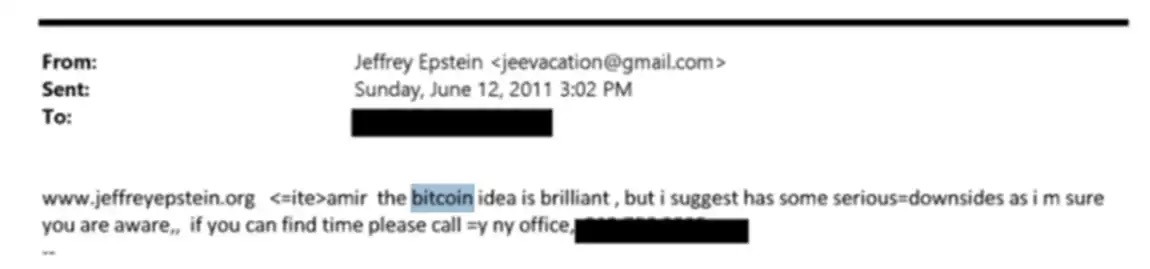
The email below is dated June 12, 2011, right around the peak of Bitcoin's price that year. Epstein stated in the email, "Bitcoin is a brilliant idea, but it has some serious drawbacks."
In 2013, the frequency of cryptocurrency mentions in Epstein's correspondence increased.

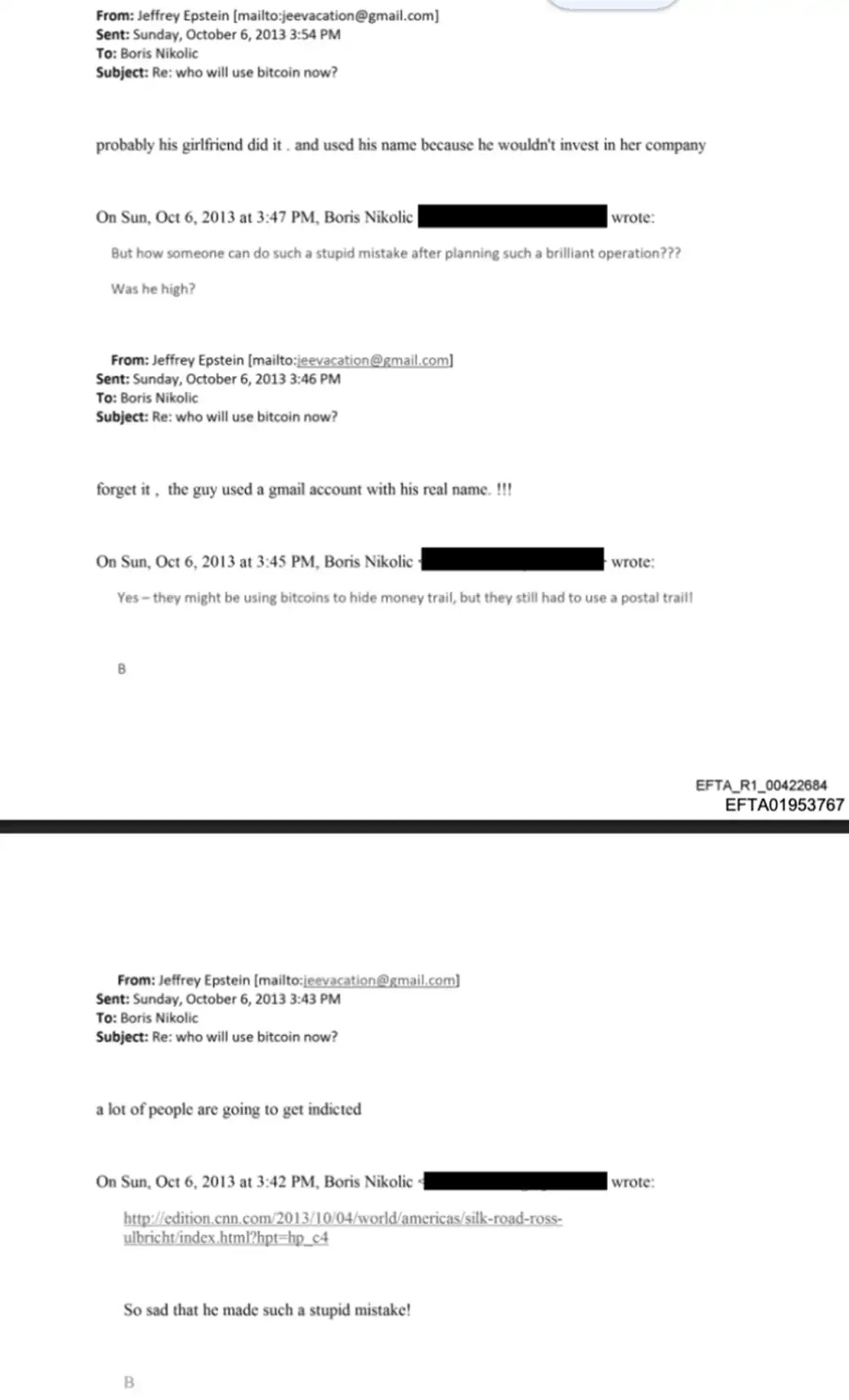
First, in an email exchange with Boris Nikolic (who once served as Bill Gates's chief technology advisor and was named in Epstein's will), the subject was "Who uses Bitcoin now?" They sarcastically discussed Ross Ulbricht, the founder of Silk Road who was arrested that year, saying that Ross's use of a Gmail account with his real name was a stupid mistake.
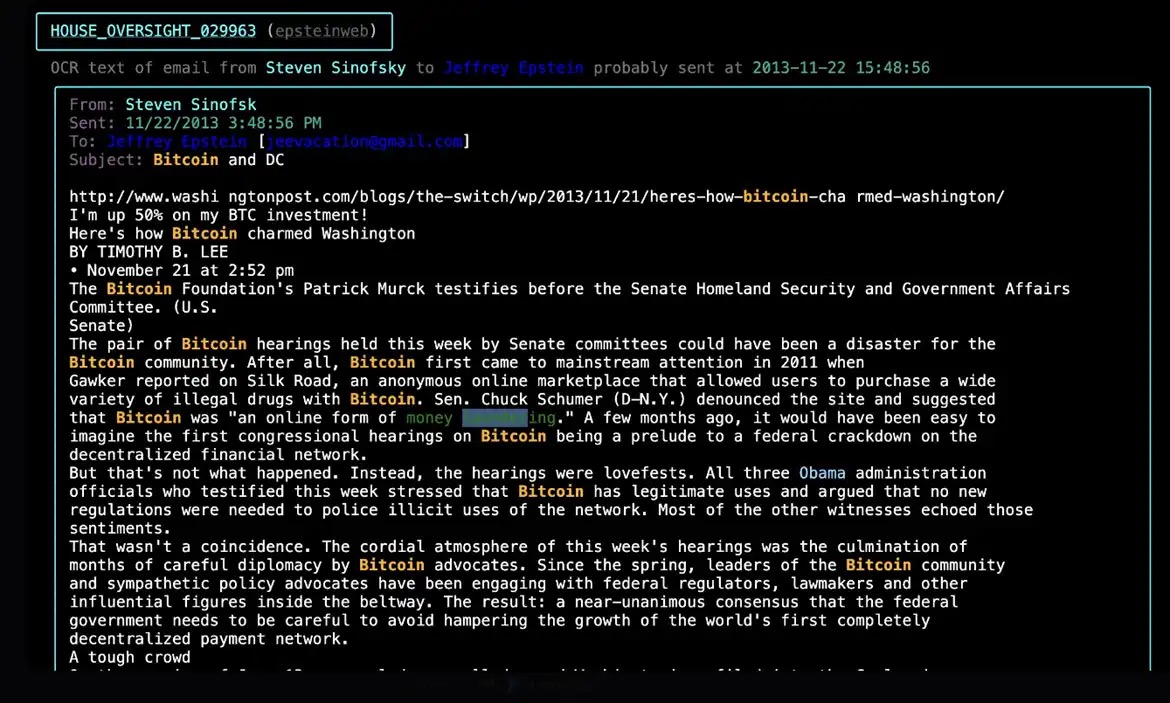
a16z board partner and former president of Microsoft's Windows division, Steven Sinofsky, emailed Epstein to say that his Bitcoin investment had increased by 50% and shared Timothy B. Lee's article "How Bitcoin Captivated Washington."
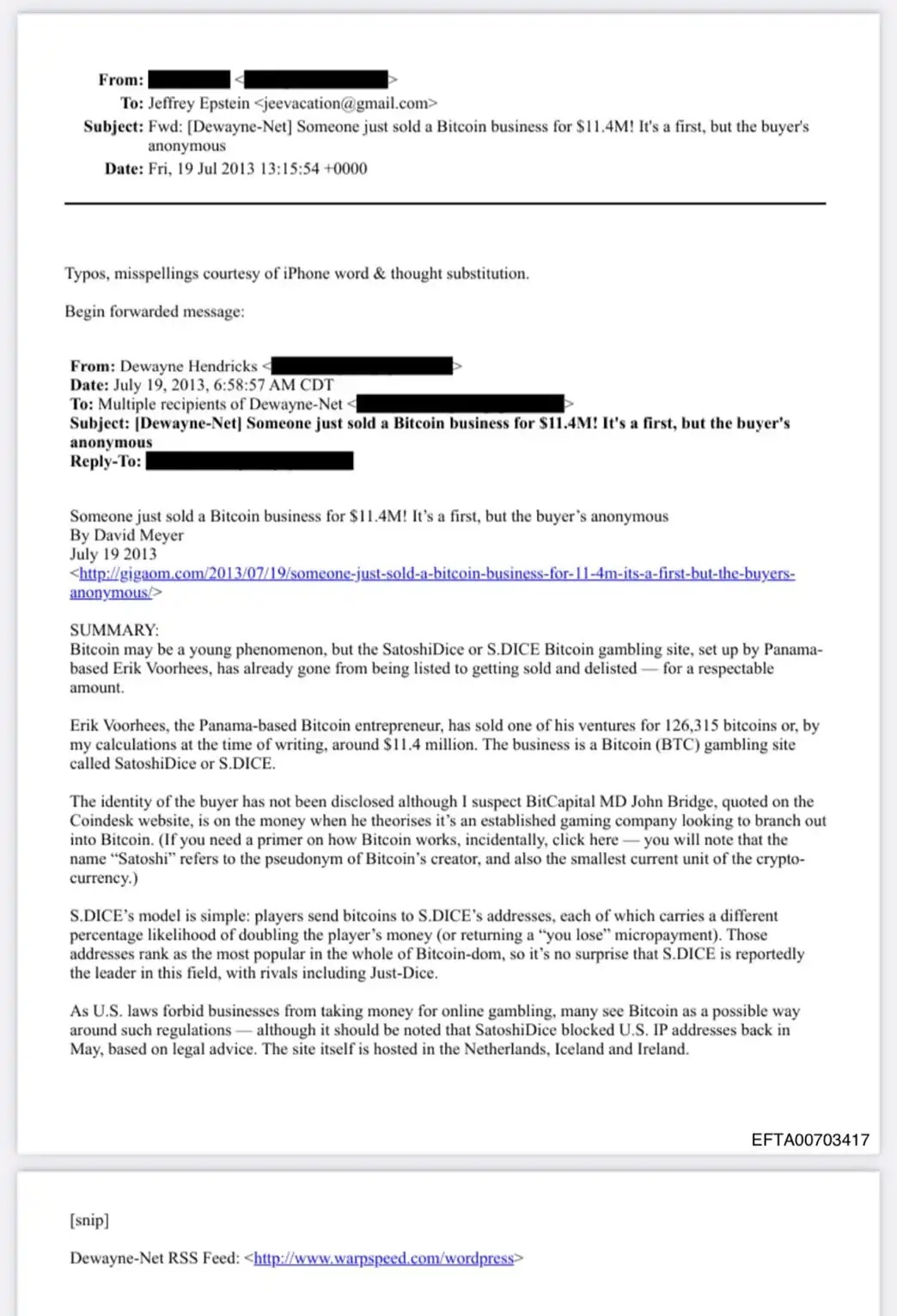
He also received news that the once-famous Bitcoin website Satoshi Dice had been sold for $11.4 million.
In 2014, Epstein engaged in an in-depth discussion with PayPal co-founder Peter Thiel about the nature of Bitcoin.
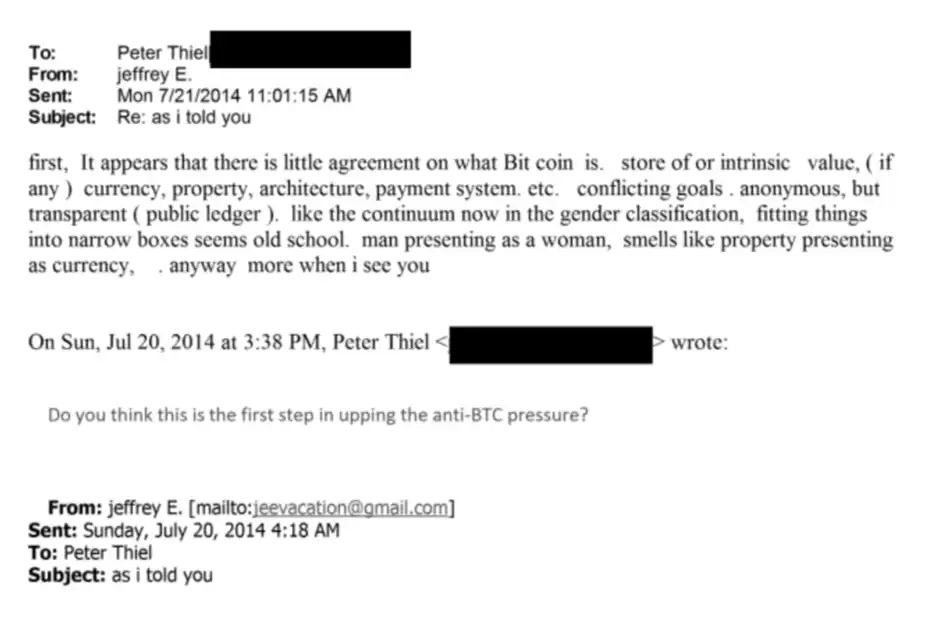
"There is no consensus on what Bitcoin is—a store of value, a currency, or property... It's like a man dressing as a woman, like property masquerading as currency."

This exchange shows that Epstein was very familiar with the ideological debates surrounding Bitcoin's nature in the early stages of the cryptocurrency market. He even compared it to gender identity.

Another email revealed that Epstein participated in the seed round funding of Bitcoin infrastructure company Blockstream. The round totaled $18 million, and Epstein's investment increased from $50,000 to $500,000.
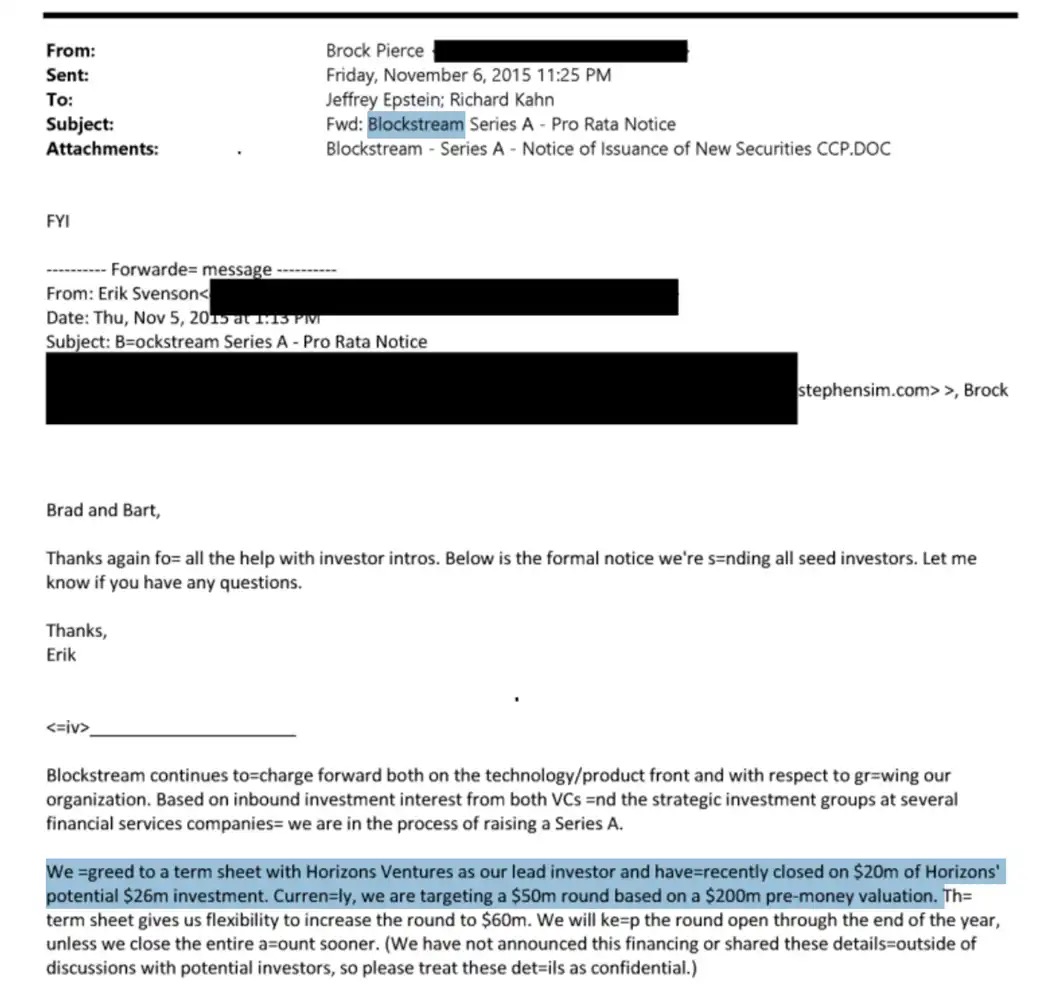
Blockstream CEO Adam Back recently issued a statement denying any direct or indirect financial connection between the company and Epstein or his estate. He explained that Epstein was a limited partner in a fund that once held a minority stake in Blockstream but had since fully divested.

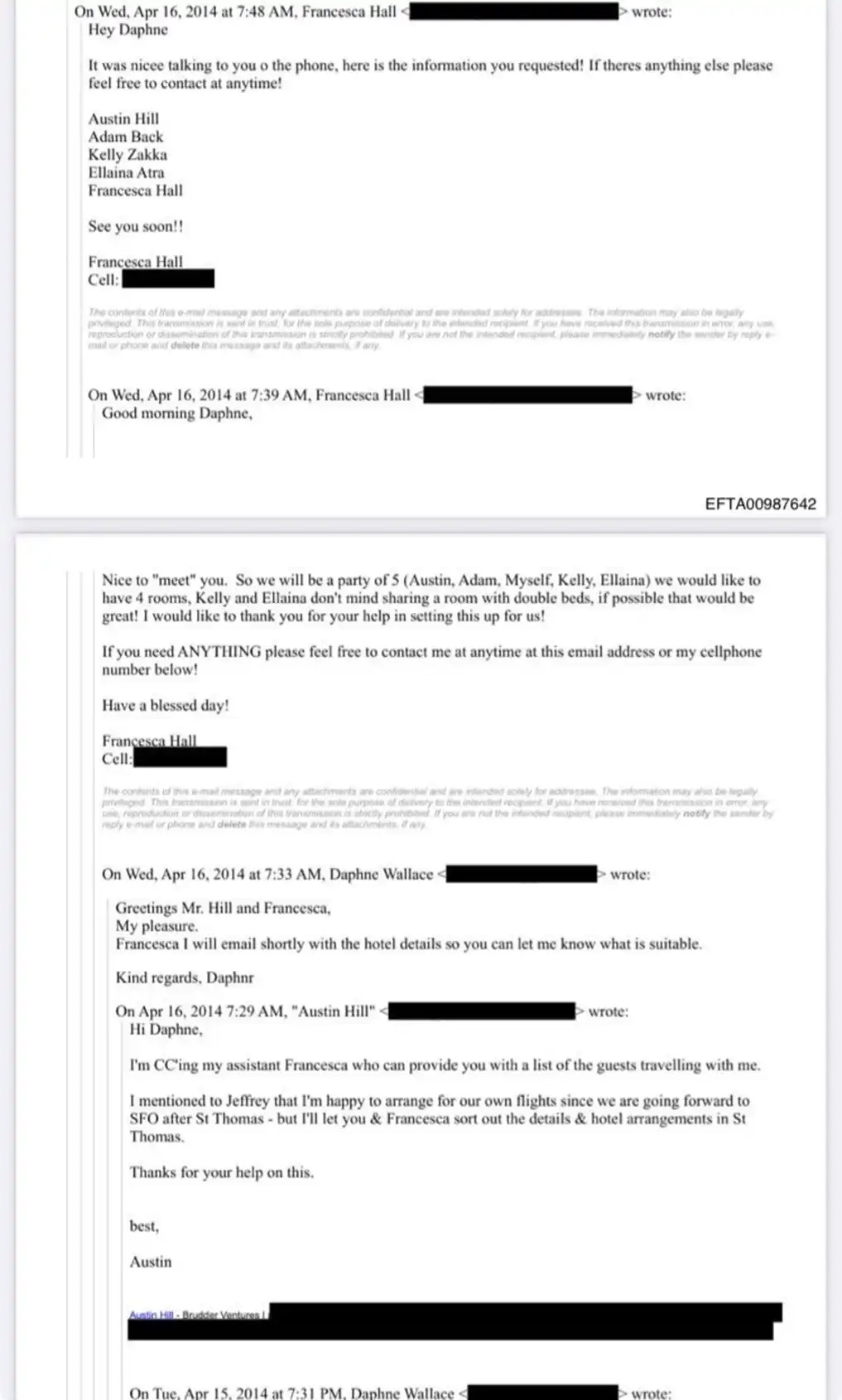
However, the names of Adam Back and Austin Hill (Blockstream co-founder) appeared in travel arrangement emails for St. Thomas Island (about 2 miles from "Epstein Island"):
Additionally, in 2014, Austin Hill emailed Epstein and Joi Ito (former director of the MIT Media Lab; Epstein invested in Blockstream through his fund). He stated that Ripple ($XRP) and Stellar (a new project by Ripple founder Jed McCaleb after leaving Ripple) negatively impacted the ecosystem Blockstream was building and harmed Blockstream because their investors were "backing two horses in the same race."
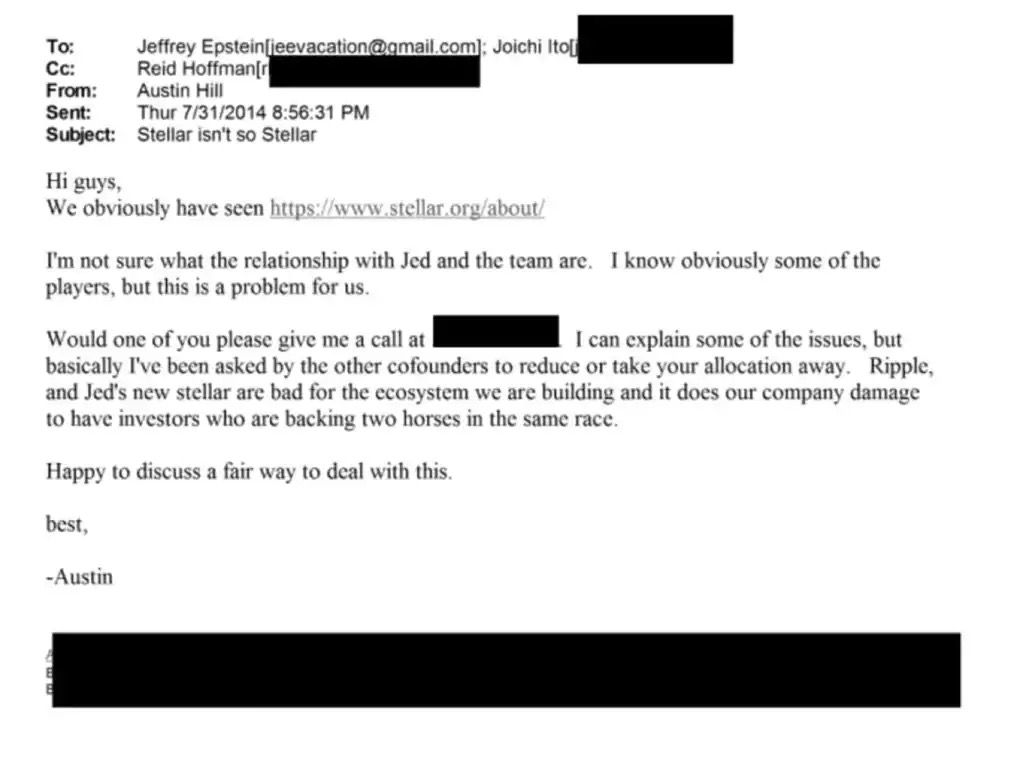
There is some divergence in the English-speaking community regarding the interpretation of this. Based on the context, I personally tend to adopt the interpretation that Epstein may have also invested in Ripple/Stellar at the time, which displeased Blockstream. This led Austin Hill to state in the email, "I was asked by other co-founders to reduce or even cancel your allocation."

Although Ripple and Stellar's growth was not affected, we do not know if more, unknown, excellent cryptocurrency projects have been stifled in their infancy through such behind-the-scenes pressure, from then until now.

In response, former Ripple CTO David Schwartz tweeted, "I don't want to be a conspiracy theorist, but if this is just the tip of the iceberg, I wouldn't be surprised at all."
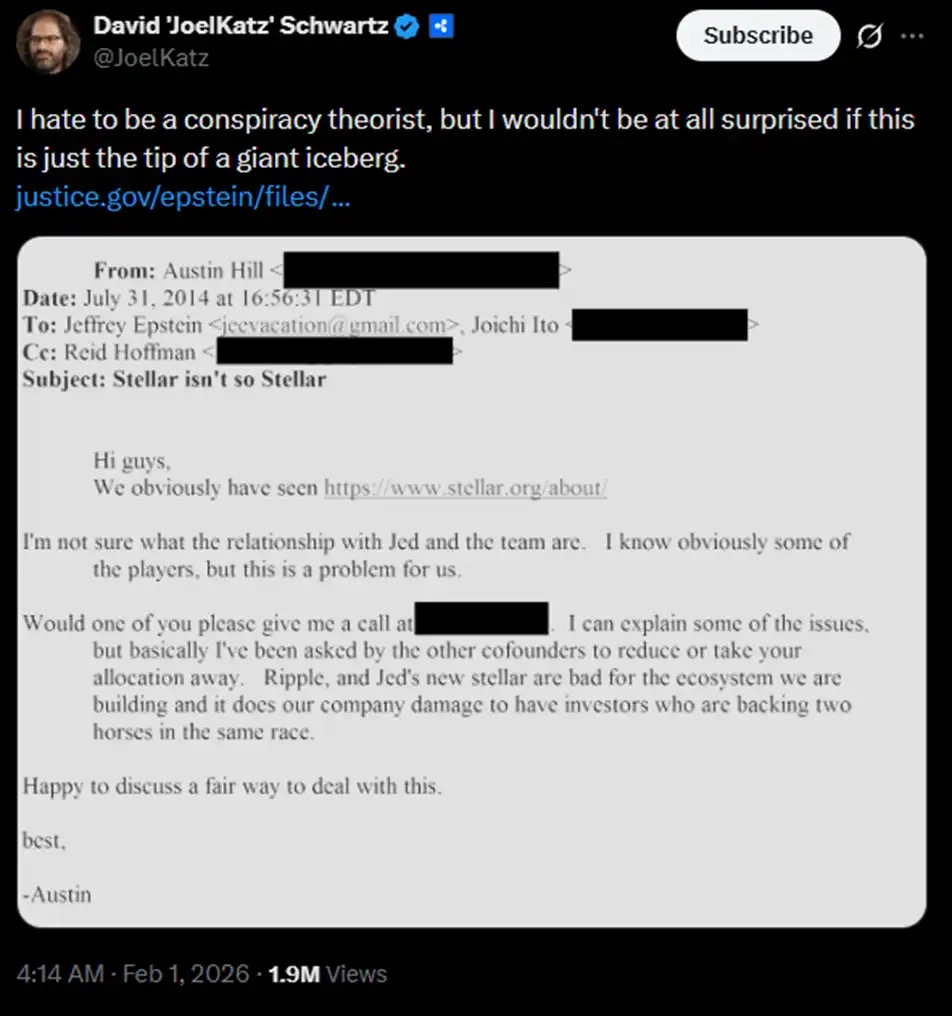
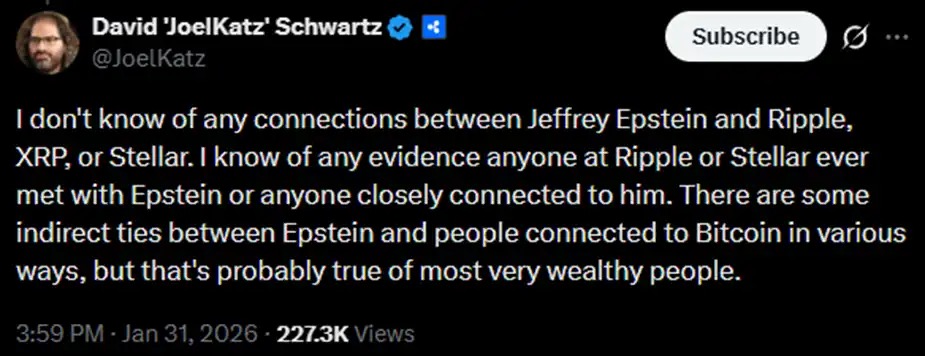
So, does this mean Epstein's evil also existed in the cryptocurrency field? David Schwartz also stated that for most ultra-wealthy individuals, having some connection to Bitcoin is probably very common.
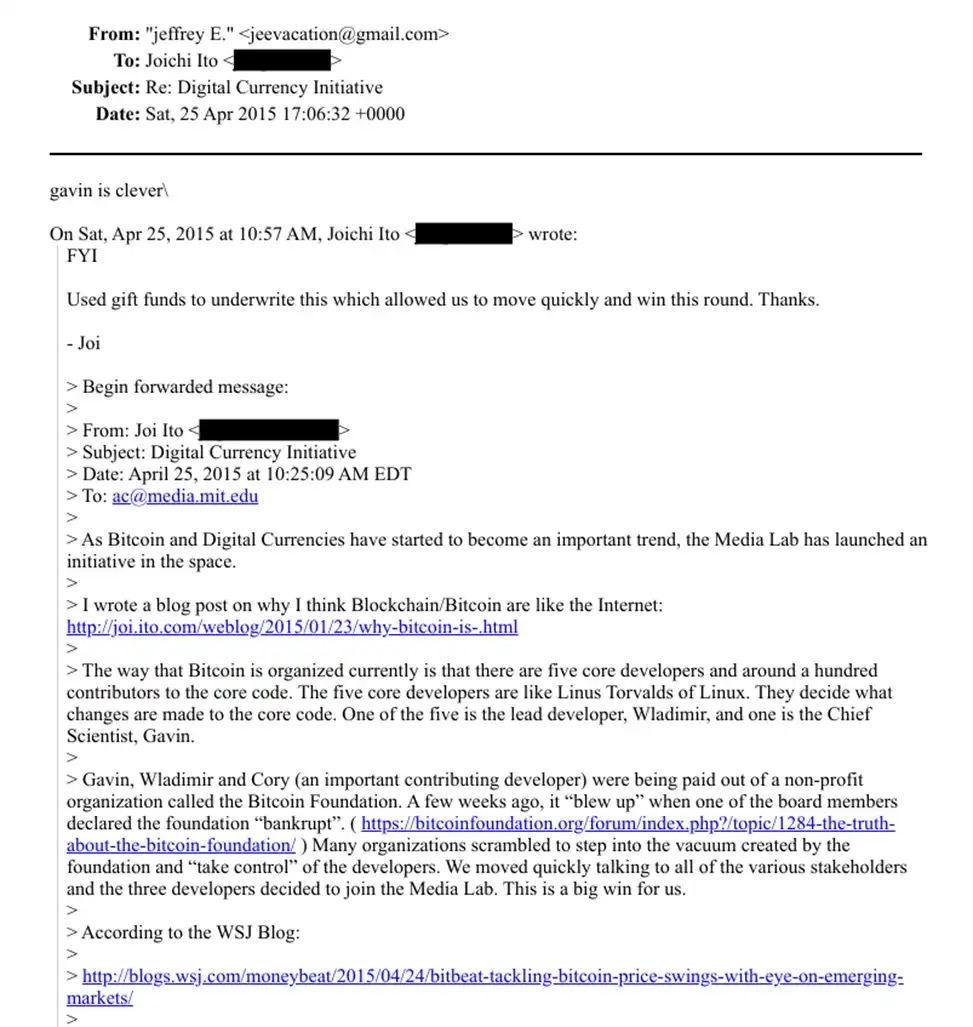
Furthermore, in 2014-2015, the collapse of the Bitcoin Foundation left Bitcoin Core developers without stable salaries. The MIT Media Lab's Digital Currency Initiative (DCI) began paying salaries to several Bitcoin Core developers. As a result, three Bitcoin Core developers—Gavin Andresen, Wladimir van der Laan, and Cory Fields—decided to join the MIT Media Lab.

At that time, the scandal had not yet broken, and the public was unaware of Epstein's anonymous donations to the MIT Media Lab. Joi Ito thanked Epstein via email, not only explaining Bitcoin's development operations to Epstein but also stating that thanks to this money, the lab was "able to move quickly and score a huge victory" because "many organizations wanted to take advantage of the situation to control Bitcoin's developers."

Epstein's reply was a simple compliment about Gavin Andresen: "Gavin is very smart."
Did Epstein Meet Satoshi?

In 2016, Epstein emailed Saudi Royal Court advisor Raafat AlSabbagh and current Abu Dhabi Department of Culture and Tourism advisor Aziza Al Ahmadi with two "radical ideas for creating two new currencies." One was a "Sharia" dollar. Just as all U.S. dollar bills have "In God We Trust," the Middle East could have its own "Sharia" dollar for internal use.
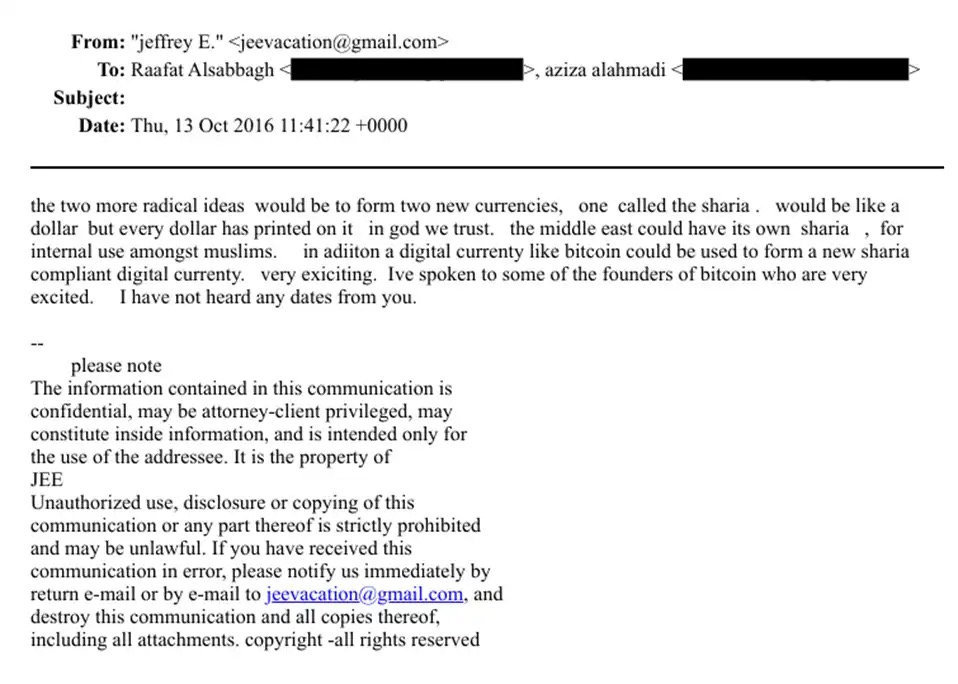
The other idea was to create a digital currency like Bitcoin to make money compliant with Sharia law. Then, after this idea, he casually and lightly dropped this piece of information:

"I have spoken with some of the Bitcoin creators, and they are very excited."

Epstein's purpose at the time might have been more about showing off his connections to enhance his reliable image, so he mentioned it offhand. But this could completely rewrite the history of Bitcoin and even the entire cryptocurrency industry. "Some Bitcoin creators"—does this mean Satoshi Nakamoto was not an individual but a team? If so, many mysteries surrounding Satoshi Nakamoto would have a reasonable explanation.

There are even more thought-provoking questions. Who was this team? What was their motivation for creating Bitcoin? If Epstein really met them, how did he initially find out who they were and establish a relationship with them? If even Epstein knew who created Bitcoin, wouldn't the U.S. government know? What motives does the U.S. government, which has remained silent on this issue, have?

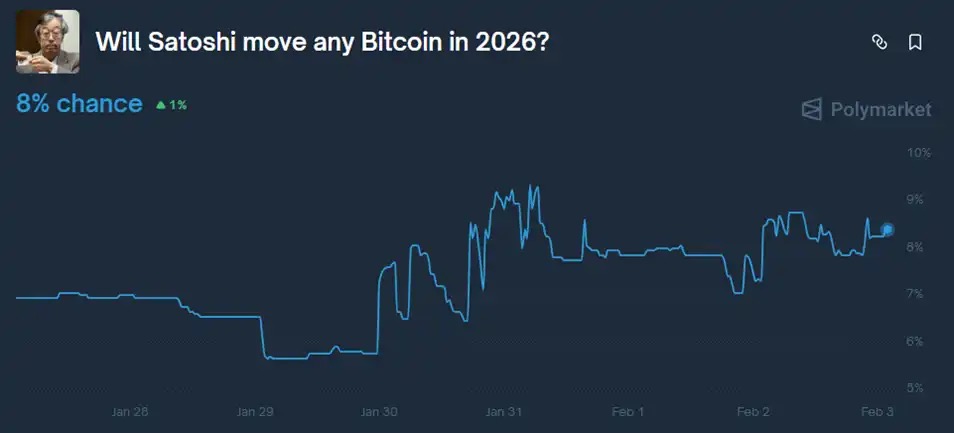
After this latest batch of Epstein files was disclosed, the possibility of "Satoshi Nakamoto's Bitcoin address taking action in 2026" on the prediction market Polymarket rose from about 6% to about 9.3% and is currently holding at 8%.
If Epstein did meet Satoshi Nakamoto, it seems Satoshi was not successful in evangelizing Bitcoin to him during their contact. In an email exchange on August 31, 2017, when asked "Is it worth buying a Bitcoin?" Epstein simply said "No." At that time, one Bitcoin was less than $5,000.

Whether Epstein actually met Satoshi Nakamoto is still unknown. However, we do know that he met the now most famous Bitcoin bull—MicroStrategy CEO Michael Saylor.

For years, Saylor's determination to only buy and never sell Bitcoin has been堪称变态 (abnormal/perverse, used here for emphasis on his extreme behavior). But in 2010, he was not yet famous for this identity.

That year, Comrade Saylor spent $25,000 to attend a party organized by Epstein's publicist Peggy Siegal and initially displayed his "autistic" traits at the event. This is how Peggy Siegal described Saylor:
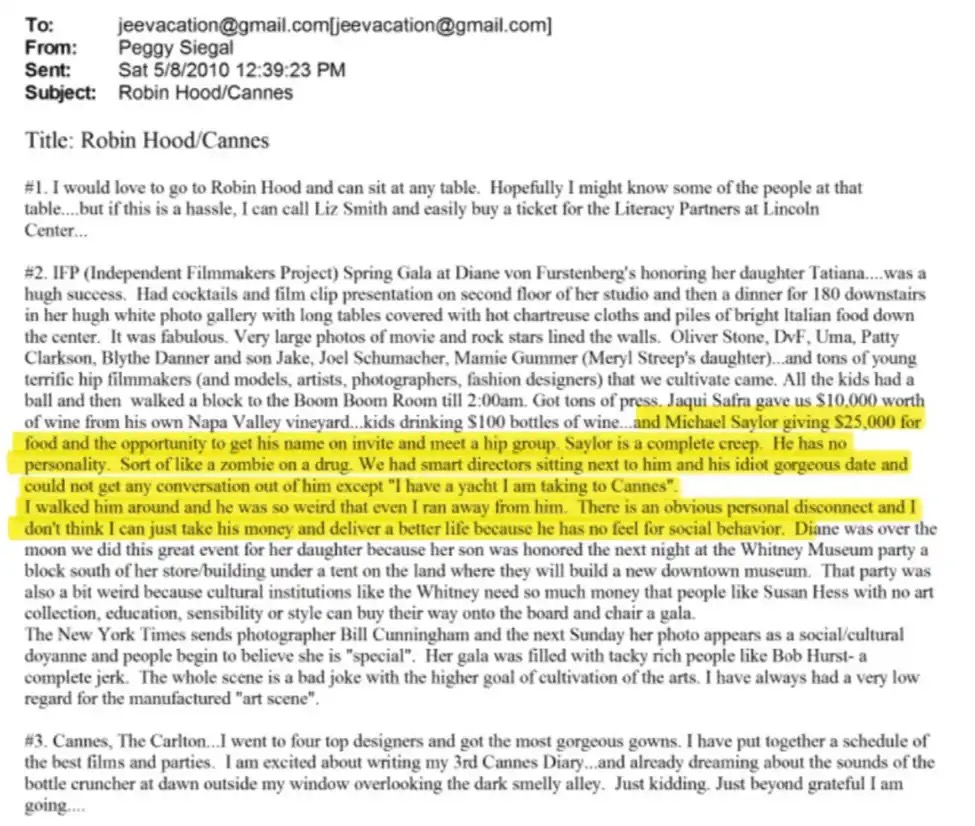
"This guy is a total freak, completely charmless, like a zombie on a drug overdose. We had smart directors at our party, sitting right next to him and his pretty, idiotic chick, and besides 'I have a yacht' and 'I'm going to Cannes,' there was no conversation. I took him around, but he was so weird I just had to run away. He has no personality and no social skills. I don't even know how to get money from him."

Being called变态 (freak/weirdo) by a变态 (freak/weirdo, referring to Epstein's associates) shows just how变态 Saylor) Saylor really is. Perhaps only a creation as great as Bitcoin could accommodate a变态 like Saylor and allow him to build a great career.

Conclusion

About half of the Epstein files have not yet been disclosed. How many more bombshells related to the cryptocurrency industry are hidden in these remaining files?

Will time clear the fog?


Twitter:https://twitter.com/BitpushNewsCN

Bitpush TG Discussion Group:https://t.me/BitPushCommunity

Bitpush TG Subscription: https://t.me/bitpush

Original link:https://www.bitpush.news/articles/7608204

Kripto yang Sedang Tren

Pertanyaan Terkait

QWhat was Jeffrey Epstein's initial opinion on Bitcoin in 2011, and what did he identify as its key issue?

AIn 2011, Jeffrey Epstein described Bitcoin as 'a brilliant idea' but noted that it had 'some serious drawbacks.'

QWhich prominent Bitcoin infrastructure company did Epstein invest in through a fund, and what was the controversy surrounding his involvement?

AEpstein invested in Blockstream's seed round through a fund, initially putting in $50,000 which grew to $500,000. Blockstream's CEO later denied any direct or indirect financial ties, stating Epstein was a limited partner in a fund that held a minority stake and had fully divested.

QWhat startling claim did Epstein make in a 2016 email regarding the creators of Bitcoin?

AIn a 2016 email, Epstein claimed, 'I have been meeting with some of the bitcoin creators and they are very excited,' suggesting he may have had contact with Satoshi Nakamoto or the founding team.

QHow did Epstein's associate, Peggy Siegal, describe MicroStrategy CEO Michael Saylor after meeting him at a party?

APeggy Siegal described Michael Saylor as a 'complete freak' with 'no charm,' comparing him to a 'zombie on too many drugs.' She found him socially awkward and difficult to engage with.

QWhat role did Epstein's donations to the MIT Media Lab play in the Bitcoin ecosystem?

AEpstein's anonymous donations to the MIT Media Lab allowed its Digital Currency Initiative (DCI) to fund the salaries of key Bitcoin Core developers like Gavin Andresen, Wladimir van der Laan, and Cory Fields, which the lab's director saw as a crucial move to prevent other organizations from controlling the developers.

Bacaan Terkait

Setelah Tiga Kuartal Berturut-Turut Turun, Bisakah Pasar Kripto Menyambut Jendela Stabilitas di Kuartal Ketiga?

Pasar kripto mengalami kuartal terburuk sejak 2022, dengan kapitalisasi pasar turun 12.6% menjadi $2.1 triliun, didorong oleh keluarnya modal dan penurunan volume perdagangan. Bitcoin dan Ethereum masing-masing jatuh 14.2% dan 25.4% di kuartal kedua. Aliran keluar bersih dari ETF Bitcoin AS mencapai $4.67 miliar, menandakan tekanan jual yang berkelanjutan. Faktor utama meliputi terputusnya hubungan dengan saham AS, kebijakan moneter Federal Reserve yang ketat, dan pelepasan aset oleh perusahaan seperti Strategy. Proses legislasi UU CLARITY yang akan memberikan kejelasan regulasi terhambat, meningkatkan premi risiko di sektor ini. Namun, ada tanda-tanda potensi stabilisasi. Aliran keluar ETF yang besar secara historis sering terjadi di akhir fase penurunan, dan para pemegang Bitcoin jangka panjang mulai menambah kepemilikan lagi. Sementara sebagian besar sektor menyusut, pasar prediksi dan aset koleksi yang ditokenisasi mencatat pertumbuhan signifikan. Pandangan untuk kuartal ketiga sangat bergantung pada pertemuan Fed akhir Juli. Sinyal kebijakan yang lunak dapat mendukung pemulihan Bitcoin, sementara sikap yang hawkish dapat memicu konsolidasi lebih lanjut. Meskipun tantangan regulasi tetap ada, indikator teknis seperti harga Bitcoin yang mendekati rata-rata bergerak 200-mingguannya menunjukkan dasar jangka panjang belum rusak. Logika pasar telah bergeser dari mengandalkan narasi ke faktor fundamental seperti kebijakan dan ekspektasi suku bunga.

marsbitKemarin 08:40

Setelah Tiga Kuartal Berturut-Turut Turun, Bisakah Pasar Kripto Menyambut Jendela Stabilitas di Kuartal Ketiga?

marsbitKemarin 08:40

The SpaceX Trade, Terbuka: SPCXON Mulai Diperdagangkan di WEEX

SpaceX meluncurkan IPO terbesar dalam sejarah pada Juni 2026, namun akses bagi banyak pedagang terhambat oleh batasan regional dan prosedur broker. WEEX kini menghadirkan SPCXON/USDT di pasar spotnya, sebuah instrumen tokenisasi yang memungkinkan paparan terhadap pergerakan harga SpaceX melalui akun kripto yang diselesaikan dengan USDT, tanpa memerlukan broker AS atau pembiayaan bank. SPCXON adalah produk tokenisasi yang mencerminkan ekonomi kepemilikan SpaceX bagi pedagang yang memenuhi syarat di luar AS, dengan dividen diinvestasikan kembali. Aset ini diperdagangkan di WEEX sebagai pasangan spot dengan USDT, tersedia selama jam pasar, memberikan akses mudah bagi trader kripto. Kasus investasi untuk SpaceX didasarkan pada pertumbuhan pendapatan Starlink dan pencapaian Starship, meskipun valuasinya yang tinggi (sekitar 90-110 kali pendapatan) telah memperhitungkan eksekusi sempurna selama bertahun-tahun. Faktor seperti jumlah saham publik yang terbatas dan masa buka kunci (unlock) insider pertama menjadi pertimbangan penting. Penting untuk diingat bahwa SPCXON memberikan paparan, bukan kepemilikan langsung atas saham atau hak suara. Harganya dapat diperdagangkan pada premium atau diskon terhadap nilai aset bersih. WEEX menawarkan akses ke berbagai aset TradFi yang ditokenisasi seperti ini dalam satu akun terpadu, bersama dengan pasar futures dan kampanye perdagangan dengan pool hadiah.

TheNewsCryptoKemarin 08:33

The SpaceX Trade, Terbuka: SPCXON Mulai Diperdagangkan di WEEX

TheNewsCryptoKemarin 08:33

Momen Perdagangan BIT: BTC Masih Tertekan oleh EMA 200 Mingguan, Setelah Ditolak Mungkin Kembali Turun, Saham Penyimpanan dan Semikonduktor yang Melonjak Malam Kemudian Mulai Anjlok di Pasar Malam

**PASAR KRIPTO & SAHAM: BTC Hadapi Resistensi, Saham Semikonduktor Turun di Perdagangan Malam** Pasar kripto melanjutkan pemulihan, dengan harga Bitcoin bertahan di sekitar $66,000 setelah rebound lebih dari 15% dari titik terendah Juli. Namun, BTC menghadapi **tembok resistensi kuat di dekat $68,000**, yang bertepatan dengan biaya rata-rata investor selama lima bulan terakhir dan titik gagalnya rebound pertengahan Juni. Secara teknis, perhatian tertuju pada **200 EMA mingguan (~$68,328) sebagai level kunci**. Jika BTC ditolak di level ini, potensi penurunan menuju support $63,000 terbuka. Analis menyoroti volume rendah dan penurunan open interest futures di CME, menandakan rebound ini lebih dipicu likuiditas rendah musim panas daripada awal bull run penuh. Di pasar saham AS, **indeks futures utama turang** setelah sesi kemarin yang kuat. Sektor semikonduktor dan penyimpanan (storage), yang melonjak pada hari Selasa (contoh: Micron +12%), **mengalami koreksi di perdagangan malam (night trading)**. ETF semikonduktor turun 2,22% dan saham Micron turun 2,29%. Meski begitu, ada sorotan positif seperti **Super Micro Computer (SMCI)** yang naik lebih dari 15% setelah melaporkan pandangan pendapatan yang kuat dan pesanan baru yang sangat besar, mengonfirmasi permintaan server AI tetap solid. Kekhawatiran makro muncul dari **kenaikan harga minyak mentah (di atas $91)** akibat ketegangan geopolitik dan **lonjakan imbal hasil (yield) obligasi pemerintah AS**, dengan imbal hasil 10-tahun mencapai sekitar 4,64%. Faktor-faktor ini dapat menambah tekanan inflasi dan membatasi ruang gerak pasar saham. Saham terkait kripto seperti Coinbase dan Robinhood naik kuat didorong oleh perkembangan regulasi yang lebih jelas di AS. Di Asia, **Korea Selatan** dan **Jepang** menunjukkan kinerja beragam. Indeks KOSPI Korea naik didukung pemulihan saham semikonduktor, sementara pasar Jepang melemah dengan **Yen terus melemah ke level terendah sejak 1986**, meningkatkan kekhawatiran akan intervensi bank sentral. **Yang Perlu Diperhatikan Selanjutnya:** * **22 Juli:** Acara AI AMD, rilis laporan keuangan dari Google (Alphabet), Tesla, IBM. * **23 Juli:** Keputusan suku bunga Bank Sentral Eropa (ECB), data klaim pengangguran AS, laporan keuangan Intel. * Perkembangan lebih lanjut dari **harga minyak, imbal hasil obligasi, dan dinamika Yen Jepang** akan menjadi penentu sentimen pasar risiko secara keseluruhan.

marsbitKemarin 08:32

Momen Perdagangan BIT: BTC Masih Tertekan oleh EMA 200 Mingguan, Setelah Ditolak Mungkin Kembali Turun, Saham Penyimpanan dan Semikonduktor yang Melonjak Malam Kemudian Mulai Anjlok di Pasar Malam

marsbitKemarin 08:32

Mantan Ketua CFTC dan Presiden Circle, Tarbert: Satu Pihak Menasihati Anda untuk Berpikir Jangka Panjang, di Sisi Lain Menguangkan $30 Juta Sendiri

Penulis: Zen, PANews Heath Tarbert, mantan Ketua CFTC dan Presiden Circle, baru-baru ini menyerukan kepada investor untuk mengadopsi pandangan jangka panjang terhadap saham Circle, meskipun harganya telah turun 70% dari puncaknya. Namun, ia sendiri secara konsisten menjual saham CRCL sejak perusahaan go public, menguangkan sekitar $30 juta tanpa pernah membeli saham tambahan di pasar terbuka. Tarbert, yang bergabung dengan Circle pada Juli 2023 dan menjadi Presiden pada awal 2025, dikenal sebagai pendukung kuat narasi "jangka panjang" perusahaan. Namun, sehari sebelum IPO Circle, ia menetapkan rencana perdagangan 10b5-1 untuk menjual hingga 353.290 saham dalam setahun. Dalam 13 bulan setelah IPO, ia menjual lebih dari 360.000 saham, termasuk penjualan tunggal senilai $11,5 juta pada Maret 2026. Ia bahkan menetapkan rencana 10b5-1 kedua untuk menjual hingga 160.000 saham lagi pada akhir tahun 2026. Langkah Tarbert ini menuai kecaman karena dianggap tidak konsisten dengan pesan "jangka panjang" yang ia sampaikan kepada publik. Perjalanan kariernya sering dikaitkan dengan "revolving door" antara regulator dan dunia keuangan. Setelah mengundurkan diri sebagai Ketua CFTC pada Maret 2021, ia bergabung dengan Citadel Securities hanya 27 hari kemudian sebagai Kepala Penasihat Hukum, tepat saat perusahaan itu menghadapi pengawasan ketat terkait peristiwa GameStop. Di Citadel, ia juga mendukung undang-undang yang memperluas wewenang CFTC atas pasar crypto, sementara Citadel diketahui berencana berekspansi ke aset kripto. Tarbert kemudian pindah ke Circle pada 2023, membantu perusahaan mengatasi tantangan regulasi dan akhirnya go public melalui IPO langsung. Meskipun sangat berharga bagi perusahaan, tindakannya menjual saham dalam jumlah besar sambil mendorong investor untuk bertahan menimbulkan pertanyaan tentang komitmennya yang sebenarnya terhadap masa depan jangka panjang Circle.

marsbitKemarin 08:09

Mantan Ketua CFTC dan Presiden Circle, Tarbert: Satu Pihak Menasihati Anda untuk Berpikir Jangka Panjang, di Sisi Lain Menguangkan $30 Juta Sendiri

marsbitKemarin 08:09

Gate Research Institute: Produk Keuangan Kripto Menggulirkan Gelombang "Wall Street-ization", Kompetisi atau Integrasi?

**Ringkasan: Gelombang "Wall Street-ization" Produk Keuangan Kripto: Kompetisi atau Integrasi?** Artikel ini membahas fenomena konvergensi antara keuangan tradisional (TradFi) dan keuangan kripto (Crypto). Meskipun Bitcoin awalnya dirancang sebagai sistem peer-to-peer yang terdesentralisasi dan bebas dari perantara seperti bank, pasar kripto kini semakin diintegrasikan ke dalam infrastruktur keuangan tradisional. **Tren "Wall Street-ization":** Dimulai dengan disetujuinya ETF spot Bitcoin pada 2024, aset kripto kini dikemas menjadi produk seperti ETF (oleh BlackRock, Fidelity, dll.), futures, dan sekuritisasi aset riil (RWA) seperti obligasi pemerintah yang ditokenisasi. Ini memberikan akses yang mudah dan teregulasi bagi investor institusional, tetapi juga berarti kekuasaan atas penerbitan, penentuan harga, kustodian, dan distribusi aset kripto semakin bergeser ke lembaga keuangan besar. **Dua Jalur Konvergensi (1+1>2):** Artikel ini menyoroti dua arah integrasi: 1. **Dari CEX ke TradFi:** Dilambangkan oleh **Gate.io**, yang berkembang dari bursa kripto menjadi platform multi-aset. Gate kini menawarkan perdagangan saham nyata (AS, Hong Kong, Korea) menggunakan USDT, menyediakan akses tanpa batas waktu ke pasar tradisional. 2. **Dari TradFi ke Crypto:** Dilambangkan oleh **Robinhood**, platform broker tradisional yang memperluas layanannya ke aset kripto (termasuk melalui akuisisi Bitstamp) dan mengembangkan produk seperti token saham di blockchain. **Tujuan Bersama: Akun Keuangan "Super" Terpadu:** Kedua jalur ini bertujuan menciptakan **akun keuangan generasi berikutnya yang terpadu**. Pengguna di masa depan mungkin dapat memperdagangkan Bitcoin, saham Apple, ETF, emas, dan obligasi pemerintah yang ditokenisasi dalam satu antarmuka yang sama, menggunakan stablecoin sebagai lapisan dana. **RWA dan Obligasi Pemerintah di On-Chain sebagai Lapisan Tengah:** Tokenisasi aset dunia nyata, terutama obligasi pemerintah AS, menyediakan aset berpenghasilan rendah risiko di ekosistem on-chain. Pasar ini tumbuh pesat (naik 40% pada paruh pertama 2026) meskipun pasar kripto turun, menunjukkan permintaan nyata. **Kesimpulan:** "Wall Street-ization" bukanlah pengambilalihan sepihak, melainkan **transformasi timbal balik**. TradFi dan Crypto saling melengkapi: Crypto mendapatkan akses ke likuiditas, kepatuhan, dan jaringan distribusi yang luas, sementara TradFi mengadopsi efisiensi, kecepatan, dan pasar 24/7 dari Crypto. Hasil akhirnya adalah pembentukan **pasar modal terpadu yang lebih efisien dan global**, di mana batas antara aset tradisional dan kripto semakin kabur.

marsbitKemarin 08:07

Gate Research Institute: Produk Keuangan Kripto Menggulirkan Gelombang "Wall Street-ization", Kompetisi atau Integrasi?

marsbitKemarin 08:07

Trading

Spot

Artikel Populer

Cara Membeli COOKIE

Selamat datang di HTX.com! Kami telah membuat pembelian Cookie DAO (COOKIE) menjadi mudah dan nyaman. Ikuti panduan langkah demi langkah kami untuk memulai perjalanan kripto Anda.Langkah 1: Buat Akun HTX AndaGunakan alamat email atau nomor ponsel Anda untuk mendaftar akun gratis di HTX. Rasakan perjalanan pendaftaran yang mudah dan buka semua fitur.Dapatkan Akun SayaLangkah 2: Buka Beli Kripto, lalu Pilih Metode Pembayaran AndaKartu Kredit/Debit: Gunakan Visa atau Mastercard Anda untuk membeli Cookie DAO (COOKIE) secara instan.Saldo: Gunakan dana dari saldo akun HTX Anda untuk melakukan trading dengan lancar.Pihak Ketiga: Kami telah menambahkan metode pembayaran populer seperti Google Pay dan Apple Pay untuk meningkatkan kenyamanan.P2P: Lakukan trading langsung dengan pengguna lain di HTX.Over-the-Counter (OTC): Kami menawarkan layanan yang dibuat khusus dan kurs yang kompetitif bagi para trader.Langkah 3: Simpan Cookie DAO (COOKIE) AndaSetelah melakukan pembelian, simpan Cookie DAO (COOKIE) di akun HTX Anda. Selain itu, Anda dapat mengirimkannya ke tempat lain melalui transfer blockchain atau menggunakannya untuk memperdagangkan mata uang kripto lainnya.Langkah 4: Lakukan trading Cookie DAO (COOKIE)Lakukan trading Cookie DAO (COOKIE) dengan mudah di pasar spot HTX. Cukup akses akun Anda, pilih pasangan perdagangan, jalankan trading, lalu pantau secara real-time. Kami menawarkan pengalaman yang ramah pengguna baik untuk pemula maupun trader berpengalaman.

355 Total TayanganDipublikasikan pada 2025.07.23Diperbarui pada 2026.06.02

Cara Membeli COOKIE

Diskusi

Selamat datang di Komunitas HTX. Di sini, Anda bisa terus mendapatkan informasi terbaru tentang perkembangan platform terkini dan mendapatkan akses ke wawasan pasar profesional. Pendapat pengguna mengenai harga COOKIE (COOKIE) disajikan di bawah ini.

活动图片