Introduction to DeFi and DeFAI
Decentralized Finance (DeFi) has long been hailed as a revolutionary shift in the financial industry, offering decentralized alternatives to traditional financial services. However, despite its potential, DeFi has faced significant challenges in achieving mass adoption, mainly due to its steep learning curve and complicated user experience. In fact, the adoption rate of DeFi is still only 1.4% globally, with a limited number of active users, many of whom are seasoned cryptocurrency investors.
The introduction of DeFAI (Decentralized Finance + Artificial Intelligence) presents an exciting evolution of the DeFi ecosystem. DeFAI aims to lower the barriers to entry by leveraging AI to simplify complex DeFi operations, allowing even non-expert users to access a wide range of blockchain financial services. By incorporating AI agents and natural language interfaces, DeFAI seeks to create a more intuitive and user-friendly DeFi experience.
Key benefits of DeFAI include:
1. Lowering Operation Barriers: Users can execute complex DeFi operations, like swapping tokens, providing liquidity, and staking, simply by issuing natural language commands to AI agents. No need to manually navigate through complex interfaces.
2. Automated Strategies: AI agents can perform tasks like arbitrage and investment strategies, automatically adjusting risk parameters, giving ordinary users access to advanced tools previously available only to professionals.
3. Data Integration: AI can monitor social media sentiment, KOL comments, on-chain transaction data, and price trends, enabling automated execution of trades when certain conditions are met.
The Role of Orbit in the DeFAI Ecosystem
Orbit, developed by SphereOne, is an innovative AI-powered platform designed to integrate seamlessly with DeFi. As one of the leading DeFAI projects, Orbit sets itself apart by focusing on enhancing user accessibility to DeFi services through the use of natural language processing and AI. Orbit aims to bridge the gap between complex DeFi operations and the everyday user, making decentralized finance accessible to the masses.
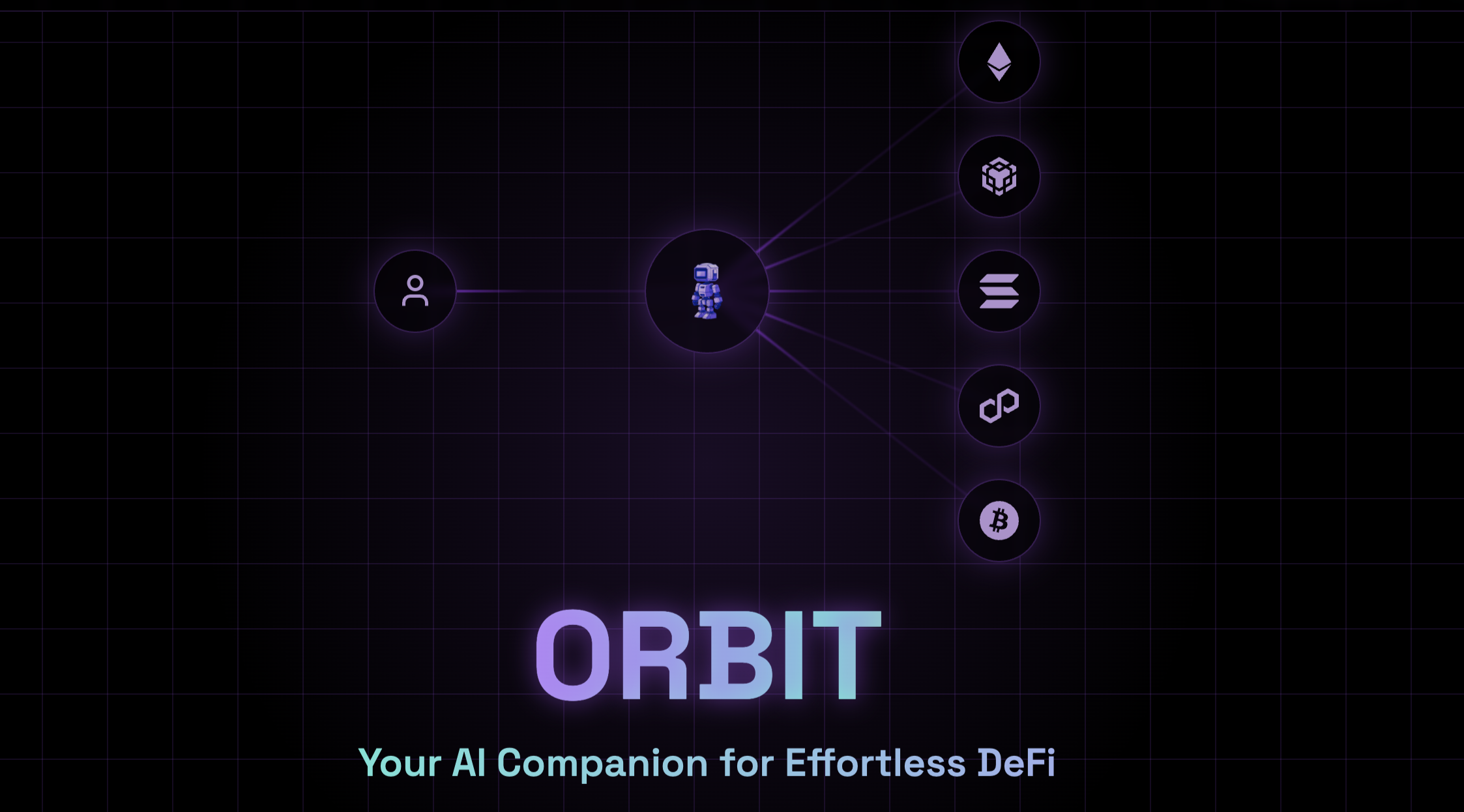
Orbit is an AI-driven platform designed to automate DeFi trading. It supports multiple blockchain protocols, including EVM, Solana, Sui, Cosmos, and Bitcoin, and offers features such as automated liquidity management, yield farming, cross-chain bridging, and lending. By combining AI and blockchain technology, Orbit simplifies the DeFi process and enhances both the user experience and efficiency.
Key features of Orbit include:
• AI-Powered Chat Interface: Users interact with Orbit using simple commands like "Swap 1 ETH to USDC," and the AI seamlessly executes the trade across multiple blockchains.
• Cross-Chain Functionality: Orbit supports over 117 blockchain networks, allowing users to easily manage assets across various ecosystems without switching interfaces or managing multiple wallets.
• Real-Time Transaction Speed: Orbit enables fast transactions with its AI-powered agent, ensuring smooth and efficient cryptocurrency trading experiences.
• AI-Enhanced Trading: Advanced AI algorithms optimize trading strategies, helping users make smarter investment decisions and enhance their market performance.
GRIFT Token and Its Utility
The GRIFT token is the native token of the Orbit ecosystem. It serves as a multifunctional asset, enabling users to access a variety of features within the platform, including trading, liquidity provision, governance voting, and participation in rewards programs. The token's value and demand are influenced by market trends, technological developments, and user behavior, making its economic model dynamic and adaptable to ensure long-term platform growth and sustainability.
Key aspects of GRIFT token’s functionality include:
• Platform Access: Token holders gain exclusive access to premium features, product upgrades, and community events.
• Buybacks & Rewards: A portion of the platform's revenue is used to buy back GRIFT tokens on the open market, with the tokens redistributed to holders, creating a symbiotic relationship between the project and its community.
• Incentivizing Participation: GRIFT holders can participate in governance decisions, earning rewards for their involvement and contribution to the platform's ecosystem.
DeFAI’s Impact on DeFi
DeFi, once considered too complex for everyday users, has struggled to attract a broad user base. The complexity of operations like token swaps, liquidity provision, and understanding gas fees has kept DeFi a niche ecosystem, primarily accessible to experienced traders. DeFAI changes that by simplifying the process and making decentralized finance more accessible and user-friendly.
As more DeFi users seek ease of use and efficiency, platforms like Orbit are poised to bridge this gap. With its AI-driven interface, Orbit makes interacting with DeFi protocols intuitive and straightforward. Users no longer need to understand the technicalities of blockchain transactions; they simply input commands, and Orbit’s AI handles the execution. This breakthrough is critical to the mass adoption of DeFi.
The Future of DeFAI and Orbit’s Role
The future of DeFi lies in the ability to break down its barriers and make it accessible to a broader audience. By integrating AI with blockchain technologies, DeFAI is poised to expand the DeFi user base significantly. Orbit is at the forefront of this transformation, offering an innovative, efficient, and user-friendly solution to the complex world of decentralized finance.
As the DeFi space evolves, projects like Orbit that combine AI and blockchain are set to play a crucial role in its future. With the ability to automate processes, execute trades, and simplify user interactions, Orbit is paving the way for the next wave of innovation in DeFi.
In the coming years, as more users seek low-barrier access to decentralized financial services, Orbit and other DeFAI projects will continue to grow and evolve, driving the future of decentralized finance toward mass adoption.
Conclusion
Orbit’s AI-driven platform is revolutionizing the way users interact with DeFi. By offering a natural language interface, automated trading strategies, and cross-chain functionality, Orbit simplifies the complexities of decentralized finance and makes it accessible to a wider audience. As DeFi continues to mature, Orbit’s innovative solutions place it at the forefront of the DeFAI revolution, driving the mass adoption of decentralized finance and shaping the future of blockchain-based financial services.
Orbit’s success and its potential to reshape the DeFi landscape make it a project worth watching closely in the coming years. The integration of AI with blockchain is the next logical step in the evolution of decentralized finance, and Orbit is leading the charge.





