Вся команда Electric Coin Company (ECC), стоящая за приватной монетой Zcash, покинула Bootstrap, некоммерческую организацию, созданную для поддержки токена, после того, что генеральный директор ECC Джош Свайхарт описал как сбой в управлении, сделавший работу команды невозможной. Свайхарт заявил, что команда создаст новую компанию и продолжит развивать Zcash, подчеркнув, что сам протокол не затронут.
Начало гражданской войны в Zcash?
В заявлении, размещенном в X, Свайхарт сказал, что «за последние несколько недель стало ясно, что большинство членов правления Bootstrap ... явно отклонились от миссии Zcash», назвав Заки Маниана, Кристину Гарман, Алана Фэрлеса и Мишель Лай, которых он collectively referred to как «ZCAM».
Свайхарт представил уход как ответ на изменения в условиях employment, навязанные большинством правления. «Вчера вся команда ECC ушла после того, как была конструктивно уволена* ZCAM», — написал он. «Короче говоря, условия нашего трудоустройства были изменены таким образом, что нам стало невозможно эффективно и добросовестно выполнять свои обязанности».
Этот уход представляет собой резкое обострение напряженности внутри одной из поддерживающих структур Zcash — сети, которая исторически полагалась на небольшое количество специализированных организаций для финансирования и координации разработки. Свайхарт не предоставил конкретных деталей о спорных управленческих действиях или условиях employment, но представил раскол как защитную меру для сохранения способности Electric Coin Company выполнять свой мандат.
«Мы основываем новую компанию, но мы все та же команда с той же миссией: создание неостановимых частных денег», — сказал Свайхарт. Он подчеркнул, что «протокол Zcash не затронут», добавив, что решение было «просто о защите работы нашей команды от злонамеренных управленческих действий, которые сделали невозможным следование первоначальной миссии ECC».
Зуко Уилкокс, основатель Zcash, заявивший, что конфликт не затрагивает его или Shielded Labs, также постарался отделить организационный спор от операционного статуса сети. «Большая драма в одной (или теперь двух?) из многих поддерживающих организаций Zcash», — написал он в X, прежде чем заверить пользователей.
«Сеть Zcash является открытой, беспермиссивной, безопасной и приватной, и ничто в этом конфликте не может этого изменить», — сказал Зуко. «Вы можете спокойно продолжать использовать Zcash».
Во втором пункте Зуко дал характеристику членам правления, названным Свайхартом, подчеркнув, как личное доверие и долгосрочные рабочие отношения могут влиять на споры об управлении экосистемой. «Я тесно работал с Аланом Фэрлесом, Заки Манианом и Кристиной Гарман более 10 лет, через множество напряженных и сложных ситуаций, и с Мишель Лай около 5 лет», — написал он. «Основываясь на моем опыте, я считаю их всех людьми исключительно высокой integrity».
Ответ правления Bootstrap
[ОБНОВЛЕНИЕ:] После поста Свайхарта правление Bootstrap выпустило собственное заявление, связывающее спор с управленческими и юридическими ограничениями вокруг предложенной сделки с участием Zashi, описывая разногласия как спор о структуре, а не о основной миссии Zcash. «Мы опечалены таким исходом и уважаем вклад тех, кто решил уйти», — написало правление, прежде чем добавить, что «важно прояснить природу разногласий».
Bootstrap заявила, что была создана как некоммерческая организация, действующая в общественных интересах по статье 501(c)(3), с «конкретными юридическими и фидуциарными обязательствами», регулирующими структурирование активов, интеллектуальной собственности и транзакций. По словам правления, оно обсуждало «внешние инвестиции и альтернативные структуры для приватизации Zashi», работая с юридическими консультантами, чтобы обеспечить соответствие любого пути вперед законодательству США о некоммерческих организациях и сохранение долгосрочной миссии Zcash.
«В for-profit компаниях нет ничего плохого», — говорится в заявлении, с добавлением, что хорошо выполненное усилие может привлечь «большой объем внешнего капитала для того, чтобы сделать Zcash и приватность великолепными и удобными для пользователя», но с оговоркой, что «некоммерческие ограничения Bootstrap/ECC реальны».
Правление предупредило, что самая последняя версия предложенной сделки может создать юридические и политические риски для всей экосистемы, утверждая, что она «вводит новые уязвимости для политически мотивированных атак на Zcash». В нем упоминалась возможность судебных исков от доноров и даже сценарий распада, при котором «Zashi пришлось бы передать обратно ECC», представляя эти хвостовые риски как угрозу не только для вовлеченных сторон, но и для «всей экосистемы Zcash».
В этом контексте в заявлении противостояние было представлено как вопрос соответствия: «Это не разногласие по поводу миссии Zcash, которая остается неизменной», — написало правление. «Речь идет о соблюдении юридических и фидуциарных обязательств организации 501(c)(3) и о моральном императиве обеспечения того, чтобы активы Bootstrap оставались посвящены миссии, которой они должны были служить».
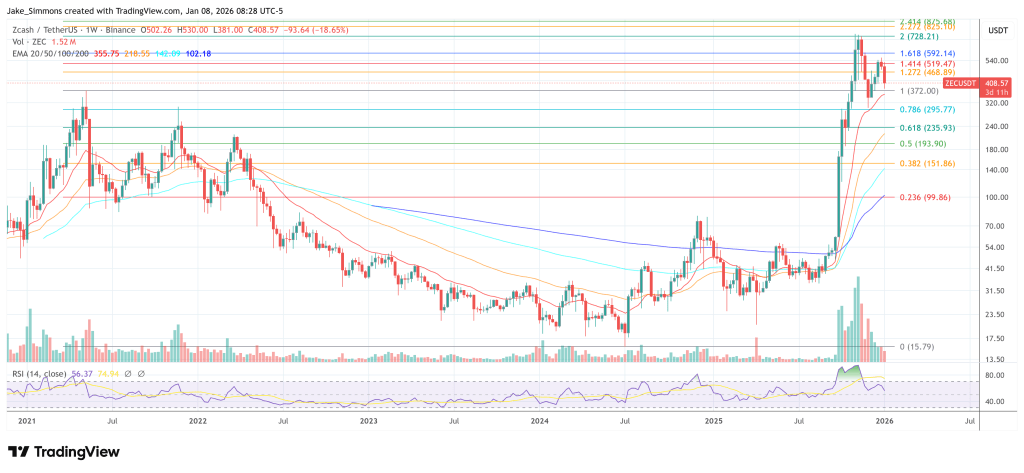
На момент публикации цена ZEC сильно пострадала от драмы, торгуясь на уровне $408.57.