xMoney Appoints Raoul Pal as Strategic Advisor to Support the Next Phase of Global Payments

TheNewsCryptoОпубликовано 2026-02-03Обновлено 2026-02-03

Введение

xMoney, a provider of compliant payment infrastructure bridging traditional and digital finance, has appointed globally respected investor and macro economist Raoul Pal as a Strategic Advisor. Pal, founder of Real Vision and Global Macro Investor (GMI), brings decades of financial market expertise from roles at Goldman Sachs and GLG Partners. His appointment supports xMoney’s mission to build scalable, regulated payment rails amid the global shift toward digital assets and stablecoins. xMoney emphasizes a regional-first strategy, building within Europe’s strict regulatory environment to ensure compliance from the outset. Pal believes the future of crypto lies in seamless, invisible payments, and will advise on long-term strategy and market evolution. CEO Gregorious Siourounis stated that this approach provides a structural advantage as digital assets enter mainstream finance. The company aims to enable seamless cross-border transactions across currencies and technologies.

Vaduz, Liechtenstein, February 3rd, 2026, Chainwire

A globally respected investor and founder of Real Vision brings decades of financial market insight to xMoney’s leadership team

xMoney, a leading provider of compliant payment infrastructure bridging traditional finance and digital assets, today announced that Raoul Pal has joined the company as a Strategic Advisor.

Raoul Pal is one of the most widely respected macro thinkers of his generation. An investor, entrepreneur, and financial commentator, he has spent decades analyzing how money moves, how markets evolve, and how technological shifts reshape global financial systems. His appointment comes at a pivotal moment, as global payments transition toward regulated digital rails, stablecoins, and on-chain settlement.

With Raoul’s strategic guidance, xMoney aims to further strengthen its position at the intersection of payments, regulation, and digital assets – building infrastructure that enables seamless value transfer across traditional currencies, cryptocurrencies, and stablecoins.

A Career Spanning Global Finance and Digital Assets

Raoul began his career in traditional finance, holding senior roles at Goldman Sachs, where he led hedge fund sales for equities and derivatives in Europe, and later at GLG Partners, where he co-managed a global macro fund alongside some of the world’s most respected hedge fund managers.

In 2005, he founded Global Macro Investor (GMI), which has since become a trusted research platform for hedge funds, family offices, pension funds, sovereign wealth funds, registered investment advisors, and high-net-worth investors worldwide. GMI is widely recognized for its independent macro research and strong long-term performance track record.

Raoul co-founded Real Vision in 2014, transforming financial media by making institutional-grade market intelligence accessible to a global audience. What began as a video-first platform evolved into a global financial knowledge network with millions of users across nearly every country.

The new xMoney advisor is also the co-founder of Exponential Age Asset Management (EXPAAM), an investment firm built specifically for the digital asset economy. Its flagship fund, the Exponential Age Digital Asset Fund, provides curated exposure to top crypto hedge funds by combining macroeconomic frameworks with deep digital asset research.

Supporting the Future of Payments

Raoul’s long-standing belief is that the world is experiencing a structural shift in money, technology, and market infrastructure – not a temporary trend. Payments, in particular, are undergoing one of the most significant transformations in decades.

​​Unlike many payment platforms that expand globally first and retrofit compliance later, xMoney has taken a regional-first approach, building its infrastructure within Europe, one of the most highly regulated financial environments in the world. This strategy enables xMoney to meet stringent regulatory standards from day one, while creating a scalable foundation for global expansion aligned with frameworks such as MiCA.

“Crypto only fulfills its promise when it disappears into the background,” said Raoul Pal. “The real winners will be the platforms that make global payments simple, compliant, and invisible. That’s what excites me the most about xMoney.”

As Strategic Advisor, Raoul will work closely with xMoney’s leadership team, focusing on long-term strategy, market structure, and anticipating how global money movement will evolve as regulated stablecoins, compliant on-chain settlement, and hybrid payment models become foundational financial infrastructure.

“We’re building payment rails for the future, starting in the most regulated markets first,” said Gregorious Siourounis, Co-Founder & CEO of xMoney. “That discipline gives us a structural advantage as digital assets move into mainstream finance. Raoul’s depth of experience, macro insight, and clarity of thought reinforce our belief that long-term winners in payments will be compliant, scalable, and globally interoperable.”

The appointment underscores xMoney’s commitment to building a compliant, scalable payment infrastructure that bridges traditional finance and Web3, enabling businesses and consumers to transact seamlessly across borders, currencies, and technologies.

About xMoney

xMoney is a pioneering payments company with strategic European licenses, focused on building a seamless, secure, and future-ready payments ecosystem. By combining cutting-edge technology, strong regulatory compliance, and a broad product suite spanning traditional and digital assets, xMoney bridges traditional finance and next-generation payment rails.

Website: www.xmoney.com

Contact

Marketing Lead
Rus Alex
xMoney
[email protected]

Связанные с этим вопросы

QWho has xMoney appointed as a Strategic Advisor, and what is his background?

AxMoney has appointed Raoul Pal as a Strategic Advisor. He is a globally respected investor, entrepreneur, and financial commentator. He began his career at Goldman Sachs, co-founded Real Vision, and is the co-founder of Exponential Age Asset Management (EXPAAM).

QWhat is the core strategic approach of xMoney in building its payment infrastructure?

AxMoney has taken a regional-first approach, building its infrastructure within Europe, one of the world's most highly regulated financial environments. This allows them to meet stringent regulatory standards from the start and create a scalable foundation for global expansion.

QAccording to Raoul Pal, what is the key to crypto fulfilling its promise in the payments space?

ARaoul Pal stated, 'Crypto only fulfills its promise when it disappears into the background. The real winners will be the platforms that make global payments simple, compliant, and invisible.'

QWhat are the key areas Raoul Pal will focus on in his advisory role at xMoney?

AAs a Strategic Advisor, Raoul Pal will focus on long-term strategy, market structure, and anticipating how global money movement will evolve with the adoption of regulated stablecoins, compliant on-chain settlement, and hybrid payment models.

QWhat is the name of the flagship fund from Raoul Pal's firm, Exponential Age Asset Management (EXPAAM)?

AThe flagship fund from Exponential Age Asset Management (EXPAAM) is the Exponential Age Digital Asset Fund.

Похожее

In-Depth Report on the On-Chain Lending Market: When Off-Chain Credit Meets On-Chain Liquidation

The on-chain lending market has evolved from a peripheral DeFi niche into core financial infrastructure. As of early 2026, total value locked (TVL) in on-chain lending protocols has reached $64.3 billion, accounting for 53.54% of total DeFi TVL, making it the largest and most mature vertical within decentralized finance. Aave dominates the sector with approximately $32.9 billion in TVL, commanding nearly half of the market—a leadership position that is unlikely to be challenged in the foreseeable future. However, the path of on-chain lending forward is not without risk. Liquidation cascades, credit defaults, and cross-chain vulnerabilities remain systemic threats hanging over the industry. At the same time, a deeper structural transformation is underway: on-chain lending is shifting from a “leverage tool for crypto-native users” to a “compliant gateway for institutional capital”. The scale of RWA (Real World Asset) lending has surpassed $18.5 billion, with U.S. Treasuries and government securities increasingly serving as core collateral. Institutional capital inflows are reshaping both the user base and risk appetite of the sector. This report systematically analyzes the evolution of on-chain lending definitions, competitive dynamics, core risks, and future trends, providing a comprehensive industry outlook for investors and trade practitioners. Key findings suggest that the “one dominant player with several strong challengers” structure will persist in the short term, while fixed-rate lending, compliant collateral, and institutional credit underwriting will define the next phase of competition. For investors focused on DeFi infrastructure, three key opportunity tracks stand out, namely, the Aave ecosystem (Morpho, Spark), RWA lending protocols (Ondo, Maple) and fixed-rate innovation (Notional, Pendle).

HTX Learn26 мин. назад

In-Depth Report on the On-Chain Lending Market: When Off-Chain Credit Meets On-Chain Liquidation

HTX Learn26 мин. назад

Fu Peng's First Public Speech in 2026: What Exactly Are Crypto Assets? Why Did I Join the Crypto Asset Industry?

Fu Peng, a renowned macroeconomist and now Chief Economist at New火 Group, delivered his first public speech of 2026 at the Hong Kong Web3 Festival. He explained his perspective on crypto assets and why he joined the industry, framing it within the context of macroeconomic trends and financial evolution. Fu emphasized that crypto assets are transitioning from an early, belief-driven phase to a mature, institutionally integrated asset class. He drew parallels to the 1970s-80s, when technological advances (like computing) revolutionized traditional finance, leading to the rise of FICC (Fixed Income, Currencies, and Commodities). Similarly, current advancements in AI, data, and blockchain are reshaping finance, with crypto assets becoming part of a new "FICC + C" (C for Crypto) framework. He noted that institutional capital, including traditional hedge funds, avoided early crypto due to its speculative nature but are now engaging as regulatory clarity emerges (e.g., stablecoin laws, CFTC classifying crypto as a commodity). Fu predicted that 2025-2026 marks a turning point where crypto becomes a standardized, financially viable asset for diversified portfolios, akin to commodities or derivatives in traditional finance. Fu defined Bitcoin not as "digital gold" in a simplistic sense but as a value-preserving, financially tradable asset. He highlighted that crypto's future lies in regulated, institutional adoption, moving away from retail-dominated trading. His entry into crypto signals this maturation, where traditional finance integrates crypto into mainstream asset management.

marsbit1 ч. назад

Fu Peng's First Public Speech in 2026: What Exactly Are Crypto Assets? Why Did I Join the Crypto Asset Industry?

marsbit1 ч. назад

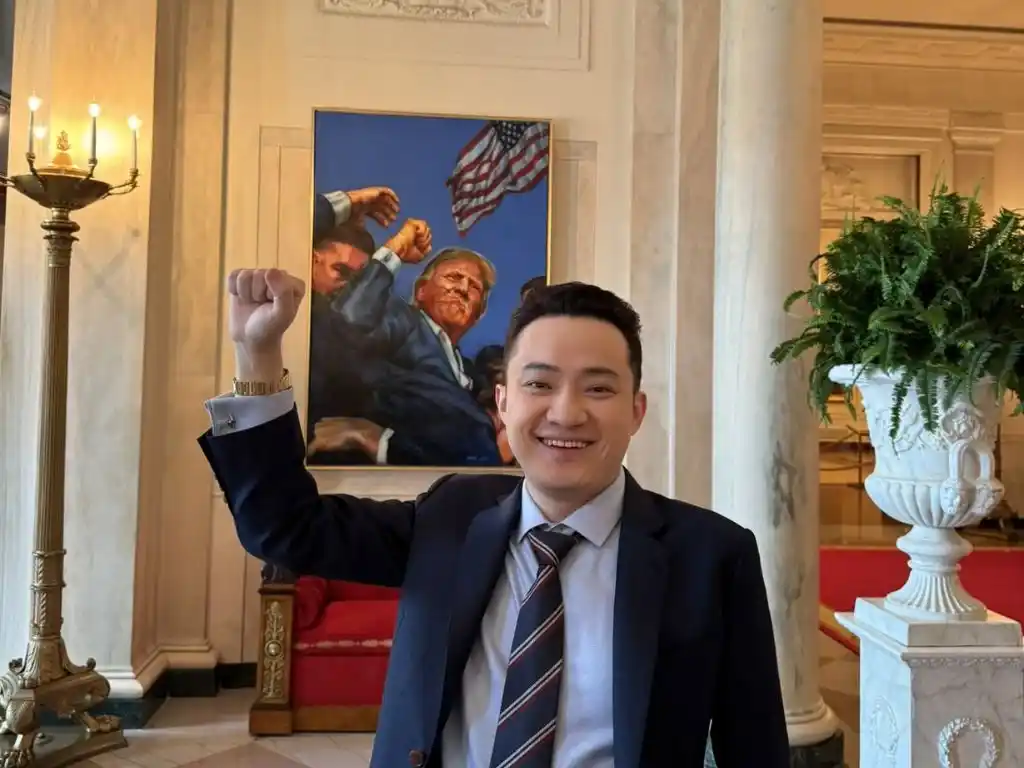
Justin Sun Sues Trump Family: What $75 Million Bought Was Only a Blacklist

Justin Sun, founder of Tron, has filed a lawsuit in federal court against World Liberty Financial (WLF), alleging he was made the "primary target of a fraudulent scheme" after investing $75 million. Sun claims the investment secured him an advisor title and WLFI tokens, which were later frozen by WLF, causing "hundreds of millions in losses." The dispute began in late 2024 when Sun's investment helped revive WLF's struggling token sale, which ultimately raised $550 million. Shortly after, the SEC dropped its lawsuit against Sun following Donald Trump's inauguration. However, relations soured when Sun refused WLF's demands for additional funding. In August 2025, WLF added a "blacklist" function to its smart contract, allowing it to unilaterally freeze tokens. Sun's holdings, worth approximately $107 million, were frozen, and he was threatened with token destruction. The lawsuit highlights WLF's structure, which directs 75% of token sale profits to the Trump family, who had earned $1 billion by December 2025. WLF's CEO is Zach Witkoff, son of U.S. Middle East envoy Steve Witkoff. The project faces scrutiny for opaque operations, including a controversial loan arrangement on the Dolomite platform, co-founded by a WLF advisor. Despite Sun's history with the SEC, the case underscores centralization risks within DeFi, as WLF controls governance and holds powers to freeze assets arbitrarily. Sun's tokens remain frozen as legal proceedings begin.

marsbit1 ч. назад

Justin Sun Sues Trump Family: What $75 Million Bought Was Only a Blacklist

marsbit1 ч. назад

Торговля

Спот
Фьючерсы
活动图片