Three CZs, Three Different Stories

marsbitОпубликовано 2026-01-09Обновлено 2026-01-09

Введение

Three individuals share the initials "CZ" but represent vastly different paths in the era of globalization. The first, Chen Zhi, epitomized the lawless, gray-area entrepreneurship of the mid-2010s. Operating from Cambodia, he built a transnational fraud network, generating up to $30 million daily through scams and forced labor. His empire, built on exploiting regulatory gaps and weak international cooperation, collapsed in 2026 when he was arrested and repatriated to China, signaling the end of an era of unregulated profiteering. The second, Changpeng Zhao (CZ), founder of Binance, represents the tech-entrepreneurial era. A technologist at heart, he built the world's largest cryptocurrency exchange through product excellence and innovation. Unlike Chen Zhi, his venture created value but eventually faced escalating regulatory scrutiny. In 2023, Zhao and Binance pleaded guilty to U.S. charges, resulting in a $4.3 billion fine and his resignation as CEO. His story illustrates that technological innovation must ultimately adapt to regulatory frameworks to survive. The third, CZ Chen, a Millennial and COO of AI firm Manus, represents a new model of success in the AI age. As a skilled professional, she achieved rapid wealth and influence by joining the right company at the right time. Manus, hailed as the first通用 AI Agent, was acquired by Meta in 2025. However, the deal faced review by Chinese authorities, highlighting that her success is now intertwined with geopolitical tensio...

Author: Yizhiyu CoolFish

Recently, group members have been discussing three "CZs"—Binance founder Changpeng Zhao, Manus COO CZ Chen, and the recently arrested and repatriated boss of the Prince Group, Chen Zhi.

If Bao in "Blossoms Shanghai" represents a glamorous transformation in 1990s Shanghai amid era opportunities, then the following stories are three different scripts offered by three CZs choosing different paths in the wave of globalization.

Three people, three stories, spanning nearly half a century.....

I. Chen Zhi and the Era of the Unruly—The Myth of Rapid Wealth in the Gray Zone

In the mid-2010s, Chinese capital was eager to go global. It was a special moment: on one hand, China's economic strength continued to grow, foreign exchange reserves were ample, and domestic companies and investment institutions were increasingly willing to expand globally, urgently seeking new growth points in overseas markets; on the other hand, the regulatory framework for global cross-border capital flows lagged behind the pace of market changes, with entry rules and review standards in some countries still being adjusted and improved, creating a certain flexibility due to regulatory differences across markets.

There were many gray areas, and many opportunities.

Chen Zhi (abbreviated as CZ) rose against this backdrop. This 38-year-old businessman built a transnational fraud network, with daily revenues once reaching $30 million. This number is enough to make anyone's eyes widen. But more importantly, this number represents an unconstrained gray area.

In Chen Zhi's story, we see unruly entrepreneurship going global, but in the wrong direction—very wrong. He did not create value through product innovation, technological advancement, or management optimization. He accumulated wealth through direct, aggressive, and even illegal means.

He established a "fraud center" in Cambodia, using forced labor to conduct online fraud targeting victims worldwide. He attempted to launder money through financial tools, using cryptocurrencies, cross-border payments, and multi-country registrations to evade regulation.

Why could this model exist?

The answer is simple: because no one could effectively stop it. In the mid-2010s, global regulation of transnational cybercrime was not as tight as it is now. Law enforcement cooperation between countries was not close enough. A person with the courage, resources, and ability to reduce the probability of being regulated and held accountable through lobbying, regulatory favoritism, and jurisdictional immunity could survive in the gaps of the law—and even thrive.

But all this came to an abrupt end in October 2025. U.S. prosecutors filed charges against Chen Zhi. In January 2026, he was arrested in Cambodia and subsequently repatriated to China. His empire collapsed overnight. Interested friends can read my other article: "‘Even a Penny Falling from the Sky Is His’—Uncovering the Crimes and Downfall of Cambodia’s ‘Prince’ Chen Zhi."

What does Chen Zhi represent?

He represents an era that has passed. The characteristics of that era were: regulatory vacuums, numerous gray areas, and the possibility of rapid wealth accumulation. But the fate of this era is: once global regulation begins to coordinate, once countries strengthen law enforcement cooperation, once the international order begins to rebuild, this model collapses completely.

Chen Zhi's arrest is not just the tragedy of one person but the end of a gray era.

II. Changpeng Zhao and the Era of Technological Entrepreneurship—The Game of Innovation and Compliance

If Chen Zhi represents the era of gray wealth, then Changpeng Zhao represents the era of technological entrepreneurship.

This is a completely different story.

Changpeng Zhao was born in 1977 in Lianyungang, Jiangsu. His upbringing was typical: he moved to Canada at age 12, studied computer science at McGill University, and after graduation worked at Bloomberg and the Tokyo Stock Exchange, among others, developing technology and financial software.

He is a technologist, a programmer who understands finance.

This background is important. Unlike Chen Zhi, Zhao did not create value by evading regulation but by technological innovation that changed the entire industry's ecosystem.

In 2013, Zhao entered the cryptocurrency field, working at Blockchain.info and later serving as CTO of OKCoin.

Notably, in 2014, he sold his Shanghai property and invested the proceeds in Bitcoin.

After leaving OKCoin in less than a year, he founded his second company, Bijie Technology, but this was not his greatest achievement.

In 2017, Zhao founded Binance. This was a critical moment. 2017 was a big year for cryptocurrencies, with Bitcoin rising from $3,000 to nearly $20,000, and the entire crypto community was euphoric. Against this backdrop, Zhao launched Binance—an efficient, user-friendly cryptocurrency exchange.

Binance's success was astonishing. In less than eight months, it became the world's largest cryptocurrency exchange, capable of processing about 1.4 million orders per second.

Zhao himself became a legendary figure. In February 2018, Forbes magazine listed him as the "richest person in cryptocurrency." By May 2018, his net worth exceeded $1.39 billion.

But there is a key difference: Zhao's success was built on product innovation. Binance succeeded because it offered a better user experience, higher trading efficiency, and more currency pairs.

But Zhao also faced a problem: catching up. Although Binance changed the exchange ecosystem through product innovation, it did not obtain formal financial licenses in any country. This might have been acceptable in 2017 and 2018, but over time, global regulators began to focus on cryptocurrency exchanges.

Zhao faced a choice: either resist regulation or compromise and surrender to it. He ultimately chose the latter.

In November 2023, Zhao and Binance pleaded guilty to the U.S. Department of Justice, admitting violations of the Bank Secrecy Act and anti-money laundering regulations. Binance was fined $4.3 billion, and Zhao stepped down as CEO.

This is an interesting contrast. When faced with regulatory pressure, Chen Zhi chose to flee and resist, ultimately being arrested. Zhao chose to plead guilty and survived. Although Binance was severely hit, it still exists and has strengthened cooperation with U.S. regulators. In the long run, the market will become more standardized, and Binance remains the world's largest cryptocurrency exchange.

What does Changpeng Zhao represent?

He represents the typical characteristics of the technological entrepreneurship era. In this era, a entrepreneur with a technical background and product innovation capabilities can rise rapidly by changing the industry's ecosystem. But this era is also characterized by gradual regulatory catch-up. Innovators can temporarily bypass regulation but must eventually face it.

The success of the technological entrepreneurship era lies not in resisting regulation but in adapting to it. The true winners are those enterprises and entrepreneurs who can continue to innovate within the regulatory framework.

III. CZ Chen and the AI Era—New Possibilities for Leapfrogging

If Chen Zhi represents the unruly era and Changpeng Zhao represents the technological entrepreneurship era, then CZ Chen represents the great leap forward in the wave of AI.

This is a brand-new story.

CZ Chen is a post-90s generation. She is not an entrepreneur but a professional manager. She graduated with a bachelor's degree from Shanghai University of Finance and Economics and a master's degree from Columbia University. Her career trajectory is also perfect: she worked at Vanke, MM Capital (an investment bank), and finally joined Manus AI as Chief Operating Officer.

CZ Chen did not create wealth by founding a company but achieved leapfrogging through precise career choices. She joined the right company at the right time and ultimately reaped huge rewards.

The story behind Manus and its founder Xiao Hong is also interesting (for details, see my other article: "Xiao Hong: From Small-Town Youth to Manus CEO, the Long-Termism of a Bitcoin Believer").

In March 2025, Manus shocked the global tech circle, with media calling it the world's first general-purpose AI Agent. By December, Manus had achieved $100 million in annual recurring revenue (ARR), setting a record for the fastest startup to reach this milestone.
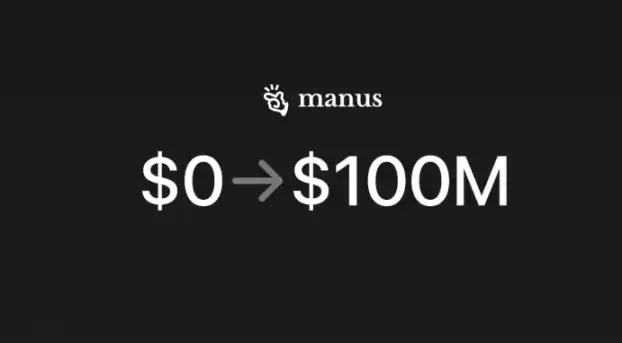
In the same month, Meta announced its acquisition of Manus. This was a huge success. As the company's COO, CZ Chen undoubtedly gained immense wealth and fame.

But the story is not over. On January 8, 2026, China's Ministry of Commerce stated that it would review Meta's acquisition of Manus to assess whether the transaction violates Chinese laws and regulations on technology export controls, imports and exports, and overseas investment.

CZ Chen suddenly seems to be facing uncertainty, but this uncertainty is entirely different from that faced by Chen Zhi or Changpeng Zhao.

Chen Zhi faced moral and legal judgment—his business model itself was illegal. Zhao faced compliance pressure—his business model needed to compromise with regulation.

CZ Chen faces geopolitical risk—her success itself is not problematic, but her success involves Sino-U.S. technological competition.

What does CZ Chen represent? She represents the new possibilities of the AI era. In this era, a well-educated, internationally minded professional elite can achieve rapid wealth leapfrogging by joining the right company and making the right choices at the right time.

In Conclusion

Times are changing, and so are the rules.

Three "CZs," three different lives, yet like three prisms, they refract three facets of the博弈 between individuals and power, technology, and national will in the wave of era development.

Some gamble on gray areas, some embrace regulatory pain, some ride the AI wave. The era's tickets are always being issued, but each era's ticket looks different.

If you can't adapt, you can only be out.

Связанные с этим вопросы

QWhat are the three different stories of the three 'CZ's mentioned in the article?

AThe three stories are: 1) Chen Zhi, who represents the era of gray-area wealth accumulation through illegal means like transnational fraud networks; 2) Zhao Changpeng (CZ), who represents the technology entrepreneurship era, building innovative products like Binance while navigating regulatory challenges; and 3) CZ Chen, who represents the AI era, achieving rapid wealth and career growth by joining the right company (Manus AI) at the right time, though facing geopolitical risks.

QHow did Chen Zhi's business model operate and why did it collapse?

AChen Zhi operated a transnational fraud network, establishing a 'fraud center' in Cambodia that used forced labor to conduct online scams targeting global victims. He utilized financial tools like cryptocurrencies, cross-border payments, and multi-country registrations to evade regulation. His model collapsed in late 2025 when U.S. prosecutors filed charges against him, leading to his arrest in Cambodia and repatriation to China in January 2026, marking the end of an era with regulatory gaps.

QWhat was Zhao Changpeng's background and how did Binance achieve success?

AZhao Changpeng (CZ) was born in 1977 in China, moved to Canada at age 12, studied computer science at McGill University, and worked in tech and financial software development at companies like Bloomberg and the Tokyo Stock Exchange. He founded Binance in 2017 during the cryptocurrency boom. Binance succeeded by offering a user-friendly, efficient cryptocurrency exchange with high transaction capacity (handling 1.4 million orders per second), quickly becoming the world's largest exchange through product excellence and innovation.

QWhat challenges did Zhao Changpeng face with regulators, and how did he resolve them?

AZhao Changpeng and Binance faced increasing regulatory scrutiny over time, particularly for operating without formal financial licenses in many countries. In November 2023, they pleaded guilty to U.S. Department of Justice charges for violating the Bank Secrecy Act and anti-money laundering regulations. Binance was fined $4.3 billion, and Zhao stepped down as CEO. Unlike Chen Zhi, who resisted regulators, Zhao chose to cooperate and adapt, allowing Binance to continue operating within a more regulated framework.

QWho is CZ Chen and what risks does she face in the AI era?

ACZ Chen is a post-90s professional who graduated from Shanghai University of Finance and Economics and Columbia University. She worked at companies like Vanke and MM Capital before becoming COO of Manus AI, which developed a groundbreaking AI Agent and was acquired by Meta in December 2025. She represents the AI era's potential for rapid career advancement through strategic choices. However, she faces geopolitical risks, as China's Ministry of Commerce announced an investigation into Meta's acquisition of Manus for potential violations of technology export controls and regulations, reflecting broader Sino-U.S. tech competition tensions.

Похожее

Биткоин: Почему защита уровня $59 тыс. может стать самым серьёзным испытанием для BTC на сегодняшний день

Биткоин (BTC) восстанавливается после месяцев снижения и в настоящее время торгуется около $64 000, отскочив от минимума $57 800 1 июля. Ключевой уровень поддержки находится на отметке $59 000, где сконцентрирована себестоимость позиций для более чем половины всех трейдеров. Отскок от этого уровня рассматривается как защита зоны держателями, однако аналитики указывают, что это может не являться окончательным дном рынка, поскольку поведение краткосрочных держателей остается неоднозначным. Долгосрочные держатели (LTH) в настоящее время не проявляют активных продаж, что подтверждается метрикой Binary CDD, упавшей до нуля. Это является конструктивным сигналом для биткоина. Коэффициент SOPR, измеряющий доходность реализованного объема, составляет 0,89 и медленно растет. Исторически подобные уровни в апреле 2020 и сентябре 2023 годов предшествовали значительным ралли. Устойчивый спрос со стороны инвесторов США через спотовые биткоин-ETF является еще одним ключевым фактором для продолжения роста. В июле чистый приток средств в эти фонды оставался положительным. Для закрепления восходящего тренда биткоину необходимо преодолеть сопротивление в районе $64 336.

ambcrypto48 мин. назад

Биткоин: Почему защита уровня $59 тыс. может стать самым серьёзным испытанием для BTC на сегодняшний день

ambcrypto48 мин. назад

Еженедельный отчет о финансировании | Crypto.com привлекает 400 миллионов долларов, CeFi и стабильные монеты продолжают привлекать капитал

**Краткий обзор финансирования на неделю 13-19 июля 2026 года** Неделя была отмечена значительной концентрацией капитала в криптоиндустрии. Общая сумма привлеченных средств составила более 812 миллионов долларов в рамках 17 сделок. Наибольшие инвестиции получили секторы централизованных финансов (CeFi), стейблкоинов и инфраструктуры. Ключевые события: * **Crypto.com** привлек 400 млн долларов от Citadel Securities, достигнута оценка в 200 миллиардов долларов. * **Alpaca** (API-брокер) собрала 135 млн долларов. * Значительные раунды также состоялись у **Flex** (70 млн долларов, кросс-бордерный банкинг на стейблкоинах), **Velocity** (38 млн долларов, платежная инфраструктура) и **Pact Labs** (7 млн долларов от Tether для интеграции USDT в зарплатные системы). В области **инфраструктуры** выделились: * **ADI Chain** (500 млн долларов на развитие инфраструктуры для стейблкоинов и расчетов). * **Cyclops** (20 млн долларов, платежная инфраструктура на стейблкоинах). * **Glacis Labs** (6.8 млн долларов, многоцепочечный клиринг). В секторе **DeFi** и **Web3+AI** суммы были скромнее, включая 500 млн долларов для **DGrid AI** и 400 млн долларов для **Quote Trade**. Параллельно продолжился сильный приток капитала в **AI и робототехнику**: * **Fireworks** (AI-облачные сервисы) привлекла 15 млрд долларов. * Венчур **Walden Robotics** (гуманоидные роботы) и китайская компания **Climber Dynamics** (также гуманоидные роботы) привлекли 3 млрд и почти 2 млрд долларов соответственно. Также на неделе были отмечены несколько значимых **приобретений**, включая покупку японским SBI Holdings сингапурской биржи Coinhako.

marsbit1 ч. назад

Еженедельный отчет о финансировании | Crypto.com привлекает 400 миллионов долларов, CeFi и стабильные монеты продолжают привлекать капитал

marsbit1 ч. назад

Самое мягкое медвежье дно? Медведи BTC уходят, а ARK и Bitwise единогласно смотрят вверх

20 июля 2026 года рынок криптовалют демонстрирует смешанные сигналы. BTC колеблется около $75 000, ETH откатился до $1900, а альткойны остаются вялыми. Индекс страха находится на уровне 35, указывая на преобладание паники. Тем не менее, появляются признаки потенциального дна. По данным Polymarket, существует 33% вероятность падения BTC ниже $50 000 к концу года. ARK Invest отмечает, что, несмотря на техническую слабость, наблюдается рост доли долгосрочных держателей и поставок в убытке — возможные сигналы истощения продавцов. Bitwise называет текущий спад «структурно самым мягким медвежьим рынком» для BTC, подчеркивая, что минимумы циклов последовательно повышаются благодаря институциональному принятию. Аналитики технического анализа предполагают, что важная зона поддержки сформировалась между $59 000 и $70 000. Точка зрения разнится: одни считают, что низ волны C, возможно, уже сформирован около $57 000, другие предупреждают, что неспособность преодолеть $66 000 повышает риск локального максимума. Значительный торговец Doctor Profit сообщил о закрытии всех коротких позиций и начале поэтапного накопления биткойнов в диапазоне $54 000–$64 000, ссылаясь на структурные улучшения, такие как прогресс в регулировании. Общий консенсус сводится к тому, что, несмотря на сохраняющиеся макроэкономические риски и волатильность, текущая коррекция может быть более умеренной, а институциональное накопление указывает на формирование долгосрочной основы для восстановления.

Foresight News1 ч. назад

Самое мягкое медвежье дно? Медведи BTC уходят, а ARK и Bitwise единогласно смотрят вверх

Foresight News1 ч. назад

Эволюция порядка в эпоху ИИ и Web3: Конкурентные аспекты m&W и пути исследования

Человечество переживает переход от «повышения производительности» к «трансформации производственных отношений». С развитием AI Agent (интеллектуальных агентов) высвобождается беспрецедентный кремниевый производственный потенциал. В будущем все больше задач будут выполнять не отдельные индивиды, а совместные сети людей, AI Agent и мультиагентные системы. Ключевой вопрос: как установить доверительные отношения между незнакомыми людьми и AI Agent для долгосрочного сотрудничества? Как оценивать сложный вклад? Как создать стабильные, справедливые и устойчивые механизмы распределения стоимости между разными субъектами? Web3 заложил основу для децентрализованной экономики, изучая идентичность, активы, организацию и инфраструктуру. Однако в эпоху AI Agent простого решения проблем владения активами и транзакций уже недостаточно. Будущим интеллектуальным сетям нужна новая система порядка, охватывающая идентичность, кредит, сотрудничество и экономические стимулы. m&WDAO, через свою концепцию EcoFi (Экологический Финансы / Экологический Порядок), исследует модель нового порядка для экономики совместной деятельности человека и машины. Она стремится соединить когнитивные активы человека, исполнительные способности AI Agent и экономические механизмы на блокчейне. Конкуренция m&W разворачивается в измерении построения инфраструктуры для будущих интеллектуальных сетей: как в них генерируется доверие, как происходит сотрудничество и как стоимость постоянно фиксируется. В статье анализируются существующие подходы, такие как Colony (коллаборация и управление в DAO), SingularityNET (обмен возможностями ИИ), Gitcoin Passport/Verax (инфраструктура идентичности и репутации), Farcaster и Lens Protocol (открытые социальные сети). Отмечается, что в то время как эти проекты решают важные частные задачи, m&W фокусируется на более фундаментальном вопросе построения доверия и механизмов сотрудничества между людьми и AI Agent. Эволюционный путь m&W представлен в три этапа: 1. **m&W 1.0: Кредитный якорь.** Создание сети высококачественных участников (Builders) через строгий отбор ("столкновение протонов") и превращение их вклада в невозвращаемые кредитные активы (SBT - Soulbound Token). 2. **m&W 2.0: Экономика сотрудничества.** Протокол EcoFi трансформирует кредитные активы в производительность, создавая замкнутую экономическую петлю для проверки, оценки и вознаграждения сложного, неструктурированного вклада с использованием гибридной системы проверки (ИИ + человек + арбитражная сеть). 3. **m&W 3.0: Интеллектуальный порядок.** Создание экономики AI Agent, где долгосрочные проверенные заслуги человека служат кредитной основой для его "цифрового двойника" (AI Agent), что позволяет агентам участвовать в экономической сети как доверенным субъектам. Проект сталкивается с вызовами, включая сложный "холодный старт" из-за высоких требований к участникам, необходимость баланса между автоматизацией ИИ и человеческим суждением, а также построение устойчивой токеномики ($CMW). В заключение, миссия m&W заключается не в создании еще одного рынка AI-услуг, а в исследовании новых производственных отношений для эпохи ИИ. Цель - соединить кредит, основанный на долгосрочном вкладе человека, способности к сотрудничеству AI Agent, механизмы блокчейна и экономические стимулы, чтобы заложить основу для надежного, справедливого и устойчивого порядка в будущих сетях совместной деятельности человека и машины.

链捕手1 ч. назад

Эволюция порядка в эпоху ИИ и Web3: Конкурентные аспекты m&W и пути исследования

链捕手1 ч. назад

Китай завоевывает все 42 балла на IMO 2026, Шанхайская средняя школа выметает золотые медали, GPT-5.6 повторяет момент AlphaGO

Поздравляем команду Китая с завоеванием чемпионского титула на 67-й Международной математической олимпиаде (IMO 2026) в Шанхае! Китайская команда, все участники которой получили золотые медали, набрала 232 балла, опередив занявшую второе место команду США на 25 очков. Трое китайских школьников — Дэн Лэянь и Чжан Болунь из Шанхайской средней школы, а также Лю Чэ из Второй средней школы при Восточно-Китайском педагогическом университете — получили золотые медали с идеальным результатом в 42 балла. Это уже 26-я победа Китая в общем зачёте с 1989 года. Впервые IMO проводилась в средней школе — Шанхайской средней школе, чьи ученики в сумме завоевали уже 20 золотых медалей IMO. Особое внимание в этом году привлекло участие ИИ. Сообщается, что GPT-5.6 Pro впервые с первой попытки решил все шесть задач IMO 2026, продемонстрировав потенциал перехода от поиска методом проб и ошибок к точному и безошибочному решению, что ранее считалось исключительной чертой человеческого интеллекта.

marsbit2 ч. назад

Китай завоевывает все 42 балла на IMO 2026, Шанхайская средняя школа выметает золотые медали, GPT-5.6 повторяет момент AlphaGO

marsbit2 ч. назад

Торговля

Спот
活动图片