SKR Airdrop Drops Thirty Thousand Dollars, But Is It a Mobile Ecosystem or a Staking Prison?

比推Опубликовано 2026-01-22Обновлено 2026-01-22

Введение

Solana Mobile distributed nearly 2 billion SKR tokens (20% of total supply) to users and developers of its Seeker smartphone, with airdrop values reaching up to $30,000 for top-tier recipients. The token launched on multiple exchanges and saw a 350% price surge shortly after. The Seeker phone, marketed as a Web3 device with built-in security and a dApp store, has over 150,000 orders—largely driven by speculative airdrop expectations rather than utility. SKR’s tokenomics feature high initial inflation (10% annually) and a 23.9% staking APY to incentivize locking supply—over 38% of tokens are already staked. Unstaking requires a 48-hour cooldown, with mechanisms that reset the timer on additional redemption attempts. While the project promotes governance and ecosystem participation, current use cases for SKR remain limited and lack fundamental utility. Partnerships offer minor perks but no major token burn or essential spending scenarios. The value largely depends on market speculation and staking yields—raising sustainability concerns unless stronger adoption occurs.

Author: Sanqing, Foresight News

Original Title: Over Half the Circulating Supply, 4x Increase at Launch, SKR's "Open Scheme"


On January 21st, Solana Mobile officially distributed the ecosystem token SKR airdrop to Seeker phone users and ecosystem developers. This airdrop distributed nearly 2 billion tokens, accounting for approximately 20% of the total supply (10 billion tokens). Simultaneously, SKR tokens began trading on centralized exchanges like Coinbase, Bitget, Bybit, and on Solana's on-chain DEXs. The next day, Hyperliquid listed SKR perpetual contracts with up to 3x leverage, and Bithumb announced it would list a SKR/KRW trading pair.

The value of this airdrop was significant. At the current price of approximately $0.04 USDT, some developers and the highest-tier users received 750,000 tokens, worth about $30,000 USD; subsequent tiers received 125,000 tokens (approx. $5,000 USD), 40,000 tokens (approx. $1,600 USD), 10,000 tokens (approx. $400 USD), and 5,000 tokens (approx. $200 USD) respectively.

According to Bitget market data, the price of SKR experienced a brief consolidation after listing, then began to rise around 2:00 AM today, reaching a high of $0.061552 USDT. Its market capitalization once exceeded $300 million, with a 24-hour increase of over 350%.

Hardware Narrative: Buying Electronics for the "Golden Shovel"

The Solana Seeker is the second-generation Web3 smartphone following the Saga. Its goal is to break the current centralized landscape of the mobile app market by building an open mobile platform.

The device integrates a hardware-level security mechanism called "Seed Vault" and features a zero-fee dApp store to lower the barrier for developers and ensure user asset security.

Currently, Seeker has officially disclosed over 150,000 pre-orders and activations. But we must ask honestly: Are these 150,000 users really buying it to use a Web3 phone?

The driving force behind the vast majority of orders stems from the wealth creation myth of the airdrops associated with the Saga phone. Users aren't buying a phone; they are buying an anticipated "golden shovel."

This airdrop mechanism confirms this: the highest-tier "Sovereign" users received 750,000 SKR, while the basic "Scout" tier received 5,000.

As a phone, it faces overwhelming competition from mainstream devices; as a mining machine, its payback period depends entirely on SKR's secondary market performance.

Token Model: Using "Staking" to Mask Lack of Utility

In terms of allocation, 30% of the tokens are allocated to airdrops (Season 1 distributed approx. 20%), 25% for ecosystem growth and partner incentives, 10% to the community treasury; the remainder is allocated to the Solana Mobile team (15%), Solana Labs (10%), and liquidity bootstrapping (10%).

The total supply of SKR tokens is fixed at 10 billion, with the current circulating supply being approximately 5.7 billion tokens. While "over half in circulation" appears very decentralized, this is actually a carefully designed "open scheme" by the project team.

How to prevent massive airdrop sell-offs? The answer is: force you to stake. According to SKR staking page data, the total amount of SKR staked has reached approximately 3.8 billion tokens.

SKR has a high initial inflation rate of 10% in the first year, decreasing by 25% each subsequent year until stabilizing at 2%. This means if you hold SKR without staking, your share will be diluted. To combat inflation, holders are forced to lock their tokens into the staking contract.

The current staking APY for SKR is approximately 23.9%, with rewards auto-compounding every 48 hours. Although unstaking requires a 48-hour cooldown period, this combination of high inflation + high yield has successfully locked a large amount of liquidity back on-chain.

If you have one batch of SKR in the 48-hour redemption cooldown period and you wish to initiate redemption for another batch, the system will forcibly combine the two batches and recalculate a new 48-hour cooldown period.

Ecosystem Status: Besides "Nesting Dolls," What Can SKR Do?

At the end of Season 1, Seeker claimed over 265 dApps were live, generating 9 million transactions and $2.6 billion in transaction volume. Furthermore, Season 2 offers multiple paths beyond staking for收益, including governance participation and application interaction.

However, this "governance utility" and "ecosystem participation" seem particularly weak at this stage.

Officially, holders can participate in dApp store rule-making and application review through staking. But for retail users, this governance right cannot be eaten nor does it generate cash flow for buybacks.

And at this current stage, Solana Mobile is the only active Guardian, making the current SKR staking more like handing money over to official custody.

Although Season 2 has launched multiple applications, the so-called empowerment is mostly forced linkage. Helium Mobile offered 3 months of free service in the US; Backpack offered up to $1000 in trading fee rebates; Parallel Colony offered early access to AI games; Amp Pay offered some card issuance rewards and point multipliers.

These benefits are nice, but they do not construct a rigid consumption scenario for SKR. There is currently no large-scale burn mechanism, nor are there core functions that require paying SKR to use. Users trading meme coins on Dev.fun or scanning whiskey on Baxus do not fundamentally rely on SKR itself.

The Seeker (Solana Mobile) team is using SKR's price pump effect and high APY staking to forcibly buy a "window of opportunity." During this window, as long as the price holds and the staking yield outpaces inflation, holders will obediently lock up their tokens.

But in the long run, if the Seeker ecosystem cannot produce a "killer app" that truly gives SKR an application scenario, when staking unlocks and inflation accumulates, SKR could face a sharp value correction. Currently, SKR knows how to market and pump, but it hasn't yet learned how to "land."

In conclusion, although SKR currently carries strong marketing colors, and its staking mechanism even seems slightly "sneaky" due to details like the cooldown reset. However, in this extremely realistic market environment, even the grandest technical vision often can't beat a consistently green candlestick chart. For participants, the coin that makes everyone money is the best coin for now.


Twitter:https://twitter.com/BitpushNewsCN

Bitpush TG Discussion Group:https://t.me/BitPushCommunity

Bitpush TG Subscription: https://t.me/bitpush

Original link:https://www.bitpush.news/articles/7605170

Связанные с этим вопросы

QWhat was the value of the SKR airdrop for the highest tier of users, and how many tokens did they receive?

AThe highest tier 'Sovereign' users received 750,000 SKR tokens, which were valued at approximately $30,000 USD at the time of the airdrop.

QWhat is the initial annual inflation rate for the SKR token, and what mechanism is used to encourage holders to counteract this inflation?

AThe initial annual inflation rate for SKR is 10%. To counteract this dilution, holders are incentivized to stake their tokens, which currently offers an APY of approximately 23.9%.

QAccording to the article, what is the primary reason users are purchasing the Solana Seeker phone, rather than its utility as a device?

AThe primary reason users are purchasing the Solana Seeker phone is not for its utility as a Web3 device, but as an expected 'golden shovel' due to the potential for high-value airdrops, following the precedent set by the previous Saga phone.

QWhat criticism does the article level against the current utility and 'empowerment' of the SKR token within its ecosystem?

AThe article criticizes that the current utility of SKR, such as governance rights and ecosystem participation, is largely superficial. It lacks rigid consumption scenarios, a large-scale burn mechanism, or core functionalities that require spending SKR, making the 'empowerment' feel forced and pale.

QWhat potential long-term risk does the article identify for SKR if the ecosystem fails to develop further?

AThe long-term risk identified is that if the Seeker ecosystem fails to produce a 'killer application' that creates a genuine use case for SKR, the token could face a sharp value correction once staking unlocks and inflation accumulates, as the current price is largely sustained by marketing and high staking yields.

Похожее

In-Depth Report on the On-Chain Lending Market: When Off-Chain Credit Meets On-Chain Liquidation

The on-chain lending market has evolved from a peripheral DeFi niche into core financial infrastructure. As of early 2026, total value locked (TVL) in on-chain lending protocols has reached $64.3 billion, accounting for 53.54% of total DeFi TVL, making it the largest and most mature vertical within decentralized finance. Aave dominates the sector with approximately $32.9 billion in TVL, commanding nearly half of the market—a leadership position that is unlikely to be challenged in the foreseeable future. However, the path of on-chain lending forward is not without risk. Liquidation cascades, credit defaults, and cross-chain vulnerabilities remain systemic threats hanging over the industry. At the same time, a deeper structural transformation is underway: on-chain lending is shifting from a “leverage tool for crypto-native users” to a “compliant gateway for institutional capital”. The scale of RWA (Real World Asset) lending has surpassed $18.5 billion, with U.S. Treasuries and government securities increasingly serving as core collateral. Institutional capital inflows are reshaping both the user base and risk appetite of the sector. This report systematically analyzes the evolution of on-chain lending definitions, competitive dynamics, core risks, and future trends, providing a comprehensive industry outlook for investors and trade practitioners. Key findings suggest that the “one dominant player with several strong challengers” structure will persist in the short term, while fixed-rate lending, compliant collateral, and institutional credit underwriting will define the next phase of competition. For investors focused on DeFi infrastructure, three key opportunity tracks stand out, namely, the Aave ecosystem (Morpho, Spark), RWA lending protocols (Ondo, Maple) and fixed-rate innovation (Notional, Pendle).

HTX Learn38 мин. назад

In-Depth Report on the On-Chain Lending Market: When Off-Chain Credit Meets On-Chain Liquidation

HTX Learn38 мин. назад

Fu Peng's First Public Speech in 2026: What Exactly Are Crypto Assets? Why Did I Join the Crypto Asset Industry?

Fu Peng, a renowned macroeconomist and now Chief Economist at New火 Group, delivered his first public speech of 2026 at the Hong Kong Web3 Festival. He explained his perspective on crypto assets and why he joined the industry, framing it within the context of macroeconomic trends and financial evolution. Fu emphasized that crypto assets are transitioning from an early, belief-driven phase to a mature, institutionally integrated asset class. He drew parallels to the 1970s-80s, when technological advances (like computing) revolutionized traditional finance, leading to the rise of FICC (Fixed Income, Currencies, and Commodities). Similarly, current advancements in AI, data, and blockchain are reshaping finance, with crypto assets becoming part of a new "FICC + C" (C for Crypto) framework. He noted that institutional capital, including traditional hedge funds, avoided early crypto due to its speculative nature but are now engaging as regulatory clarity emerges (e.g., stablecoin laws, CFTC classifying crypto as a commodity). Fu predicted that 2025-2026 marks a turning point where crypto becomes a standardized, financially viable asset for diversified portfolios, akin to commodities or derivatives in traditional finance. Fu defined Bitcoin not as "digital gold" in a simplistic sense but as a value-preserving, financially tradable asset. He highlighted that crypto's future lies in regulated, institutional adoption, moving away from retail-dominated trading. His entry into crypto signals this maturation, where traditional finance integrates crypto into mainstream asset management.

marsbit1 ч. назад

Fu Peng's First Public Speech in 2026: What Exactly Are Crypto Assets? Why Did I Join the Crypto Asset Industry?

marsbit1 ч. назад

Justin Sun Sues Trump Family: What $75 Million Bought Was Only a Blacklist

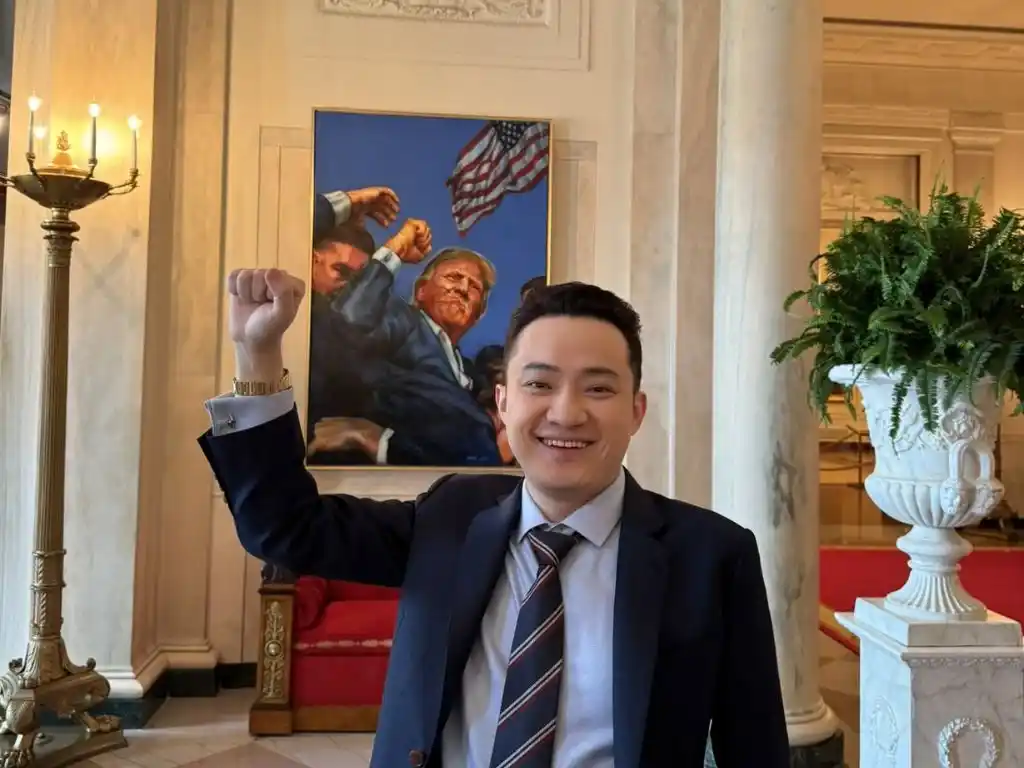
Justin Sun, founder of Tron, has filed a lawsuit in federal court against World Liberty Financial (WLF), alleging he was made the "primary target of a fraudulent scheme" after investing $75 million. Sun claims the investment secured him an advisor title and WLFI tokens, which were later frozen by WLF, causing "hundreds of millions in losses." The dispute began in late 2024 when Sun's investment helped revive WLF's struggling token sale, which ultimately raised $550 million. Shortly after, the SEC dropped its lawsuit against Sun following Donald Trump's inauguration. However, relations soured when Sun refused WLF's demands for additional funding. In August 2025, WLF added a "blacklist" function to its smart contract, allowing it to unilaterally freeze tokens. Sun's holdings, worth approximately $107 million, were frozen, and he was threatened with token destruction. The lawsuit highlights WLF's structure, which directs 75% of token sale profits to the Trump family, who had earned $1 billion by December 2025. WLF's CEO is Zach Witkoff, son of U.S. Middle East envoy Steve Witkoff. The project faces scrutiny for opaque operations, including a controversial loan arrangement on the Dolomite platform, co-founded by a WLF advisor. Despite Sun's history with the SEC, the case underscores centralization risks within DeFi, as WLF controls governance and holds powers to freeze assets arbitrarily. Sun's tokens remain frozen as legal proceedings begin.

marsbit1 ч. назад

Justin Sun Sues Trump Family: What $75 Million Bought Was Only a Blacklist

marsbit1 ч. назад

Торговля

Спот
Фьючерсы
活动图片