Sam Altman Speaks Out After Molotov Cocktail Thrown at His Home: I Love My Family, and I Believe AI Belongs to Everyone

marsbitОпубликовано 2026-04-11Обновлено 2026-04-11

Введение

In the aftermath of a molotov cocktail attack on his home, Sam Altman shares a rare family photo, hoping to deter further violence. He reflects on the power of words and narratives, acknowledging the heightened anxiety surrounding AI. Altman outlines his core beliefs: AI is humanity's most powerful tool for empowerment and must be democratized; its development, while carrying legitimate risks, requires a broad societal response and new policies for a safe economic transition. He admits to personal and professional mistakes at OpenAI, including mishandling conflicts, but takes pride in upholding the mission against pressures like Elon Musk's demand for unilateral control. He attributes the "Shakespearean drama" in the AI industry to a "ring of power" dynamic—the dangerous allure of controlling AGI. The only solution, he argues, is to widely share the technology, ensuring democratic systems, not a few labs, retain control and that the democratic process remains more powerful than any company. He calls for de-escalating rhetoric to avoid further real-world harm.

Author: Sam Altman

Compiled by: Deep Tide TechFlow

Deep Tide Insight: Someone threw a Molotov cocktail at Sam Altman's home at 3:45 a.m. He rarely shared a family photo publicly, hoping it might deter the next person from taking such a step. This article is not just a complaint about the attack; it also marks his first comprehensive explanation of his belief in AI: AI must be democratized, a few labs should not decide humanity's future, and the temptation that "once you see AGI, you can't unsee it" fills this field with Shakespearean drama.

This is a photo of my family. I love them more than anything.

I hope images have power. We usually maintain a fair amount of privacy, but in this case, I'm sharing a photo in the hope that it might discourage the next person from throwing a Molotov cocktail at our home, no matter how they feel about me.

The first person did so last night at 3:45 a.m. Fortunately, it bounced off the house, and no one was hurt.

Words also have power. A few days ago, there was an inflammatory article about me. Yesterday, someone told me they thought the article appeared at a time of extreme anxiety about AI, making my situation more dangerous. I didn't take it seriously at the time.

Now I'm awake in the middle of the night, angry, and realizing I underestimated the power of words and narratives. This seems like a good time to talk about a few things.

First, my beliefs.

Striving for everyone's prosperity, empowering all people, and advancing science and technology are moral imperatives to me.

AI will be the most powerful tool to expand human capabilities and potential. The demand for this tool is essentially limitless; people will do incredible things with it. The world should have an abundance of AI, and we must figure out how to make that happen.

Not everything will go smoothly. Fear and anxiety about AI are justified; we are witnessing the greatest societal change in a long time, perhaps ever. We must get safety right—it's not just about aligning a model. We urgently need a societal response to address new threats. This includes new policies to help navigate difficult economic transitions and reach a better future.

AI must be democratized; power cannot be too concentrated. Control over the future belongs to all people and their institutions. AI needs to empower individuals, and we need to collectively decide our future and new rules. I don't think it's right for a few AI labs to make the most important decisions about our future form.

Adaptability is crucial. We are all learning new things very quickly; some of our beliefs will be right, some will be wrong, and sometimes we need to change our minds rapidly as technology evolves and society changes. No one yet understands the implications of superintelligence, but they will be enormous.

Second, some personal reflections.

When I look back at my work at OpenAI over the first decade, I can point to many things I'm proud of and a bunch of mistakes.

I was thinking about our upcoming trial with Elon and remembering how adamant I was about not agreeing to the unilateral control he wanted over OpenAI. I'm proud of that, proud of the narrow path we walked at the time that allowed OpenAI to continue to exist and all the achievements that followed.

I'm not proud of my avoidance of conflict, which has caused immense pain for me and OpenAI. I'm not proud of how I mishandled the conflict with the previous board, which caused great chaos for the company. I've made many other mistakes in OpenAI's crazy trajectory; I am a flawed person at the center of an exceptionally complex situation, trying to get a little better each year, always working for the mission. We started knowing how high the risks of AI were and how personal disagreements between well-intentioned people I care about would be magnified immensely. But experiencing these intense clashes firsthand and often having to arbitrate them is another thing, and the cost is serious. I am sorry to those I have hurt and wish I could learn faster.

I am also very aware that OpenAI is now a major platform, not a small startup, and we need to operate in a more predictable way now. The past few years have been extremely intense, chaotic, and high-pressure.

Still, what I am most proud of is that we are achieving our mission, which seemed extremely unlikely when we started. Against all odds, we figured out how to build very powerful AI, figured out how to accumulate enough capital to build the infrastructure to deliver it, figured out how to build a product company and business, figured out how to deliver fairly safe and robust services at scale, and more. Many companies say they will change the world; we actually did.

Third, some thoughts about this industry.

My personal takeaway from the past few years, and my view on why there is so much Shakespearean drama between companies in our field, boils down to this: "Once you see AGI, you can't unsee it." It has a real "Ring of Power" dynamic that makes people do crazy things. I don't mean that AGI itself is the ring, but rather the totalitarian philosophy of "being the one who controls AGI."

The only solution I can think of is to move in the direction of widely sharing the technology with people, and no one owning the ring. The two obvious ways to do this are individual empowerment and ensuring democratic systems remain in control.

It is important that the democratic process remains more powerful than companies. Laws and norms will change, but we must work within the democratic process, even if it is messy and slower than we would like. We want to be a voice and a stakeholder, but not own all the power.

Much of the criticism of our industry comes from sincere concerns about the extremely high risks of this technology. This is very valid, and we welcome good-faith criticism and debate. I empathize with anti-tech sentiment; obviously, technology is not always good for everyone. But overall, I believe technological progress can make the future unbelievably good, for your family and mine.

As we have that debate, we should de-escalate the rhetoric and tactics and try to have fewer explosions in fewer homes, both metaphorically and literally.


Связанные с этим вопросы

QWhat was Sam Altman's house targeted with, and what was his response?

ASam Altman's house was targeted with a Molotov cocktail at 3:45 AM. In response, he shared a rare family photo publicly, hoping it would deter future attacks, and expressed his love for his family.

QAccording to Sam Altman, what is the moral obligation regarding AI and technology?

ASam Altman believes it is a moral obligation to work for the prosperity of everyone, empower all people, and advance science and technology.

QWhat does Sam Altman mean by 'democratizing AI' and why is it important?

ADemocratizing AI means ensuring that power is not overly concentrated and that the control of the future belongs to all people and their institutions. It is important because a few AI labs should not make the most important decisions about humanity's future.

QWhat personal reflection did Sam Altman share about his time at OpenAI?

ASam Altman reflected that he is proud of not agreeing to unilateral control demanded by Elon Musk and for OpenAI's achievements, but he is not proud of avoiding conflict, which caused pain, and he apologized for the people he hurt.

QWhat does Sam Altman compare the dynamic of 'once you see AGI you can't unsee it' to, and what is the solution he proposes?

ASam Altman compares the dynamic to the 'Ring of Power' from fiction, which drives people to do crazy things. The solution he proposes is to widely share the technology so that no one owns the 'ring,' through individual empowerment and ensuring democratic systems remain in control.

Похожее

In-Depth Report on the On-Chain Lending Market: When Off-Chain Credit Meets On-Chain Liquidation

The on-chain lending market has evolved from a peripheral DeFi niche into core financial infrastructure. As of early 2026, total value locked (TVL) in on-chain lending protocols has reached $64.3 billion, accounting for 53.54% of total DeFi TVL, making it the largest and most mature vertical within decentralized finance. Aave dominates the sector with approximately $32.9 billion in TVL, commanding nearly half of the market—a leadership position that is unlikely to be challenged in the foreseeable future. However, the path of on-chain lending forward is not without risk. Liquidation cascades, credit defaults, and cross-chain vulnerabilities remain systemic threats hanging over the industry. At the same time, a deeper structural transformation is underway: on-chain lending is shifting from a “leverage tool for crypto-native users” to a “compliant gateway for institutional capital”. The scale of RWA (Real World Asset) lending has surpassed $18.5 billion, with U.S. Treasuries and government securities increasingly serving as core collateral. Institutional capital inflows are reshaping both the user base and risk appetite of the sector. This report systematically analyzes the evolution of on-chain lending definitions, competitive dynamics, core risks, and future trends, providing a comprehensive industry outlook for investors and trade practitioners. Key findings suggest that the “one dominant player with several strong challengers” structure will persist in the short term, while fixed-rate lending, compliant collateral, and institutional credit underwriting will define the next phase of competition. For investors focused on DeFi infrastructure, three key opportunity tracks stand out, namely, the Aave ecosystem (Morpho, Spark), RWA lending protocols (Ondo, Maple) and fixed-rate innovation (Notional, Pendle).

HTX Learn33 мин. назад

In-Depth Report on the On-Chain Lending Market: When Off-Chain Credit Meets On-Chain Liquidation

HTX Learn33 мин. назад

Fu Peng's First Public Speech in 2026: What Exactly Are Crypto Assets? Why Did I Join the Crypto Asset Industry?

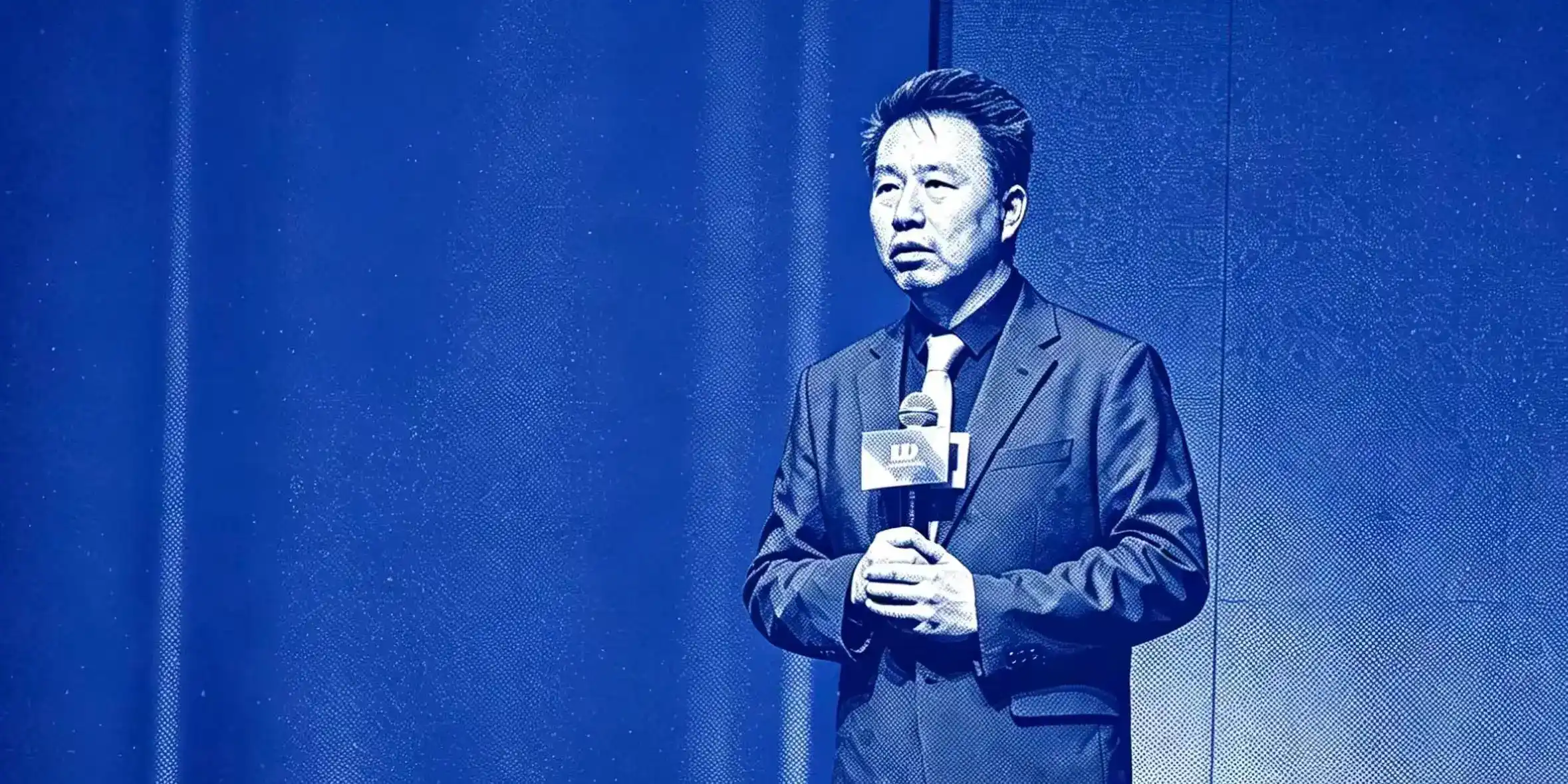
Fu Peng, a renowned macroeconomist and now Chief Economist at New火 Group, delivered his first public speech of 2026 at the Hong Kong Web3 Festival. He explained his perspective on crypto assets and why he joined the industry, framing it within the context of macroeconomic trends and financial evolution. Fu emphasized that crypto assets are transitioning from an early, belief-driven phase to a mature, institutionally integrated asset class. He drew parallels to the 1970s-80s, when technological advances (like computing) revolutionized traditional finance, leading to the rise of FICC (Fixed Income, Currencies, and Commodities). Similarly, current advancements in AI, data, and blockchain are reshaping finance, with crypto assets becoming part of a new "FICC + C" (C for Crypto) framework. He noted that institutional capital, including traditional hedge funds, avoided early crypto due to its speculative nature but are now engaging as regulatory clarity emerges (e.g., stablecoin laws, CFTC classifying crypto as a commodity). Fu predicted that 2025-2026 marks a turning point where crypto becomes a standardized, financially viable asset for diversified portfolios, akin to commodities or derivatives in traditional finance. Fu defined Bitcoin not as "digital gold" in a simplistic sense but as a value-preserving, financially tradable asset. He highlighted that crypto's future lies in regulated, institutional adoption, moving away from retail-dominated trading. His entry into crypto signals this maturation, where traditional finance integrates crypto into mainstream asset management.

marsbit1 ч. назад

Fu Peng's First Public Speech in 2026: What Exactly Are Crypto Assets? Why Did I Join the Crypto Asset Industry?

marsbit1 ч. назад

Justin Sun Sues Trump Family: What $75 Million Bought Was Only a Blacklist

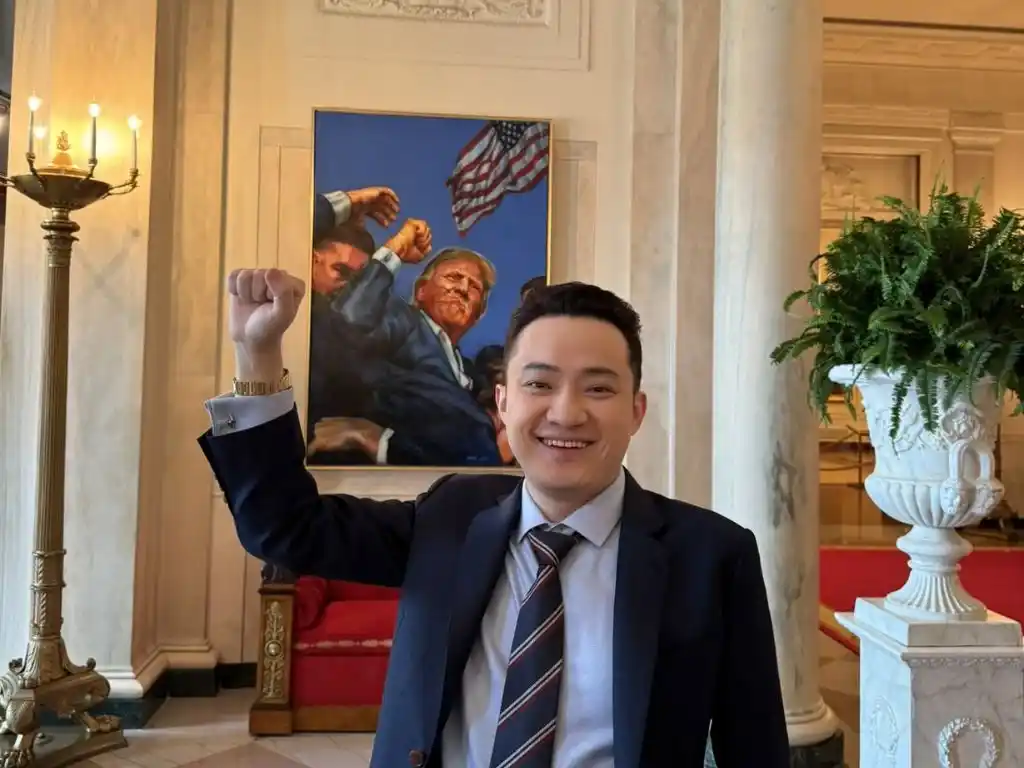
Justin Sun, founder of Tron, has filed a lawsuit in federal court against World Liberty Financial (WLF), alleging he was made the "primary target of a fraudulent scheme" after investing $75 million. Sun claims the investment secured him an advisor title and WLFI tokens, which were later frozen by WLF, causing "hundreds of millions in losses." The dispute began in late 2024 when Sun's investment helped revive WLF's struggling token sale, which ultimately raised $550 million. Shortly after, the SEC dropped its lawsuit against Sun following Donald Trump's inauguration. However, relations soured when Sun refused WLF's demands for additional funding. In August 2025, WLF added a "blacklist" function to its smart contract, allowing it to unilaterally freeze tokens. Sun's holdings, worth approximately $107 million, were frozen, and he was threatened with token destruction. The lawsuit highlights WLF's structure, which directs 75% of token sale profits to the Trump family, who had earned $1 billion by December 2025. WLF's CEO is Zach Witkoff, son of U.S. Middle East envoy Steve Witkoff. The project faces scrutiny for opaque operations, including a controversial loan arrangement on the Dolomite platform, co-founded by a WLF advisor. Despite Sun's history with the SEC, the case underscores centralization risks within DeFi, as WLF controls governance and holds powers to freeze assets arbitrarily. Sun's tokens remain frozen as legal proceedings begin.

marsbit1 ч. назад

Justin Sun Sues Trump Family: What $75 Million Bought Was Only a Blacklist

marsbit1 ч. назад

Торговля

Спот
Фьючерсы

Популярные статьи

Как купить HOME

Добро пожаловать на HTX.com! Мы сделали приобретение Defi.app (HOME) простым и удобным. Следуйте нашему пошаговому руководству и отправляйтесь в свое крипто-путешествие.Шаг 1: Создайте аккаунт на HTXИспользуйте свой адрес электронной почты или номер телефона, чтобы зарегистрироваться и бесплатно создать аккаунт на HTX. Пройдите удобную регистрацию и откройте для себя весь функционал.Создать аккаунтШаг 2: Перейдите в Купить криптовалюту и выберите свой способ оплатыКредитная/Дебетовая Карта: Используйте свою карту Visa или Mastercard для мгновенной покупки Defi.app (HOME).Баланс: Используйте средства с баланса вашего аккаунта HTX для простой торговли.Третьи Лица: Мы добавили популярные способы оплаты, такие как Google Pay и Apple Pay, для повышения удобства.P2P: Торгуйте напрямую с другими пользователями на HTX.Внебиржевая Торговля (OTC): Мы предлагаем индивидуальные услуги и конкурентоспособные обменные курсы для трейдеров.Шаг 3: Хранение Defi.app (HOME)После приобретения вами Defi.app (HOME) храните их в своем аккаунте на HTX. В качестве альтернативы вы можете отправить их куда-либо с помощью перевода в блокчейне или использовать для торговли с другими криптовалютами.Шаг 4: Торговля Defi.app (HOME)С легкостью торгуйте Defi.app (HOME) на спотовом рынке HTX. Просто зайдите в свой аккаунт, выберите торговую пару, совершайте сделки и следите за ними в режиме реального времени. Мы предлагаем удобный интерфейс как для начинающих, так и для опытных трейдеров.

643 просмотров всегоОпубликовано 2025.06.10Обновлено 2025.06.10

Как купить HOME

Обсуждения

Добро пожаловать в Сообщество HTX. Здесь вы сможете быть в курсе последних новостей о развитии платформы и получить доступ к профессиональной аналитической информации о рынке. Мнения пользователей о цене на HOME (HOME) представлены ниже.

活动图片