Safe and Ethena Partner To Boost USDe On Multisig Wallets

TheNewsCryptoОпубликовано 2026-01-13Обновлено 2026-01-13

Введение

Safe Foundation, steward of the smart account platform securing over $60 billion in assets, and Ethena Labs, the protocol behind the $6 billion+ stablecoin USDe, have announced a strategic partnership. The collaboration aims to boost institutional adoption and user experience for USDe within Safe’s multisig ecosystem. Key benefits include a 10x multiplier on Ethena Sats Points for Safe users holding USDe and gas-free Ethereum mainnet transactions for all USDe-related interactions. The partnership builds on strong institutional traction, as 85% of Ethena assets in Safe accounts are held in staked sUSDe, indicating significant use in treasury strategies by DAOs and institutions. Both entities emphasize Safe’s security and self-custody strengths as critical for Ethena’s growth in DeFi.

Zug, Switzerland – Blockman PR – JANUARY 13, 2026 Safe Foundation, steward of the industry-leading multisig-based smart account platform securing over $60 billion in digital assets, and Ethena Labs, the protocol behind the third-largest tokenized dollar, USDe (with over $6 billion in supply), today announced a strategic partnership to accelerate institutional adoption and enhance the user experience of Ethena’s USDe within Safe Smart Accounts and multisig ecosystem.

The collaboration signals a broader strategic initiative by Safe to move the stablecoin economy on self-custodial rails. Further, it immediately delivers two major benefits for users holding Ethena’s USDe within the Safe ecosystem:

  1. 10x Ethena Sats Points Boost: Safe accounts holding USDe will receive a 10x boost multiplier on their accrued points during the current Ethena points program, significantly increasing rewards for early adopters and treasury managers utilizing Safe.
  2. Gas-Free Mainnet Transactions: In a massive UX unlock for multisig users, Safe will sponsor the gas fees for all Ethereum mainnet transactions made by USDe holders, making it entirely gas-free to interact with their USDe holdings from their Safe Smart Account.

Safe smart accounts currently secure over $6 billion in stablecoin assets across Ethereum mainnet. While Safe’s permissionless infrastructure already supports USDe and sUSDe, with $65.1 million in sUSDe currently secured, this partnership formalizes both companies’ commitment to positioning Safe self-custodial wallet ecosystem as the preferred platform for accessing Ethena’s products.

Institutional Traction

The partnership is built on strong existing adoption, with data indicating Safe users view Ethena’s products as a foundational treasury solution:

As of January 2025, 85% of all Ethena assets capital secured in Safe accounts on Ethereum mainnet is held in sUSDe (the staked token). This figure confirms that Safe users—primarily DAOs, protocols, and institutional entities—are utilizing Ethena in their treasury strategies.

“The stablecoin landscape is rapidly diversifying and Ethena has pioneered a fundamentally new model while delivering resilient value, deep liquidity, and proven adoption at scale. Safe is the best way to interact with USDe and the Ethena protocol giving institutional access without compromise. Safe users increasingly seek reliable options that maintain the highest level of security and self-custody” said Andre Geest, VP of Growth at Safe Foundation.

“Safe’s unmatched track record of securing over $60 billion makes it the definitive platform for USDe’s institutional trajectory. The fact that 83% of the existing Ethena capital in Safe accounts is already staked in sUSDe clearly validates the strong, professional demand for Ethena-related products in treasury management,” said Guy Young, Founder at Ethena Labs. “This alliance will accelerate the integration of USDe into the deepest layers of the DeFi economy.”

Safe serves as critical treasury infrastructure, processing over $4 billion in monthly transfers. The platform’s commitment to supporting multiple stablecoin types ensures users can continuously optimize their treasury strategies while maintaining self-custody over their most critical assets.

About Safe

Safe (previously Gnosis Safe) is an onchain asset custody protocol, securing ~$60 Billion in assets today. Released as on open-source software stack by the Safe Ecosystem Foundation, it is establishing a universal ‘smart account standard for secure custody of digital assets, data, and identity. Safe is built for the mission to unlock digital ownership for everyone in web3, including DAOs, enterprises, retail, and institutional users

Website, Twitter, Discord, Blog, GitHub, Docs

About the Safe Ecosystem Foundation, Zug, Switzerland

The mission of the Safe Ecosystem Foundation is to support the development of Safe, to strengthen Safe technology and to promote the Safe Ecosystem. The Safe Ecosystem Foundation is a non-profit organisation based in Zug, Switzerland, that helps educate people about Safe smart accounts and promotes Safe technology through the provision of grants and other forms of funding.

This is not an offer to sell or a solicitation of an offer to purchase any SAFE tokens and is not an offering, advertisement, solicitation, confirmation, statement, or any financial promotion that can be construed as an invitation or inducement to engage in any investment activity or similar.

The Safe Ecosystem Foundation makes no representations, warranties and/or covenants with respect to the Safe Technology (or any implementations of the Safe{Wallet} and/or Safe Smart Accounts) or any program (Grants, Hackathons and/or any other forms of funding) run by the Safe Ecosystem Foundation. You should not rely on the content herein for advice of any kind, including legal, investment, financial, tax, or other professional advice, and such content is not a substitute for advice from a qualified professional.

Disclaimer: TheNewsCrypto does not endorse any content on this page. The content depicted in this Press Release does not represent any investment advice. TheNewsCrypto recommends our readers to make decisions based on their own research. TheNewsCrypto is not accountable for any damage or loss related to content, products, or services stated in this Press Release.


TagsEthenaPress ReleaseSafe Foundation

Связанные с этим вопросы

QWhat are the two main benefits for users holding Ethena's USDe within the Safe ecosystem announced in this partnership?

AThe two main benefits are: 1. A 10x Ethena Sats Points Boost multiplier on accrued points during the current points program. 2. Gas-free Ethereum mainnet transactions for all USDe holders, with Safe sponsoring the gas fees.

QWhat percentage of Ethena assets capital secured in Safe accounts on Ethereum mainnet is held in sUSDe as of January 2025, and what does this indicate?

A85% of all Ethena assets capital secured in Safe accounts is held in sUSDe (the staked token). This indicates that Safe users—primarily DAOs, protocols, and institutional entities—are utilizing Ethena in their treasury strategies.

QWhat is the total value of digital assets currently secured by the Safe platform, and how much stablecoin value does it secure on Ethereum mainnet?

AThe Safe platform secures over $60 billion in digital assets. It currently secures over $6 billion in stablecoin assets across Ethereum mainnet.

QAccording to the Ethena Labs founder, what does the high percentage of staked sUSDe in Safe accounts validate?

AGuy Young, Founder at Ethena Labs, stated that the fact that 83% of the existing Ethena capital in Safe accounts is staked in sUSDe clearly validates the strong, professional demand for Ethena-related products in treasury management.

QWhat is the core mission of the Safe Ecosystem Foundation as stated in the article?

AThe mission of the Safe Ecosystem Foundation is to support the development of Safe, to strengthen Safe technology, and to promote the Safe Ecosystem. It aims to unlock digital ownership for everyone in web3, including DAOs, enterprises, retail, and institutional users.

Похожее

Anthropic Cries Wolf: Is the AGI Threat Real, or Just an IPO Story?

Anthropic has published an article titled "When AI builds itself," discussing the emerging concept of "recursive self-improvement," where AI begins to actively participate in designing, training, testing, and optimizing its own subsequent versions. The company presents internal data showing that by May 2026, over 80% of code merged into its codebase was written by Claude, its AI model. Claude's capabilities have expanded to handling complex, open-ended engineering tasks, achieving a 76% success rate in such areas, and even contributing to research processes, such as optimizing code performance and conducting AI safety experiments. Anthropic outlines an evolution from human-driven development to AI-assisted workflows, culminating in the current stage where AI agents can autonomously write, run, and delegate code. The company cautions that the path toward a "closed loop," where AI continuously improves itself, is becoming visible. It calls for coordinated global mechanisms to potentially slow or pause frontier AI development to allow safety research and societal structures to catch up. However, the timing of this warning coincides with Anthropic's preparations for an IPO, framing the narrative not just as a safety concern but also as a demonstration of Claude's advanced capabilities and its integral role in accelerating Anthropic's own R&D—creating a potential "flywheel" effect for competitive advantage. This contrasts with OpenAI's recent, more policy-oriented discussion of the same risks, highlighting the competitive dynamics in the AI industry as companies position themselves in both the technological and regulatory landscape.

marsbit12 мин. назад

Anthropic Cries Wolf: Is the AGI Threat Real, or Just an IPO Story?

marsbit12 мин. назад

BIT Research: ETF Purchases Have Slowed, Strategy (MicroStrategy) Has Slowed, What Else Can Drive Bitcoin's Rise?

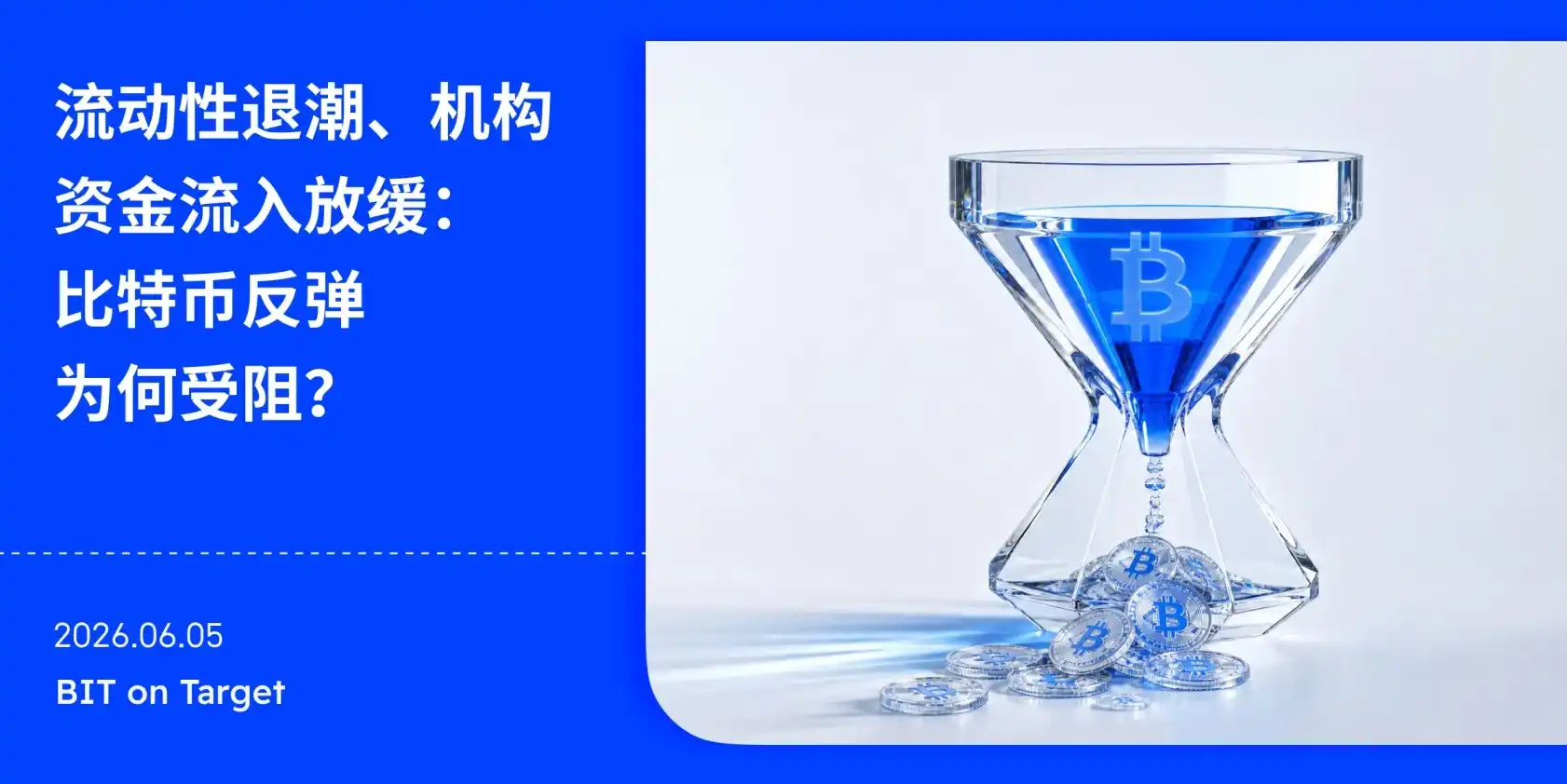
Market Refocus on Inflation and Rate Expectations Weighs on Bitcoin Currently, the market is in a phase of macro-repricing dominated by inflation and interest rate expectations. Bitcoin, which previously benefited from easy liquidity and low inflation, is seeing its core bullish drivers weaken. These drivers were market expectations for interest rate cuts and strong inflows from Bitcoin ETFs and institutions like MicroStrategy (referred to as "Strategy" in the text). The logic has shifted. Recent high inflation data (e.g., CPI hitting 3.8% in a May 2026 report) has caused the market to sharply reduce its rate cut expectations for 2025 and even price in potential hikes. This is a key constraint for Bitcoin, as it lacks cash flows and is highly sensitive to rate expectations. Concurrently, institutional capital flows have slowed significantly. Following the hot CPI data, Bitcoin ETFs saw accelerated outflows, with around $4.3 billion leaving over a period. MicroStrategy's ability to keep adding substantial Bitcoin to its balance sheet is also diminishing. Together, ETF and MicroStrategy holdings total roughly $110 billion, but their momentum as growth engines is cooling. In summary, Bitcoin's current pressure stems not from its own fundamentals but from a changing macro environment. As long as inflation stays elevated, Bitcoin is likely to remain in a consolidating phase. However, historically, inflation eventually peaks. Once it recedes and rate cut expectations rebuild, institutional capital could return, potentially fueling a new and more robust recovery phase for Bitcoin.

marsbit19 мин. назад

BIT Research: ETF Purchases Have Slowed, Strategy (MicroStrategy) Has Slowed, What Else Can Drive Bitcoin's Rise?

marsbit19 мин. назад

Earning 1000 Trillion in Half a Year, 'Pocketing' 20 Million per Capita: This Round of Wealth Creation in the Korean Stock Market is Unprecedented in Scale

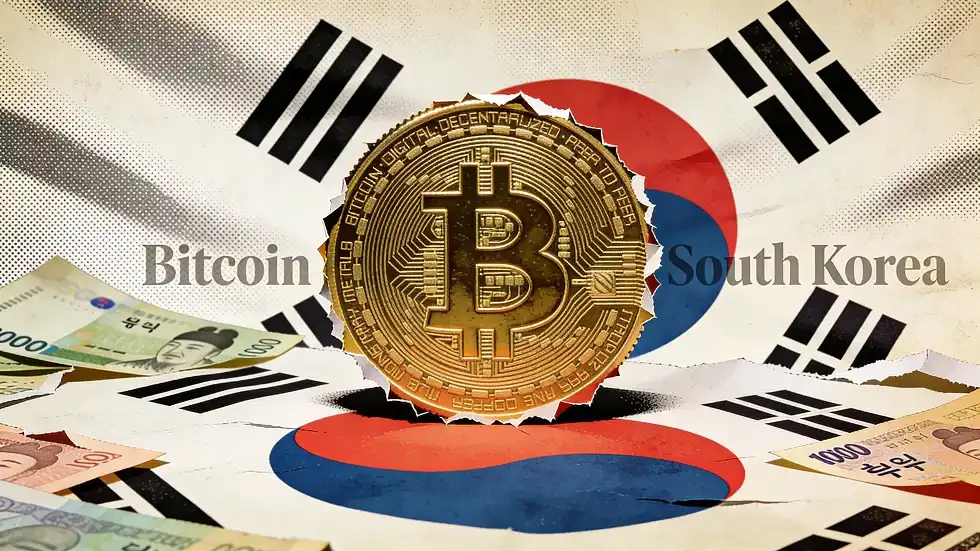
The South Korean stock market is experiencing an unprecedented wealth surge in 2026, with household equity and fund asset values soaring by over 1,000 trillion KRW (~$730bn) year-to-date. This translates to an average per capita wealth increase of roughly 20 million KRW, fueled by a historic 109% rally in the KOSPI index. The boom is driven by three converging forces: an AI-driven semiconductor supercycle boosting giants like Samsung and SK Hynix; the government's "Value-Up" market reforms addressing long-standing corporate governance issues; and aggressive real estate regulations that have locked capital within financial markets, preventing profits from flowing back into property. This has triggered a wealth effect, boosting high-end consumption significantly. However, the gains are highly concentrated. The two semiconductor behemoths account for over half the index's value, but retail investors own relatively low stakes in them, systematically missing the biggest rallies. Wealth and consumption benefits are skewed towards luxury goods and imported cars, bypassing mainstream retail. Further risks stem from excessive leverage, with high trading volume in leveraged ETFs, and a market sentiment heavily reliant on the AI sector's fortunes and speculative rumors. While this cycle marks a potential shift from real estate to equities as a primary wealth generator for Koreans, its sustainability, amid structural imbalances and leverage, remains a critical test.

marsbit25 мин. назад

Earning 1000 Trillion in Half a Year, 'Pocketing' 20 Million per Capita: This Round of Wealth Creation in the Korean Stock Market is Unprecedented in Scale

marsbit25 мин. назад

Behind ZEC's Over 30% Plunge: An 'Unlimited Minting' Vulnerability with No Way to Prove if It Was Ever Exploited

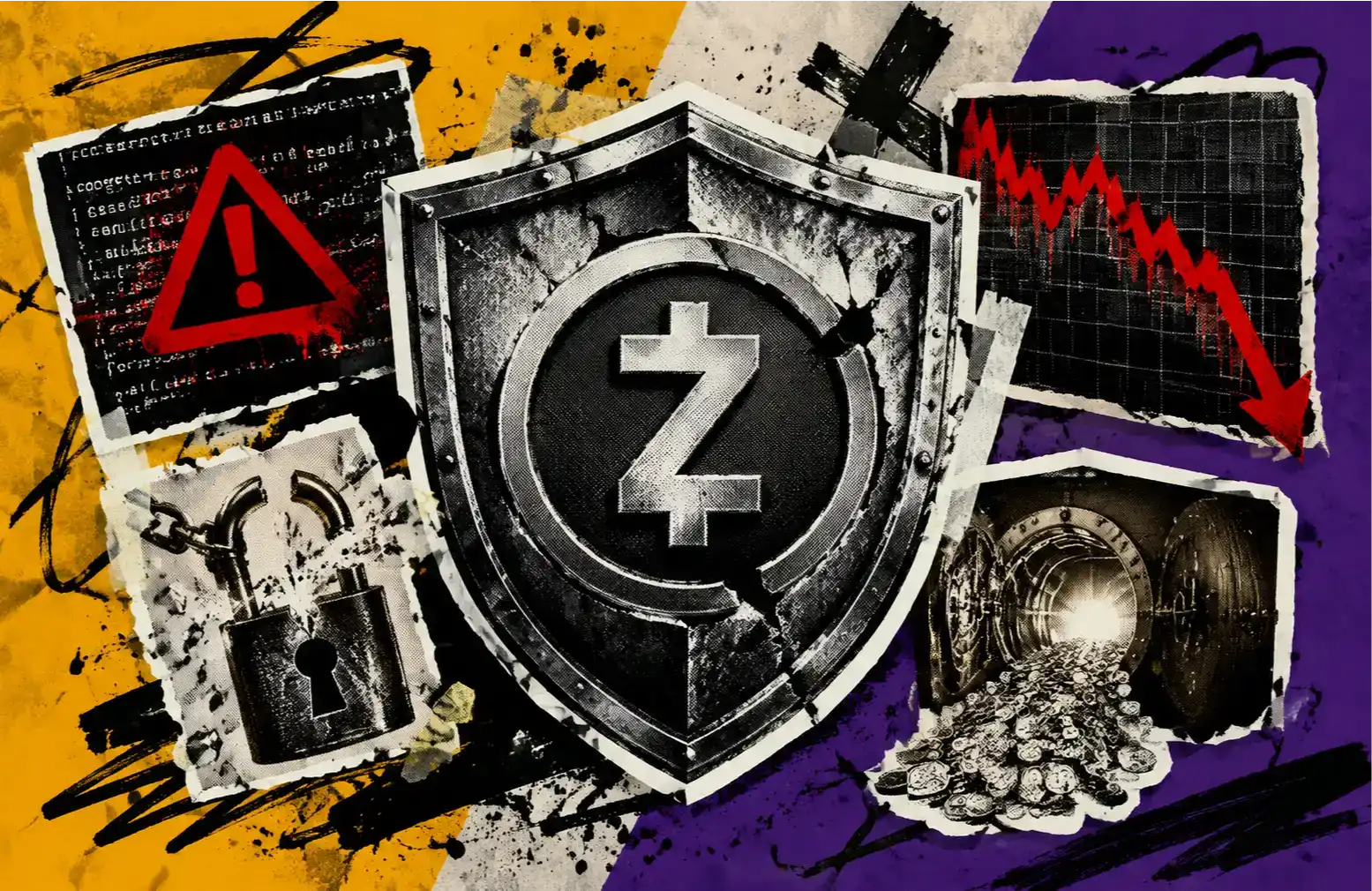
A critical vulnerability was discovered in Zcash's Orchard privacy pool, allowing for the theoretical creation of undetectable counterfeit ZEC. Researcher Taylor Hornby found the flaw on May 29th, 2024, within the Orchard circuit's cryptographic constraints, which could let an attacker bypass asset conservation rules. Although a rapid emergency fix was deployed within days via a coordinated soft and hard fork, a core uncertainty remains: due to Orchard's privacy features, it is impossible to cryptographically prove whether this "unlimited mint" flaw was exploited in the nearly four years since the pool's 2022 launch. This uncertainty, rather than the patched flaw itself, triggered a market panic, causing ZEC's price to drop over 30%. While the Zcash Foundation stated no evidence of exploitation was found, independent entity Shielded Labs emphasized the impossibility of definitively proving no counterfeit ZEC was ever created. The incident highlights the unique trust challenge in privacy systems. To address this, developers are proposing a new network upgrade with enhanced auditing to allow verifiable proof of supply integrity. Notably, the researcher utilized the newly released AI model Claude Opus 4.8 as a tool during the security review, signaling the growing role of advanced AI in uncovering complex cryptographic vulnerabilities.

marsbit27 мин. назад

Behind ZEC's Over 30% Plunge: An 'Unlimited Minting' Vulnerability with No Way to Prove if It Was Ever Exploited

marsbit27 мин. назад

Торговля

Спот
Фьючерсы
活动图片