Автор оригинала:Solus Group, исследователь криптовалют
Компиляция: CryptoLeo(@LeoAndCrypto)

Примечание редактора: Недавно аналитик Ash в своем популярном посте указал, что из более чем 100 новых токенов, выпущенных в 2025 году с помощью TGE, 84.7% токенов имеют FDV ниже, чем на момент TGE. Медианное значение FDV этих токенов упало на 71% по сравнению с моментом выпуска (медианная рыночная капитализация упала на 67%).Лишь 15% токенов показали рост FDV по сравнению с моментом TGE. В целом, большинство новых токенов, выпущенных в 2025 году, относятся к категории «пиковая цена на момент TGE».
Продолжая анализ этих данных, я нашел еще более интересную статью (от Solus Group), которая также начинается с TGE токенов проектов, анализирует динамику 113 токенов после TGE в 2025 году и ее корреляцию с условиями финансирования, активностью сообщества и листингом на биржах. Исследование показало, чтокрупное финансирование, активное сообщество, листинг на биржах — эти критерии отбора, которые все считают общими показателями качества проекта, практически не влияют на динамику токенов проекта.Раньше мы часто сочетали эти условия для отбора хороших проектов, но в 2025 году эта модель оценки проектов уже «не работает». Среди данных есть одна особенно заставляющая задуматься:
- Проекты, чья цена торгов ниже цены IDO, в среднем имеют доход в 1.36 миллиона долларов.
- Проекты, чья цена торгов выше цены выпуска IDO, в среднем имеют доход в 790 тысяч долларов.
Но все эти проекты получили поддержку венчурных капиталистов, что в определенной степени указывает на то, чторынок больше ценит хайп, а не реальные результаты, больше ценит истории, а не данные, больше ценит обещания, а не сам продукт. Web3 не может больше притворяться, что «все хорошо», нельзя называть трафик ботов «ростом».Конечно, данная статья делает лишь некоторые статистические выводы, которые не являются стандартом для всех проектов. Хорошие проекты и крупное финансирование все же отражают направление развития индустрии криптовалют. Odaily Planet Daily скомпилировал это следующим образом:
Финансирование в 2 миллиона долларов, участие топовых венчурных фондов, 500 тысяч подписчиков в сообществе, листинг на крупных биржах, грандиозный старт в первый день, ликование в Discord, атмосфера праздника повсюду в соцсетях.

В предыдущей статье мы раскрыли реальную ситуацию с ROI 0.96x:К 2025 году в среднем каждый токен фактически умирает в первый же день, мы доказали, что система не работает. Теперь мы проанализировали 113 случаев выпуска токенов с начала 2025 года и подтвердили это неопровержимыми данными — с которыми большинство основателей не решаются столкнуться.
Результаты шокируют: крупное финансирование не помогает, огромное сообщество не имеет значения, каждая переменная, которую вы оптимизируете, статистически бесполезна.
Но под поверхностью скрывается нечто более искаженное, что до сих пор мучает многих основателей:
В настоящее время состояние доходов проекта является медвежьим сигналом, токены прибыльных проектов торгуются ниже, чем токены неприбыльных проектов, эта динамика вопрос жизни и смерти. Если продолжать наказывать прибыльных и поощрять спекулянтов, вся отрасль не выживет.
Примечание Odaily Planet Daily: Ранее Solus Group опубликовала соответствующие данные, согласно которым средняя доходность инвестиций (ROI) новых проектов с TGE в 2025 году, рассчитанная с первого дня после выпуска, составила 0.96, что означает, что их продукт с первого дня выпуска был убыточным.
Ловушка данных для предпринимателей: Парадокс финансирования, высокое финансирование не означает преимущество токена
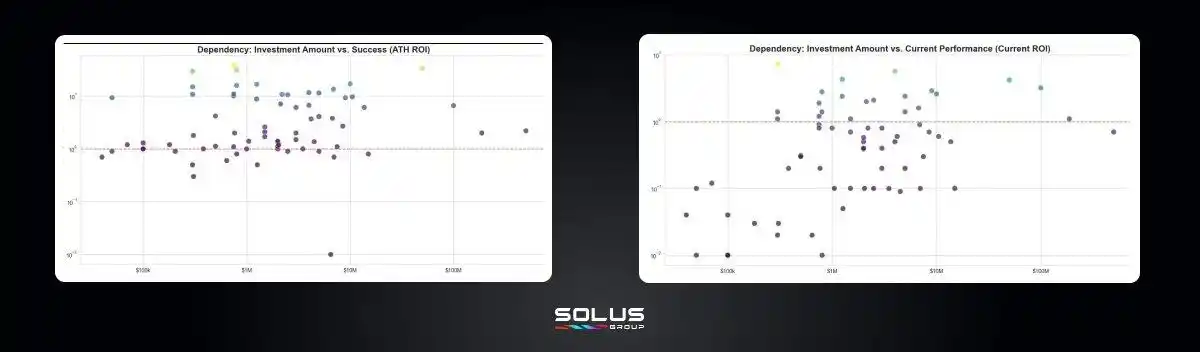
Корреляция между объемом финансирования и результативностью токена: 0.04, статистически можно считать нулевой.
Токены проектов, привлекших 10 миллионов долларов, показывают такие же результаты, как и токены проектов, привлекших 1 миллион долларов. На графике выше это доказано — независимо от суммы финансирования, распределение токенов по диапазону ROI является случайным.Лучшие performing проекты: Myshell, B2 Network, Bubblemaps, Mind Network, Particle Network, Creator.Bid (в момент ATH оценка выросла в 10-30 раз) привлекли от 300 тысяч до 3 миллионов долларов. В то же время проекты like Boundless и Analog, привлекшие более 10 миллионов долларов, имеют мультипликаторы оценки всего около 1x.
Текущие показатели токенов еще хуже, независимо от объема финансирования, большинство токенов имеют ROI ниже 1x.Например, токены с объемом финансирования от 5 до 100 миллионов долларов имеют ROI от 0.1x до 0.7x (например, Fleek, Pipe Network, Sahara AI), такой же, как и у токенов проектов практически без финансирования.
Факт: Крупное финансирование ускоряет смерть токена проекта.

Проекты с наименьшим финансированием (от 300 тысяч до 5 миллионов долларов) имеют более высокий ROI на каждый привлеченный доллар, они выполняются быстрее, имеют более низкую стоимость изменения курса и не тонут в графиках разблокировки токенов венчурных инвесторов, массовая разблокировка токенов разрушает доходность проекта.
Если вы стремитесь к 10 миллионам долларов ради «конкуренции», то вы готовитесь к провалу.
Миф о фанатах: Огромное сообщество проекта — тоже просто «бумажный тигр»
500 тысяч подписчиков в соцсетях против 50 тысяч — статистические результаты完全相同 идентичны.
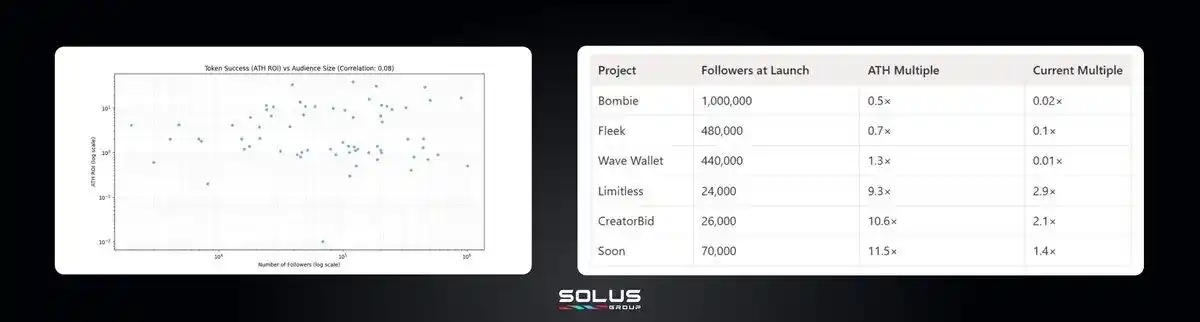
Коэффициент корреляции: 0.08 (ATH токена) и -0.06 (текущее состояние токена)
Данные показывают, чторазмер аудитории не имеет никакой прогностической ценности для результативности токена, проекты с огромной фан-базой показывают неоднородные результаты — некоторые взлетают, некоторые падают, проекты с маленькой аудиторией тоже, нет тренда, нет закономерности, нет корреляции.
Ваша группа в Discord — это не сообщество, а спекулятивная аудитория, ожидающая ухода.
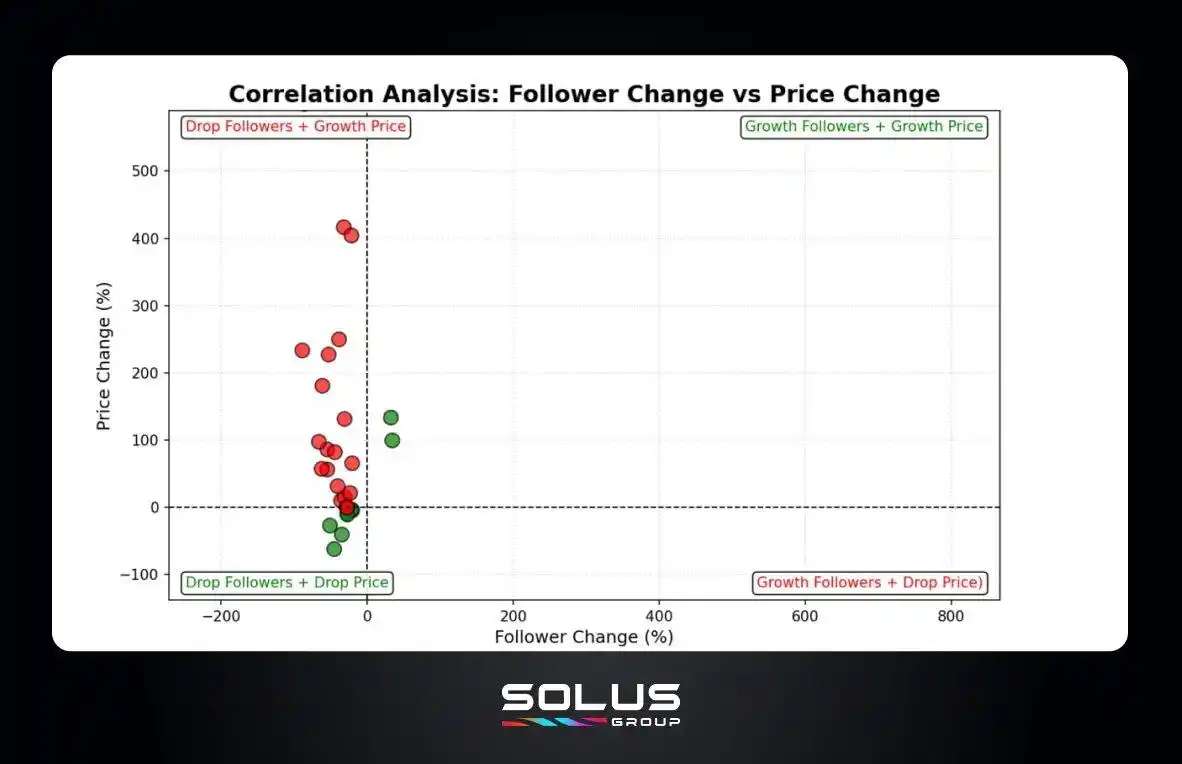
Реальность: Цена определяет развитие сообщества, а не сообщество двигает цену.
Когда цена резко падает, последователи исчезают. График доказывает это — левый нижний квадрант (сокращение последователей + падение цены) очень плотный. Когда цена взлетает, последователи иногда растут вслед за ней, но нестабильно.
Это означает:
Ваше «активное сообщество» никогда по-настоящему не интересовалось продуктом — их интересовала динамика цены токена. Как только токен разочаровывает, они исчезают, рост сообщества — это запаздывающий показатель, а не опережающий.
Это не просто теория, а точка зрения, открыто выраженная @belizardd (исследователь и трейдер/KOL):
Большинство людей здесь纯粹纯粹 для спекуляций, а не для самого продукта. Мы видим, что после TGE хорошо показали себя寥寥无几 протоколы, и в основном те, у которых была низкая начальная FDV токена, невысокий объем привлеченных средств и щедрый аирдроп. Честно говоря, я сейчас не буду слепо инвестировать во что попало. Риск/вознаграждение не оправдано, я просто жду улучшения рынка.
Спекулянты знают, что игра сломана. Они заняли выжидательную позицию. В то же времяоснователи продолжают тратить 60% бюджета на Discord-ботов, Twitter-розыгрыши и рекламу у KOL — сжигая деньги на статистически незначимых метриках.
Настоящий вопрос: «Если завтра токен упадет на 50%, сколько человек останется?»
Ответ: Почти никто.
Ловушка цены токена, остерегайтесь завышенной/заниженной цены
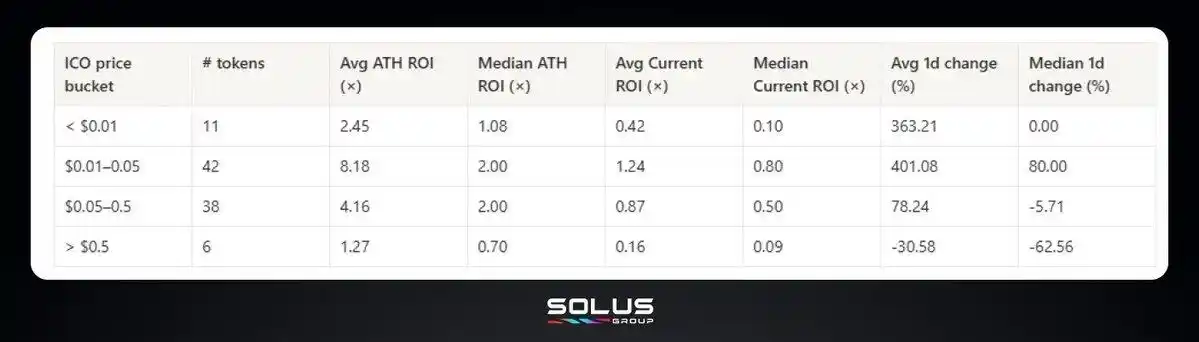
Медианный ROI по цене листинга токена:
Ниже $0.01: 0.1x (убыток 90%)
$0.01 – $0.05: 0.8x (жизнеспособная зона)
$0.05 – $0.50: 0.5x (убыток 50%)
Выше $0.50: 0.09x (убыток 91%)
Повторю еще раз:
Цена выпуска ниже $0.01 не делает ваш токен «более доступным», а лишь превращает вас в дешевую монету, привлекающую меркантильный капитал, который быстро растет и быстро падает.
Цена выше $0.50 не делает ваш токен «премиальным», а лишь указывает на завышенную цену, слишком высокая цена токена убивает розничный рынок, и киты тоже не купят.
Диапазон цен на токены от $0.01 до $0.05 — единственный жизнеспособный ценовой диапазон, эта цена достаточно высока, чтобы указать на легитимность проекта, и достаточно низка, чтобы оставить пространство для роста. В этом ценовом диапазоне только 42 из 97 проектов показали медианную положительную динамику.
Если ваша токеномика оценивает вас в $0.003 или $1.20, остановите пересмотр модели, данные показывают, что проект уже провалился.
Состояние индустрии: Прекратите строительство в стиле 2021 года
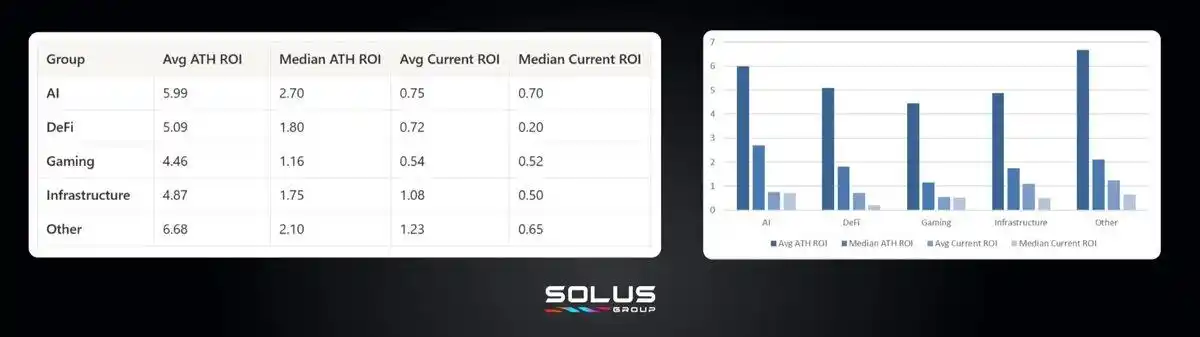
Проигравшие: Gaming
Средний ATH ROI: 4.46x (самый низкий)
Медианный текущий ROI: 0.52x
Токены GameFi как лотерейные билеты: сыграл один раз и навсегда забыт.
Ловушка: DeFi
Средний ATH ROI: 5.09x (выглядит неплохо)
Медианный текущий ROI: 0.2x (катастрофический)
Токены DeFi сначала резко растут в цене, а затем падают сильнее, чем в любой другой области, разрыв между хайпом и реальностью极其残酷 чрезвычайно жесток.
Победители: AI
Средний ATH ROI: 5.99x (наибольший рост)
Медианный текущий ROI: 0.70x (лучшая сохранность)
Токены AI взлетают в цене и остаются стабильными. Этот тренд устойчив, и деньги随之 притекают.
Если вы разрабатываете GameFi, то ваша исполнительность должна быть в 10 раз выше средней, чтобы достичь среднего результата. Если вы в сфере DeFi, будьте готовы к быстрому росту и резкому падению. Если вы в сфере AI, рынок даст вам шанс, но при условии, что вы предоставите результаты. К инфраструктуре предъявляются более строгие требования: по сравнению со стандартными dApp (например, AI-агентами), вы потратите больше времени и ресурсов, но ваш медианный текущий ROI略低于 чуть ниже, чем у всеми ругаемой сферы GameFi.
Данным все равно, какой проект вас интересует.
Данные IDO/IEO: Хорошая платформа не спасет проект
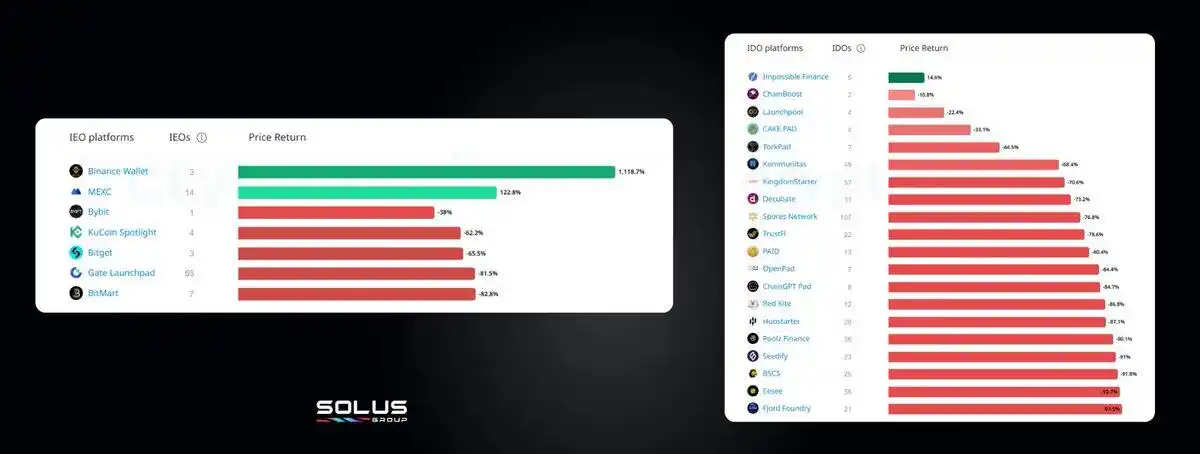
Вы тратите месяцы на нетворкинг, чтобы получить место на Binance Launchpad или аллокацию на Tier-1 IDO,вы думаете, что прохождение отбора платформой означает защиту. Данные показывают, что это не так.
Платформы IDO: Почти все проекты в убытке
Только один проект на 5 платформах IDO показал доходность +14.6%, и все. Все остальные показали доходность от -70% до -93%.
Так называемые «продвинутые Launchpad'ы» не защищают покупателей, а лишь предоставляют им способ потерять деньги.
Платформы IEO: Апофеоз ошибки выжившего
Кошелек Binance показывает доходность 11x. Выглядит невероятно, но там было всего 3 выпуска, выборка слишком мала. MEXC на 14 выпусках показывает доходность +122.8% — выборка больше, но все равно является аномалией. Все остальные? Плохие результаты. Токены Bybit IEO убыточны на 38%, остальные еще хуже.
Это доказывает:
Выбор платформы — это лотерея с лучшим брендингом. Победы нескольких аномальных данных искажают среднее значение, в то время как большинство выпусков токенов в основном падают, плата за «кураторские услуги» — будь то через связи, плату за листинг или распределение токенов — не может надежно защитить ROI токена.
Платформа не может спасти мусорный токен, и не может помочь хорошему токену.
Размышления о 2025, взгляд на 2026
Развитие проектов в 2025 году провалилось на каждом уровне.
Нулевой уровень: Фонд
Проблема: «Токеномика, основанная на догадках». Неограниченный сброс токенов на неликвидный рынок при отсутствии органической модели доходов для поглощения удара.
Первый уровень: Финансирование
Проблема в: «Сначала подгоним под PDF, разберемся позже.»
Второй уровень: Маркетинг
Проблема: Модель KOL, оплаченные наемные пользователи, исчезающие, как только прекращается оплата.
Третий уровень: Ликвидность
Проблема: Предположение, что ликвидность будет расти с хайпом, но это не так, институциональные инвесторы ждут доказательств.
Четвертый уровень: Удержание пользователей
Проблема: Инфраструктура с нулевым удержанием. «Сообщество проекта» — это 10 тысяч пользователей Telegram, которые покинут вас в течение 90 дней.
В 2026 году не стоит играть в старые игры. За всем этим стоит еще более глубокая проблема, инфраструктура действительно важна, но даже при идеальной инфраструктуре все решает время. Как сказал Иван Паскар (руководитель роста Altius Labs):
Токены не чинят сломанные вещи — они усиливают реальность. Правильное время = усиление импульса. Неправильное время = годы усилий мгновенно обращаются в прах. Большинство команд терпят неудачу не в дизайне токена, они терпят неудачу из-за неверной оценки стадии и макросреды, время — не деталь, оно решает все.
Что делать проектам в 2026 году
Выживание — это не следование старому сценарию, а создание нового.
1. Тщательное проектирование
Целевая сумма от 300 тысяч до 5 миллионов долларов, проекты с самым высоким ROI на каждый доллар находятся здесь. Больше денег = больше проблем.
2. Себестоимость выживания
Цена выпуска между $0.01 и $0.05. Другие цены难以存活难以 выжить. Если ваша токеномика не укладывается в этот диапазон, значит, с ними что-то не так.
3. Продукт прежде всего, токен второстепенен
Если вы не можете объяснить в одном предложении, зачем существует ваш токен, значит, его не существует. Доходы должны предшествовать спекуляциям.
4. Игнорируйте vanity-метрики
Количество подписчиков — это отвлекающий фактор, активность кошельков, удержание и доход на пользователя — ключевые метрики.
5. Отраслевой реализм
Прежде чем писать код, поймите уровень неудач в вашей отрасли. GameFi需要两倍 требует вдвое большей эффективности исполнения для достижения безубыточности. AI имеет попутный ветер — при условии, что вы можете предоставить результаты.
6. Объединяйтесь, либо умрите
Приближается эра слияний и поглощений. Если вы не можете масштабироваться самостоятельно, найдите покупателя. Поглощение — это не провал, а разумный шаг.
Эти шесть принципов важны. Но факт в том, что стандартный сценарий устарел, сейчас больше нет универсальной стандартной модели.