Narrowest-Ever Margin to 'Pass': US Senate Confirms Warsh as Federal Reserve Chair

marsbitОпубликовано 2026-05-14Обновлено 2026-05-14

Введение

On May 13, the U.S. Senate confirmed Kevin Warsh as the new Federal Reserve Chair in a historically narrow vote of 54-45, largely along party lines. This marks the slimmest confirmation margin since 1977. Warsh, a former Fed governor known for hawkish views, will succeed Chair Jerome Powell on May 14 amid a politically charged environment. His tenure begins as the Fed faces resurgent inflation, with recent CPI and PPI data exceeding expectations, and mounting pressure from the Trump administration for interest rate cuts. Warsh has pledged to maintain the Fed's independence despite these political overtures. His first major test will be the June FOMC meeting, where he must navigate conflicting demands between cooling inflation and political calls for monetary easing, all while working to restore market confidence in the central bank's non-partisan credibility.

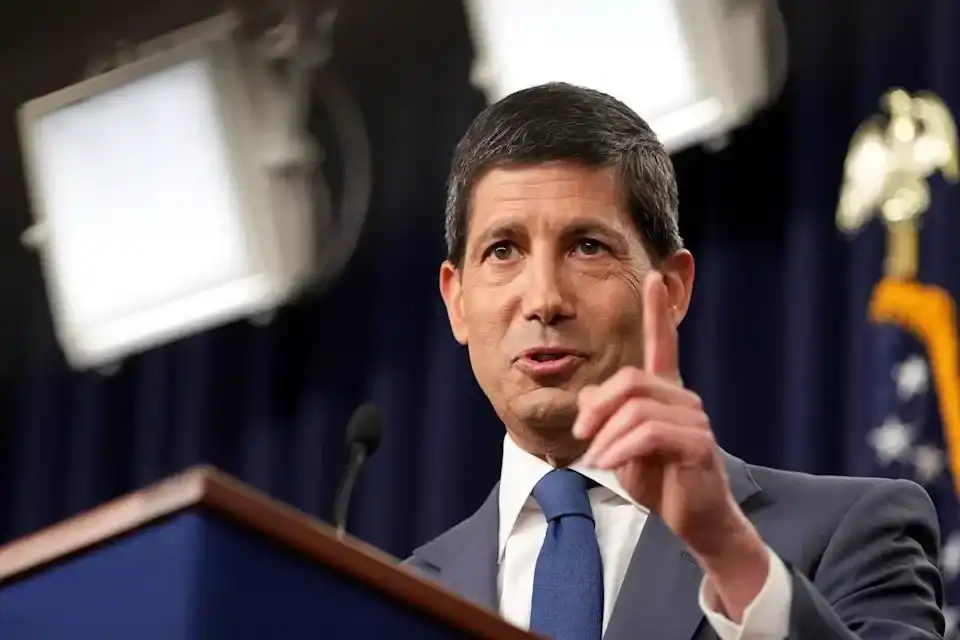
On Wednesday, Eastern Time, the U.S. Senate formally confirmed former Federal Reserve Governor Kevin Warsh as the Federal Reserve Chair following a full floor vote. While the Senate's confirmation was expected, the vote saw Warsh receiving support from senators only by a narrow margin.

The vote on Warsh's nomination for Fed Chair was almost entirely along party lines, with the nomination receiving 54 'yes' votes and 45 'no' votes—a mere 9-vote difference. Among the supporters, 53 were Republican senators. Only one Democrat, Senator John Fetterman of Pennsylvania, defected to vote in favor.

According to media statistics, based on this vote result, this confirmation vote is the "narrowest margin" for any Federal Reserve Chair since the U.S. Congress in 1977 required that the Fed Chair nomination be confirmed by the Senate. Compared to Warsh, previous Fed Chair nominees were all confirmed by the Senate with significantly larger margins.

Current Fed Chair Powell won at least 80 votes in favor during his two-term confirmations. Powell's predecessor, Yellen, was confirmed in 2014 with a vote of 56 in favor and only 26 against, with many senators absent from that vote due to poor weather.

Powell's term as Fed Chair is scheduled to end this Friday, May 15th. Following the Senate confirmation, Warsh will officially take over on May 14th, beginning a four-year term as Chair. In a vote on Tuesday, the Senate had already confirmed Warsh for a 14-year term as a Federal Reserve Governor.

Warsh undoubtedly faces thorny monetary policy decisions upon taking office. Earlier this week, following the release of hotter-than-expected U.S. April CPI data, Nick Timiraos, known as the "new Fed whisperer," pointed out that the CPI report means rate cuts are no longer a story for 2026, and Trump, who nominated Warsh, has already expressed a strong desire for the Fed to cut rates. Warsh is heading for trouble.

Before the Senate vote results were announced, on Wednesday, Timiraos further noted that the market was strongly signaling that the 2024-2025 rate-cutting cycle had ended.

He highlighted a market development: the yield on the two-year Treasury note rose to its highest level since June of last year during Wednesday's trading session. The Fed's policy rate in June of last year was 75 basis points higher than it is now.

Media reports indicate that a growing number of Fed officials believe the central bank should clearly signal that its next interest rate move could be either a hike or a cut. This means that if Warsh attempts to push for rate cuts that other officials view as lacking justification, he will face strong resistance.

Taking Office Under the Shadow of 'Politicization': Fed Independence Faces Unprecedented Scrutiny

The reason Warsh's confirmation process garnered such attention is not just because of the close vote, but also because it occurred against the backdrop of escalating controversy over the politicization of U.S. monetary policy.

Over the past few months, U.S. President Trump has continuously and publicly pressured the Fed to cut rates. Since taking office last year, he has repeatedly criticized Powell for acting "too slowly" on rate cuts and frequently hinted at wanting the Fed to be more cooperative with the White House's economic agenda.

Facing these questions, Warsh emphasized during his confirmation hearing that he made no policy promises to Trump, would absolutely not be Trump's puppet, and pledged to uphold the Fed's monetary policy independence.

However, the market widely believes that the relationship between the Fed and the White House will enter a more sensitive phase after Warsh takes office.

It is noteworthy that although Powell is stepping down as Fed Chair, he still plans to retain his position as a Federal Reserve Governor. This means that for some time, the Fed's internal dynamics may feature two different styles and policy philosophies simultaneously.

Warsh: From Hawk to Moderate

The 56-year-old Warsh is not an "outsider."

He served as a Federal Reserve Governor from 2006 to 2011, one of the youngest governors at the time, and participated in core decision-making during the 2008 global financial crisis. Since then, he has been active on Wall Street and in academia, having worked at the Duquesne Family Office and served as a research fellow at Stanford University's Hoover Institution.

Compared to Powell, Warsh's monetary policy philosophy leans more "hawkish."

He has long criticized the Fed for maintaining ultra-loose policy for too long after the pandemic, believing it directly fueled inflation in subsequent years. He has also repeatedly advocated for reducing the Fed's balance sheet, decreasing the use of "forward guidance" on future rate paths, and pushing the Fed to "return to a more traditional central bank role."

However, the market has also noted that Warsh's recent public statements on interest rates have been more moderate than in the past, which some Democratic lawmakers view as a move towards Trump's dovish stance.

Warsh's Top Challenge: Inflation Reheating

The most immediate challenge facing Warsh is the resurgence of U.S. inflationary pressures.

CPI and PPI data for April released this week show that energy prices and geopolitical risks are pushing inflation higher again. U.S. CPI rose 3.8% year-over-year in April, while PPI rose 6% year-over-year, marking the largest increases in nearly three years and over three years, respectively.

At the same time, escalating Middle East tensions, risks in the Strait of Hormuz, and surging oil prices are adding further imported inflationary pressure.

This means that while the Trump administration hopes to push for rate cuts to stimulate economic growth, the real inflationary environment may not permit the Fed to pivot quickly to easing.

In other words, Warsh may face a dilemma right at the start of his term: the "White House wants rate cuts" versus "economic data doesn't support rate cuts."

Another Major Challenge: How to Allay Market Concerns Over Fed Credibility

Beyond the pure interest rate decision, a deeper issue lies in whether the market still believes in the Fed's independence.

Over the past year, political attacks on the Fed have escalated significantly—from the controversy over White House pressure to cut rates, to the Justice Department investigating the Fed headquarters renovation project, to some Republicans publicly calling for Powell's resignation—all raising concerns that the central bank's independence is being eroded.

Warsh's almost purely partisan confirmation process itself reinforces such concerns.

In contrast, Powell previously received over 80 Senate votes in favor in both of his confirmations for Fed Chair; Yellen also secured 56 votes in favor when confirmed in 2014.

Analysts believe that in the future, Warsh will not only need to formulate monetary policy but will also need to rebuild market trust in the Fed as being "apolitical."

June Meeting May Bring 'Debut Storm'

Warsh's first major test after taking office will likely be the monetary policy meeting of the Federal Open Market Committee (FOMC) scheduled for June 16-17.

Currently, divisions within the Fed over whether the next move should be a rate hike, a hold, or a cut have notably widened.

On one hand, U.S. economic growth is beginning to slow; on the other hand, inflation and oil prices are rising again.

The market currently widely expects that the Fed may not cut rates this year, but the Trump administration clearly does not accept this outlook.

Therefore, Warsh's first policy meeting will not only determine the direction of interest rates but will also serve as the first pressure test for the market to observe whether he leans more towards "political compromise" or "central bank independence."

Связанные с этим вопросы

QBy what margin was Kevin Warsh confirmed as Federal Reserve Chair by the Senate, and why is this notable?

AKevin Warsh was confirmed by a vote of 54 to 45, a margin of just 9 votes. This is notable as it is the narrowest margin of confirmation for a Fed Chair since 1977, when Senate confirmation became required.

QWhat potential challenge regarding monetary policy is Warsh expected to face immediately upon taking office?

AWarsh is expected to face the difficult challenge of navigating potential pressure from the White House to cut interest rates while confronting economic data, such as recently hot inflation figures, that may not justify a swift move to monetary easing.

QWhy has Kevin Warsh's confirmation process raised particular concerns about the Federal Reserve's independence?

AHis confirmation process raised concerns because the vote was almost strictly along party lines and occurred against a backdrop of heightened political pressure on the Fed from the White House to cut rates, fueling fears of increasing politicization of monetary policy.

QHow does Kevin Warsh's past monetary policy stance compare to that of his predecessor, Jerome Powell?

AHistorically, Warsh has been considered more of a monetary policy 'hawk' compared to Powell. He has criticized the Fed's prolonged post-pandemic easy policy for fueling inflation and advocated for a return to a more traditional central bank role, though his recent rhetoric has softened.

QWhat is seen as a key early test for Chair Warsh after he takes office?

AA key early test will be the Federal Open Market Committee (FOMC) meeting in June. This meeting will be closely watched to see how he navigates internal Fed divisions and external political pressure on interest rate decisions, serving as an initial gauge of his commitment to central bank independence.

Похожее

Навигация в мире событийной торговли: Топ-5 рынков прогнозов для каждого типа пользователя

Сектор рынков прогнозов переживает быстрый рост, привлекая миллиарды долларов ежемесячного объема торгов к середине 2026 года. Прибыльность торговли теперь зависит не только от точности прогноза, но и от таких операционных факторов, как ликвидность, скорость исполнения, комиссии и инструменты управления рисками. В статье рассматриваются пять ведущих платформ для разных типов пользователей: 1. **Polymarket:** Децентрализованная платформа с глобальным охватом событий и высокой ликвидностью, работающая на блокчейне. Рассчитана на крипто-пользователей. 2. **Kalshi:** Полностью регулируемая (CFTC) биржа в США для торговли контрактами на макроэкономику и спорт, ориентированная на институциональных инвесторов. 3. **Outpoll:** Платформа с фокусом на профессиональные инструменты для активных и алгоритмических трейдеров. Предлагает встроенные ордера Take-Profit и Stop-Loss, низкие комиссии (~0.1%) и поддержку API. 4. **OG Predictive:** Регулируемая (CFTC) платформа, ориентированная на спортивные ставки, с плоской комиссией за контракт и детальными игровыми рынками. 5. **Manifold Markets:** Нерегулируемая площадка с виртуальной валютой ("Mana"), служащая песочницей для тестирования стратегий и создания рынков на любые темы. Выбор платформы зависит от потребностей пользователя: глобальная ликвидность и крипто-расчеты (Polymarket), регуляторная безопасность в США (Kalshi), продвинутые инструменты управления рисками (Outpoll), глубина спортивных рынков (OG Predictive) или экспериментальная среда без риска реальных денег (Manifold). Успех в современной торговле событиями определяется не только прогнозом, но и эффективностью операционного исполнения.

TheNewsCrypto7 мин. назад

Навигация в мире событийной торговли: Топ-5 рынков прогнозов для каждого типа пользователя

TheNewsCrypto7 мин. назад

Почему масштабные криптоконференции теряют свою популярность?

Все больше людей испытывают усталость от крупных оффлайн-конференций в криптоиндустрии. Хотя снижение отдачи и малое количество полезной информации — частые жалобы, коренная причина в другом. Раньше такие саммиты были жизненно важны как глобальные точки встречи для децентрализованной индустрии. Однако сейчас их ценность размывается. Ключевые игроки — инвесторы и разработчики — перемещаются в небольшие частные мероприятия на полях больших конференций, где общение более качественное. Основная программа часто не предлагает ничего нового. Кроме того, появились эксклюзивные мероприятия по приглашениям, которые, хотя и эффективны, создают барьеры для новичков. С другой стороны, кажущийся упадок может быть признаком зрелости. Криптоиндустрия смещает фокус вовне, интегрируясь в традиционные секторы, такие как финансы. Крипто-темы теперь обсуждаются на общих отраслевых форумах, что делает узкоспециализированные саммиты менее необходимыми. Вероятно, количество крупных крипто-конференций сократится. Они были важны на этапе внутренней консолидации отрасли, но теперь рост лежит во взаимодействии с реальной экономикой. Переход качественного общения в закрытые форматы — это неизбежная цена масштабирования и признак взросления индустрии.

marsbit20 мин. назад

Почему масштабные криптоконференции теряют свою популярность?

marsbit20 мин. назад

Флагман валюты и акций丨 Глобальные публичные компании на прошлой неделе чисто продали BTC на сумму 85,45 миллиона долларов, объем долларовых резервов Strategy вырос до 3 миллиардов долларов (14 июля)

Обзор рынка криптоакций и акций: глобальные публичные компании в прошлую неделю нетто-продали биткойн на 85,45 млн долларов, а резервы в долларах Strategy выросли до 30 миллиардов (14 июля). На прошлой неделе глобальные публичные компании (исключая майнинговые) нетто-продали биткойн на сумму 85,45 млн долларов США, при этом Strategy (бывшая MicroStrategy) и японская Metaplanet воздержались от покупок. Тем временем, резервы в долларах США компании Strategy достигли 30 миллиардов при запасе биткойна в 843 775 монет. Hyperscale Data увеличила свои резервы биткойна до более чем 1000 монет. Среди других значимых событий: Cleanspark приобрел 454 BTC, увеличив запас до 13 924 BTC; китайская игровая компания Boyaa Interactive увеличила запас до 4 201 BTC; а BitFuFu и Empery Digital осуществили продажи биткойна. В целом, публичные компании во втором квартале 2026 года приобрели 110 000 BTC. На рынке традиционных акций американские инвесторы демонстрируют крайне оптимистичные настроения, что, по мнению аналитиков Bank of America, является предупреждающим сигналом. Morgan Stanley ожидает, что рост на рынке акций США расширится за пределы технологического сектора благодаря сильным отчетам компаний. В Южной Корее иностранные инвесторы вывели рекордные 110 млрд долларов с фондового рынка. На рынке США на настроения повлияли заявления Трампа и напряженность между США и Ираном. Компания ChangXin Memory планирует IPO в Китае, нацелившись на привлечение 29,5 млрд юаней.

marsbit33 мин. назад

Флагман валюты и акций丨 Глобальные публичные компании на прошлой неделе чисто продали BTC на сумму 85,45 миллиона долларов, объем долларовых резервов Strategy вырос до 3 миллиардов долларов (14 июля)

marsbit33 мин. назад

Эскалация напряженности в Ормузском проливе: биткоин в качестве убежища обвалился до $61,7 тыс.

13 июля цена биткоина значительно снизилась, упав примерно до 61,7 тысячи долларов, на фоне роста геополитической напряженности в Ормузском проливе. Этот инцидент, наряду с другими макроэкономическими факторами, усилил настроения бегства от рисков на глобальных финансовых рынках, оказав давление на криптоактивы. Ранее биткоин достигал уровня около 64,4 тысячи долларов, но завершил день падением примерно на 4%, синхронно с снижением ключевых фондовых индексов США. Аналитики связывают коррекцию с обострением отношений между США и Ираном, что повысило опасения относительно инфляции и отложило ожидания снижения процентных ставок ФРС. Это привело к оттоку капитала из рискованных активов, включая биткоин. Также отмечается замедление притока институциональных средств через ETF, а неудача в преодолении ключевого уровня сопротивления спровоцировала массовые ликвидации leveraged-лонгов. Эксперты подчеркивают, что текущая ситуация представляет собой типичную коррекцию в рамках здорового рыночного цикла, а долгосрочный восходящий тренд биткоина остается неизменным. Важным фактором станут данные по индексу потребительских цен США, публикация которых может повлиять на политику ФРС и, соответственно, на привлекательность риск-активов. Краткосрочная волатильность не свидетельствует о структурных изменениях, и дальнейшая динамика будет зависеть от макроэкономических условий и восстановления уверенности инвесторов.

marsbit45 мин. назад

Эскалация напряженности в Ормузском проливе: биткоин в качестве убежища обвалился до $61,7 тыс.

marsbit45 мин. назад

Почему большие криптоконференции утратили былой блеск?

В статье анализируется снижение популярности крупных офлайн-конференций в криптоиндустрии. Автор, инвестиционный менеджер Blockchain Capital Джона Буриан, выделяет две основные причины. С пессимистической точки зрения, ценность крупных публичных саммитов размывается. Ключевые участники (разработчики, инвесторы, основатели) перемещаются в небольшие частные встречи, сайд-ивенты и закрытые пригласительные форумы. Основная программа часто содержит устаревшую информацию, уже озвученную в соцсетях. Это создает порочный круг: снижение качества аудитории отпугивает других ценных участников. Тенденция наблюдается и в других сферах, например, в ИИ. С оптимистической точки зрения, спад криптоспецифичных конференций отражает зрелость и экспансию отрасли. Её лидеры теперь сосредоточены на внешнем мире: интеграции с традиционными финансами (стейблкоины), привлечении массовых пользователей через цифровые банки и создании продуктов для реальной экономики (сырьевые фьючерсы, прогнозные рынки). Криптотематика всё чаще включается в повестку мейнстримных отраслевых форумов, что может привести к постепенному исчезновению узкоспециализированных "криптосаммитов". В будущем количество крупных отраслевых конференций, вероятно, сократится. Индустрия переросла фазу внутренней консолидации, требующей частых встреч. Смещение фокуса на приватные форматы и внешнюю экспансию — естественный признак взросления сектора, даже если это происходит за счет потери открытости и случайных полезных знакомств, которые давали большие конференции.

Foresight News45 мин. назад

Почему большие криптоконференции утратили былой блеск?

Foresight News45 мин. назад

Торговля

Спот
活动图片