Morgan Stanley's First Bitcoin ETF One-Week Review: Defying the Trend to Attract Capital, a Signal of Institutional Accumulation

Odaily星球日报Опубликовано 2026-04-16Обновлено 2026-04-16

Введение

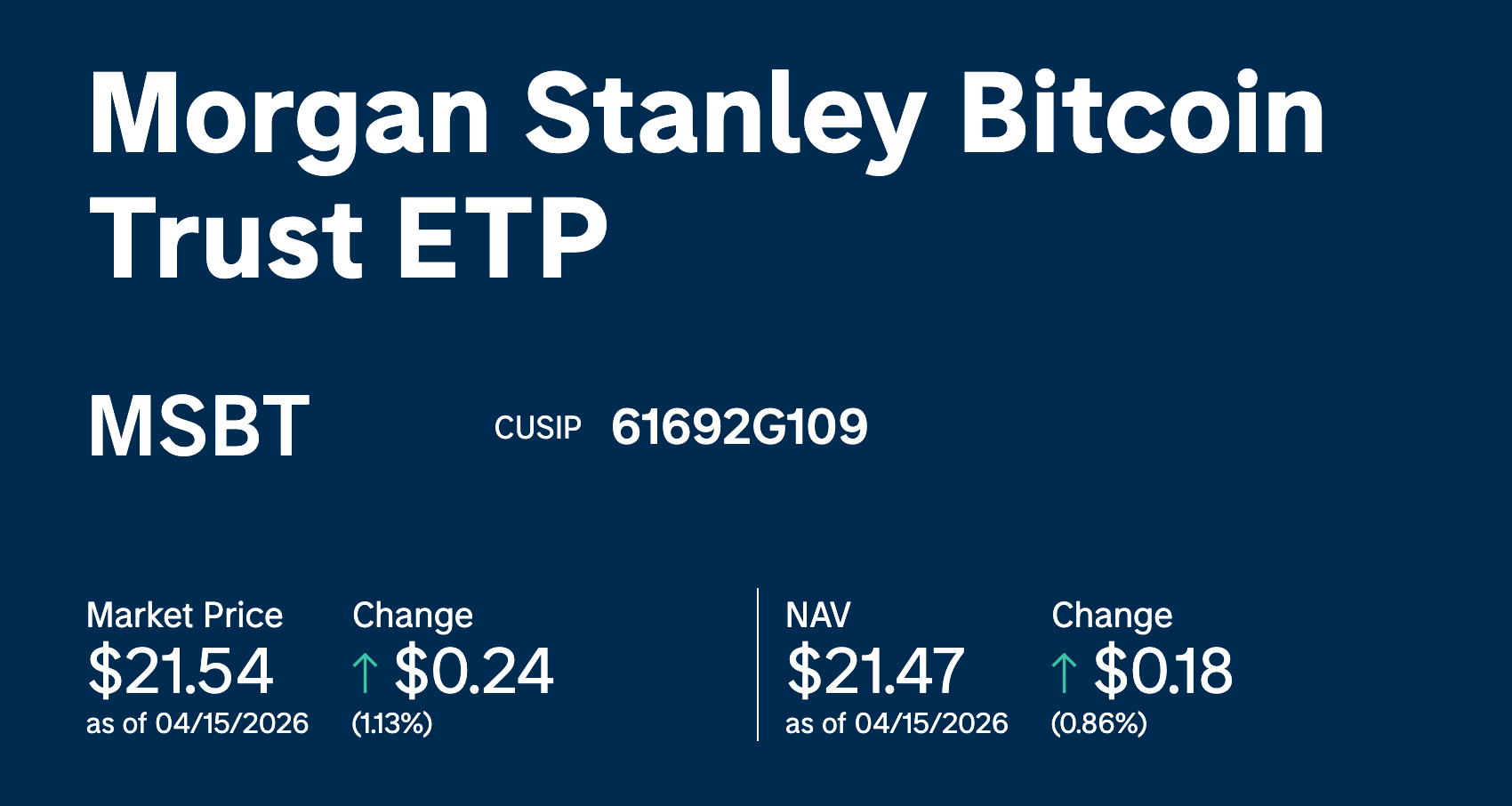
Morgan Stanley launched its first spot Bitcoin ETF, the Morgan Stanley Bitcoin Trust (MSBT), on April 8, becoming the first major U.S. bank to issue such a product. With the lowest annual fee among U.S. Bitcoin ETFs at 0.14%, it is custodied by Coinbase and administered by BNY Mellon. In its first week, MSBT saw consistent inflows despite overall market outflows. On its debut, it attracted $30.6 million while the broader Bitcoin ETF market bled $93.9 million. It continued to see inflows in subsequent days, even as major ETFs like Fidelity’s FBTC experienced significant outflows. By the end of the week, MSBT had accumulated $37.5 million in net inflows, with assets under management (AUM) around $64–70 million, holding roughly 960 BTC. The launch timing—amid a 44% Bitcoin price correction from its 2025 high—suggests institutional accumulation at lower levels. Morgan Stanley’s wealth advisors are reportedly recommending up to a 4% Bitcoin allocation to high-net-worth clients, signaling potential sustained inflows from its $7 trillion client assets. Shortly after, Goldman Sachs filed for its own Bitcoin ETF—a covered call strategy product aimed at generating income from option premiums, catering to yield-seeking institutional investors. Analysts see MSBT’s steady inflows as a sign of institutional confidence despite bearish sentiment, making it a key indicator of Wall Street’s growing engagement with Bitcoin.

Original | Odaily Planet Daily (@OdailyChina)

Author|jk

What is this ETF?

On April 8th, Morgan Stanley officially launched the Morgan Stanley Bitcoin Trust (MSBT) on the NYSE Arca platform, a subsidiary of the New York Stock Exchange, becoming the first spot Bitcoin ETF in U.S. history issued under the name of a major commercial bank.

The fund has Coinbase as its cryptocurrency custodian and The Bank of New York Mellon responsible for cash and administrative management. Its core competitive advantage lies in its annual fee of 0.14%. This is the lowest among all current U.S. spot Bitcoin ETFs, lower than BlackRock's IBIT at 0.25%, Grayscale Mini BTC at 0.15%, and Bitwise's BITB at 0.20%.

A brief summary of Morgan Stanley: It is one of the top investment banks and financial services companies in the U.S., founded in New York in 1935; its market capitalization is approximately $1.8 trillion, and it is one of the Global Systemically Important Banks (G-SIB), ranking alongside Goldman Sachs, JPMorgan Chase, and Bank of America as top Wall Street institutions; it consistently ranks among the top three globally in IPO underwriting, M&A advisory, stock brokerage, and other areas.

First Week Inflow and Outflow Data

On the first day of listing (April 8th), MSBT recorded a net inflow of $30.6 million, with a trading volume of approximately $34 million and over 1.6 million shares traded. Notably, the entire Bitcoin ETF market saw a net outflow of $93.9 million that day, with Fidelity's FBTC and ARK 21Shares experiencing significant outflows. Only BlackRock's IBIT and MSBT recorded positive inflows against the trend. In other words, this ETF attracted capital against the trend amidst a market-wide outflow. On April 9th, as news of U.S.-Iran ceasefire talks boosted market sentiment, the entire Bitcoin ETF market turned to a net inflow of $304 million. MSBT continued to record a net inflow of $14.9 million, ranking third among all ETFs that day, behind only BlackRock's IBIT ($269.3 million) and Fidelity's FBTC ($53.3 million).

Entering the second week (Monday, April 13th), the market weakened again, and the entire Bitcoin ETF market returned to a net outflow state. On Tuesday, April 14th, the situation was similar. Fidelity's FBTC saw a single-day outflow as high as $229.2 million, and the entire market had a net outflow of $291 million. However, MSBT recorded a positive inflow of $6.28 million, standing alongside BlackRock's IBIT and Bitwise's BITB as the only three mainstream Bitcoin ETFs that maintained net inflows that day.

Cumulative data: A cumulative net inflow of $37.5 million since inception, fund AUM is approximately $63.84 million (Morgan Stanley口径), SoSoValue data shows $70.12 million, holdings of about 960 BTC, a market price premium to NAV of 0.57%, with a market price return of +6.86% and an NAV return of +6.24% since inception.

Behind the Data: Institutions Accumulating at Low Points in a Bear Market

The inflow data for MSBT, placed in the current market context, sends a very clear signal.

Bitcoin experienced a significant correction after hitting an all-time high of $126,198 in October 2025 and is currently fluctuating in the $70,000-$75,000 range, a decline of about 44% from the peak. Throughout the first few months of 2026, U.S. spot Bitcoin ETFs experienced four consecutive months of net outflows, with low market sentiment and retail investors exiting.

But what are institutions doing? MSBT's data provides a good example.

First, regarding the timing of the launch, Morgan Stanley prepared this product for about 18 months, ultimately choosing to launch it at a time when Bitcoin was nearly halved from its all-time high and market sentiment was generally pessimistic, rather than chasing the rally at the top of the bull market. Second, this ETF saw continuous inflows against the trend during a period of widespread pessimism. On April 13th and 14th, while the entire Bitcoin ETF market saw significant net outflows (a single-day outflow of $291 million on the 14th), MSBT still maintained positive inflows.

This indicates that the funds flowing into MSBT are not hot money transferred from other ETFs due to fees.

Third, Morgan Stanley's internal recommended holding ratio is as high as 4%. The bank had previously advised clients to set their Bitcoin allocation between 0% and 4%. With the launch of MSBT, advisors now have a direct internal tool with the lowest fees. If Morgan Stanley's approximately 16,000 wealth advisors are actively promoting allocations to high-net-worth clients, even a tiny percentage reallocation of the $7 trillion in client assets under management could bring in billions in sustained inflows. Bloomberg ETF analyst Eric Balchunas even predicts MSBT's AUM could reach $5 billion within a year.

Goldman Sachs Also Prepares to Enter

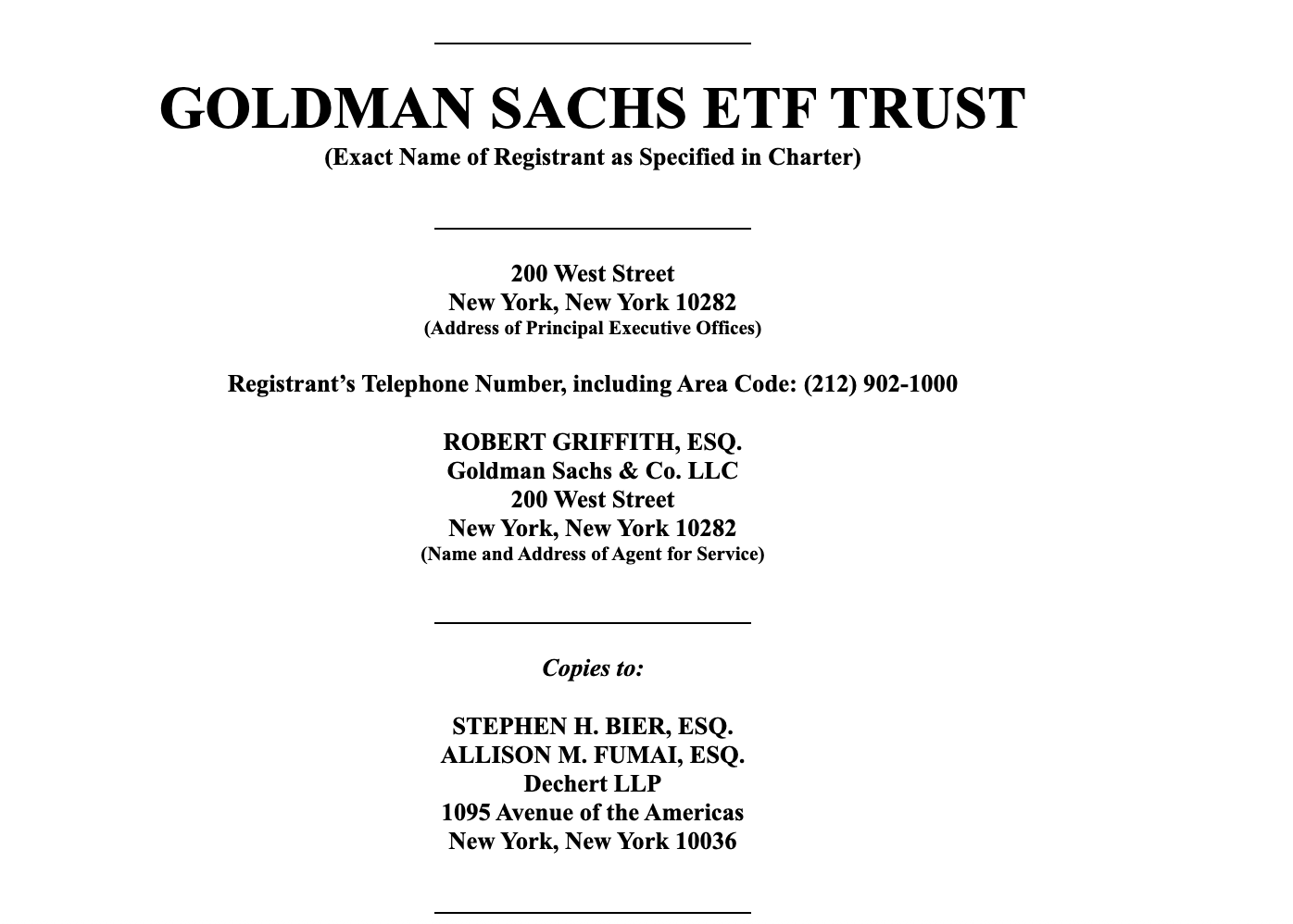
Finally, just six days after MSBT's listing, on April 14th, Goldman Sachs announced its application to launch its first-ever proprietary Bitcoin ETF, becoming another major U.S. bank to enter the fray following Morgan Stanley.

But Goldman's product is fundamentally different from MSBT. This fund, named the "Goldman Sachs Bitcoin Premium Income ETF," employs a Covered Call strategy, aiming to generate ongoing premium income by selling options while maintaining Bitcoin exposure. According to the application process, it is expected to launch as early as late June to early July 2026.

The fund will allocate at least 80% of its net assets to Bitcoin-linked instruments, including spot Bitcoin ETPs, related options, and Bitcoin ETP index options, while using a covered call strategy to generate monthly income. The specific operation is: the fund sells options dynamically adjusted between 40% and 100% of its Bitcoin exposure—this range design allows the fund to continuously collect option premiums in sideways or mildly rising markets, but during significant Bitcoin rallies, the fund's performance will lag behind pure spot ETFs due to capped upside gains.

Simply put, this is a structure that "trades some upside potential for stable cash flow"—regularly distributing option premiums to holders, suitable for investors who want to participate in the Bitcoin narrative but prioritize stable cash flow over full price appreciation. Bloomberg ETF analyst Eric Balchunas thus dubbed it "Boomer Candy," tailor-made for those traditional institutional investors who want a piece of the Bitcoin action but can't stomach the extreme volatility.

Goldman's entry immediately drove a single-day market-wide inflow of $411.5 million. This means, there's no need to panic in a bear market; Wall Street's top institutions have already begun collectively positioning themselves.

Conclusion

The first week numbers for MSBT's listing don't appear particularly striking. The cumulative inflow of $37.5 million is微不足道 compared to BlackRock's IBIT's $55 billion size. But the signal itself is very significant: a century-old institution managing $7 trillion in wealth, entering the market with the lowest fee in history during a 44% Bitcoin correction and极度 pessimistic market sentiment, and relying on 16,000 advisors to continuously push allocations to high-net-worth clients. For readers focused on institutional movements, MSBT's weekly inflow data will become an important window to observe Wall Street's true stance going forward.

Связанные с этим вопросы

QWhat is the Morgan Stanley Bitcoin Trust (MSBT) and what makes it unique among US spot Bitcoin ETFs?

AThe Morgan Stanley Bitcoin Trust (MSBT) is the first spot Bitcoin ETF issued under the name of a major US commercial bank, launched by Morgan Stanley on the NYSE Arca platform. Its most significant competitive advantage is its annual fee of 0.14%, which is the lowest among all US spot Bitcoin ETFs, lower than BlackRock's IBIT (0.25%), Grayscale Mini BTC (0.15%), and Bitwise's BITB (0.20%).

QHow did the MSBT perform in terms of net inflows during its first week of trading, particularly in the context of overall market outflows?

AIn its first week, the MSBT demonstrated resilience by attracting net inflows even when the broader market was experiencing outflows. On its first day (April 8), it recorded a net inflow of $30.6 million while the overall market saw a net outflow of $93.9 million. It continued this trend on subsequent days, such as April 14, when it had a net inflow of $6.28 million while the total market had a significant net outflow of $291 million.

QWhat signal does the launch and initial performance of the MSBT send about institutional behavior in the Bitcoin market?

AThe launch and performance of the MSBT signal that major financial institutions like Morgan Stanley are strategically building positions during a market downturn rather than chasing highs. By launching after a ~44% price correction from the all-time high and continuing to attract inflows during periods of broad market pessimism and outflows, it indicates a calculated, long-term institutional accumulation strategy at lower price levels.

QWhat is Goldman Sachs' proposed Bitcoin ETF and how does its strategy differ from the MSBT?

AGoldman Sachs has applied for its first proprietary Bitcoin ETF called the 'Goldman Sachs Bitcoin Premium Income ETF.' Unlike the straightforward spot Bitcoin strategy of the MSBT, Goldman's fund will employ a covered call options strategy. It aims to generate consistent premium income by selling call options on its Bitcoin holdings, trading off some potential upside price appreciation for stable cash flow. This structure is designed for investors seeking Bitcoin exposure but preferring lower volatility and regular income.

QWhat is the potential long-term significance of the MSBT's launch, according to the article's conclusion?

AThe article concludes that while the initial inflows into the MSBT may seem modest compared to giants like BlackRock's IBIT, its long-term significance is substantial. The fact that a century-old institution managing $7 trillion in client assets entered the market with the lowest fee during a period of extreme pessimism is a powerful signal. The weekly inflow data for MSBT will serve as a crucial window into Wall Street's genuine appetite for Bitcoin, as its vast network of financial advisors begins allocating a portion of their clients' portfolios to it.

Похожее

How Many Tokens Away Is Yang Zhilin from the 'Moon Chasing the Light'?

The article explores the intense competition between two leading Chinese AI companies, DeepSeek and Kimi (Moon Dark Side), and the mounting pressure on Yang Zhilin, the founder of Kimi. While DeepSeek re-emerged after 15 months of silence with its powerful V4 model—boasting 1.6 trillion parameters and low-cost, long-context capabilities—Kimi has been focusing on long-context processing and multi-agent systems with its K2.6 model. Yang faces a threefold challenge: technological rivalry, commercialization pressure, and investor expectations. Despite Kimi’s high valuation (reaching $18 billion), its revenue heavily relies on a single product with low paid conversion rates, while DeepSeek’s strategic silence and open-source influence have strengthened its market position and valuation prospects, now targeting over $20 billion. Both companies reflect broader trends in China’s AI ecosystem: Kimi aims for global influence through open-source contributions and agent-based advancements, while DeepSeek prioritizes foundational innovation and hardware independence, notably shifting to Huawei’s chips. Their competition is seen as vital for China’s AI progress, with the gap between top Chinese and U.S. models narrowing to just 2.7% on the Elo rating scale. Ultimately, the article argues that this rivalry, though anxiety-inducing for leaders like Zhilin, is essential for driving innovation and solidifying China’s role in the global AI landscape.

marsbit12 ч. назад

How Many Tokens Away Is Yang Zhilin from the 'Moon Chasing the Light'?

marsbit12 ч. назад

Торговля

Спот
Фьючерсы

Популярные статьи

Как купить S

Добро пожаловать на HTX.com! Мы сделали приобретение Sonic (S) простым и удобным. Следуйте нашему пошаговому руководству и отправляйтесь в свое крипто-путешествие.Шаг 1: Создайте аккаунт на HTXИспользуйте свой адрес электронной почты или номер телефона, чтобы зарегистрироваться и бесплатно создать аккаунт на HTX. Пройдите удобную регистрацию и откройте для себя весь функционал.Создать аккаунтШаг 2: Перейдите в Купить криптовалюту и выберите свой способ оплатыКредитная/Дебетовая Карта: Используйте свою карту Visa или Mastercard для мгновенной покупки Sonic (S).Баланс: Используйте средства с баланса вашего аккаунта HTX для простой торговли.Третьи Лица: Мы добавили популярные способы оплаты, такие как Google Pay и Apple Pay, для повышения удобства.P2P: Торгуйте напрямую с другими пользователями на HTX.Внебиржевая Торговля (OTC): Мы предлагаем индивидуальные услуги и конкурентоспособные обменные курсы для трейдеров.Шаг 3: Хранение Sonic (S)После приобретения вами Sonic (S) храните их в своем аккаунте на HTX. В качестве альтернативы вы можете отправить их куда-либо с помощью перевода в блокчейне или использовать для торговли с другими криптовалютами.Шаг 4: Торговля Sonic (S)С легкостью торгуйте Sonic (S) на спотовом рынке HTX. Просто зайдите в свой аккаунт, выберите торговую пару, совершайте сделки и следите за ними в режиме реального времени. Мы предлагаем удобный интерфейс как для начинающих, так и для опытных трейдеров.

1.2k просмотров всегоОпубликовано 2025.01.15Обновлено 2025.03.21

Как купить S

Sonic: Обновления под руководством Андре Кронье – новая звезда Layer-1 на фоне спада рынка

Он решает проблемы масштабируемости, совместимости между блокчейнами и стимулов для разработчиков с помощью технологических инноваций.

2.2k просмотров всегоОпубликовано 2025.04.09Обновлено 2025.04.09

Sonic: Обновления под руководством Андре Кронье – новая звезда Layer-1 на фоне спада рынка

HTX Learn: Пройдите обучение по "Sonic" и разделите 1000 USDT

HTX Learn — ваш проводник в мир перспективных проектов, и мы запускаем специальное мероприятие "Учитесь и Зарабатывайте", посвящённое этим проектам. Наше новое направление .

1.8k просмотров всегоОпубликовано 2025.04.10Обновлено 2025.04.10

HTX Learn: Пройдите обучение по "Sonic" и разделите 1000 USDT

Обсуждения

Добро пожаловать в Сообщество HTX. Здесь вы сможете быть в курсе последних новостей о развитии платформы и получить доступ к профессиональной аналитической информации о рынке. Мнения пользователей о цене на S (S) представлены ниже.

活动图片