‘Let crypto bill die’ – Crypto VC cites stablecoin yields as red line

ambcryptoОпубликовано 2026-01-11Обновлено 2026-01-11

Введение

Some crypto industry leaders are expressing strong opposition to a potential stablecoin yield ban in the upcoming crypto market structure bill. Following reports that lawmakers are receptive to TradFi demands to restrict yields, Galaxy CEO Mike Novogratz criticized Congress for prioritizing bank profits over consumers. Nic Carter of Castle Island Ventures stated that if stablecoin yields are killed, the entire bill should be allowed to die. However, Consensys lawyer Bill Hughes remains optimistic about the bipartisan negotiations. Key committees are set to mark up their versions of the bill on January 15th, covering SEC and CFTC oversight. The bill requires Democrat support to pass committee votes. Contentious issues include stablecoin yields, DeFi provisions, and ethics standards. If the vote fails, it could sour market sentiment and delay progress until at least 2026 due to upcoming elections and crowded legislative calendars.

Some crypto industry leaders are disappointed following reports that lawmakers might be open to the idea of banning stablecoin yields.

According to reporter Sander Lutz, lawmakers are now receptive to TradFi demands to change stablecoin yield rules during bipartisan negotiations on the crypto market structure bill. The bill is scheduled for a markup on 15 January.

Reacting to the development, Galaxy CEO Mike Novogratz slammed the legislators, calling the update a “sad state.”

“Sad state that Congress cares more about banks margins than they do consumers! Both D’s and R’s need to ask who are they serving?”

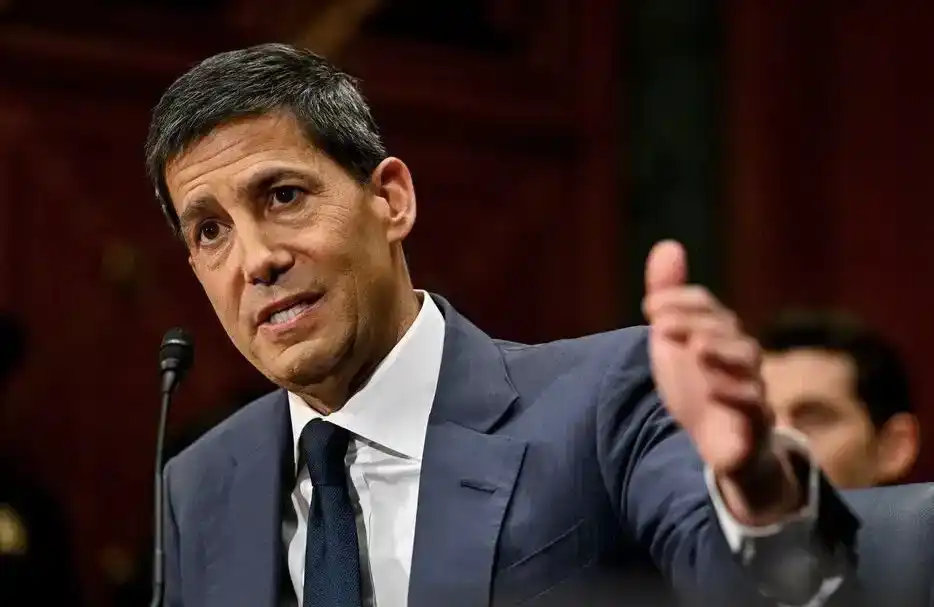
For his part, Nic Carter, partner at crypto VC firm Castle Island Ventures, said that the sector would be better off without the bill if stablecoin rewards are restricted.

“If they want to kill stablecoin yield we might as well just let the bill die.”

Bill Hughes, a lawyer at Consensys and one of the attendees at the meeting, acknowledged potential pitfalls. However, he remains optimistic about the crypto bill.

“For what it’s worth, I left the call more bullish than I had been previously. We are close. Pitfalls, for sure. But closer than we’ve ever been. And smart people calling the game. I’m optimistic.”

What to expect from crypto bill markup

Both the Senate Banking Committee and Senate Agriculture Committee are expected to markup their respective version of the crypto bill on 15 January. The Banking committee handles the SEC’s oversight mandate, while the Agriculture committee will cover the responsibility of the Commodity Futures Trading Commission (CFTC).

Although the bill is sponsored by Republicans, they must have Democrat buy-in to pass the committee vote before being advanced to the Senate chamber for a final floor vote.

For the Senate Banking group, the key contentious issues have been stablecoin yields, DeFi provisions, and ethics standards that seek to ban President Donald Trump’s family from the crypto sector.

Based on Carter and Novogratz’s reactions, it’s unclear whether yields or DeFi regulations will be deal-breakers.

However, according to Senator Tim Scott (R-SC), Senate Banking Committee chair, it may be time to take the bill to the next step after “good-faith, bipartisan negotiations.”

What’s next if the vote fails?

Alex Thorn, Galaxy Research’s Head of Research, recently reiterated that the bill needs 7-10 Democrats to pass the Senate Banking committee vote (A total of 60 YES votes needed to pass).

If the vote falters, it would have minimal impact. However, it will still sour market sentiment, he said. He also warned that another committee vote could be challenging in 2026.

“If the Senate falls short next week, the combination of crowded congressional calendars and looming midterm elections makes a second run in 2026 highly uncertain.”


Final Thoughts

  • TradFi’s demand to restrict stablecoin yields is reportedly gaining traction in Congress.
  • Failure to pass the committee vote on 15 January could throw the bill into limbo.

Связанные с этим вопросы

QWhat is the main concern of crypto industry leaders regarding the upcoming stablecoin bill?

ACrypto industry leaders are concerned and disappointed that lawmakers might be open to the idea of banning stablecoin yields, which they see as a major red line.

QWho is Mike Novogratz and what was his reaction to the proposed changes?

AMike Novogratz is the CEO of Galaxy. He slammed the legislators, calling the update a 'sad state' and accused Congress of caring more about bank margins than consumers.

QAccording to Nic Carter, what would be the consequence of restricting stablecoin yields in the bill?

ANic Carter, a partner at crypto VC firm Castle Island Ventures, stated that if stablecoin yields are restricted, the sector would be better off letting the bill die.

QWhat are the key contentious issues for the Senate Banking Committee regarding the crypto bill?

AThe key contentious issues for the Senate Banking Committee are stablecoin yields, DeFi provisions, and ethics standards that seek to ban President Donald Trump’s family from the crypto sector.

QWhat did Alex Thorn say would happen if the Senate Banking committee vote fails on January 15?

AAlex Thorn, Galaxy Research’s Head of Research, said that if the vote fails, it would have minimal immediate impact but would sour market sentiment, and a second run in 2026 would be highly uncertain due to crowded congressional calendars and midterm elections.

Похожее

Lowering Expectations for BTC's Next Bull Market

The author, Alex Xu, explains his decision to significantly reduce his Bitcoin holdings (from full to ~30% of his portfolio) during the current bull cycle, citing a lowered long-term outlook for BTC's price appreciation in the next cycle. He outlines six key reasons for this reduced expectation: 1. **Diminished Growth Drivers:** The narrative of exponential user adoption has largely played out with institutional ETF adoption. The next major growth phase—adoption by sovereign national reserves or central banks—seems unlikely in the near future. 2. **Personal Opportunity Cost:** More attractive investment opportunities have emerged in other assets, such as undervalued companies. 3. **Industry-Wide Contraction:** The broader crypto industry is struggling, with most Web3 business models (SocialFi, GameFi, DePIN) failing. This overall萧条 (depression) reduces the fundamental demand and consensus for Bitcoin. 4. **Strain on Major Buyer:** MicroStrategy, a major corporate buyer of BTC, faces rising financing expenses for its debt, which could slow its purchasing rate and create significant marginal pressure on the market. 5. **Increased Competition from Gold:** The emergence of "tokenized gold" has closed the functional gap (portability, divisibility) between physical gold and Bitcoin, offering a strong competitor in the non-sovereign store-of-value space. 6. **Security Budget Concerns:** The block reward halving continues to exacerbate the long-standing issue of funding Bitcoin's network security, with new fee source explorations like Ordinals and L2s largely failing. The author's decision to hold a significant (though reduced) position reflects a cautious, not bearish, outlook. He remains open to increasing his exposure if the fundamental reasons for his skepticism change or if new positive catalysts emerge.

marsbit34 мин. назад

Lowering Expectations for BTC's Next Bull Market

marsbit34 мин. назад

Can Iran 'Control' the Strait of Hormuz?

Iran has announced a comprehensive plan to assert control over the strategic Strait of Hormuz, a critical global oil shipping chokepoint. The proposed measures include requiring all vessels to obtain Iranian permission for passage, imposing fees for security, environmental protection, and navigation management—preferably paid in Iranian rials—and absolutely banning Israeli ships. Vessels from countries deemed hostile by Iran’s top security bodies may also be barred. Analysts suggest Iran’s motives are multifaceted: increasing pressure on the U.S. and Israel by leveraging control over oil transit to influence global prices and inflation; creating a new revenue stream, potentially exceeding $7.7 billion annually, to counter Western sanctions and support postwar reconstruction; and using transit permissions as bargaining chips in future negotiations, notably with the U.S. However, the plan faces significant practical and diplomatic challenges. Enforcing comprehensive interception and fee collection in the busy waterway, patrolled by international military forces, would be difficult. The U.S. has already countering with a blockade of Iranian ports and threats to intercept any ship paying fees, potentially strangling Iran’s oil exports and fee revenue. Broad international opposition, led by European and Gulf states, and legal controversies further complicate implementation. The proposal may ultimately serve more as a negotiating tactic than a feasible policy, with its execution remaining highly uncertain.

marsbit1 ч. назад

Can Iran 'Control' the Strait of Hormuz?

marsbit1 ч. назад

Торговля

Спот
Фьючерсы
活动图片