Indonesia lists 29 licensed crypto platforms as big exchanges explore market

cointelegraphОпубликовано 2025-12-22Обновлено 2025-12-22

Введение

Indonesia's Financial Services Authority (OJK) has published a whitelist of 29 licensed cryptocurrency platforms, including major international players like Upbit, to help users identify legally authorized exchanges. The move comes as global firms such as Robinhood and OSL Group expand into Indonesia—one of the world’s fastest-growing crypto markets with over 17 million traders. The list follows stricter regulations (OJK Regulation No. 23/2025) that enhance oversight of digital assets, require prior approval for derivatives trading, and mandate investor knowledge tests. These measures aim to align with international standards and strengthen consumer protection in the rapidly expanding crypto economy.

Indonesia’s Financial Services Authority (OJK) has published a whitelist of 29 licensed crypto platforms, officially spelling out which exchanges are legally allowed to operate in the country.

The list, which includes names of entities and their apps or platforms, is meant to serve as an official reference for users to verify whether a provider is properly licensed before trading.

OJK has urged the public to transact only with entities on the list and to treat unlisted platforms as unlicensed operators.
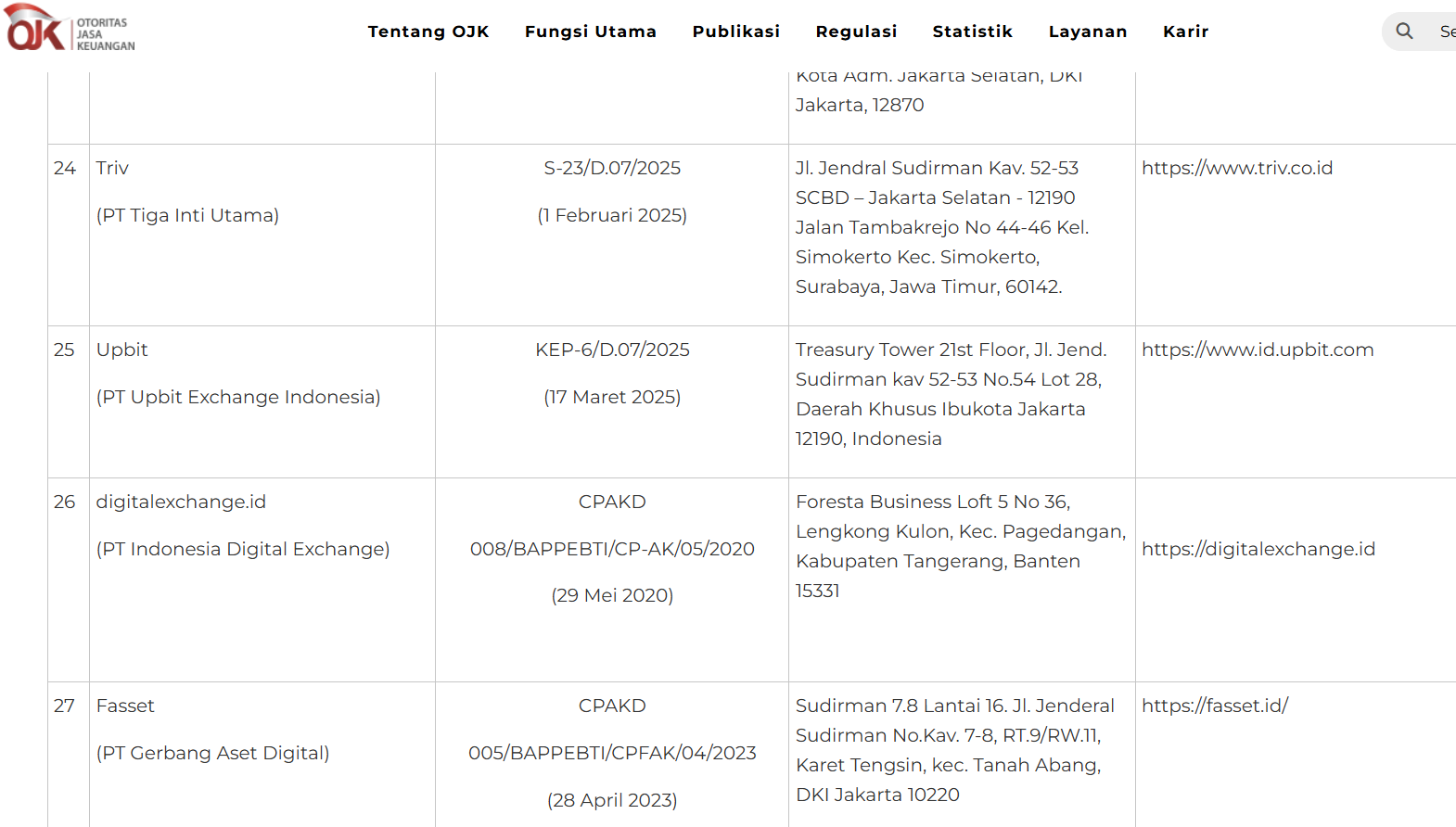
South Korea’s largest exchange, Upbit, is included among licensed exchanges. Source: OJK

​Global crypto players eyeing Indonesia

The clarification of who can legally offer crypto services lands as global players move to lock in Indonesian footholds.

Robinhood signed deals earlier this month to acquire Indonesian brokerage Buana Capital and licensed digital asset trader PT Pedagang Aset Kripto, a move that gives it entry to a market with more than 19 million capital‐market investors and about 17 million crypto traders.

Related: Indonesia’s digital rupiah CBDC to get ‘stablecoin’ companion backed by government bonds

Hong Kong–based OSL Group completed its acquisition of licensed local exchange Koinsayang in September, securing regulatory approval to offer spot and derivatives trading.

Related: Survey finds 6 in 10 of Asia’s rich plan to ramp up crypto buying

Tightening oversight of digital assets

The whitelist follows OJK Regulation No. 23/2025, which tightens oversight of digital financial assets, including crypto and related derivatives. The rule bars exchanges from facilitating trades in assets that are not registered or approved by a licensed digital asset exchange, and it introduces a framework for digital asset derivatives that requires prior OJK approval at the exchange level.

Platforms must implement margin mechanisms via segregated funds or digital assets, and consumers have to pass a knowledge test before accessing derivatives. These are measures the regulator said were designed to align with international supervisory standards and strengthen investor protection.

Related: Ripple’s big Singapore win: What the expanded license allows now

Among fastest-growing markets worldwide

Indonesia’s tightening grip on licensing comes as the country cements its place as a major crypto market. Robinhood and industry data providers describe Indonesia as one of Southeast Asia’s fastest‐growing crypto economies, with tens of millions of investors across capital markets and digital assets.

Chainalysis’ 2025 Global Crypto Adoption Index places Indonesia in the global top 10 for crypto adoption and notes that the country has been among the most dynamic markets worldwide, highlighting its growing presence in global digital asset activity.

Связанные с этим вопросы

QHow many licensed crypto platforms has Indonesia's Financial Services Authority (OJK) officially listed?

AIndonesia's Financial Services Authority (OJK) has published a whitelist of 29 licensed crypto platforms.

QWhat major South Korean exchange is included in Indonesia's list of licensed crypto platforms?

ASouth Korea's largest exchange, Upbit, is included among the licensed exchanges in Indonesia.

QWhich company recently acquired Indonesian brokerage Buana Capital and licensed digital asset trader PT Pedagang Aset Kripto?

ARobinhood signed deals to acquire Indonesian brokerage Buana Capital and licensed digital asset trader PT Pedagang Aset Kripto.

QWhat does OJK Regulation No. 23/2025 introduce for digital asset derivatives trading?

AOJK Regulation No. 23/2025 introduces a framework for digital asset derivatives that requires prior OJK approval at the exchange level and mandates that consumers pass a knowledge test before accessing derivatives.

QHow does Indonesia rank globally in terms of crypto adoption according to Chainalysis' 2025 index?

AAccording to Chainalysis' 2025 Global Crypto Adoption Index, Indonesia is placed in the global top 10 for crypto adoption.

Похожее

Fu Peng's First Public Speech in 2026: What Exactly Are Crypto Assets? Why Did I Join the Crypto Asset Industry?

Fu Peng, a renowned macroeconomist and now Chief Economist at New火 Group, delivered his first public speech of 2026 at the Hong Kong Web3 Festival. He explained his perspective on crypto assets and why he joined the industry, framing it within the context of macroeconomic trends and financial evolution. Fu emphasized that crypto assets are transitioning from an early, belief-driven phase to a mature, institutionally integrated asset class. He drew parallels to the 1970s-80s, when technological advances (like computing) revolutionized traditional finance, leading to the rise of FICC (Fixed Income, Currencies, and Commodities). Similarly, current advancements in AI, data, and blockchain are reshaping finance, with crypto assets becoming part of a new "FICC + C" (C for Crypto) framework. He noted that institutional capital, including traditional hedge funds, avoided early crypto due to its speculative nature but are now engaging as regulatory clarity emerges (e.g., stablecoin laws, CFTC classifying crypto as a commodity). Fu predicted that 2025-2026 marks a turning point where crypto becomes a standardized, financially viable asset for diversified portfolios, akin to commodities or derivatives in traditional finance. Fu defined Bitcoin not as "digital gold" in a simplistic sense but as a value-preserving, financially tradable asset. He highlighted that crypto's future lies in regulated, institutional adoption, moving away from retail-dominated trading. His entry into crypto signals this maturation, where traditional finance integrates crypto into mainstream asset management.

marsbit6 мин. назад

Fu Peng's First Public Speech in 2026: What Exactly Are Crypto Assets? Why Did I Join the Crypto Asset Industry?

marsbit6 мин. назад

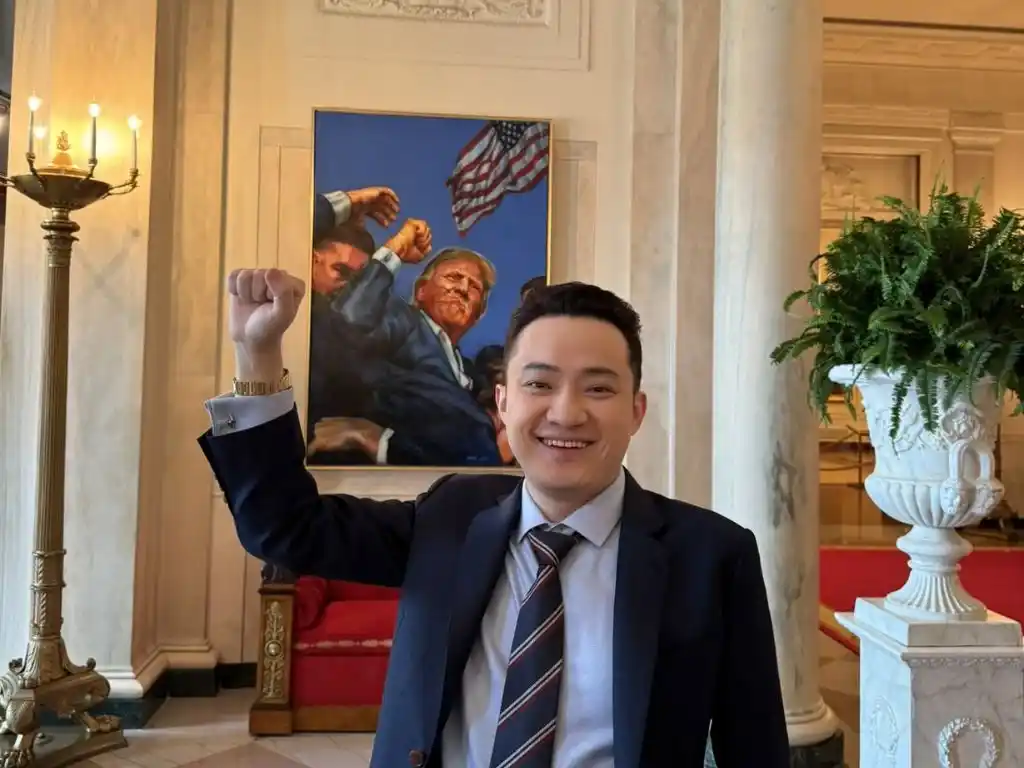
Justin Sun Sues Trump Family: What $75 Million Bought Was Only a Blacklist

Justin Sun, founder of Tron, has filed a lawsuit in federal court against World Liberty Financial (WLF), alleging he was made the "primary target of a fraudulent scheme" after investing $75 million. Sun claims the investment secured him an advisor title and WLFI tokens, which were later frozen by WLF, causing "hundreds of millions in losses." The dispute began in late 2024 when Sun's investment helped revive WLF's struggling token sale, which ultimately raised $550 million. Shortly after, the SEC dropped its lawsuit against Sun following Donald Trump's inauguration. However, relations soured when Sun refused WLF's demands for additional funding. In August 2025, WLF added a "blacklist" function to its smart contract, allowing it to unilaterally freeze tokens. Sun's holdings, worth approximately $107 million, were frozen, and he was threatened with token destruction. The lawsuit highlights WLF's structure, which directs 75% of token sale profits to the Trump family, who had earned $1 billion by December 2025. WLF's CEO is Zach Witkoff, son of U.S. Middle East envoy Steve Witkoff. The project faces scrutiny for opaque operations, including a controversial loan arrangement on the Dolomite platform, co-founded by a WLF advisor. Despite Sun's history with the SEC, the case underscores centralization risks within DeFi, as WLF controls governance and holds powers to freeze assets arbitrarily. Sun's tokens remain frozen as legal proceedings begin.

marsbit14 мин. назад

Justin Sun Sues Trump Family: What $75 Million Bought Was Only a Blacklist

marsbit14 мин. назад

$500 to Buy OpenAI Stock: Silicon Valley's Most Respectable Liquidity Invitation

Silicon Valley's largest venture capital platform, AngelList, has launched a new fund called USVC, allowing U.S. retail investors to buy into high-profile AI companies like OpenAI, Anthropic, and xAI with a minimum investment of $500—no accredited investor status required. Promoted by AngelList co-founder Naval Ravikant, the fund is framed as an opportunity for ordinary people to access high-growth private tech investments traditionally reserved for VCs. However, critics argue it functions more like an exit vehicle for early insiders. USVC acquires shares not through primary rounds but largely via secondary transactions—purchasing stakes from early investors, VC funds, and employees looking to cash out at peak valuations. With companies like xAI heavily weighted in the portfolio, the fund effectively channels retail money into providing liquidity for insiders who entered at much lower valuations. The fund’s structure raises concerns: shares are illiquid, with no secondary market, and buybacks are limited and discretionary. The actual annual fee reaches 3.61%, far above the advertised 1% management fee. This model parallels the "low float, high fully diluted valuation" strategy seen in crypto, where early investors profit by selling to latecomers at inflated prices. The timing—alongside similar moves by platforms like Robinhood—suggests that Silicon Valley’s sudden interest in retail inclusion may be less about democratizing access and more about securing exits for insiders.

marsbit44 мин. назад

$500 to Buy OpenAI Stock: Silicon Valley's Most Respectable Liquidity Invitation

marsbit44 мин. назад

Торговля

Спот
Фьючерсы
活动图片