Glassnode spinout Cense raises €6.5 million seed round to transform crypto compliance for banks

insights.glassnodeОпубликовано 2026-06-03Обновлено 2026-06-03

Введение

Cense, a crypto compliance platform spun out from Glassnode in 2023, has raised a €6.5 million seed round co-led by G+D Ventures and Rabo Investments. The funding will support its European expansion. The company addresses a critical gap between crypto-native activity and traditional banking by automating compliance due diligence. It analyzes on-chain data to produce standardized, auditable documentation for financial institutions, helping them manage digital asset exposure and meet regulatory requirements where conventional systems fall short. The investment underscores the growing need for trusted infrastructure as institutional adoption of crypto accelerates.

G+D Ventures and Rabo Investments have co-led a €6.5 million seed round in Cense, the crypto compliance and evidence platform for financial institutions and a 2023 spinout of Glassnode. The round was joined by a group of angel investors and will support the continued European expansion of the Cense platform.

This is a notable moment for Glassnode. Cense is the first venture to be spun out of the company. The decision reflected a clear conviction: one of the largest unmet needs in digital asset markets is the operational gap between crypto-native activity and the traditional banking system. That problem required a dedicated company, led by the same founders and powered by the same on-chain analytics foundations that Glassnode has spent years developing.

“When we founded Glassnode, our mission was to make on-chain data understandable and useful for anyone serious about digital asset markets. Cense extends that mission into the regulated banking layer, applying the same analytical rigor to one of the most consequential workflows in finance. Spinning Cense out as an independent company was the right way to give that mission the focus and pace it deserves, and this funding round confirms that the market sees the opportunity as clearly as we do,” says Jan Happel, co-founder and CEO of Glassnode.

The funding comes at a structural inflection point for digital assets. Capital is increasingly moving between crypto and traditional finance, whether through long-held positions being realized, stablecoin liquidity moving across venues, or institutional allocators repositioning at scale. Banks are now being asked to engage with clients and transactions that their existing infrastructure was not designed to assess. The operational layer that connects on-chain activity to bank-grade compliance documentation has become one of the clearest unmet needs in the market.

The Cense platform addresses this gap. By collecting and analyzing wallet, exchange and transaction data, it automates crypto compliance due diligence and produces standardized, auditable documentation that banks can act on. Conventional AML systems were not built for digital assets, while pure crypto analytics platforms often fail to reflect the regulatory and decision-making realities of financial institutions. Cense bridges that gap by translating complex on-chain activity into structured, bank-usable evidence.

“What stands out most is the team behind Cense: the founders have already built two successful companies, including Glassnode, and are early pioneers in the space. They combine strong product expertise with proven entrepreneurial experience. The market opportunity is equally compelling, driven by accelerating institutional adoption of digital assets and an increasingly complex regulatory environment that demands precisely such solutions,” says Andreas Barthelmes, Principal at G+D Ventures.

“Banks need trusted infrastructure to manage digital asset exposure with the same confidence they apply to financial crime and compliance,” says Dennis Wohlfarth, CEO of Cense. “This investment validates Cense’s position as that infrastructure layer. G+D Ventures and Rabo Investments bring deep expertise, strong banking networks and operational experience, giving us a strong foundation for the continued expansion of Cense.”

“What I find compelling about Cense is that the team understands both the complexity of digital assets and the operational realities of financial institutions. That combination is rare, and it is exactly what is needed when building infrastructure for banks,” says Sander ten Hagen, Investor at Cense.

Pascal Deck, Investor at Rabo Investments, adds: “Cense addresses a critical blind spot in crypto compliance by combining on-chain and off-chain insights, enabling institutions to onboard clients with greater speed, confidence and regulatory clarity, positioning it as a key enabler for scaling into digital assets. As more investors incorporate crypto into their portfolios, solutions like Cense are essential to turn a traditionally complex onboarding process into a seamless and scalable experience.”

With the new funding, Cense will accelerate the technological development of its platform and expand its market presence across Europe.


About Cense

Cense is a Swiss crypto intelligence specialist, founded in 2023 as a spinout of Glassnode. The Cense platform helps banks and financial institutions gain visibility into customers’ digital asset activity and provides the infrastructure to assess, document, and manage that activity at scale while meeting increasing regulatory requirements.


Связанные с этим вопросы

QWhat is Cense and how much seed funding did it recently raise?

ACense is a crypto compliance and evidence platform for financial institutions, spun out of Glassnode in 2023. It recently raised €6.5 million in a seed funding round.

QWhich companies co-led the seed investment round in Cense?

AThe €6.5 million seed round in Cense was co-led by G+D Ventures and Rabo Investments.

QAccording to the article, what is the main problem that Cense aims to solve?

ACense aims to solve the operational gap between crypto-native activity and the traditional banking system. It addresses the unmet need for an infrastructure layer that translates complex on-chain activity into structured, bank-usable compliance documentation that existing systems were not designed to handle.

QWhat will Cense use the new funding for?

ACense will use the new funding to accelerate the technological development of its platform and expand its market presence across Europe.

QWho is Dennis Wohlfarth and what did he say the investment validates?

ADennis Wohlfarth is the CEO of Cense. He stated that the investment validates Cense's position as the trusted infrastructure layer that banks need to manage digital asset exposure with the same confidence they apply to financial crime and compliance.

Похожее

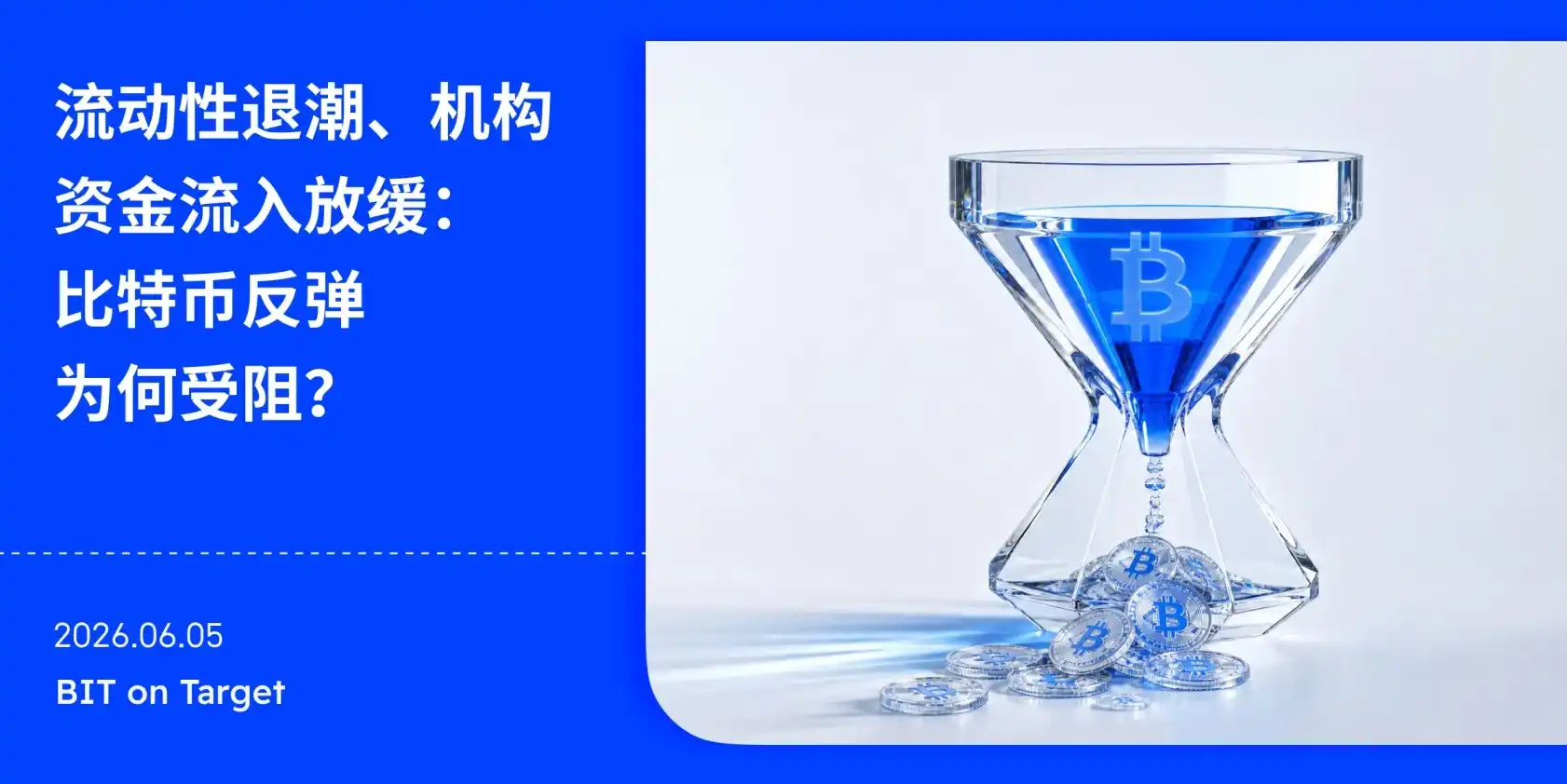
BIT Research: ETF Purchases Have Slowed, Strategy (MicroStrategy) Has Slowed, What Else Can Drive Bitcoin's Rise?

Market Refocus on Inflation and Rate Expectations Weighs on Bitcoin Currently, the market is in a phase of macro-repricing dominated by inflation and interest rate expectations. Bitcoin, which previously benefited from easy liquidity and low inflation, is seeing its core bullish drivers weaken. These drivers were market expectations for interest rate cuts and strong inflows from Bitcoin ETFs and institutions like MicroStrategy (referred to as "Strategy" in the text). The logic has shifted. Recent high inflation data (e.g., CPI hitting 3.8% in a May 2026 report) has caused the market to sharply reduce its rate cut expectations for 2025 and even price in potential hikes. This is a key constraint for Bitcoin, as it lacks cash flows and is highly sensitive to rate expectations. Concurrently, institutional capital flows have slowed significantly. Following the hot CPI data, Bitcoin ETFs saw accelerated outflows, with around $4.3 billion leaving over a period. MicroStrategy's ability to keep adding substantial Bitcoin to its balance sheet is also diminishing. Together, ETF and MicroStrategy holdings total roughly $110 billion, but their momentum as growth engines is cooling. In summary, Bitcoin's current pressure stems not from its own fundamentals but from a changing macro environment. As long as inflation stays elevated, Bitcoin is likely to remain in a consolidating phase. However, historically, inflation eventually peaks. Once it recedes and rate cut expectations rebuild, institutional capital could return, potentially fueling a new and more robust recovery phase for Bitcoin.

marsbit7 мин. назад

BIT Research: ETF Purchases Have Slowed, Strategy (MicroStrategy) Has Slowed, What Else Can Drive Bitcoin's Rise?

marsbit7 мин. назад

Earning 1000 Trillion in Half a Year, 'Pocketing' 20 Million per Capita: This Round of Wealth Creation in the Korean Stock Market is Unprecedented in Scale

The South Korean stock market is experiencing an unprecedented wealth surge in 2026, with household equity and fund asset values soaring by over 1,000 trillion KRW (~$730bn) year-to-date. This translates to an average per capita wealth increase of roughly 20 million KRW, fueled by a historic 109% rally in the KOSPI index. The boom is driven by three converging forces: an AI-driven semiconductor supercycle boosting giants like Samsung and SK Hynix; the government's "Value-Up" market reforms addressing long-standing corporate governance issues; and aggressive real estate regulations that have locked capital within financial markets, preventing profits from flowing back into property. This has triggered a wealth effect, boosting high-end consumption significantly. However, the gains are highly concentrated. The two semiconductor behemoths account for over half the index's value, but retail investors own relatively low stakes in them, systematically missing the biggest rallies. Wealth and consumption benefits are skewed towards luxury goods and imported cars, bypassing mainstream retail. Further risks stem from excessive leverage, with high trading volume in leveraged ETFs, and a market sentiment heavily reliant on the AI sector's fortunes and speculative rumors. While this cycle marks a potential shift from real estate to equities as a primary wealth generator for Koreans, its sustainability, amid structural imbalances and leverage, remains a critical test.

marsbit12 мин. назад

Earning 1000 Trillion in Half a Year, 'Pocketing' 20 Million per Capita: This Round of Wealth Creation in the Korean Stock Market is Unprecedented in Scale

marsbit12 мин. назад

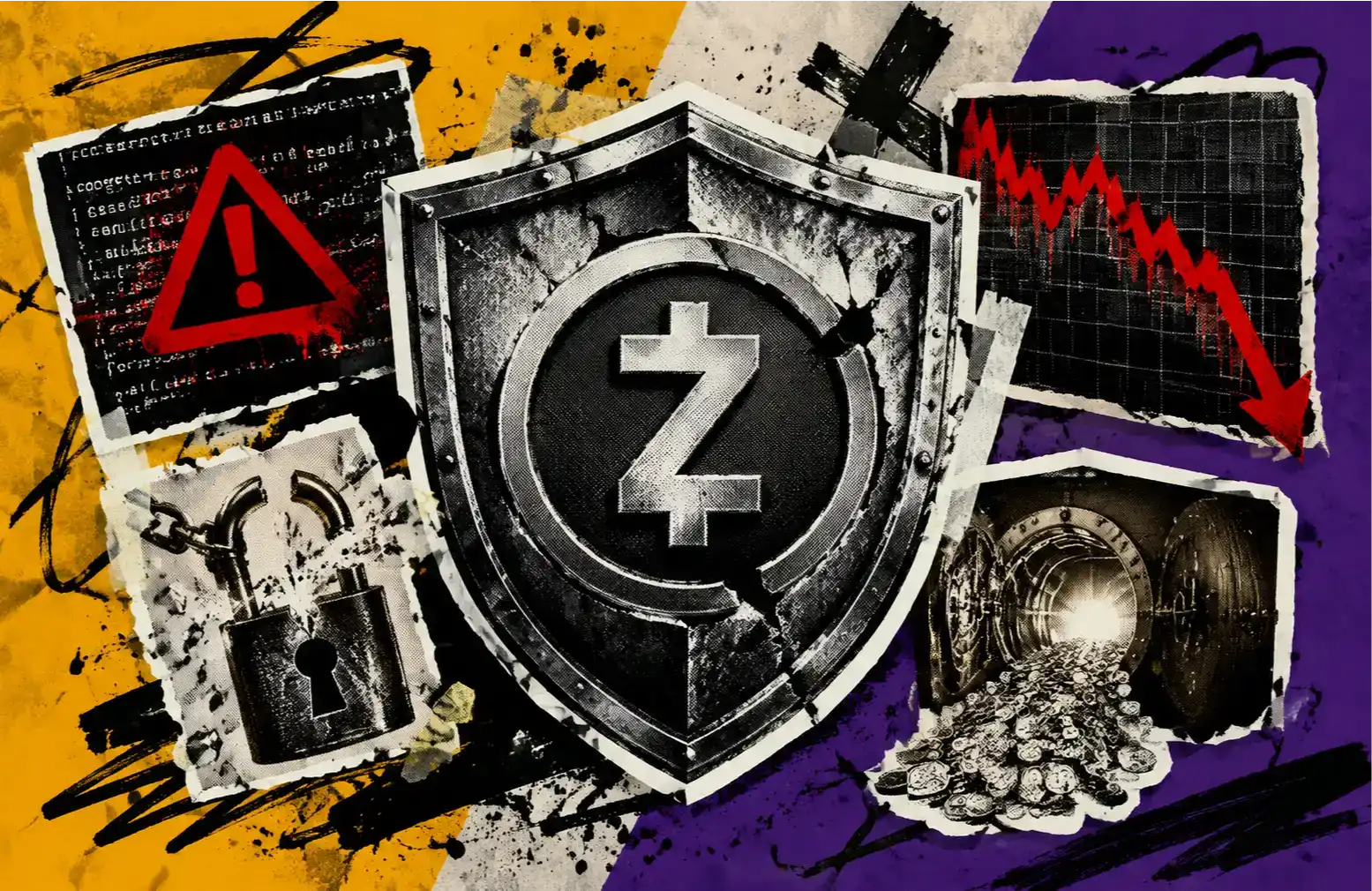
Behind ZEC's Over 30% Plunge: An 'Unlimited Minting' Vulnerability with No Way to Prove if It Was Ever Exploited

A critical vulnerability was discovered in Zcash's Orchard privacy pool, allowing for the theoretical creation of undetectable counterfeit ZEC. Researcher Taylor Hornby found the flaw on May 29th, 2024, within the Orchard circuit's cryptographic constraints, which could let an attacker bypass asset conservation rules. Although a rapid emergency fix was deployed within days via a coordinated soft and hard fork, a core uncertainty remains: due to Orchard's privacy features, it is impossible to cryptographically prove whether this "unlimited mint" flaw was exploited in the nearly four years since the pool's 2022 launch. This uncertainty, rather than the patched flaw itself, triggered a market panic, causing ZEC's price to drop over 30%. While the Zcash Foundation stated no evidence of exploitation was found, independent entity Shielded Labs emphasized the impossibility of definitively proving no counterfeit ZEC was ever created. The incident highlights the unique trust challenge in privacy systems. To address this, developers are proposing a new network upgrade with enhanced auditing to allow verifiable proof of supply integrity. Notably, the researcher utilized the newly released AI model Claude Opus 4.8 as a tool during the security review, signaling the growing role of advanced AI in uncovering complex cryptographic vulnerabilities.

marsbit15 мин. назад

Behind ZEC's Over 30% Plunge: An 'Unlimited Minting' Vulnerability with No Way to Prove if It Was Ever Exploited

marsbit15 мин. назад

imToken's 10th Anniversary Unveils Strategic Direction for the Next Decade: Evolving from a Trusted Main Wallet to a Personal Digital Hub

On its tenth anniversary, decentralized wallet imToken announced its strategic vision for the next decade: evolving from a "trusted main wallet" into a "personal control interface." This new direction aims to help users manage not only digital assets but also identity, permissions, and AI agent actions in an increasingly open and intelligent internet. imToken outlined that while the past decade focused on Store, Send, and Stake—securing assets, enabling transfers, and facilitating network participation—the future introduces a fourth core proposition: Sign. This expanded concept goes beyond transaction signing to encompass expressing intent, granting permissions, setting rules, delegating actions, and revoking authorizations. As AI agents gain autonomy, imToken emphasizes the need for clear, verifiable, and revocable user control over their actions. CEO Ben He stated that imToken's mission is shifting from enabling ownership of digital assets to ensuring user sovereignty over their entire digital world in the AI era. The company's core principle has been upgraded from "Digital Assets, Under Your Control" to "Your Digital World, Under Your Control." Future development will focus on three areas: upholding self-custody principles, extending security from transactions to authorizations and automated actions, and building product capabilities for managing permissions, delegations, policies, and revocations. imToken views the wallet's role as expanding into a trusted control interface for human-AI collaboration, where managing keys, signatures, and permissions forms the infrastructure for personal digital sovereignty. Founded in 2016, imToken serves millions of users across 150+ countries, providing non-custodial wallet services supporting over 50 blockchain networks.

marsbit16 мин. назад

imToken's 10th Anniversary Unveils Strategic Direction for the Next Decade: Evolving from a Trusted Main Wallet to a Personal Digital Hub

marsbit16 мин. назад

Торговля

Спот
Фьючерсы
活动图片