Автор: Suvashree Ghosh, Matt Haldane
Компиляция: Saoirse, Foresight News
Еще недавно криптоиндустрия провозглашала лозунг «блокчейн, а не биткоин», утверждая, что технология распределенного реестра выйдет за рамки финансовых приложений и кардинально преобразит интернет. Однако последние тенденции финансирования показывают, что в реальном мире наличные деньги по-прежнему правят бал.
После того как в начале 2020-х годов спал ажиотаж вокруг Web3 и NFT, инвестиционный энтузиазм в криптоиндустрии заметно охладел. Но один сегмент рынка вопреки тенденциям привлек все больше венчурного капитала — платежи в стейблкоинах.
Покупка компанией Stripe в прошлом году Bridge за 1,1 миллиарда долларов стала ранним сигналом того, что традиционные финансовые институты начали осваивать платежи в стейблкоинах. После этого ряд стартапов, таких как ARQ, KAST, RedotPay, последовательно получили новое финансирование для создания трансграничных платежных каналов и финансовых услуг на основе стейблкоинов. Покупка компанией Mastercard на прошлой неделе BVNK за 1,8 миллиарда долларов лишь подтвердила сильный интерес рынка к этому направлению.
«Стартапы, связанные со стейблкоинами, — это, пожалуй, самая горячая область венчурного финансирования на сегодняшний день», — заявил генеральный партнер Dragonfly Capital Роб Хэдик. — «Стейблкоины уже отделились от всей криптоиндустрии и стали одним из немногих прорывных приложений, которые действительно нашли широкое практическое применение».
По данным Architect Partners, компании, специализирующейся на ежегодных отчетах о криптофинансировании, общий объем финансирования компаний, занимающихся криптоплатежами, в 2025 году взлетел до 2,6 миллиарда долларов, превысив сумму за предыдущие три года вместе взятые. На фоне покупки Mastercard BVNK ожидается, что в этом году эта цифра продолжит расти.
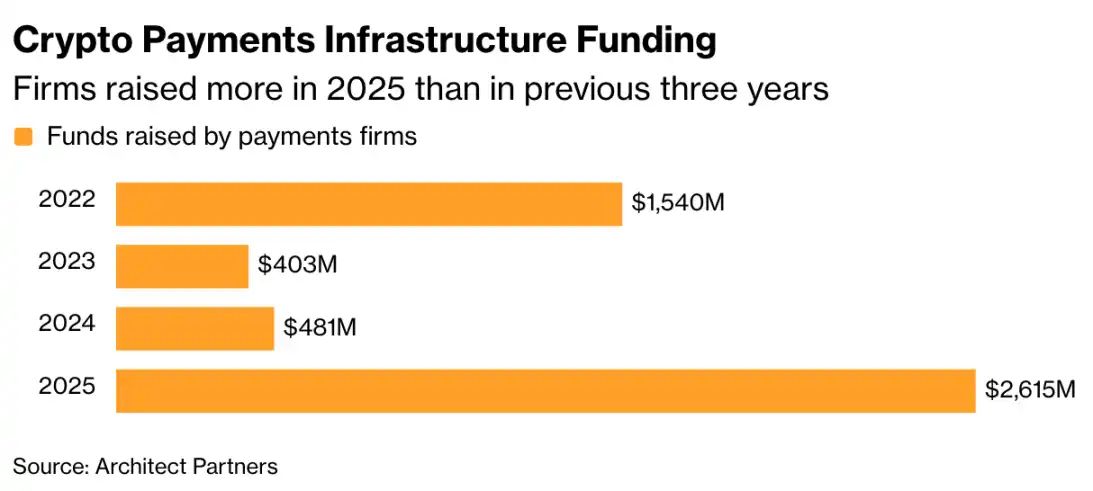
Финансирование инфраструктуры криптоплатежей: объем финансирования компаний в 2025 году превысил сумму за предыдущие три года
В то же время общий объем частного финансирования в криптоиндустрии вырос с почти 13 миллиардов долларов в 2024 году до 20,4 миллиарда долларов в 2025 году, но все еще остался ниже пикового значения в 27,6 миллиарда долларов в 2022 году.
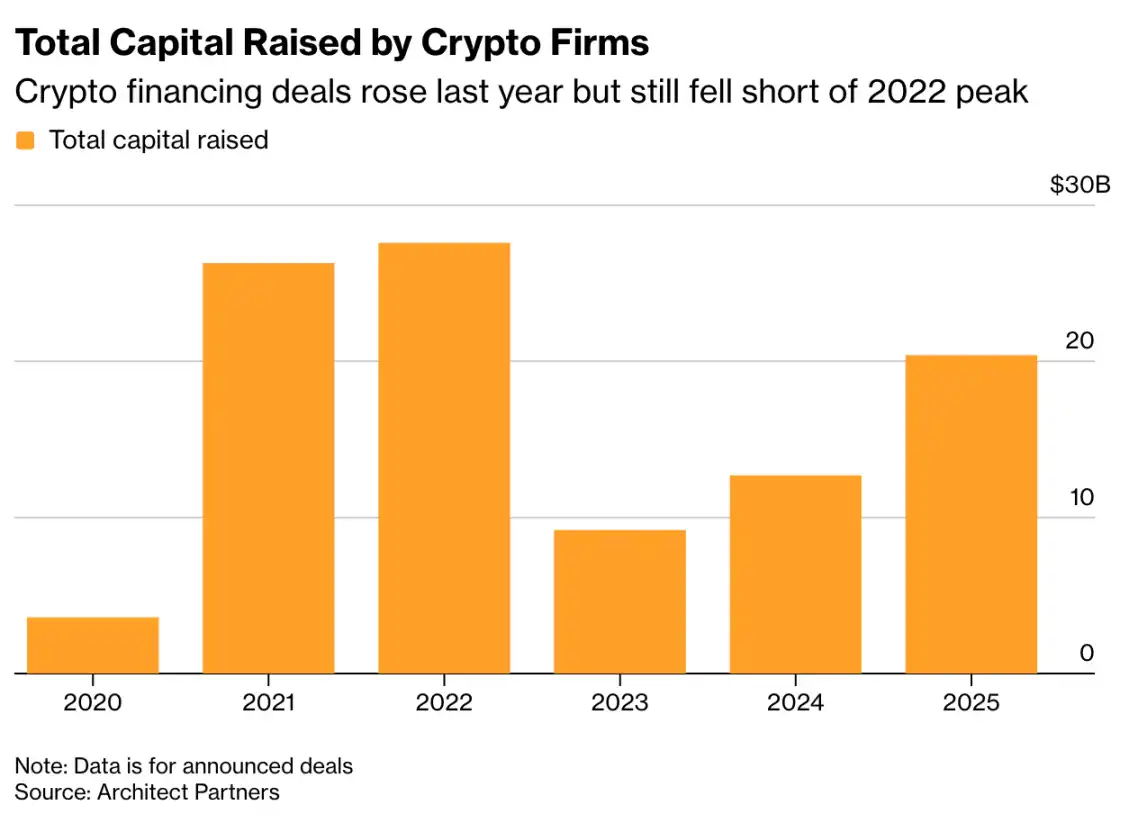
Общий объем финансирования криптовалютных компаний: количество сделок по финансированию криптовалют в прошлом году выросло, но так и не достигло пика 2022 года
В настоящее время частные средства наиболее сконцентрированы в двух основных областях: «инфраструктура для инвестиций и торговли» и «брокеры и биржи», которые являются бизнесом, связанным с финансовыми приложениями. Платежная инфраструктура стабильно занимает третье место. Это разительный контраст с сегментом блокчейн-игр, который был ядром бума Web3 и NFT: объем финансирования упал с 3,76 миллиарда долларов в 2022 году (около 14% от общего финансирования) до того, что в 2025 году он перестал быть отдельной категорией в статистике.
Фактически, в 2022 году различные децентрализованные приложения (уровень функциональности Web3) в совокупности привлекли финансирование в размере 5,2 миллиарда долларов; в то время как в отчете за 2025 год осталась только одна категория — потребительские DApp, с финансированием всего в 864 миллиона долларов.
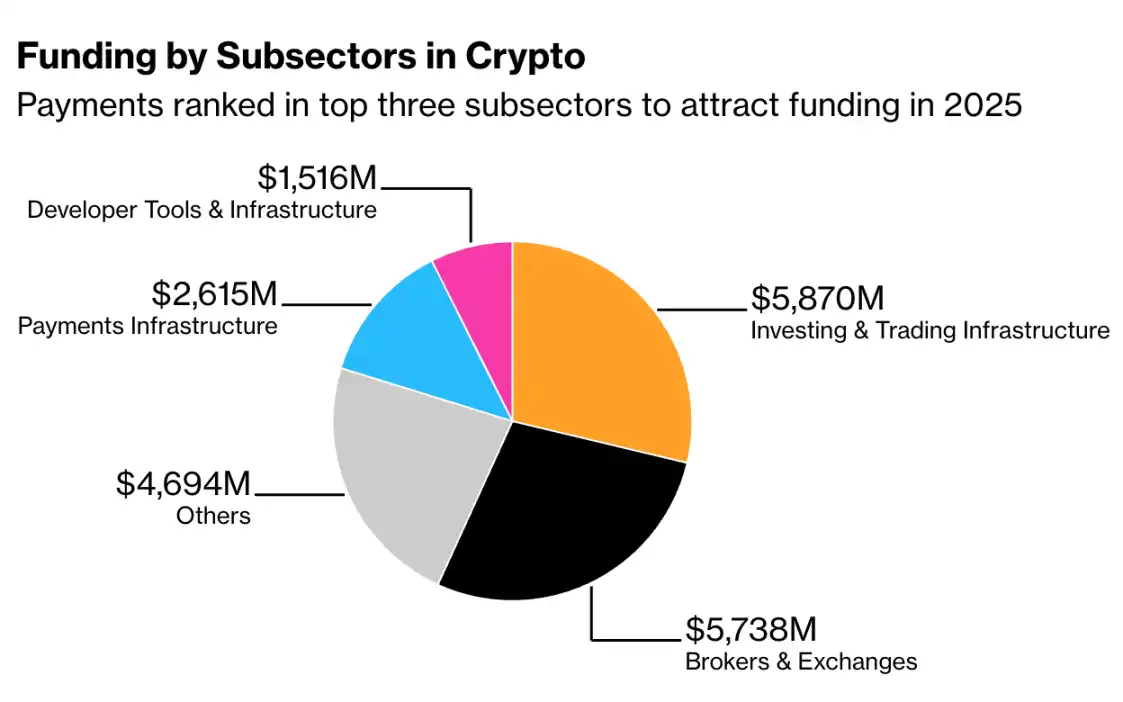
Финансирование по сегментам криптовалютной индустрии: платежная сфера вошла в тройку подотраслей, привлекших наибольшее финансирование в 2025 году
Стейблкоины создают более совершенную финансовую инфраструктуру для блокчейна. Эти токены обычно привязаны к доллару в соотношении 1:1, а их стоимость обеспечена базовыми активами. Благодаря прокриптополитике администрации Трампа энтузиазм рынка в отношении стейблкоинов в прошлом году достиг невиданных высот.
Согласно данным Artemis Analytics, общий объем транзакций со стейблкоинами в 2025 году резко вырос на 72%, достигнув 33 триллионов долларов. В настоящее время двумя крупнейшими стейблкоинами являются USDT компании Tether и USDC компании Circle.
Акции Circle во вторник показали самое большое падение в истории, поскольку инвесторы оценивают возможные изменения в регулировании стейблкоинов в США и усиление конкуренции в отрасли. Но основная привлекательность стейблкоинов по-прежнему очевидна: максимально эффективный перевод средств.
Межбанковские переводы до сих пор остаются медленными, дорогими и требуют значительного объема средств. Несмотря на многолетнее развитие финтеха, трансграничные переводы по-прежнему сильно зависят от открытия счетов с предварительно внесенными средствами в разных юрисдикциях.
«Стейблкоины кардинально меняют эту картину», — заявил соучредитель и генеральный директор компании по международным платежам Nium Праджит Нану. — «Они позволяют передавать стоимость по всему миру в режиме реального времени без сопоставимых потерь в эффективности использования средств, и именно поэтому инвесторы видят в них ключевую инфраструктуру платежей следующего поколения».
В этой отрасли по-прежнему существуют сильные «привратники». Крупные платежные сети, такие как Visa и Mastercard, контролируют доступ к платежным терминалам. В отчете основатель и управляющий партнер Architect Partners Эрик Ф. Рисли написал, что проблема дистрибуции каналов «является главной головной болью для каждой компании, связанной со стейблкоинами и платежами».
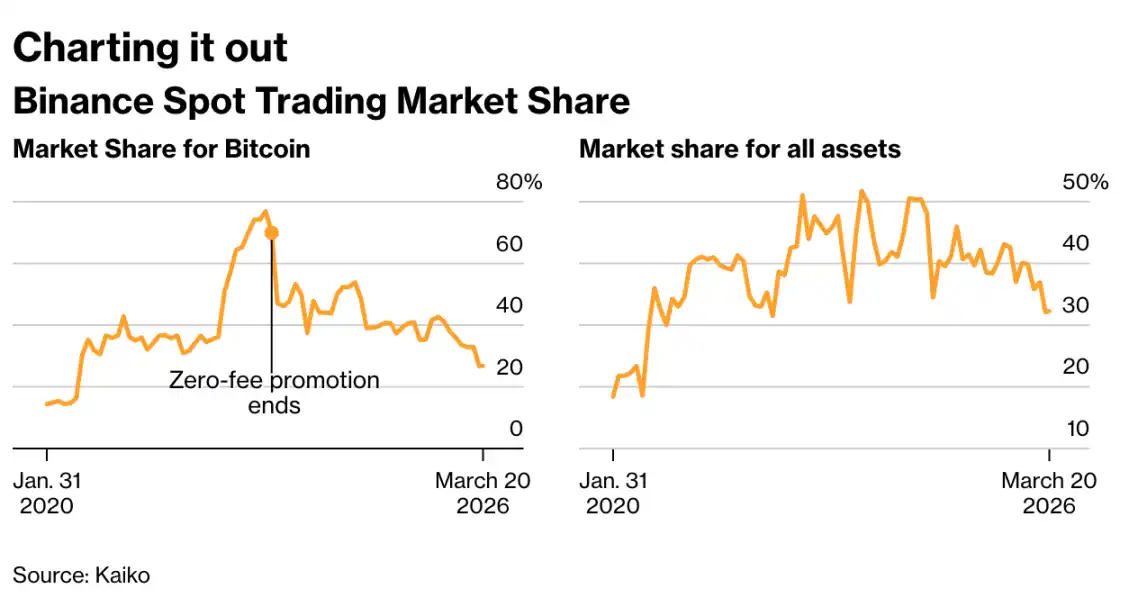
График доли рынка спотовой торговли Binance
По состоянию на февраль этого года доля Binance в спотовой торговле биткоинами упала до 27% (эти данные могут незначительно отличаться в зависимости от методологии подсчета), а доля в торговле всеми криптовалютами упала с 52% до 32%. Доля ее наиболее прибыльного бизнеса с деривативами также значительно снизилась, упав до 34%.
Franklin Templeton в партнерстве с Ondo Finance выпустила токенизированные продукты ETF, которые можно торговать через криптокошельки круглосуточно, в обход брокерских счетов и правил торговли в ограниченное время, от которых десятилетиями зависели инвестиции в фонды.
Голоса из индустрии
«Ирония проведения этого мероприятия сейчас в Лас-Вегасе просто бросается в глаза», — прямо заявил глава клиентских решений Morningstar Бен Джонсон, заявив, что эта отрасль «уже окончательно перешла красную линию между инвестициями и азартными играми без возможности отступления».
ETF, созданные для упрощения инвестиций, теперь стали носителем новейшей формы финансовых азартных игр в США. По данным Bloomberg Intelligence, из 1000 новых фондов, выпущенных в прошлом году, 36% пришлось на leveraged products или фонды, связанные с криптовалютами.






