From Silicon Valley Darling to Sanctions Focus: How a Startup Crossed Venezuela's Red Line

比推Опубликовано 2026-02-03Обновлено 2026-02-03

Введение

Kontigo, a Silicon Valley fintech startup, raised over $20 million from investors like Coinbase Ventures and was part of Y Combinator, promoting itself as a "neobank for Latin America." However, it became a key channel for moving funds in and out of Venezuela, circumventing U.S. sanctions aimed at isolating the Maduro regime. The company enabled users to convert bolivars into dollar-pegged stablecoins, but it also facilitated oil sales for Venezuela, with nearly 80% of oil revenues paid in stablecoins in late 2024. Kontigo operated under a Venezuelan government license through a local entity, Oha Technology, though it denied ties to the regime. After U.S. military action ousted Maduro, Kontigo faced service cuts from JPMorgan, Stripe, and others, alongside allegations of undisclosed government links. The company launched an internal review, insisting it complies with U.S. laws, but its transaction activity plummeted amid the crisis.

Written by: Ben Foldy

Compiled by: Luffy, Foresight News

Original title: How a Silicon Valley Startup Became Venezuela's Cryptocurrency Lifeline


Fintech startup Kontigo's founders embraced Silicon Valley strategies: moving the company into a San Francisco residence, hosting hackathons tailored for TikTok; pitching buzzword-filled presentations claiming to build a "new Latin American bank"; even boasting about pioneering the Martian economy.

These tactics helped this small, flamboyant crypto startup secure a spot in top accelerator Y Combinator, raising over $20 million in December last year from prominent Silicon Valley investors including Coinbase Ventures.

But recent U.S. military actions in Venezuela have spotlighted the controversial aspect of Kontigo's business: it became a crucial channel for moving funds in and out of Venezuela's heavily sanctioned economy.

Kontigo now faces service disruptions from banks and payment networks including JPMorgan Chase, Stripe and Bridge, while also confronting allegations of undisclosed ties to the ousted Maduro regime, which Kontigo denies.

A Kontigo spokesperson declined to answer questions about business details but stated in a declaration that the company is reviewing its operational model.

"Kontigo is committed to expanding financial access for underserved communities," the spokesperson said. "We are conducting an internal review and will share updates at the appropriate time. We adhere to U.S. laws, including U.S. sanctions regulations, and are evaluating existing sanctions compliance processes and mechanisms, making improvements where necessary."

Kontigo was co-founded in 2023 by Venezuelan Jesus Castillo, who portrayed himself as a "David" about to defeat banking giants. The company claims its 1.2 million users across Latin and South America have moved over $1 billion through its platform. The app allows users to convert hard currency into dollar-pegged stablecoins for payments and access to traditional banking systems.

Outside Venezuela, the company presented itself to investors as a platform helping ordinary Latin Americans facing hyperinflation. But within Venezuela, it became a channel to circumvent U.S. sanctions designed to cut off key sectors of the Maduro regime from the international financial system.

According to a presentation at an invitation-only partner meeting in Caracas last December, an economist invited by Kontigo explained how the company's technology helped the Maduro regime evade U.S. sanctions on oil exports, bringing oil sales revenue back into the domestic economy as cryptocurrency.

As sanctions severed Venezuela's traditional financial channels, the government increasingly relied on stablecoins for oil sales. The economist showed that nearly 80% of oil revenue in the second half of last year came in stablecoin payments. These funds were then converted into bolivars through banks, informal exchange counters, and government-authorized crypto exchanges like Kontigo.

One slide stated: "The crypto market came to the rescue."

For months, Kontigo provided users with transfers between JPMorgan U.S. bank accounts through intermediaries, transactions mostly prohibited by sanctions.

Late last year, JPMorgan abruptly cut off these channels. According to sources, Stripe, which had handled payments and transactions for Kontigo, has also terminated its partnership.

When Kontigo partnered with another U.S. financial institution, executives claimed the company had no physical operations in Venezuela, sources said. The partner recently took steps to end its relationship with Kontigo.

Venezuela turns to stablecoins for oil sales under U.S. sanctions

In the U.S.: A flashy, high-profile startup

Castillo co-founded Kontigo to solve Venezuela's daily financial struggles with blockchain technology, where hyperinflation and lack of credit made it hard for people to save. The platform allows users to convert bolivars into more stable, dollar-pegged stablecoins.

To U.S. investors, Castillo packaged his startup as an immigrant team with big dreams, fighting hard. Early investors said they were drawn to the vision of helping people in real need.

Promotional materials claimed Castillo and colleagues drove Uber night shifts to make ends meet while building the company, aiming to create a financial system for a "multi-planetary abundance era" to avoid "exporting Earth's monetary and economic failures to Mars."

By mid-2025, according to a promotional video on LinkedIn, Kontigo began offering users free "virtual" U.S. bank accounts with JPMorgan. Sources said these accounts were provided through another fintech startup, Checkbook, with no direct banking relationship between JPMorgan and Kontigo. Nonetheless, Kontigo used Chase's brand logo in advertisements.

Last December, just weeks before the U.S. raid toppled the Maduro regime, Kontigo announced a $20 million funding round from investors including Coinbase Ventures, Alumni Ventures and DST Capital. Coinbase, Alumni and DST did not respond to requests for comment.

After the funding, Castillo posted a video on LinkedIn boasting about what he called a "$23 million" Silicon Valley mansion where he and his seven-person team would live, free from distractions, aiming to reach $100 million in annual revenue within 60 days.

"If you're not willing to move the whole team to San Francisco, lock yourselves in a house until you hit the goal, you're not serious enough, you don't want success as badly as we do, you're destined to fail," Castillo said.

According to a promotional video, the funding coincided with a rebranding, with Kontigo claiming to allow any global user to buy and sell dollar-pegged crypto without providing identification.

"Jamie Dimon, we're coming," Castillo posted on LinkedIn, calling out the JPMorgan CEO and again boasting about building the "world's largest bank."
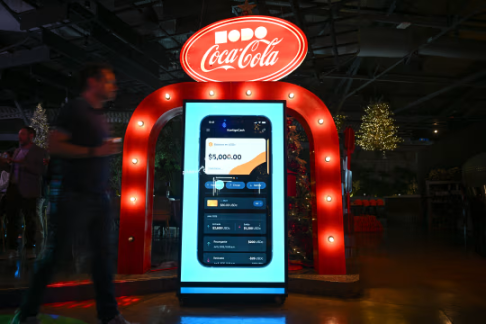
A large screen displaying Kontigo's crypto app interface, showing a $5,000 balance and transaction history

In Venezuela: A different story

In Venezuela, Kontigo operated under a license from the country's crypto regulator Sunacrip, granted by the Venezuelan finance minister to a local company named Oha Technology.

Kontigo later seemed to distance itself from Oha, saying it partners with local institutions in all markets. But until recently, Kontigo's website showed it held a Sunacrip operating license and listed Oha as its Venezuelan subsidiary. Castillo's personal webpage showed he had served as COO of Oha AI. And in private group chats seen by The Wall Street Journal, Castillo celebrated obtaining the Sunacrip license in January 2025, sharing the license document.

At the invitation-only Caracas meeting, company spokespeople emphasized crypto's growing role in Venezuela's economy. Economist Asdrúbal Oliveros told the audience that sanctioned oil sales revenue was received in stablecoins, then flowed into licensed crypto platforms like Kontigo and its competitor Crixto.

Venezuelan Kontigo users could use the app to transfer funds to their Venezuelan bank accounts, even if the bank was sanctioned by the U.S. Treasury.

A turn of fate

Just weeks after announcing its funding success, Kontigo's situation began deteriorating rapidly.

In late December, an article in The Information exposed that Kontigo had been cut off by JPMorgan.

Days later, U.S. military action ousted President Maduro. Soon after, influential independent fintech journalist Jason Mikula wrote about the company, alleging secret ties between Kontigo and one of Maduro's sons.

Kontigo fought back immediately.

When Klarna CEO Sebastian Siemiatkowski shared Mikula's article on X, Kontigo's official account replied that the company "will hold those spreading this false information accountable for the damage to our commercial reputation."

Kontigo then informed users of a platform hack, with 1,005 users losing about $341,000 total. The company said it fully compensated users for their losses.

In a nine-minute video posted on social media on January 12, Castillo said in Spanish that the platform was under attack from both hackers and critics, denying any ties between Kontigo and the Maduro regime.

"The truth is, Kontigo's success is the result of years of effort, resilience and persistence. We are not anyone's son-in-law, nephew or cousin," he said.

Nevertheless, as problems mounted, the company's operations seemed to struggle. Sources said Stripe and Bridge had terminated partnerships with Kontigo, and users reported PayPal no longer processed the app's payments. The Venezuelan crypto license held by Oha Technology expired on January 8.

Kontigo's main public crypto wallet, listed on its website, showed almost no transaction activity in recent days. For months prior, the wallet handled weekly transactions worth hundreds of thousands of dollars, but since January 19, only a few transactions of about $1 each have occurred.


Twitter:https://twitter.com/BitpushNewsCN

Bitpush TG Discussion Group:https://t.me/BitPushCommunity

Bitpush TG Subscription: https://t.me/bitpush

Original link:https://www.bitpush.news/articles/7608316

Связанные с этим вопросы

QWhat was Kontigo able to achieve through its association with Silicon Valley's Y Combinator and investors?

AKontigo successfully joined the prestigious Y Combinator incubator and raised over $20 million in funding from prominent Silicon Valley investors like Coinbase Ventures in December, by adopting Silicon Valley strategies such as hosting hackathons and using ambitious rhetoric.

QHow did Kontigo's operations in Venezuela come under scrutiny related to U.S. sanctions?

AKontigo became a significant channel for moving funds in and out of Venezuela's heavily sanctioned economy, facilitating the conversion of hard currency into dollar-pegged stablecoins, which was used to circumvent U.S. sanctions aimed at isolating the Maduro regime.

QWhat specific service did Kontigo provide that involved JPMorgan Chase, and what was the outcome?

AKontigo provided users with virtual U.S. bank accounts through JPMorgan Chase via an intermediary, enabling transactions that were largely prohibited under sanctions. JPMorgan Chase eventually cut off this service in response to the sanctions compliance issues.

QWhat allegations did Kontigo face regarding its connections to the Venezuelan government, and how did the company respond?

AKontigo faced allegations of undisclosed ties to the overthrown Maduro regime, including claims of involvement with a son of Maduro. The company denied these associations, stating that their success was due to hard work and not political connections.

QWhat major setbacks did Kontigo experience following the U.S. military action in Venezuela and subsequent reports?

AKontigo faced service disruptions from partners like JPMorgan Chase, Stripe, and Bridge, encountered a hack that resulted in user losses, had its Venezuelan crypto license expire, and saw a significant drop in transaction activity on its platform.

Похожее

Near Returns to the AI Stage: Transformation into a Public Chain Due to 'Payroll Difficulties,' Agent and Privacy Emerge as New Growth Narratives

NEAR Returns to AI Origins: From Payroll Struggles to Blockchain, Now Focusing on AI Agents and Privacy NEAR Protocol's journey began not with grand blockchain ambitions, but from a practical hurdle: its AI startup founders, including Transformer paper co-author Illia Polosukhin, couldn't efficiently pay international developers in 2017. This led them to pivot and build a high-performance, scalable blockchain. After years navigating various crypto narratives like sharding and cross-chain interoperability, NEAR is now leveraging its AI roots to re-enter the AI arena. A key driver is its "NEAR Intents" layer, which abstracts complex cross-chain transactions. Users simply state their goal (e.g., swap BTC for ETH), and a solver network finds the optimal route. This system has processed over $20B in cross-chain volume, generating significant fee revenue. A major growth area is private transactions via "Confidential Intents/Swaps," which hide trade details until settlement to protect against MEV and front-running. Remarkably, private swaps recently accounted for over 40% of NEAR's transaction volume, highlighting strong demand but also potential regulatory scrutiny. With its AI-founder pedigree, NEAR is positioning itself at the intersection of blockchain, AI agents, and privacy, aiming to become infrastructure for the emerging agent economy while navigating the challenges of its rapid adoption.

marsbit2 ч. назад

Near Returns to the AI Stage: Transformation into a Public Chain Due to 'Payroll Difficulties,' Agent and Privacy Emerge as New Growth Narratives

marsbit2 ч. назад

From Ethereum to AI's 'CROPS': What Exactly is This Set of 'Slow Variables' That Vitalik Repeatedly Emphasizes?

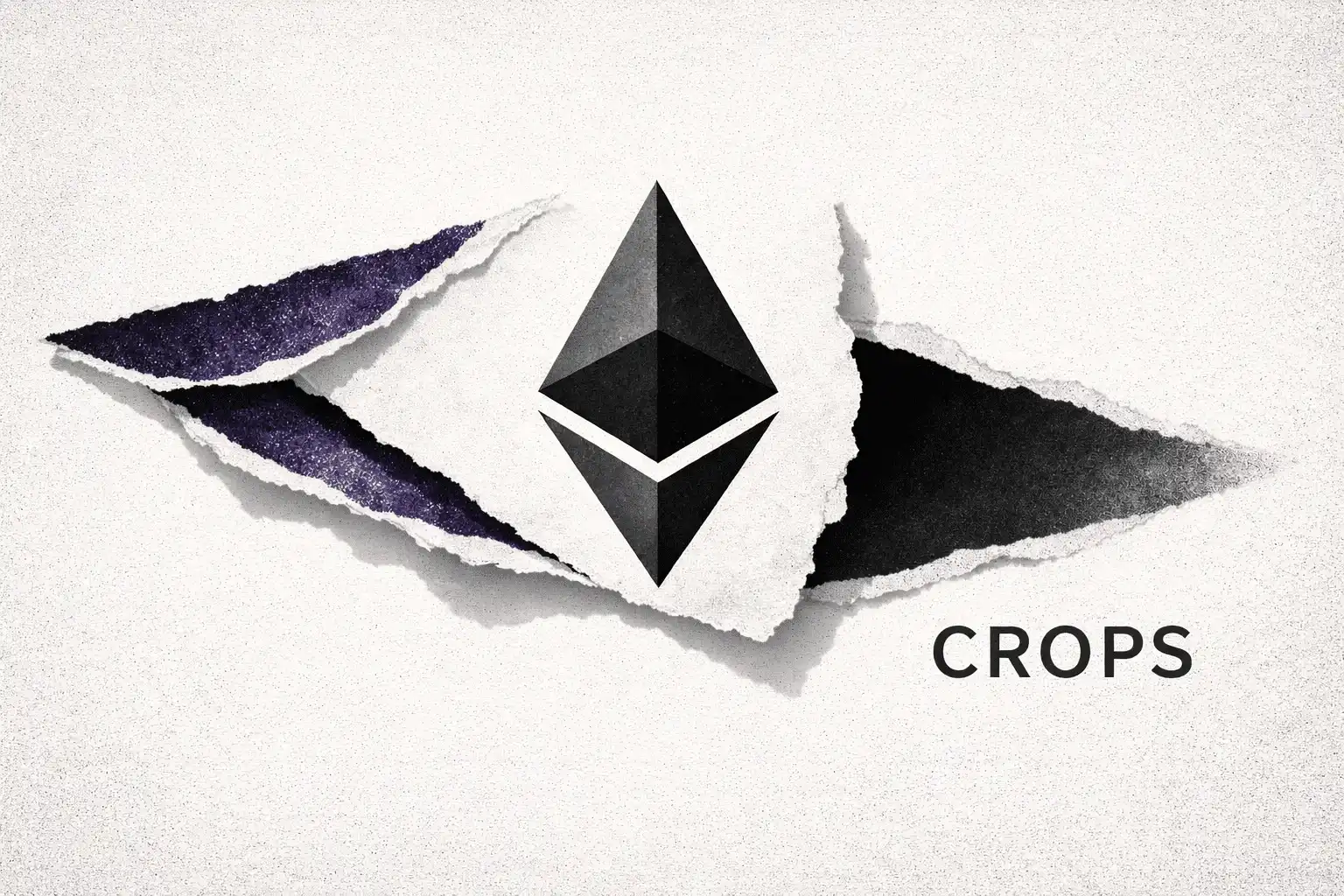
In recent discussions, Vitalik Buterin has frequently emphasized the concept of "CROPS," a framework defining core values for Ethereum's development. CROPS stands for Censorship Resistance, Capture Resistance, Open Source, Privacy, and Security. Initially outlined in the Ethereum Foundation's "EF Mandate," it represents a commitment to user sovereignty, ensuring that the network resists external control, remains open, protects privacy, and prioritizes security. The relevance of CROPS extends beyond Ethereum's foundational principles, becoming crucial in the context of AI integration. As AI agents begin handling wallet operations and automated transactions, the risk increases that users may cede control over their digital assets, privacy, and intentions to centralized AI service providers. A "CROPS AI" would therefore emphasize local execution where possible, privacy-preserving remote model calls (e.g., using zero-knowledge proofs), and transparent, verifiable processes to maintain user agency. Vitalik highlights a significant convergence between "CROPS Ethereum access layer" and "CROPS AI." Both address the same fundamental challenge: how users can access powerful services—be it blockchain data via RPCs or AI models—without exposing sensitive information or relinquishing ultimate control. This intersection points toward a future digital entry point that is more private, secure, and user-controlled. Ultimately, CROPS is not merely an abstract ideal but a practical guidepost. It steers development—from protocol resilience and wallet design to AI agent safety—towards a future where users retain self-sovereignty even as digital systems grow more complex and powerful. In an era of accelerating AI adoption, these "slow variables" of censorship resistance, openness, privacy, and security may define Ethereum's enduring value.

marsbit2 ч. назад

From Ethereum to AI's 'CROPS': What Exactly is This Set of 'Slow Variables' That Vitalik Repeatedly Emphasizes?

marsbit2 ч. назад

Silicon Valley 'Startup Guru' Steve Hoffman: Web3 + AI Could Be a Trap

Silicon Valley investor and "Godfather of Startups" Steve Hoffman warns that combining Web3 with AI is likely a trap, not a promising venture. In an interview, Hoffman argues that while AI is a foundational technology touching all industries, Web3 adds complexity, friction, and regulatory risk without solving mainstream consumer or business needs. He advises founders to focus on deep, specialized applications where startups can out-iterate giants, rather than on generic features easily replicated by large tech companies. Hoffman observes that Silicon Valley will lead foundational AI research, while China excels at rapid, large-scale application and commercialization, particularly in robotics. He stresses that AI-driven autonomous agents capable of collaborative, multi-step tasks are 2-4 years away, which will cause significant job displacement. The solution is not to slow AI but to redesign business models around human-AI collaboration and reform social systems like education and retraining. For startups, Hoffman recommends focusing on vertical, expertise-heavy domains to build defensibility. He sees major opportunities in AI fraud detection and cybersecurity. Key founder mindsets include systemic thinking over feature-focus, relentless customer centricity, building adaptive teams, and deeply understanding AI's capabilities and limits. Hoffman is also leading a non-profit initiative to establish university centers aimed at training future leaders in responsible, human-value-aligned AI innovation.

marsbit3 ч. назад

Silicon Valley 'Startup Guru' Steve Hoffman: Web3 + AI Could Be a Trap

marsbit3 ч. назад

Token Inefficient, Economy Tokenless

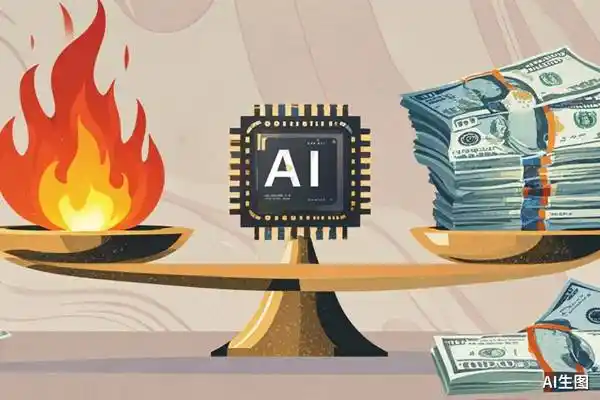
The article "Tokens Aren't Economical, Economics Aren't Tokenized" analyzes a pivotal shift in the AI industry from a technology-driven narrative to one dominated by capital efficiency. It highlights two concurrent trends: a severe capital shortage due to the exorbitant and recurring costs of compute (e.g., OpenAI's high burn rate) and a wave of corporate spin-offs where major tech companies are separating their AI units (like Kuaishou's Kling and Baidu's Kunlunxin). The core argument is that AI's "anti-internet" business model, where user growth increases costs rather than profits, has created a disconnect between high valuations and actual cash flow. Spin-offs address this by allowing AI assets to be valued independently. Within a parent company, they are seen as cost centers, but as standalone entities, they are priced based on their growth potential and scarcity in the primary market, leading to massive valuation premiums (e.g., Kling's estimated value tripling post-spin-off). The industry is at an inflection point, moving from "model worship" to "value realization." The competition is evolving from a pure compute (GPU) race to a broader focus on systemic efficiency and full-stack engineering (involving CPUs and orchestration) to achieve viable commercialization. The year 2026 is framed as a critical moment where the industry must definitively answer how to economically translate AI capability into tangible business value, reshaping the sector's future power structure.

marsbit4 ч. назад

Token Inefficient, Economy Tokenless

marsbit4 ч. назад

Торговля

Спот
Фьючерсы

Популярные статьи

Как купить S

Добро пожаловать на HTX.com! Мы сделали приобретение Sonic (S) простым и удобным. Следуйте нашему пошаговому руководству и отправляйтесь в свое крипто-путешествие.Шаг 1: Создайте аккаунт на HTXИспользуйте свой адрес электронной почты или номер телефона, чтобы зарегистрироваться и бесплатно создать аккаунт на HTX. Пройдите удобную регистрацию и откройте для себя весь функционал.Создать аккаунтШаг 2: Перейдите в Купить криптовалюту и выберите свой способ оплатыКредитная/Дебетовая Карта: Используйте свою карту Visa или Mastercard для мгновенной покупки Sonic (S).Баланс: Используйте средства с баланса вашего аккаунта HTX для простой торговли.Третьи Лица: Мы добавили популярные способы оплаты, такие как Google Pay и Apple Pay, для повышения удобства.P2P: Торгуйте напрямую с другими пользователями на HTX.Внебиржевая Торговля (OTC): Мы предлагаем индивидуальные услуги и конкурентоспособные обменные курсы для трейдеров.Шаг 3: Хранение Sonic (S)После приобретения вами Sonic (S) храните их в своем аккаунте на HTX. В качестве альтернативы вы можете отправить их куда-либо с помощью перевода в блокчейне или использовать для торговли с другими криптовалютами.Шаг 4: Торговля Sonic (S)С легкостью торгуйте Sonic (S) на спотовом рынке HTX. Просто зайдите в свой аккаунт, выберите торговую пару, совершайте сделки и следите за ними в режиме реального времени. Мы предлагаем удобный интерфейс как для начинающих, так и для опытных трейдеров.

1.4k просмотров всегоОпубликовано 2025.01.15Обновлено 2026.06.02

Как купить S

Sonic: Обновления под руководством Андре Кронье – новая звезда Layer-1 на фоне спада рынка

Он решает проблемы масштабируемости, совместимости между блокчейнами и стимулов для разработчиков с помощью технологических инноваций.

2.3k просмотров всегоОпубликовано 2025.04.09Обновлено 2025.04.09

Sonic: Обновления под руководством Андре Кронье – новая звезда Layer-1 на фоне спада рынка

HTX Learn: Пройдите обучение по "Sonic" и разделите 1000 USDT

HTX Learn — ваш проводник в мир перспективных проектов, и мы запускаем специальное мероприятие "Учитесь и Зарабатывайте", посвящённое этим проектам. Наше новое направление .

1.8k просмотров всегоОпубликовано 2025.04.10Обновлено 2025.04.10

HTX Learn: Пройдите обучение по "Sonic" и разделите 1000 USDT

Обсуждения

Добро пожаловать в Сообщество HTX. Здесь вы сможете быть в курсе последних новостей о развитии платформы и получить доступ к профессиональной аналитической информации о рынке. Мнения пользователей о цене на S (S) представлены ниже.

活动图片