На карте США Вайоминг (Wyoming) часто остаётся незамеченным «западным активом».
При упоминании о нём у большинства сразу возникает образ Старого служаки, извергающегося в Йеллоустонском национальном парке, или вечных снегов на вершине Гранд-Титон.
Это самый малонаселённый штат США: на территории почти в 260 тысяч квадратных километров живёт менее 600 тысяч человек — это число даже меньше населения одного отдалённого пригородного посёлка Шанхая.
В литературной и кинематографической памяти это безжалостная дикая природа, которую «нельзя исправить, можно только терпеть», по словам Энни Пру (Annie Proulx), это горы, в которых застряли ковбои из «Горбатой горы», и это кровавая окраина, запертая метелью в «Омерзительной восьмёрке» Квентина Тарантино.

Он противоречив и ярок: здесь крайне консервативно, это самый «тёмно-красный» штат страны, где республиканцы доминируют уже сорок лет, и на выборах 2024 года более 70% избирателей проголосовали за Трампа. Но он также был в авангарде времени: ещё в 1869 году он стал первым «штатом равенства», предоставившим женщинам право голоса.
Но Вайоминг — отнюдь не финансовая пустыня. Каждое лето здесь собираются «самые влиятельные» люди мира: в тихом курортном местечке Вайоминга Джексон-Хоул (Jackson Hole) Федеральный резервный банк Канзас-Сити проводит ежегодную всемирную встречу глав центральных банков. От Гринспена (тринадцатого председателя ФРС) до Пауэлла — почти каждый ключевой поворот в глобальной денежно-кредитной политике определялся на этих лугах, окружённых заснеженными горами.
Именно этот обособленный и уникальный «западный дух» снова вывел Вайоминг в центр внимания в начале 2026 года.
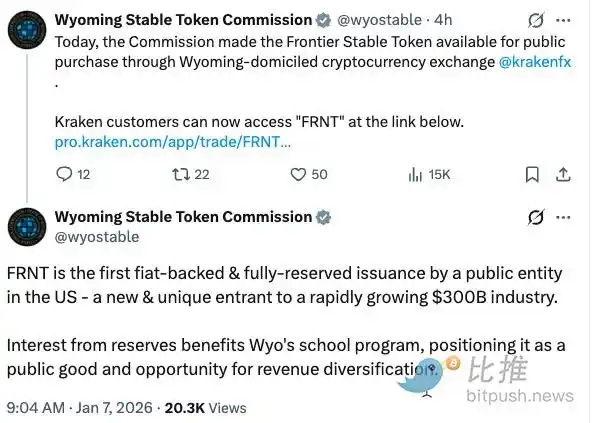
7 января местное время штат официально объявил о выпуске стейблкоина $FRNT, первоначально запущенного в сети Solana с поддержкой шести совместимых с EVM цепочек. Это первый в мире стейблкоин, обеспеченный «кредитом правительства штата».
В поисках света среди рудников: путь возрождения через энергетический переход
Радикализм Вайоминга коренится в глубокой финансовой тревоге: «подземное богатство», которое кормило эту землю сто лет, истощается.
Будучи энергетическим сердцем, supplying 40% угля в США, он когда-то создал миф о «налоговом рае» за счёт налога на ресурсы добывающей промышленности: жители не платят подоходный налог, компании не платят налог на прибыль.
Одной из важных причин является то, что благодаря непрерывному экспорту ресурсов из бассейна Паудер-Ривер этот малонаселённый штат создал колоссальное богатство: его ВВП на душу населения долгое время стабильно входил в десятку лучших в США, а в годы энергетического бума мог сравниться с Нью-Йорком и Калифорнией.
Это процветание когда-то позволяло Вайомингу с уверенностью отказываться от введения подоходного налога, налога на прибыль предприятий и налога на наследство. Однако это было хрупкое процветание, построенное на тяжёлой промышленности.
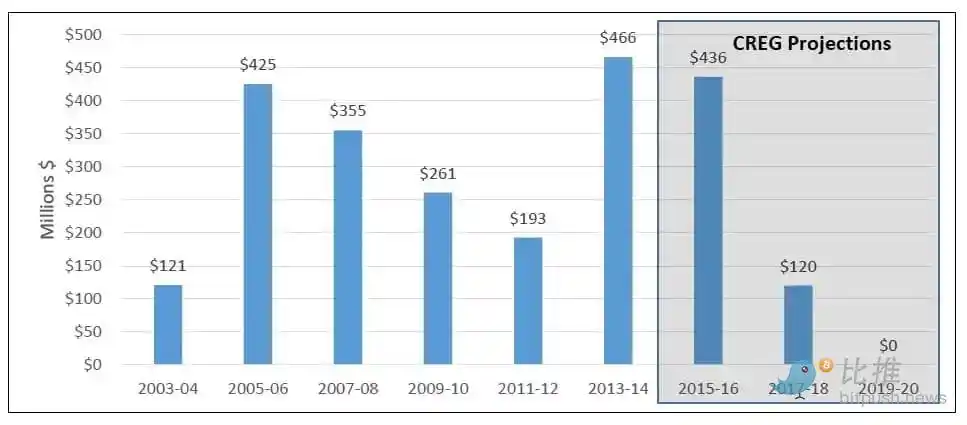
С 2011 года начался десятилетний «лавинообразный» спад в ключевой отрасли Вайоминга:
Безжалостная замена рынка: подъём дешёвого сланцевого газа и возобновляемых источников энергии нанёс сокрушительный удар по углю с точки зрения cost of generation.
Ужесточение экологических ограничений: продвижение федеральных правил по выбросам углерода (таких как План чистой энергии) привело к массовому закрытию угольных электростанций по всей стране.
Обрывной провал в бюджете: согласно официальным данным CREG, приведённым Wyoming Public Media, налог на угольные ресурсы штата упал с 290 миллионов долларов в 2011 году до 170 миллионов долларов в 2022 году. В 2025 году ожидается, что добыча угля в штате упадёт до второго самого низкого показателя в истории, что составит лишь половину от пика 2008 года. А «бонусы за аренду угольных шахт (Bonuses)», которые когда-то были важным источником финансирования школьной инфраструктуры, и вовсе упали до нуля.
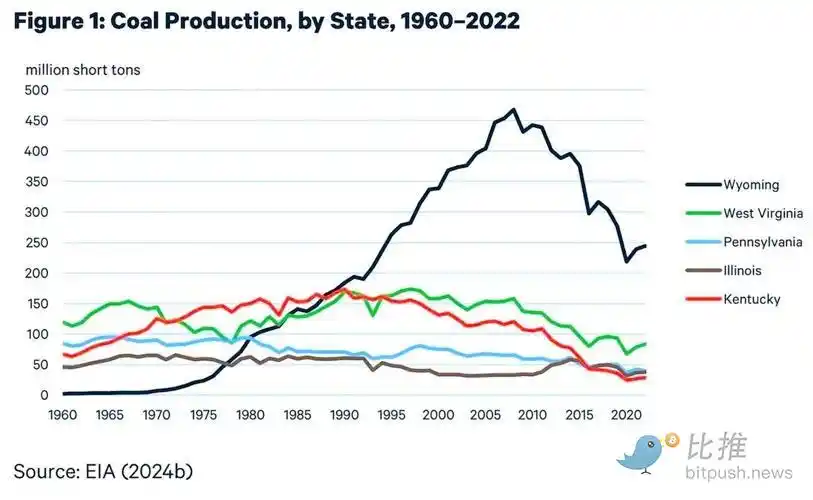
«Если не будем шевелиться, мы станем следующей Западной Вирджинией (прим.: традиционный угледобывающий регион США, ставший одним из беднейших штатов после упадка угольной промышленности)». — Эта острая боль заставила даже самых консервативных ковбойских политиков на местах почувствовать настоятельную необходимость действовать.
Они поняли, что,既然 нельзя изменить趋势 энергетического перехода,就必须 использовать самое核心овое актив Вайоминга — чрезвычайно свободное право коммерческого законодательства.
На самом деле, инновационный基因 Вайоминга早有先例. В 1977 году он первым в стране изобрёл LLC (Общество с ограниченной ответственностью) —至今最流行的 коммерческую структуру.
С 2018 года, чтобы спасти себя, этот самый «красный» консервативный штат был вынужден начать долгий путь институциональных инноваций в мире криптовалют.
В 2019 году законодательное собрание Вайоминга приняло Закон Палаты представителей № 74 (HB 74), создав новый вид финансового субъекта: лицензию SPDI (Специальное депозитарное учреждение особого назначения). Это не банк в традиционном понимании, а учреждение, которое «не занимается кредитованием, а только отвечает за хранение и расчеты».
В сентябре 2020 года криптобиржа Kraken получила здесь первую в США лицензию SPDI, основав Kraken Bank, что ознаменовало первый раз, когда криптоактивы получили статус «банка» в рамках законодательства штата.
В 2021 году штат率先 принял «Закон о DAO», разрешающий организациям, управляемым кодом, регистрироваться в качестве законного LLC-субъекта.
Что касается недавно выпущенного $FRNT, согласно плану Комитета по стейблкоинам Вайоминга (WST), стейблкоин $FRNT обеспечен избыточным залогом в 102% в казначейских облигациях и наличных США.
Управление резервами осуществляет инвестиционный гигант Franklin Templeton, который управляет активами объёмом около 1,6 триллиона долларов, а кастодиальные услуги предоставляет его дочерняя компания Fiduciary Trust Company International. Его основная бизнес-логика заключается в следующем: правительство штата привлекает доллары, покупает казначейские облигации США, а полученные процентные доходы напрямую переводятся в «Фонд образования» (School Foundation Fund) для поддержки местного публичного образования.
Стейблкоины: Кому это действительно выгодно?
Этот прыжок Вайоминга фактически знаменует выход стейблкоинов на вторую половину гонки: от «игры в доверие» частных компаний к «общественному благу» на государственном уровне.
Раньше, говоря о стейблкоинах, обсуждали риски compliance Tether или Circle; но в нарративе Вайоминга стейблкоин возвращается к своей сути — чрезвычайно эффективному, низкозатратному платежному каналу (комиссия за расчет обычно ниже $0,01), который начинает обладать属性ми общественных финансов.
Однако эта «цифровая магистраль» столкнулась в реальном мире с невидимыми барьерами.
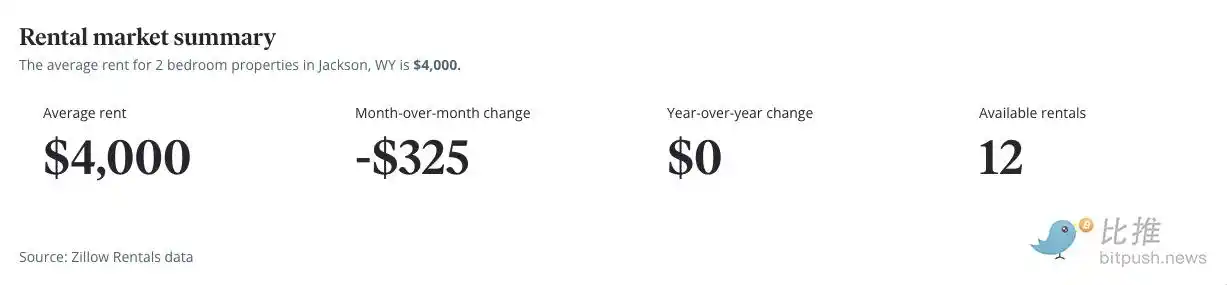
В курортной зоне Джексон-Хоул в Вайоминге аренда обычной двухкомнатной квартиры уже достигла 4000 долларов в месяц, что на 25% выше, чем в Лос-Анджелесе. Хотя местный ВВП на душу населения находится на передовых позициях в США, около 10% жителей по-прежнему сталкиваются с нехваткой продовольствия. Для синих воротничков, которые каждое утро спешат на автобусы и维持生计 на две-три работы, «стейблкоин» больше похож на далёкое техническое понятие.
Этот раскол не случаен, он был精心 спроектирован и поддерживается. Один из государственных финансовых чиновников признался prospect.org, что через приобретение земель и пороги планирования local landscape формируется таким образом, чтобы «не видеть бедности».
Писательница Энни Пру описывала суровость земли Вайоминга,如今这份 суровость технологиями и капиталом сложена в два слоя реальности, которые не проникают друг в друга.
С одной стороны, это утопия уклонения от налогов, созданная wealth class среди гор и лесов; с другой — обычные американцы, которые поддерживают всё это, но не имеют места для жизни — их жизнь незаметно складывается как в реальности, так и в сетевом нарративе.
Автор пролистал обсуждения о Вайоминге на Reddit, жалобы местных随处可见:
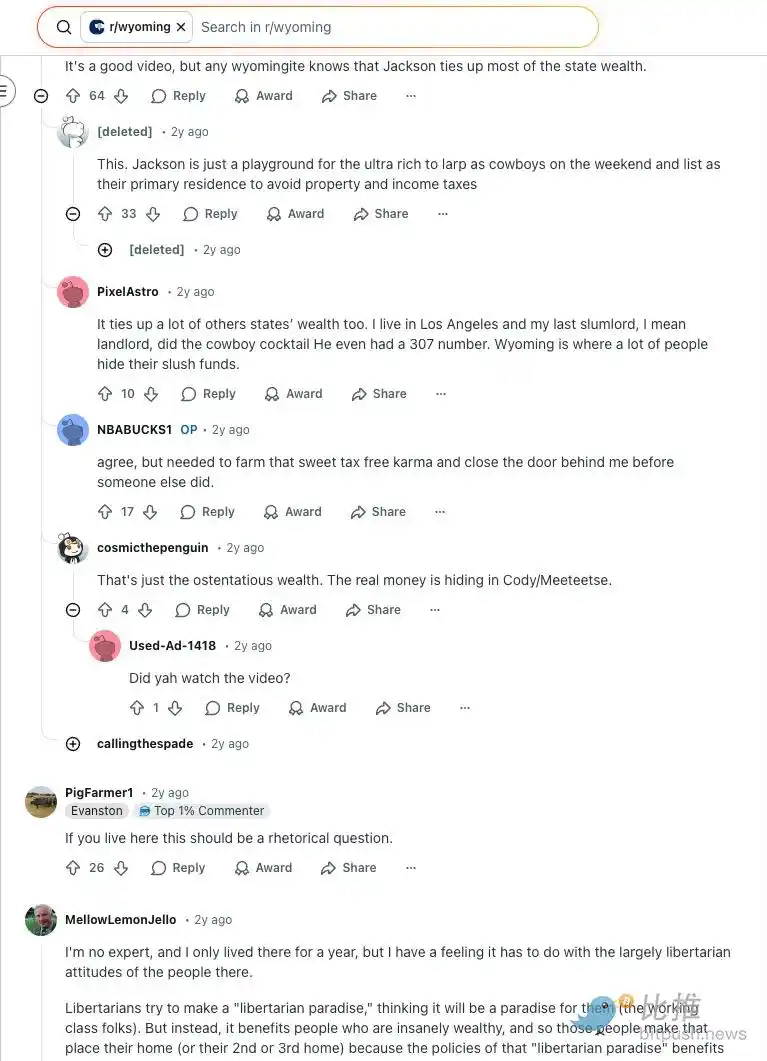
«Джексон — это не более чем игровая площадка для супербогатых, которые по выходным играют в ковбоев, они регистрируют это место как основное место жительства, чтобы избежать налога на имущество и подоходного налога»
«Люди здесь — либертарианцы, они пытаются построить «либертарианский рай». Они думают, что это будет рай для них (рабочего класса). Но на самом деле он приносит пользу тем, кто и так плавает в деньгах, эти люди делают его своим домом (или второй, третьей резиденцией), потому что политика «либертарианского рая», такая как меньше регулирования, налогов и т.д., выгодна для них.»
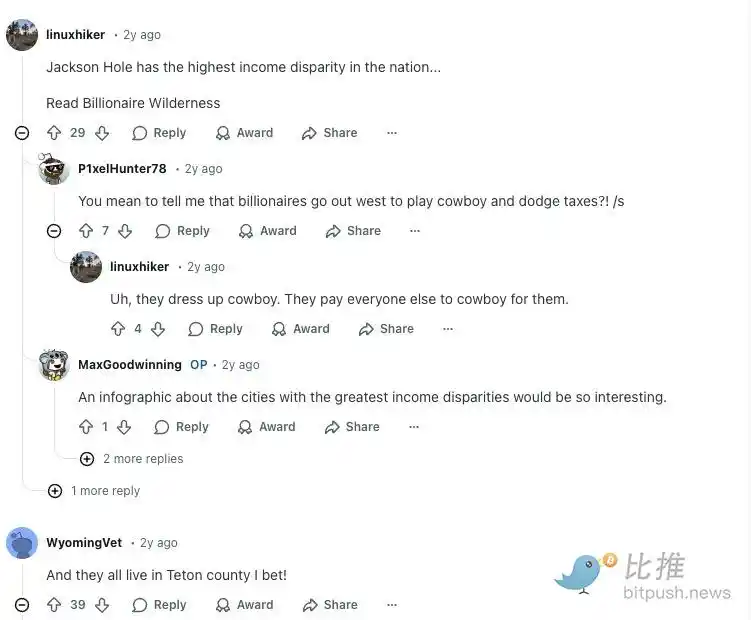
На фоне такого раскола правительство штата пытается на руинах угольной промышленности с помощью закона и стейблкоинов построить финансовую автономию в цифровую эпоху. Данные показывают, что в Вайоминге на каждую тысячу взрослых приходится 348 LLC, что превзошло Делавэр и сделало его новой institutional洼地 США.
Но сможет ли эта цифровая прибыль, хлынувшая в «ковбойский штат», действительно залатать трещины на этой земле?