Former "NFT Chain" Spends $250 Million to Compete with Stripe and Circle

比推Опубликовано 2026-01-20Обновлено 2026-01-20

Введение

Polygon Labs has acquired Coinme and Sequence for over $250 million, positioning itself as a "stablecoin rail" competitor to Stripe and Circle. Coinme, a licensed money transmitter in 48 U.S. states, provides a compliant fiat on-ramp via a vast cash-to-crypto network. Sequence offers smart wallet infrastructure that abstracts blockchain complexities for end-users. Together, these acquisitions enable Polygon to offer a full-stack solution for stablecoin payments, combining regulatory access, user-friendly technology, and physical cash integration. This strategy aims to capture value in the growing stablecoin payment market, competing with closed ecosystems like Circle’s Arc and service-oriented platforms like Stripe’s Tempo, while avoiding the token economic pitfalls seen in projects like Tether’s Plasma.

Source: Fintech Blueprint

Author: Laurence Smith

Original Title: DeFi: Polygon’s $250MM play for the Stablecoin Rails, competing with Stripe

Compiled and Arranged by: BitpushNews


Polygon Labs has acquired Coinme and Sequence for over $250 million.
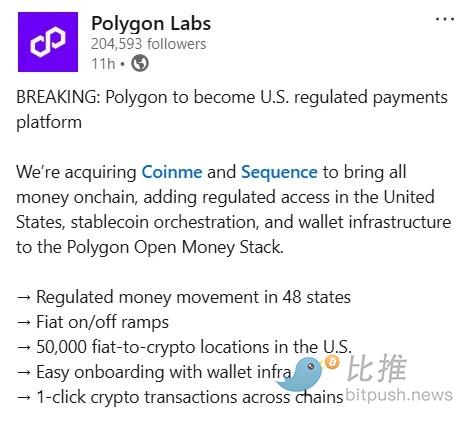
Founded in 2014, Coinme is a compliance and physical bridge in the payments space. It operates one of the largest licensed cash-to-cryptocurrency networks in the United States, covering over 50,000 retail locations (including Coinstar kiosks), where users can exchange cash for digital assets.

More importantly, Coinme holds Money Transmitter Licenses (MTL) in 48 states, which can be embedded into diverse user experiences. For comparison, Alpaca Markets recently raised $150 million at a valuation exceeding $1 billion, with its business focused on embedded crypto asset and stock trading services.
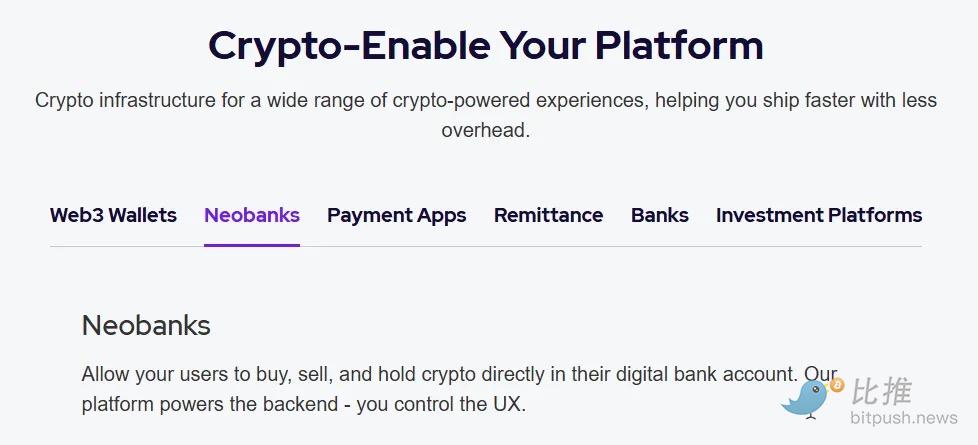
Under the current U.S. regulatory environment, particularly the "Genius Act," licenses are a key prerequisite for generating revenue. MTLs are necessary to access the Federal Reserve payment system and avoid legal risks associated with unauthorized banking activities. By acquiring Coinme, Polygon directly gains market access, enabling it to handle fiat and stablecoin conversions without relying on third-party banking partners (which may terminate relationships with crypto businesses at any time).

Sequence addresses the second obstacle: user experience.

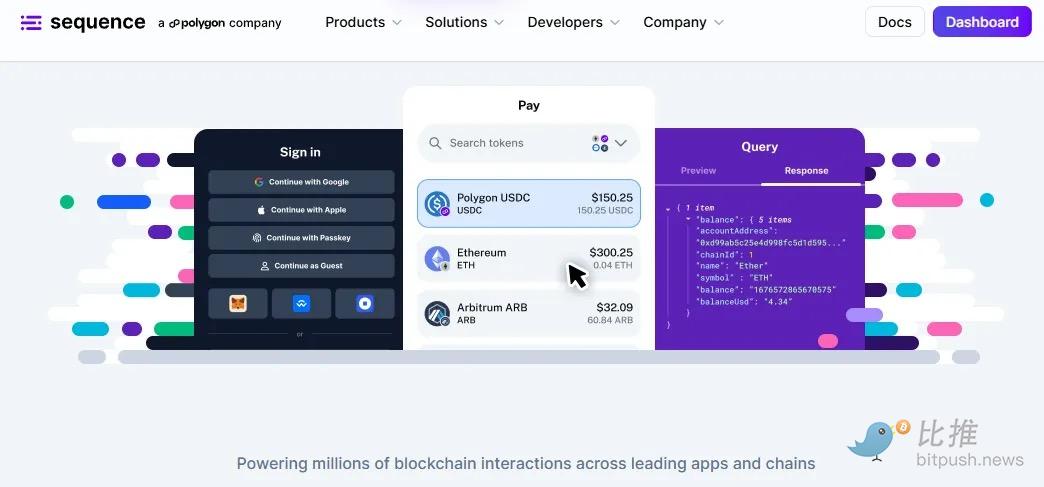
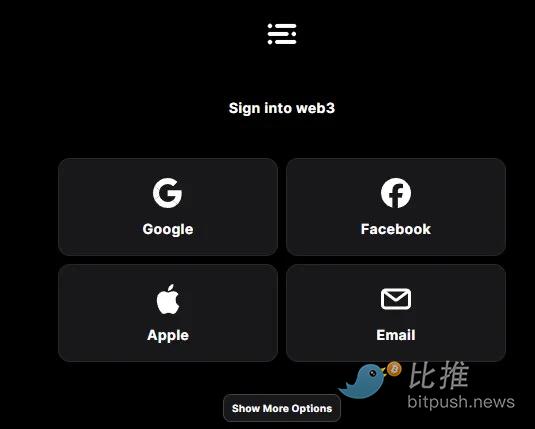
Polygon provides the underlying ledger, while Sequence offers smart wallet infrastructure. Its technology uses account abstraction to hide the complexities of blockchain (gas fees, private keys, cross-chain bridging), so end-users don't even need to be aware of the blockchain's existence. Its "Trails" coordination engine supports one-click payments, requiring no technical knowledge from the user.
Strategic Positioning: Becoming the "Stablecoin Public Chain"
Polygon's ultimate goal is to transform into a stablecoin public chain. The most direct comparison is the Stripe ecosystem: Polygon is analogous to Tempo (which raised $500 million), Sequence is analogous to Privvy (acquired by Stripe), and Coinme is analogous to Bridge (also acquired by Stripe).

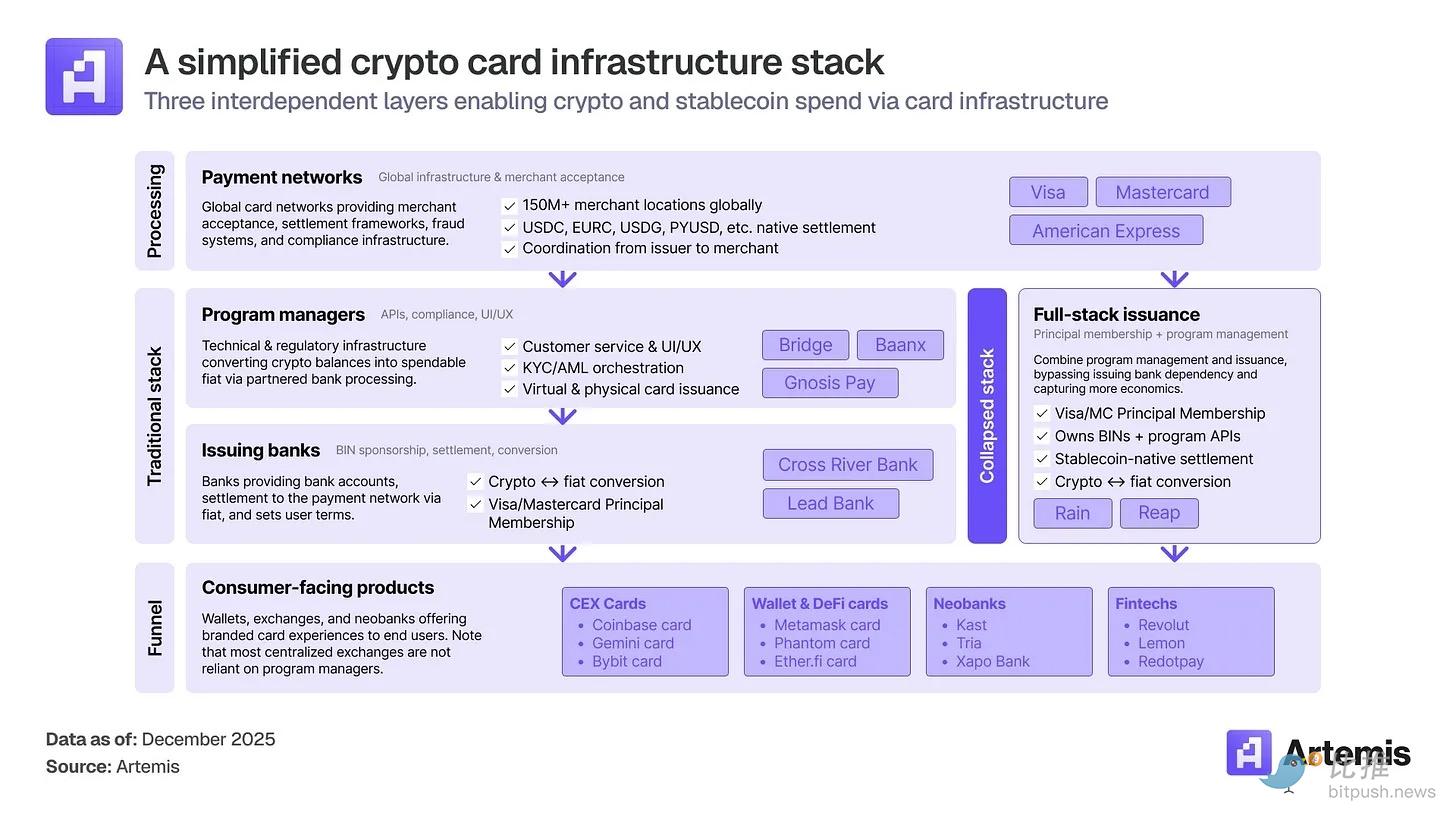
This move is not surprising. Over the past year, other players like Rain (which integrates stablecoin payments with Visa via a BaaS solution) have also seen significant success. The company recently completed a $250 million funding round, with payment volume growing 38-fold within a year.

Unlike Polygon, Rain does not provide a public chain but instead offers the underlying technology for payment cards that use stablecoins in the physical world. Polygon's acquisition reveals its strategic intent: to capture the value currently flowing to these specialized middleware providers.
Market Effect: Lowering Barriers, Reshaping the Narrative

By bundling Coinme's nationwide licenses with Sequence's smart wallet technology stack, Polygon lowers the entry barrier for a new generation of developers and simplifies its own positioning—transitioning from a former "media and NFT public chain" to a "money public chain."

This will have a dual market effect:

1. With Polygon's out-of-the-box compliant on-ramp and user experience tools, it will be easier to birth the next "Rain";

2. Large fintech companies can directly integrate with Polygon's "open money stack," completely bypassing third-party BaaS providers.

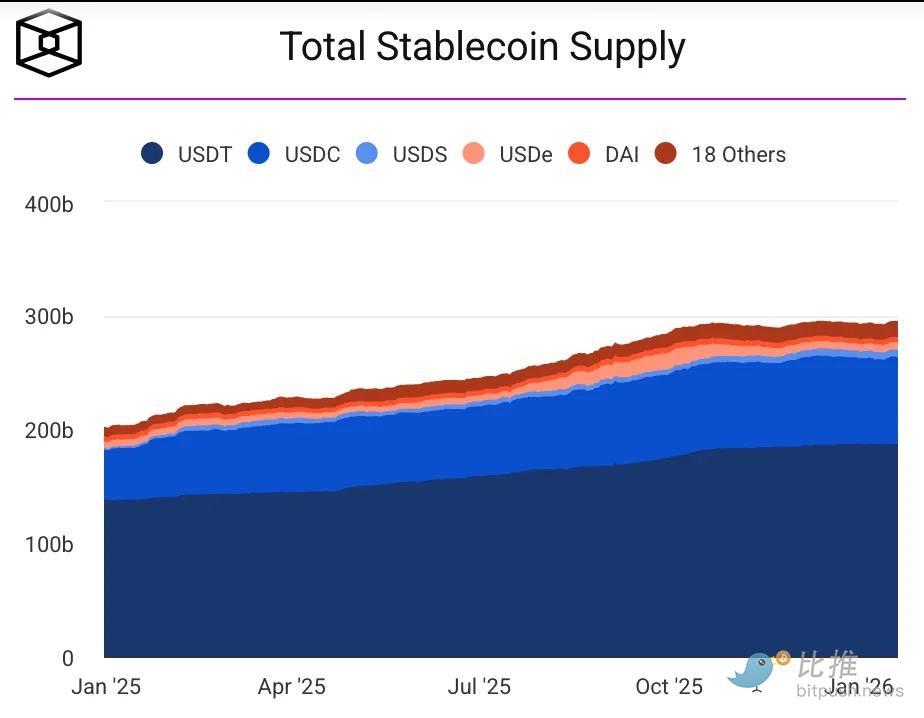
Total Addressable Market: $300 billion.
Precedent: The Failure of Tether Plasma (XPL)

Tether's Plasma (XPL) also attempted to become the preferred stablecoin network, but its flawed token economic model led to excessive mining and aggressive selling. The XPL token, designed to secure the network, plummeted 80% in price, as the market realized the chain's "zero-fee" utility did not require holding a volatile native asset. By the time staking was expected to launch in early 2026, the speculative bottom had long since collapsed, validator incentives vanished, and the network's long-term viability was in doubt.
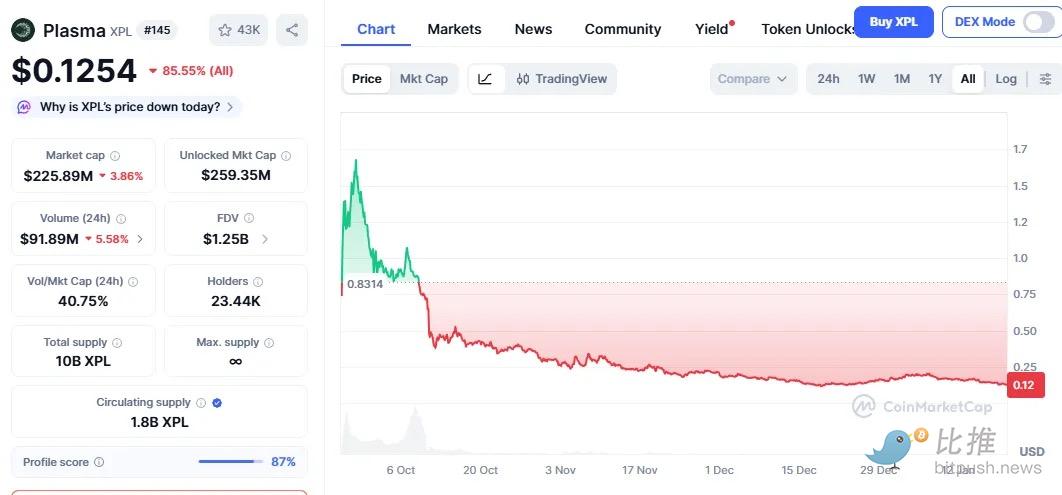
Polygon faces a similar contradiction. To avoid repeating this mistake, it must ensure its new integrated tech stack provides a stable business environment, decoupled from the price performance of its native token, POL. Instead of consumer-centric incentives, Polygon has chosen to attract user attention and activity through partnerships.

The crypto payments space also features two other integrated models vying for dominance: Stripe's Tempo and Circle's Arc. So far, each has its focus:
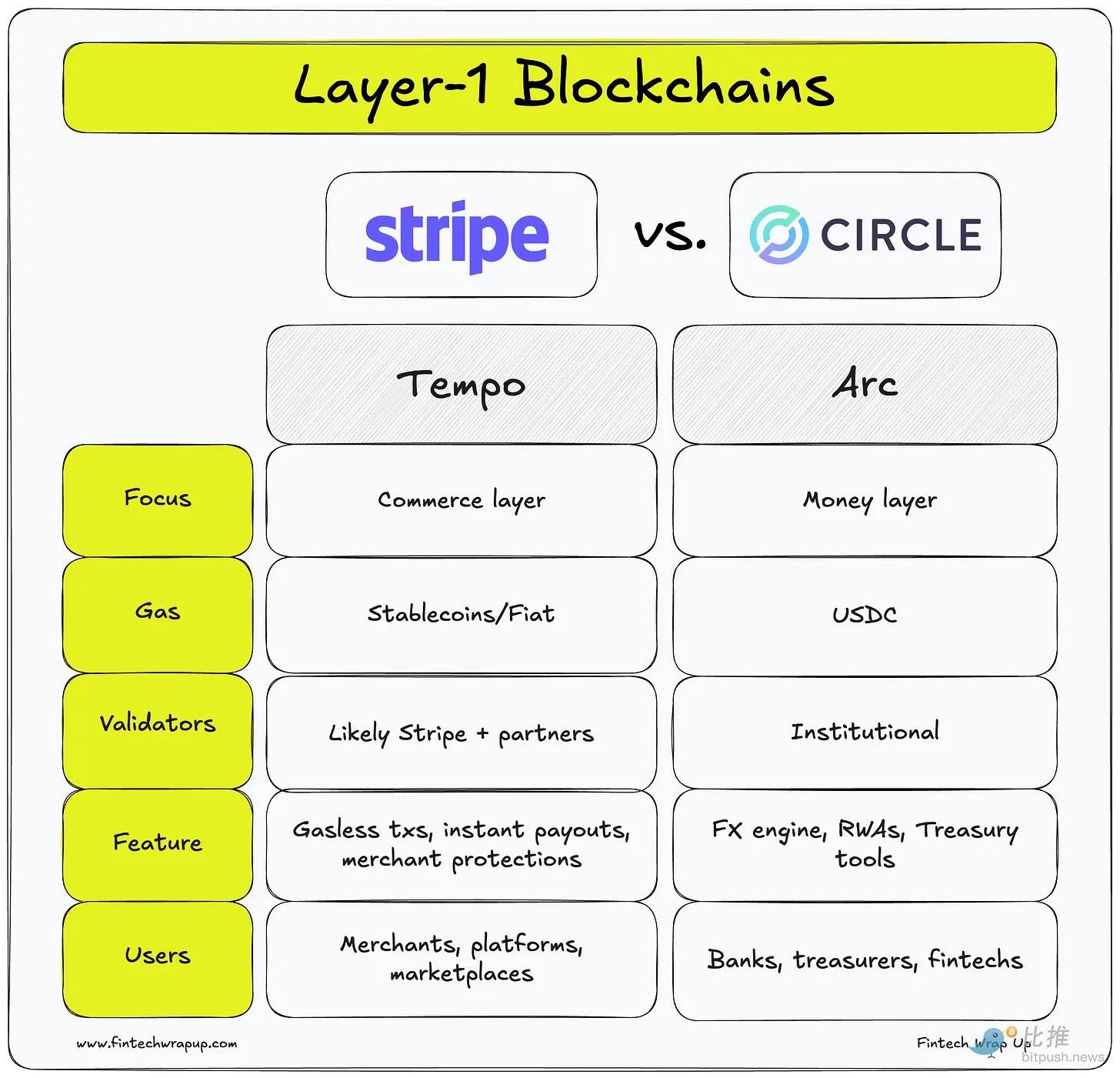
Circle Arc is a closed ecosystem. By making USDC the native gas token, Arc allows businesses to avoid exposure to volatile cryptocurrencies entirely. For banks, Arc, being built by the asset issuer, ensures the strictest compliance loop; it resembles an institutional settlement center more than a general-purpose blockchain.

Stripe's Tempo is more neutral—it doesn't care which stablecoin you use; it just wants to be the network that processes them. Tempo's unique advantage is its vast fintech distribution network, acting as an internet-scale SWIFT system that integrates with existing Stripe dashboards. It targets developers who already have a business and simply want to add "pay with stablecoins" as a feature.

Polygon is an infrastructure toolkit. Unlike Circle and Stripe, which focus on service provision, Polygon has long existed as an open ecosystem. The acquisition of Coinme and Sequence shifts its value proposition from a "high-speed public chain" to a "licensed payments-as-a-toolbox."

Among the three, Polygon is the only solution offering a physical cash bridge. This makes it a superior choice in certain real-world fintech scenarios (such as cross-border remittances, cash-dominant economies, payroll applications)—because the funds in these scenarios often originate as physical cash, flowing within a compliant environment spanning 48 states.

We look forward to the competition shifting more towards real-world application, rather than endless speculative casinos.


Twitter:https://twitter.com/BitpushNewsCN

Bitpush TG Discussion Group:https://t.me/BitPushCommunity

Bitpush TG Subscription: https://t.me/bitpush

Original Link:https://www.bitpush.news/articles/7604499

Связанные с этим вопросы

QWhat is the strategic goal behind Polygon's $250 million acquisition of Coinme and Sequence?

APolygon's strategic goal is to transform into a 'stablecoin public chain' by acquiring Coinme for its regulatory compliance and physical cash-to-crypto infrastructure, and Sequence for its smart wallet technology that simplifies user experience, aiming to compete with companies like Stripe and Circle in the stablecoin payment rails sector.

QHow does Coinme's acquisition benefit Polygon in terms of regulatory compliance and market access?

ACoinme holds Money Transmitter Licenses (MTL) in 48 U.S. states, providing Polygon with regulatory compliance and direct market access to handle fiat and stablecoin conversions without relying on third-party banking partners, reducing legal risks and ensuring seamless operations under U.S. regulatory environment like the Genius Act.

QWhat role does Sequence play in Polygon's strategy to improve user experience in blockchain transactions?

ASequence provides smart wallet infrastructure that uses account abstraction to hide blockchain complexities such as gas fees, private keys, and cross-chain bridging. Its 'Trails' coordination engine enables one-click payments, allowing end-users to interact without needing to understand the underlying technology, thus simplifying the onboarding process for developers and users.

QHow does Polygon's approach to becoming a stablecoin public chain differ from competitors like Stripe's Tempo and Circle's Arc?

APolygon offers an open ecosystem with a licensed payment toolkit, including physical cash bridges via Coinme, targeting real-world use cases like cross-border remittances and cash-based economies. In contrast, Stripe's Tempo is a neutral network focused on integrating stablecoin payments into existing services, while Circle's Arc is a closed ecosystem prioritizing institutional settlement with USDC compliance, without direct cash handling capabilities.

QWhat was the key failure of Tether's Plasma (XPL) that Polygon aims to avoid in its stablecoin strategy?

ATether's Plasma (XPL) failed due to a flawed token economic model that led to excessive mining and aggressive selling, causing its native token price to drop 80%. Polygon aims to avoid this by ensuring its integrated tech stack provides a stable business environment decoupled from the price volatility of its native POL token, focusing on partnerships and utility rather than consumer-centric token incentives.

Похожее

Apple Also Has to Pay Rent Now

Apple Pays Rent Too: The Two-Way Flow of "Traffic Tax" and "AI Capability Rent" Between Tech Giants For over two decades, Google has paid Apple an estimated $20 billion annually to remain the default search engine on Safari, a "traffic tax" for a critical user entry point. However, in 2026, the direction of this cash flow partially reversed. Apple agreed to pay Google roughly $1 billion per year to license its Gemini AI models, as Apple's own models reportedly struggled with complex tasks. This creates a unique dynamic: Apple acts as the "landlord" in the established search ecosystem, collecting rent from Google for access. Simultaneously, in the emerging AI arena, Apple becomes the "tenant," paying Google for access to cutting-edge AI capabilities it cannot currently match internally. While Apple claims its new models are "distilled" from Gemini outputs and contain "not a drop" of Google's original code, core dependencies remain. Its knowledge base is refined using Gemini's outputs, and its most powerful cloud model runs on Google's infrastructure. Apple has structured the deal as non-exclusive, allowing it to theoretically switch AI suppliers—a hedge against over-reliance. The future hinges on whether advanced AI models become a commodity (cheap and abundant) or remain a concentrated, scarce resource (expensive and controlled by few). Apple is betting on the former, leveraging its massive device ecosystem to be a powerful, choosy customer. If the latter proves true, its bargaining power could erode. This power dynamic is extending to developers. Apple, Google, and WeChat are all pushing for apps to expose their core functions as standardized "actions" or "intents" that their respective AI assistants (Siri, Gemini, WeChat AI) can directly call. The new scarce resource is no longer just app store visibility, but "being selected by the AI." The currency of "rent" has changed from a 30% revenue share to ceding control over how users interact with an app's functions.

marsbit22 мин. назад

Apple Also Has to Pay Rent Now

marsbit22 мин. назад

Missed the SpaceX IPO? WEEX's "First Trade Protection" Lets You Experience US Stock Trading Risk-Free.

With the excitement around SpaceX's recent public listing reigniting interest in the US stock market, Chinese investors face significant challenges accessing compliant and convenient trading channels following regulatory actions against major online brokers. This article explores the available options, highlighting their risks and limitations. Traditional paths for US stock investments remain problematic. Qualified Domestic Institutional Investor (QDII) and Listed Open-Ended Fund (LOF) products, while compliant, suffer from high fees, significant purchase premiums, and a very limited selection of assets. Small, unregulated offshore brokers pose substantial risks, including potential insolvency. While secure, VIP accounts at banks in Hong Kong or Singapore require high minimum deposits (often 1-2 million RMB) and in-person visits, placing them out of reach for most retail investors. The article positions cryptocurrency exchanges, specifically their TradFi (traditional finance on-chain) offerings, as a compelling alternative. Platforms like WEEX are noted for providing access to a wide range of US stocks and ETFs, including SpaceX (SPCXON), through tokenized assets. This method offers advantages such as a single account for both crypto and traditional assets, USDT-based settlement avoiding fiat complexities, flexible leverage, and robust risk management. To attract users, WEEX is promoting a "First Trade Guarantee" campaign. Running from June 15 to July 8 (UTC+8), it features a $30,000 prize pool. Users who trade $500 worth of US stock contracts can qualify for a guarantee on their first eligible trade: 100% loss coverage up to $30 or a 20% bonus on profits up to $30. The campaign is presented as a low-risk opportunity for both crypto natives and traditional investors to experience US stock trading.

marsbit24 мин. назад

Missed the SpaceX IPO? WEEX's "First Trade Protection" Lets You Experience US Stock Trading Risk-Free.

marsbit24 мин. назад

How Difficult is Chip Making? A Division Error Costs 475 Million Dollars

How Hard Is It to Make a Chip? A Division Error Cost $475 Million Chip expert Shi Kan, a researcher at the Chinese Academy of Sciences and a popular tech creator, explains the immense challenges of chip development. Chips are foundational to modern technology, but their creation is extraordinarily difficult. The journey from sand to a functional chip involves complex design and manufacturing, but a critical bottleneck is verification—ensuring the design works flawlessly before costly production. A single, undetected bug can have catastrophic consequences, as illustrated by the infamous 1994 Intel Pentium FDIV bug. A flaw in the floating-point division unit forced a recall costing $475 million. Unlike software, chips cannot be easily patched after manufacture, making "first-time success" paramount. However, industry surveys show only 24% of chip projects achieve this; over three-quarters require at least one costly re-spin due to design flaws. Verification has thus become the dominant phase, consuming up to 70% of the design cycle. The core challenge is a "verification impossible triangle" between high performance, good debuggability, and low cost. Exhaustively verifying a modern CPU core could take 15,000 years with software simulation, or 30 years with advanced hardware emulation—timeframes utterly impractical for development. Despite being essential, verification is often seen as unglamorous "dirty work," receiving less academic attention than fields like AI. Shi and his team are tackling this by developing an agile verification research framework called ENCORE, based on FPGA technology, to improve verification efficiency and debug capability. Beyond research, Shi engages in public science communication through long-form video content, aiming to demystify chip technology, AI, and computer science. He argues for the value of pursuing "hard and long-term" endeavors, whether in the meticulous world of chip verification or in creating substantive educational content, believing such sustained effort is likely the right path forward.

marsbit33 мин. назад

How Difficult is Chip Making? A Division Error Costs 475 Million Dollars

marsbit33 мин. назад

Claude to Mandate "Face-Scan ID Verification", No ID No Service Starting July?

Anthropic, the creator of Claude AI, has sent privacy policy update emails to users, signaling a significant shift. The key change, effective July 8, is the potential requirement for consumer-level users (Free, Pro, Max plans) to verify their age or identity. This verification would be conducted through the third-party service Persona, involving uploading a government-issued photo ID and taking a live selfie for comparison. Anthropic states this data is for security purposes only, will not be used for model training, and is processed by Persona, not stored on its own servers. The update also clarifies data handling for Claude's new capabilities: when performing multi-step tasks or connecting to third-party apps, user data may flow between Anthropic and those external services. Additionally, more information may be collected from users who participate in Anthropic research. This move is seen as a major step towards establishing accountability as AI agents become more powerful and autonomous, capable of executing complex, real-world tasks. It follows previous enforcement actions, like the banning of the "Fable 5" account, and indicates a broader industry trend toward stricter user identification and safety measures. The verification is expected to apply in specific scenarios, particularly as users engage Claude in more complex agentic workflows.

链捕手46 мин. назад

Claude to Mandate "Face-Scan ID Verification", No ID No Service Starting July?

链捕手46 мин. назад

Blockchain Has Finally Started to Sail into the Mainstream After 18 Years

Blockchain Finds Its True Path After 18 Years: Becoming the Financial Backbone for AI Agents and Autonomy This analysis explores a pivotal shift in the blockchain and crypto investment landscape, driven by the dominance of AI. Major venture capital firms, including Variant, Paradigm, Haun Ventures, and YZi Labs, are moving beyond pure "crypto" investment theses. They are expanding their focus to AI, robotics, and frontier tech, signaling that blockchain is no longer seen as a standalone sector but as an underlying infrastructure layer. The core argument is that blockchain's killer application may not be user-facing apps, but rather providing the economic rails for the coming wave of AI agents, autonomous robots, and automated systems. Key capabilities like self-custody wallets, programmable stablecoins for micropayments, on-chain identity, and verifiable smart contracts are positioned as essential for a future where machines conduct economic activity. The recent $1.4 billion investment by Tether (via its venture arm) in German robotics company NEURA Robotics exemplifies this, aiming to embed Tether's wallet tools directly into robots for autonomous transactions. While many "AI + Crypto" projects remain superficial, the article concludes that true value lies where crypto is a necessary component—enabling machine-to-machine payments, agent autonomy, verifiable data provenance, and open financial settlement for the AI era. For crypto venture capital, this convergence with AI represents both an adaptation to shifting capital flows and a potential path to unlocking the large-scale, non-speculative utility the industry has long sought.

marsbit54 мин. назад

Blockchain Has Finally Started to Sail into the Mainstream After 18 Years

marsbit54 мин. назад

Торговля

Спот
Фьючерсы

Популярные статьи

Тест по Altura NFT

HTX Learn: Изучите Altura NFT и Заработаете Токены USDT

2.1k просмотров всегоОпубликовано 2024.06.11Обновлено 2024.06.12

Тест по Altura NFT

GoMining: Упрощенный Майнинг Биткоина С Помощью NFT

GoMining редкий случай, когда гигант майнинга уделяет внимание доступности майнинговой индустрии для индивидуальных инвесторов и энтузиастов.

2.3k просмотров всегоОпубликовано 2024.07.15Обновлено 2024.07.15

GoMining: Упрощенный Майнинг Биткоина С Помощью NFT

Что такое AINFT

EternaFi Agents и $AINFT: Комплексный анализ инфраструктуры NFT на базе ИИ в экосистеме Web3 Пересечение искусственного интеллекта (ИИ) и технологии блокчейн быстро развивается, создавая инновационные платформы, которые переопределяют модели собственности и экономического участия. EternaFi Agents, вместе со своим родным токеном $AINFT, является примером революционного подхода к токенизации инфраструктур ИИ с помощью невзаимозаменяемых токенов (NFT). Запущенный в июле 2025 года командой разработчиков из Nova Club, EternaFi объединяет достижения ИИ с децентрализованными финансовыми механизмами блокчейна, представляя уникальную инвестиционную возможность для участников экосистемы web3. Эта статья направлена на предоставление глубокого анализа EternaFi Agents, охватывающего его основные компоненты, функциональность и значимость в крипто-ландшафте. Введение и обзор проекта EternaFi Agents является ярким примером того, как технология блокчейн может демократизировать доступ к передовым возможностям ИИ. Проект стремится изменить парадигму собственности на ИИ, диверсифицируя экономическое участие и делая сложные ИИ-системы доступными для более широкой группы заинтересованных сторон. В своей основе проект токенизирует собственную крупную языковую модель (LLM), разработанную Nova Club, позволяя держателям NFT получать долевое участие в экономической эффективности модели. Используя NFT, представляющие доли в LLM, EternaFi Agents способствует модели, в которой заинтересованные стороны не только участвуют в потреблении ИИ-услуг, но и наслаждаются разделением экономических вознаграждений, генерируемых платформой. Этот трансформационный подход позволяет разработать устойчивые модели доходов для ИИ-услуг, одновременно способствуя широкому вовлечению сообщества и обеспечивая прозрачное управление. Что такое EternaFi Agents? EternaFi Agents представляет собой проект инфраструктуры AI-NFT, который стремится объединить возможности ИИ с технологией блокчейн в согласованной экосистеме. Основной особенностью этого проекта является создание NFT, которые служат финансовыми инструментами, представляющими доли собственности в собственных ИИ-инфраструктурах Nova Club. Каждый NFT символизирует прямое участие в экономической эффективности базовой ИИ-системы, предоставляя выгодную возможность для инвесторов. Проект работает на блокчейне Base, известном своей масштабируемостью и эффективностью, что обеспечивает управляемые транзакционные расходы и облегчает бесшовный операционный опыт. Одной из примечательных особенностей является механизм распределения доходов, в рамках которого держатели NFT могут получать части дохода от подписок, генерируемых ИИ-услугами, предоставляемыми на платформе. Этот инновационный подход устанавливает связь между успехом ИИ-услуг и экономическими дивидендами, распределяемыми среди держателей, тем самым обеспечивая согласование интересов в сообществе. Кто является создателем EternaFi Agents? Творческой силой за EternaFi Agents является Nova Club, команда разработчиков, базирующаяся в Сингапуре, обладающая опытом в объединении ИИ и технологии блокчейн. Их предыдущий опыт в разработке ИИ и анализе криптовалют придает проекту доверие, внося широкий спектр экспертизы в создание EternaFi Agents. Миссия Nova Club сосредоточена на демократизации доступа к передовым технологиям ИИ, одновременно создавая устойчивые экономические модели, которые приносят пользу пользователям и разработчикам. Их приверженность прозрачности, управлению сообществом и инновациям отражается в дизайне и реализации платформы EternaFi, стремящейся создать уникальную экосистему, способствующую положительному взаимодействию и созданию долгосрочной ценности. Кто являются инвесторами EternaFi Agents? Конкретные детали относительно инвесторов или инвестиционных организаций, поддерживающих EternaFi Agents, не доступны для публики. Однако EternaFi приняла инклюзивный подход к финансированию своего развития через продажу NFT широкой публике, позволяя разнообразным участникам инвестировать в экосистему. Архитектура проекта обеспечивает ответственное финансирование основной инфраструктуры, позволяя членам сообщества участвовать в собственности и экономических доходах, генерируемых ИИ-услугами. Эта модель подчеркивает вовлеченность сообщества, согласуя интересы инвесторов и разработчиков проекта, создавая совместную среду, в которой долгосрочное участие поощряется. Как работает EternaFi Agents? EternaFi Agents функционирует через многоаспектную экосистему, где NFT служат основным средством представления собственности в рамках проекта. Каждый держатель NFT имеет право на долю от ежемесячного дохода от подписок, произведенного базовой платформой на базе ИИ, тем самым позиционируя владение NFT как выгодный инвестиционный инструмент. Механизм генерации дохода Основным источником генерации дохода для платформы EternaFi являются подписные сборы, связанные с предоставляемыми ИИ-услугами. Пользователи могут получать доступ к различным уровням услуг, начиная от базовых инструментов рыночного анализа до комплексных решений для торговли с помощью ИИ. Эти услуги монетизируются и формируют основу для механизма распределения доходов, который распределяет прибыль среди держателей NFT через автоматизированные смарт-контракты. Инновационной особенностью экосистемы EternaFi является механизм распределения доходов, который работает прозрачно, обеспечивая распределение вознаграждений на основе проверяемых метрик работы платформы ИИ. Это создает прямую связь между эффективностью ИИ-услуг и доходами, доступными для инвесторов сообщества, устанавливая устойчивую экономическую модель. Механизмы стекинга и вестинга Участники EternaFi могут участвовать в стекинге своих NFT, чтобы разблокировать дополнительные экономические преимущества. График вестинга разработан для поощрения долгосрочной приверженности среди участников, вознаграждая тех, кто демонстрирует постоянную поддержку проекта. Это обеспечивает надежное согласование интересов и способствует чувству вовлеченности сообщества, необходимому для достижения долгосрочных целей проекта. Прозрачное управление EternaFi Agents принимает децентрализованное управление, позволяя держателям NFT активно участвовать в принятии решений относительно развития платформы и ее будущих направлений. Управляющая структура включает механизмы голосования сообщества, предоставляя держателям NFT возможность влиять на важные решения и способствуя совместному подходу к росту проекта. Хронология EternaFi Agents Разработка EternaFi Agents демонстрирует систематический подход к созданию устойчивой ИИ-инфраструктуры, одновременно удовлетворяя потребности участников сообщества. Ниже представлена хронология важных этапов в истории проекта: Июль 2025: Запуск EternaFi Agents, включая публичную продажу NFT и развертывание токена $AINFT на блокчейне Base. 4 квартал 2025: Создание рыночной инфраструктуры, включая ликвидные пулы и запуск панелей стекинга для держателей NFT. 2026: Начало программ вовлечения сообщества, расширение возможностей ИИ и интеграция с кросс-цепочными технологиями. 4 квартал 2026: Реализация системы распределения дивидендов, позволяющая держателям NFT получать экономические выгоды от своих инвестиций. Эти вехи подчеркивают акцент на создании функциональной и participative экосистемы, обеспечивая непрерывную эволюцию для удовлетворения рыночных потребностей. Технологическая инфраструктура и интеграция блокчейна EternaFi Agents основан на передовой технологической платформе, объединяющей системы ИИ с возможностями блокчейна. Работая на блокчейне Base, проект использует преимущества масштабируемости и низких транзакционных расходов. Основная архитектура смарт-контрактов управляет владением NFT, распределением доходов и функциями управления сообществом, обеспечивая эффективность и прозрачность. Разработка системы ИИ Собственная крупная языковая модель, лежащая в основе EternaFi Agents, была разработана независимо и предназначена для удовлетворения потребностей в приложениях, генерирующих доход, без зависимости от внешних собственных фреймворков. Это начинание отражает приверженность созданию универсальной и адаптируемой ИИ-инфраструктуры, способной предоставлять значимые услуги пользователям, тем самым генерируя экономическую ценность для инвесторов. Меры безопасности Надежность инфраструктуры безопасности EternaFi имеет первостепенное значение. Регулярные аудиты и строгие меры безопасности обеспечивают целостность систем ИИ и механизмов блокчейна, защищая от потенциальных уязвимостей и укрепляя доверие среди участников. Заключение EternaFi Agents знаменует собой знаковую инновацию в области искусственного интеллекта и технологии блокчейн, открывая возможности для общественной собственности и экономического участия в передовых возможностях ИИ. Комплексная стратегия проекта по токенизации ИИ-инфраструктуры через NFT устанавливает прецедент для будущих децентрализованных экосистем. Согласуя техническую сложность с экономическими моделями, ориентированными на пользователя, EternaFi не только способствует вовлечению, но и создает устойчивую структуру распределения доходов для участников сообщества. Значимость EternaFi выходит далеко за рамки его операционного успеха, так как он демонстрирует, как блокчейн может демократизировать передовые технологии ИИ, прокладывая путь для будущих начинаний в этом пересечении. Эволюция EternaFi Agents может ознаменовать новую эру разработки ИИ, характеризующуюся управлением, основанным на участниках, устойчивыми экономическими моделями и прозрачной верификацией, в конечном итоге способствуя более широкой демократизации ИИ и доступности технологий в различных отраслях.

871 просмотров всегоОпубликовано 2025.08.14Обновлено 2025.08.14

Что такое AINFT

Обсуждения

Добро пожаловать в Сообщество HTX. Здесь вы сможете быть в курсе последних новостей о развитии платформы и получить доступ к профессиональной аналитической информации о рынке. Мнения пользователей о цене на NFT (NFT) представлены ниже.

活动图片