Event Preview: Creating Pop Culture with Prompts | Super Creator Live

marsbitОпубликовано 2026-04-01Обновлено 2026-04-01

Введение

Event Preview: Creating Pop Culture with Prompts | Super Creator Live In 1970s South Bronx, New York, resourceful young people transformed record players into instruments by looping beats, birthing hip-hop and demonstrating how culture emerges from playful, rule-breaking creativity. Similarly, today’s AI technology is often narrowly viewed through a lens of economic efficiency—yet its true potential may lie beyond utilitarian applications. This event, co-hosted by Beating and West Sea Radio, invites creators to explore AI’s expressive, cultural, and emotional possibilities. We seek demos—whether games, films, music, or emotionally resonant experiments—that use AI to turn unique ideas into tangible creations. This gathering aims to connect creators, investors, and audiences, fostering a space for unconventional thinking. By enabling individuals to transform personal stories and emotions into shareable art, AI is democratizing pop culture—shifting it from top-down production to a participatory, prompt-driven movement. Join us to help shape this new wave.

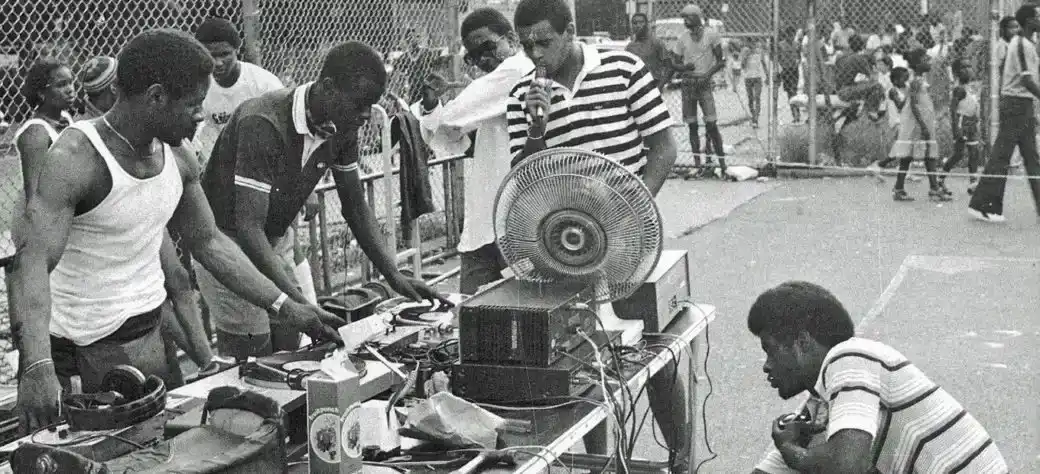
In the South Bronx of the 1970s, resources were scarce, but the party had to go on. Young people who couldn't afford live bands brought home turntables to street corners and abandoned warehouses, dancing joyfully to the beat of the drums.

Before this, playing records was a ritual of step-by-step precision. Dust had to be wiped away, the record placed, the switch pressed, and the needle set down. After a few faint, intermittent crackles, the melody would rise from the background noise.

"It feels a bit too rigid."

That's what the young people of half a century ago thought as they repeatedly switched between the same drum breaks, cueing, looping, and looping again. In the never-ending rhythm, they turned a machine meant for playing back music into a brand new instrument. What happened next, we all know: these self-proclaimed "DJs" single-handedly created Hip-Hop, unleashing a torrent of vibrant energy that flows to this day.
Most moments in the birth of pop culture share a similar history—myths from imagination to popularity, constantly "played" out by those who refuse to be disciplined by convention, in a spirit of defiance.

There's no doubt that our era loves change more than any before. In the horizon of time built by imagination, human civilization, still toddling within the solar system, is in its most energetic years, so technological development also carries an unstoppable momentum.

Faced with the surging wave of AI, many people feel a sense of disorienting anxiety. Subconsciously, we take it for granted that cutting-edge technology must be used for economically rational purposes. So, in calculations of cost reduction and efficiency gains, we repeatedly sketch out that seemingly more powerful and cheaper virtual labor force.

"It feels a bit too rigid."

I wonder if you resonate with those young people on the streets back then. Just as no one said turntables could only play music, if we don't do the "serious business" mentioned above, what else can AI do?

We want to see the fun and spirit that spills out when you cross swords with AI experts. Thus, Beating and our old friends at West Sea Radio have co-planned another offline gathering, giving it a somewhat cheeky name—"Super Creator Live."

Super, an adjective反复出现的形容词 in those热血少年漫画热血少年漫画 (hot-blooded少年少年少年少年少年少年少年少年少年少年少年少年少年少年少年少年少年少年少年少年少年少年少年少年少年少年少年少年少年少年少年少年少年少年少年少年少年少年少年少年少年少年少年少年少年少年少年少年少年少年少年少年少年少年少年少年少年少年少年少年少年少年少年少年少年少年少年少年少年少年少年少年少年少年少年少年少年少年少年少年少年少年少年少年少年少年少年少年少年少年少年少年少年少年少年少年少年少年少年少年少年少年少年少年少年少年少年少年少年少年少年少年少年少年少年少年少年少年少年少年少年少年少年少年少年少年少年少年少年少年少年少年少年少年少年少年少年少年少年少年少年少年少年少年少年少年少年少年少年少年少年少年少年少年少年少年少年少年少年少年少年少年少年少年少年少年少年少年少年少年少年少年少年少年少年少年少年少年少年少年少年少年少年少年少年少年少年少年少年少年少年少年少年少年少年少年少年少年少年少年少年少年少年少年少年少年少年少年少年少年少年少年少年少年少年少年少年少年少年少年少年少年少年少年少年少年少年少年少年少年少年少年少年少年少年少年少年少年少年少年少年少年少年少年少年少年少年少年少年少年少年少年少年少年少年少年少年少年少年少年少年少年少年少年少年少年少年少年少年少年少年少年少年少年少年少年少年少年少年少年少年少年少年少年少年少年少年少年少年少年少年少年少年少年少年少年少年少年少年少年少年少年少年少年少年少年少年少年少年少年少年少年少年少年少年少年少年少年少年少年少年少年少年少年少年少年少年少年少年少年少年少年少年少年少年少年少年少年少年少年少年少年少年少年少年少年少年少年少年少年少年少年少年少年少年少年少年少年少年少年少年少年少年少年少年少年少年少年少年少年少年少年少年少年少年少年少年少年少年少年少年少年少年少年少年少年少年少年少年少年少年少年少年少年少年少年少年少年少年少年少年少年少年少年少年少年少年少年少年少年少年少年少年少年少年少年少年少年少年少年少年少年少年少年少年少年少年少年少年少年少年少年少年少年少年少年少年少年少年少年少年少年少年少年少年少年少年少年少年少年少年少年少年少年少年少年少年少年少年少年少年少年少年少年少年少年少年少年少年少年少年少年少年少年少年少年少年少年少年少年少年少年少年少年少年少年少年少年少年少年少年少年少年少年少年少年少年少年少年少年少年少年少年少年少年少年少年少年少年少年少年少年少年少年少年少年少年少年少年少年少年少年少年少年少年少年少年少年少年少年少年少年少年少年少年少年少年少年少年少年少年少年少年少年少年少年少年少年少年少年少年少年少年少年少年少年少年少年少年少年少年少年少年少年少年少年少年少年少年少年少年少年少年少年少年少年少年少年少年少年少年少年少年少年少年少年少年少年少年少年少年少年少年少年少年少年少年少年少年少年少年少年少年少年少年少年少年少年少年少年少年少年少年少年少年少年少年少年少年少年少年少年少年少年少年少年少年少年少年少年少年少年少年少年少年少年少年少年少年少年少年少年少年少年少年少年少年少年少年少年少年少年少年少年少年少年少年少年少年少年少年少年少年少年少年少年少年少年少年少年少年少年少年少年少年少年少年少年少年少年少年少年少年少年少年少年少年少年少年少年少年少年少年少年少年少年少年少年少年少年少年少年少年少年少年少年少年少年少年少年少年少年少年少年少年少年少年少年少年少年少年少年少年少年少年少年少年少年少年少年少年少年少年少年少年少年少年少年少年少年少年少年少年少年少年少年少年少年少年少年少年少年少年少年少年少年少年少年少年少年少年少年少年少年少年少年少年少年少年少年少年少年少年少年少年少年少年少年少年少年少年少年少年少年少年少年少年少年少年少年少年少年少年少年少年少年少年少年少年少年少年少年少年少年少年少年少年少年少年少年少年少年少年少年少年少年少年少年少年少年少年少年少年少年少年少年少年少年少年少年少年少年少年少年少年少年少年少年少年少年少年少年少年少年少年少年少年少年少年少年少年少年少年少年少年少年少年少年少年少年少年少年少年少年少年少年少年少年少年少年少年少年少年少年少年少年少年少年少年少年少年少年少年少年少年少年少年少年少年少年少年少年少年少年少年少年少年少年少年少年少年少年少年少年少年少年少年少年少年少年少年少年少年少年少年少年少年少年少年少年少年少年少年少年少年少年少年少年少年少年少年少年少年少年少年少年少年少年少年少年少年少年少年少年少年少年少年少年少年少年少年少年少年少年少年少年少年少年少年少年少年少年少年少年少年少年少年少年少年少年少年少年少年少年少年少年少年少年少年少年少年少年少年少年少年少年少年少年少年少年少年少年少年少年少年少年少年少年少年少年少年少年少年少年少年少年少年少年少年少年少年少年少年少年少年少年少年少年少年少年少年少年少年少年少年少年少年少年少年少年少年少年少年少年少年少年少年少年少年少年少年少年少年少年少年少年少年少年少年少年少年少年少年少年少年少年少年少年少年少年少年少年少年少年少年少年少年少年少年少年少年少年极客漫画), is here to cheer on your "rule-breaking" ideas.
Beyond economic rationality, pop culture, emotional value, and fun creativity are also indispensable pieces of the world we live in.

A complete world is not just about the infrastructure of steel and concrete. One of the most important driving forces behind the popularization of technology is its silent infiltration into the daily lives of ordinary people: it's the music that makes someone hit repeat late at night, the short films that make people laugh and cry, the interactive games that carry joy and sorrow.

In the past, if you wanted to produce an album, shoot a short film, or create a game, you faced high financial barriers and technical walls. Pop culture back then was manufactured top-down by a few large institutions, and the masses could only sit in the audience, being dutiful consumers.

But now, if you have a great idea in your head and a strong desire to express it, AI can assist you in creating, giving form to your creativity.

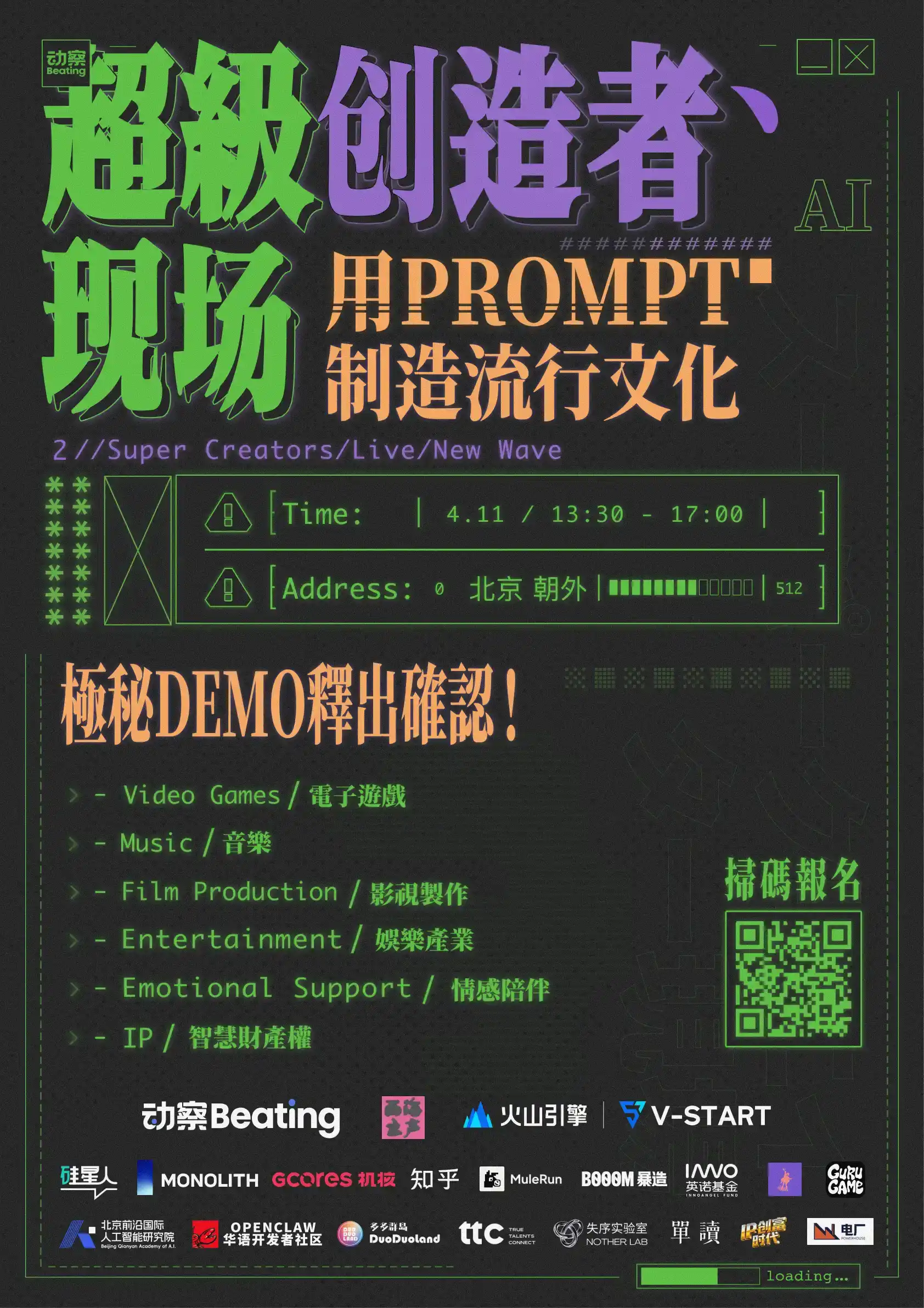
Thus, we are also opening Demo recruitment for this event.
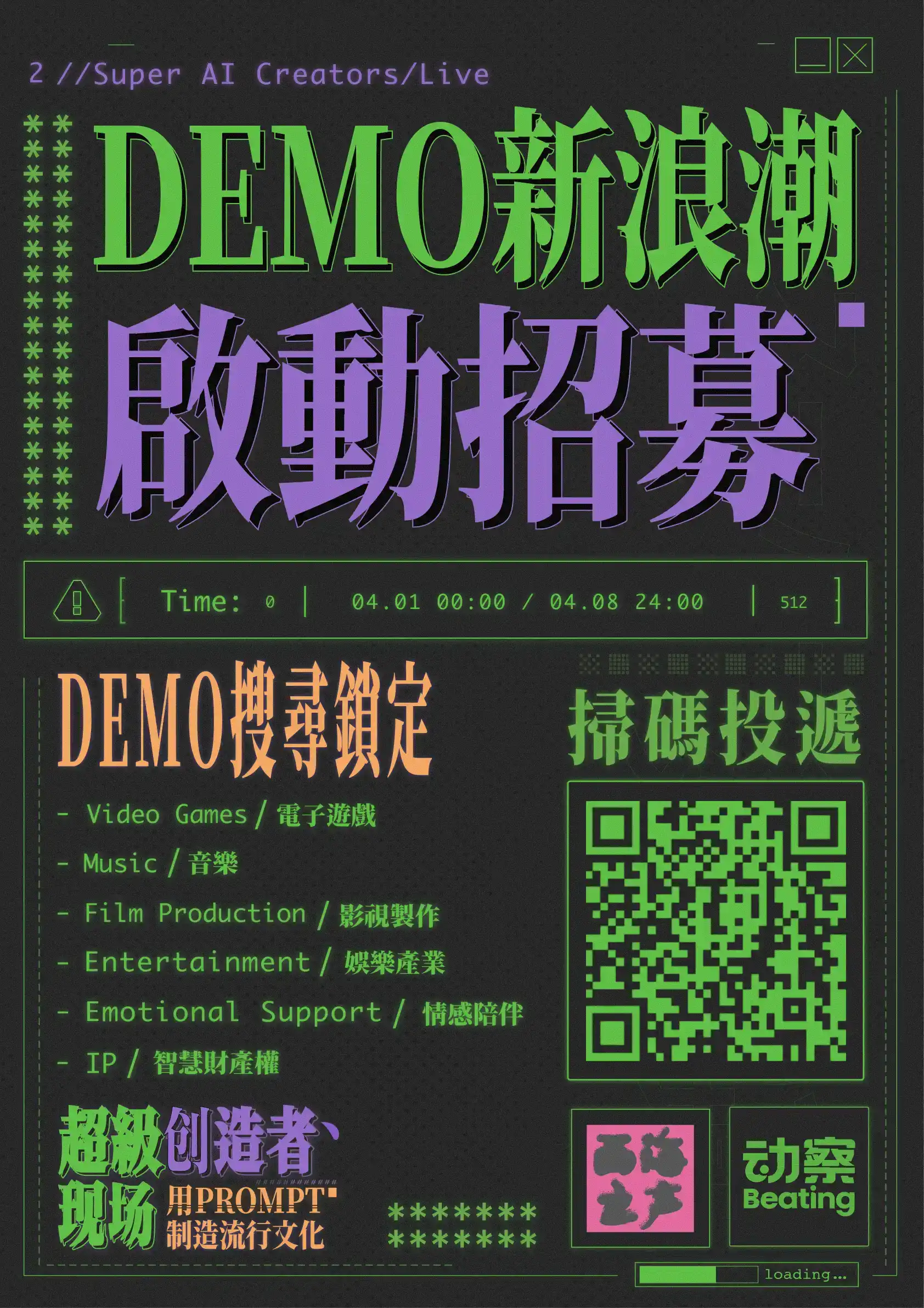
If you're tinkering with some interesting products using AI, whether it's games, film and TV, music, or just weird things that provide emotional value, as long as it carries your expression and creativity, we welcome you to scan the code to submit your Demo and bring it to the event. (Whether you submit or not, we suggest scanning the code to take a look—there's a surprise.)

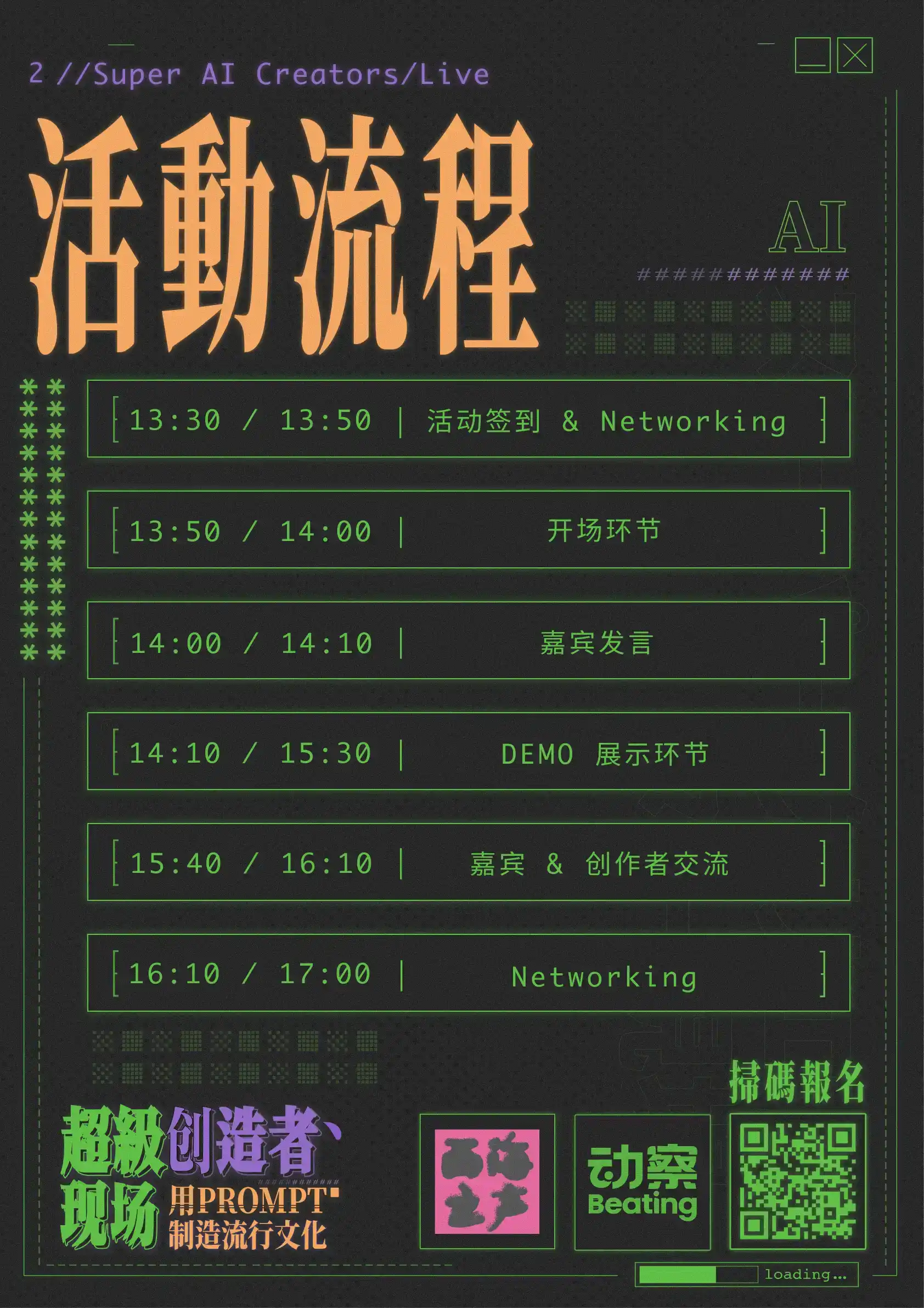
Come碰撞 (collide) with like-minded creators, chat with sharp investors, and meet potential users face-to-face. This is a field for wild ideas to freely碰撞 (collide), letting those seemingly "unserious" thoughts come out into the sun.

When everyone can use AI to turn their emotions, stories, and quirks into images, music, virtual companions, or interactive entertainment products, the production logic of pop culture is completely overturned. It is no longer a monopolized privilege but a new wave that everyone can participate in and create with Prompts.

We believe that the pop culture of the new era is being written line by line by us with Prompts.

Registration link: https://luma.com/7nkw0r3m

We'll see you there.
Связанные с этим вопросы

QWhat historical event in the 1970s is mentioned as the origin of Hip-Hop culture?

AIn the 1970s in the South Bronx, New York, young people who couldn't afford live bands brought home turntables to street corners and abandoned warehouses, repeatedly switching and looping the same drum beats, turning the record player into a new instrument and creating Hip-Hop.

QWhat is the main theme of the 'Super Creator Live' event mentioned in the article?

AThe event focuses on using AI not just for economic efficiency but for creating popular culture, emotional value, and fun ideas, encouraging people to use prompts to participate in and create new waves of culture.

QHow does the article suggest AI is changing the production logic of popular culture?

AAI lowers the financial and technical barriers that once restricted cultural production to large institutions, allowing anyone with ideas and expression to use AI to create music, films, games, or other emotional products, democratizing cultural creation.

QWhat kind of projects is the event looking for in its Demo recruitment?

AThe event welcomes demos of interesting products made with AI, including games, films, music, or any quirky creations that carry personal expression and creativity, regardless of whether they serve conventional 'serious' purposes.

QWhat is the significance of the phrase '好像有点太死板了' (It seems a bit too rigid) in the context of the article?

AThe phrase reflects a rejection of rigid, conventional uses of technology—first with record players being used creatively for music mixing instead of just playback, and now with AI being used for imaginative cultural creation beyond mere economic efficiency.

Похожее

In-Depth Report on the On-Chain Lending Market: When Off-Chain Credit Meets On-Chain Liquidation

The on-chain lending market has evolved from a peripheral DeFi niche into core financial infrastructure. As of early 2026, total value locked (TVL) in on-chain lending protocols has reached $64.3 billion, accounting for 53.54% of total DeFi TVL, making it the largest and most mature vertical within decentralized finance. Aave dominates the sector with approximately $32.9 billion in TVL, commanding nearly half of the market—a leadership position that is unlikely to be challenged in the foreseeable future. However, the path of on-chain lending forward is not without risk. Liquidation cascades, credit defaults, and cross-chain vulnerabilities remain systemic threats hanging over the industry. At the same time, a deeper structural transformation is underway: on-chain lending is shifting from a “leverage tool for crypto-native users” to a “compliant gateway for institutional capital”. The scale of RWA (Real World Asset) lending has surpassed $18.5 billion, with U.S. Treasuries and government securities increasingly serving as core collateral. Institutional capital inflows are reshaping both the user base and risk appetite of the sector. This report systematically analyzes the evolution of on-chain lending definitions, competitive dynamics, core risks, and future trends, providing a comprehensive industry outlook for investors and trade practitioners. Key findings suggest that the “one dominant player with several strong challengers” structure will persist in the short term, while fixed-rate lending, compliant collateral, and institutional credit underwriting will define the next phase of competition. For investors focused on DeFi infrastructure, three key opportunity tracks stand out, namely, the Aave ecosystem (Morpho, Spark), RWA lending protocols (Ondo, Maple) and fixed-rate innovation (Notional, Pendle).

HTX Learn33 мин. назад

In-Depth Report on the On-Chain Lending Market: When Off-Chain Credit Meets On-Chain Liquidation

HTX Learn33 мин. назад

Fu Peng's First Public Speech in 2026: What Exactly Are Crypto Assets? Why Did I Join the Crypto Asset Industry?

Fu Peng, a renowned macroeconomist and now Chief Economist at New火 Group, delivered his first public speech of 2026 at the Hong Kong Web3 Festival. He explained his perspective on crypto assets and why he joined the industry, framing it within the context of macroeconomic trends and financial evolution. Fu emphasized that crypto assets are transitioning from an early, belief-driven phase to a mature, institutionally integrated asset class. He drew parallels to the 1970s-80s, when technological advances (like computing) revolutionized traditional finance, leading to the rise of FICC (Fixed Income, Currencies, and Commodities). Similarly, current advancements in AI, data, and blockchain are reshaping finance, with crypto assets becoming part of a new "FICC + C" (C for Crypto) framework. He noted that institutional capital, including traditional hedge funds, avoided early crypto due to its speculative nature but are now engaging as regulatory clarity emerges (e.g., stablecoin laws, CFTC classifying crypto as a commodity). Fu predicted that 2025-2026 marks a turning point where crypto becomes a standardized, financially viable asset for diversified portfolios, akin to commodities or derivatives in traditional finance. Fu defined Bitcoin not as "digital gold" in a simplistic sense but as a value-preserving, financially tradable asset. He highlighted that crypto's future lies in regulated, institutional adoption, moving away from retail-dominated trading. His entry into crypto signals this maturation, where traditional finance integrates crypto into mainstream asset management.

marsbit1 ч. назад

Fu Peng's First Public Speech in 2026: What Exactly Are Crypto Assets? Why Did I Join the Crypto Asset Industry?

marsbit1 ч. назад

Justin Sun Sues Trump Family: What $75 Million Bought Was Only a Blacklist

Justin Sun, founder of Tron, has filed a lawsuit in federal court against World Liberty Financial (WLF), alleging he was made the "primary target of a fraudulent scheme" after investing $75 million. Sun claims the investment secured him an advisor title and WLFI tokens, which were later frozen by WLF, causing "hundreds of millions in losses." The dispute began in late 2024 when Sun's investment helped revive WLF's struggling token sale, which ultimately raised $550 million. Shortly after, the SEC dropped its lawsuit against Sun following Donald Trump's inauguration. However, relations soured when Sun refused WLF's demands for additional funding. In August 2025, WLF added a "blacklist" function to its smart contract, allowing it to unilaterally freeze tokens. Sun's holdings, worth approximately $107 million, were frozen, and he was threatened with token destruction. The lawsuit highlights WLF's structure, which directs 75% of token sale profits to the Trump family, who had earned $1 billion by December 2025. WLF's CEO is Zach Witkoff, son of U.S. Middle East envoy Steve Witkoff. The project faces scrutiny for opaque operations, including a controversial loan arrangement on the Dolomite platform, co-founded by a WLF advisor. Despite Sun's history with the SEC, the case underscores centralization risks within DeFi, as WLF controls governance and holds powers to freeze assets arbitrarily. Sun's tokens remain frozen as legal proceedings begin.

marsbit1 ч. назад

Justin Sun Sues Trump Family: What $75 Million Bought Was Only a Blacklist

marsbit1 ч. назад

Торговля

Спот
Фьючерсы
活动图片