Ethereum Completes Another Key Technical Advancement, Can It Achieve a Leap Forward by 2026?

marsbitОпубликовано 2025-12-22Обновлено 2025-12-22

Введение

The Ethereum Foundation (EF) has announced a major technical breakthrough in zkEVM development, achieving a dramatic reduction in block proof generation time—from 16 minutes to just 16 seconds—with a 45-fold decrease in cost. Certain zkVMs can now prove 99% of mainnet blocks in under 10 seconds on target hardware. However, EF emphasizes that raw speed is meaningless without proven security. Several mathematical conjectures underlying popular STARK-based zkEVMs have recently been disproven, reducing their security guarantees. The core focus has now shifted from throughput to provable safety, with L1 zkEVMs required to meet a 128-bit security standard to prevent risks like token forgery or state corruption. EF released a three-phase roadmap aiming for full compliance by December 2026: 1. By end-February 2026, all zkEVM teams must integrate with EF’s soundcalc security tool. 2. By end-May, achieve intermediate goals like 100-bit provable security. 3. By end-December, reach 128-bit provable security with formal verification of recursive proof systems. Key technologies like WHIR and JaggedPCS are being deployed to improve efficiency. Challenges remain, including on-chain implementation, dynamic security parameter adjustments, and uneven progress among teams. Once achieved, secure zkEVMs could allow Ethereum to increase gas limits safely, enhance L1 capacity, and blur the lines between L1 and L2 execution. The race for reliability is now the central theme for Ethereum in 2026.

The zkEVM ecosystem has achieved a performance leap after a year of intensive efforts, reducing Ethereum block proof time from 16 minutes to 16 seconds, with a cost reduction of 45 times. Participating zkVMs can now complete proofs for 99% of mainnet blocks within 10 seconds on target hardware.

On December 18, the Ethereum Foundation (EF) announced the implementation of a real-time proof mechanism and the elimination of performance bottlenecks. However, it emphasized that the real challenge lies in reliability, as speed without security support becomes a burden. Additionally, several zkEVMs based on STARK algorithms have had their underlying mathematical conjectures disproven in recent months, leading to a reduction in security levels.

Previously, in July, EF set comprehensive real-time proof goals covering multiple dimensions such as latency, hardware, and security. These have now been met through the EthProofs benchmark tests.

The core shift is from pursuing throughput to prioritizing provable security, clearly stating that L1-level zkEVMs must achieve a 128-bit security standard, aligning with mainstream cryptographic norms. This is because forged proofs could lead to critical risks such as token counterfeiting and L1 state tampering, making security margins non-negotiable.

EF simultaneously unveiled a three-phase security roadmap:

  1. By the end of February 2026, all zkEVM teams must integrate their proof systems with EF's soundcalc security assessment tool to standardize security calculations;
  2. Achieve the Glamsterdam standard by the end of May, meeting interim goals like 100-bit provable security;
  3. Complete the H-star final goal by the end of December, achieving 128-bit provable security and providing formal security arguments for recursive topological structures.

To meet these goals, EF mentioned key technical tools like WHIR and JaggedPCS, which can improve efficiency by optimizing proof generation and avoiding computational waste, while techniques like recursive topologies help reduce proof size.

However, multiple challenges remain: real-time proofs have not yet been implemented on-chain, leaving actual validator performance in question; security parameters need dynamic adjustment as mathematical conjectures are disproven; it is uncertain if all teams can meet deadlines; and formal verification projects for recursive architectures are still in early stages, with uneven ecosystem development.

Notably, compliant zkEVMs could enable Ethereum to increase the Gas limit, enhancing block capacity while ensuring staking feasibility, promoting L1 as a trusted settlement layer, and blurring the boundaries between L2 and L1 execution.

With the performance sprint concluded, the core focus of the zkEVM ecosystem has shifted to achieving sufficiently reliable security proofs without relying on easily disprovable conjectures, to support trillion-dollar asset scales. The security competition has now officially begun, and it will be the main theme for Ethereum in 2026.

Связанные с этим вопросы

QWhat major technical achievement did the Ethereum Foundation announce on December 18th regarding zkEVM?

AThe Ethereum Foundation announced the implementation of a real-time proof mechanism and the elimination of performance bottlenecks, reducing block proof time from 16 minutes to 16 seconds and cutting costs by 45 times.

QWhat is the core shift in focus for zkEVM development according to the Ethereum Foundation?

AThe core shift is from pursuing throughput to prioritizing provable security, requiring L1-level zkEVMs to achieve a 128-bit security standard to prevent risks like token forgery and L1 state tampering.

QWhat are the three phases of the security roadmap set by the Ethereum Foundation for zkEVM teams?

A1. By February 2026, all zkEVM teams must integrate their proof systems with EF's soundcalc security assessment tool. 2. By May 2026, achieve the Glamsterdam standard with 100-bit provable security. 3. By December 2026, complete the H-star goal with 128-bit provable security and formal security arguments for recursive topology structures.

QWhat challenges remain for zkEVM despite the performance improvements?

AChallenges include real-time proofs not yet being on-chain, security parameters needing dynamic adjustments due to disproven mathematical conjectures, uncertainty about teams meeting deadlines, and early-stage formal verification for recursive architectures.

QHow could achieving the security goals for zkEVM benefit Ethereum's future?

AIt could enable Ethereum to increase Gas limits, enhance block capacity while ensuring staking feasibility, solidify L1 as a trusted settlement layer, and blur the boundaries between L2 and L1 execution.

Похожее

Over 80% of New Tokens Peak at TGE: The Root Cause and Cure for Web3's False Prosperity

Nearly 85% of tokens launched in 2025 have seen their fully diluted valuation (FDV) fall below their initial TGE valuation, with a median decline of 71%. Only 15% of new tokens outperformed their TGE price. This trend reveals systemic issues in the Web3 space, where high fundraising, large communities, and major exchange listings—often considered markers of quality—show no statistical correlation with token performance. Key findings include: - Projects raising $1 million performed similarly to those raising $10 million. Excessive funding often leads to faster token failure due to investor unlocks and market pressure. - Community size (e.g., 50k vs. 500k followers) has no predictive value for token success. Most "communities" are speculative and disappear when prices drop. - Token pricing is critical: tokens priced between $0.01–$0.05 at launch showed the best survival rates, while those outside this range often failed. - AI tokens outperformed others in both peak and sustainability, while Gaming and DeFi sectors struggled severely. - IDO/IEO platforms provided no reliable protection; most launches resulted in significant losses. The root causes include flawed tokenomics, over-reliance on speculative metrics, poor timing, and a market that prioritizes narrative over substance. The article urges builders in 2026 to focus on sustainable fundraising, realistic token pricing, product-market fit, and genuine metrics like user retention and revenue—rather than vanity indicators. The old playbook is broken; adaptation and integration are essential for survival.

marsbit1 мин. назад

Over 80% of New Tokens Peak at TGE: The Root Cause and Cure for Web3's False Prosperity

marsbit1 мин. назад

Ripple Chiseled a Crack in the Wall, But Swift Tore Down the Entire Wall

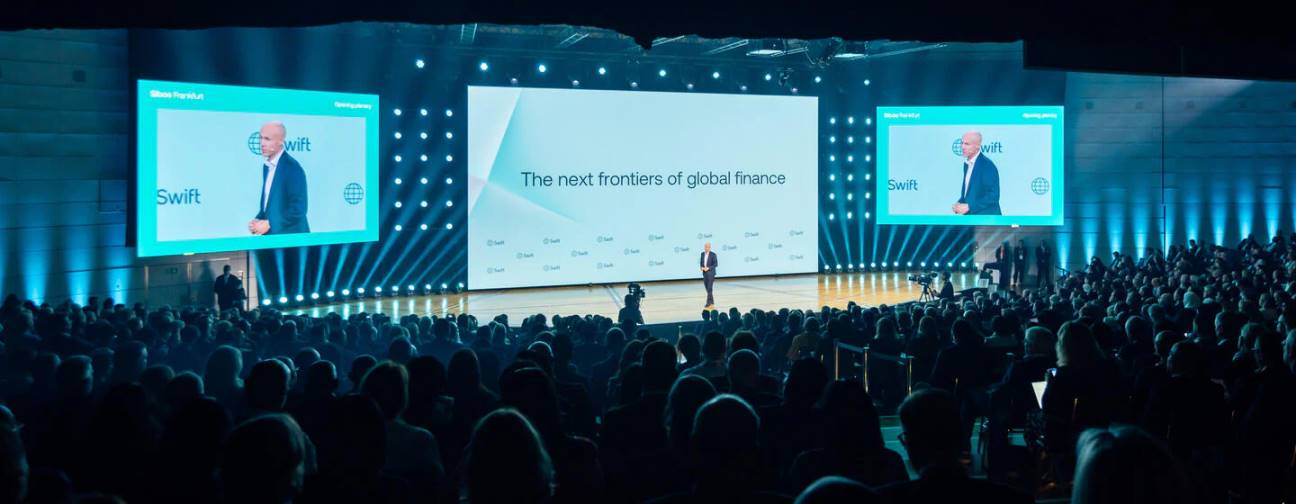
At the Sibos 2025 conference, Swift announced a major evolution of its financial infrastructure by integrating a blockchain-based shared ledger to support tokenized assets and enable secure, real-time, and interoperable global transactions. The new system, built on Consensys' Ethereum Layer 2 network Linea, uses zk-EVM rollup technology to reduce costs and settlement times while meeting banking security standards. Over 30 major banks, including JPMorgan and Citibank, are participating in the pilot. The article reflects on Ripple’s long-standing effort to challenge traditional cross-border payments using XRP and RippleNet, which has seen adoption in retail and corporate remittances despite earlier regulatory challenges. However, Swift’s move represents a broader and more systemic shift. Unlike Ripple’s XRP-dependent model, Swift’s ledger is asset-agnostic, supporting CBDCs, stablecoins, and fiat currencies, and leverages its existing network of over 11,000 institutions. This transition marks a convergence of traditional and decentralized finance, enabling 24/7 settlement, reducing reliance on pre-funded accounts, and potentially freeing up trillions in trapped capital. By adopting a neutral, interoperable, and highly scalable blockchain framework, Swift is positioned to redefine global value transfer—moving from a legacy telegraphic model to a digitally-native, mathematically-verified system.

深潮15 мин. назад

Ripple Chiseled a Crack in the Wall, But Swift Tore Down the Entire Wall

深潮15 мин. назад

Торговля

Спот
Фьючерсы

Популярные статьи

HSK: стимулируя совместный рост экосистемы HashKey и создавая инновационный мост между TradFi и криптоиндустрией

Основанная в 2018 году, HashKey Group - ведущая азиатская группа, предоставляющая полный спектр финансовых услуг в сфере цифровых активов.

1.8k просмотров всегоОпубликовано 2025.11.05Обновлено 2025.11.05

Обсуждения

Добро пожаловать в Сообщество HTX. Здесь вы сможете быть в курсе последних новостей о развитии платформы и получить доступ к профессиональной аналитической информации о рынке. Мнения пользователей о цене на A (A) представлены ниже.

活动图片