DOJ Files Reveal Epstein’s $3.2M Coinbase Stake in 2014, Fueling LiquidChain’s Booming Presale

bitcoinistОпубликовано 2026-02-03Обновлено 2026-02-03

Введение

Newly unsealed DOJ documents reveal Jeffrey Epstein invested $3.2 million in Coinbase in 2014, half of which was sold for nearly $15 million in 2018. This highlights the significant returns from early crypto infrastructure investments. The article argues that while early exchanges solved the problem of buying crypto, the current challenge is fragmented liquidity across blockchains. It presents LiquidChain ($LIQUID) as a Layer 3 solution addressing this by unifying Bitcoin, Ethereum, and Solana ecosystems. The protocol enables cross-chain trades and offers developers a "Deploy-Once Architecture." The piece concludes that LiquidChain's presale is attracting attention as the next major infrastructure play, targeting the value of interoperability and simplified cross-chain usage.

Newly unsealed Department of Justice documents have confirmed a bizarre footnote in crypto history: Jeffrey Epstein poured roughly $3.2 million into Coinbase back in 2014. At the time, Bitcoin was trading well below $1,000.

It wasn’t just a small punt, either. Records indicate that about half this stake was liquidated in 2018 for nearly $15 million, a windfall that underscores the staggering multiples generated by early infrastructure plays in the digital asset space.
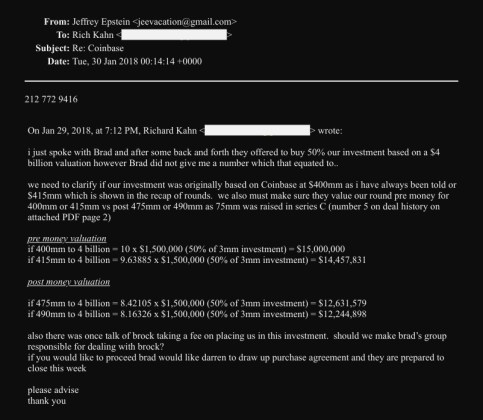
Forget the name attached to the capital for a moment. What actually matters here, from a market structure perspective, is where the money went. In 2014, the biggest headache was simply buying Bitcoin; centralized exchanges (CEXs) like Coinbase solved that fiat on-ramp problem.

But today? The bottleneck has moved. It’s no longer about buying assets, but actually using them across a fragmented mess of blockchains. As the market digests these legacy gains, sophisticated traders are hunting for the next infrastructure fix: liquidity unification.

That search is funneling serious volume toward Layer 3 solutions, with LiquidChain ($LIQUID) emerging as a clear beneficiary.

Buy $LIQUID here.

Beyond Centralized Gatekeepers: LiquidChain Unifies Fragmented Ecosystems

The era defined by that 2014 investment was all about walled gardens, centralized entities holding custody to facilitate trade. While that worked for onboarding, it left us with a disjointed DeFi landscape where liquidity is trapped on isolated islands.

Bitcoin, Ethereum, and Solana currently operate as silos, forcing users to navigate risky bridges just to move capital. LiquidChain ($LIQUID) addresses this. The protocol (relatively new to the scene) isn’t trying to compete with these chains. Instead, it acts as the connective tissue between them.

LiquidChain operates as a Layer 3 (L3) Cross-Chain Liquidity Layer. It’s not just another bridge transferring tokens; it provides a single execution environment. This unlocks ‘atomic composability’, meaning you can execute a trade touching $BTC, $ETH, and $SOL liquidity simultaneously without ever leaving the interface.

For developers, the ‘Deploy-Once Architecture’ is the real hook. Instead of rewriting smart contracts for three different virtual machines (EVM, SVM, and Bitcoin script), teams deploy on LiquidChain once and instantly access users across every connected ecosystem.

The implications are massive. Just as Coinbase captured value by simplifying the purchase of Bitcoin, LiquidChain targets the value in simplifying the usage of Bitcoin in DeFi. By abstracting away the headache of cross-chain swaps, the protocol is chasing the institutional volume that currently sits on CEXs simply because on-chain UX is still too clunky.

Read the LiquidChain whitepaper.

Get your $LIQUID here.

Smart Money Rotates Into Layer 3 As LiquidChain Redefines Settlement

History suggests the highest ROI usually comes from solving the dominant infrastructure hurdle of the era.

In 2014, that was the exchange layer. In 2026? It’s interoperability. The buzz around LiquidChain ($LIQUID) comes down to its approach to verifiable settlement. Rather than trusting third parties, the protocol uses a Cross-Chain VM that cryptographically verifies transactions. It’s a necessary upgrade to reduce the counterparty risk that has plagued bridges for years.

The $LIQUID token fuels this entire ecosystem, handling liquidity staking and gas fees. The economic model looks aggressive: it’s designed to soak up value from the volatility of every chain it connects. If Bitcoin activity surges, LiquidChain benefits.
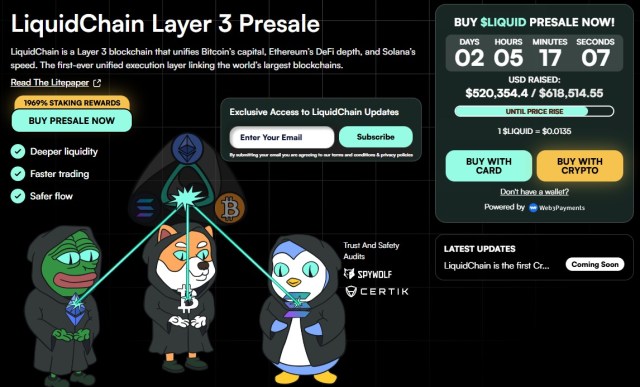
If Solana memecoins rally, LiquidChain captures fees from the cross-chain arbitrage. It offers “index-like” exposure to the broader market without forcing investors to pick a specific winning chain.

The contrast between legacy CEX investments and modern DeFi infrastructure is sharp. While those DOJ files are a stark reminder of the massive gains made by early gatekeepers, the current presale activity around LiquidChain suggests the next wave of capital is betting on a borderless, unified liquidity layer. Opportunities to back infrastructure protocols before mainnet launch don’t come around often.

Check out the LiquidChain presale.

Disclaimer: This article is for informational purposes only and does not constitute financial advice. Cryptocurrency investments, particularly in presale stages, carry high risks including volatility and potential loss of principal. Always conduct your own due diligence.


Связанные с этим вопросы

QAccording to the DOJ files, how much did Jeffrey Epstein invest in Coinbase in 2014 and what was the value of the partial liquidation in 2018?

AJeffrey Epstein invested roughly $3.2 million in Coinbase in 2014. Records indicate that about half of this stake was liquidated in 2018 for nearly $15 million.

QWhat is the primary market problem that LiquidChain ($LIQUID) aims to solve, according to the article?

ALiquidChain aims to solve the problem of fragmented liquidity across isolated blockchains (like Bitcoin, Ethereum, and Solana) by acting as a unified Layer 3 Cross-Chain Liquidity Layer, enabling atomic composability and simplifying cross-chain asset usage.

QWhat key feature does LiquidChain offer to developers to simplify building across multiple chains?

ALiquidChain offers developers a 'Deploy-Once Architecture,' which allows them to deploy their smart contracts on LiquidChain once and instantly gain access to users across every connected blockchain ecosystem, without needing to different virtual machines.

QHow does the $LIQUID token's economic model capture value from the broader cryptocurrency market?

AThe $LIQUID token is designed to capture value from the volatility and activity of every chain it connects. It benefits from fees generated by cross-chain transactions, such as when Bitcoin activity surges or Solana memecoins rally, providing 'index-like' exposure to the broader market.

QWhat does the article suggest is the current dominant infrastructure hurdle that represents the highest potential ROI, similar to the exchange layer in 2014?

AThe article suggests that the current dominant infrastructure hurdle, and thus the area with the highest potential ROI, is interoperability—solving the fragmentation and complexity of using assets across multiple, separate blockchains.

Похожее

Торговля

Спот
Фьючерсы

Популярные статьи

Как купить S

Добро пожаловать на HTX.com! Мы сделали приобретение Sonic (S) простым и удобным. Следуйте нашему пошаговому руководству и отправляйтесь в свое крипто-путешествие.Шаг 1: Создайте аккаунт на HTXИспользуйте свой адрес электронной почты или номер телефона, чтобы зарегистрироваться и бесплатно создать аккаунт на HTX. Пройдите удобную регистрацию и откройте для себя весь функционал.Создать аккаунтШаг 2: Перейдите в Купить криптовалюту и выберите свой способ оплатыКредитная/Дебетовая Карта: Используйте свою карту Visa или Mastercard для мгновенной покупки Sonic (S).Баланс: Используйте средства с баланса вашего аккаунта HTX для простой торговли.Третьи Лица: Мы добавили популярные способы оплаты, такие как Google Pay и Apple Pay, для повышения удобства.P2P: Торгуйте напрямую с другими пользователями на HTX.Внебиржевая Торговля (OTC): Мы предлагаем индивидуальные услуги и конкурентоспособные обменные курсы для трейдеров.Шаг 3: Хранение Sonic (S)После приобретения вами Sonic (S) храните их в своем аккаунте на HTX. В качестве альтернативы вы можете отправить их куда-либо с помощью перевода в блокчейне или использовать для торговли с другими криптовалютами.Шаг 4: Торговля Sonic (S)С легкостью торгуйте Sonic (S) на спотовом рынке HTX. Просто зайдите в свой аккаунт, выберите торговую пару, совершайте сделки и следите за ними в режиме реального времени. Мы предлагаем удобный интерфейс как для начинающих, так и для опытных трейдеров.

1.2k просмотров всегоОпубликовано 2025.01.15Обновлено 2025.03.21

Как купить S

Sonic: Обновления под руководством Андре Кронье – новая звезда Layer-1 на фоне спада рынка

Он решает проблемы масштабируемости, совместимости между блокчейнами и стимулов для разработчиков с помощью технологических инноваций.

2.2k просмотров всегоОпубликовано 2025.04.09Обновлено 2025.04.09

Sonic: Обновления под руководством Андре Кронье – новая звезда Layer-1 на фоне спада рынка

HTX Learn: Пройдите обучение по "Sonic" и разделите 1000 USDT

HTX Learn — ваш проводник в мир перспективных проектов, и мы запускаем специальное мероприятие "Учитесь и Зарабатывайте", посвящённое этим проектам. Наше новое направление .

1.8k просмотров всегоОпубликовано 2025.04.10Обновлено 2025.04.10

HTX Learn: Пройдите обучение по "Sonic" и разделите 1000 USDT

Обсуждения

Добро пожаловать в Сообщество HTX. Здесь вы сможете быть в курсе последних новостей о развитии платформы и получить доступ к профессиональной аналитической информации о рынке. Мнения пользователей о цене на S (S) представлены ниже.

活动图片