Crypto Isn’t A Cult: Why Vanity Fair’s ‘True Believers’ Piece Misses The Point

bitcoinistОпубликовано 2026-03-18Обновлено 2026-03-18

Введение

A recent Vanity Fair article portrays the crypto community as a cult of "true believers," depicting participants as naive, decadent, and out-of-touch zealots clinging to a failed dream. The piece uses dramatic photography and mocking captions—such as "the most expensive religion in the world"—to caricature industry figures as extravagant and unserious. The crypto community has pushed back strongly, arguing the article focuses on stereotypical "degenerate" personalities rather than the developers and contributors building real technological infrastructure and value. Critics note that legacy media often ignores the serious, technical side of crypto in favor of sensationalist narratives. Despite the article’s claim that crypto is dead, Bitcoin continues to trade at high values, underscoring the resilience and ongoing activity within the ecosystem. The response highlights a demand for more serious and nuanced coverage of the space.

A recent Vanity Fair piece painted a cartoonish profile of what they called “crypto’s true believers”, framing long‐time participants as cultish die‐hards who won’t admit the dream is over.
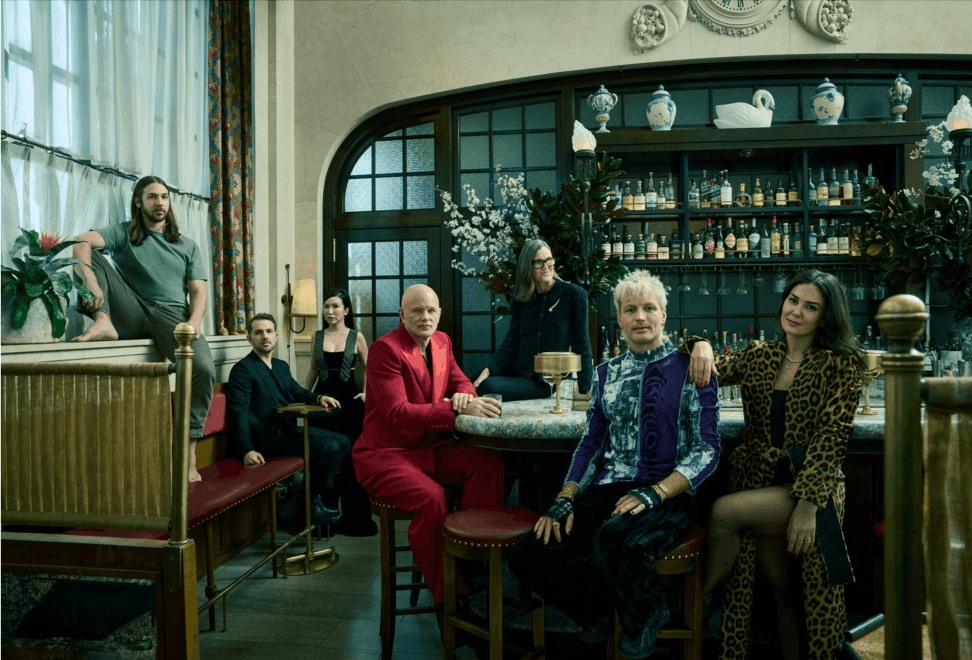
The original caption on the cover picture o the article reads “the most expensive religion on the world”. Source. Vanity Fair.

Crypto: “The Most Expensive Religion In The World”

Dim lights, deep contrast shadows, rich jewel tones, animal print, bright colored suits and a decadentism-old money aesthetic. That’s the depiction of Vanity Fair’s “Crypto’s True Believers”: a group of overdue-old Hollywood ingenuos people that refuse to accept that they have fallen out of grace. A festival of banality and naivety led by capricious people throwing a “tantrum” after living a maximalist-multimillionaire lifestyle that would make Jay Gatsby and Daisy Buchanan blush.

Related Reading: Crypto Donations Branded ‘Dangerous’? UK Security Panel Urges Immediate Ban

Even worse: the “zealots who are holding the line”, as the hit piece calls them, are condescendingly framed as cult members in a way that would make Vitalik Buterin, Ethereum’s co-founder, raise his arms in desperation: this portrayal, the entire piece, is everything that he has been tirelessly warning against — a fact that the article itself, without any sense of self-awareness, is gracious enough to acknowledge.
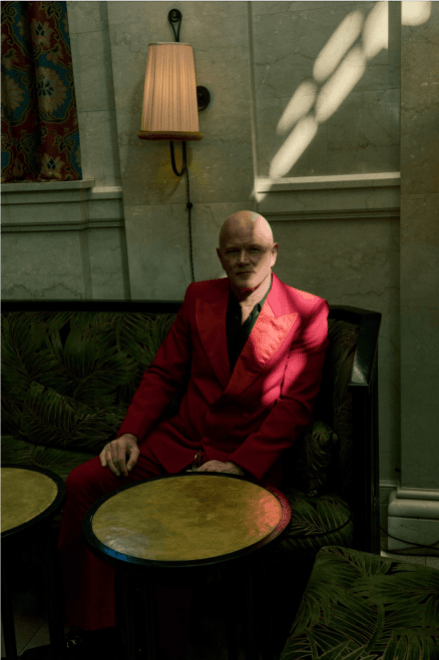
Michael Novogratz, CEO of Galaxy Digital, is made to look like some sort of Wilson Fisk, Daredevil’s Kingpin. Source. Vanity Fair.

As if the pictures weren’t enough, the captions take matters to the next level: from “the bitcoin playboy” and “the couture evangelist” to “the build-a-bear and the product mommy”: the followers of the “sixth asset class” are the successors of Satoshi Nakamoto’s original “hyper online” followers.

Despite acknowledging that the implosion of Lehman Brothers took with it “the myth of institutional security” for the entire world, Vanity Fair depicts the “early believers” of Bitcoin’s White Paper as “cypherpunks on message boards, creating their own echo chamber and convinced that cryptography could do what regulators never would: redistribute power”. A cyberpunk caricature of a rightfully disillusioned generation looking for a different way to rebuild a world that had just collapsed on top of them, crushing their dreams and ambitions with it.

The article positions itself as the “serious” view of crypto from the traditional media bubble, implicitly antagonizing and directly mocking the plead of the subjects they depict to be taken seriously: what could be serious about them, the degen-extravaganza champions? Why would anyone still care about the crashes, frauds, and regulatory crackdowns of this out of touch group of crypto aristocracy?

The Community Takes A Rightful Stand

For obvious reasons, the piece triggered immediate backlash on social media X from builders, founders and on‐chain governance people. One of them is Dennison Bertram, Tally’s founder, who argues that the problem is way bigger than “just another hit piece in a long line of forgettable nonsense”: it’s the angle, the choice to depict all crypto people like “degen” stereotypes.

Legacy outlets keep interviewing the same people, some users on X claimed, instead of people who actually shipped protocols, standards, and tooling for billions in on‐chain value: media loves “degen” archetypes because they’re clickable, but that lens erases the serious, boring, resilient parts of the ecosystem that are actually making a real impact in the world.

On his X’s thread, Bertram analyzes each picture through the lenses of someone who worked as a fashion photographer for over a decade before crypto. With this authority, Bertram argues that not only is the article mean spirited, but photographer Jeremy Liebman’s work “is a deliberate work of mockery”.

The takeaway of all of this seems to be that if you’re going to write that crypto is dead, at least talk to the people still shipping code, running DAOs, maintaining testnets and governance forums every day.
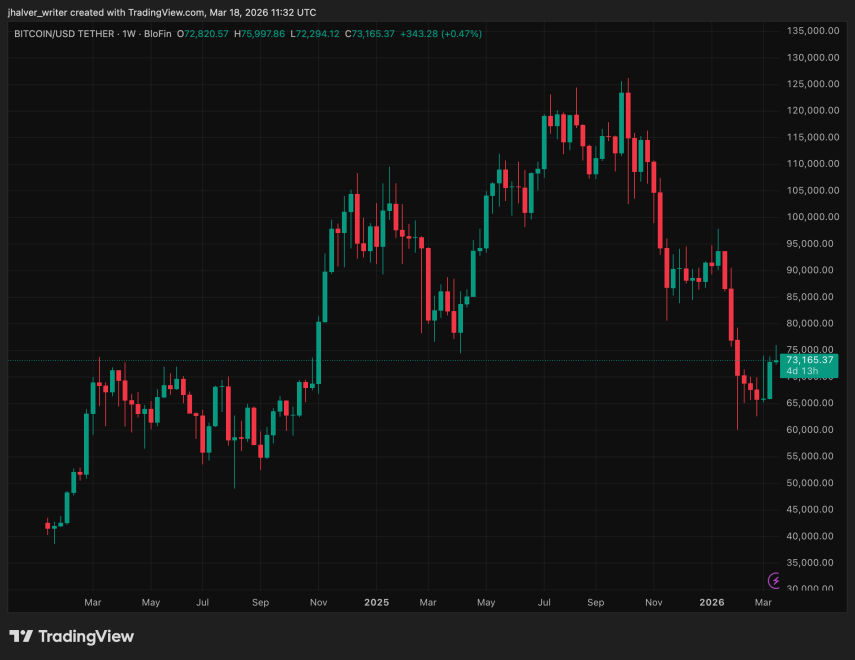
At the time of writing, BTC trades for $73k on the daily chart. Source: BTCUSD on Tradingview

Cover image from Perplexity, BTCUSD chart from Tradingview

Связанные с этим вопросы

QWhat is the main criticism of the Vanity Fair article 'Crypto's True Believers' according to the author?

AThe author criticizes the Vanity Fair article for painting a cartoonish and cultish profile of long-time crypto participants, framing them as naive, decadent, and out-of-touch zealots who refuse to accept that the crypto dream is over, rather than acknowledging the serious work being done in the ecosystem.

QHow does the Vanity Fair article depict the early believers of Bitcoin's White Paper?

AThe article depicts early Bitcoin believers as 'cypherpunks on message boards, creating their own echo chamber and convinced that cryptography could do what regulators never would: redistribute power', portraying them as a cyberpunk caricature of a disillusioned generation.

QWhat does Dennison Bertram, Tally's founder, claim about the Vanity Fair article's photography?

ADennison Bertram, who has a background as a fashion photographer, argues that the photography in the Vanity Fair article is 'a deliberate work of mockery' and a setup to ridicule crypto and those depicted, rather than a serious portrayal.

QAccording to the article, what does the crypto community argue legacy media outlets keep doing wrong?

AThe crypto community argues that legacy media outlets keep interviewing the same stereotypical 'degen' personalities instead of people who actually build protocols, standards, and tooling that create real on-chain value, thus erasing the serious and resilient parts of the ecosystem.

QWhat is the implied message of the article's original cover picture caption, as mentioned in the text?

AThe original caption on the cover picture of the Vanity Fair article reads 'the most expensive religion in the world', implying that crypto is portrayed as a cult-like belief system that demands extreme financial devotion from its followers.

Похожее

Fu Peng's First Public Speech in 2026: What Exactly Are Crypto Assets? Why Did I Join the Crypto Asset Industry?

Fu Peng, a renowned macroeconomist and now Chief Economist at New火 Group, delivered his first public speech of 2026 at the Hong Kong Web3 Festival. He explained his perspective on crypto assets and why he joined the industry, framing it within the context of macroeconomic trends and financial evolution. Fu emphasized that crypto assets are transitioning from an early, belief-driven phase to a mature, institutionally integrated asset class. He drew parallels to the 1970s-80s, when technological advances (like computing) revolutionized traditional finance, leading to the rise of FICC (Fixed Income, Currencies, and Commodities). Similarly, current advancements in AI, data, and blockchain are reshaping finance, with crypto assets becoming part of a new "FICC + C" (C for Crypto) framework. He noted that institutional capital, including traditional hedge funds, avoided early crypto due to its speculative nature but are now engaging as regulatory clarity emerges (e.g., stablecoin laws, CFTC classifying crypto as a commodity). Fu predicted that 2025-2026 marks a turning point where crypto becomes a standardized, financially viable asset for diversified portfolios, akin to commodities or derivatives in traditional finance. Fu defined Bitcoin not as "digital gold" in a simplistic sense but as a value-preserving, financially tradable asset. He highlighted that crypto's future lies in regulated, institutional adoption, moving away from retail-dominated trading. His entry into crypto signals this maturation, where traditional finance integrates crypto into mainstream asset management.

marsbit6 мин. назад

Fu Peng's First Public Speech in 2026: What Exactly Are Crypto Assets? Why Did I Join the Crypto Asset Industry?

marsbit6 мин. назад

Justin Sun Sues Trump Family: What $75 Million Bought Was Only a Blacklist

Justin Sun, founder of Tron, has filed a lawsuit in federal court against World Liberty Financial (WLF), alleging he was made the "primary target of a fraudulent scheme" after investing $75 million. Sun claims the investment secured him an advisor title and WLFI tokens, which were later frozen by WLF, causing "hundreds of millions in losses." The dispute began in late 2024 when Sun's investment helped revive WLF's struggling token sale, which ultimately raised $550 million. Shortly after, the SEC dropped its lawsuit against Sun following Donald Trump's inauguration. However, relations soured when Sun refused WLF's demands for additional funding. In August 2025, WLF added a "blacklist" function to its smart contract, allowing it to unilaterally freeze tokens. Sun's holdings, worth approximately $107 million, were frozen, and he was threatened with token destruction. The lawsuit highlights WLF's structure, which directs 75% of token sale profits to the Trump family, who had earned $1 billion by December 2025. WLF's CEO is Zach Witkoff, son of U.S. Middle East envoy Steve Witkoff. The project faces scrutiny for opaque operations, including a controversial loan arrangement on the Dolomite platform, co-founded by a WLF advisor. Despite Sun's history with the SEC, the case underscores centralization risks within DeFi, as WLF controls governance and holds powers to freeze assets arbitrarily. Sun's tokens remain frozen as legal proceedings begin.

marsbit14 мин. назад

Justin Sun Sues Trump Family: What $75 Million Bought Was Only a Blacklist

marsbit14 мин. назад

$500 to Buy OpenAI Stock: Silicon Valley's Most Respectable Liquidity Invitation

Silicon Valley's largest venture capital platform, AngelList, has launched a new fund called USVC, allowing U.S. retail investors to buy into high-profile AI companies like OpenAI, Anthropic, and xAI with a minimum investment of $500—no accredited investor status required. Promoted by AngelList co-founder Naval Ravikant, the fund is framed as an opportunity for ordinary people to access high-growth private tech investments traditionally reserved for VCs. However, critics argue it functions more like an exit vehicle for early insiders. USVC acquires shares not through primary rounds but largely via secondary transactions—purchasing stakes from early investors, VC funds, and employees looking to cash out at peak valuations. With companies like xAI heavily weighted in the portfolio, the fund effectively channels retail money into providing liquidity for insiders who entered at much lower valuations. The fund’s structure raises concerns: shares are illiquid, with no secondary market, and buybacks are limited and discretionary. The actual annual fee reaches 3.61%, far above the advertised 1% management fee. This model parallels the "low float, high fully diluted valuation" strategy seen in crypto, where early investors profit by selling to latecomers at inflated prices. The timing—alongside similar moves by platforms like Robinhood—suggests that Silicon Valley’s sudden interest in retail inclusion may be less about democratizing access and more about securing exits for insiders.

marsbit44 мин. назад

$500 to Buy OpenAI Stock: Silicon Valley's Most Respectable Liquidity Invitation

marsbit44 мин. назад

Торговля

Спот
Фьючерсы
活动图片