Indepth Research

Provide in-depth research reports and independent analysis, leveraging data, technology, and economic insights to deliver a comprehensive examination of the blockchain ecosystem, project potential, and market trends.

Witnessing History! Just Now, the First Limit-Up! Are Commodities Rallying Across the Board?

On December 15, the platinum futures contract on the Guangzhou Futures Exchange surged by 7%, hitting a daily limit up for the first time since its listing, closing at 482.4 yuan/gram. Palladium futures also rose sharply by 4.73%. This rally reflects a broader global trend, with international platinum prices up 93% year-to-date, driven by structural supply constraints and growing demand. Supply-side issues are critical. Over 70% of global platinum production comes from South Africa, where aging infrastructure, power instability, and high operational costs hinder output. Similarly, palladium supply remains tight, with Russia—supplying over 40%—facing geopolitical risks. Global platinum supply has declined significantly from 258.4 tons in 2021 to an estimated 227.4 tons in 2024. Demand is robust and diversifying. Automotive applications (37.4% of platinum demand) remain stable, while industrial use (30%) spans chemicals, glass, and electronics. The hydrogen economy presents a major growth opportunity, as platinum is essential for fuel cells and electrolyzers. Investment demand is rising due to macroeconomic uncertainty and potential monetary easing. Analysts are bullish long-term, with some predicting platinum could reach $2,170–$2,300/oz by 2026. However, risks include high volatility, potential demand substitution from elevated prices, and sensitivity to global industrial activity. The rally underscores a broader commodities momentum, with some drawing parallels to Bitcoin’s role as "digital gold."

marsbit12/15 10:43

Witnessing History! Just Now, the First Limit-Up! Are Commodities Rallying Across the Board?

marsbit12/15 10:43

Digital Banks Are No Longer in the Banking Business; The Real Gold Mine Lies in Stablecoins and Identity Verification

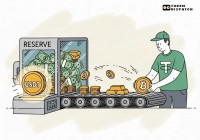
The article argues that the core value of digital banking has shifted away from traditional models. Valuation is no longer driven by user numbers but by revenue per customer, as seen with Revolut's diversified income streams versus Nubank's reliance on credit. The true "gold mines" are now stablecoins and identity verification. For stablecoins, the primary profit is the interest earned on reserve assets (like Treasury bills), a revenue stream captured by the issuer (e.g., Circle) rather than the consumer-facing digital bank. This is leading to vertical integration, with companies like Stripe and Circle building proprietary settlement networks (Tempo, Arc) to control this profitable infrastructure and ensure privacy. Stablecoins are disrupting the old, multi-layered payment system by enabling direct, peer-to-peer transfers, forcing digital banks to become efficient routing layers for these transactions or risk obsolescence. Simultaneously, identity is becoming the new account core. The trend is moving away from siloed KYC processes towards portable, verifiable credentials (e.g., EU's Digital Identity Wallet, Worldcoin, Polygon ID). This will allow a user's identity to travel across platforms, simplifying compliance and making the crypto wallet the central hub for assets and identity. The article concludes that user count, cards, and UI are no longer competitive advantages. Future successful digital banks will be "wallet-first" systems, falling into one of three models: 1. **Interest-driven:** Profit from holding user stablecoin balances and earning yield on reserves. 2. **Payment-flow-driven:** Profit from facilitating a high volume of stablecoin transactions. 3. **Stablecoin infrastructure-driven:** The most profitable model, controlling the issuance, reserves, and settlement of stablecoins itself. The market will split between simple consumer apps and powerful infrastructure providers that control the core of the financial stack.

深潮12/15 09:52

Digital Banks Are No Longer in the Banking Business; The Real Gold Mine Lies in Stablecoins and Identity Verification

深潮12/15 09:52

Market Liquidity Survey: Under Diminishing Liquidity, Retail Investors 'Buy Lottery Tickets', Main Players 'Purchase Insurance'

Following the sharp market decline on October 11, the crypto market has entered a period of low activity and structural divergence. Analysis of order book depth, derivatives data, and stablecoin flows reveals a clear trend: liquidity is deteriorating, institutional players are adopting defensive strategies, while retail investors remain in a wait-and-see mode. Order book depth on major exchanges like Binance has weakened significantly, with both bid and ask liquidity thinning out. Altcoin open interest and trading volumes have also declined, indicating a lack of retail participation and speculative interest. A notable shift is observed in the options market. Bitcoin options now dominate trading activity, with put options—particularly those concentrated around the $85,000 strike—carrying significantly higher premiums than calls. This suggests that while retail traders are buying cheap, out-of-the-money call options (like “lottery tickets”), institutions are paying high premiums for downside protection, reflecting a bearish or defensive stance. The max pain point for December is around $100,000, indicating a key level where option sellers would profit most. Stablecoin data further highlights this divide. USDT reserves on exchanges have reached an all-time high, suggesting available capital from retail and non-compliant players waiting to enter. In contrast, USDC—predominantly used by U.S. institutions—has seen a sharp 40% withdrawal from exchanges, signaling institutional exodus or de-risking. Overall, the market shows fragile liquidity, major capital fleeing or hedging, and a cautious retail crowd. A break below the $85,000 support—where institutional puts are concentrated—may be more critical than any push toward $100,000.

marsbit12/15 09:29

Market Liquidity Survey: Under Diminishing Liquidity, Retail Investors 'Buy Lottery Tickets', Main Players 'Purchase Insurance'

marsbit12/15 09:29

Pakistan, from 'Iron Brother' to 'On-Chain Iron'?

Pakistan is strategically embracing cryptocurrency and blockchain technology as a key part of its economic transformation. In December 2025, the Pakistan Virtual Asset Regulatory Authority (PVARA) granted No Objection Certificates (NOCs) to two major global crypto exchanges, signaling a significant regulatory shift. With over 40 million digital asset users and an estimated annual trading volume exceeding $300 billion, Pakistan ranks third globally in crypto adoption. The country’s crypto growth has been largely grassroots-driven, fueled by high smartphone penetration (over 70%), a young population, and significant overseas remittances—over $30 billion annually—which can be processed faster and cheaper via cryptocurrencies like USDT. Pakistan’s geographic location also positions it as a potential hub for digital asset flows in South and Central Asia. Under the new regulatory framework, Pakistan is exploring a $2 billion national asset tokenization initiative, aiming to digitize sovereign bonds, treasury bills, and commodities like oil and gas to enhance transparency and attract foreign investment. This initiative aligns with broader efforts to formalize and monetize the country’s growing crypto economy while mitigating risks like fraud and money laundering. The move reflects a strategic pivot from informal adoption to state-sanctioned experimentation, positioning Pakistan as an emerging player in the global digital economy and a case study for other developing nations facing similar economic challenges.

深潮12/15 08:07

Pakistan, from 'Iron Brother' to 'On-Chain Iron'?

深潮12/15 08:07

Looking Back at the Web3 Wallet Undercurrents of 2025: What Are the Major Players Really Competing On?

In 2025, the Web3 wallet sector is undergoing a quiet but significant transformation, driven by major players integrating advanced technologies to enhance security, usability, and functionality. Key developments include Coinbase and Bitget adopting TEE (Trusted Execution Environment) for secure key management and transaction signing, Binance and OKX leveraging TEE with MPC (Multi-Party Computation) and smart accounts for improved security and cross-chain operations, and MetaMask and Phantom introducing social login features using encrypted key sharding for better recovery and user experience. The evolution reflects a shift from purely self-custodial models to hybrid approaches that balance security with convenience, enabling features like automated trading, gas sponsorship, and seamless multi-chain interactions. This transition is fueled by emerging trends such as Perps (perpetual contracts), RWA (real-world assets), and CeDeFi, which demand more complex transaction capabilities. While no new dominant wallets emerged, existing leaders are repositioning as comprehensive entry points for diverse on-chain activities, moving beyond basic asset storage to integrated financial services. The adoption of TEE and MPC technologies, alongside potential future integration with passkeys, indicates a maturation of wallet infrastructure, setting the stage for broader adoption and more sophisticated applications in the coming years.

marsbit12/15 04:05

Looking Back at the Web3 Wallet Undercurrents of 2025: What Are the Major Players Really Competing On?

marsbit12/15 04:05

活动图片