Indepth Research

Provide in-depth research reports and independent analysis, leveraging data, technology, and economic insights to deliver a comprehensive examination of the blockchain ecosystem, project potential, and market trends.

Dell's "Dual Comeback": The Political AI Narrative of an Aging Server Company

Dell's "Dual Comeback": The Political AI Narrative of an Old-Server Giant In mid-2026, Dell's stock price soared over 10x from its 2022 lows, fueled by a powerful convergence of AI business resurgence and political alignment. Wall Street's narrative centers on a fundamental business shift. Dell's explosive growth is driven by the enterprise "on-prem AI" server market, where companies like Eli Lilly and Honeywell prefer running AI workloads on their own infrastructure rather than in public clouds. This plays directly to Dell's historic strengths in selling integrated IT solutions to corporate clients. While AI server sales have compressed overall毛利率 due to the high cost of NVIDIA GPUs, the market now values the massive absolute dollar profits and, crucially, the high-margin attach sales of Dell's storage, networking, and multi-year service contracts attached to each server sale. Simultaneously, a distinct political narrative unfolded. Following a record $6.25 billion donation by Michael Dell to a Trump-endorsed initiative in late 2025, President Trump publicly urged Americans to "buy a Dell" in May 2026. Shortly after, Dell secured a massive $9.7 billion Pentagon IT contract. This sequence established a new "political alpha" factor, where presidential endorsement and federal contracts became key valuation drivers. The current stock price significantly exceeds traditional financial models and even the most bullish analyst targets, suggesting the market is pricing in both stories simultaneously: the AI growth trajectory and the expectation of sustained political favor and government contracts. Dell epitomizes a new era where a company's value is tied as much to its CEO's political calendar as to its balance sheet, blending technological disruption with Washington influence. The key question for investors is which "Dell" they are buying, and when the other narrative might unwind.

marsbit05/29 08:12

Dell's "Dual Comeback": The Political AI Narrative of an Aging Server Company

marsbit05/29 08:12

Reddit Discussion: After 11 Years in Crypto, RWA Is One of the Few Things That Doesn't Feel Like 'Old Wine in a New Bottle'

Reddit Discussion: After 11 Years in Crypto, RWA Feels Unlike the Usual 'Old Wine in a New Bottle' A user with experience since 2014 shares that, having witnessed major crypto cycles from ICOs to FTX, most new narratives are just rebranded old ideas. However, Real World Assets (RWA) feel genuinely different. It's not about moving existing on-chain capital but bringing yields from real-world assets onto the blockchain. While many projects are flawed, the underlying premise is stronger than most. The user outlines key checks before engaging with any RWA project: 1) Existence of a lending business *before* the token launch (citing examples like Maple and 8lends). 2) Clear, transparent handling of defaults, using Goldfinch's 2023 issues as a critical lesson about inevitable credit risk. They note a crucial distinction for newcomers: RWA lending involves slow recovery from real assets (taking months), unlike the instant liquidations of over-collateralized DeFi protocols like Aave. Ultimately, the hard part is the traditional credit work, not the blockchain. Commenters agree, emphasizing the importance of documented default procedures and teams with pre-token real-world credit experience. They observe that a project's response to its first default is more telling than any metrics dashboard, summarizing RWA as "old credit on a new rail."

marsbit05/29 06:09

Reddit Discussion: After 11 Years in Crypto, RWA Is One of the Few Things That Doesn't Feel Like 'Old Wine in a New Bottle'

marsbit05/29 06:09

Native Privacy Features: Ethereum's Lifesaver?

"The Native Privacy Function: Ethereum's Lifeline?" While Ethereum's ETH price struggles, privacy coins like Zcash (ZEC) are rallying, highlighting growing market demand for financial privacy. Ethereum's developers are now racing to implement native privacy features, seen as critical for its future. Currently, all Ethereum asset balances and transaction histories are fully public, deterring institutional adoption and eroding its core value as a settlement layer. Industry experts warn Ethereum must deliver usable privacy within 12 months or risk falling behind competitors like Solana and Tron, which are already gaining market share and revenue. Data shows a significant decline in holdings among mid-sized and large Ethereum wallets, adding pressure. A broader industry shift towards financial privacy is underway, driven by stablecoin adoption, on-chain applications, and sophisticated AI-powered tracking. Privacy is no longer a niche concern but a mainstream need for both individuals and businesses wanting confidential transactions. Ethereum's co-founder Vitalik Buterin is prioritizing privacy, with a roadmap focusing on three key areas: Account Abstraction (improving wallet programmability and obscuring patterns), FOCIL (to combat transaction censorship), and stealth address mechanisms to break linkability between transactions. Additionally, the Ethereum Foundation's Kohaku toolkit aims to solve pre-chain data leaks at the RPC level. For Ethereum, native privacy is crucial to capture the institutional tokenization market, where confidentiality for corporate treasury, securities, and DeFi interactions is mandatory. With over $350 billion in tokenized assets, Ethereum's ecosystem lead is substantial but not unassailable. Successfully deploying privacy within a year could solidify its position as the default settlement layer. Failure could see focus and capital shift permanently to blockchains built with privacy as a foundational principle.

marsbit05/29 03:35

Native Privacy Features: Ethereum's Lifesaver?

marsbit05/29 03:35

Bit Digital CEO: Why I Bought More ETH

Bit Digital CEO Sam Tabar explains his recent decision to purchase more Ethereum (ETH). He emphasizes that his investment is not based on market cycles or popular narratives, but on data-driven analysis identifying a pricing discrepancy in the asset. The article critiques the "ETH as money" framework, arguing it is an incorrect lens for evaluating Ethereum. Unlike Bitcoin's singular focus on becoming a monetary asset, Ethereum prioritizes utility by serving as a programmable settlement layer for global development. This practical focus, while precluding it from winning a "money" coordination game, has created unique value. Tabar counters criticism about Ethereum's fragmented ecosystem by highlighting that substantial, real-world value is already being settled on-chain. This includes the issuance of stablecoins, tokenization of assets like U.S. Treasuries, and transactions for AI agents. He sees Ethereum, combined with computational layers, as providing the core primitives—computation and settlement—necessary for institutional finance to migrate on-chain. He believes the catalyst for ETH's value re-rating will come from this institutional demand, which follows its own, slower regulatory and operational timeline, not retail narrative cycles. Tabar concludes by stating his purchase fulfills a fiduciary duty to make sound capital allocation decisions. He views ETH as a yield-generating asset (citing 94.7% gross margins from staking in Q1) that secures the world's dominant smart contract platform, which processes trillions in transactions annually. He does not need ETH to become a global reserve currency; its current utility and discounted valuation relative to the infrastructure it powers are sufficient reasons to buy and hold.

marsbit05/29 02:54

Bit Digital CEO: Why I Bought More ETH

marsbit05/29 02:54

Kelp DAO Vulnerability Triggers Exodus of Hundreds of Billions; Two Major DeFi Lending Pathologies Clash Head-On

Title: Kelp DAO Exploit Triggers $15 Billion Exodus, Exposing a Clash Between Two DeFi Lending Models. In April 2026, a hacker exploited a LayerZero bridge vulnerability in the Kelp DAO project, minting $292 million in fake rsETH tokens. These were deposited into Aave as collateral to borrow real Ethereum, draining the protocol's liquidity. Within three and a half days, Aave saw $15 billion in deposits flee, forcing a costly $160 million bailout. The root cause was identified as Aave's governance, which had previously voted to set rsETH's loan-to-value ratio to a risky 93%, leaving minimal safety margin. This incident starkly contrasts with the experience of Morpho, the second-largest DeFi lending protocol. Some fake rsETH also flowed into Morpho, but the exposure was limited to $1 million across isolated, pre-configured markets, preventing systemic contagion. The event highlights a fundamental divergence in DeFi lending architectures. Aave employs a shared liquidity pool model, where all deposits back all approved collateral assets, governed by DAO vote. This creates systemic risk, as seen when even users who never interacted with rsETH faced frozen funds. Furthermore, Aave's governance, influenced by leveraged borrowers, prioritized their interests during the crisis, even lowering borrowing rates for frozen markets at the expense of safer depositors. Its supplemental insurance mechanism, Umbrella, also failed as providers withdrew capital when needed. Morpho operates on an isolated market model. Anyone can create a separate lending market with fixed parameters (collateral, loan asset, oracle, rates). Independent risk managers (curators) allocate capital to these markets, bearing losses within their own vaults if they occur. This structure prevents risk from spreading and removes governance conflicts, as curators' decisions are not subject to community override. Beyond crisis management, the shared pool model carries a hidden cost: idle capital. In Aave's core markets, the spread between borrowing and deposit rates represents unusable funds, costing an estimated $52 million annually in lost value. Morpho's model targets a higher utilization rate (90% vs. Aave's 60-80%) because it eliminates rehypothecation risk, dynamically adjusting rates to balance supply and demand without governance delays. Consequently, Morpho often offers higher net yields to depositors. Institutional adoption underscores this difference. Major players like Coinbase (powering its lending for over 100M users), Apollo Global Management, Anchorage Digital, and SG-FORGE (Societe Generale) have chosen to build on Morpho. They require compliant, self-controlled risk parameters that Aave's community-governed model cannot provide. This trend is amplified by regulations like the proposed US GENIUS Act, which will push stablecoin issuers to seek neutral, controllable infrastructure like Morpho to manage trillions in reserve assets.

marsbit05/29 01:44

Kelp DAO Vulnerability Triggers Exodus of Hundreds of Billions; Two Major DeFi Lending Pathologies Clash Head-On

marsbit05/29 01:44

The Truth About Global Payments, Exposed by Airwallex

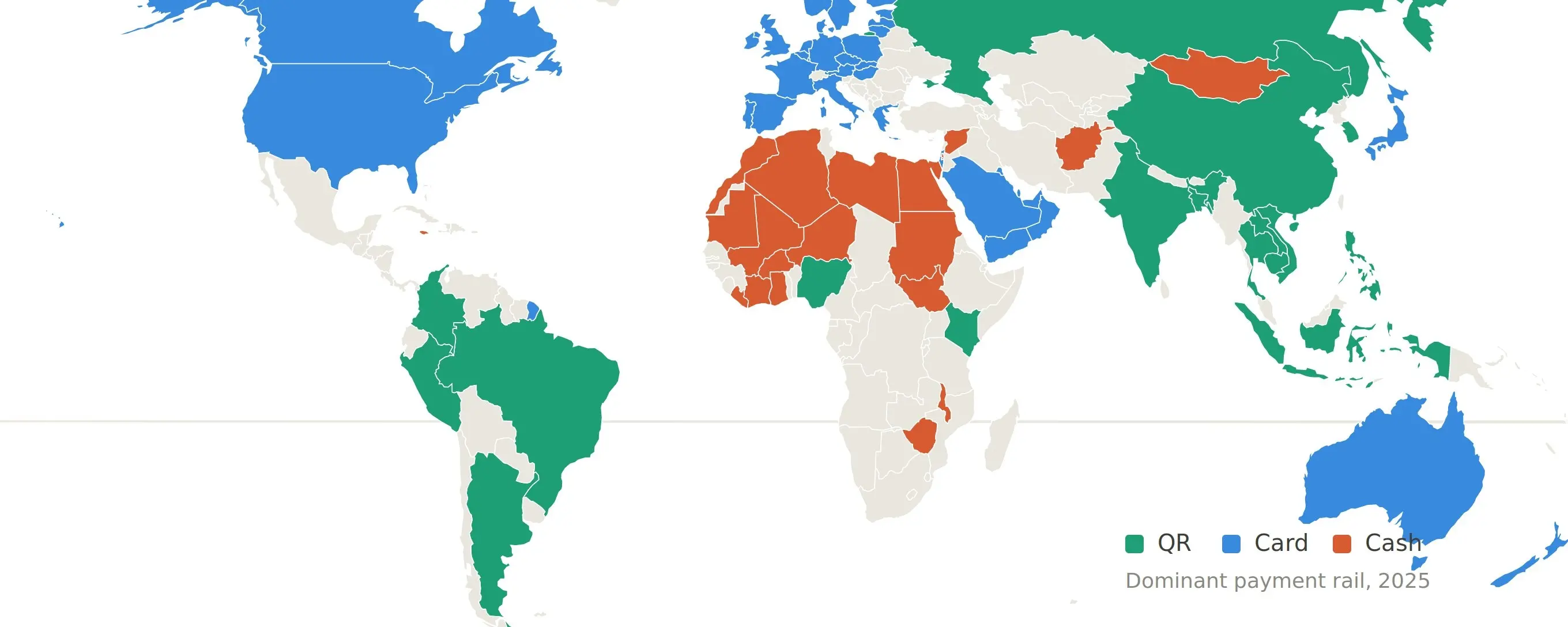
Airwallex's founder, Jack Zhang, outlines the three primary paths in the global payments industry and explains why the company chooses the most demanding one: building its own global financial infrastructure. The article begins by highlighting a common industry problem: payment platforms appear homogenized on the surface, offering similar features like global acquiring and multi-currency accounts. However, their underlying capabilities differ vastly. Customers truly care about payment stability, compliance robustness, and reliable market entry support. Zhang identifies three strategic paths: 1. **Bypassing Traditional Systems (Web3/Crypto):** This path promises efficiency via stablecoins and blockchain settlement but struggles with mainstream adoption, significant regulatory friction, and a lack of competitive edge against established players, often leaving it with niche or non-compliant markets. 2. **Packaging Existing Infrastructure:** The most common route, where companies layer a modern interface over legacy banking and partner networks. While enabling fast expansion, it fails to solve core issues like dependency on correspondent banks and intermediary risk, merely postponing the need for solid foundations. 3. **Building Own Global Infrastructure:** The path chosen by Airwallex, Ant International, and others. It involves obtaining local licenses, establishing direct regulatory relationships, building local teams, and controlling the full technology stack. This "heavy" approach is slow and capital-intensive but aims to internalize complexity, providing customers with a "lighter" experience. The core argument is that for business clients, the highest cost isn't transaction fees but hidden risks like frozen accounts, payment delays, and regulatory shocks. By investing heavily in its own infrastructure, Airwallex seeks to absorb these complexities, offering customers greater stability, cost savings (beyond fees), and long-term certainty. This foundational investment, though initially slow, enables compound growth, as evidenced by Airwallex's accelerated revenue scaling. In conclusion, while shortcuts enable faster growth, mastering the most difficult aspects—owning the underlying infrastructure—creates durable value for customers and sustainable advantage for the payment provider.

marsbit05/28 16:10

The Truth About Global Payments, Exposed by Airwallex

marsbit05/28 16:10

Six Complaints from an Ethereum Developer

Six Grievances from an Ethereum Developer The author, an early investor and developer still building on Ethereum, expresses deep frustration with its trajectory and declining ETH/BTC price since the merge. The core argument is that Ethereum's current market position stems from concrete failures in execution and strategy, not abstract coordination problems. The first grievance targets a shift in the Ethereum Foundation's mentality from builders to "infrastructure," adopting a premature posture of a retired victor. Second, marketing the Merge around ESG (99.95% energy reduction) is seen as talking to its own conscience rather than the market, which prioritizes user experience and yield. Third, the seven-year delay in delivering Proof-of-Stake (PoS) ceded critical narrative and development time to competitors like Solana. Fourth, three years post-merge, there is still no user-friendly first-party staking application, forcing reliance on centralized services like Lido and undermining ETH's monetary narrative. Fifth, the rollup-centric roadmap has strategically surrendered base-layer fee capture to L2s, fragmenting value within the ecosystem while Solana demonstrates an integrated L1's value accrual. Finally, the author criticizes an institutional culture that prioritizes philosophical ideals (credible neutrality, pluralism) over competitive product delivery focused on what users actually want. The diagnosis is "accumulated execution debt." Ethereum possessed a structural advantage in 2021 but spent years in governance debates, while Solana's ecosystem coordinated efficiently to deliver and capture the next wave of value. The conclusion is that Ethereum's market cap reflects its abandonment of the fight for asset appreciation.

链捕手05/28 12:39

Six Complaints from an Ethereum Developer

链捕手05/28 12:39

US Debt Exceeds $39 Trillion, Surpassing GDP for First Time: The 'Gray Rhino' Every Investor Must Face by 2026

The U.S. national debt has exceeded $39 trillion, with the debt-to-GDP ratio surpassing 100% in 2026 for the first time since WWII. The annual interest payment is projected to reach $1.039 trillion. Driven by structural factors like tax cuts, rising entitlement spending (Social Security, Medicare), and compounding interest, the deficit persists. The Congressional Budget Office warns the current fiscal path is unsustainable, projecting debt could reach 175% of GDP by 2056. While the U.S. is unlikely to default as it issues its own currency, the consequences include persistent inflation pressure, higher long-term interest rates (e.g., 30-year Treasury yields at 5.2%), and potential crowding out of private investment. A fiscal crisis could manifest as a sudden, sharp spike in borrowing costs if market confidence erodes. Major credit rating agencies have downgraded U.S. debt, reflecting these concerns. For investors, this signals the end of the era of permanently low interest rates. Equity investors should favor companies with strong current earnings over high-growth stocks reliant on low discount rates. Bond investors face headwinds for long-term Treasuries due to increased supply, making shorter-duration bonds and investment-grade corporates relatively attractive. Gold and real assets can provide a hedge against currency debasement risks. Three broad scenarios are possible: gradual stabilization through fiscal reform (unlikely given political gridlock), a slow-burn of high debt and interest rates dragging on growth (the most probable baseline), or a sudden loss of market confidence triggering a crisis. Key indicators to watch include CBO report updates, Treasury auction demand, and the 30-year Treasury yield. The core takeaway for investors is the need to adjust portfolios for a world of sustained higher government borrowing costs and interest rates.

marsbit05/28 11:50

US Debt Exceeds $39 Trillion, Surpassing GDP for First Time: The 'Gray Rhino' Every Investor Must Face by 2026

marsbit05/28 11:50

活动图片