Author: Ada, Deep Tide TechFlow
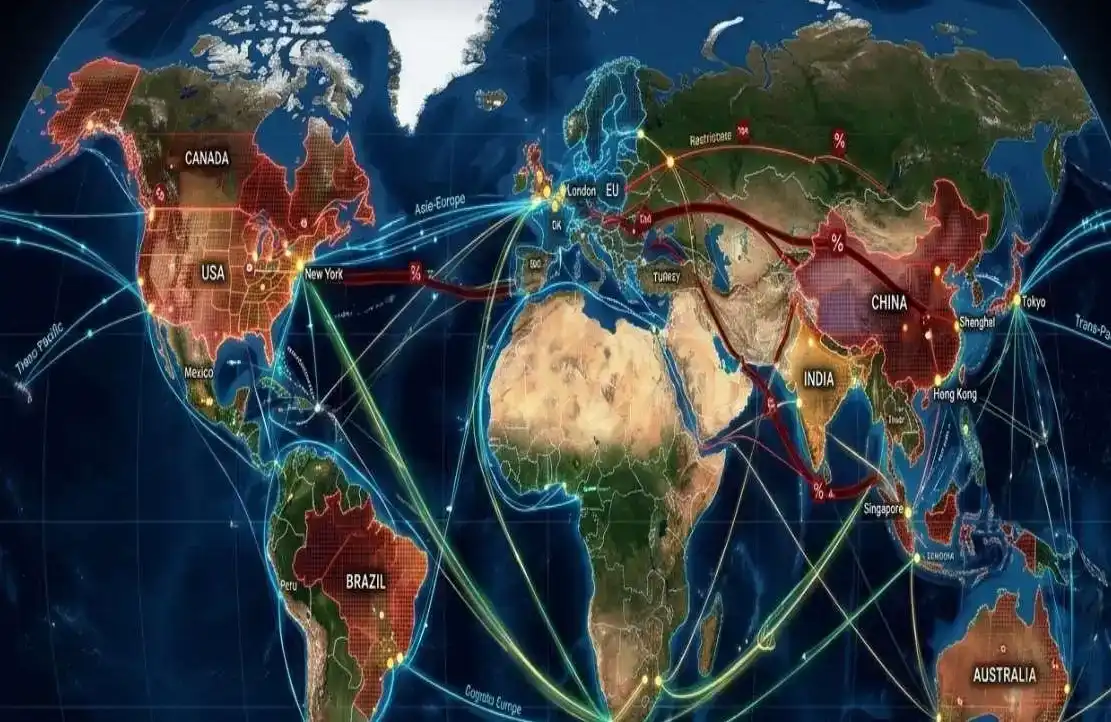
The ripple effects of China's tungsten export controls to Japan have now reached the upstream AI memory chip sector.
Japan's 25% share of global WF6 (tungsten hexafluoride) production capacity has entered a countdown to shutdown, forcing Samsung and SK Hynix to urgently seek alternative supplies overnight. South Korea's SK Specialty signed a long-term contract with Samsung for a monthly supply of 150 tons, while Foosung initiated certification with China's CSSC Specialty Gases, aiming for large-scale imports starting August; 2026 WF6 contract prices have been locked in for increases of 70% to 90%. Japanese suppliers warn that key inventories could be depleted by mid-2026. On social platform X, the 'White-Haired Stock God' Serenity singled out Foosung as a 'big winner,' but the inherent risks in this substitution game are equally clear—Korean manufacturers themselves rely on imports for the tungsten powder needed to produce the gas.
Japan's two main WF6 suppliers, Kanto Denka Kogyo and Central Glass, have notified South Korean clients like Samsung, SK Hynix, and DB HiTek that they cannot guarantee supply after May or June. This is a major blow to the downstream memory chip sector following China's implementation of export controls on tungsten-related items in February 2025.
Chain Reaction from China's APT Export Controls, Japan's WF6 Capacity Feels Pressure First
As early as February 2025, China's Ministry of Commerce and the General Administration of Customs jointly announced the inclusion of tungsten-related items into the dual-use items export control list. The impact of this move is now being fully realized over a year later. According to industry analysis firm CTOL Digital, since the controls took effect, Japan's imports of APT (Ammonium Paratungstate, a precursor to tungsten powder) from China on key trade routes plummeted by up to 70%, a figure that directly chokes the supply chain for Japanese WF6 producers.
The pressure arrived faster than the industry anticipated. According to a report on April 3 by South Korean semiconductor media The Elec, citing multiple industry sources, Kanto Denka and Central Glass have begun notifying South Korean chipmakers like Samsung and DB HiTek of potential imminent supply disruptions. One informed source stated, 'Supply can be maintained with existing tungsten inventories in May and June, but the outlook for the second half is unclear.' Japanese producers have suggested their South Korean clients turn to domestic alternatives, SK Specialty and Foosung.
Japan holds about 25% of the global WF6 supply. This means that a production cut by Japanese firms would instantly remove a quarter of the world's tungsten film precursor. According to information agency SunSirs, Samsung and SK Hynix sourced approximately 80% of their WF6 from Japan in the past, placing them squarely on the front lines of the crisis. Among them, Samsung's exposure is significantly higher than SK Hynix's, as the latter's supply portfolio is more diversified, including SK Specialty, Foosung, and China's Peric Special Gases.
SK Specialty Signs 150-ton Monthly Long-Term Supply Deal with Samsung, Korean Leaders Ramp Up Production
In the face of the crisis, South Korean companies demonstrated exceptional execution speed. According to SunSirs, SK Specialty has signed a long-term supply agreement with Samsung for a monthly volume of 150 tons. This scale is unusual under normal circumstances, as WF6 is a high-purity specialty gas, not a bulk commodity that can be easily scaled up.
SK Specialty is South Korea's largest WF6 supplier and benefits from natural group synergy with downstream clients. It belongs to the SK Group, closely tied to SK Hynix within the same group; now, by adding Samsung to its long-term contract list, it essentially secures positions with both of South Korea's top memory manufacturers.
Time is the scarcest resource in this scramble for orders. WF6 is a highly corrosive, hazardous gas requiring purity levels of 5N to 6N (99.999% to 99.9999%). The certification process for new suppliers typically takes 12 to 18 months, covering process testing, yield verification, equipment adaptation, and more. However, according to The Elec, some foundries are 'shortening or skipping parts of the process' for one reason only: urgency.
Foosung Initiates Certification with CSSC Specialty Gases, Targets Large-Scale Imports Starting August
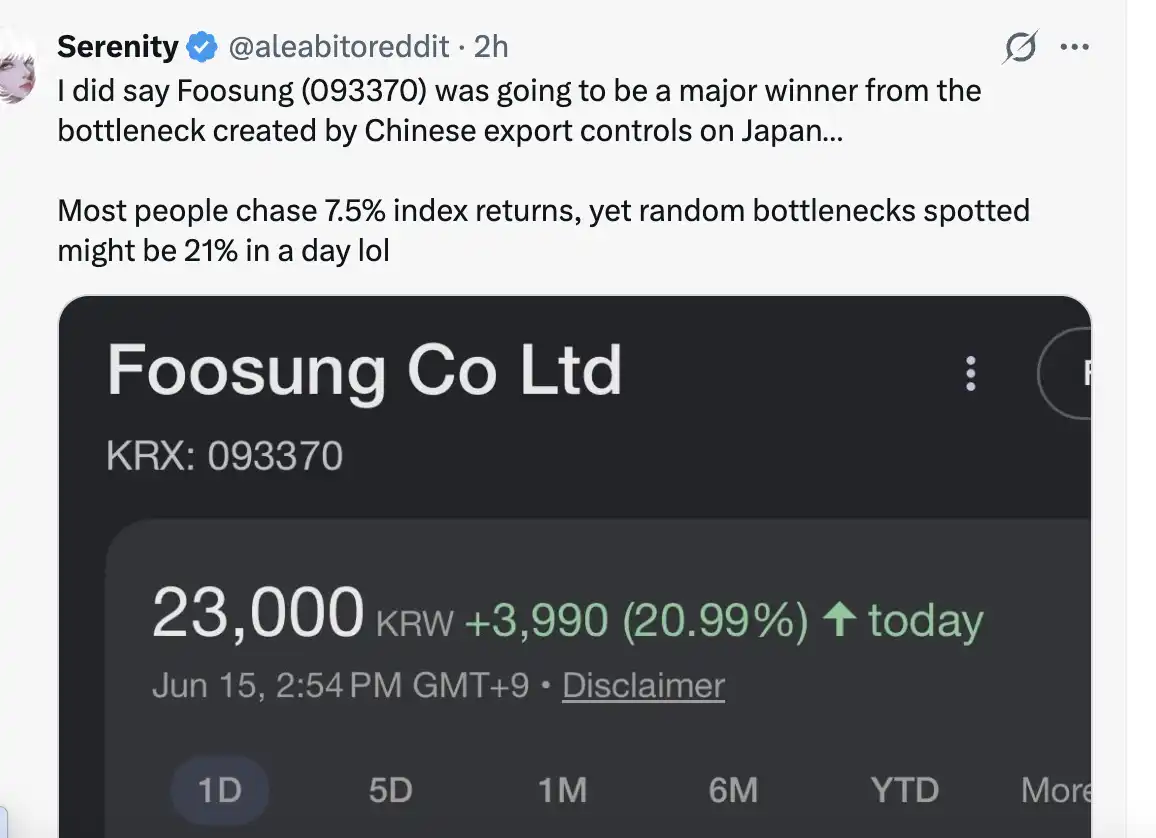
Foosung (Korean code 093370) is taking another route. This South Korean fluorochemical company, with a market cap of about $1.2 billion, is one of SK Hynix's three existing WF6 suppliers, alongside SK Specialty and China's Peric. Beyond WF6, it is also South Korea's sole producer of anhydrous hydrogen fluoride (HF), the country's second-largest WF6 manufacturer, and the sole producer of battery electrolyte salt LiPF6. Its Ulsan plant integrates three fluorochemical production lines, representing highly concentrated technological assets.
According to industry information cited by SunSirs and futunn among other media, Foosung has initiated the certification process with China Shipbuilding Industry Group's CSSC Specialty Gases, aiming to begin large-scale WF6 imports from August. The hidden implication of this move is worth unpacking: Japan halts WF6 production due to tungsten powder shortages, while South Korea's Foosung turns to importing finished WF6 from China. The same tungsten supply chain is segmented by China's export controls into parts that 'restrict Japan' and 'allow South Korea.'
The 'White-Haired Stock God' Serenity on platform X has noted this thread. He posted on June 13, naming Foosung: 'Foosung looks like it will become a huge beneficiary soon. Basically, China's export controls on Japan have caused Japan's WF6 supply chain to collapse, and the 25% of global supply needed by SK Hynix, Samsung, TSMC will have to find alternatives elsewhere.'
The secondary market has already reacted to this logic. According to CTOL Digital, Foosung's stock price has risen approximately 196% over the past 12 months, despite its TTM EPS still being negative.
2026 WF6 Contract Prices to Rise 70% to 90%; Japanese Suppliers Warn of Mid-2026 Inventory Depletion
Price signals at the contract level have already emerged. According to CTOL Digital, South Korea's SK Specialty, Foosung, and Japan's Kanto Denka have formally notified Samsung, SK Hynix, DB HiTek, and Magnachip that 2026 WF6 contract prices will increase by 70% to 90%. This is a collective pricing action within an oligopolistic market, leaving downstream buyers with few alternative options.
An even more cautionary signal comes from the supply side. Also per CTOL Digital, Japanese suppliers have warned that key inventories could be depleted by mid-2026. This implies that even South Korean clients with signed long-term contracts face uncertainty regarding physical deliveries.
The irreplaceability of WF6 is being repriced by the market. Chipmakers cannot simply swap gas cylinders between different suppliers; any deviation in impurities could scrap millions of dollars worth of wafer inventories. This is the fundamental reason for the stringent 12 to 18-month certification process for new suppliers and the underlying logic that sustains the oligopolistic structure.
The stock price reaction is already ahead. According to CTOL Digital, Japan's Kanto Denka's stock price has risen about 374% over the past year, with its market capitalization soaring to 240.3 billion yen and a TTM P/E ratio exceeding 63 times. Foosung's gain in the same period is about 196%, and despite its negative TTM EPS, the market has granted it a significant premium. These valuations reflect not a short-term, event-driven spike but a structural market revaluation of the WF6 oligopoly.
South Korea's Substitution Window Supported by Geopolitics, Not Determined by Technical Barriers
The South Korean companies poised to benefit from Japan's supply disruption are not entirely self-sufficient either. SK Specialty and Foosung, as domestic South Korean WF6 producers, also rely on imported tungsten powder for gas production. The difference so far is that they are being treated differently from their Japanese counterparts. SunSrs states: 'China's export controls have so far primarily targeted Japan. South Korea can still continue importing tungsten powder. This is a geopolitical choice, not a natural outcome of market forces.'
The Chinese domestic supply side is rapidly rising. According to futunn citing industry data, CSSC Specialty Gases will reach a WF6 production capacity of 2,000 tons/year by the end of 2025, with purity reaching 6N levels, and its products have already entered the supply chains of global chipmakers. SunSrs data further indicates that the localization rate of China's fluorine-containing specialty gases has significantly increased to 50% over the past two years.
This reality adds a clear footnote to Foosung's 'winner' narrative. The current window of opportunity is premised on the assumption that 'China continues to allow tungsten powder exports to South Korea,' not locked in by irreplaceable technical barriers. Decision-makers at Samsung and SK Hynix may already be asking themselves the question posed by SunSirs: 'If Japan can be shut down due to raw material shortages, what could prevent South Korea from facing the same fate tomorrow?'