Jensen Huang Publicly Challenges Google and Amazon, Is the Chip Business Entirely Sustained by Anthropic?

marsbitОпубликовано 2026-04-21Обновлено 2026-04-21

Введение

In a candid interview, Nvidia CEO Jensen Huang challenged competitors like Google and Amazon, admitted past strategic errors, and criticized U.S. export controls on AI chips. He framed Nvidia’s role as turning “electricity in, tokens out,” emphasizing the complexity and value of AI inference. Huang dismissed rival custom chips like Google’s TPU and Amazon’s Trainium as inflexible and niche, claiming their growth relies heavily on clients like Anthropic. He also acknowledged missing early investment opportunities in OpenAI and Anthropic. On China, Huang warned that export restrictions risk pushing the country toward self-sufficiency and could cost U.S. leadership in AI. Finally, he explained Nvidia’s acquisition of Groq as a move to serve premium, low-latency token markets. Throughout, Huang emphasized ecosystem trust and Nvidia’s central role in global AI infrastructure.

By | ChanLianShe CLS

In April 2026, the presence of NVIDIA CEO Jensen Huang was frequently seen at global power centers.

From the Davos Forum to the GTC conference, he repeatedly conveyed a core message to the world: AI is not only a technological revolution but also the largest infrastructure construction project in human history.

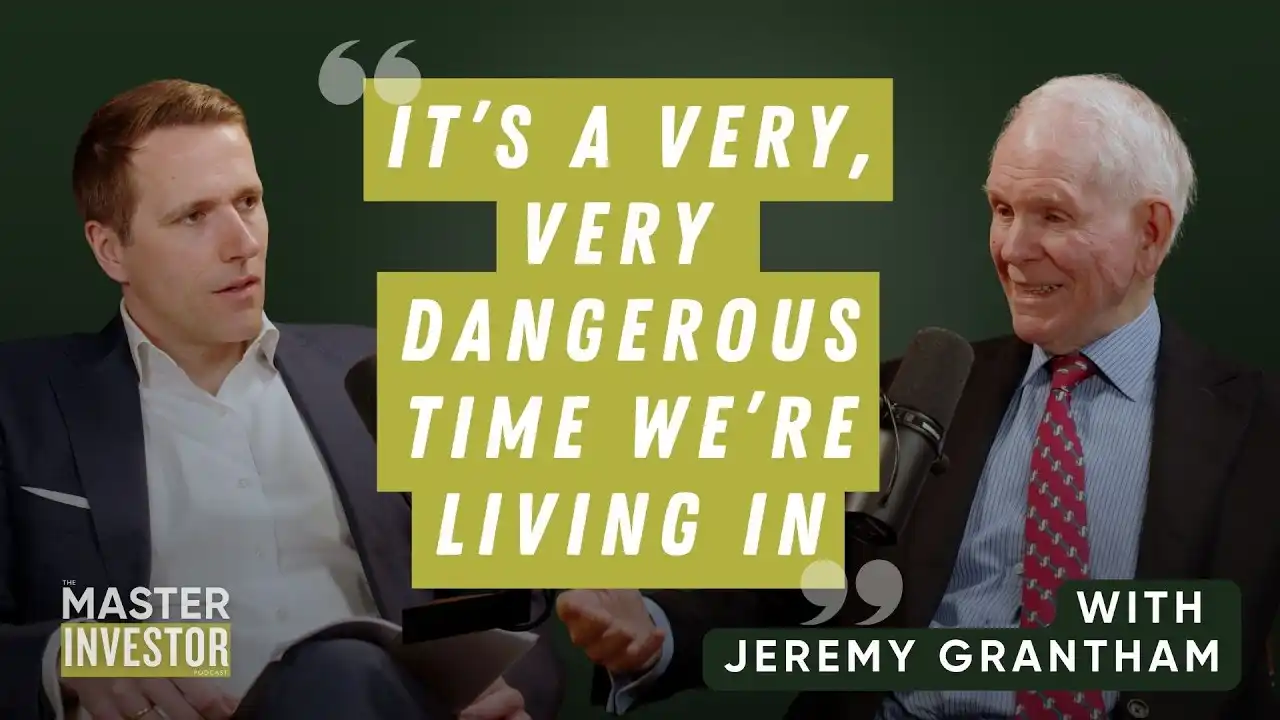
However, a lengthy conversation with Silicon Valley podcast host Dwarkesh Patel on April 15th tore apart the facade of Huang's controlled narrative.

In nearly two hours of intense exchange, Huang not only publicly challenged Google's TPU, admitted to making a serious strategic mistake, but also proposed the idea of token stratification and issued an unprecedented fierce rebuttal against export controls.

In this unscripted dialogue, Huang was not only defending NVIDIA's market value but also desperately safeguarding the company's dominant position as the global computing power hub.

Redefining NVIDIA: Electrons In, Tokens Out

Many worry that if AI software becomes as common and cheap as water and electricity, NVIDIA's chips might also become less important. Huang countered this concern with an extremely simple model: NVIDIA's job is "input electrons, output tokens."

Here, "electrons" refer to the most primitive electrical energy, the fundamental energy that drives computer operation. The so-called "tokens" can be understood as language fragments or logical units generated by AI.

He believes that making every word and every piece of logic generated by AI more valuable involves an extremely complex process that is difficult to easily replace.

To solidify this position, NVIDIA's strategy is to "do as many necessary things as possible, while doing as little as possible." Any环节 that doesn't require hands-on effort is handed over to ecosystem partners, while NVIDIA itself focuses intensely on the most difficult technological core.

This strategy has given NVIDIA absolute leverage in the supply chain. NVIDIA's purchasing commitments are currently close to $100 billion and may even exceed one trillion in the future.

Huang bluntly stated that partners are willing to invest in building factories for him because NVIDIA possesses the absolute capability to convert this production capacity into global demand.

Interestingly, Huang pointed out that the real bottleneck in computing power expansion is not chip manufacturing. He believes semiconductor technical challenges can be solved within two or three years, but the hardest bottleneck is actually the "plumbers and electricians" in infrastructure. He even suggested inviting plumbers to next year's NVIDIA GTC conference.

Furthermore, more than hardware, he is concerned about energy policy, because without sufficient electricity, even the most advanced computing factories cannot operate.

Criticizing Custom Chips: Without Anthropic, TPU Growth Would Be Zero

When discussing competitors' custom chips (ASICs), Huang was highly aggressive. He directly named Google's TPU and Amazon's Trainium, publicly challenging them to run performance tests. He mocked that the opponents' claimed 40% cost advantage is completely unfounded.

He further exposed the commercial difficulties of his opponents. Huang believes that while these specialized chips are fast for certain fixed computations, they lack flexibility and cannot keep up with the annual几十-fold changes in AI algorithms. More crucially, he believes there is no substantial market opportunity for custom chips. He bluntly stated that without the major client Anthropic propping them up, the growth of TPU and Trainium would actually be zero.

However, Huang also engaged in rare self-reflection. He admitted that he had missed the best window to invest in OpenAI and Anthropic. The reason was that he underestimated the hunger of these model labs for massive computing power investments.

He直言 this was his miscalculation; he thought these labs could survive on venture capital, but the reality is they must seek massive support like that from big tech companies. He emphasized that he would not make the same mistake again.

Affirming the Chinese Market: A Rebuttal to Export Controls

On the issue of export controls to China, Huang's emotions ran highest.

He repeatedly interrupted the host, vehemently stating that comparing AI to nuclear weapons is "crazy." He believes China possesses over 60% of the global chip manufacturing capacity and a vast pool of AI research talent, making the idea of restricting China's access to chips completely unrealistic.

He issued a stern warning to policymakers. Huang pointed out that restrictive policies are instead forcing China to accelerate the development of its domestic chip industry, pushing the entire AI ecosystem towards internal architectures.

His nightmare scenario is: if future global AI models are all optimized for non-US hardware, the US will completely lose its technological leadership.

Huang firmly believes that competition is the guarantee of leadership. China is currently one of the world's largest contributors to open-source models, and most of these成果 currently run on NVIDIA's technology architecture. If the US abandons this huge market out of fear, it will not only hurt the profits of American companies but also cause the US to lose the opportunity to define global technology standards.

The Underlying Logic of Acquiring Groq: Tokens Need Stratification

Towards the end of the conversation, Huang explained the deeper business considerations behind NVIDIA's acquisition of Groq.

Previously, NVIDIA had tested various exotic chip architectures in simulators and found none performed better than the existing architecture. However, Groq was acquired because market demand had changed: tokens began to be stratified.

所谓 "stratification" means different customers have different demands for AI response speed. Huang gave an example: for software engineers requiring extremely high efficiency, if the AI's response could be one second faster, they would be willing to pay a higher price.

Groq's technology, while not high in total throughput, excels in its extremely fast response speed. NVIDIA uses this to enter the "premium token" market, creating different price tiers for services based on response speed.

The entire lengthy conversation revealed one fact: Huang's 30-year collaboration with TSMC doesn't even require legal contracts; this trust-based ecosystem is his foundation. Every decision he makes, whether publicly challenging opponents or arguing vehemently amidst control controversies, has only one purpose:

To ensure that every path globally for converting electrons into intelligent tokens must pass through NVIDIA.

Article Information Source: Jensen Huang – Will Nvidia’s moat persist? Dwarkesh Patel, YouTube

Связанные с этим вопросы

QWhat is Jensen Huang's core argument about AI industry as mentioned in the article?

AJensen Huang argues that AI is not just a technological revolution but the largest infrastructure construction project in human history, with Nvidia's role being to 'input electrons and output tokens'—transforming raw electrical energy into valuable AI-generated language fragments or logical units.

QWhy does Jensen Huang criticize competitors like Google's TPU and Amazon's Trainium?

AHe criticizes them for lacking flexibility to keep up with rapid AI algorithm changes and claims their cost advantages are unfounded. He also states that without Anthropic as a major client, the growth of TPU and Trainium would be zero.

QWhat strategic mistake did Jensen Huang admit to regarding AI model labs like OpenAI and Anthropic?

AHe admitted to underestimating the computational hunger of model labs, mistakenly believing they could survive on venture capital alone rather than requiring massive support like big tech companies, and vowed not to repeat this error.

QWhat is Jensen Huang's view on export controls limiting chip sales to China?

AHe strongly opposes them, calling the comparison of AI to nuclear weapons 'crazy.' He warns that such policies push China to develop its own chip industry and AI ecosystems, potentially causing the U.S. to lose global technological leadership and market definition.

QWhat was the underlying reason for Nvidia's acquisition of Groq according to the article?

AThe acquisition was driven by the need to cater to a stratified token market where customers value response speed. Groq's technology offers extremely fast responses, allowing Nvidia to serve high-end token demand with premium pricing based on speed tiers.

Похожее

Where Is the AI Infrastructure Industry Chain Stuck?

The AI infrastructure (AI Infra) industry chain is facing unprecedented systemic bottlenecks, despite the rapid emergence of applications like DeepSeek and Seedance 2.0. The surge in global computing demand has exposed critical constraints across multiple layers of the supply chain—from core manufacturing equipment and data center cabling to specialty materials and cleanroom facilities. Key challenges include four major "walls": - **Memory Wall**: High-bandwidth memory (HBM) and DRAM face structural shortages as AI inference demand outpaces training, with new capacity not expected until 2027. - **Bandwidth Wall**: Data transfer speeds lag behind computing power, causing multi-level bottlenecks in-chip, between chips, and across data centers. - **Compute Wall**: Advanced chip manufacturing, reliant on EUV lithography and monopolized by ASML, remains the fundamental constraint, with supply chain fragility affecting production. - **Power Wall**: While energy demand from data centers is rising, power supply is a solvable near-term challenge through diversified energy infrastructure. Expansion is further hindered by shortages in testing equipment, IC substrates (critical for GPUs and seeing price hikes over 30%), specialty materials like low-CTE glass fiber, and high-end cleanroom facilities. Connection technologies are evolving, with copper cables resurging for short-range links due to cost and latency advantages, while optical solutions dominate long-range scenarios. Innovations like hollow-core fiber and advanced PCB technologies (e.g., glass substrates, mSAP) are emerging to meet bandwidth needs. In summary, AI Infra bottlenecks are multidimensional, spanning compute, memory, bandwidth, power, and supply chain logistics. Advanced chip manufacturing remains the core constraint, while substrate, material, and equipment shortages present immediate challenges. The industry is moving toward hybrid copper-optical solutions and accelerated domestic supply chain development.

marsbit12 мин. назад

Where Is the AI Infrastructure Industry Chain Stuck?

marsbit12 мин. назад

Autonomy or Compatibility: The Choice Facing China's AI Ecosystem Behind the Delay of DeepSeek V4

DeepSeek V4's repeated delay in early 2026 has sparked global discussions on "de-CUDA-ization" in AI. The highly anticipated trillion-parameter open-source model is undergoing deep adaptation to Huawei’s Ascend chips using the CANN framework, representing China’s first systematic attempt to run a core AI model outside the CUDA ecosystem. This shift, however, comes with significant engineering challenges. While the model uses a MoE architecture to reduce computational load, it places extreme demands on memory bandwidth, chip interconnects, and system scheduling—areas where NVIDIA’s mature CUDA ecosystem currently excels. Migrating to Ascend introduces complexities in hardware topology, communication latency, and software optimization due to CANN’s relative immaturity compared to CUDA. The move highlights a broader strategic dilemma: short-term compatibility with CUDA offers practical benefits and faster adoption, as seen in CANN’s efforts to emulate CUDA interfaces. Yet, long-term over-reliance on compatibility risks inheriting CUDA’s limitations and stifling native innovation. If global AI shifts away from transformer-based architectures, strict compatibility could lead to technological obsolescence. Despite these challenges, DeepSeek V4’s eventual release could demonstrate the viability of a full domestic AI stack and accelerate CANN’s ecosystem growth. However, true technological independence will require building an original software-hardware paradigm beyond compatibility—a critical task for China’s AI ambitions in the next 3-5 years.

marsbit30 мин. назад

Autonomy or Compatibility: The Choice Facing China's AI Ecosystem Behind the Delay of DeepSeek V4

marsbit30 мин. назад

How Blockchain Fills the Identity, Payment, and Trust Gaps for AI Agents?

AI Agents are rapidly evolving into autonomous economic participants, but they face critical gaps in identity, payment, and trust infrastructure. They currently lack standardized ways to prove who they are, what they are authorized to do, and how they should be compensated across different environments. Blockchain technology is emerging as a solution to these challenges by providing a neutral coordination layer. Public ledgers offer auditable credentials, wallets enable portable identities, and stablecoins serve as a programmable settlement layer. A key bottleneck is the absence of a universal identity standard for non-human entities—akin to "Know Your Agent" (KYA)—which would allow Agents to operate with verifiable, cryptographically signed credentials. Without this, Agents remain fragmented and face barriers to interoperability. Additionally, as AI systems take on governance roles, there is a risk that centralized control over models could undermine decentralized governance in practice. Cryptographic guarantees on training data, prompts, and behavior logs are essential to ensure Agents act in users' interests. Stablecoins and crypto-native payment rails are becoming the default for Agent-to-Agent commerce, enabling seamless, low-cost transactions for AI-native services. These systems support permissionless, programmable payments without traditional merchant onboarding. Finally, as AI scales, human oversight becomes impractical. Trust must be built into system architecture through verifiable provenance, on-chain attestations, and decentralized identity systems. The future of Agent economies depends on cryptographically enforced accountability, allowing users to delegate tasks with clearly defined constraints and transparent operation logs.

marsbit1 ч. назад

How Blockchain Fills the Identity, Payment, and Trust Gaps for AI Agents?

marsbit1 ч. назад

Торговля

Спот
Фьючерсы
活动图片