火必投票上币第一名,NFT算力赛道BBC增长潜力有多大?

MirrorОпубликовано 2023-01-18Обновлено 2023-01-26

Введение

1月18日晚20:00,火必将上线第二期PrimeVote投票胜出的项目Bull BTC CLUB(BBC),他是做什么的?
1月18日晚20:00,火必将上线第二期PrimeVote投票胜出的项目Bull BTC CLUB(BBC),他是做什么的?

Bull BTC CLUB介绍

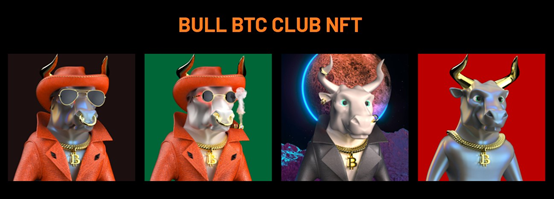
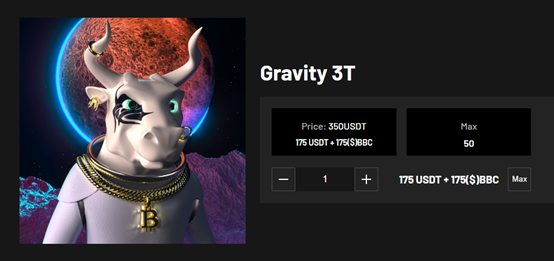
Bull BTC CLUB目前跨链部署在BSC/TRON/ETH/POLYGON。本质上,BBC是一个算力衍生品平台,使用算力预言机底层技术将用户、矿池、Defi借贷保证金制度有机结合,算力发行和交易上加入了NFT元素,让算力交易变得更加安全、更加有趣。简单来说,平台的公牛NFT代表着一定比特币算力,用户购买NFT即购买了一定比特币算力,获得NFT的同时还能享受挖矿收益。除了直接购买NFT,BBC还有算力盲盒的玩法。另外,BBC上还包括质押挖矿、借贷、机枪池等金融衍生品服务。
Bull BTC CLUB满足了什么市场需求

算力市场非常的庞大,每年有上百亿美元的规模。散户想参与挖矿不一定非要购买矿机,通过算力平台购买小额算力参与挖矿的方式很普遍。如果在购买算力的过程中,还能获得NFT,并且有概率获得代表更多算力的稀有NFT,这种有奖销售的方式自古以来就深得人心。在时间节点上,熊市是参与挖矿的最佳时机,BBC算力NFT的推出时间符合市场需求,也符合大家对牛市的守望。

NFT市场也早已达到百亿美元规模,站在NFT的角度,大多数NFT只有难以估量的艺术价值,并没有太多的实用性。虽然存在一夜暴富的情况,但绝大多数NFT最终只成为了纪念品。如果NFT锚定算力,价值波动区间明确,对NFT的交易流通会更加有利。就像纸币锚定黄金,带来的其实是双赢。

Bull BTC CLUB发展情况

BBC Labs成立于2021年底,经过1年左右的开发和设计,2022年Q3上线了第三方Bull BTC CLUB 算力NFT发行交易市场。2023年Q1开启了BBC的空投活动和节点治理。未来,BBC将上线自己的交易市场,开发更多的算力挖矿品种,上线更多的链,还将打造自己的算力元宇宙。

目前BBC的公牛NFT已经近3万的持有者,NFT总交易量超过500万美元。
Bull BTC CLUB影响力

BBC的影响力主要在海外,Twitter、Telegram、Discord三个渠道的粉丝量接近40万人,活跃度也不错。要知道,用户对于NFT类项目尤为重要,短时间做到这种程度说明其NFT产品已经得到了市场的认可。另外,通过谷歌搜索“Bull BTC CLUB”,有314万条结果,内容的铺设渠道已基本成型。

Bull BTC CLUB还与多家机构达成了合作,平台算力已接入矿池f2pool、AntPool等全球大型矿池,NFT交易市场Binance NFT、APENFT、element等,安全机构Certiek。生态内所需的大型机构均有涉及。

BBC代币分配

BBC的代币总量是210亿,其中30%用于NFT质押奖励,50%用于生态系统,10%归属团队,剩余10%为储备金。均为线性释放,不会全部立即投入市场。代币除了用于流动性激励,还可参与DAO的社区治理。当前BCC的市场价格是0.027美元。

小结

整体而言,Bull BTC CLUB看起来是一个小而美的NFT项目,但通过底层创新技术算力预言机驱动的算力+NFT+Defi的玩法,让BBC有了平台级的想象空间。短短一年多的时间,BBC在社群和机构合作上产生的影响力非常优秀,这对平台级的NFT项目很重要,火必PrimeVote投票第一的结果也证实了BBC的社群实力。接下来可主要关注平台产品迭代和社区治理情况。


Похожее

How Blockchain Fills the Identity, Payment, and Trust Gaps for AI Agents?

AI Agents are rapidly evolving into autonomous economic participants, but they face critical gaps in identity, payment, and trust infrastructure. They currently lack standardized ways to prove who they are, what they are authorized to do, and how they should be compensated across different environments. Blockchain technology is emerging as a solution to these challenges by providing a neutral coordination layer. Public ledgers offer auditable credentials, wallets enable portable identities, and stablecoins serve as a programmable settlement layer. A key bottleneck is the absence of a universal identity standard for non-human entities—akin to "Know Your Agent" (KYA)—which would allow Agents to operate with verifiable, cryptographically signed credentials. Without this, Agents remain fragmented and face barriers to interoperability. Additionally, as AI systems take on governance roles, there is a risk that centralized control over models could undermine decentralized governance in practice. Cryptographic guarantees on training data, prompts, and behavior logs are essential to ensure Agents act in users' interests. Stablecoins and crypto-native payment rails are becoming the default for Agent-to-Agent commerce, enabling seamless, low-cost transactions for AI-native services. These systems support permissionless, programmable payments without traditional merchant onboarding. Finally, as AI scales, human oversight becomes impractical. Trust must be built into system architecture through verifiable provenance, on-chain attestations, and decentralized identity systems. The future of Agent economies depends on cryptographically enforced accountability, allowing users to delegate tasks with clearly defined constraints and transparent operation logs.

marsbit12 мин. назад

How Blockchain Fills the Identity, Payment, and Trust Gaps for AI Agents?

marsbit12 мин. назад

Six Years Since DeFi Summer, How Will the Decentralized Financial Revolution Continue?

In 2026, the DeFi sector faces a severe trust crisis following a series of high-profile security breaches, including a $292 million theft from KelpDAO’s rsETH, a $2.85 million exploit at Drift Protocol due to permission vulnerabilities, and a $14.9 million lending failure at Venus Protocol. These incidents triggered a withdrawal of approximately $10 billion from DeFi over a single weekend, highlighting systemic risks beyond smart contract flaws—such as governance, cross-chain complexity, and operational weaknesses. Despite these challenges, on-chain finance continues to grow, with capital shifting toward safer, regulated products. Stablecoins like USDT ($185B) and USDC ($78B) have reached a combined market cap of $263 billion, while tokenized U.S. Treasuries surged to $10.93 billion. Visa’s growing USDC settlement volume, now annualized at $3.5 billion, signals increasing institutional adoption of compliant blockchain-based financial infrastructure. The competition for the future of on-chain finance is intensifying. While native DeFi struggles with trust and capital outflows, regulated products—stablecoins, tokenized assets, and ETFs—are gaining dominance by offering programmable, 24/7 settlement without high DeFi risks. Over 80 crypto projects shut down in Q1 2026, reflecting dwindling patience for speculative ventures. The core challenge for open DeFi is to rebuild trust and demonstrate irreplaceable value—or risk ceding its role as the primary entry point to on-chain finance.

marsbit22 мин. назад

Six Years Since DeFi Summer, How Will the Decentralized Financial Revolution Continue?

marsbit22 мин. назад

Торговля

Спот
Фьючерсы
活动图片



