IMF Bows To Bitcoin—Global Economic Standards Overhauled

bitcoinistОпубликовано 2025-08-02Обновлено 2025-08-02

Введение

The International Monetary Fund (IMF) used a July 31 staff blog to say the quiet part out loud: Bitcoin now...

Trusted Editorial content, reviewed by leading industry experts and seasoned editors. Ad Disclosure

The International Monetary Fund (IMF) used a July 31 staff blog to say the quiet part out loud: Bitcoin now belongs inside the world’s core economic statistics. The post—timed to the UN Statistical Commission’s approval of the updated System of National Accounts (SNA)—states that “Bitcoin, for example, has a tangible economic impact, including because it consumes large amounts of energy to produce. Yet because it doesn’t involve the creation of goods or services in the traditional sense, it isn’t counted in gross domestic product.”

To fix that measurement gap, compilers have agreed to “classify certain crypto assets as ‘non-produced nonfinancial assets,’ which are reflected in national wealth.” It is not a value judgment about Bitcoin; it is a decision to count it in the balance sheets governments use. For a once-dismissed technology, being measured alongside land and subsoil assets is institutional recognition in the language central banks and treasuries speak.

Bitcoin Breaks Into The System

The IMF’s own social post distilled the message in a way that ricocheted across BTC circles: “Bitcoin consumes as much electricity as Argentina but isn’t counted in GDP because it doesn’t create traditional goods or services.” That line replays a theme of earlier IMF work that framed Bitcoin and AI as power-intensive sectors whose footprint policymakers must understand, not ignore.

In 2024 the Fund’s blog estimated BTC mining and data centers together used about 2% of global electricity in 2022 and discussed policy tools—including energy taxation—to manage emissions; several summaries of the same analysis, based on IEA projections cited by IMF officials, describe a baseline path toward roughly 3.5% by 2027. Whatever one thinks of the framing, the crucial point for markets is statistical visibility: once an activity is explicitly measured, it enters the macro conversation about assets, flows, and external balances.

That visibility is reinforced in the external accounts. The IMF’s new Balance of Payments Manual (BPM7) integrates Bitcoin into cross-border statistics by treating transfers of non-liability crypto such as BTC as transactions in “non-produced nonfinancial assets” and, critically, by recognizing “validation services” as services.

Draft chapters provide explicit compiler examples in which a miner or validator in Economy A is paid by a user in Economy B, to be recorded as cross-border services trade. An annex on changes from BPM6 spells out that payments for validation are “recorded… as cross-border transactions in crypto assets payable… to the producer of the services.” In practical terms, mining and staking sold to non-residents become exports in the services account, and cross-border BTC acquisitions and disposals move through the capital account. That is no small change for a sector long caricatured as “off the books.”

Bitcoin-native voices immediately underscored the significance. “This is actually pretty big news—IMF officially incorporating bitcoin into [the] international development paradigm,” wrote David Bailey, arguing that “balance of trade, GDP, [and] sovereign credit quality… will now incorporate bitcoin’s economic footprint.” Even trimmed to its essentials, the takeaway is clear: macro gatekeepers will be counting what was once invisible.

For Melanion GreenTech researcher Jan Wüstenfeld, the stakes are human as much as statistical. He called BTC “the most efficient tool available in turning energy into a lifeline for those suffering under policies imposed by the IMF,” adding: “Nothing beats Bitcoin’s energy-to-lifeboat ratio.”

Climate researcher Daniel Batten took direct aim at the Fund’s energy framing, calling it “FUD” in a rallying cry—“Game on”—that speaks to how this moment is being read in Bitcoin circles: not as censure, but as confirmation that the asset has grown too consequential to ignore.

Perhaps the most granular reaction came from the Sustainable Bitcoin Protocol, which argued that the language many seized on—“energy-intensive”—misses the bigger picture of formal integration. “People are understandably upset that the @IMFNews says Bitcoin is ‘energy-intensive’, but this is actually a positive, watershed moment!” the group wrote.

“The IMF just officially classified BTC as a non-produced capital asset… Bitcoin’s no longer invisible. Even the IMF is forced to measure and report it. That’s legitimization. That’s visibility. That’s macro adoption.” Their thread mirrors the BPM7 and SNA mechanics: once Bitcoin is recorded as a capital asset and its validation activity is booked as services, it enters balance-of-payments and national wealth statistics by design.

None of this means the IMF has changed its caution on sovereign Bitcoin policy; it means the Fund is updating the statistical plumbing while continuing to press its risk case. Batten’s recent research contends that, in practice, IMF leverage has hindered nation-state adoption.

He points to El Salvador’s program with the IMF, where authorities committed “not to accumulate further bitcoins ‘at the level of the overall public sector,’” even as the National Bitcoin Office disclosed additional purchases for a “Strategic Bitcoin Reserve.”

Batten also highlighted Pakistan, where a flurry of reports in early July said the IMF had rejected a plan to offer subsidized electricity for Bitcoin mining and certain energy-intensive industries. Local and crypto outlets described the proposal as blocked on power-market and fiscal-risk grounds, while Pakistan’s Power Division and the IMF quickly issued denials that any formal rejection had occurred.

Set against that policy backdrop, the July 31 standards news remains unambiguously constructive for Bitcoin. The IMF blog makes two points that matter for asset allocators. First, it confirms that compilers will classify “certain crypto assets as ‘non-produced nonfinancial assets,’” bringing them into measured national wealth. Second, it signals harmonization with BPM7 so that cross-border flows and validation-service revenues are recorded coherently across external and national accounts.

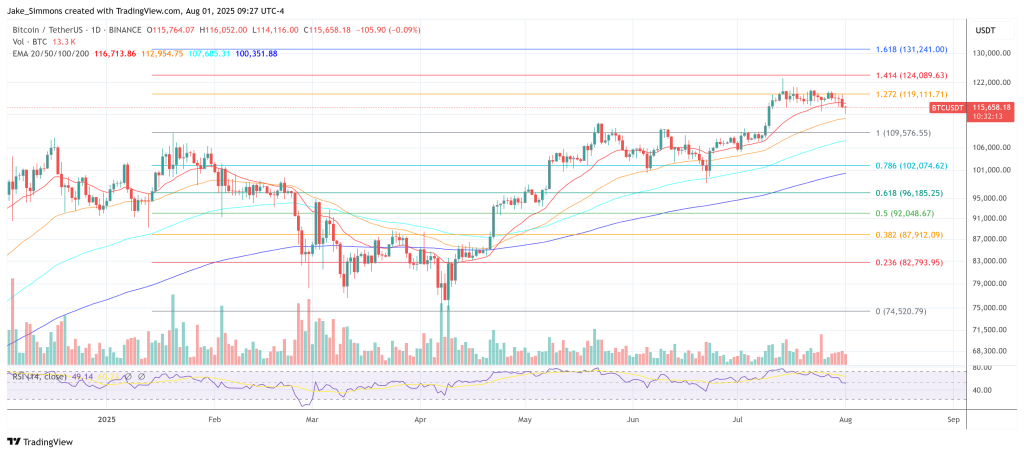
At press time, BTC traded at $115,658.
Bitcoin price
BTC remains below the 1.272 Fib, 1-day chart | Source: BTCUSDT on TradingView.com
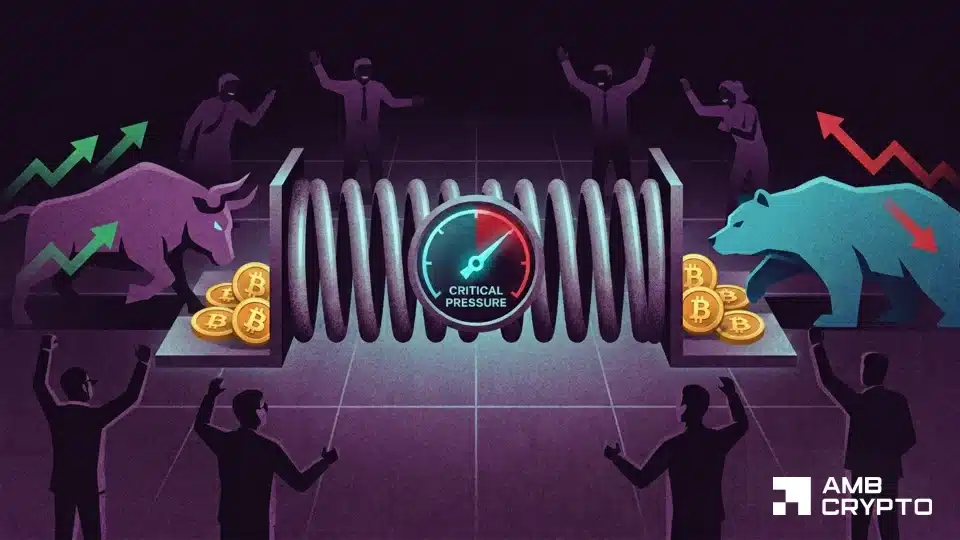
Featured image created with DALL.E, chart from TradingView.com
Editorial Process for bitcoinist is centered on delivering thoroughly researched, accurate, and unbiased content. We uphold strict sourcing standards, and each page undergoes diligent review by our team of top technology experts and seasoned editors. This process ensures the integrity, relevance, and value of our content for our readers.

Jake Simmons has been a Bitcoin enthusiast since 2016. Ever since he heard about Bitcoin, he has been studying the topic every day and trying to share his knowledge with others. His goal is to contribute to Bitcoin's financial revolution, which will replace the fiat money system. Besides BTC and crypto, Jake studied Business Informatics at a university. After graduation in 2017, he has been working in the blockchain and crypto sector. You can follow Jake on Twitter at @realJakeSimmons.

Похожее

Почему GWEI вырос на 18% сегодня? Американский объем, риски шорт-сквиза и не только…

Токен GWEI вырос на 18% за 24 часа, опередив общее восстановление крипторынка. Основным драйвером роста стал всплеск торгового объема со стороны американских инвесторов до $2,09 млн, что составило около 12,59% от общего объема торгов токеном. Общая торговая активность выросла на 9,53%, достигнув $16,58 млн. Однако данные по перпетуальным фьючерсам указывают на осторожность: отрицательное значение финансирования (-0,38%) свидетельствует о смещении позиций в сторону шорт-сделок, что может сигнализировать о рисках "короткого" сжатия (short squeeze). В то же время давление продаж на спотовом рынке заметно снизилось. Анализ ликвидности показывает, что ниже текущей цены ордеров мало, что может ограничить потенциальное падение. Основные скопления ликвидности находятся выше текущей цены, что со временем может притягивать к ней курс. Таким образом, краткосрочный импульс остается восходящим, но сохраняется риск коррекции.

ambcrypto1 ч. назад

Почему GWEI вырос на 18% сегодня? Американский объем, риски шорт-сквиза и не только…

ambcrypto1 ч. назад

'Не может быть подвергнуто цензуре' - Предложение по блокировке Ordinals в Bitcoin получило менее 1% поддержки

Предложение по мягкому форку Bitcoin BIP-110, направленное на блокировку нефинансовых данных, таких как Ordinals и Runes, не получило достаточной поддержки майнеров для активации. К финальному сроку 4 июля менее 1% хэшрейта сети (всего 10 из 2016 блоков) проголосовало за обновление, при необходимом пороге в 55%. Сторонники форка, такие как разработчик Люк Дэвис-младший, утверждали, что он необходим для защиты основной денежной функции Bitcoin, обеспечивая дешевые P2P-переводы и борясь со спамом. Однако критики, включая BitMEX Research и CEO Blockstream Адама Бэка, предупреждали, что BIP-110 нарушит работу кошельков, может заблокировать более 1.7 млн BTC и представляет собой попытку цензуры, противоречащую принципам неизменности и устойчивой сети. Бэк подчеркнул, что Bitcoin, как и интернет, практически невозможно подвергнуть цензуре. Финальное окно для активации форка пользователями ожидается в августе, но, учитывая минимальную поддержку майнеров, его шансы на успех считаются крайне низкими. Сообщество Bitcoin остается разделенным в этом вопросе.

ambcrypto2 ч. назад

'Не может быть подвергнуто цензуре' - Предложение по блокировке Ordinals в Bitcoin получило менее 1% поддержки

ambcrypto2 ч. назад

Биткоин на отметке $62 тысяч: почему CoinShares предупреждает, что ‘это все еще выглядит как начальная стадия формирования дна’

После продолжительного снижения Bitcoin начал стабилизироваться, однако макроэкономические факторы по-прежнему препятствуют долгосрочному восстановлению. Согласно отчету CoinShares, недавний отскок цены до уровня около $62 000 был спровоцирован слабым отчетом по занятости в США за июнь, что снизило ожидания скорого повышения ставок ФРС. Это привело к падению доходности казначейских облигаций, сделав криптоактивы относительно более привлекательными. Тем не менее, аналитики предупреждают, что это лишь краткосрочная реакция рынка, а не начало устойчивого роста. Денежно-кредитная политика ФРС остается сдержанной. Продажи крупными держателями (китами), оказавшие давление на рынок в 2025 году, в основном прекратились, но сохраняются другие проблемы: геополитическая неопределенность, отток капитала из биткойн-ETF в пользу AI-фондов и потенциальное давление со стороны продаж Strategy. Открытый интерес растет, что указывает на высокий уровень левериджа и риск резких ценовых движений. CoinShares заключает, что текущая ситуация больше похожа на раннюю стадию формирования дна, а не на начало нового устойчивого бычьего тренда.

ambcrypto3 ч. назад

Биткоин на отметке $62 тысяч: почему CoinShares предупреждает, что ‘это все еще выглядит как начальная стадия формирования дна’

ambcrypto3 ч. назад

PEPE обгоняет DOGE, но отстает от BONK – В чем истинная причина 14%-го роста

За последние 24 часа цена мемкоина PEPE выросла на 14,06%, достигнув $0,00002808, а его рыночная капитализация составила $1,16 млрд. Объем торгов увеличился на 49,6% до $274,5 млн, что указывает на возобновление интереса со стороны рынка. Рост в основном поддерживался спотовыми покупателями: объем спотовых торгов вырос на 80,46%, опередив рост фьючерсного объема (69,27%). Это говорит о притоке реального спроса, а не только о спекуляциях с плечом. Открытый интерес по фьючерсам также увеличился на 21,60%. Среди других мемкоинов PEPE показал себя лучше DOGE, но уступил BONK по темпам роста торговой активности. С технической точки зрения, PEPE восстановился после уровня поддержки $0,0000231 и приблизился к ключевому сопротивлению $0,0000300. Индекс относительной силы (RSI) находится на уровне 55,96, что указывает на улучшение покупательной способности без признаков перегрева. Успешный прорыв выше $0,0000300 может открыть путь к следующей цели в районе $0,0000400.

ambcrypto4 ч. назад

PEPE обгоняет DOGE, но отстает от BONK – В чем истинная причина 14%-го роста

ambcrypto4 ч. назад

Еженедельная разблокировка токенов: PUMP начинает разблокировку для команды и инвесторов.

**Pump.fun** Проект: Pump.fun - платформа для запуска мем-токенов в сети Solana. Ключевое событие: Начало разблокировки токенов для команды и инвесторов. Объем разблокировки: 82.5 млрд токенов PUMP. Примерная стоимость: Около 130 млн долларов США. Описание: Стартовал процесс вестинга, что может оказать влияние на рыночное предложение токена. **Hyperliquid** Проект: Hyperliquid - высокопроизводительный блокчейн, цель которого - создание полностью ончейн-открытой финансовой системы. Ключевое событие: Предстоящая разблокировка части токенов. Объем разблокировки: 450 тыс. токенов HYPE. Примерная стоимость: Около 31.98 млн долларов США. Описание: Разблокировка является частью запланированного графика выпуска токенов проекта. Оба события представляют собой значительные выпуски токенов на рынок в течение недели, что является важным фактором для инвесторов.

marsbit5 ч. назад

Еженедельная разблокировка токенов: PUMP начинает разблокировку для команды и инвесторов.

marsbit5 ч. назад

Торговля

Спот
活动图片