How Investors Navigate Fear and Uncertainty of a Bear Market

bitcoinistОпубликовано 2025-03-24Обновлено 2025-03-24

Введение

Bear markets bring out the worst in investor sentiment—fear, doubt, and a whole lot of secondguessing. When prices keep dropping,...

Trusted Editorial content, reviewed by leading industry experts and seasoned editors. Ad Disclosure

Bear markets bring out the worst in investor sentiment—fear, doubt, and a whole lot of secondguessing. When prices keep dropping, many shift from chasing gains to simply protecting what they have. Some park their funds in stablecoins, while others stick with blue-chip cryptos or turn to staking for passive income. In this article, I will examine how investor sentiment shapes market behavior and explore effective strategies for weathering bearish conditions.

Understanding Investor Sentiment in a Bear Market

A bear market is characterized by prolonged price declines, high volatility, and widespread uncertainty. Investor sentiment during such periods is typically pessimistic and risk-averse, driven by fear, doubt, and caution. Many traders and investors shift their focus from aggressive growth to capital preservation, seeking ways to protect their assets while waiting for market recovery. During a bear market, the usual “buy low, sell high” mentality is replaced by a more defensive approach. Investors look for strategies that help them minimize losses, generate steady returns, and prepare for the next bull run. One of the most effective ways to achieve this is by staking cryptocurrencies, which allows investors to earn passive income while holding their assets.

Common Investment Strategies in a Bear Market

When market sentiment turns negative, investors adopt various strategies to mitigate risk and optimize returns. One common approach is the flight to safety, where investors move funds into stablecoins such as USDT, USDC, and DAI to avoid volatility.

Some hedge their portfolios with blue-chip cryptocurrencies like Bitcoin (BTC) and Ethereum (ETH), which are often considered safer bets due to their established market dominance.

Another popular strategy is dollar-cost averaging (DCA), where investors purchase crypto at regular intervals, lowering their average entry price over time. This reduces the risk of investing a lump sum at the wrong time and is particularly effective for long-term investors.

While these strategies help investors navigate bearish conditions, they are not without drawbacks. Moving funds into stablecoins provides stability but doesn’t generate meaningful returns. Hedging with blue-chip cryptocurrencies can reduce volatility but still expose investors to downturns and liquidity challenges. Dollar-cost averaging helps smooth out entry prices, yet it can lead to prolonged unrealized losses if the bear market persists.

Why Staking Is an Attractive Strategy in a Bear Market

To balance these risks, investors may consider complementing these strategies with yield-generating options like staking.

Staking is another key strategy in the bear markets. Investors use staking to earn passive income while waiting for prices to recover. Staking assets like ETH, ADA, and TRX helps holders earn additional tokens without active trading, while liquidity pools and lending platforms provide alternative ways to generate yield.

Among all investment strategies, staking stands out as a low-risk, passive income option that can provide steady rewards even in uncertain market conditions. Here are some benefits of staking:

Earning Passive Income: Staking allows investors to earn passive income by generating additional tokens as rewards, helping offset unrealized losses.

Compounding Returns: By reinvesting staking rewards, investors can increase their holdings over time and benefit when the market recovers.

Maximizing Asset Productivity: In a bear market, fewer traders make profits, and staking ensures that funds remain productive rather than sitting idle.

Staking on CoinEx: Features and Benefits

CoinEx is one of the prominent platforms offering staking services, providing investors with a secure and efficient way to generate passive income.

CoinEx supports five popular PoS tokens; they include CET, ETH, SOL, ADA, and TRX. Here are their advantages for staking.

CoinEx Token (CET): A unique staking option on CoinEx, CET comes with a major advantage: the platform waives the 10% service fee, allowing stakers to maximize their rewards. CET also plays a central role in the CoinEx ecosystem, offering trading fee discounts and other benefits.

Ethereum (ETH): As the largest PoS blockchain, ETH staking provides stable returns and contributes to the security of the Ethereum network. With Ethereum’s dominance in DeFi and Web3, staking ETH is a strategic move for long-term believers in the ecosystem.

Solana (SOL): Known for its high-speed transactions and low fees, Solana offers attractive staking rewards. Stakers benefit from Solana’s growing adoption in DeFi and NFT markets, making it a strong option for earning passive income.

Cardano (ADA): With its research-driven approach and strong development community, ADA is a solid staking asset. Cardano’s staking model is designed for decentralization, allowing users to earn rewards while supporting network security.

TRON (TRX): TRON boasts high throughput and efficiency, making it a reliable staking choice. TRX staking not only generates passive income but also contributes to the network’s governance, allowing users to participate in decision-making.

Staking Rewards and Fees

Annual Percentage Yield (APY): The APY for staking on CoinEx varies by cryptocurrency and fluctuates based on on-chain supply and demand.

Service Fees: CoinEx charges a 10% service fee on staking rewards, except for CET, which is exempt from this fee.

Redemption Periods: CoinEx offers relatively short redemption periods, typically ranging from one to four days, providing greater liquidity compared to platforms with longer lock-up periods.

Navigating a Bear Market with Strategic Investments

There are actually more ways to navigate a bear market effectively other than the above strategies. Some investors focus on accumulating high-quality project assets at discounted prices, viewing downturns as opportunities. More experienced traders may engage in short selling and perpetual futures, profiting from price declines through derivatives like futures contracts and perpetual swaps. However, this strategy carries higher risks and requires careful risk management to avoid significant losses.

At the end, portfolio diversification is key. Staking stands out as a prudent investment choice that allows investors to earn passive income, accumulate more tokens, and maintain a productive portfolio despite market uncertainties. By carefully selecting reputable platforms like CoinEx and focusing on cryptocurrencies with favorable staking terms, investors can navigate bear markets effectively while preparing for the next uptrend. While the overall market sentiment may be negative, opportunities still exist to generate yield, hedge against volatility, and accumulate strong assets at discounted prices. With the right strategy, staking can serve as a valuable tool for sustaining and growing a crypto portfolio during turbulent times.


Editorial Process for bitcoinist is centered on delivering thoroughly researched, accurate, and unbiased content. We uphold strict sourcing standards, and each page undergoes diligent review by our team of top technology experts and seasoned editors. This process ensures the integrity, relevance, and value of our content for our readers.

Bitcoinist is the ultimate news and review site for the crypto currency community!

Похожее

Bitroot Public Chain Invited to Attend Tencent Cloud Singapore AI Conference, Discussing the Future Alongside Solana

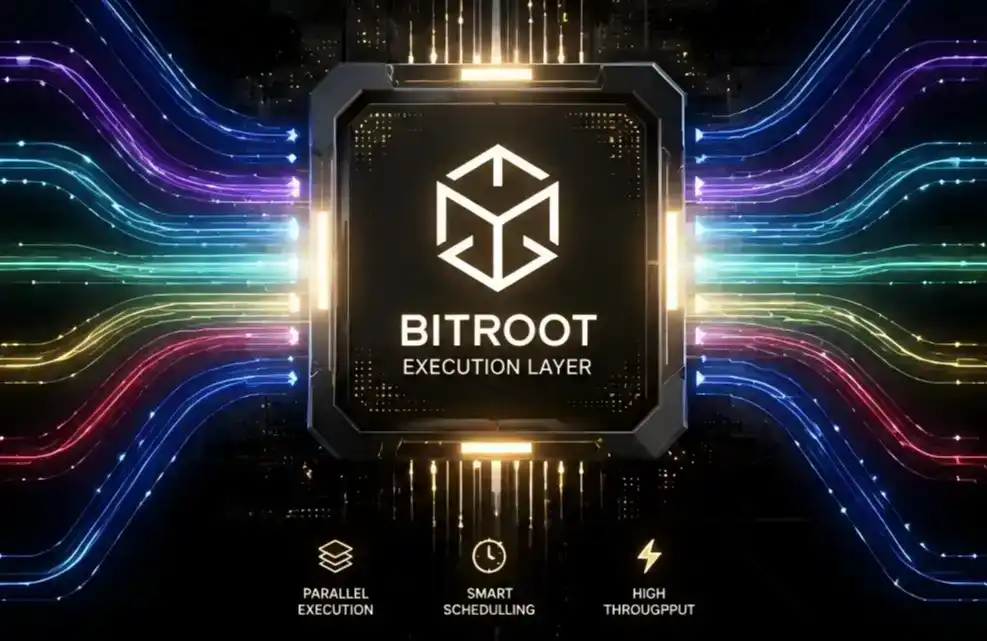
On May 19, Bitroot, an emerging Layer 1 blockchain, participated in the Tencent Cloud AI Summit in Singapore alongside key industry players like Solana Foundation. The event explored the intersection of AI infrastructure, enterprise applications, AI Agents, and Web3. Bitroot's invitation, despite being pre-mainnet, highlights industry interest in its focus on high-performance, AI-native architecture tailored for future AI Agent execution and verifiable on-chain automation. Bitroot CEO Juan Jose emphasized that AI competition is shifting from model performance to data, real-world application scenarios, and trust infrastructure. He argued that for AI Agents to evolve from assistants to autonomous executors managing transactions and assets, they require low-latency, low-cost, and high-throughput blockchain environments. Bitroot aims to address this through its EVM-compatible design, optimistic parallel execution, and a consensus mechanism targeting high scalability. Currently in its Testnet 5.0 phase, Bitroot reports metrics like over 50,000 peak TPS and sub-0.3 second average block time. Its narrative positions it within a growing landscape where next-generation Layer 1s like Monad and Aptos also compete on performance, while Bitroot differentiates by integrating AI computational capabilities natively across its stack. The summit underscored that the fusion of AI and Web3 is moving from concept to infrastructure competition, where networks balancing performance, security, and verifiability will be crucial for enabling scalable AI-driven applications.

marsbit53 мин. назад

Bitroot Public Chain Invited to Attend Tencent Cloud Singapore AI Conference, Discussing the Future Alongside Solana

marsbit53 мин. назад

Hedge Fund Q1 Interpretation: Everyone Is Selling Software, Buying Chips

Hedge Funds and Mutual Funds Aligned in Q1: Dumping Software, Buying Chips A clear consensus emerged among major U.S. hedge funds and mutual funds in Q1: they were simultaneously selling software stocks and pouring capital into the semiconductor sector. This aggressive rotation pushed semiconductor exposure in hedge fund long portfolios to a record high. Hedge funds delivered a 7% return year-to-date, while only 30% of large-cap active mutual funds outperformed their benchmarks. The average short interest for S&P 500 constituents rose to 3% of market cap, the highest since 2011. Within technology, the structural shift was stark. Hedge funds' semiconductor weighting hit an all-time high, while software fell to its lowest since 2019. Excluding Microsoft, mutual funds' relative overexposure to semis vs. software was the largest since 2012. Microsoft was among the most net-sold stocks by both groups. Hedge funds net purchased semiconductor names like LRCX and AMAT. Strategies diverged on leverage and cash. Hedge funds increased their net exposure to near a one-year high after an initial cut. Mutual funds raised their cash allocation, though it remains historically low at 1.4%. Sector alignment was high in Industrials (both overweight) but divergent in Tech: hedge funds increased their Tech net tilt by a record 853 basis points, while mutual funds reduced theirs. Clear splits also appeared in Financials and Consumer Discretionary. Four stocks appeared on both Goldman's hedge fund VIP and mutual fund overweight lists: BA, MA, MRVL, and V. This "shared favorites" basket has returned 10% YTD, outperforming the equal-weight S&P 500. Notably, all "Magnificent Seven" stocks are on the hedge fund VIP list but are uniformly underweighted by mutual funds.

marsbit1 ч. назад

Hedge Fund Q1 Interpretation: Everyone Is Selling Software, Buying Chips

marsbit1 ч. назад

The Evolution Path of Physical Bitcoin

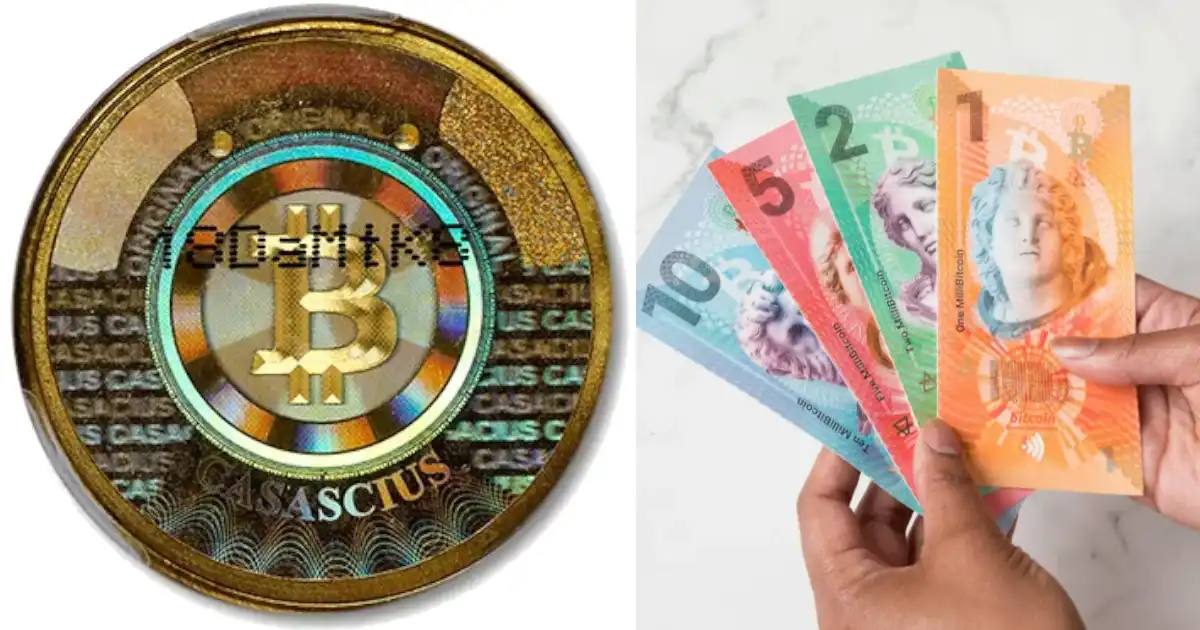
The Evolution of Physical Bitcoin Bitcoin's digital nature is its core strength, enabling self-custody and rapid global transfers. However, its intangibility also hinders mainstream adoption. For over a decade, creators have attempted to materialize Bitcoin while preserving its cash-like properties, yielding notable results. Casascius Coins, launched in 2011, were the first and most iconic physical Bitcoin. Creator Mike Caldwell generated private keys offline, printed them on coins, and sealed them with tamper-evident holograms. This model relied on user trust in the centralized issuer. Production ceased in 2013 due to regulatory pressure from FinCEN. RavenBit Coins emerged in 2014 aiming to decentralize minting by letting users generate and apply their own keys. However, this led to trust issues with numerous untrusted minters and insecure key generation methods. In 2016, Coinkite introduced Opendimes—a breakthrough in bearer asset technology. These USB-shaped devices generate and store keys internally. Funds can be received by checking the public key, but spending requires physically breaking the device to extract the private key. While innovative and open-source, its cost (~$20) and form factor limit its use for small, everyday transactions. Satochip's Satodime, a card-shaped device using similar secure chip technology, followed. It supports NFC interaction and comes in various forms. While potentially cheaper in bulk (~13€), it remains a high-security hardware wallet, not a low-cost cash substitute. A fundamental cost barrier exists. For physical Bitcoin to achieve widespread commercial use, hardware costs must drop below $1 to match the production cost of fiat banknotes. Current secure chips capable of running Bitcoin's cryptographic algorithms (like secp256k1) are too expensive. Chips like NXP's NTAG X DNA (~$3) show cost-reduction potential but lack native Bitcoin curve support. Projects like OfflineCash embed chips in banknote-like paper, but face challenges with durability, the need for custom Bitcoin-enabled chips, and the inherent requirement for users to verify balances online—which conflicts with Bitcoin's trustless ideal. Coinkite's Tapsigner, a ~$20 card with a proprietary Bitcoin NFC chip, is seen as a more practical step forward. It functions as a reloadable hardware wallet for contactless payments, solving the "change" problem and focusing on real-world retail integration, a direction also pursued by companies like Cash App and Square. In summary, the journey to physical Bitcoin has progressed from trusted centralized mints (Casascius) to user-generated keys (RavenBit) and finally to self-contained secure hardware (Opendimes, Satodime, Tapsigner). The core challenge remains developing a sufficiently low-cost, durable, and truly trustless physical bearer asset that can function like cash in daily transactions. Current solutions are either too expensive or introduce new trust assumptions, keeping the ideal of ubiquitous physical Bitcoin just out of reach for now.

marsbit1 ч. назад

The Evolution Path of Physical Bitcoin

marsbit1 ч. назад

Торговля

Спот
Фьючерсы
活动图片