Pro-XRP Lawyer Slams SEC Attorneys Over Ethics Breach: Here’s What Happened

bitcoinistОпубликовано 2025-03-18Обновлено 2025-03-18

Введение

Pro-XRP lawyer John E. Deaton delivered a scathing critique of the Securities and Exchange Commission’s (SEC’s) legal team on March...

Trusted Editorial content, reviewed by leading industry experts and seasoned editors. Ad Disclosure

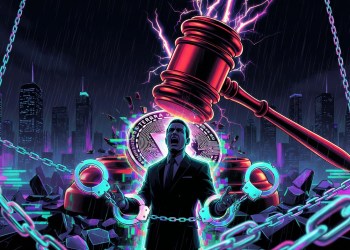
Pro-XRP lawyer John E. Deaton delivered a scathing critique of the Securities and Exchange Commission’s (SEC’s) legal team on March 17, alleging a pattern of unethical conduct and behavior that extends far beyond a single enforcement action. Deaton’s remarks, posted on X, call into question not only the SEC’s overall enforcement strategy but also the professional integrity of individual staff attorneys.

Pro-XRP Lawyer Calls Out SEC Attorneys

Deaton began his commentary by emphasizing the recent appellate court rulings that found the SEC’s actions “arbitrary and capricious”—a legal standard he describes as exceedingly difficult to meet, and indicative that no valid argument could justify the agency’s behavior in that instance. He reinforced this point by citing a separate federal judge’s criticism of SEC attorneys, where the court stated the lawyers were “hypocrites” who lacked “good faith” and “faithful allegiance to the law.” Deaton reminded his followers that these same attorneys were even sanctioned for committing fraud upon the court, underscoring that such a reprimand suggests they deliberately misled the judiciary to prevail in litigation.

He also spoke about smaller crypto projects and their founders, highlighting how some were threatened with drawn-out legal battles that would bankrupt them. Deaton singled out Jeremy Kauffman and the token project LBRY, which he claims was “bankrupted” by SEC tactics even though the token was legitimately being used for non-investment purposes. He maintains that Joe Roets and Dragonchain faced similar treatment, only managing to hold on through a shift in the political landscape. He also pointed to Kraken, suggesting that the enforcement strategy extended across the broader crypto industry.

Deaton concluded that the attorneys in question should not be allowed to shift blame onto former SEC Chair Gary Gensler. He argued, “I could go on and on. These lawyers don’t get to hide behind Gensler made me do it. They’ve earned it. Period.”

Deaton’s message came in response to a new Politico article by Declan Harty titled “Italian vendetta: SEC targeted by triumphant crypto industry.” The piece details a power reversal underway in Washington following the installation of a new administration and acting SEC Chair Mark Uyeda, who has halted or dropped numerous enforcement actions against firms such as Coinbase, Robinhood, and Gemini.

According to Politico, high-profile industry figures—including Coinbase CEO Brian Armstrong, Ripple’s top lawyer Stuart Alderoty, and Gemini co-founders Cameron and Tyler Winklevoss—have not only called for the SEC to adopt clearer rules but have also pushed to hold specific agency staff accountable for what they view as misconduct under previous leadership.

Harty’s reporting underscores a broader effort by these crypto leaders to stigmatize law firms that bring on senior SEC attorneys who managed crypto investigations. One former SEC employee speaking to Politico on condition of anonymity claimed to know of at least one interview that was abruptly canceled and one job offer that was rescinded specifically because of the firm’s ties to crypto. Meanwhile, William McLucas, a former SEC enforcement director, described the direct targeting of agency staff as “totally inappropriate,” arguing that the crypto industry ought to focus on moving forward rather than “singling out lawyers and saying, ‘We want them labeled as pariahs.’”

Yet the industry’s sense of betrayal appears to run deep. While Ripple’s Alderoty insists that the focus is on “accountability — not retribution,” anonymous sources suggest that some of the more provocative voices in crypto appear to be “grave dancing,” seeking public vindication now that the SEC’s posture has shifted. Industry observers note that despite the changed leadership and the agency’s pullback, the SEC is still the primary authority over significant portions of the crypto market, and a healthy long-term relationship with regulators remains essential to shaping policy.

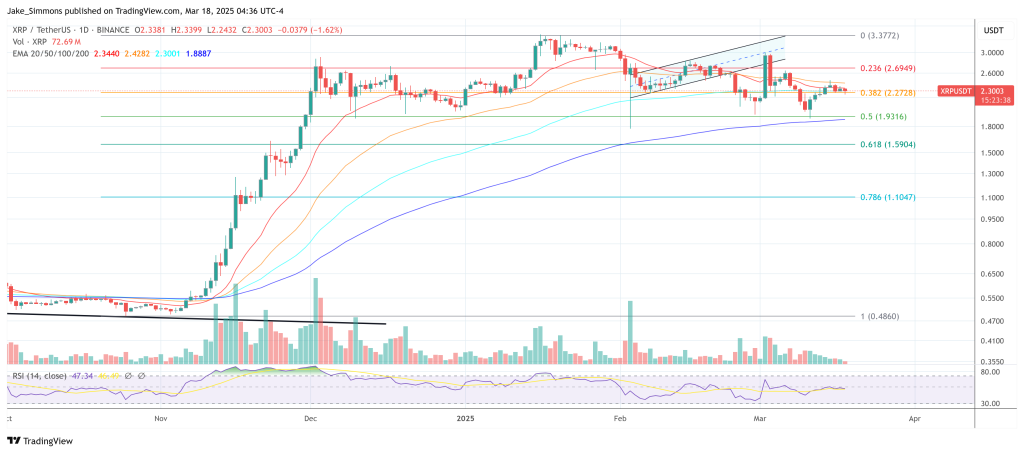
At press time, XRP traded at $2.30.
XRP price
XRP price, 1-day chart | Source: XRPUSDT on TradingView.com
Featured image from YouTube, chart from TradingView.com
Editorial Process for bitcoinist is centered on delivering thoroughly researched, accurate, and unbiased content. We uphold strict sourcing standards, and each page undergoes diligent review by our team of top technology experts and seasoned editors. This process ensures the integrity, relevance, and value of our content for our readers.

Jake Simmons has been a Bitcoin enthusiast since 2016. Ever since he heard about Bitcoin, he has been studying the topic every day and trying to share his knowledge with others. His goal is to contribute to Bitcoin's financial revolution, which will replace the fiat money system. Besides BTC and crypto, Jake studied Business Informatics at a university. After graduation in 2017, he has been working in the blockchain and crypto sector. You can follow Jake on Twitter at @realJakeSimmons.

Похожее

From Mining Pool to Mars: Why Is Wang Chun in the SpaceX Cockpit?

Title: From Mining Pool to Mars: Why Wang Chun is in the SpaceX Cockpit? When SpaceX announced that Wang Chun, co-founder of F2Pool, would command the first commercial crewed interplanetary mission, many were shocked. Why would a Bitcoin mining pool founder be on a Mars mission roster? However, understanding Wang Chun's journey over the past decade and the deepening ties between the crypto industry and SpaceX reveals this is not accidental, but an inevitable result of a new era taking shape. Today's Mars plan is no longer just a space engineering project; it is evolving into a civilization-upgrading experiment driven by global tech capital, AI, computing power, energy, and the crypto economy. Wang Chun stands precisely at the intersection of these forces. Part 1: From F2Pool to SpaceX – Wang Chun's Leap F2Pool, founded when Bitcoin was still niche, is one of the earliest large-scale mining pools and once held a significant share of global Bitcoin hash rate. Wang Chun belongs to the first generation of Chinese Bitcoin advocates and infrastructure builders—idealists and engineers who believed in a new value network independent of traditional finance. Miners like him built the hardware, energy, and computing power foundational to decentralized networks. This aligns with the long-term, high-engineering, future-oriented vision required for space civilization. Elon Musk’s space endeavors value such long-term builders over mere capital players, which explains Wang Chun's entry into the SpaceX ecosystem. Part 2: Why Crypto and SpaceX Are Growing Closer The core of global tech competition is shifting from internet applications to next-generation infrastructure. Both crypto and SpaceX are part of this. SpaceX's goal is to drastically reduce space access costs. If successful, it could enable orbital servers, space-based energy, global satellite internet, and Martian bases. These new frontiers will require new payment systems, value networks, and global financial architectures. Cryptocurrencies, inherently global and trustless, are poised to become key to off-planet economies. Moreover, crypto and SpaceX share a high-risk, long-termist ethos—believing in ambitious, world-changing goals despite early skepticism. Part 3: Human Spaceflight Enters the Commercial Era Space exploration, long dominated by state actors, is now being transformed by commercial entities like SpaceX. Wang Chun's involvement signifies that future deep-space participants may include not just career astronauts, but also entrepreneurs, engineers, and AI researchers. This mirrors the Age of Exploration, where commercial capital eventually drove global expansion. Wang Chun has emphasized that Mars colonization must not be delayed for future generations, countering a potential over-focus on nearer-term, commercial lunar projects. His presence symbolizes how new capital, technical communities, and idealists from the crypto world are now entering the interstellar age. In summary, the true significance is not an individual's journey to Mars, but the shift in the driving force of human civilization expansion from state machinery to tech companies, AI systems, and global technology capital. Wang Chun's path—from mining pool to Mars, from the Bitcoin network to starships—may be a preview of technological civilization's evolution in the coming decades.

marsbit3 ч. назад

From Mining Pool to Mars: Why Is Wang Chun in the SpaceX Cockpit?

marsbit3 ч. назад

Торговля

Спот
Фьючерсы
活动图片