【研报精选】Meme价格下跌,反转即将来临?

Tap Chi BitcoinОпубликовано 2023-05-10Обновлено 2023-05-15

Введение

自 4 月初以来,Pepe 代币价格 (PEPE) 的涨幅一直领先于整个加密货币市场。然而,从 5 月 5 日开始的急剧下跌抹去了这些收益的很大一部分。

自 4 月初以来,Pepe 代币价格 (PEPE) 的涨幅一直领先于整个加密货币市场。然而,从 5 月 5 日开始的急剧下跌抹去了这些收益的很大一部分。

尽管下跌,但今天 MEME 价格反弹,可能开启另一轮牛市。这将是对历史高位的看涨逆转,还是只是小幅反弹?继续阅读下文以了解有关 PEPE 价格预测的更多信息。

Pepe 引领了“表情包季节”,14 天内上涨了 2400%。上涨趋势导致 5 月 5 日创下 0.000044 美元的历史新高。

然而,PEPE 此后下跌,导致 5 月 8 日的最低价格为 0.000018 美元,触及 0.618 长期斐波拉契回撤支撑位。如果下跌只是修正,则该水平通常充当底部。

相对强度指数 (RSI) 给出了混合结果。通过使用 RSI 作为动量指标,交易者可以XEM处于超买或超卖状态,从而决定是增持还是卖出资产。

如果RSI在50以上且呈上升趋势,则多头有优势,但如果指标在50以下,则相反。虽然该指标目前低于 50,但该指标正在向上移动。

此外,它在达到 25(绿色符号)的超卖水平后恢复。因此,该指标并不能确定数字资产XEM处于上升趋势还是下降趋势。
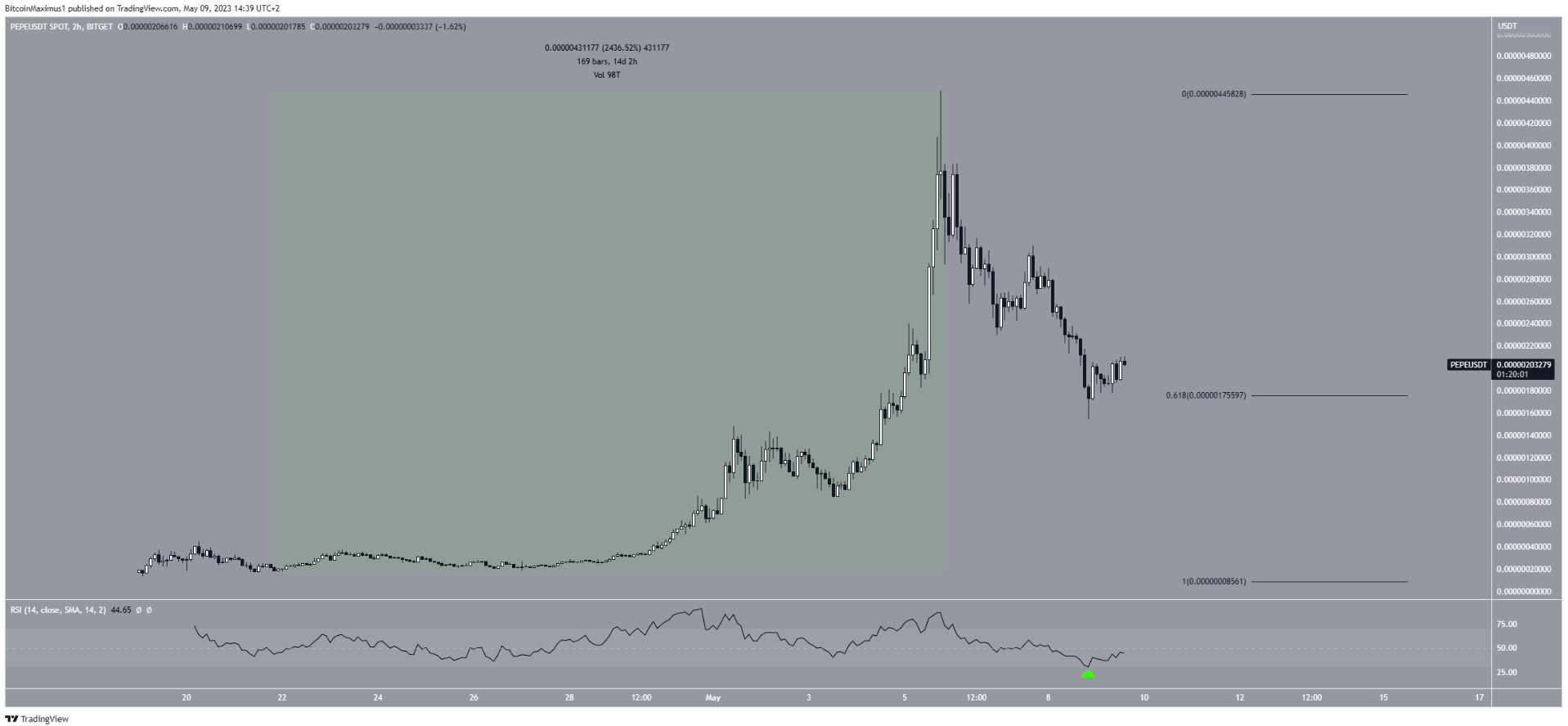
PEPE/USDT 2小时图|资料来源: TradingView

短期小时图的技术分析提供了更乐观的 PEPE 价格预测。这是由于艾略特波浪理论和价格行为。

浪数表明价格已经完成了ABC修正结构(白色)。下行趋势恰好在 0.618 斐波拉契回撤支撑处结束,这一事实与正在进行的修正一致。

接下来,价格突破历史高点形成的下行阻力线。这更符合 PEPE 价格调整已经结束并且牛市已经开始的可能性。

如果是,价格将反弹至 0.5-0.618 斐波拉契回撤阻力区域 0.000030-0.0000034 美元。

达到该水平后的反应可能会决定反弹XEM小幅反弹还是新的向上运动,这将使价格再创历史新高。
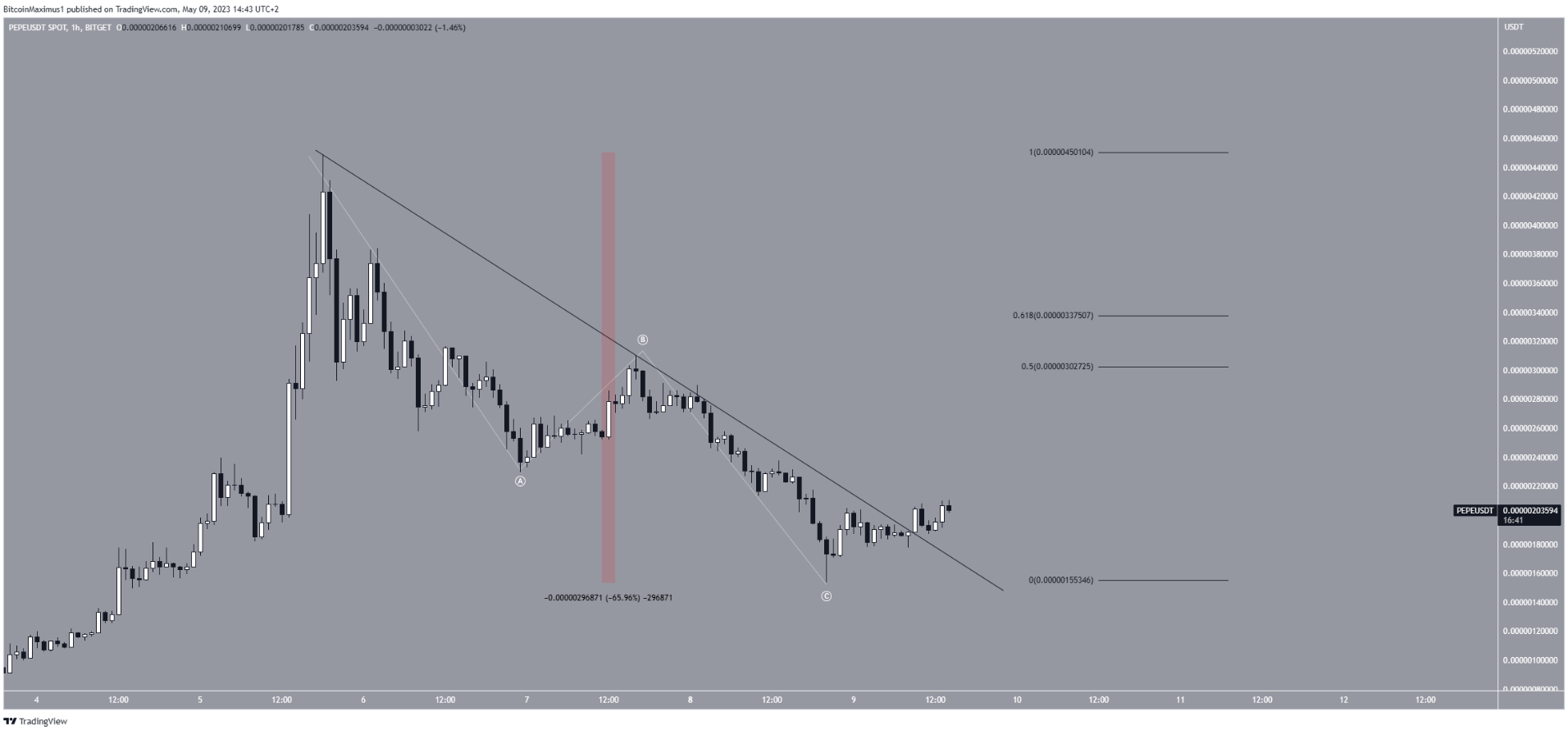
每小时PEPE/USDT图表|资料来源: TradingView

然而,跌破 5 月 8 日低点将使这一看涨预测无效。

在这种情况下,PEPE 价格可能会跌至下一个支撑位 0.000010 美元。

Похожее

The Value Distribution of Stablecoins

**Summary: The Value Distribution of Stablecoins** The article argues that stablecoins are evolving from mere trading tools into broader channels for dollar access. It divides the stablecoin ecosystem into four layers to analyze how value is distributed: 1. **Issuance Layer:** Mints stablecoins, holds reserve assets, and captures the spread between reserve yield and user costs (e.g., Tether, Circle). This layer currently earns the largest profit margin. 2. **Infrastructure Layer:** Connects stablecoins to the traditional financial system, handling fiat on/off-ramps, banking integration, compliance (KYC/AML), and asset management (e.g., Bridge, BVNK). This is the "unglamorous" but critical work, building the essential bridges between crypto and real-world finance. 3. **Acquiring/Distribution Layer:** Integrates stablecoins into merchant systems, manages payment flows, and provides enterprise financial software (e.g., Stripe, Coinbase). They act as the access point for businesses. 4. **Application Layer:** The end-users and businesses that ultimately use stablecoins for payments, settlements, or as a store of value. They benefit from convenience but have little pricing power. The core thesis is that while the issuance layer currently dominates profits, the often-overlooked **infrastructure layer holds significant long-term potential**. The real challenge and barrier to mass adoption is not the on-chain transfer of stablecoins (which is simple), but the complex "last mile" integration into existing business workflows, banking systems, and regulatory frameworks across different countries. Companies in this layer are currently in a "land grab" phase, investing heavily to build networks, secure bank partnerships, and establish compliance pathways. While their position is currently pressured by the profitable issuers above and distribution platforms below, the article suggests that if stablecoins become a default financial rail for businesses, the infrastructure providers who have done the hard work of integration will ultimately gain strong pricing power and become entrenched, essential players.

marsbit1 ч. назад

The Value Distribution of Stablecoins

marsbit1 ч. назад

The Value Distribution of Stablecoins

The Value Distribution of Stablecoins The article argues that stablecoins are evolving from a mere trading tool into a broad "dollar channel." It analyzes the industry's value chain through four layers: 1. **Issuance Layer (e.g., Tether, Circle):** The top layer that mints stablecoins, holds reserve assets, and captures the thickest interest rate spread. 2. **Infrastructure Layer (e.g., Bridge, BVNK):** Connects stablecoins to the traditional financial system, handling critical but complex "dirty work" like fiat on/off-ramps, banking integration, compliance (KYC/AML), and cross-border settlement. 3. **Acquiring/Distribution Layer (e.g., Stripe, Coinbase):** Embeds stablecoins into merchant systems, manages payment flows, and integrates with enterprise software. 4. **Application Layer:** End-users and businesses that ultimately use stablecoins for payments, settlement, or storing value. The author posits that while the issuance layer currently captures the most profit, the most overlooked and potentially critical layer is infrastructure. The core challenge for stablecoin adoption isn't the on-chain transfer (which is simple), but bridging the gap between blockchain and the real-world financial system. This involves solving practical problems for businesses: fiat conversion, reconciliation, tax handling, and user onboarding. Infrastructure companies are currently in a difficult "land-grab" phase—building networks, securing banking relationships, and achieving compliance country-by-country. They face pressure from both the profitable issuance layer above and distribution platforms below. However, the author suggests this layer is building a crucial moat. Once stablecoins become a default business rail, the infrastructure players who have done the hard work of integration may gain significant, durable value and pricing power.

链捕手1 ч. назад

The Value Distribution of Stablecoins

链捕手1 ч. назад

How to Do Research Well: Deliberately Practice the Real Skills That Matter

No one truly teaches you how to do research. You're often given a desk, a pre-selected problem, and vague instructions to "create something new." Consequently, many people reverse-engineer the job based on visible outputs—papers, posts, announcements—learning only how to *appear* like a researcher rather than how to *become* one. True research capability is built from stacking small, trainable skills, nearly all of which can be developed through deliberate practice. **Pick Your Own Problem:** Most researchers absorb problems from advisors or trends, lacking the underlying reasoning. Choosing a problem you genuinely care about, as John Schulman advises, leads to original work. Develop "taste" like a muscle: predict experiment outcomes, guess paper results from methods, and track which findings remain important over time. **Upgrade Your Inputs:** Relying on shared reading lists (arXiv hot lists, filtered group chats) leads to unoriginal conclusions. Undervalued old literature often holds crucial insights (e.g., MoE, LSTM, backpropagation). Richard Sutton's "The Bitter Lesson" or Claude Shannon's 1952 talk on creative thinking are more predictive than lengthy modern surveys. Breadth matters as much as depth: draw from neuroscience, mechanism design, hardware knowledge, and honest statistics. Read papers directly, especially appendices and limitations sections. **Write Everything Down:** As Paul Graham noted, writing exposes flaws in seemingly mature ideas. Writing is the cheapest defense against self-deception. Following Feynman's principle, Darwin programmatically wrote down facts contradicting his theory to combat memory bias. Maintain a detailed log of hypotheses, setups, predictions, results, and updated understandings. Reviewing past logs fosters essential humility.

marsbit3 ч. назад

How to Do Research Well: Deliberately Practice the Real Skills That Matter

marsbit3 ч. назад

Торговля

Спот
Фьючерсы
活动图片