A taxa de câmbio de referência serve apenas para consulta e não está bloqueada. A taxa final será determinada pelo preço de execução real.
Estatísticas em Tempo Real de USDT
O preço ao vivo de Tether USDt (USDT) é $4.98 USD e a sua capitalização de mercado atual é de $-- USD.
Receba atualizações em tempo real de USDT/USD na HTX. Mantenha-se informado com os dados mais recentes e as tendências do mercado para tomar decisões de trading inteligentes. HTX, a sua fonte confiável de informações precisas sobre preços de criptomoedas.
Estatísticas Principais de Tether USDt
Volume de 24h (USD)
$--
Variação de Preço Hoje
--
Oferta em Circulação (USDT)
--
Registe-se e negoceie para ganhar recompensas no valor de até 1,500 USDT.Participe Agora
Desempenho do Preço de USDT
Acompanhe as variações de preço de Tether USDt com visualizações de gráfico abrangendo 1 dia, 30 dias, 60 dias, 90 dias, 1 ano e o período desde que foi listado na HTX.Ver mais dados sobre os preços de Tether USDt
Horário
Alterar
Variação (%)
Preço mais alto
Preço mais baixo
No data
Informações de Mercado de USDT
Obtenha os detalhes mais recentes do preço de Tether USDt na HTX: alta e baixa em 24 horas, máxima histórica (ATH) e variação percentual diária do preço.
24h Baixo
$0
24h Alto
$0
Máximo histórico
$0
Capitalização de Mercado
$0.00
Volume de 24h (USD)
$--
Oferta Circulante
--
O que é USDT?
O Tether USDt é um token digital que funciona como uma stablecoin, o que significa que o seu valor é projetado para ser estável em comparação com uma moeda fiduciária—neste caso, o USD. Cada token USDT é teoricamente respaldado por um montante equivalente de moeda fiduciária mantido em reservas pela Tether Limited, criando um sistema de reserva de 1 para 1. Este mecanismo visa garantir que o valor de cada USDT permaneça atrelado a um USD, proporcionando aos utilizadores um meio fiável de armazenar valor e facilitar transações.
O Tether opera em várias redes de blockchain, incluindo Ethereum e Tron, o que aumenta a sua acessibilidade e usabilidade. A capacidade de negociar e transferir USDT em várias plataformas torna-o uma ferramenta valiosa para entusiastas e traders de criptomoedas que procuram navegar no panorama de ativos digitais sem o medo da extrema volatilidade de preços normalmente associada a outras criptomoedas.
Com base no desempenho histórico de Tether USDt, a nossa ferramenta de previsão estima que o preço de Tether USDt (USDT) poderá atingir -- até --.
Preço Previsto de USDT em --
A nossa previsão mais recente indica que o preço de Tether USDt (USDT) aumentará para -- até --, com uma variação de preço de --% e um ROI acumulado de aproximadamente --%.
Compre o seu primeiro USDT na HTXRegiste-se Agora
Perguntas Frequentes sobre USDT
Qual é o preço de Tether USDt (USDT) hoje?
O preço atual de Tether USDt (USDT) é $4.98 USD.
Qual é a capitalização de mercado de Tether USDt (USDT)?
A capitalização de mercado atual de Tether USDt (USDT) é de $0.00 USD, calculada multiplicando a sua oferta em circulação pelo seu preço atual.
Qual é a oferta em circulação de Tether USDt (USDT)?
A oferta em circulação atual de Tether USDt (USDT) é de -- USDT.
Qual é a máxima histórica de Tether USDt (USDT)?
Em 2026-08-21, a máxima histórica de Tether USDt (USDT) é de $0 USD.
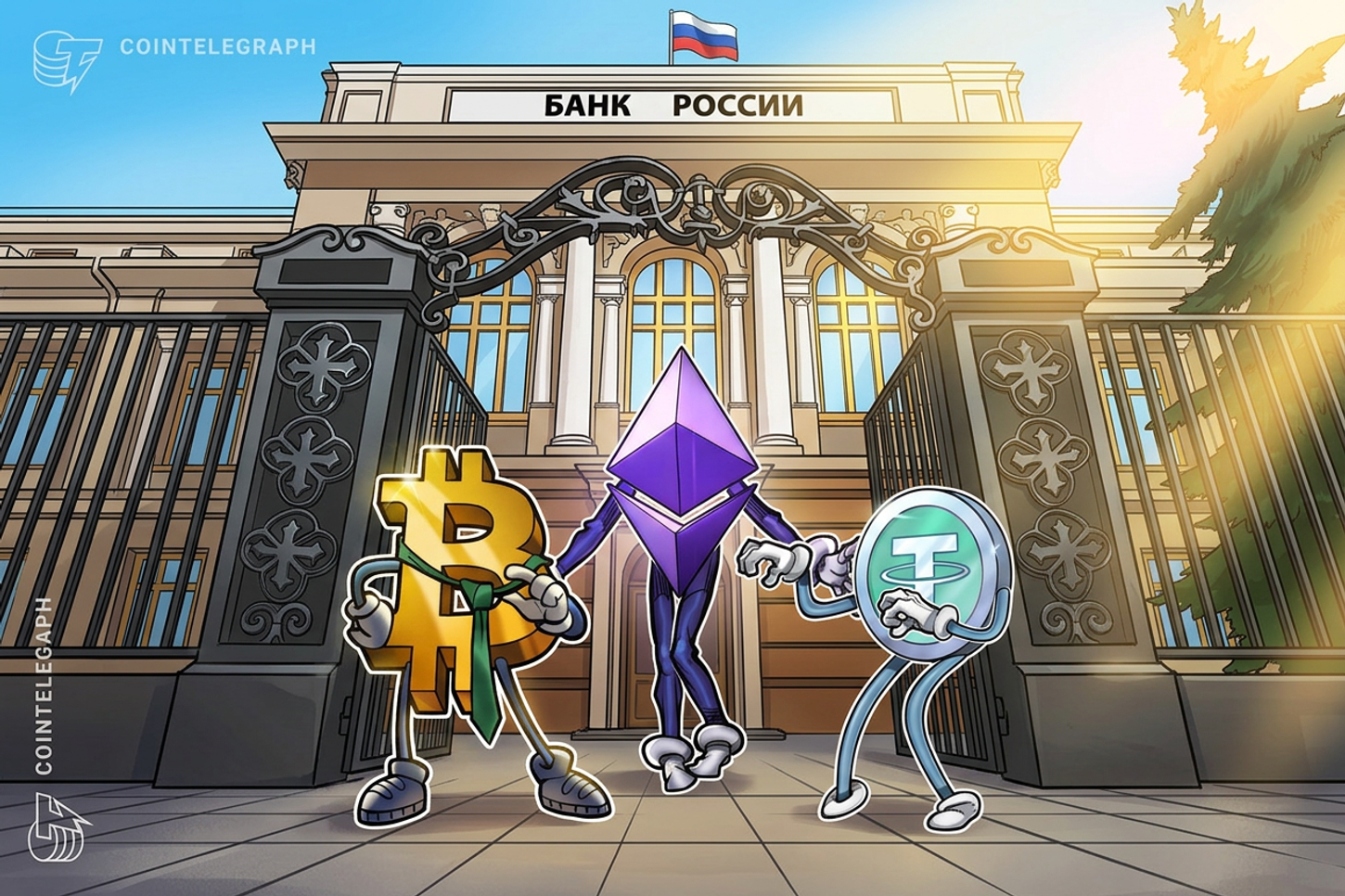
Russia's central bank has proposed allowing Bitcoin, Ether, and Tether's USDT for public trading on exchanges under new regulations. The assets were selected based on criteria like market capitalization, trading volume, and a five-year price history. The move follows a law signed by President Vladimir Putin granting the central bank authority to approve digital currencies for organized trading. New rules limit non-qualified investors to purchasing up to 300,000 rubles (approximately $3,650) worth of cryptocurrency annually per intermediary, with no limits for qualified investors. All investors must pass a risk test before transacting. The restrictions aim to protect non-qualified investors from crypto market volatility. Public comments on the proposal are being accepted until August 24.
KPMG has completed a full financial statement audit of Tether for the fiscal year ending December 31, 2025. Tether, the issuer of the USDT stablecoin, announced that the audit of Tether International, S.A. de C.V. resulted in an unqualified opinion. This means KPMG concluded the financial statements fairly present the company's financial position, in accordance with U.S. accounting rules.
Tether reported a reserve surplus of $6.814 billion, meaning its assets exceeded liabilities from issued tokens at year-end. The audit went beyond previous quarterly reserve attestations by examining a broader set of records, controls, and financial reports. KPMG also physically inspected and recounted every gold bar held by Tether.
This milestone comes as stablecoins face increased regulatory and market scrutiny over reserve backing and transparency. Tether's CEO, Paolo Ardoino, stated the audit addresses long-standing criticism and sets a new industry standard. Observers will now monitor whether Tether continues with audited reports and if other stablecoin issuers follow suit.
Tether CEO Paolo Ardoino has issued a clear denial in response to market reports alleging that the company behind the USDT stablecoin is developing its own proprietary blockchain. An analytical report had suggested Tether was building a private blockchain, or "stablechain," to reduce its reliance on existing networks and gain greater control over its ecosystem.
Ardoino firmly stated via social media that these claims are false, emphasizing that Tether is not developing any blockchain technology and has no such plans. He reiterated the company's strategy is to continue operating across multiple existing blockchain networks.
USDT is currently available on several major blockchains, including Ethereum, Tron, Solana, Avalanche, and TON. This multi-chain approach allows users to choose networks based on transaction costs and speed requirements. While experts speculated that a proprietary blockchain could significantly impact the stablecoin sector, Ardoino's statement appears to have quelled these rumors for now.
The article notes that Tether has also drawn attention for its investments in artificial intelligence, mining, and digital infrastructure. However, company leadership maintains that ensuring the smooth operation of USDT across various blockchains remains a top priority. The cryptocurrency market continues to watch Tether's strategic moves closely.
Tether is expanding into artificial intelligence, aiming to provide accessible AI tools to users in developing regions where its stablecoins already have a significant presence. CEO Paolo Ardoino stated the company plans to develop practical AI applications for sectors like healthcare, finance, and sports. The focus will be on services that run on standard smartphones, targeting populations with limited access to advanced digital infrastructure. This move is a natural extension for Tether, which claims over 650 million users globally, particularly in regions like Africa and South America.
Ardoino noted that Tether no longer sees itself as just a crypto company but as a digital dollar and digital gold firm. While USDT remains its core product, used as a hedge against inflation and currency instability, Tether has diversified into decentralized communication, agriculture, and solar power in recent years. AI monetization strategies may involve small, recurring digital currency payments.
This expansion follows a KPMG audit confirming Tether's reserves exceed liabilities by $6.8 billion, backing its $183 billion USDT supply. With a massive existing user base, Tether aims to leverage its network to distribute AI and other infrastructure far beyond cryptocurrency.
Stablecoin giant Tether has engaged Big Four auditor KPMG to verify its reserves, including a physical count of roughly 150 tons of gold in a Swiss vault. The audit confirmed the gold is present and that Tether's total reserves exceed its liabilities by $6.8 billion. CEO Paolo Ardoino described the process as "a physically heavy exercise" in an interview with Fortune.
The audit aimed to address a long-standing conspiracy theory in the crypto world that USDT is not properly backed and could face a mass default.
In a significant statement, Ardoino declared, "We haven't considered ourselves a crypto company for a long time. I think we are a digital dollar and digital gold company." He noted Tether has over 650 million users globally, with a strong focus in Africa and South America, where demand for stable digital assets is high due to recurring currency devaluations.
Beyond financial services, Tether has been investing in decentralized communications, agriculture, and solar-powered kiosk networks for low-cost autonomous electricity.
The company's next strategic move is to provide basic AI services to its user base in developing countries. Ardoino emphasized that even in the poorest nations, most people have a mobile phone capable of running simple AI models. The goal is to offer affordable, fundamental tools in sectors like healthcare, finance, and sports for a few dollars per month, payable via Tether or other digital payments.
Ardoino expressed concern about societal inequality transforming from a wealth gap into a deeper "intellectual gap."
cryptonews.ru2天前
Perguntas Relacionadas
Bem-vindo à FAQ de Cripto. As perguntas e respostas dos utilizadores sobre Tether USDt (USDT) são apresentadas abaixo.