Winter for Crypto IPOs: Consensys and Ledger Withdraw Applications

marsbitPublicado em 2026-05-16Última atualização em 2026-05-16

Resumo

The crypto IPO window is tightening significantly in 2026, marked by prominent companies delaying or pausing their public listing plans. Following a successful 2025 "harvest year" that saw Circle, Bullish, and Gemini go public amidst a bull market, the tide has turned. Consensys, developer of MetaMask, recently postponed its IPO until at least fall 2026. Hardware wallet leader Ledger also suspended its planned US listing due to unfavorable market conditions, with Kraken having previously delayed its own plans. This shift is driven by a cooling market in 2026, characterized by a significant Bitcoin price correction, declining trading volumes, and reduced investor risk appetite for crypto stocks. The poor post-IPO performance of 2025 listings like Circle and Bullish, which saw major share price declines, has heightened investor caution. This contrasts sharply with the current AI sector, where companies like SpaceX, OpenAI, and Anthropic are commanding massive valuations and investor enthusiasm based on narratives of stable, exponential growth. Crypto companies now face pressure to transition from hype-driven models to demonstrating reliable cash flows and robust compliance. While the paused IPO plans may lead to valuation resets and affect ecosystem liquidity, they also accelerate industry consolidation toward stronger, more compliant infrastructure players. A potential recovery in Bitcoin's price and clearer regulations could reopen the IPO window in the latter half of 2026.

Author: Ma Ke, Foresight News

On May 14th, Consensys, the developer of MetaMask wallet, temporarily postponed its IPO to at least the Fall of this year. Meanwhile, crypto hardware wallet giant Ledger also suspended its US IPO plan on May 13th. Previously, the exchange Kraken had repeatedly delayed its listing plans. This series of IPO postponements and suspensions signals a significant narrowing of the 2026 IPO window following the 2025 boom in crypto company listings.

2025 was considered a "bumper year for IPOs" in the industry: stablecoin issuer Circle successfully listed on the NYSE, and several companies including Bullish and Gemini completed their listings, initially opening an exit channel for crypto VCs. Crypto-related IPOs in 2025 raised approximately $14.6 billion, and VC deal volume soared to $19.7 billion. BTC price once surged to a record high of $126,000, institutional capital flowed in, the regulatory environment was relatively friendly, and multiple crypto stocks saw strong first-day performance.

Entering 2026, Bitcoin's price corrected significantly, trading volume declined, and investor risk appetite for crypto stocks cooled rapidly. BitGo, as the first crypto IPO of 2026, priced at $18 in January for its listing. Although it briefly rose on its debut, it subsequently fell back, once dropping to $7, and has now recovered to $11.9.

Specifically, the listing pace of several leading companies has clearly slowed. Payward, the parent company of Kraken, confidentially filed an S-1 form in November 2025, originally planning to proceed in Q1 2026 with a valuation target once aiming for $20 billion. On March 18th this year, the company paused its plans due to "difficult market conditions." Co-CEO Arjun Sethi stated that although the valuation dropped to $13.3 billion in a recent funding round, the IPO filing remains valid, awaiting the optimal window.

Arjun Sethi

Ledger's suspension was more abrupt. Known for its hardware wallets and enterprise-grade infrastructure, reports in January 2026 indicated it had hired investment banks to prepare for a US listing targeting a $4 billion valuation. Citing sources familiar with the matter, unfavorable market conditions led Ledger to decide to pause, without initiating the formal filing process. A company spokesperson declined to comment but suggested the possibility of turning to private financing to sustain growth.

Notably, just in March, Ledger appointed former Circle executive John Andrews as CFO and opened a New York office to strengthen its US business layout. This expansion shows its business strategy remains unchanged; the IPO pause is more due to external factors.

Meanwhile, MetaMask parent company Consensys also joined the wait-and-see ranks. The company had hired JPMorgan and Goldman Sachs as underwriters, originally planning to submit an S-1 form around the end of February with a target to list in 2026. However, due to market weakness, Consensys has postponed its IPO to at least this Fall.

Behind these crypto companies' IPO suspensions are, of course, the combined result of multiple factors.

The stock performance of the first wave of crypto IPOs in 2025 has intensified market caution toward the 2026 listing window.

This year, Circle's stock price has fallen from a high of $300 to below $50, Bullish dropped from $118 to below $25. Even BitGo, the first crypto IPO of 2026 opening the year, couldn't escape—after pricing at $18 and listing in January, it briefly rebounded but then fell all the way to near $7 at its lowest.

This year's performance collectively confirms that crypto-related stocks are prone to capital chasing at the tail end of a bull market but struggle to withstand valuation resets during cyclical downturns. Traditional institutional investors' required risk premium for "cycle-bound" assets has significantly increased.

In stark contrast to the "cooling-off period" for crypto IPOs, the AI sector in 2026 is in the midst of a dual boom in IPOs and fundraising.

SpaceX has begun IPO preparations, targeting a staggering valuation of $1.75 to $2 trillion, becoming one of the world's most anticipated tech listing projects.
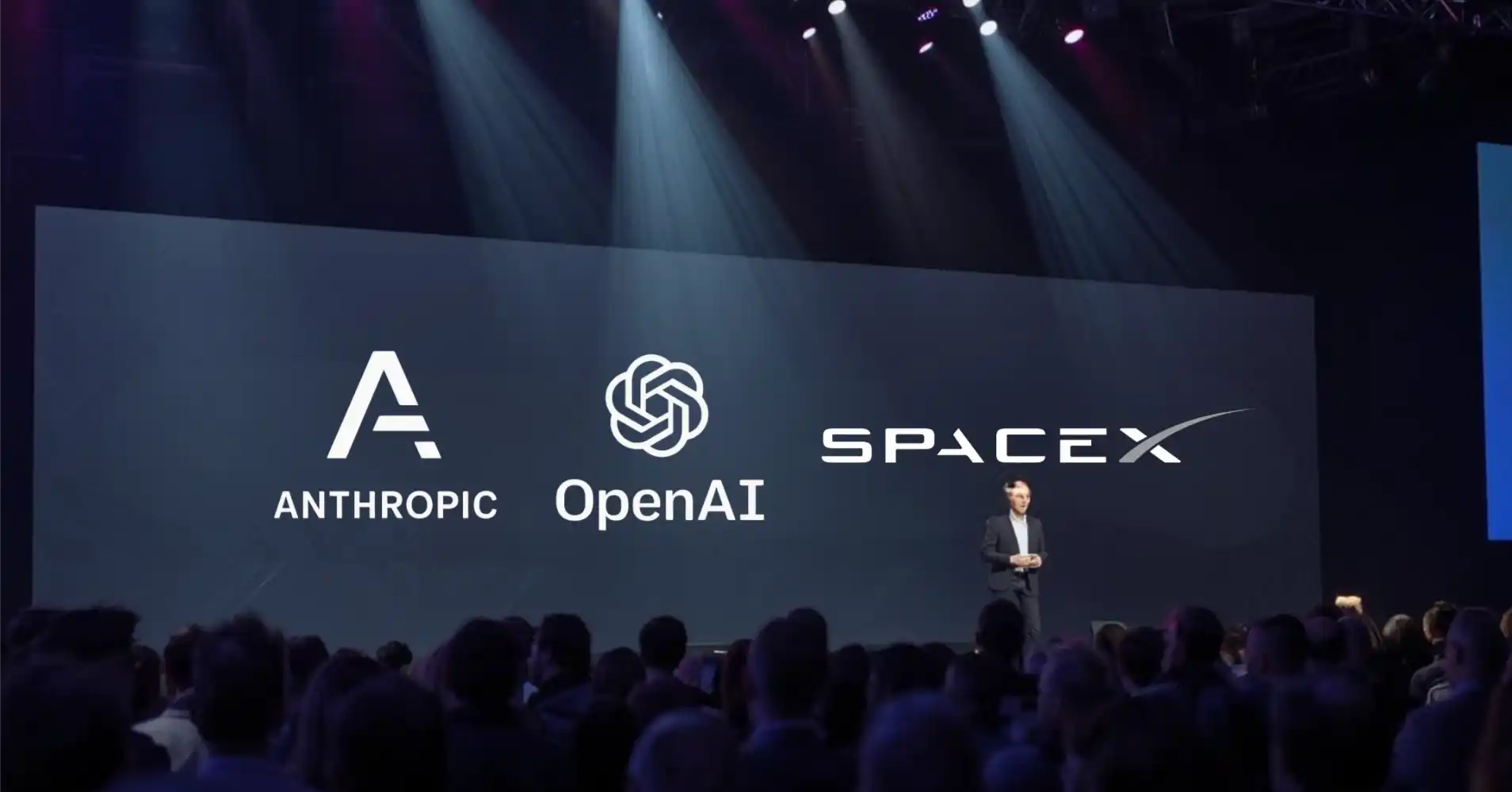
OpenAI's valuation is approaching $1 trillion and is in close communication with several investment banks regarding its listing path; Anthropic's valuation has neared $900 billion and is also actively preparing IPO materials. The AI narrative, with its promise of a "productivity revolution," has attracted a massive influx of long-term capital. Even in an environment of macro uncertainty, AI-related IPOs can garner a much higher risk appetite than crypto assets.

In comparison, crypto companies are highly dependent on Bitcoin prices and trading volumes, with stronger revenue volatility, making it difficult to offer the "exponential growth" certainty promised by AI companies. This cross-sectoral divergence between hot and cold further amplifies investor wait-and-see sentiment towards crypto IPOs, also forcing crypto companies to accelerate their transition from "storytelling" to "telling cash flow stories, telling compliance stories."

Furthermore, crypto companies are shifting towards more pragmatic strategies: although private financing has shrunk in scale, it can still provide a buffer; some companies choose to first optimize product lines, expand into stablecoins or institutional services, and wait for Bitcoin to stabilize at a higher range and for market conditions to improve before proceeding with a listing.

The implications of this phenomenon for the industry warrant deeper thought.

On one hand, it accelerates survival of the fittest. Weaker projects face increased fundraising difficulty, and resources concentrate towards companies with strong compliance and solid infrastructure, such as Ledger's institutional-grade platform and Kraken's custody business. On the other hand, it highlights the crypto industry's transition from narrative-driven to performance-driven. Companies truly capable of weathering cycles are building anti-volatility cash flows and enhancing transparency to win long-term trust. However, in the short term, the narrowing IPO window may lead to valuation resets and affect confidence and liquidity across the entire ecosystem.

Looking ahead, if Bitcoin returns to $90,000 or higher, and regulatory bills are further enacted, the second half of 2026 may usher in a second wave of IPO windows.

Perguntas relacionadas

QWhich two major crypto companies have recently postponed or paused their IPO plans, and what is the timeline for one of them?

AConsensys, the developer of MetaMask, and Ledger, the hardware wallet giant, have both postponed or paused their IPO plans. Consensys has temporarily delayed its IPO until the earliest this fall.

QWhat was the total amount raised by crypto-related IPOs and the total VC deal volume in the year 2025, as mentioned in the article?

AIn 2025, crypto-related IPOs raised approximately $14.6 billion, and the total VC deal volume surged to $19.7 billion.

QWhat key factor is cited as contrasting with the crypto IPO 'cooling-off period' in 2026, and name one prominent example company in that sector?

AIn contrast to the crypto IPO 'cooling-off period', the AI sector is experiencing a dual climax of IPOs and financing in 2026. A prominent example is SpaceX, which has initiated IPO preparations with a target valuation of $1.75 to $2 trillion.

QAccording to the article, why are investors showing more caution towards crypto IPOs in 2026 compared to AI companies?

AInvestors are more cautious towards crypto IPOs because crypto companies are highly dependent on Bitcoin price and trading volume, resulting in stronger revenue volatility and an inability to provide the 'exponential growth' certainty promised by AI companies. AI's 'productivity revolution' narrative attracts long-term capital.

QWhat potential future developments could lead to a second wave of IPO opportunities in the second half of 2026, as per the article's outlook?

AAccording to the article's outlook, if Bitcoin returns to $90,000 or higher and regulatory legislation further materializes, the second half of 2026 could see a second wave of IPO opportunities.

Leituras Relacionadas

Apple Also Has to Pay Rent Now

Apple Pays Rent Too: The Two-Way Flow of "Traffic Tax" and "AI Capability Rent" Between Tech Giants For over two decades, Google has paid Apple an estimated $20 billion annually to remain the default search engine on Safari, a "traffic tax" for a critical user entry point. However, in 2026, the direction of this cash flow partially reversed. Apple agreed to pay Google roughly $1 billion per year to license its Gemini AI models, as Apple's own models reportedly struggled with complex tasks. This creates a unique dynamic: Apple acts as the "landlord" in the established search ecosystem, collecting rent from Google for access. Simultaneously, in the emerging AI arena, Apple becomes the "tenant," paying Google for access to cutting-edge AI capabilities it cannot currently match internally. While Apple claims its new models are "distilled" from Gemini outputs and contain "not a drop" of Google's original code, core dependencies remain. Its knowledge base is refined using Gemini's outputs, and its most powerful cloud model runs on Google's infrastructure. Apple has structured the deal as non-exclusive, allowing it to theoretically switch AI suppliers—a hedge against over-reliance. The future hinges on whether advanced AI models become a commodity (cheap and abundant) or remain a concentrated, scarce resource (expensive and controlled by few). Apple is betting on the former, leveraging its massive device ecosystem to be a powerful, choosy customer. If the latter proves true, its bargaining power could erode. This power dynamic is extending to developers. Apple, Google, and WeChat are all pushing for apps to expose their core functions as standardized "actions" or "intents" that their respective AI assistants (Siri, Gemini, WeChat AI) can directly call. The new scarce resource is no longer just app store visibility, but "being selected by the AI." The currency of "rent" has changed from a 30% revenue share to ceding control over how users interact with an app's functions.

marsbitHá 1h

Apple Also Has to Pay Rent Now

marsbitHá 1h

Missed the SpaceX IPO? WEEX's "First Trade Protection" Lets You Experience US Stock Trading Risk-Free.

With the excitement around SpaceX's recent public listing reigniting interest in the US stock market, Chinese investors face significant challenges accessing compliant and convenient trading channels following regulatory actions against major online brokers. This article explores the available options, highlighting their risks and limitations. Traditional paths for US stock investments remain problematic. Qualified Domestic Institutional Investor (QDII) and Listed Open-Ended Fund (LOF) products, while compliant, suffer from high fees, significant purchase premiums, and a very limited selection of assets. Small, unregulated offshore brokers pose substantial risks, including potential insolvency. While secure, VIP accounts at banks in Hong Kong or Singapore require high minimum deposits (often 1-2 million RMB) and in-person visits, placing them out of reach for most retail investors. The article positions cryptocurrency exchanges, specifically their TradFi (traditional finance on-chain) offerings, as a compelling alternative. Platforms like WEEX are noted for providing access to a wide range of US stocks and ETFs, including SpaceX (SPCXON), through tokenized assets. This method offers advantages such as a single account for both crypto and traditional assets, USDT-based settlement avoiding fiat complexities, flexible leverage, and robust risk management. To attract users, WEEX is promoting a "First Trade Guarantee" campaign. Running from June 15 to July 8 (UTC+8), it features a $30,000 prize pool. Users who trade $500 worth of US stock contracts can qualify for a guarantee on their first eligible trade: 100% loss coverage up to $30 or a 20% bonus on profits up to $30. The campaign is presented as a low-risk opportunity for both crypto natives and traditional investors to experience US stock trading.

marsbitHá 1h

Missed the SpaceX IPO? WEEX's "First Trade Protection" Lets You Experience US Stock Trading Risk-Free.

marsbitHá 1h

How Difficult is Chip Making? A Division Error Costs 475 Million Dollars

How Hard Is It to Make a Chip? A Division Error Cost $475 Million Chip expert Shi Kan, a researcher at the Chinese Academy of Sciences and a popular tech creator, explains the immense challenges of chip development. Chips are foundational to modern technology, but their creation is extraordinarily difficult. The journey from sand to a functional chip involves complex design and manufacturing, but a critical bottleneck is verification—ensuring the design works flawlessly before costly production. A single, undetected bug can have catastrophic consequences, as illustrated by the infamous 1994 Intel Pentium FDIV bug. A flaw in the floating-point division unit forced a recall costing $475 million. Unlike software, chips cannot be easily patched after manufacture, making "first-time success" paramount. However, industry surveys show only 24% of chip projects achieve this; over three-quarters require at least one costly re-spin due to design flaws. Verification has thus become the dominant phase, consuming up to 70% of the design cycle. The core challenge is a "verification impossible triangle" between high performance, good debuggability, and low cost. Exhaustively verifying a modern CPU core could take 15,000 years with software simulation, or 30 years with advanced hardware emulation—timeframes utterly impractical for development. Despite being essential, verification is often seen as unglamorous "dirty work," receiving less academic attention than fields like AI. Shi and his team are tackling this by developing an agile verification research framework called ENCORE, based on FPGA technology, to improve verification efficiency and debug capability. Beyond research, Shi engages in public science communication through long-form video content, aiming to demystify chip technology, AI, and computer science. He argues for the value of pursuing "hard and long-term" endeavors, whether in the meticulous world of chip verification or in creating substantive educational content, believing such sustained effort is likely the right path forward.

marsbitHá 1h

How Difficult is Chip Making? A Division Error Costs 475 Million Dollars

marsbitHá 1h

Trading

Spot
Futuros
活动图片