Why is XRP in the red now after a 50% weekly surge?

cryptonews.ruPublicado em 2026-08-26Última atualização em 2026-08-26

Resumo

XRP fell 2.2% over 24 hours after a 49.4% surge in the previous week, moving back into negative territory. The drop coincides with major banks advancing blockchain-based payment solutions that address the need for prefunding in cross-border transfers, potentially competing with XRP's use case. JPMorgan Chase expanded its blockchain settlement system, Kinexys, to eight currencies, allowing clients to move and exchange funds around the clock without needing a separate crypto asset. Similarly, Citigroup operates a round-the-clock USD clearing network and offers Citi Token Services for tokenized deposits, aiming to speed up payments while reducing the amount of capital required upfront. While its 90-second settlement is slower than XRP Ledger's 3-5 seconds, using cash already held in a regulated bank may be more critical for companies. Furthermore, SWIFT has facilitated interoperability between different bank-issued tokenized deposits without a common cryptocurrency. In a recent pilot, HSBC and Standard Chartered completed a cross-border transaction using SWIFT's ledger to coordinate and settle obligations between their separate token systems. SWIFT reports that 17 banks across six continents are preparing for real transactions using this model. These developments in traditional finance present alternative, bank-integrated pathways for instant, cross-border value transfer, potentially impacting the demand and price trajectory for XRP.

$XRP fell 2.2% over 24 hours after rising 49.4% over seven days, returning the token to negative territory after a week of gains.

The drop comes as crypto traders watch changes in the payment business related to $XRP as major banks continue to implement blockchain systems aimed directly at solving the prefunding problem. JPMorgan Chase (NYSE: JPM) is doing this through Kinexys.

In June, JPMorgan expanded its blockchain top-up capabilities to eight currencies: USD, EUR, GBP, AUD, HKD, JPY, RMB, and SGD. Customers can move these funds around the clock and exchange the supported currencies on-chain.

A company holding dollars can receive yen without first purchasing a separate crypto asset to facilitate the transaction. JPMorgan can set the foreign exchange rate, execute the swap, and record the settlement on its blockchain immediately.

Citigroup's (NYSE: C) US dollar clearing network, which operates 24/7, serves over 250 banks across more than 40 markets. Citi Token Services also transfers tokenized commercial bank deposits using blockchain infrastructure. Citi states that combining both systems allows institutions to make cross-border payments swiftly while requiring less funds to be pre-positioned.

Real-Time Liquidity Sharing technology also enables processing payments without banks prefunding each account. Ninety seconds is still slower than the $XRP Ledger's settlement range of three to five seconds. But for companies, it may be more important to use cash already held at a regulated bank than to route payments through $XRP.

SWIFT links separate bank tokens, eliminating the need for a common cryptocurrency

Banks faced another issue, as their digital deposits were not interconnected. This meant that if you held a one-dollar token for HSBC Holdings (NYSE: HSBC), it was an obligation of HSBC. Similarly, a token for a deposit at Standard Chartered (LSE: STAN) was confined to the Standard Chartered ecosystem.

SWIFT is addressing this problem. On August 19, HSBC and Standard Chartered banks completed the first cross-border transaction via SWIFT's blockchain ledger. The banks kept their deposit tokens in their own infrastructure. SWIFT delivered messages, matched obligations, compared them, and calculated payments for each bank. The final transfer was settled through traditional payment systems.

SWIFT did not recreate the $XRP model. Indeed, a cryptocurrency can serve as a bridge asset on its own ledger. However, SWIFT implemented an alternative approach, using different tokens issued by banks that can interoperate, even when on different platforms.

The project extends beyond the initial pair of banks. SWIFT states that 17 banks across six continents are preparing to conduct real transactions for tokenized deposits via this ledger. HSBC already offers its tokenized deposit service in six markets and supports CNH, HKD, SGD, EUR, GBP, USD, and AED.

end-content

Criptomoedas em alta

Perguntas relacionadas

QWhat is the main reason for XRP's recent price decline according to the article?

AThe price decline is attributed to developments in the payment business landscape, specifically the adoption of blockchain systems by major banks like JPMorgan Chase and Citigroup that address pre-funding issues, potentially offering alternatives to using XRP.

QHow did JPMorgan expand its on-chain deposit capabilities, and what does it allow?

AIn June, JPMorgan expanded its on-chain deposit capabilities to eight currencies: USD, EUR, GBP, AUD, HKD, JPY, RMB, and SGD. This allows clients to move these funds 24/7 and exchange the supported currencies on-chain.

QWhat solution did SWIFT implement to connect different bank-issued tokens without using a common cryptocurrency like XRP?

ASWIFT implemented a solution using its own blockchain ledger that facilitates transactions between different bank-issued tokens. It delivers messages, matches obligations, compares them, and calculates payments for each bank, with the final settlement occurring through traditional payment systems.

QWhat key advantage do Citi's systems offer for cross-border payments according to the article?

ACiti's systems, combining its 24/7 U.S. dollar clearing network and Citi Token Services, allow institutions to make overseas payments quickly while requiring less pre-positioned funds. Its Real-Time Liquidity Sharing technology also processes payments without banks needing to pre-fund each account.

QHow does the settlement speed of SWIFT's new solution compare to that of the XRP Ledger?

AThe settlement for SWIFT's described solution takes 90 seconds, which is slower than the XRP Ledger's settlement range of three to five seconds.

Leituras Relacionadas

a16z Deep Dive: Stop Chasing the 'AI Smell', Here's a Practical Guide to Writing with AI

"Don't Obsess Over AI Detection: A Practical Guide to Writing Alongside AI" by Steph Zinn (a16z Crypto) This guide moves beyond the flawed premise that AI-generated text can be easily spotted by a set of "tells" and that these features automatically mean poor quality. Instead, it focuses on how writers and founders can use LLMs effectively by understanding, controlling, and editing the common stylistic tendencies of AI-assisted prose. The article breaks down AI writing "tells" into four key dimensions: **1. Rhetorical Features (Insight-Shaped Writing):** AI often produces semantically empty, "corporate-sounding" filler language—vague profundities, hedging phrases, excessive parallelism, and summary statements. The advice is to ruthlessly edit these out, using prompts to make language more specific and direct. **2. Voice Features (The Alexa Voice):** Default AI writing relies on a narrow, fungible vocabulary of low-friction, abstract words and cliché phrases that lack personality. While this generic voice is acceptable for support docs or mass communications, founders should preserve their unique voice for impactful writing. Use LLMs to identify and replace jargon, aiming for concrete, distinctive word choices. **3. Structural Features (Form Without Function):** AI tends towards over-structured text with excessive subheadings, lists, roadmaps, and the rigid "three-point" framework. While clear structure is good for readability and SEO, it shouldn't force ideas into unnatural containers. Choose a structure that serves the format and purpose, borrowing from effective examples. **4. Punctuation Features (Dash Panic):** The overuse of em dashes and colons has become a hallmark, but writers shouldn't avoid useful punctuation just to seem "human." The key is avoiding repetitive, distracting patterns. Use punctuation that is grammatically correct and supports the flow of your argument. The core argument is that many so-called AI flaws are just amplified versions of existing bad writing habits. The goal isn't to eliminate AI's role but to use it as a tool while maintaining editorial control. The final question shouldn't be "Can this be detected as AI?" but "Does this writing effectively do its job?"

marsbitHá 21m

a16z Deep Dive: Stop Chasing the 'AI Smell', Here's a Practical Guide to Writing with AI

marsbitHá 21m

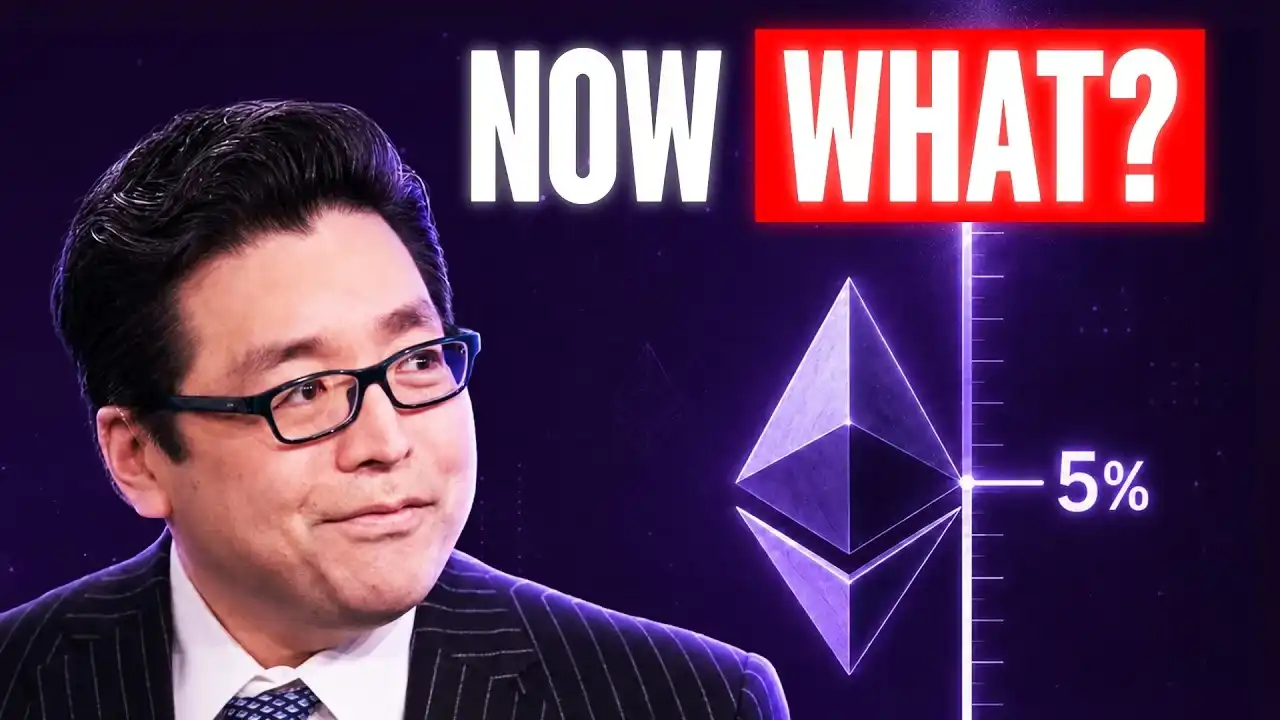
Podcast Notes | Conversation with Tom Lee: Bitmine Acquiring Nearly 5% of Total ETH Supply Is Not the End Goal, ETH Price Target Set at $10,000

In a podcast interview, Tom Lee, Chairman of BitMine Immersion Technologies, discusses the company's strategy to accumulate nearly 5% of the total Ethereum supply within 14 months, using equity financing and avoiding debt. BitMine has consistently purchased ETH for over 60 consecutive weeks, with recent weeks combining buybacks with purchases. The company's substantial ETH holdings generate approximately $300 million in annual staking rewards, covering operational costs like the dividends for its 9.5% perpetual preferred stock (BMNP). Lee positions ETH as a store-of-value asset, likening it to stocks or land, rather than a pure cash-flow instrument. Looking ahead, Lee suggests BitMine may continue buying beyond the 5% target if institutional adoption grows. He outlines a bullish price target for ETH: surpassing $5,000 in a new crypto bull cycle and potentially exceeding $10,000 within 1-2 years, driven by Wall Street tokenization and AI-related demand. The discussion also covers BitMine's evolution into an ecosystem player, funding Ethereum Foundation spin-offs and developing its Maven staking platform. Lee acknowledges his significant financial interests are tied to ETH's price and BitMine's performance. The interview provides a framework for evaluating ETH as a long-term asset, emphasizing staking yield sustainability and future institutional demand, while noting the uncertainties surrounding macro cycles and real-world adoption.

marsbitHá 21m

Podcast Notes | Conversation with Tom Lee: Bitmine Acquiring Nearly 5% of Total ETH Supply Is Not the End Goal, ETH Price Target Set at $10,000

marsbitHá 21m

Pricing Risk Assets in 8 Hours: Tonight's PCE to Set the Discount Rate, Nvidia to Test Earnings Tomorrow Morning

"Pricing Risk Assets in 8 Hours: PCE to Set the Discount Rate Tonight, NVIDIA to Test Profits Tomorrow Morning" Risk asset prices hinge on two variables: the numerator (earnings expectations) and the denominator (the discount rate). Both will be recalibrated within eight hours. First, at 20:30 Beijing time, the US Bureau of Economic Analysis releases July PCE inflation data and the second estimate of Q2 GDP. Consensus expects mild core PCE growth, but a surge in key PPI components poses an upside risk. A hotter-than-expected print could push Treasury yields and the dollar higher, threatening the recent rally in Bitcoin (BTC) above $80K, which was fueled by falling yields. A benign reading would support risk assets. Market sentiment is already "greedy" (Fear & Greed Index at 74), making it vulnerable to disappointment. Second, around 04:20, NVIDIA reports its Q2 FY27 earnings. While consensus revenue of ~$91.85B slightly exceeds company guidance, the market has priced in a beat. The key will be the magnitude of the beat and, crucially, the Q3 guidance. As a bellwether for tech and AI narratives, NVIDIA's results will significantly impact overall risk appetite and AI-related crypto tokens. The combination creates four scenarios: 1) Benign PCE & strong NVIDIA guidance confirms the bullish trend. 2) Hot PCE & strong NVIDIA leads to conflicted signals and likely volatility for BTC. 3) Benign PCE & weak NVIDIA guidance pressures tech but offers some macro support for BTC. 4) Hot PCE & weak NVIDIA guidance presents a "double whammy," risking a sharp pullback in BTC toward the $75K-$76K support zone. The outcomes will set the tone for markets ahead of the upcoming Jackson Hole symposium.

marsbitHá 54m

Pricing Risk Assets in 8 Hours: Tonight's PCE to Set the Discount Rate, Nvidia to Test Earnings Tomorrow Morning

marsbitHá 54m

Trading

Spot

Artigos em Destaque

Como comprar T

Bem-vindo à HTX.com!Tornámos a compra de Threshold Network Token (T) simples e conveniente.Segue o nosso guia passo a passo para iniciar a tua jornada no mundo das criptos.Passo 1: cria a tua conta HTXUtiliza o teu e-mail ou número de telefone para te inscreveres numa conta gratuita na HTX.Desfruta de um processo de inscrição sem complicações e desbloqueia todas as funcionalidades.Obter a minha contaPasso 2: vai para Comprar Cripto e escolhe o teu método de pagamentoCartão de crédito/débito: usa o teu visa ou mastercard para comprar Threshold Network Token (T) instantaneamente.Saldo: usa os fundos da tua conta HTX para transacionar sem problemas.Terceiros: adicionamos métodos de pagamento populares, como Google Pay e Apple Pay, para aumentar a conveniência.P2P: transaciona diretamente com outros utilizadores na HTX.Mercado de balcão (OTC): oferecemos serviços personalizados e taxas de câmbio competitivas para os traders.Passo 3: armazena teu Threshold Network Token (T)Depois de comprar o teu Threshold Network Token (T), armazena-o na tua conta HTX.Alternativamente, podes enviá-lo para outro lugar através de transferência blockchain ou usá-lo para transacionar outras criptomoedas.Passo 4: transaciona Threshold Network Token (T)Transaciona facilmente Threshold Network Token (T) no mercado à vista da HTX.Acede simplesmente à tua conta, seleciona o teu par de trading, executa as tuas transações e monitoriza em tempo real.Oferecemos uma experiência de fácil utilização tanto para principiantes como para traders experientes.

715 Visualizações TotaisPublicado em {updateTime}Atualizado em 2026.06.02

Como comprar T

Discussões

Bem-vindo à Comunidade HTX. Aqui, pode manter-se informado sobre os mais recentes desenvolvimentos da plataforma e obter acesso a análises profissionais de mercado. As opiniões dos utilizadores sobre o preço de T (T) são apresentadas abaixo.

活动图片