Wall Street Shorts ETH: Vitalik Knew and Front-Ran, Tom Lee Still Deluded

Odaily星球日报Publicado em 2026-03-06Última atualização em 2026-03-06

Resumo

Wall Street short-selling firm Culper Research has initiated a short position on ETH and related securities, including Bitmine (BMNR). The firm argues that Ethereum’s token economic model was fundamentally broken following the Fusaka upgrade in December 2025, which increased the gas limit from 45M to 60M. Contrary to initial expectations of a 10–30% drop, gas fees fell by approximately 90%, leading to a surge in low-value on-chain activity such as address poisoning and dust attacks. These activities now account for a significant portion of transaction growth and new wallet creation, distorting metrics often cited as signs of organic adoption. Culper alleges that Vitalik Buterin and core developers severely miscalculated Layer 1 demand elasticity using outdated models, overestimating real demand by 3–9 times. The report claims Vitalik is aware of these issues and has been selling ETH, exceeding previously announced sales targets. Meanwhile, Tom Lee of Bitmine continues to defend ETH based on misleading on-chain activity growth. Additionally, validators are earning 40–50% less in tips per unit of gas, reducing staking yields and potentially weakening institutional interest. Ethereum is also losing developer and market share to Solana, which has attracted major institutional DeFi adoption. Culper concludes that Ethereum’s tokenomics are irreparably damaged and expects further price declines.

This article is from:Culper Research

Compiled by | Odaily Planet Daily (@OdailyChina); Translator | Azuma (@azuma_eth)

Editor's Note: On March 6, Wall Street short-selling firm Culper Research suddenly published an article announcing it is shorting ETH and related securities like BMNR. Culper Research's logic is that Vitalik and other developers miscalculated Ethereum's demand elasticity before the Fusaka upgrade, leading to the upgrade damaging ETH's token economic model. Culper Research also mentioned that Vitalik is well aware of this and is actively front-running with practical actions, while the deluded Tom Lee is heading towards a dead end.

In response to the firm's massive shorting, Vitalik himself and Tom Lee have not yet responded, but Vitalik's father, Dmitry Buterin (dima.eth), responded by saying: "When you see the phrase 'Vitalik knows this and is selling,' you don't need to read further. They are clowns craving attention, not researchers."

Below is the original content from Culper Research, compiled by Odaily Planet Daily. Compiling this article does not mean we agree with Culper Research's views, but is only to present the perspective and market煽动 of some Wall Street institutions regarding ETH.

Latest disclosure: We are shorting ETH and ETH-related stocks, including Bitmine (BMNR).

We believe that after the Fusaka upgrade in December 2025, ETH's token economic model has been broken. Vitalik knows this and is selling; while ETH's staunchest bull, Tom Lee, continues to add ineffective investments. ETH will continue to fall.

Tom Lee's Bitmine has consistently defended ETH, claiming that "ETH is not in a death spiral due to increasing utility." He cited the surge in active addresses and transaction numbers on Ethereum after the Fusaka upgrade as evidence of so-called "improved fundamentals" and institutional adoption, but he is completely wrong.
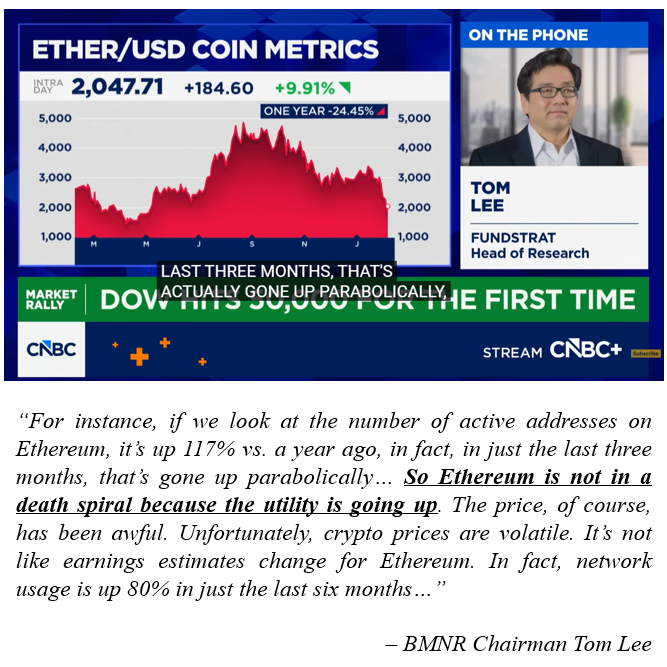
By Tom Lee's own logic, if on-chain activity on Ethereum does not reflect real usage growth and fundamental improvement, then ETH is indeed in a death spiral.

And our research shows that this is exactly what is happening.

We conducted a comprehensive analysis of on-chain data from January 2025 to February 2026, and the results show that what Lee calls "institutional adoption driving Ethereum's activity growth" can actually be explained by a large number of low-value address poisoning and wallet dusting behaviors. These behaviors were triggered by the excess block space after the Fusaka upgrade.
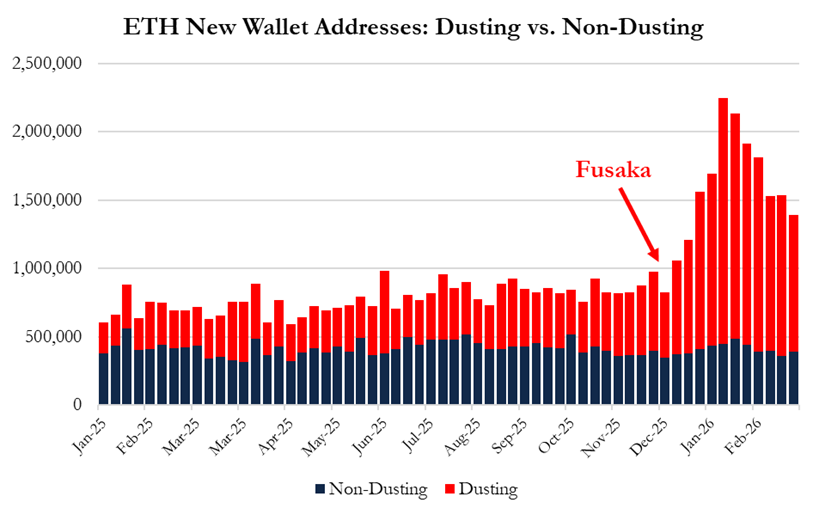
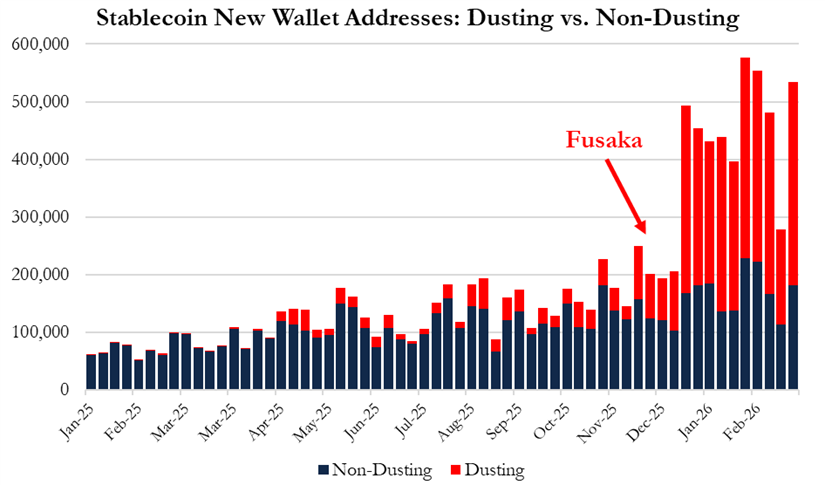
After the Fusaka upgrade:

  • 95% of new wallet growth comes from newly created dust addresses;
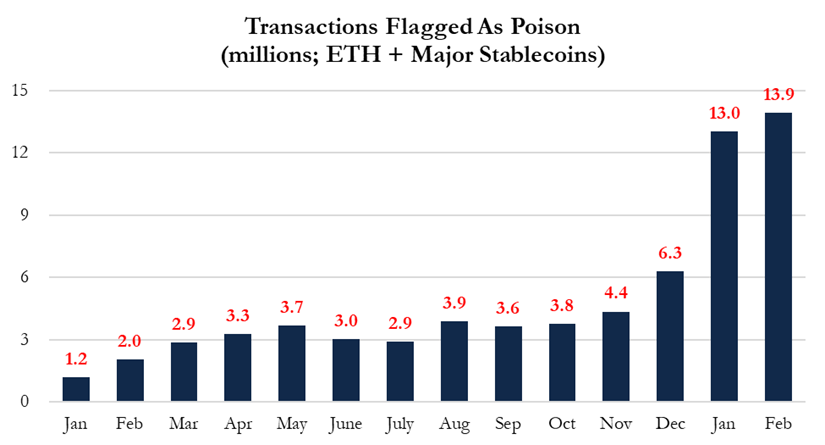
  • Address poisoning attacks have increased by more than 3 times;
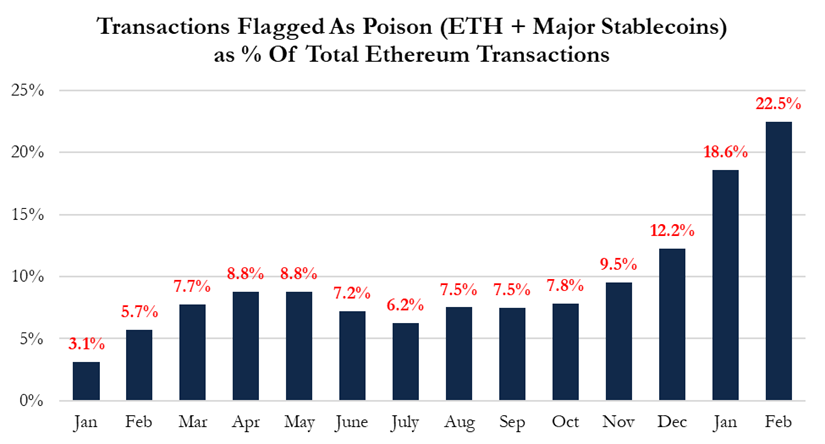
  • Poisoning behavior explains over 50% of Ethereum's transaction growth;
  • Poisoning transactions now account for 22.5% of all Ethereum transactions;
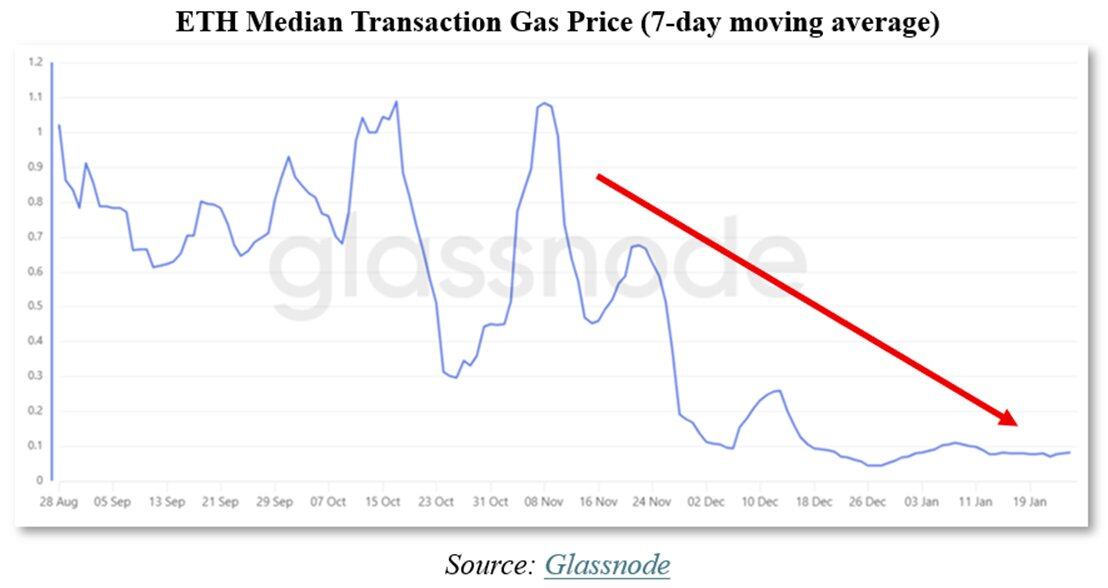
The Fusaka upgrade increased the gas limit from 45M to 60M, aiming to expand Ethereum Layer1 capacity. Vitalik and the protocol team previously predicted gas fees would drop by 10%–30%, but the reality is that gas fees dropped by about 90%.

Vitalik and the validators made a serious miscalculation in Layer1 demand elasticity. They used outdated mathematical models (based on assumptions from before EIP-1559 and before Layer2 emerged), thereby overestimating Layer1 demand by 3 to 9 times. This is also why we believe Vitalik is selling large amounts of ETH. On January 30, Vitalik announced in advance that he would sell 16,384 ETH to fund the Ethereum Foundation's "austerity period," but since then, he has sold over 19,300 ETH and is still selling.

Vitalik understands something Tom Lee does not — ETH's token economic model has been broken.

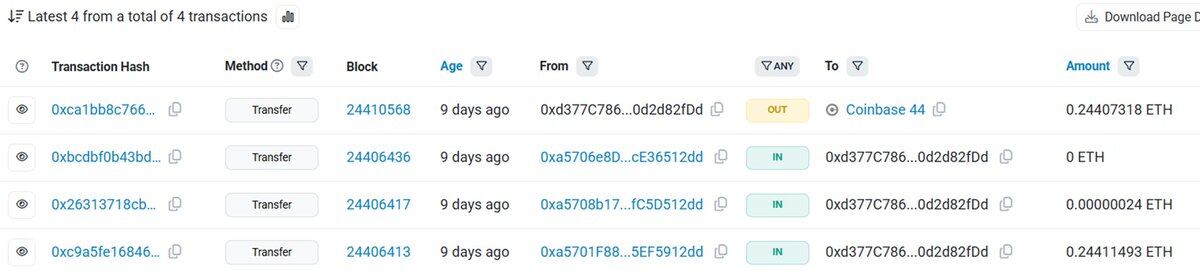
We personally documented Ethereum network address poisoning. We created two new addresses and transferred between them. Within 5 minutes, we were subjected to an address poisoning attack. We encourage readers to verify this phenomenon themselves. Currently, the rate of losses due to poisoning attacks is 8 times higher than before the Fusaka upgrade.
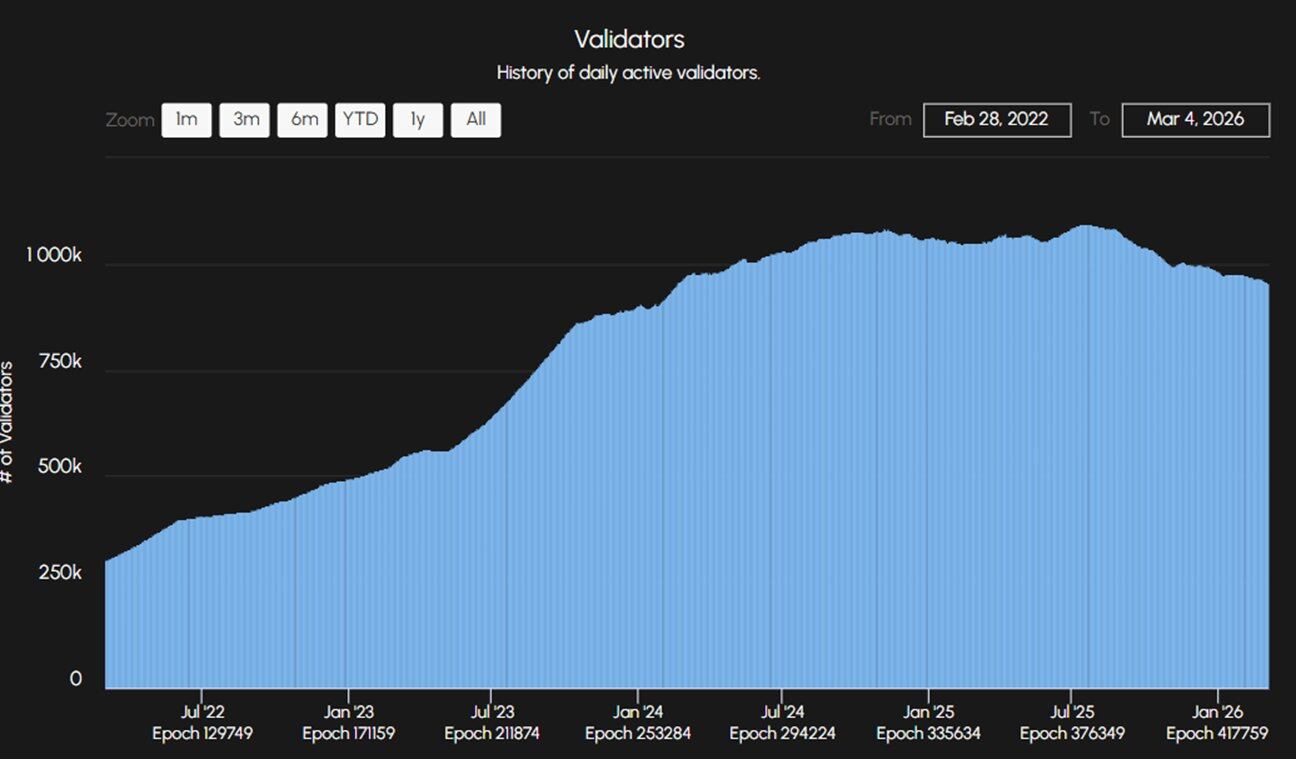
Furthermore, the increase in the gas limit has hit Ethereum's validators群体, as validators now see a 40%–50% decline in tip income per unit of gas. Falling yields will weaken staking demand and high-value transaction activity, further undermining institutional adoption. This flywheel has now started to reverse.
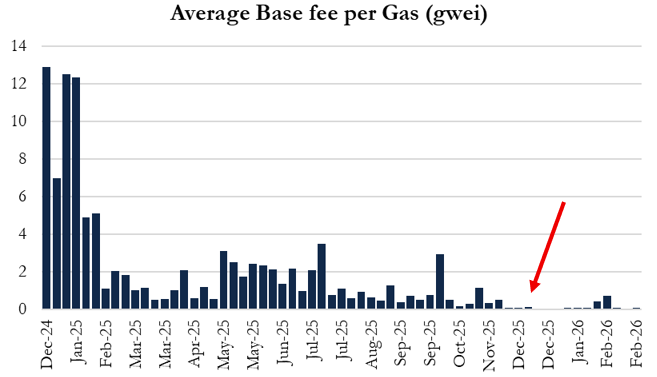
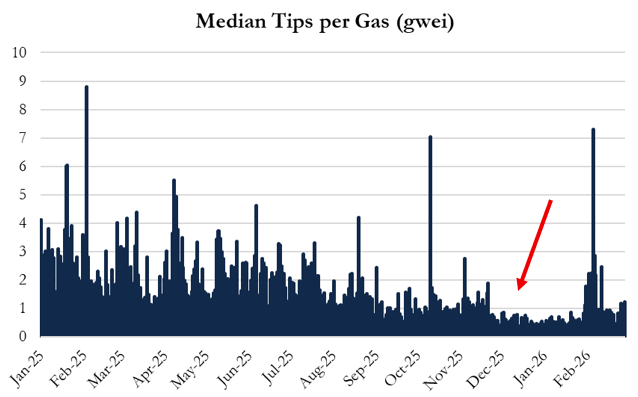
Meanwhile, Ethereum continues to lose market share to Solana and its own Layer2 networks.

  • Solana developer count grew 29% in 2025;
  • Ethereum developer growth was only 6%;
  • Talent is leaving the Ethereum ecosystem;
  • Institutions like Visa and Citigroup have chosen Solana for DeFi applications;
  • Solana DEX trading volume is already more than double that of Ethereum.

In the dot-com bubble era, Netscape and Nokia dominated the market for over 10 years, but the real winners were Google and Apple. We believe Ethereum's situation is similar — we think Ethereum's token economic model has collapsed, Tom Lee is trapped in his own position, and ETH's price will continue to fall.


Perguntas relacionadas

QWhat is the main argument presented by Culper Research for shorting ETH?

ACulper Research argues that the Fusaka upgrade in December 2025 broke Ethereum's token economic model by significantly increasing block space, which caused gas fees to drop by ~90% instead of the projected 10-30%. This led to a surge in low-value spam activities (address poisoning and dusting attacks) that artificially inflate on-chain metrics, while validators' earnings and institutional adoption declined. They claim Vitalik Buterin is aware of this and selling ETH, while Tom Lee remains incorrectly bullish.

QWhat specific on-chain data does Culper Research cite to support their claim that Ethereum's activity growth is not organic?

ACulper Research cites data showing that 95% of new wallet growth post-Fusaka comes from dust addresses, address poisoning attacks increased over 3x, poisoning explains over 50% of transaction growth, and poisoning transactions now constitute 22.5% of all Ethereum transactions. They also note that gas fees dropped ~90% due to miscalculated demand elasticity.

QWhy does Culper Research claim Vitalik Buterin is selling ETH, and what evidence do they provide?

ACulper Research claims Vitalik is selling ETH because he knows the tokenomics are broken post-Fusaka. They note he announced selling 16,384 ETH on January 30 to fund Ethereum Foundation's 'austerity period' but has since sold over 19,300 ETH and continues selling, indicating insider awareness of the model's failure.

QHow does Culper Research argue that the Fusaka upgrade negatively impacted Ethereum validators?

AThey state that the gas limit increase from 45M to 60M reduced validators' tip earnings per unit of gas by 40-50%, lowering yields and weakening staking demand and high-value transaction activity, which further undermines institutional adoption.

QWhat comparisons does Culper Research make between Ethereum and Solana, and what trends do they highlight?

ACulper Research highlights Solana's growth compared to Ethereum: Solana developer count increased 29% in 2025 vs. Ethereum's 6%, institutions like Visa and Citigroup chose Solana for DeFi, Solana DEX volume is over 2x Ethereum's, and talent is leaving Ethereum. They analogize Ethereum to past giants like Netscape and Nokia that were disrupted.

Leituras Relacionadas

380,000 Apps Exposed, 2,000+ Apps Leaked Secrets: AI Programming Turns 'Intranet' into Public Internet

Israeli cybersecurity firm RedAccess uncovered a severe data exposure trend linked to "vibe coding" or AI-powered software development tools. Their research found approximately 38,000 publicly accessible web applications built with platforms like Lovable, Base44, Netlify, and Replit. Of these, an estimated 2,000 apps exposed sensitive corporate and personal data, including medical records, financial information, internal strategic documents, and customer chat logs. In some cases, access even granted administrative privileges. The core issue stems from default privacy settings that make applications public by default, combined with a lack of built-in security controls (like authentication) in the AI-generated code. This allows employees without security expertise—"citizen developers"—to easily create and deploy applications that bypass standard corporate security reviews. The exposed apps, often indexed by search engines, are trivially discoverable. While some platform providers (Replit, Lovable, Wix/Base44) argue that security configuration is the user's responsibility and question the validity of some findings, security researchers confirm the widespread reality of such exposures. This pattern, also noted in prior studies, highlights a critical security gap as AI democratizes app creation, potentially leading to massive, unintentional data leaks.

marsbitHá 30m

380,000 Apps Exposed, 2,000+ Apps Leaked Secrets: AI Programming Turns 'Intranet' into Public Internet

marsbitHá 30m

Attracting Global Capital, Asia's New 'Super Cycle' Is Unfolding

Investors are turning to Asia as the next frontier for global equity growth, with a new "super cycle" unfolding across the region. Driven by the AI revolution, Asian markets, particularly South Korea, have seen significant rallies. According to Morgan Stanley analysis, the underlying drivers of Asia's industrial cycle are shifting from traditional sectors like real estate and manufacturing to massive investments in AI infrastructure, energy security and transition, and supply chain resilience. Fixed asset investment in Asia is projected to grow from around $11 trillion in 2025 to $16 trillion by 2030, with a 7% annual growth rate from 2026-2030. The AI wave is a primary catalyst, driving immense capital expenditure for chips, servers, data centers, and power systems. Asia is central to this hardware supply chain. In China, AI investment is focused on building a full-system domestic capability, with the local AI chip market potentially reaching $86 billion by 2030. Beyond AI, China's export story is expanding from EVs and batteries to robotics. The country already captures about half of new global industrial robot demand and over 90% of humanoid robot shipments. This growth phase mirrors the early stages of China's EV export boom. Simultaneously, energy security investments, spurred by AI's massive power needs, are rising, with China benefiting from its leadership in solar, batteries, and EVs. Regional defense spending is also increasing structurally, supporting demand for advanced manufacturing. The main beneficiaries are China, South Korea, and Japan, positioned in core supply chain areas. However, risks remain, including potential overcapacity, profit margin pressures from competition, persistent technological restrictions, geopolitical friction, and workforce displacement due to AI-driven automation. Market volatility is also expected to increase as investor expectations diverge on the realization of these capital investment and export themes.

marsbitHá 31m

Attracting Global Capital, Asia's New 'Super Cycle' Is Unfolding

marsbitHá 31m

Funding Weekly Report | 14 Public Funding Events, Kalshi Completes $10B New Funding Round at $220B Valuation Led by Coatue Management

Weekly Funding Roundup: 14 Deals and $10.49B+ in Total Funding, Led by Kalshi's $1B Round Last week (5.4-5.10) saw 14 notable funding events in the global blockchain ecosystem, raising over $10.49 billion in total. Key highlights include Kalshi, a prediction market platform, securing a $1 billion round led by Coatue Management, reaching a $22 billion valuation. The platform now boasts ~2 million MAUs and $178B in annualized trading volume. In DeFi, regulated on-chain reinsurer OnRe raised $5 million in Series A funding, and Bitcoin-backed credit protocol Saturn Credit completed a $2 million seed round. For Infrastructure & Tools, OpenTrade raised $17 million to expand its stablecoin yield infrastructure, and RWA platform Balcony secured $12.7 million to deploy its property settlement service in the US. Centralized Finance saw one deal: AI-driven trading platform Stockcoin.ai completed a seed round led by Amber Group. In the prediction market sector alongside Kalshi, AI-powered platform Elastics raised $2 million. Other notable deals include SC Ventures' strategic investment in crypto market maker GSR and Centrifuge securing a "seven-figure" investment from Coinbase to become a core RWA partner for Base. On the investor side, Haun Ventures raised a new $1 billion fund targeting crypto and AI, and Multi Investment raised ~$616 million to focus on blockchain and Web3 investments.

marsbitHá 1h

Funding Weekly Report | 14 Public Funding Events, Kalshi Completes $10B New Funding Round at $220B Valuation Led by Coatue Management

marsbitHá 1h

Trading

Spot
Futuros
活动图片