Vibe Coding, Possibly a New Narrative for Web3

深潮Publicado em 2025-12-19Última atualização em 2025-12-19

Resumo

"Vibe Coding, the Next Web3 Narrative" explores how AI-assisted development, or "Vibe Coding," is poised to transform Web3 application landscape, similar to how Pump.fun revolutionized token creation. Key signals from Web2 indicate rapid growth: programming-related LLM queries grew from 11% to 50% of all usage in under a year, and leading AI development platforms saw valuations surge 72x. Studies show 84% of developers use or plan to use AI tools, with 41% of code now AI-generated. While Web3 Vibe Coding platforms are still emerging, early examples include: - @dreamspaceHQ for no-code website and dashboard creation with multi-chain data aggregation. - @Minidevx for building mini-apps on Farcaster. - @Poofnew, a chain-based Replit alternative for creating apps via prompts. - @RemixGG_ for creating and playing games on Base. The movement empowers non-developers (especially degens) to rapidly experiment with consumer apps, trading terminals, SocialFi, and more—accelerating innovation and narrative cycles. The article concludes that Vibe Coding could do for Web3 apps what Pump.fun did for tokens, marking 2026 as a pivotal year for adoption and signaling.

Author:miguelrare

Compiled by: Deep Tide TechFlow

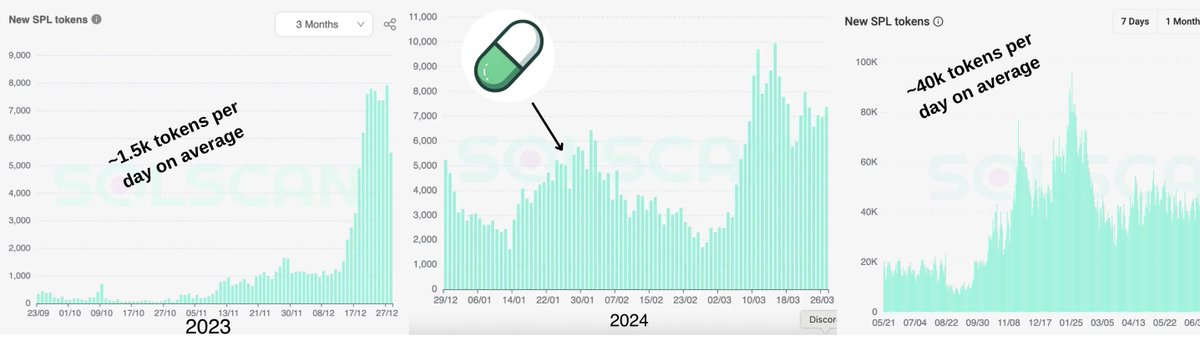
Pumpfun has brought hundreds of thousands of new tokens to the market,

and Vibecoding will bring the same transformation to Web3 applications.
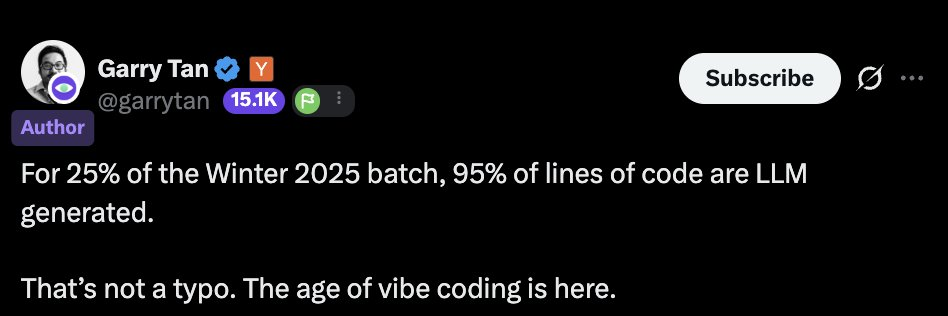
$GOAT is a pioneer in the field of AI agents.

It successfully combined two major hot narratives at the time: AI agents + Meme coins, instantly making "token value" clear to speculators (degens).

However, $GOAT did not appear out of thin air; its success relied on a series of important catalysts from Web2—the infrastructure provided by X and the growing momentum of OpenAI.

If you were active in the market at the time, you probably remember what happened next.

Shortly after $GOAT was launched, everyone started talking about Virtual Protocol. This was a project that existed before the narrative exploded, and its FDV (fully diluted valuation) had hovered between $20 million and $50 million for nearly a year.

Now, a very similar pattern is forming around Vibecoding. This term has only recently emerged. Some speculators are already doing Vibecoding for simple on-chain projects, but due to a lack of infrastructure, especially in the Web3 space, these applications have failed to gain enough attention.

Here is a detailed analysis:

  • The rise of Vibecoding in Web2

  • Its inevitable impact on Web3

  • The formation of early on-chain infrastructure

  • Bullish signals from Web2

Bullish Signals from Web2

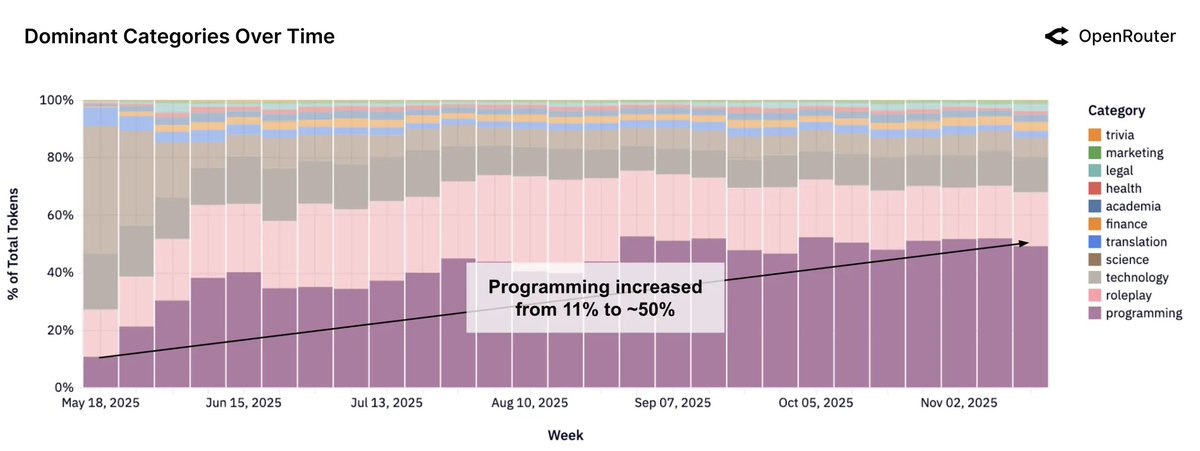
From May 2025 to December 2025, the proportion of all LLM queries related to programming grew from 11% to 50%.

In less than a year, programming queries accounted for half of all LLM usage categories.
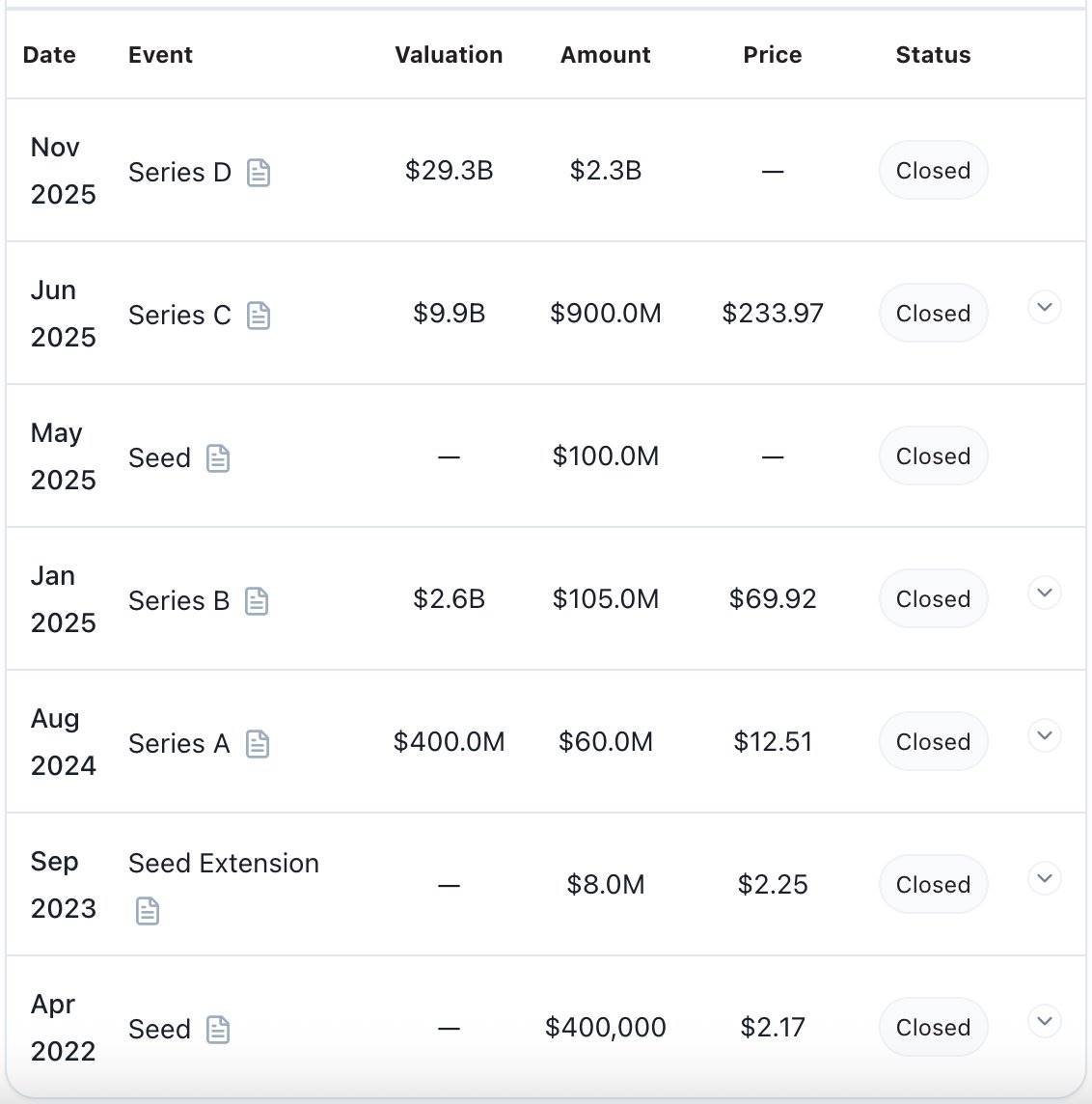
At the same time, the valuation of the most popular AI-driven development platform surged 72 times in one year, from $400 million to $29.3 billion.
If we zoom out and look at survey data and research reports, there are three important signals worth noting:

  • 84% of respondents are using or plan to use AI tools in their development process.

  • 41% of code is now generated by AI.

  • Developers report that AI tools improve productivity by an average of 10%-30%.

At the same time, it is important to clarify that Vibecoding is not the same as AI-assisted development.

For complex production-level systems, relying solely on Vibecoding may be risky. However, given the astonishing expansion speed of this field, more and more developers will begin to incorporate Vibecoding into their workflows.

(According to the 2025 Stack Overflow Developer Survey, only 17% of developers are currently using Vibecoding, which means there is still huge room for growth.)

The PumpFun Effect

A few years ago, issuing your own token was not easy. Teams tried various issuance mechanisms until PumpFun introduced an extremely simple model. PumpFun provided creators with a simplified way to issue tokens and also brought a new trading experience to speculators (degens). So, why can't we see a similar pattern replicated in Web3 applications?
Speculators (Degens) are always the first users and early adopters of emerging narratives.

Many of them know exactly what products the market currently needs, how to launch these products, and what Crypto Twitter (CT) truly cares about—because they have been observing new project launches for years.

Empowering degens to turn ideas into products without coding skills or high costs essentially provides the front line with fresh ideas to experiment with.

Therefore, we may see hundreds of creative experiments emerging across multiple tracks:

Consumer applications, trading terminals, SocialFi, prediction markets, GameFi Ponzi projects, and more.

This phenomenon, in turn, may accelerate the growth of specific market narratives.

Beyond the Front Line: AI Integration into Core Protocols

Beyond the abstract concept of "frontline narratives," there is another direction that excites me—AI directly integrated into large protocols.

The simplest example is trading terminals.

Delta-neutral strategies, points farming, arbitrage operations—all of these can be transformed into personalized bots or features by users entering simple prompts on the platform.

For example:

Monitor the funding rates of tokenized stocks and automatically open positions when significant spreads appear between two perpetual decentralized exchanges (perps DEXes).

In practice, this approach allows platforms to meet thousands of small user needs that are often relatively simple but overlooked by teams.

"We already have Cursor, Replit, Lovable—why do we need a Web3 fork?"
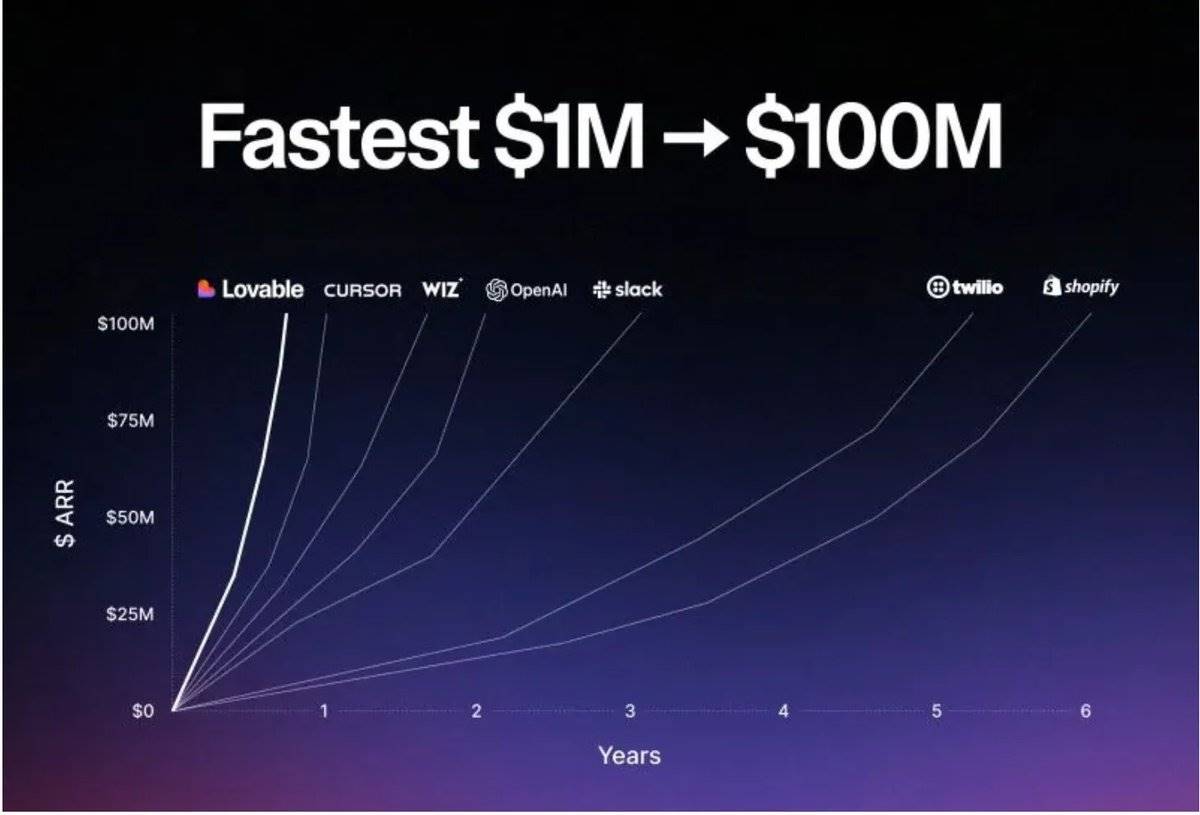
For a while, I asked myself the same question.

But after extensive research, the answer became very clear.

Even in the Web2 Vibecoding space, there is no absolute winner. Each platform has its unique features, including its own priorities, functions, and target user groups.

Some products excel at solving one or two specific problems,

while others try to do everything and end up achieving nothing.

Web3 Vibecoding platforms will not be hindered by competition with Lovable or Replit.

Their infrastructure is specifically built for on-chain creativity, not for Web2 applications.

Web3 Vibe Ecosystem
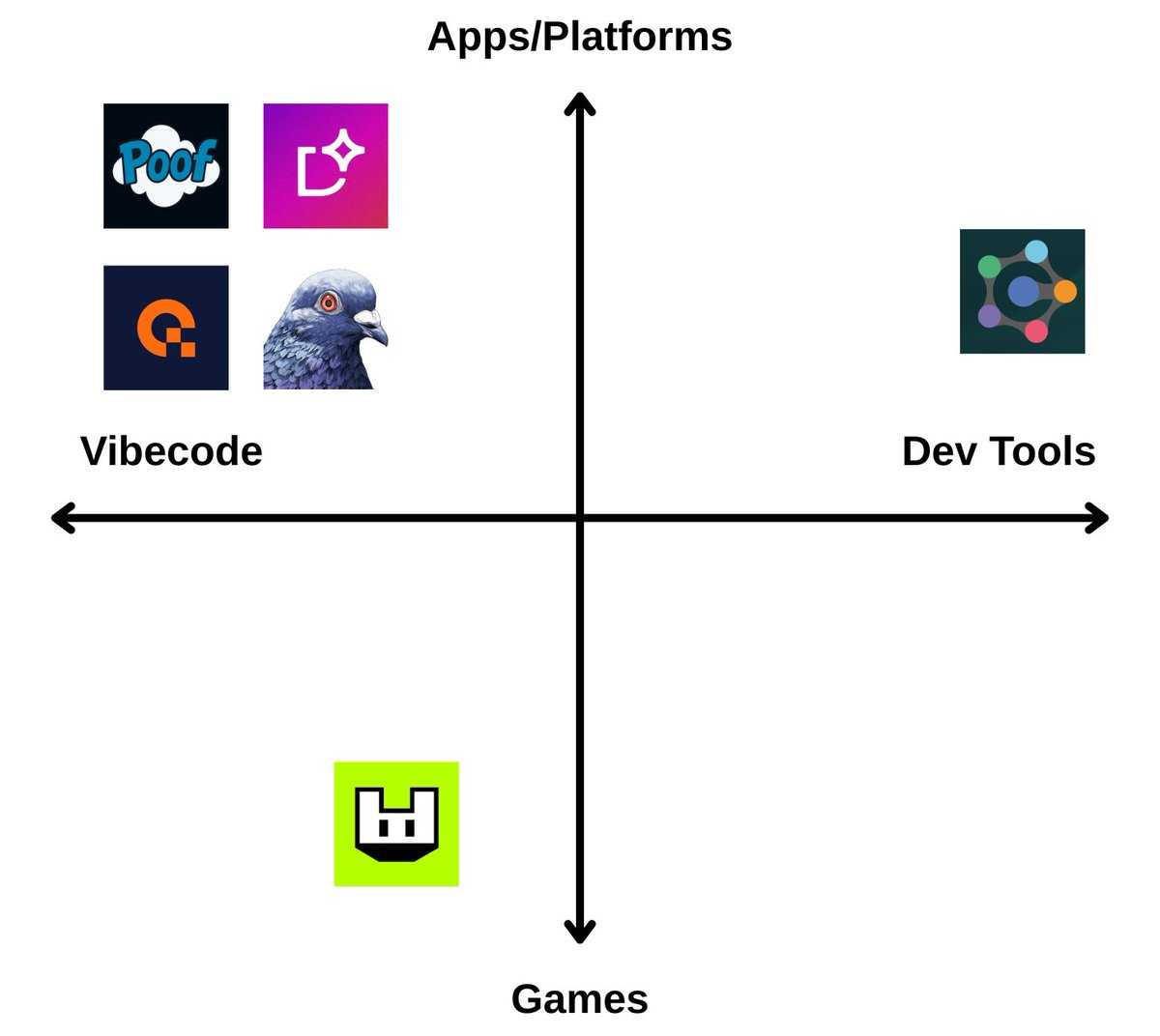
As of December 2025, there are still very few Web3 projects focused on Vibecoding or development tools, and cases of non-developers successfully launching meaningful Web3 products are even rarer.

Nevertheless, I believe it is still very important to sort out the current industry landscape.

Application/Platform Overview

@dreamspaceHQ—Without any coding knowledge, you can create websites, platforms, and dashboards.

The core advantage of Dreamspace is that, in addition to creating or connecting smart contracts through prompts, you can also aggregate data across multiple chains: BTC, ETH, zkSync, Sei, Base, and even Stellar, WTF?

@Minidevx—A Vibecoding platform based on Base, focused on building mini-apps on Farcaster.

Currently, the product is still in its early stages, with relatively few launched applications.

Minidev launched its token $MINI about a month ago—which may seem a bit rushed. Nevertheless, @0xjenil is still actively launching and improving the product, so I wouldn't be surprised to see high-quality applications emerging on Minidev soon.

@Poofnew —An on-chain version of Replit

Poof allows you to create on-chain websites and applications through prompts, which are passed to an agent and then assigned to three specialized agents: UI Agent, Smart Contract Agent, and Actions Agent.

In July of this year, the team showcased an application built entirely using Poof, where two users could duel for a "Waifu" and bet SOL in the process.

This kind of project demonstrates the flexibility of Poof as an experimental field.

Games

@RemixGG_ —A Vibecoding platform where you can create games on Base through prompts or play hundreds of games created by other users.

Some of these games are really quite good.

This application is extremely simple: download it to your phone, no wallet required, swipe through the content, try out games, or create your own.

In my opinion, this is exactly the kind of product that can attract Web2 users—they won't even realize they are using Web3 infrastructure.

Development Tools

@CodigoPlatform—Codigo is an AI-driven development platform built specifically for Solana.

It combines a cloud IDE, specially trained AI models, and complete build and deployment tools.

However, unlike Poof, Codigo is difficult to classify as a Vibecoding platform—you still need some programming skills.

Trading Bots

@pigeon_trade —A trading bot with built-in AI.

In addition to spot, perpetual, and prediction market trading, you can chat with Pigeon and Vibecode custom functions, such as:

  • Monitor funding rates on specific DEXes, set alerts, or automatically open positions

  • Track selected wallets and copy trades

  • Look for arbitrage opportunities on Polymarket and more.

Final Thoughts

Currently, there are still very few high-quality Web3 Vibecoding platforms.

Most existing projects are either still in development or have not found product-market fit (PMF), which is completely normal.

As mentioned earlier, Virtual Protocol also took a long time to form a complete narrative.

Often, the product is not bad; it is just launched too early.

I firmly believe that 2026 will be the year we start to see real signals:

Non-developers will independently build profitable Web2 companies based on creativity, large platforms will integrate Vibecoding tools, and the number of users and annual recurring revenue (ARR) of Cursor, Replit, and Lovable will continue to grow exponentially.

As always, degens will be the first users.

In a few months or a year, we will look back and compare the starting point of the Vibecoding narrative to the rise of PumpFun.

The only difference?

Pumpfun brought us hundreds of thousands of new tokens -> Vibecoding will bring the same transformation to Web3 applications.

Criptomoedas em alta

Perguntas relacionadas

QWhat is the core argument made about Vibecoding in relation to Web3?

AThe article argues that Vibecoding will bring a transformative change to Web3 applications, similar to how Pump.fun revolutionized token creation by enabling the launch of hundreds of thousands of new tokens. It suggests that Vibecoding will empower non-developers to easily build and experiment with on-chain applications, accelerating innovation and adoption in the Web3 space.

QAccording to the article, what are some key bullish signals from Web2 that support the rise of Vibecoding?

AKey bullish signals from Web2 include: programming-related LLM queries growing from 11% to 50% of all queries between May and December 2025; the valuation of a popular AI-driven development platform surging 72x from $400M to $29.3B in a year; 84% of surveyed developers using or planning to use AI tools; 41% of code now being AI-generated; and AI tools boosting developer productivity by 10-30% on average.

QHow does the article compare the potential impact of Vibecoding to the 'Pump.fun effect'?

AThe article compares Vibecoding to the 'Pump.fun effect' by stating that just as Pump.fun simplified token creation and launched a massive wave of new tokens, Vibecoding platforms will democratize the creation of Web3 applications. It will allow degens and non-coders to easily turn ideas into on-chain products, leading to hundreds of creative experiments across various sectors like consumer apps, trading terminals, SocialFi, and GameFi.
QName three Web3 projects mentioned in the article that are building Vibecoding infrastructure and briefly describe their focus.

A1. @dreamspaceHQ: A platform for creating websites, platforms, and dashboards with no coding, with a core strength in aggregating data across multiple blockchains. 2. @Poofnew: An on-chain version of Replit that uses AI agents to build on-chain websites and applications from prompts. 3. @RemixGG_: A Vibecoding platform focused on creating and playing games on Base, designed to be simple and accessible to attract Web2 users.

QWhat is the author's outlook for the Vibecoding narrative in 2026?

AThe author believes that 2026 will be the year we start to see real signals of Vibecoding's impact: non-developers independently building profitable Web2 companies, large platforms integrating Vibecoding tools, and continued exponential growth in user numbers and Annual Recurring Revenue (ARR) for platforms like Cursor, Replit, and Lovable. Degens will be the first users, and the narrative's rise will be compared to that of Pump.fun.

Leituras Relacionadas

My Coding Betting Dashboard is Profiting, but Polymarket is Truly Not a Good Place for 'Arbitrage'

The author built a custom monitoring dashboard for Polymarket, a prediction market platform, and tested it with $1,600, achieving over 30% returns. However, the core argument is that Polymarket is not a good venue for traditional arbitrage. The dashboard has two main sections: a "Portfolio Dashboard" for tracking active positions with key metrics like total capital, P&L, and a risk-control module using a tier system (T1, T2, T3), and an "Opportunity Watchlist" for monitoring markets. The article details a critical structural trap in binary markets: a bet with a high perceived probability of success still carries a 100% loss risk if wrong. The author's T1/T2/T3 system is designed to manage this by limiting position sizes based on conviction and time horizon, emphasizing that high confidence should not equal high concentration. A key insight is the danger of "pseudo-diversification"—betting on different markets driven by the same underlying variable. The author concludes that Polymarket offers few true low-risk, arbitrage opportunities. It is instead a high-risk environment where wins can create a false sense of mastery, leading to large losses. The platform is better viewed as a training ground for honing judgment through disciplined, framework-driven betting rather than a reliable income source. The tools help transform intuition into structured, rule-based decisions to mitigate the risk of catastrophic errors.

marsbitHá 2h

My Coding Betting Dashboard is Profiting, but Polymarket is Truly Not a Good Place for 'Arbitrage'

marsbitHá 2h

WeChat AI Card Hands-On Guide: Has the AI Shopping Era Arrived?

**"WeChat AI Card" Practical Test Guide: Has the Era of AI Shopping Arrived?** WeChat has officially launched the "AI Exclusive Card," a feature integrated into its Workbuddy AI assistant. This card is designed to handle payments for AI-initiated purchases. Our hands-on test reveals it's not yet a tool for fully autonomous AI shopping, but rather a controlled payment layer for AI agents. The AI Card functions as an isolated sub-wallet within WeChat Pay. Users must bind the card and transfer funds into it from their main wallet. Crucially, every transaction requires explicit user confirmation via smartphone scan; AI cannot spend autonomously. Currently accessible through the Workbuddy agent, the card targets specific digital consumption scenarios: purchasing paid content (reports, data), calling paid APIs/tools, and subscribing to services. Its design prioritizes security and control by separating funds and mandating approval for each payment. We tested a real-world scenario: ordering bubble tea via Workbuddy using a "Meituan Life Assistant" skill. The process encountered multiple hurdles: high "skill" usage costs (exceeding daily free credits), and most importantly, while a payment was successfully initiated, the AI purchased an incorrect product (a mismatched group-buy coupon instead of the desired drink). This highlights the current limitation: the **AI Card only solves the payment step**. The broader challenge lies in the **AI agent's execution chain**—accurately understanding intent, navigating third-party platforms, selecting the right product, and ensuring proper fulfillment. The payment succeeded, but the purchase failed to meet the user's need. In conclusion, the WeChat AI Exclusive Card is a cautious, early-step experiment in AI commerce. It provides a secure, user-controlled payment method for agent interactions but is not yet capable of reliable, end-to-end complex purchases. For now, it's best used for low-value, low-risk digital services with careful user verification at each step. The vision of AI handling complete shopping tasks remains a work in progress.

marsbitHá 4h

WeChat AI Card Hands-On Guide: Has the AI Shopping Era Arrived?

marsbitHá 4h

Deconstructing Notion's Growth: From a Note-taking Tool to 100 Million Users—How Notion Built a Triple Growth Flywheel Through Product, Templates, and Community

Notion's growth from a niche note-taking tool to a platform with 100 million users is powered by three interconnected flywheels: Product-Led Growth (PLG), a Template Economy, and Community-Driven Growth. First, Notion's PLG strategy relies on a highly flexible, "plastic" product that users can adapt to countless personal and team workflows. Its freemium model lowers the barrier to entry, while features like page sharing and collaboration drive organic, usage-based viral growth as users naturally invite others. Second, the Template Economy solves the "blank page" problem. Templates, created by both Notion and its community, transform abstract product capabilities into concrete, copyable solutions for specific scenarios (e.g., project management, content calendars). This dramatically lowers activation costs for new users and fuels SEO-driven discovery. Third, a vibrant Community acts as a distributed growth engine. Users and official Ambassadors create tutorials, share use cases, and host local events. This community not only educates users but also fosters a sense of identity around pursuing "better ways of working," strengthening loyalty and enabling global, low-cost expansion. Together, these flywheels create a self-reinforcing ecosystem: a great product attracts users who create templates and community content, which in turn attracts more users and deepens engagement. This system allowed Notion to scale from individuals to teams and enterprises through a bottom-up adoption path. Looking ahead, AI integration promises to accelerate these flywheels further by making templates smarter and the platform a potential AI-native work operating system. Ultimately, Notion's defensible advantage is not just its features, but this deeply entrenched network of user assets, creators, and community trust.

marsbitHá 4h

Deconstructing Notion's Growth: From a Note-taking Tool to 100 Million Users—How Notion Built a Triple Growth Flywheel Through Product, Templates, and Community

marsbitHá 4h

$10 Billion, Qualcomm to Acquire Chip Legend Jim Keller's Company

Global mobile chip giant Qualcomm is in advanced talks to acquire AI chip startup Tenstorrent in a deal valued between $8-10 billion, according to media reports. This potential acquisition would be one of the largest in the AI chip sector in recent years. Tenstorrent, led by legendary chip architect Jim Keller, has gained prominence for its RISC-V architecture and AI accelerator designs. The move highlights Qualcomm's strategic push to diversify beyond its core smartphone chip business. As the smartphone market matures, Qualcomm is aggressively targeting growth in automotive, data center, and cloud AI. Acquiring Tenstorrent would allow Qualcomm to rapidly enter the high-end AI computing market, bypassing lengthy in-house development cycles. Tenstorrent's cost-effective system architecture, which avoids expensive HBM memory and relies on standard Ethernet for clustering, offers a potential alternative to Nvidia's costly solutions. Furthermore, Tenstorrent's high-performance RISC-V CPU technology and its focus on the automotive and edge computing segments align with Qualcomm's strategic goals, including its "Snapdragon Digital Chassis" platform. Despite the strategic rationale, the high valuation has sparked some investor caution. The successful integration of Tenstorrent's open-source culture and independent team into Qualcomm's organization, along with the commercialization of its technology, remains a key challenge.

marsbitHá 5h

$10 Billion, Qualcomm to Acquire Chip Legend Jim Keller's Company

marsbitHá 5h

Trading

Spot
Futuros

Artigos em Destaque

Como comprar COPPER

Bem-vindo à HTX.com!Tornámos a compra de Copper (COPPER) simples e conveniente.Segue o nosso guia passo a passo para iniciar a tua jornada no mundo das criptos.Passo 1: cria a tua conta HTXUtiliza o teu e-mail ou número de telefone para te inscreveres numa conta gratuita na HTX.Desfruta de um processo de inscrição sem complicações e desbloqueia todas as funcionalidades.Obter a minha contaPasso 2: vai para Comprar Cripto e escolhe o teu método de pagamentoCartão de crédito/débito: usa o teu visa ou mastercard para comprar Copper (COPPER) instantaneamente.Saldo: usa os fundos da tua conta HTX para transacionar sem problemas.Terceiros: adicionamos métodos de pagamento populares, como Google Pay e Apple Pay, para aumentar a conveniência.P2P: transaciona diretamente com outros utilizadores na HTX.Mercado de balcão (OTC): oferecemos serviços personalizados e taxas de câmbio competitivas para os traders.Passo 3: armazena teu Copper (COPPER)Depois de comprar o teu Copper (COPPER), armazena-o na tua conta HTX.Alternativamente, podes enviá-lo para outro lugar através de transferência blockchain ou usá-lo para transacionar outras criptomoedas.Passo 4: transaciona Copper (COPPER)Transaciona facilmente Copper (COPPER) no mercado à vista da HTX.Acede simplesmente à tua conta, seleciona o teu par de trading, executa as tuas transações e monitoriza em tempo real.Oferecemos uma experiência de fácil utilização tanto para principiantes como para traders experientes.

1 Visualizações TotaisPublicado em {updateTime}Atualizado em 2026.06.18

Como comprar COPPER

O que é XAG

O Contrato Perpétuo XAGUSDT é o símbolo de negociação para prata cotada em dólares americanos, representando 1 onça troy de prata.

3 Visualizações TotaisPublicado em {updateTime}Atualizado em 2026.06.18

O que é XAG

Como comprar XAG

Bem-vindo à HTX.com!Tornámos a compra de Silver (XAG) simples e conveniente.Segue o nosso guia passo a passo para iniciar a tua jornada no mundo das criptos.Passo 1: cria a tua conta HTXUtiliza o teu e-mail ou número de telefone para te inscreveres numa conta gratuita na HTX.Desfruta de um processo de inscrição sem complicações e desbloqueia todas as funcionalidades.Obter a minha contaPasso 2: vai para Comprar Cripto e escolhe o teu método de pagamentoCartão de crédito/débito: usa o teu visa ou mastercard para comprar Silver (XAG) instantaneamente.Saldo: usa os fundos da tua conta HTX para transacionar sem problemas.Terceiros: adicionamos métodos de pagamento populares, como Google Pay e Apple Pay, para aumentar a conveniência.P2P: transaciona diretamente com outros utilizadores na HTX.Mercado de balcão (OTC): oferecemos serviços personalizados e taxas de câmbio competitivas para os traders.Passo 3: armazena teu Silver (XAG)Depois de comprar o teu Silver (XAG), armazena-o na tua conta HTX.Alternativamente, podes enviá-lo para outro lugar através de transferência blockchain ou usá-lo para transacionar outras criptomoedas.Passo 4: transaciona Silver (XAG)Transaciona facilmente Silver (XAG) no mercado à vista da HTX.Acede simplesmente à tua conta, seleciona o teu par de trading, executa as tuas transações e monitoriza em tempo real.Oferecemos uma experiência de fácil utilização tanto para principiantes como para traders experientes.

3 Visualizações TotaisPublicado em {updateTime}Atualizado em 2026.06.18

Como comprar XAG

Discussões

Bem-vindo à Comunidade HTX. Aqui, pode manter-se informado sobre os mais recentes desenvolvimentos da plataforma e obter acesso a análises profissionais de mercado. As opiniões dos utilizadores sobre o preço de A (A) são apresentadas abaixo.

活动图片