Valuation Trillion-Dollar SpaceX, Who Is the "Only Affordable Alternative"?

Odaily星球日报Publicado em 2026-05-08Última atualização em 2026-05-08

Resumo

"Rocket Lab (RKLB), dubbed the 'only alternative' to the trillion-dollar SpaceX, surged nearly 7% after hours following a strong Q1 2026 earnings report. Revenue hit $200.3M, up 63.5% YoY, with adjusted gross margins rising to 43%. The stock has gained 240% over the past year. Investors see Rocket Lab as replicating SpaceX's proven path: first mastering small rockets, then developing larger, reusable ones. Its 'Electron' rocket is the world's only frequently launched, reliable small launch vehicle, with successful ocean recoveries. The key to its future valuation is the 'Neutron' medium-lift rocket, currently in development and targeting a late-2026 debut. Designed to compete with SpaceX's Falcon 9, Neutron features innovations like the fixed 'HungryHippo' payload fairing for easier reuse. Beyond launch, Rocket Lab mirrors SpaceX's ecosystem approach, with its 'Space Systems' business (satellite components) contributing nearly 70% of revenue. While SpaceX's estimated $1.75-2T valuation dwarfs Rocket Lab's ~$45B, this gap represents the investment opportunity. If Neutron succeeds, Rocket Lab could transition from a small launch leader to the world's second provider of reusable medium-lift capability. The major risk is that Neutron has not yet flown. Any significant delays or failures in its development or first launch could severely pressure the company's current valuation, which heavily prices in Neutron's success."

Original | Odaily Planet Daily (@OdailyChina)

Author | Azuma (@azuma_eth)
After the U.S. stock market closed on May 8, commercial aerospace company Rocket Lab (RKLB) released a Q1 2026 earnings report that far exceeded market expectations.

The financial report data shows that Rocket Lab's Q1 revenue reached $200.3 million, a significant year-on-year increase of 63.5%, higher than the expected $189 million; the Q2 revenue guidance was raised to $225 to $240 million, far exceeding the $205 million given by analysts. Although an operating loss of $56 million indicates the company is still in a "cash-burning" mode, the adjusted gross margin has climbed to 43% (only 33.4% in the same period last year), meaning the company is significantly improving its unit economics while scaling up —— simply put, its "efficiency" in burning cash is becoming higher.

Boosted by the positive earnings report, RKLB's after-hours trading rose nearly 7%, with a year-to-date gain of 240%.

As SpaceX's historic IPO approaches, commercial spaceflight has become another hot sector in the U.S. stock market, with capital beginning to assign internet-level valuation imagination to the act of "building rockets." In this boom, besides SpaceX, whose valuation points to $1.75 to $2 trillion and whose pre-IPO shares carry a significant premium, Rocket Lab has also become a popular alternative option in the eyes of many investors due to its positioning as "the pure commercial spaceflight concept stock most resembling SpaceX."

The "Only Affordable Alternative" to SpaceX?

The reason Rocket Lab is seen as the current "only affordable alternative" to SpaceX is because Rocket Lab is perfectly replicating the successful path validated by SpaceX —— first using small rockets to establish a commercial closed loop and reusable technology, then using large rockets to optimize costs and capture core markets.

Electron: The Dominant Force in the Small Rocket Segment

In the business of building rockets, there are countless PowerPoint presentations, but companies that can reliably send rockets into space are few and far between. Currently, Rocket Lab's "Electron" rocket is the world's only small launch vehicle achieving high-frequency, reliable commercial operations, and it is also the second most frequently launched rocket in the United States, second only to SpaceX's "Falcon 9."

The "maturity" of the Electron is reflected not only in its dozens of launch records and extremely high success rate, but also in the implementation of its recovery technology. Rocket Lab has successfully recovered first-stage boosters from the ocean multiple times and has even reused engines in subsequent launches. This engineering mastery of "reusable" technology is precisely the trump card weapon that allows SpaceX to dominate the commercial space market.

Neutron: The Chaser of Falcon 9

If small rockets are Rocket Lab's entry ticket, then the medium-to-large rocket "Neutron" currently under development is the main engine for its drive towards a hundred-billion-dollar market cap.

Neutron is not simply a scaled-up version of Electron; it was designed from the outset with a strong "targeted" purpose —— to catch up with Falcon 9. The Falcon 9 remains the only commercially available reusable medium-to-large rocket on the market, giving SpaceX absolute monopoly power in this segment.
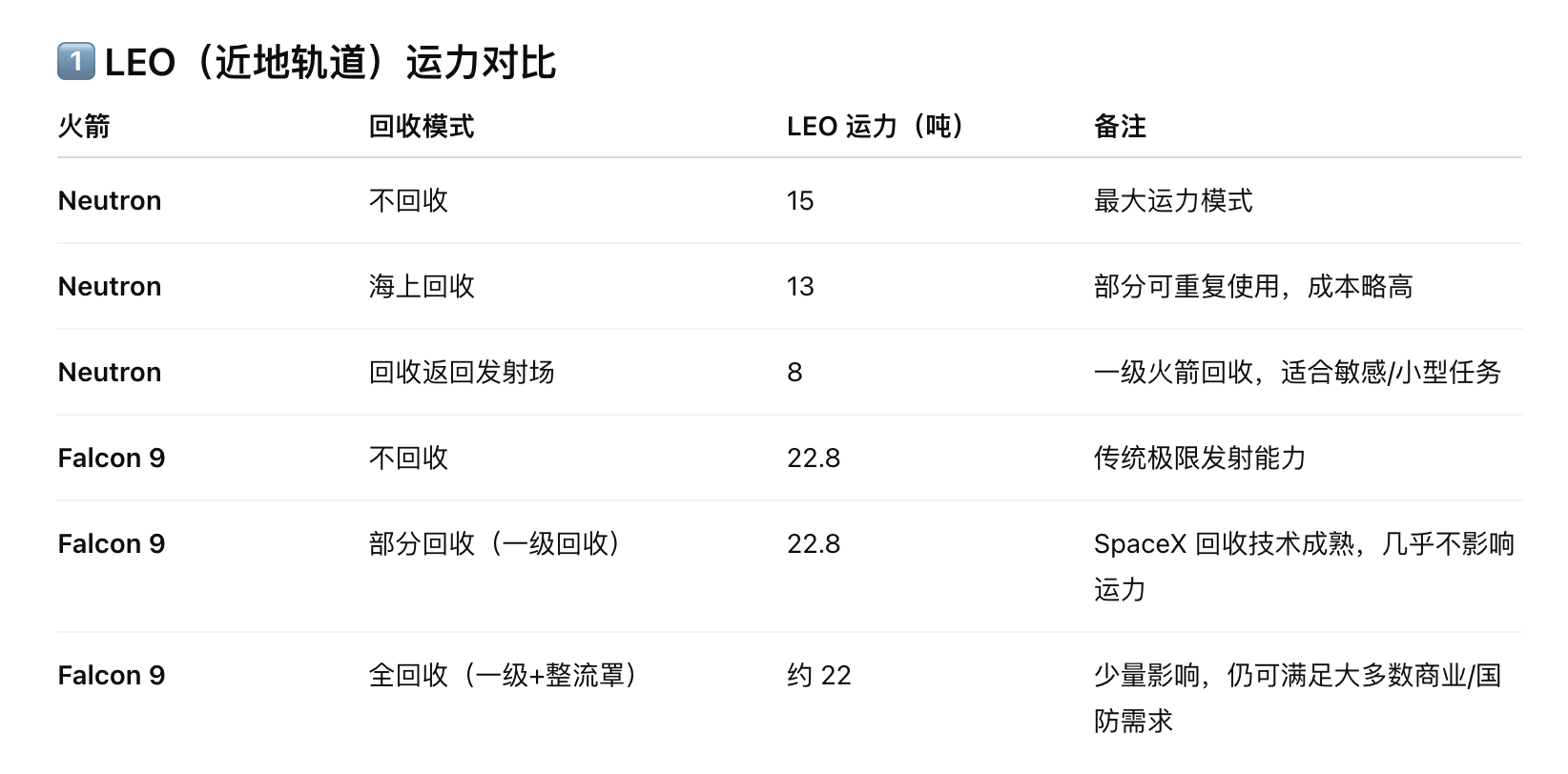
The emergence of Neutron holds its greatest significance as potentially becoming the world's only second option capable of competing with Falcon 9, although its designed payload capacity (approx. 8-15 tons) is still slightly inferior to Falcon 9's. However, in terms of engineering logic, it attempts to achieve a curve-overtaking advantage over its predecessor through "latecomer advantages" —— with unique designs like the HungryHippo fairing and Archimedes engines, Neutron aims to surpass Falcon 9 in efficiency regarding fairing recovery and engine reusability.
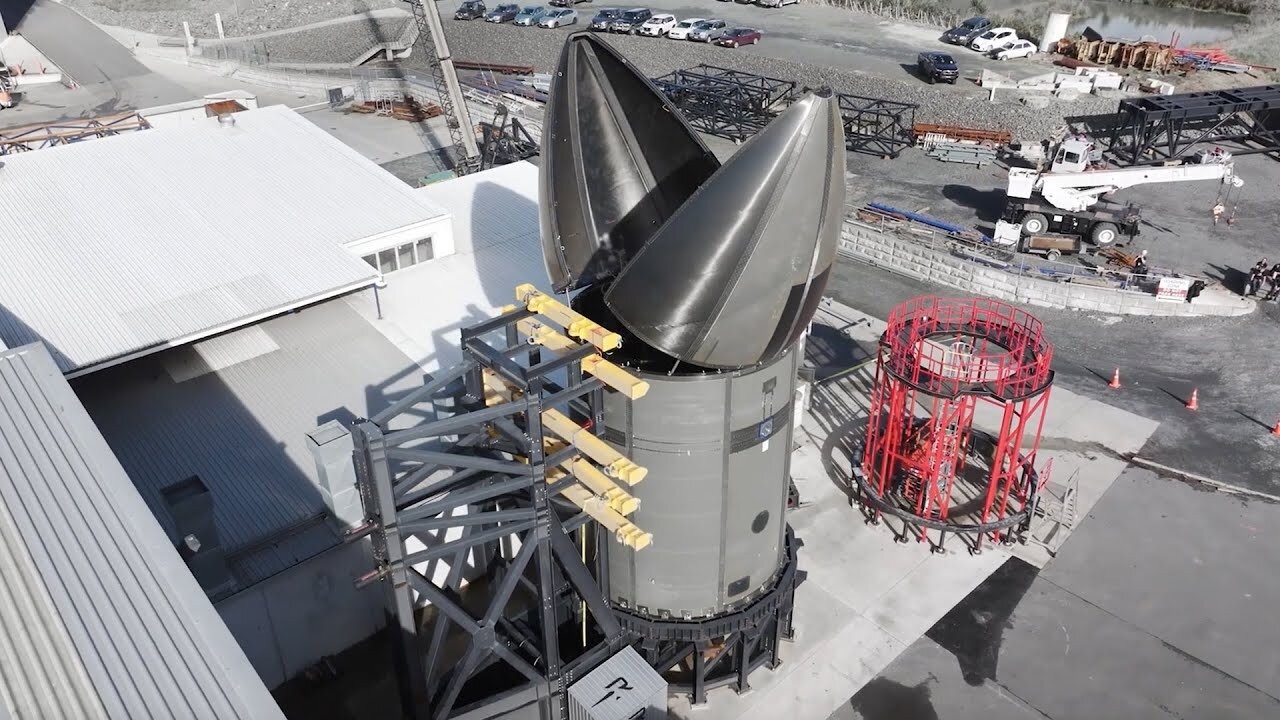
  • Odaily Note: HungryHippo is the most notable design highlight of Neutron. Unlike SpaceX, which needs to fish out fairing fragments worth millions of dollars from the sea after each launch, Neutron's fairing features a fixed, non-separating design connected to the first stage. When releasing the second stage, it opens like a "hippopotamus opening its mouth," closes again after deployment, and descends for recovery along with the first stage. This means the fairing does not need to undergo difficult sea recovery and complex post-landing reassembly; it's ready for refilling upon landing.

Judging from the currently disclosed testing progress, Rocket Lab is rapidly closing the generational gap with SpaceX in medium-to-large launch capabilities.

"Building Rockets" plus "Building Satellites": Replicating SpaceX's Ecosystem Closed Loop

Just as SpaceX has Starlink, Rocket Lab is also building its own "Launch + Manufacturing" dual-wheel drive ecosystem. Rocket Lab's "Space Systems" business (covering satellite platforms, Photon spacecraft, solar arrays, etc.) currently accounts for nearly seventy percent of its total revenue. This means that even while Neutron is still in development, Rocket Lab can generate substantial revenue by selling satellite components.

This kind of "full industry chain coverage" business model is almost unique to Rocket Lab in the public market, prior to SpaceX's own listing.

Vast Valuation Difference: A Reflection of Reality and an Investment Opportunity

Currently, SpaceX's private market valuation is as high as $1.75 to $2 trillion, while Rocket Lab's market cap has just passed $45 billion. The enormous valuation gap objectively reflects the difference in the current standings of the two companies, but this is precisely where investors see the most attractive "odds."

In today's global commercial space sector, there is essentially only one company that can stably achieve high-frequency launches, reusability, large payload capacity, and low cost: SpaceX. The cost advantage of Falcon 9 has reached a level that discourages most competitors, and this advantage is gradually forming a terrifying virtuous cycle —— the cheaper it gets, the more it launches; the more it launches, the more data it gathers; the more data, the faster the upgrades; the faster the upgrades, the cheaper it gets... This moat built by scale, data, and pace leaves countless followers in awe.

But Rocket Lab's opportunity lies in the fact that, so far, Neutron appears to be the most promising reusable medium-to-large rocket capable of catching up with Falcon 9's pace. The mere label of "the only alternative after SpaceX" is already compelling enough. Once Neutron successfully completes its test flight, Rocket Lab's valuation logic will fundamentally shift from "a small rocket company" to "the world's second platform company possessing medium-to-large reusable rocket capability," potentially capturing a significant number of commercial contracts from SpaceX's hands —— therefore, much of the current market frenzy surrounding Rocket Lab is, to a large extent, a bet on the probability of Neutron's success.

At this point in 2026, as SpaceX has shattered the trillion-dollar valuation ceiling, Rocket Lab, with a market cap of only about 2.5% of SpaceX's, clearly possesses greater upward potential.

The Biggest Risk: "Neutron" Hasn't Flown Yet...

But there is a major suspense in this story —— Can Neutron actually fly on time?

According to the latest disclosures, Neutron's first flight is scheduled for the end of 2026. However, looking back at history, the launch of any new type of rocket is subject to delays. The aerospace industry has a harsh reality —— A PowerPoint rocket ≠ a real rocket.

Historically, many rockets never flew; many rockets exploded on their first attempt; and many rockets failed in their cost-control designs. Neutron has yet to make its first flight. If the Neutron's development encounters setbacks or its first flight is delayed, its current market valuation will face severe pressure testing, making it difficult to continue the narrative no matter how good the story is.


Perguntas relacionadas

QWhat is Rocket Lab's strategic positioning in the commercial space market, particularly in relation to SpaceX?

ARocket Lab positions itself as the closest publicly traded alternative to SpaceX in the commercial space sector. Its strategy mirrors SpaceX's proven path: establishing a successful commercial loop with its small Electron rocket and developing its medium-lift Neutron rocket to challenge SpaceX's dominance and target the core market.

QWhat are the key design innovations of Rocket Lab's upcoming Neutron rocket, and how might they give it an advantage over the Falcon 9?

ANeutron features a unique fixed, non-jettisonable 'HungryHippo' fairing. It opens to deploy the second stage and then closes for re-entry and landing alongside the first stage. This design aims to achieve full and simplified reusability of the fairing, potentially offering an efficiency advantage over Falcon 9's current method of recovering and refurbishing two separate fairing halves from the sea.

QWhy is the success of Rocket Lab's Neutron rocket considered critical for the company's valuation and future prospects?

ANeutron's success is critical because it would transform Rocket Lab from a 'small rocket company' into the world's second provider of reusable medium-lift launch capability. This would validate a new valuation logic as a platform company, potentially capturing significant market share from SpaceX and justifying the high market expectations currently priced into its stock.

QBesides launch services, what other significant revenue stream does Rocket Lab have, and what is its strategic importance?

ARocket Lab generates nearly 70% of its revenue from its 'Space Systems' business, which includes building satellite components, platforms, and related hardware. This provides a stable cash flow while Neutron is under development and mimics SpaceX's 'Starlink' strategy, creating a dual-engine 'launch + manufacturing' ecosystem for resilience and growth.

QWhat is the primary investment risk highlighted for Rocket Lab in the article?

AThe primary risk is the development and first flight of the Neutron rocket. It has not yet flown, and any significant delays, technical failures, or cost overruns could severely impact Rocket Lab's market value. The 'PPT rocket vs. real rocket' uncertainty means current high valuations are largely a bet on Neutron's future success.

Leituras Relacionadas

How to Do Research Well: Deliberately Practice the Real Skills That Matter

No one truly teaches you how to do research. You're often given a desk, a pre-selected problem, and vague instructions to "create something new." Consequently, many people reverse-engineer the job based on visible outputs—papers, posts, announcements—learning only how to *appear* like a researcher rather than how to *become* one. True research capability is built from stacking small, trainable skills, nearly all of which can be developed through deliberate practice. **Pick Your Own Problem:** Most researchers absorb problems from advisors or trends, lacking the underlying reasoning. Choosing a problem you genuinely care about, as John Schulman advises, leads to original work. Develop "taste" like a muscle: predict experiment outcomes, guess paper results from methods, and track which findings remain important over time. **Upgrade Your Inputs:** Relying on shared reading lists (arXiv hot lists, filtered group chats) leads to unoriginal conclusions. Undervalued old literature often holds crucial insights (e.g., MoE, LSTM, backpropagation). Richard Sutton's "The Bitter Lesson" or Claude Shannon's 1952 talk on creative thinking are more predictive than lengthy modern surveys. Breadth matters as much as depth: draw from neuroscience, mechanism design, hardware knowledge, and honest statistics. Read papers directly, especially appendices and limitations sections. **Write Everything Down:** As Paul Graham noted, writing exposes flaws in seemingly mature ideas. Writing is the cheapest defense against self-deception. Following Feynman's principle, Darwin programmatically wrote down facts contradicting his theory to combat memory bias. Maintain a detailed log of hypotheses, setups, predictions, results, and updated understandings. Reviewing past logs fosters essential humility.

marsbitHá 45m

How to Do Research Well: Deliberately Practice the Real Skills That Matter

marsbitHá 45m

Following US Ban on Fable 5, Zhipu AI's Stock Soars 47%

On June 15th, shares of Zhipu AI surged dramatically on the Hong Kong stock market, peaking at a 47.6% gain before closing 32.82% higher. This sharp increase was directly triggered by two recent industry events. On June 12th, Anthropic announced it was suspending global access to its latest flagship models, Claude Fable 5 and Claude Mythos 5, to comply with a U.S. government export control order. The next day, Zhipu AI announced it would open access to its latest open-source flagship model, GLM-5.2, under the permissive MIT license. The Anthropic incident highlighted a critical issue beyond raw model capability: the risk of sudden, unpredictable loss of access to advanced AI models, especially for developers and enterprises deeply integrated with them. This has shifted industry and market focus toward factors like stability, sustainable access, and controllability. Zhipu's move, promoting "frontier intelligence for all," positions its openly available model as a reliable and accessible alternative. The GLM-5.2 model emphasizes "Long Horizon Task" capabilities with a 1M context window, targeting complex, multi-step coding and engineering workflows where maintaining context is crucial. Analysts note this event exposes the risk of dependency on closed-source models subject to single jurisdictional controls, potentially accelerating a shift toward domestic base models and localized deployments. The market's reaction signals a new valuation dimension in AI: providers who can offer stable, long-term, and sustainably accessible AI capabilities are gaining strategic importance.

marsbitHá 1h

Following US Ban on Fable 5, Zhipu AI's Stock Soars 47%

marsbitHá 1h

Fully Entering the AI Era: Alipay Bets on Conversation, WeChat Holds Fast to Social

In May 2026, Alipay announced over 300 million AI payment transactions. Shortly after, WeChat opened its mini-programs for AI integration, sparking controversy by requiring developer source code access. This highlights their diverging approaches to AI integration. Alipay is testing "Project Treasure," an optional AI-native interface replacing traditional app grids with a conversational window. Users can command complex tasks (e.g., "book a ride and order coffee") handled end-to-end by AI. This shift follows an abandoned standalone AI app, focusing instead on enhancing its existing user base. For unmodified mini-programs, Alipay's AI uses "screen-reading" to simulate user interactions, bypassing the need for developer overhaul. It also introduced "Token Pay" for micro-transactions and "AI Wallets" for autonomous agent spending. WeChat, prioritizing its core social function, is taking an embedded approach. Its AI agent will operate within existing contexts like group chats and official accounts, assisting without a separate interface. To enable this, WeChat offers developers two paths: granting source code access for direct AI control ("Automatic Mode") or manually encapsulating services into standardized "Skills." Both place significant burden on developers. Key differences emerge in handling legacy services: WeChat demands developer cooperation (code or labor), while Alipay's screen-reading offers immediate, if potentially less stable, compatibility. Alipay's 3 billion AI transactions demonstrate user acceptance of AI-driven commercial actions. The divergent strategies may reshape mini-program ecosystems—Alipay passively "AI-fying" services, WeChat potentially favoring resource-rich developers—and set competing technical standards. Ultimately, the competition centers on where users entrust the command to "help me get things done."

marsbitHá 1h

Fully Entering the AI Era: Alipay Bets on Conversation, WeChat Holds Fast to Social

marsbitHá 1h

Trading

Spot
Futuros
活动图片