Understanding CPO (Co-Packaged Optics) in One Article: Why Nvidia Is Willing to Spend $3.2 Billion on a Fiber?

marsbitPublicado em 2026-05-11Última atualização em 2026-05-11

Resumo

NVIDIA and Corning announced a multi-year strategic partnership on May 6, 2026, with NVIDIA committing up to $3.2 billion to support Corning's U.S. expansion. This investment will triple Corning's manufacturing plants and significantly boost its optical fiber and communications production capacity. The core driver behind this massive investment is the fundamental shift from copper to optical interconnect technology within AI data centers. As GPU clusters scale, copper wires face critical limitations: severe signal attenuation over distance, high energy consumption for signal integrity, and excessive heat generation. Optical fiber, transmitting light instead of electrical signals, solves these issues with minimal loss, near-light speed, and lower power needs. The article outlines a three-stage evolution of data center interconnect: 1. **Traditional Copper Interconnects:** The mainstream solution of the 2010s, now being phased out due to scaling bottlenecks. 2. **Pluggable Optical Modules:** The current mainstream, where modules convert electrical signals to light externally. This process still introduces energy loss and latency. 3. **CPO (Co-Packaged Optics):** The next-generation technology where the optical engine is integrated directly with the GPU chip package. This drastically reduces the electrical signal travel distance to mere millimeters, slashing power consumption and latency while boosting data density. NVIDIA CEO Jensen Huang has identified CPO as an essential...

On May 6, 2026, Nvidia and Corning announced a multi-year strategic collaboration.

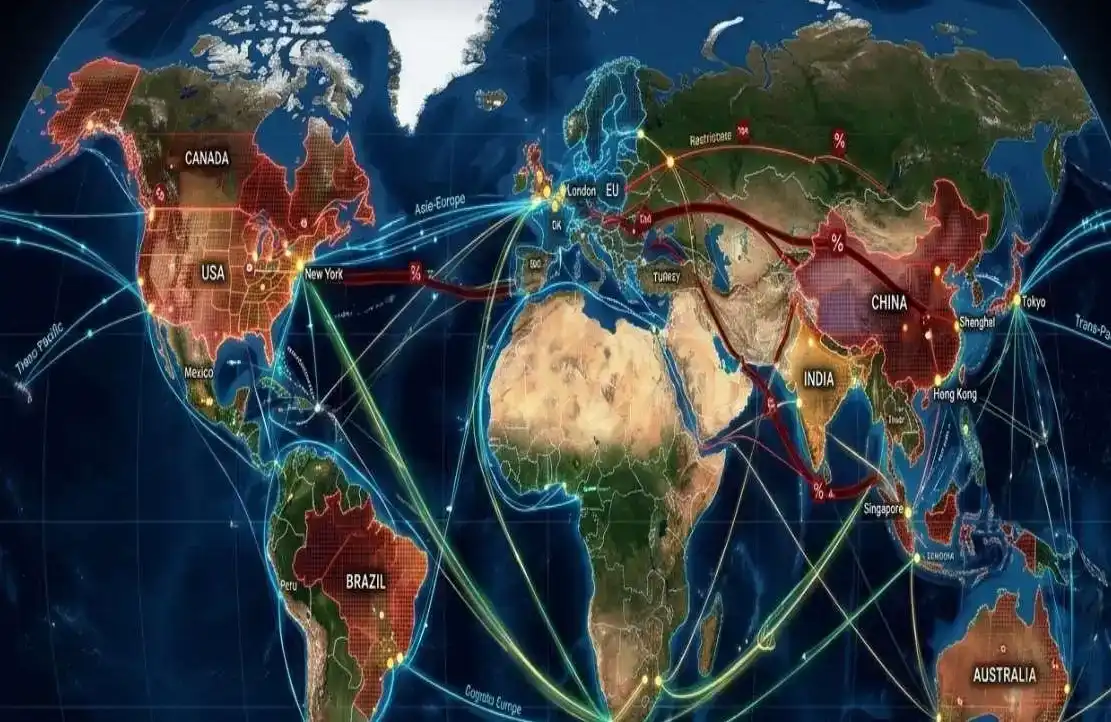
Nvidia will invest up to $3.2 billion in Corning. Corning will build three new factories in the U.S., increasing its optical communications manufacturing capacity tenfold and boosting fiber production by more than 50%. (Source: 21st Century Business Herald, May 7, 2026)

The standard media interpretation goes like this: Nvidia is investing in optical communications, upgrading data center infrastructure, the computing giant is securing its supply chain, bullish on opportunities in the optical module industry chain...

But in my opinion, what's most noteworthy this time isn't any of the above.

It's a more fundamental question: Why optics, not copper? Behind this switch from copper cables to optical fibers lies a technological evolution logic that has been ongoing for decades, but most people have never paid attention to it.

To truly understand why Nvidia is willing to spend $3.2 billion, you must grasp this logic—it's not because the optical communications concept is hot, but because it has no other choice.

The common understanding might be: Optical fibers are faster, so switch to fibers.

Actually, it's not that simple.

As always, I'll try to explain it clearly in one article.

What is the Fundamental Difference Between Copper and Optical Fiber?

Let's start with the basics.

Inside data centers, GPUs need to transmit data to each other—this is called "interconnect." Traditionally, this task was handled by copper cables, much like the network cables in our homes.

The problems with copper cables are worsening exponentially as the scale of AI computing power expands:

Problem One: Signal Attenuation. When transmitting data over copper, electrical signals attenuate with increasing distance. This is fine over short distances (tens of centimeters). But as GPU clusters in AI data centers grow larger, with increasing rack and server spacing, copper's attenuation becomes a bottleneck.

Problem Two: Energy Consumption. To combat signal attenuation, copper cables require higher drive currents, meaning more electricity. AI data centers are already among the world's largest energy consumers—Nvidia's data centers alone consume electricity equivalent to a medium-sized city annually. The interconnect network contributes a significant portion of that.

Problem Three: Heat. Current generates heat, which requires cooling systems consuming even more power. It's a vicious cycle.

Optical fibers don't transmit electrical signals; they transmit light. Light doesn't generate heat, isn't susceptible to electromagnetic interference, has minimal attenuation, and travels near the speed of light.

So, the question isn't "Is light better than copper?" but rather "The scale of AI computing power has reached a tipping point where copper can no longer sustain it."

What is CPO? Why is it the Core of Next-Generation Interconnects?

Understanding the problems with copper helps clarify the three development stages of optical communication:

Stage One: Traditional Copper Cable Interconnect (Mainstream in the 2010s)

GPUs are directly connected via copper cables. The advantages are simplicity and low cost; the disadvantages are high energy consumption and severe attenuation. This solution is being phased out as AI computing scale expands.

Stage Two: Pluggable Optical Modules (Current Mainstream)

Replace copper cables with optical fibers, but the optical modules remain "external" next to the GPU chip, requiring optical-electrical (O-E) conversion. Electrical signals travel inside the chip, are converted to light upon exiting, transmitted via fiber, and converted back to electrical signals at the other end. This conversion process itself consumes energy and introduces latency.

Stage Three: CPO—Co-Packaged Optics (Next-Generation Technology)

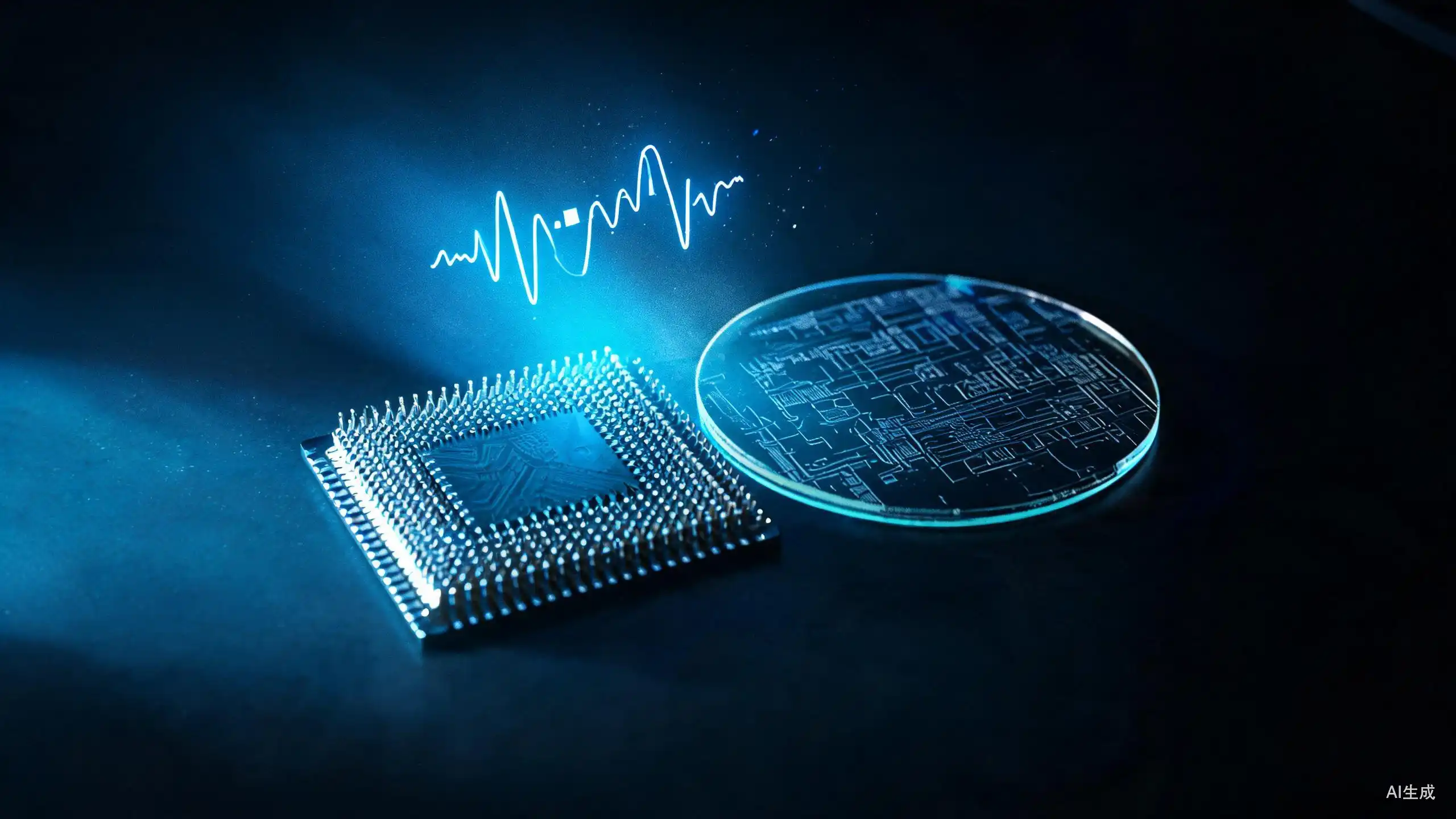
The optical engine is packaged directly with the GPU chip. The distance electrical signals travel is compressed from "tens of centimeters" to "a few millimeters." O-E conversion happens right next to the chip. Energy consumption is drastically reduced, latency is minimized, and data transmission density is greatly increased.

As Jensen Huang said at Nvidia's GTC conference in 2025: Co-packaged optics technology is a core, essential technology for AI computing infrastructure. (Source: Sina Finance, May 8, 2026)

This isn't just promotional talk for a supplier; it's an engineering-logic-driven assessment.

I refer to these three stages as the "three-step compression" of optical interconnect—from the copper era, to the external optical module era, to the CPO packaging era. The core logic is singular: continuously compress the transmission distance of electrical signals until it becomes negligible.

Why is Nvidia Investing in an Upstream Supplier? What Does This Move Signify?

Nvidia's investment strategy is undergoing a systematic shift—from being a "buyer of components" to "controlling the supply chain."

In January 2026, Meta committed up to $6 billion to help Corning expand its fiber optic cable factory. In May 2026, Nvidia invested up to $3.2 billion to secure Corning's production capacity. (Source: 21st Century Business Herald, May 7, 2026)

This pattern illustrates that optical communications capacity is transitioning from "something readily available in the procurement market" to a "strategic resource."

When the supply growth of a component cannot keep pace with demand growth, those who secure capacity first gain a competitive advantage.

This is precisely what's happening in the fiber optic market today. The price of specialty fiber G.657.A2 has skyrocketed from 32 yuan/core-kilometer to 240 yuan/core-kilometer, a gain of approximately 650%. (Source: East Money Information, May 7, 2026) The reason is simple: demand is far outpacing capacity expansion, and the lead time to build new factories is 18 to 24 months, leaving a supply gap that cannot be filled in the short term.

Nvidia's $3.2 billion investment isn't for products; it's to secure the manufacturing capability that will be the most constrained in the market for the next two to three years.

What Does This Mean for Chinese Optical Communication Companies?

Some worry: After Corning's expansion, the market share of Chinese optical communication companies in North America will be squeezed.

This concern is valid but incomplete.

Here's a counterpoint: It will take 2 to 3 years for Corning's three new factories to reach full production capacity. During this time, the global construction of AI data centers won't wait. A supply gap will persist; demand will still exceed supply.

Institutional estimates indicate a global fiber optic supply gap of 5% to 10% in 2026, potentially widening to 15% in 2027. (Source: Sina Finance, May 8, 2026)

A gap represents a window of opportunity for Chinese companies.

Especially in segments like fiber preforms, optical chips, and optical modules, the mass production capabilities and cost-control prowess of Chinese companies are competitive advantages on a global scale.

In this optical communications arms race, no one will refuse "fast and affordable Chinese suppliers."

This isn't a China-U.S. rivalry; it's a re-division of labor within the global computing power industry chain during a technological upgrade cycle.

Nvidia chose to invest $3.2 billion in securing fiber optics not because optical communications suddenly became trendy, but because copper has reached its physical limits. In every technological revolution, the step taken out of necessity is often the most certain one.

This article is for information sharing and industry analysis only and does not constitute any investment advice, investment analysis opinions, or trading invitations. The market carries risks; investment requires caution. Anyone making investment decisions based on the content of this article shall bear all risks and profits/losses themselves. The author and the publishing platform assume no legal responsibility.

This article is from the WeChat public account "BT Finance" (ID: btcjv1), author: Shi Yan.

Perguntas relacionadas

QAccording to the article, what are the three main problems with using copper wires for interconnecting GPUs in data centers as AI computing power scales?

AThe three main problems are: 1) Signal attenuation over distance, 2) High energy consumption (as more current is needed to combat attenuation), and 3) Heat generation, which leads to increased power consumption for cooling systems.

QWhat are the three stages of optical communication development described in the article, and what defines the 'Co-Packaged Optics (CPO)' stage?

AThe three stages are: 1) Traditional copper cable interconnection, 2) Pluggable optical modules, and 3) Co-Packaged Optics (CPO). CPO is defined by integrating the optical engine directly with the GPU chip, reducing the electrical signal transmission distance to just a few millimeters, thereby significantly lowering energy consumption, reducing latency, and increasing data transmission density.

QWhy did NVIDIA invest up to $3.2 billion in Corning, according to the article's analysis? What is the strategic significance of this move?

ANVIDIA invested to secure strategic manufacturing capacity, not just products. The move signifies that optical communication capacity is transforming from a readily available commodity into a strategic resource. With demand for optical fiber far outpacing supply expansion (with factory construction taking 18-24 months), locking in future manufacturing capacity provides a competitive advantage.

QWhat opportunity does the current global fiber supply gap present for Chinese optical communication companies, as mentioned in the article?

AThe supply gap (estimated at 5-10% in 2026, potentially widening to 15% in 2027) represents an opportunity window. Chinese companies' advantages in large-scale production capabilities and cost control for components like fiber preforms, optical chips, and optical modules make them competitive global suppliers that the market cannot afford to ignore during this period of high demand.

QWhat is the fundamental technical logic driving the shift from copper to optical fiber in AI data centers, as explained by the author?

AThe fundamental logic is not simply that 'optical fiber is faster.' It is that the exponential scaling of AI computing power has reached a critical point where copper wires have hit their physical limits (in terms of signal attenuation, energy consumption, and heat). The shift is driven by necessity, compressing the distance electrical signals must travel to the point where it becomes negligible, as seen in the evolution towards CPO technology.

Leituras Relacionadas

Apple Also Has to Pay Rent Now

Apple Pays Rent Too: The Two-Way Flow of "Traffic Tax" and "AI Capability Rent" Between Tech Giants For over two decades, Google has paid Apple an estimated $20 billion annually to remain the default search engine on Safari, a "traffic tax" for a critical user entry point. However, in 2026, the direction of this cash flow partially reversed. Apple agreed to pay Google roughly $1 billion per year to license its Gemini AI models, as Apple's own models reportedly struggled with complex tasks. This creates a unique dynamic: Apple acts as the "landlord" in the established search ecosystem, collecting rent from Google for access. Simultaneously, in the emerging AI arena, Apple becomes the "tenant," paying Google for access to cutting-edge AI capabilities it cannot currently match internally. While Apple claims its new models are "distilled" from Gemini outputs and contain "not a drop" of Google's original code, core dependencies remain. Its knowledge base is refined using Gemini's outputs, and its most powerful cloud model runs on Google's infrastructure. Apple has structured the deal as non-exclusive, allowing it to theoretically switch AI suppliers—a hedge against over-reliance. The future hinges on whether advanced AI models become a commodity (cheap and abundant) or remain a concentrated, scarce resource (expensive and controlled by few). Apple is betting on the former, leveraging its massive device ecosystem to be a powerful, choosy customer. If the latter proves true, its bargaining power could erode. This power dynamic is extending to developers. Apple, Google, and WeChat are all pushing for apps to expose their core functions as standardized "actions" or "intents" that their respective AI assistants (Siri, Gemini, WeChat AI) can directly call. The new scarce resource is no longer just app store visibility, but "being selected by the AI." The currency of "rent" has changed from a 30% revenue share to ceding control over how users interact with an app's functions.

marsbitHá 43m

Apple Also Has to Pay Rent Now

marsbitHá 43m

Missed the SpaceX IPO? WEEX's "First Trade Protection" Lets You Experience US Stock Trading Risk-Free.

With the excitement around SpaceX's recent public listing reigniting interest in the US stock market, Chinese investors face significant challenges accessing compliant and convenient trading channels following regulatory actions against major online brokers. This article explores the available options, highlighting their risks and limitations. Traditional paths for US stock investments remain problematic. Qualified Domestic Institutional Investor (QDII) and Listed Open-Ended Fund (LOF) products, while compliant, suffer from high fees, significant purchase premiums, and a very limited selection of assets. Small, unregulated offshore brokers pose substantial risks, including potential insolvency. While secure, VIP accounts at banks in Hong Kong or Singapore require high minimum deposits (often 1-2 million RMB) and in-person visits, placing them out of reach for most retail investors. The article positions cryptocurrency exchanges, specifically their TradFi (traditional finance on-chain) offerings, as a compelling alternative. Platforms like WEEX are noted for providing access to a wide range of US stocks and ETFs, including SpaceX (SPCXON), through tokenized assets. This method offers advantages such as a single account for both crypto and traditional assets, USDT-based settlement avoiding fiat complexities, flexible leverage, and robust risk management. To attract users, WEEX is promoting a "First Trade Guarantee" campaign. Running from June 15 to July 8 (UTC+8), it features a $30,000 prize pool. Users who trade $500 worth of US stock contracts can qualify for a guarantee on their first eligible trade: 100% loss coverage up to $30 or a 20% bonus on profits up to $30. The campaign is presented as a low-risk opportunity for both crypto natives and traditional investors to experience US stock trading.

marsbitHá 45m

Missed the SpaceX IPO? WEEX's "First Trade Protection" Lets You Experience US Stock Trading Risk-Free.

marsbitHá 45m

How Difficult is Chip Making? A Division Error Costs 475 Million Dollars

How Hard Is It to Make a Chip? A Division Error Cost $475 Million Chip expert Shi Kan, a researcher at the Chinese Academy of Sciences and a popular tech creator, explains the immense challenges of chip development. Chips are foundational to modern technology, but their creation is extraordinarily difficult. The journey from sand to a functional chip involves complex design and manufacturing, but a critical bottleneck is verification—ensuring the design works flawlessly before costly production. A single, undetected bug can have catastrophic consequences, as illustrated by the infamous 1994 Intel Pentium FDIV bug. A flaw in the floating-point division unit forced a recall costing $475 million. Unlike software, chips cannot be easily patched after manufacture, making "first-time success" paramount. However, industry surveys show only 24% of chip projects achieve this; over three-quarters require at least one costly re-spin due to design flaws. Verification has thus become the dominant phase, consuming up to 70% of the design cycle. The core challenge is a "verification impossible triangle" between high performance, good debuggability, and low cost. Exhaustively verifying a modern CPU core could take 15,000 years with software simulation, or 30 years with advanced hardware emulation—timeframes utterly impractical for development. Despite being essential, verification is often seen as unglamorous "dirty work," receiving less academic attention than fields like AI. Shi and his team are tackling this by developing an agile verification research framework called ENCORE, based on FPGA technology, to improve verification efficiency and debug capability. Beyond research, Shi engages in public science communication through long-form video content, aiming to demystify chip technology, AI, and computer science. He argues for the value of pursuing "hard and long-term" endeavors, whether in the meticulous world of chip verification or in creating substantive educational content, believing such sustained effort is likely the right path forward.

marsbitHá 54m

How Difficult is Chip Making? A Division Error Costs 475 Million Dollars

marsbitHá 54m

Trading

Spot
Futuros

Artigos em Destaque

Como comprar ONE

Bem-vindo à HTX.com!Tornámos a compra de Harmony (ONE) simples e conveniente.Segue o nosso guia passo a passo para iniciar a tua jornada no mundo das criptos.Passo 1: cria a tua conta HTXUtiliza o teu e-mail ou número de telefone para te inscreveres numa conta gratuita na HTX.Desfruta de um processo de inscrição sem complicações e desbloqueia todas as funcionalidades.Obter a minha contaPasso 2: vai para Comprar Cripto e escolhe o teu método de pagamentoCartão de crédito/débito: usa o teu visa ou mastercard para comprar Harmony (ONE) instantaneamente.Saldo: usa os fundos da tua conta HTX para transacionar sem problemas.Terceiros: adicionamos métodos de pagamento populares, como Google Pay e Apple Pay, para aumentar a conveniência.P2P: transaciona diretamente com outros utilizadores na HTX.Mercado de balcão (OTC): oferecemos serviços personalizados e taxas de câmbio competitivas para os traders.Passo 3: armazena teu Harmony (ONE)Depois de comprar o teu Harmony (ONE), armazena-o na tua conta HTX.Alternativamente, podes enviá-lo para outro lugar através de transferência blockchain ou usá-lo para transacionar outras criptomoedas.Passo 4: transaciona Harmony (ONE)Transaciona facilmente Harmony (ONE) no mercado à vista da HTX.Acede simplesmente à tua conta, seleciona o teu par de trading, executa as tuas transações e monitoriza em tempo real.Oferecemos uma experiência de fácil utilização tanto para principiantes como para traders experientes.

312 Visualizações TotaisPublicado em {updateTime}Atualizado em 2026.06.02

Como comprar ONE

Discussões

Bem-vindo à Comunidade HTX. Aqui, pode manter-se informado sobre os mais recentes desenvolvimentos da plataforma e obter acesso a análises profissionais de mercado. As opiniões dos utilizadores sobre o preço de ONE (ONE) são apresentadas abaixo.

活动图片