Stocks and Dollar Feel the Blow Along with the Global Crypto Market

TheNewsCryptoPublicado em 2026-01-20Última atualização em 2026-01-20

Resumo

The US dollar and global stocks have declined, diverting attention to the Greenland meeting. The crypto market also experienced a downturn, with its total market cap falling 2.24% and nearing the $3 trillion mark. Major cryptocurrencies like BTC and ETH dropped over 2% and 3.5%, testing key resistance levels at $90k and $3k respectively. The decline is partly attributed to Trump's announced tariffs on EU nations and international trade uncertainty, triggering a "Sell America" sentiment. Investors are seeking safety in gold and silver. A meeting in Davos is anticipated to address these tensions, as Trump's proposed tariffs, including rates up to 200% on French wines, are scheduled to take effect in 2026.

The US Dollar has plunged, and stocks have declined, with all attention now diverted to the Greenland meeting. The global crypto market has felt this pinch, evident from some of the top tokens losing their value significantly. Meanwhile, investors continue to seek a safety net in Gold and Silver.

Stocks and US Dollar

Stocks have plummeted, possibly reacting to Trump’s tariff announcement on EU nations. Nasdaq and S&P 500 have slipped by more than 1%. European futures have lost 0.27% while STOXX 600 is down by 1.2%. Japan’s Yen was last seen at 158.08 against the dollar.

The jolt of international uncertainty has hit American currency as well. The dollar index is $98.912, 0.18% lower, while the Swiss franc rose by 0.7% to a one-week high of 0.7956. As of now, per a report by Reuters, conversations around Sell America trade are gaining traction. This is a situation where investors look to sell the dollar, treasury bonds, and stocks.

Global Crypto Market Testing Key Resistance

The global crypto market cap is inching closer to the $3 trillion mark with the recent decline of 2.24%. The FGI has shifted to 42 points, and the Altcoin Index has slipped to 26 points. Top tokens like BTC and ETH are testing critical resistance levels after dropping 2.04% and 3.52% of their respective values in the last 24 hours.

BTC is trading at $91,102.11, while constantly testing the resistance at around $90k. ETH is exchanging hands at $3,097.86 with resistance pinned at approximately $3k. Other cryptocurrency market giants that have lost their momentum in the last 24 hours are BNB (-1.68%), XRP (-2.67%), and SOL (-3.56%), to mention a few.

Attention on Davos

International trade uncertainty, which acted as one of the major factors to trigger the ongoing turbulence in the crypto market, is rooted in, to some extent, Trump’s intention of taking over Greenland. A meeting is scheduled to happen in Davos, wherein it is anticipated that leaders will reach a consensus.

US President Donald Trump has already announced 2-phased tariffs. These are 10% & 25%, on EU nations. The former is tentatively scheduled to be effective on February 01, 2026, while the higher rate could go live on June 01, 2026.

Additionally, he has threatened to book a tariff rate of up to 200% on French wines and champagne with an aim to persuade French President Macron to join the Board of Peace.

Highlighted Crypto News Today:

Institutional Bitcoin Demand Surges as U.S. Custody Wallets Accumulate $53B

TagsCrypto MarketDollar

Perguntas relacionadas

QWhat are the main factors causing the decline in stocks and the US dollar according to the article?

AThe decline is attributed to Trump's tariff announcement on EU nations and international trade uncertainty, including his intention of taking over Greenland, which has diverted attention to the Greenland meeting.

QHow much has the global crypto market cap declined, and what is it approaching?

AThe global crypto market cap has declined by 2.24% and is inching closer to the $3 trillion mark.

QWhat are the current trading values and key resistance levels for BTC and ETH?

ABTC is trading at $91,102.11, testing resistance around $90k, while ETH is at $3,097.86 with resistance pinned at approximately $3k.

QWhat is the 'Sell America' trade mentioned in the article?

AThe 'Sell America' trade refers to a situation where investors look to sell the US dollar, treasury bonds, and stocks due to international uncertainty.

QWhat action has Trump taken regarding French wines and champagne, and why?

ATrump has threatened to impose a tariff rate of up to 200% on French wines and champagne to persuade French President Macron to join the Board of Peace.

Leituras Relacionadas

U.S. Government Bans Foreign Nationals from Using Fable 5, Anthropic Issues Rebuttal

U.S. Government Bans Foreign Access to Fable 5, Anthropic Issues Rebuttal On June 12th, the U.S. government ordered AI company Anthropic to immediately suspend all foreign access—including foreign nationals within the U.S. and Anthropic's own foreign employees—to its newly released Fable 5 and Mythos 5 AI models, citing national security concerns. This forced Anthropic to temporarily disable access to both models for all users globally, as it cannot technically differentiate user nationality at scale. The models, released just three days prior, represent Anthropic's highest public capability tier. Fable 5 is the first publicly available model from the advanced "Mythos" family, while Mythos 5 is a less-restricted version for approved cybersecurity and critical infrastructure partners. The government's directive was reportedly triggered by claims from another company that it could "jailbreak" Mythos 5, raising alarm within the Trump administration. Anthropic, in a detailed public statement, strongly challenged this rationale. The company argues the demonstrated "jailbreak" is a narrow, non-generalized technique that merely involves identifying minor, known software vulnerabilities—a capability common to other publicly available models like OpenAI's GPT-5.5 and routinely used by cybersecurity defenders. Anthropic stated it has complied with the order but disagrees with the government's standard, warning that applying it industry-wide would halt all new frontier model deployments. The company criticized the lack of a transparent, fact-based legal process and expressed confidence the situation stems from a misunderstanding. It is working to restore access and will release more technical details within 24 hours. Other Anthropic models remain unaffected.

链捕手Há 17m

U.S. Government Bans Foreign Nationals from Using Fable 5, Anthropic Issues Rebuttal

链捕手Há 17m

The Revelation from the Raydium Theft Incident: New DeFi Vulnerabilities Lurking in Forgotten Old Contracts

**Raydium Exploit Reveals DeFi's Hidden Risk: Forgotten "Zombie" Contracts** A recent attack on Raydium's deprecated V3 AMM pools resulted in a loss of approximately $1.34 million. The hacker exploited pools that were no longer supported by Raydium's current UI or SDK but remained fully functional and accessible on-chain. This incident highlights a critical, often overlooked category of risk in DeFi: inactive or legacy smart contracts that projects fail to properly decommission. Since March 2025, there have been at least 8 publicly reported attacks targeting such abandoned contracts, with total losses around $10.8 million. Including older pools and deprecated features, the count rises to 10 incidents with roughly $22.5 million in losses. These "zombie contracts" represent a lifecycle management failure rather than a code vulnerability, yet they are typically misclassified under general "code bug" categories in security reports, masking the true scale of the problem. The root cause is that projects often merely document a contract as "deprecated" without taking essential technical steps to secure it: withdrawing remaining assets, disabling external call functions, and implementing ongoing monitoring. These forgotten, under-monitored components become prime targets for attackers. To address this, the industry needs to recognize "zombie contracts" as a distinct risk category and establish standardized decommissioning protocols. Essential steps should include: 1) a formal retirement announcement, 2) removal of all front-end integrations, 3) withdrawal of locked assets, 4) disabling key contract functions, 5) ongoing security monitoring, 6) clear user communication, and 7) a post-mortem analysis. The value of a DeFi project lies not only in its current TVL but also in the security of its historical codebase, which has now become a new attack surface.

Foresight NewsHá 2h

The Revelation from the Raydium Theft Incident: New DeFi Vulnerabilities Lurking in Forgotten Old Contracts

Foresight NewsHá 2h

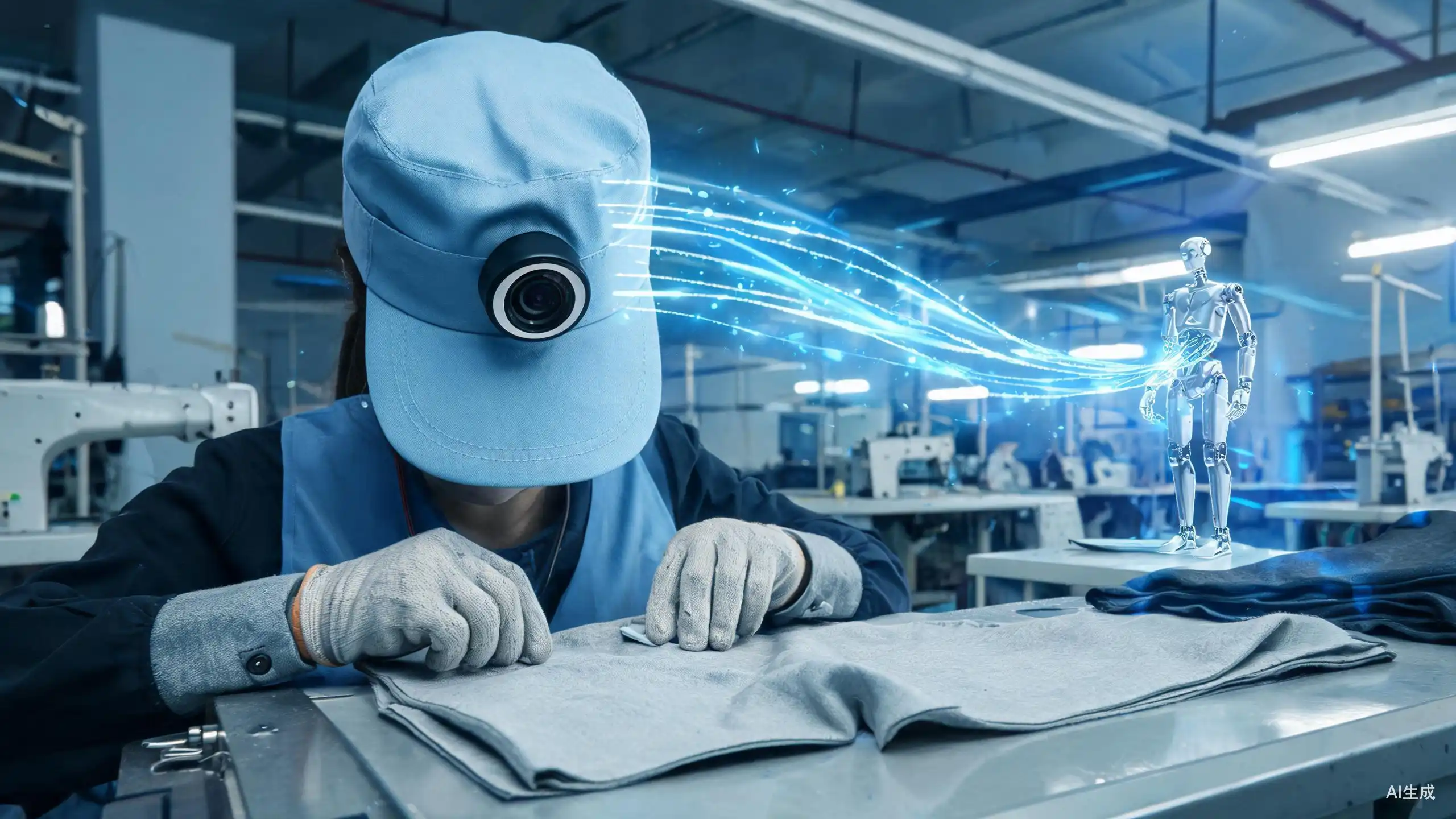
Robots Begin to 'Consume Data': The Hidden Production Chain from Indian Data Factories to Billion-Dollar Humanoid Robots

Robots have started to 'consume data,' driving the formation of a new industrial supply chain focused on producing training data for embodied AI. Unlike large language models, which are trained on vast internet text corpora, embodied AI models face a 'data desert' in the physical world. This has created a massive demand for first-person perspective video data (Ego Data), captured by workers wearing cameras in places like Indian garment factories. Companies like Neocambrian AI are establishing 'data factories' where workers perform standardized tasks (e.g., sorting clothes, kitchen organization) to generate thousands of hours of video. Research, such as NVIDIA's EgoScale, demonstrates that scaling this human demonstration data predictably improves robot performance, particularly for dexterous manipulation. This has validated a training path combining large-scale human data for pre-training with smaller amounts of robot-specific data for fine-tuning. The value of different data types varies significantly, forming a 'data pyramid.' The base consists of low-cost, large-scale internet and Ego Data. Higher layers include more expensive motion-capture data (e.g., from data gloves), simulation/synthetic data, and the most costly and scarce layer: real robot teleoperation data. This demand has spawned a layered ecosystem of data suppliers: low-cost data factories, motion capture and alignment specialists, robot-native teleoperation service providers, simulation data companies, and platforms aiming for data standardization. Robot companies themselves are adopting a 'layered procurement' strategy: outsourcing generic Ego Data while building in-house capabilities for robot-specific adaptation data and the critical deployment/failure data generated in real-world applications. The industry is shifting focus from hardware and basic mobility to the data pipelines required for general-purpose capability. While parallels exist to data labeling companies like Scale AI in the LLM boom, the physical complexity of robot data—involving action success ambiguity and sim-to-real gaps—requires more integrated solutions for data collection, annotation, and a continuous feedback loop. The race is on to build the data engines that will teach robots to operate reliably in the unstructured real world.

marsbitHá 4h

Robots Begin to 'Consume Data': The Hidden Production Chain from Indian Data Factories to Billion-Dollar Humanoid Robots

marsbitHá 4h

Trading

Spot
Futuros
活动图片