Sam Altman in Conversation with Stripe CEO: The Era Where Ideas Are More Valuable Than Code Has Arrived!

marsbitPublicado em 2026-05-15Última atualização em 2026-05-15

Resumo

At Stripe's 2026 annual conference, OpenAI CEO Sam Altman joined Stripe CEO Patrick Collison for a fireside chat. Altman shared key insights on the AI revolution, emphasizing that we are in a period of rapid takeoff, with AI capabilities advancing weekly. He outlined OpenAI's evolution from a research lab to a product company and now a large-scale "token factory" – a low-margin, utility-like provider of intelligence. Altman stressed that the most successful AI adopters have CEOs who personally automate workflows, driving organizational change. A significant shift is the rise of the "idea person." Altman now actively invests in founders with deep product insight but no coding skills, as AI tools enable them to build. He advocates for "suspension of disbelief" in investing, planning long-term (e.g., 20-year infrastructure deals) while focusing on a clear 2-year product roadmap. Beyond products, Altman is most excited about AI accelerating scientific discovery, shortening decade-long research cycles in complex diseases and driving breakthroughs in materials science and energy. He predicts the first profitable fusion reactor could emerge within five years, spurred by AI's compute demands. Finally, Altman defended OpenAI's philosophy of iterative public deployment over elite control, believing democratizing AI access is crucial to avoid centralized power and unlock global innovation.

Source: Stripe

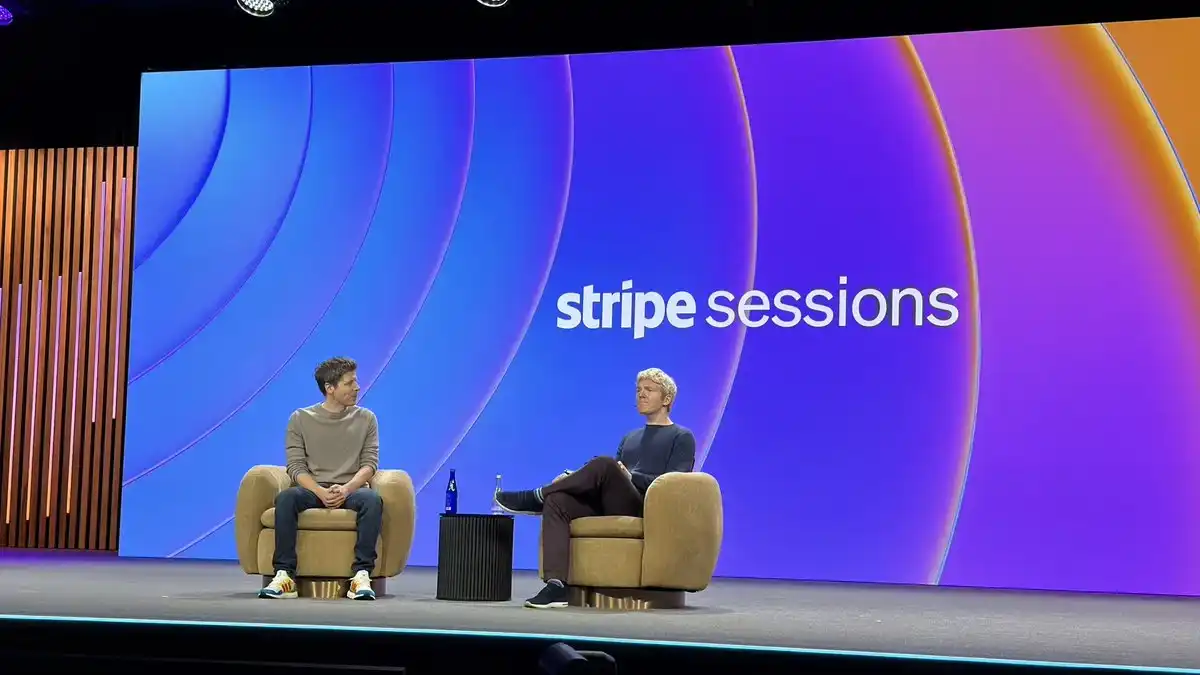
On April 30, 2026, OpenAI CEO Sam Altman took the stage at Stripe's annual conference for an in-depth fireside chat with Stripe CEO Patrick Collison.

The two have known each other for nearly two decades, and their conversation covered the inflection point in AI development, OpenAI's management philosophy, changes in the startup ecosystem, and the profound impact of AI on science and humanity's future.
During the conversation, Altman dropped a series of heavyweight viewpoints:

  • We are indeed in the midst of some kind of takeoff. AI is developing very fast; it's a little different every week.

  • OpenAI has undergone three evolutions: from a research lab, to a product company, and now to a large-scale token factory.

  • The revenge of the "Ideas People" is here: I am now willing to invest in people who deeply understand user needs and have product insight but can't write code at all.

  • What excites me most about AI is not products, nor business models, but the potential to accelerate scientific discovery.

We Are in the Midst of Takeoff

When does the Singularity begin?

Patrick Collison offered an interesting perspective in his opening: treat this year as the first year of the Singularity.

In response, Sam Altman said, "We are indeed in the midst of some kind of takeoff." From the second half of last year to the beginning of this year, AI model capabilities broke through a certain tipping point—especially in the field of code generation.

"It's a little different every week, things are moving very fast."

A Shift in Perception

Currently, Codex (OpenAI's programming model branch) is having its "moment."

While the most dedicated users are still programmers, a large number of users without programming backgrounds are also flocking to it, trying to use it to handle all their daily computer-based work.
Altman believes people will undergo a more widespread cognitive shift: realizing how much of their time is wasted on computer drudgery.

Switching messaging apps, copying and pasting content, handling repetitive emails that could obviously be automated—these fragmented tasks are quietly eroding people's focus and work experience. When most people truly realize AI can do this "grunt work" for them, the feeling will be revolutionary.

Who's Really Using AI Well?

It Only Counts if the CEO Gets Hands-On

After observing many enterprise clients, Altman concluded: The companies most successfully applying AI often share a common characteristic—the CEO personally gets hands-on.

Not symbolically announcing "we will embrace AI," but actually building automated workflows themselves, then demanding the team follow. He gave the example of Shopify's CEO: he was one of the earliest hands-on CEOs Altman had seen, directly driving the entire company to integrate AI into all processes.

OpenAI is now trying a new experiment: sending an engineer to directly accompany a company's CEO, helping them automate as many workflows as possible.

If you can make a company's leadership truly feel the power of AI, that feeling will permeate the entire organization like a fractal.

OpenAI's Three Evolutions

Sam Altman candidly shared the management evolution inside OpenAI, which is essentially a microcosm of AI's industrialization path.

Three Stages of Transformation

The first stage, a pure research lab, aiming to figure out how to build AGI when everyone thought it was crazy.

The second stage, while continuing research, needed to learn how to be a product company.

The third stage, which is now being entered: on top of the previous two, building a large-scale token factory. Altman compared it to a new type of utility, like electricity; the world needs massive, cheap, accessible intelligence.

Vision of Low-Margin Infrastructure

Addressing doubts about "will AI giants monopolize everything," Altman used Stripe as a reference point: Stripe and its customers are highly aligned; the more Stripe earns, the better its customers do, a positive infrastructure relationship.

Altman hopes OpenAI can ultimately play a similar role: an intelligence infrastructure provider, even if perpetually low-margin, as long as it's big enough, fast enough, and deeply tied to the success of the world's distributed economy.

He also acknowledged that AI's switching costs are inherently low, making high margins difficult to sustain. The recent large-scale migration of users from competitors to Codex shows that friction for switching will become smaller in the AI era.

Compute Investment: The Most Expensive Infrastructure in History

Regarding massive compute investment, Altman stated: "This will be the most expensive infrastructure project in human history."

Efficiency gains per GPU have exceeded his expectations, but demand growth is even faster. As for how much compute needs to be built? "I don't have a good answer... in some sense, demand is almost unlimited."

OpenAI's Management Philosophy

OpenAI gathers some of the smartest and most unique individuals in the world. Altman revealed his secret is extreme conviction gambling:

  • Concentrate Resources: When training GPT-3, OpenAI threw almost all its compute resources into one project. At the time, people at DeepMind warned this would create a toxic competitive culture; OpenAI's response was: We have conviction, this is the right direction.

  • Shared Vision: Altman believes that even if team members have personal conflicts or clash, their shared belief in "Scale" allows them to sit together and solve problems.

"Directly Managing Hundreds" Communication Style

Asked about any unusual management habits, Altman mentioned: He communicates directly with hundreds of people in the company daily via Slack—not through assistants, but directly himself, with one or two short messages at a time.

This decentralized approach sometimes brings him very valuable information.

The New Paradigm for Startups

"Ideas People" Revenge

Altman developed a deep-seated bias during his YC days: disdain for entrepreneurs who "only have an idea and need a programmer to implement it," thinking it was as absurd as saying "I have a great song idea, just need someone who plays guitar to make it."

But now, "the revenge of the Ideas People has arrived."

Those who deeply understand user needs and have product insight but can't code at all can now quickly build products using AI tools. Altman said he is now very willing to invest in such people.

How to Invest Before the Singularity?

AGI might arrive in three to five years. Is the traditional ten-year investment horizon for venture capital still reasonable?

Altman's answer: Do everything on this timescale with a 'suspension of disbelief.' You can't do nothing just because "the Singularity is coming in three years, we can't see through it." You still have to act as if life will continue.

OpenAI has signed twenty-year power and land agreements but only has a clear grasp of its product roadmap for the next two years.—Make long-term infrastructure investments while staying clear about the near term; that's his answer.

AI is Reshaping Scientific Discovery

What excites Altman most about AI is not products, nor business models, but the potential to accelerate scientific discovery.

He believes this will be this technology's most profound contribution to improving human quality of life.

Tackling Complex Diseases

Through collaboration with the Arc Institute, OpenAI is supporting the use of large biological foundation models like Evo 2 to research complex diseases involving multiple genes, such as cancer and Alzheimer's.
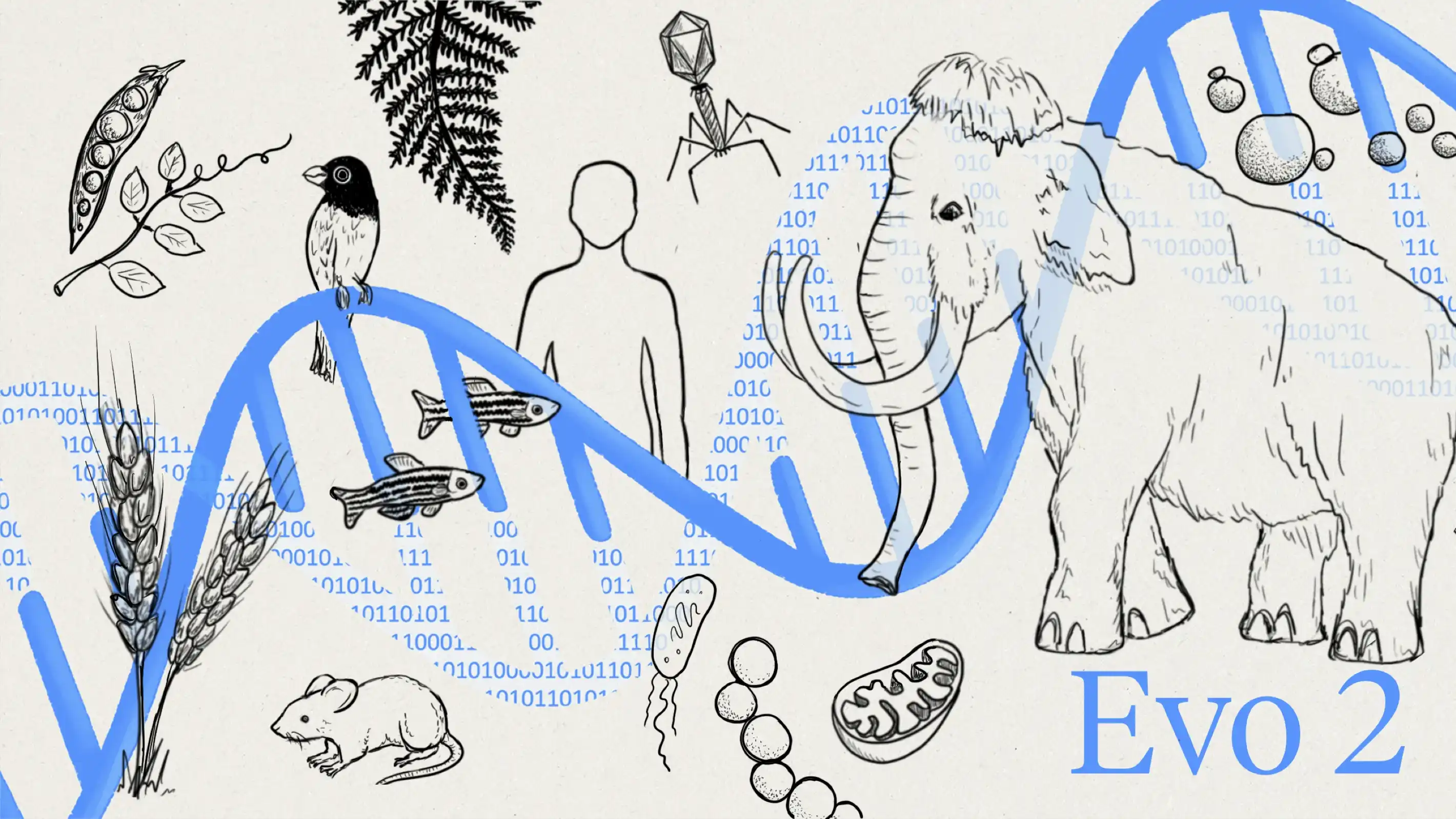
AI is shortening research cycles that originally took ten years down to one year.

Leaps in Energy and Materials

He specifically pointed out a severely underestimated field: materials science.

AI is exceptionally good at finding optimal solutions in vast combinatorial spaces, which will bring breakthroughs in catalyst development, energy efficiency improvements, etc. He expects very rapid progress here, changing all our lives in profound ways.

👉 On energy, Altman boldly predicted: Driven by the demands of AI compute, the first profitable fusion reactor could appear within five years.

Democratization: Sam Altman's Final Stand

At the end of the conversation, Altman discussed the most controversial decision in OpenAI's history: Iterative Deployment.

He recalled that many safety experts advocated locking AI in an "ivory tower," controlled by a select few, before distributing the results to the world.

"That idea made me very uncomfortable." Altman stated: Avoiding concentration of power, making this technology truly belong to the world, is extremely important.

"People will use AI in all sorts of ways, but I believe most people are good, and most will use tools to do amazing things. I think my most important contribution is pushing for this technology to be a democratized technology, accessible and buildable by everyone."

Perguntas relacionadas

QAccording to the article, what is Sam Altman's current stance on investing in founders who lack coding skills?

ASam Altman now expresses a strong willingness to invest in founders who have a deep understanding of user needs and product insight but completely lack coding skills, marking a shift from his earlier bias at Y Combinator. He calls this the 'revenge of the idea people.'

QHow does Sam Altman characterize the current state of AI development in the conversation?

ASam Altman states that 'we are definitely in some kind of takeoff,' with AI developing very rapidly and feeling different week to week, especially after a critical breakthrough in model capabilities from late last year to early this year.

QWhat are the three evolutionary phases that OpenAI has gone through, as described by Sam Altman?

AThe three phases are: 1) A pure research institution focused on figuring out how to build AGI. 2) A phase of learning to be a product company while continuing research. 3) The current phase of building a 'large-scale token factory' or a new type of utility providing abundant, cheap, and accessible intelligence.

QWhat does Sam Altman identify as the most exciting potential of AI, beyond products and business models?

AHe is most excited about AI's potential to accelerate scientific discovery, which he believes will be the technology's most profound contribution to human quality of life, citing progress in complex diseases and material science.

QWhat is the controversial principle that Sam Altman cites as his most important contribution regarding AI's development?

AHe cites 'Iterative Deployment'—the principle of democratizing AI technology by making it widely available for people to use and build upon, rather than keeping it locked in an 'ivory tower' controlled by a small elite, as his most important contribution.

Leituras Relacionadas

U.S. Government Bans Foreign Nationals from Using Fable 5, Anthropic Issues Rebuttal

U.S. Government Bans Foreign Access to Fable 5, Anthropic Issues Rebuttal On June 12th, the U.S. government ordered AI company Anthropic to immediately suspend all foreign access—including foreign nationals within the U.S. and Anthropic's own foreign employees—to its newly released Fable 5 and Mythos 5 AI models, citing national security concerns. This forced Anthropic to temporarily disable access to both models for all users globally, as it cannot technically differentiate user nationality at scale. The models, released just three days prior, represent Anthropic's highest public capability tier. Fable 5 is the first publicly available model from the advanced "Mythos" family, while Mythos 5 is a less-restricted version for approved cybersecurity and critical infrastructure partners. The government's directive was reportedly triggered by claims from another company that it could "jailbreak" Mythos 5, raising alarm within the Trump administration. Anthropic, in a detailed public statement, strongly challenged this rationale. The company argues the demonstrated "jailbreak" is a narrow, non-generalized technique that merely involves identifying minor, known software vulnerabilities—a capability common to other publicly available models like OpenAI's GPT-5.5 and routinely used by cybersecurity defenders. Anthropic stated it has complied with the order but disagrees with the government's standard, warning that applying it industry-wide would halt all new frontier model deployments. The company criticized the lack of a transparent, fact-based legal process and expressed confidence the situation stems from a misunderstanding. It is working to restore access and will release more technical details within 24 hours. Other Anthropic models remain unaffected.

链捕手Há 15m

U.S. Government Bans Foreign Nationals from Using Fable 5, Anthropic Issues Rebuttal

链捕手Há 15m

The Revelation from the Raydium Theft Incident: New DeFi Vulnerabilities Lurking in Forgotten Old Contracts

**Raydium Exploit Reveals DeFi's Hidden Risk: Forgotten "Zombie" Contracts** A recent attack on Raydium's deprecated V3 AMM pools resulted in a loss of approximately $1.34 million. The hacker exploited pools that were no longer supported by Raydium's current UI or SDK but remained fully functional and accessible on-chain. This incident highlights a critical, often overlooked category of risk in DeFi: inactive or legacy smart contracts that projects fail to properly decommission. Since March 2025, there have been at least 8 publicly reported attacks targeting such abandoned contracts, with total losses around $10.8 million. Including older pools and deprecated features, the count rises to 10 incidents with roughly $22.5 million in losses. These "zombie contracts" represent a lifecycle management failure rather than a code vulnerability, yet they are typically misclassified under general "code bug" categories in security reports, masking the true scale of the problem. The root cause is that projects often merely document a contract as "deprecated" without taking essential technical steps to secure it: withdrawing remaining assets, disabling external call functions, and implementing ongoing monitoring. These forgotten, under-monitored components become prime targets for attackers. To address this, the industry needs to recognize "zombie contracts" as a distinct risk category and establish standardized decommissioning protocols. Essential steps should include: 1) a formal retirement announcement, 2) removal of all front-end integrations, 3) withdrawal of locked assets, 4) disabling key contract functions, 5) ongoing security monitoring, 6) clear user communication, and 7) a post-mortem analysis. The value of a DeFi project lies not only in its current TVL but also in the security of its historical codebase, which has now become a new attack surface.

Foresight NewsHá 2h

The Revelation from the Raydium Theft Incident: New DeFi Vulnerabilities Lurking in Forgotten Old Contracts

Foresight NewsHá 2h

Robots Begin to 'Consume Data': The Hidden Production Chain from Indian Data Factories to Billion-Dollar Humanoid Robots

Robots have started to 'consume data,' driving the formation of a new industrial supply chain focused on producing training data for embodied AI. Unlike large language models, which are trained on vast internet text corpora, embodied AI models face a 'data desert' in the physical world. This has created a massive demand for first-person perspective video data (Ego Data), captured by workers wearing cameras in places like Indian garment factories. Companies like Neocambrian AI are establishing 'data factories' where workers perform standardized tasks (e.g., sorting clothes, kitchen organization) to generate thousands of hours of video. Research, such as NVIDIA's EgoScale, demonstrates that scaling this human demonstration data predictably improves robot performance, particularly for dexterous manipulation. This has validated a training path combining large-scale human data for pre-training with smaller amounts of robot-specific data for fine-tuning. The value of different data types varies significantly, forming a 'data pyramid.' The base consists of low-cost, large-scale internet and Ego Data. Higher layers include more expensive motion-capture data (e.g., from data gloves), simulation/synthetic data, and the most costly and scarce layer: real robot teleoperation data. This demand has spawned a layered ecosystem of data suppliers: low-cost data factories, motion capture and alignment specialists, robot-native teleoperation service providers, simulation data companies, and platforms aiming for data standardization. Robot companies themselves are adopting a 'layered procurement' strategy: outsourcing generic Ego Data while building in-house capabilities for robot-specific adaptation data and the critical deployment/failure data generated in real-world applications. The industry is shifting focus from hardware and basic mobility to the data pipelines required for general-purpose capability. While parallels exist to data labeling companies like Scale AI in the LLM boom, the physical complexity of robot data—involving action success ambiguity and sim-to-real gaps—requires more integrated solutions for data collection, annotation, and a continuous feedback loop. The race is on to build the data engines that will teach robots to operate reliably in the unstructured real world.

marsbitHá 4h

Robots Begin to 'Consume Data': The Hidden Production Chain from Indian Data Factories to Billion-Dollar Humanoid Robots

marsbitHá 4h

Trading

Spot
Futuros

Artigos em Destaque

Como comprar ERA

Bem-vindo à HTX.com!Tornámos a compra de Caldera (ERA) simples e conveniente.Segue o nosso guia passo a passo para iniciar a tua jornada no mundo das criptos.Passo 1: cria a tua conta HTXUtiliza o teu e-mail ou número de telefone para te inscreveres numa conta gratuita na HTX.Desfruta de um processo de inscrição sem complicações e desbloqueia todas as funcionalidades.Obter a minha contaPasso 2: vai para Comprar Cripto e escolhe o teu método de pagamentoCartão de crédito/débito: usa o teu visa ou mastercard para comprar Caldera (ERA) instantaneamente.Saldo: usa os fundos da tua conta HTX para transacionar sem problemas.Terceiros: adicionamos métodos de pagamento populares, como Google Pay e Apple Pay, para aumentar a conveniência.P2P: transaciona diretamente com outros utilizadores na HTX.Mercado de balcão (OTC): oferecemos serviços personalizados e taxas de câmbio competitivas para os traders.Passo 3: armazena teu Caldera (ERA)Depois de comprar o teu Caldera (ERA), armazena-o na tua conta HTX.Alternativamente, podes enviá-lo para outro lugar através de transferência blockchain ou usá-lo para transacionar outras criptomoedas.Passo 4: transaciona Caldera (ERA)Transaciona facilmente Caldera (ERA) no mercado à vista da HTX.Acede simplesmente à tua conta, seleciona o teu par de trading, executa as tuas transações e monitoriza em tempo real.Oferecemos uma experiência de fácil utilização tanto para principiantes como para traders experientes.

484 Visualizações TotaisPublicado em {updateTime}Atualizado em 2026.06.02

Como comprar ERA

Discussões

Bem-vindo à Comunidade HTX. Aqui, pode manter-se informado sobre os mais recentes desenvolvimentos da plataforma e obter acesso a análises profissionais de mercado. As opiniões dos utilizadores sobre o preço de ERA (ERA) são apresentadas abaixo.

活动图片