Polymarket Introduces Trading Fees on US App and Crypto Markets

TheNewsCryptoPublicado em 2026-01-08Última atualização em 2026-01-08

Resumo

Polymarket has introduced its first trading fees, a major shift from its previous zero-fee model. The new taker fee of 0.01% applies to trades on its US app (in private beta) and its short-duration cryptocurrency price markets. This move establishes Polymarket's first direct revenue stream as it expands from niche prediction markets into mainstream crypto trading. The fee is significantly lower than industry averages, aligning with the platform's focus on efficiency. This strategic change reflects a push toward sustainability and monetization, especially as the company targets regulated US markets and competes more directly with conventional crypto exchanges. The limited rollout indicates a cautious approach to avoid disrupting its core user base.

Polymarket has introduced trading fees, marking a significant shift in its business model as it expands beyond niche prediction markets into more mainstream crypto trading.

The platform confirmed that it has begun charging fees on its short-duration cryptocurrency price markets and on its Polymarket US app, which is currently available in private beta. Until now, Polymarket had operated entirely on a zero-fee structure, positioning itself as a low-friction alternative to traditional trading and betting platforms.

New fee structure takes effect

Under the new schedule, takers on the Polymarket US app will pay 1 basis point, or 0.01%, per trade. Polymarket has also applied fees to its 15-minute cryptocurrency price markets, which allow users to speculate on short-term price movements of major digital assets.

The company said the change establishes its first direct source of revenue, following years of growth without transaction fees. Polymarket did not disclose whether maker fees will follow or if the current structure will expand to longer-duration prediction markets.

By targeting short-term crypto markets and the US app first, Polymarket appears to be testing user response while limiting disruption to its core prediction market audience.

Strategic shift toward sustainability

Polymarket describes itself as the world’s largest decentralized prediction market, offering contracts on politics, economics, sports, and crypto events. The platform built its early momentum by removing trading fees entirely, a strategy that helped attract liquidity and users during its growth phase.

However, the launch of the Polymarket US app signals a broader ambition. Unlike traditional prediction markets that settle on real-world outcomes, the US app focuses more directly on price-based trading, placing Polymarket closer to conventional financial products.

As the platform moves into regulated and mainstream-facing markets, monetization becomes harder to avoid. The addition of a small taker fee will enable funding of the infrastructure and development at Polymarket without affecting users much.

Fees align with crypto market norms

The taker fee of 1 basis point is considerably lower than the industry average. This is because most of the centralized exchanges charge between 5 and 10 basis points for spot transactions. Derivatives platforms charge more due to leveraged positions.

Keeping fees low will help Polymarket maintain its reputation as an efficient market while still profiting from the increased trading. The focus on short-duration markets is also reflective of user groups that are concerned about more precise predictions over shorter-duration markets.

Expansion raises competitive stakes

This move pushes Polymarket closer to competition with both cryptographic trading platforms and traditional financial forecasting websites. As more and more people view forecasting markets as trading platforms and not as gimmicks, the websites of such markets face challenges.

The charging of fees also points to a degree of confidence in user retention. Polymarket, which has spent so long operating without charging fees, is confident in its ability to retain users despite charging fees.

For now, the fee rollout remains limited in scope. Still, it marks a turning point for a platform that built its identity around zero fees.

As Polymarket presses forward with the addition of more US-based products and crypto price markets, investors and participants will be anxious to see if the increased revenue stream grows well without jeopardizing user engagement.

Highlighted Crypto News:

Buck Foundation Launches Bitcoin Dollar Savings Coin With 7% Minute-By-Minute Rewards

TagsCopy tradingCrypto MarketDeFiPolymarketWeb3

Perguntas relacionadas

QWhat is the new trading fee structure introduced by Polymarket on its US app and crypto markets?

APolymarket has introduced a taker fee of 1 basis point (0.01%) per trade on its US app and its 15-minute cryptocurrency price markets.

QWhy did Polymarket decide to implement trading fees after operating with a zero-fee model?

AThe implementation of fees establishes Polymarket's first direct source of revenue, funding infrastructure and development as it expands into more mainstream and regulated markets, moving beyond its niche prediction market origins.

QHow does Polymarket's new taker fee compare to industry averages on other crypto exchanges?

APolymarket's taker fee of 1 basis point is considerably lower than the industry average, as most centralized exchanges charge between 5 and 10 basis points for spot transactions, with derivatives platforms typically charging more.

QWhat strategic shift does the introduction of fees represent for Polymarket's business model?

AThe fee introduction marks a strategic shift toward sustainability and monetization as Polymarket expands from decentralized prediction markets into mainstream crypto trading and regulated US-based products, placing it in closer competition with traditional financial platforms.

QWhich specific Polymarket products are currently affected by the new fee structure?

AThe new fee structure currently applies to trades on the Polymarket US app (in private beta) and the platform's short-duration 15-minute cryptocurrency price markets, while longer-duration prediction markets remain unaffected for now.

Leituras Relacionadas

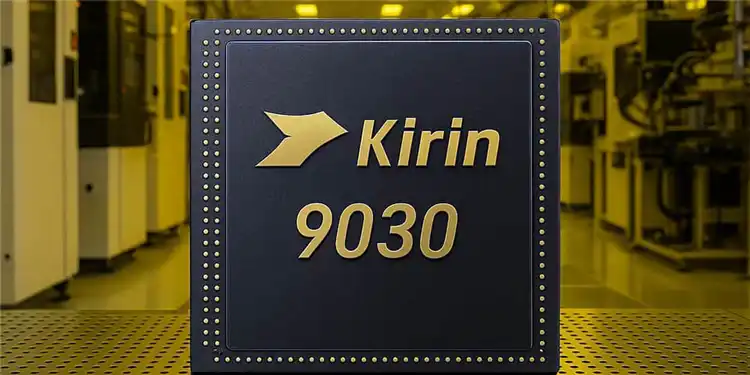
SemiAnalysis Dissects Huawei's Kirin 9030: Process Technology Halted, So They Folded the Chip

SemiAnalysis has published a detailed teardown report on the HiSilicon Kirin 9030 Pro chipset found in Huawei's Mate 80 Pro. Fabricated using SMIC's most advanced N+3 node without EUV lithography, the analysis reveals significant technical achievements and strategic shifts. The report indicates SMIC's N+3 has achieved transistor density comparable to TSMC's N6 (113.4 vs 107.7 MTr/mm²), primarily through aggressive use of Self-Aligned Quadruple Patterning (SAQP) for its metal layers. This results in a notably small 32.5nm M0 metal pitch. However, SemiAnalysis notes this achievement comes with significantly higher process complexity, cost, and potential yield challenges compared to competitors using more advanced tools. The Kirin 9030 design maximizes this constrained density. While its GPU performance has improved ~70% and matches Qualcomm's 2022 flagship level, the CPU core's IPC lags behind current top-tier designs from Apple and Qualcomm, a gap attributed to the underlying manufacturing technology rather than design capability. Facing long-term restrictions on advanced tools, Huawei is charting a new path. The report highlights the company's "LogicFolding" roadmap, a 3D stacking technique aimed at shortening signal paths to boost performance and efficiency. The goal is to reach 5GHz frequency and a projected density of 295 MTr/mm² by 2031. SemiAnalysis concludes that export controls have not halted China's chip progress but have fundamentally altered its trajectory, making it more expensive and complex. This has spurred innovation in alternative areas like 3D stacking and domestic EDA tool development, with Huawei's supply chain also beginning to integrate Chinese memory from CXMT.

marsbitHá 43m

SemiAnalysis Dissects Huawei's Kirin 9030: Process Technology Halted, So They Folded the Chip

marsbitHá 43m

How Will the Price Move Before SpaceX's Next Share Unlock?

TL;DR Investors buying SPCX after SpaceX's IPO are not simply investing in a typical tech stock. It’s a high-valuation asset driven by Musk's narrative, Starlink, and space transport potential, but with a key twist: a very small initial float of ~4% has led to significant post-listing price appreciation. The current price action reflects a timing gap. Before the first lock-up expiration (estimated around August, subject to official confirmation), scarcity and high demand could continue to push prices up. Short-term bulls focus on low float, FOMO, and potential index inclusion. However, bears point to the supply dynamics that will change post-lockup. Existing shareholders still hold over 95% of shares, which will be released in stages starting from the first unlock window. This introduces future selling pressure from low-cost holders. The upcoming Q2 earnings report is a critical catalyst before the unlock. It will test whether the company's fundamentals can justify the current ~$2.1T valuation. Strong results could support the pre-unlock momentum, while weak figures could amplify concerns about future supply. The trading thesis is shifting from immediate scarcity ("can't buy enough") to evaluating future absorption capacity ("who will buy when more supply hits"). The path ahead hinges on the specifics of the unlock schedule, Q2 earnings performance, and whether anticipated passive index buying materializes.

marsbitHá 1h

How Will the Price Move Before SpaceX's Next Share Unlock?

marsbitHá 1h

Bitcoin Short-Term Bullish Structure Validated, HYPE Low-Entry Window Opens | Guest Analysis

**Market Analysis Summary (Week of June 2026)** **Overall Market Context:** The market environment is exceptionally complex, with the unexpected US-Iran agreement and the reopening of the Strait of Hormuz triggering a global asset repricing and significant volatility. This heightened noise underscores the importance of a structured analytical framework. **Bitcoin (BTC) Analysis & Strategy:** * **Current Status:** The price has climbed above $65,000, currently in a rebound phase (segment 38-39) following a complex 12-segment correction from the May high of $82,850. * **Key Levels:** * **Primary Resistance:** $69,500–$70,500. A successful breakout above $65,000 targets this zone. * **Primary Support:** $65,000 (immediate), followed by $59,000–$60,000 and $55,000. * **Weekly Outlook & Strategy:** The focus is on the confirmation of the $65,000 level. * **Bullish Scenario (Hold $65K):** A move toward the $69.5K–$70.5K resistance zone is anticipated, which is a potential area for initiating medium-term short positions. * **Bearish Scenario (Break below $65K):** A retest of the $60,000–$62,000 support range is likely. * **Medium-Term Strategy:** Currently neutral. Plan to establish short positions (up to 60% allocation) either in the $69.5K–$70.5K resistance zone upon signs of rejection, or on a confirmed breakdown below $65,000 and further below $59K–$60K. * **Short-Term Strategy:** Utilize 30% capital for scalping opportunities based on support/resistance levels, using 30/60-minute charts. **HYPE Analysis & Strategy:** * **Current Status:** The price has stabilized around $52 after a four-segment decline from the June high of $75.87 and is now in a rebound (segment 50-51). * **Key Levels:** * **Primary Resistance:** $62.50–$64.57. Watch for potential rejection here to form a lower high. * **Primary Support:** $52–$55.50, followed by $47–$49. * **Weekly Outlook & Strategy:** Adopt a "buy on dips, avoid chasing rallies" approach. * **Core View:** Monitor the price action and potential formation of a lower high ("endpoint 51") in the $62.50–$64.57 resistance zone. * **Short-Term Strategy:** Consider light long positions (max 30% allocation) if the price finds support and shows reversal signals in the $52–$54.50 or deeper $47–$49 support zones, confirmed by proprietary quantitative bottom signals. **Trade Review:** Last week's HYPE short-term long trade, executed based on proprietary "Price Difference" and "Momentum" model signals, yielded a profit of approximately 11.88%. The entry was near $54.39 and exit near $60.85. **Risk Management Reminder:** Always set an initial stop-loss upon entry. Move stop-loss to breakeven at +1% profit, then trail it upwards to lock in gains as the trade progresses. *Disclaimer: All analysis, models, and strategies are based on personal technical analysis for educational purposes only, not investment advice. The market carries inherent risk.*

Odaily星球日报Há 1h

Bitcoin Short-Term Bullish Structure Validated, HYPE Low-Entry Window Opens | Guest Analysis

Odaily星球日报Há 1h

Bitcoin Short-Term Bullish Structure Validated, HYPE Accumulation Window Opens | Guest Analysis

**Bitcoin and HYPE Market Analysis: Short-Term Outlook and Trading Strategies** This market analysis examines Bitcoin (BTC) and HYPE amid volatile conditions, providing short-term outlooks and specific trading strategies. **Key Outlooks:** * **Bitcoin (BTC):** Focus is on whether BTC's recent move above $65,000 holds. A successful breakout could lead to a test of the $69,500-$70,500 resistance zone, where medium-term short positions are considered. A failure, breaking below $65,000, may trigger a decline towards the $59,000-$60,000 support area. * **HYPE:** The token completed a four-wave correction and is now rebounding. The key resistance zone is $62.5-$64.57. The trading strategy is "buy on dips," looking for entry opportunities near the $52-$54.5 or deeper $47-$49 support zones, pending confirmation from proprietary models. **BTC Trading Strategy:** * **Medium-term:** Primarily looking to establish short positions (up to 60% allocated capital) if price rallies to the $69,500-$70,500 resistance area and shows signs of reversal. Alternative plans involve initiating shorts on a breakdown below $65,000. * **Short-term:** Allocate up to 30% capital for intraday "spread" trades based on support/resistance levels on 30/60-minute charts. **HYPE Trading Strategy:** * **Short-term:** Adopt a dip-buying approach. Consider light long positions (under 30% capital) when price tests key support levels ($52-$54.5 or $47-$49) and shows stabilization, confirmed by proprietary "Price Spread" and "Momentum Quant" models. **Trade Recap:** The analysis reviews a successful HYPE long trade from the previous week, executed at ~$54.39 and closed at ~$60.85 for an ~11.88% gain, based on signals from the aforementioned models. **Risk Management Emphasis:** The article stresses strict capital allocation (under 30-60%), immediate initial stop-loss placement, and a trailing stop-loss protocol to lock in profits as trades move favorably. ***Disclaimer:** All analysis, models, and strategies are for educational purposes based on technical analysis, not investment advice. Markets are volatile; trade with caution.*

marsbitHá 1h

Bitcoin Short-Term Bullish Structure Validated, HYPE Accumulation Window Opens | Guest Analysis

marsbitHá 1h

Trading

Spot
Futuros
活动图片