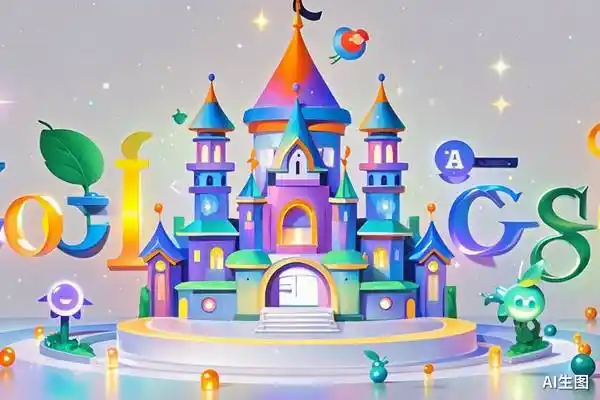
Lighthouses Guide the Way, Torches Claim Sovereignty: A Hidden War Over AI Allocation Rights

marsbitPublicado em 2025-12-22Última atualização em 2025-12-22

Resumo

The article "Lighthouse Guides Direction, Torch Fights for Sovereignty: A Hidden War Over AI Allocation" by Zhixiong Pan examines the underlying power struggle in AI development, moving beyond superficial metrics like model size and performance rankings. It identifies two coexisting paradigms: the "Lighthouse," representing state-of-the-art (SOTA), centralized AI systems controlled by tech giants like OpenAI and Google, which push cognitive boundaries but are resource-intensive and create dependency risks; and the "Torch," symbolizing open-source, locally deployable models (e.g., DeepSeek, Mistral) that democratize access, ensure data sovereignty, and enable private, customizable AI assets. The Lighthouse drives innovation and sets technical directions but poses risks in accessibility, control, and single-point failures. The Torch, while shifting security and responsibility to users, offers resilience, cost stability, and compliance for critical applications in sectors like healthcare and finance. The interplay between these models forms a symbiotic relationship: Lighthouses expand capabilities, while Torches disseminate and stabilize these advances, collectively elevating AI’s baseline. Ultimately, the conflict is over AI allocation rights—defining default intelligence, managing externalities, and determining individual control. A dual strategy—using Lighthouses for frontier tasks and Torches for private, reliable deployment—is proposed as the pragmatic path forward, bal...

Author: Zhixiong Pan

When we talk about AI, the public discourse is easily dominated by topics like "parameter scale," "leaderboard rankings," or "which new model has crushed another." We can't say these noises are entirely meaningless, but they often act like a layer of foam, obscuring the deeper undercurrents beneath the surface: in today's technological landscape, a hidden war over AI allocation rights is quietly unfolding.

If we zoom out to the scale of civilizational infrastructure, you'll find that artificial intelligence is simultaneously manifesting two distinct yet intertwined forms.

One is like a "lighthouse" towering over the coast, controlled by a few giants, pursuing the farthest reach of light, representing the cognitive upper limit humanity can currently touch.

The other is like a "torch" held in hand, pursuing portability, privatization, and replicability, representing the intelligent baseline accessible to the public.

Only by understanding these two forms of light can we break through the fog of marketing jargon, clearly judge where AI will ultimately take us, who will be illuminated, and who will be left in the dark.

Lighthouses: The Cognitive Height Defined by SOTA

So-called "lighthouses" refer to Frontier / SOTA (State of the Art) level models. In dimensions such as complex reasoning, multimodal understanding, long-chain planning, and scientific exploration, they represent the most capable, costly, and centrally organized systems.

Institutions like OpenAI, Google, Anthropic, and xAI are typical "lighthouse builders." What they construct is not just model names, but a production method of "trading extreme scale for boundary breakthroughs."

Why Lighthouses Are Inevitably a Game for the Few

The training and iteration of frontier models essentially involve forcibly bundling together three extremely scarce resources.

First is computing power, which not only means expensive chips but also entails cluster-level scaling, long training cycles, and high interconnection costs. Second is data and feedback, requiring massive corpus cleaning, continuously updated preference data, complex evaluation systems, and intensive human feedback. Finally, engineering systems encompass distributed training, fault-tolerant scheduling, inference acceleration, and the entire pipeline from research to usable products.

These elements form an extremely high barrier. It's not something a few geniuses can replace by writing "smarter code." It's more like a vast industrial system—capital-intensive, complex in chain, and increasingly expensive for marginal improvements.

Therefore, lighthouses are inherently centralized: they are often controlled by a few institutions with training capabilities and data loops, ultimately used by society in the form of APIs, subscriptions, or closed products.

The Dual Significance of Lighthouses: Breakthrough and Traction

The existence of lighthouses is not to "make everyone write copy faster." Their value lies in two more hardcore roles.

First is the exploration of cognitive limits. When tasks approach the edge of human capability, such as generating complex scientific hypotheses, cross-disciplinary reasoning, multimodal perception and control, or long-range planning, you need the strongest beam. It doesn't guarantee absolute correctness, but it illuminates the "feasible next step" further.

Second is the traction of technological routes. Frontier systems often pioneer new paradigms first: whether better alignment methods, more flexible tool usage, or more robust reasoning frameworks and security strategies. Even if they are later simplified, distilled, or open-sourced, the initial path is often blazed by lighthouses. In other words, a lighthouse is a societal-level laboratory, showing us "how far intelligence can go" and forcing efficiency improvements across the entire industry chain.

The Shadow of Lighthouses: Dependency and Single-Point Risks

But lighthouses also cast obvious shadows, risks often not mentioned in product launches.

The most direct is controlled accessibility. How much you can use and whether you can afford it depends entirely on the provider's strategy and pricing. This leads to high dependency on the platform: when intelligence exists primarily as a cloud service, individuals and organizations effectively outsource critical capabilities to the platform.

Convenience comes with fragility: network outages, service shutdowns, policy changes, price hikes, or interface modifications can instantly render your workflows ineffective.

Deeper hidden dangers lie in privacy and data sovereignty. Even with compliance and promises, data flow itself remains a structural risk. Especially in scenarios involving healthcare, finance, government affairs, and corporate core knowledge, "sending internal knowledge to the cloud" is often not just a technical issue but a severe governance problem.

Moreover, as more industries delegate key decision-making links to a few model providers, systemic biases, evaluation blind spots, adversarial attacks, and even supply chain disruptions are amplified into significant societal risks. Lighthouses can illuminate the sea, but they are part of the coastline: they provide direction but also无形中 dictate the航道.

Torches: The Intelligent Baseline Defined by Open Source

Shifting focus from the distance, you'll see another light source: the open-source and locally deployable model ecosystem. DeepSeek, Qwen, Mistral, etc., are just prominent representatives. What they represent is a new paradigm, turning fairly strong intelligent capabilities from "scarce cloud services" into "downloadable, deployable, modifiable tools."

This is the "torch." It corresponds not to the upper limit of capability but to the baseline. This doesn't mean "low capability" but represents the intelligent baseline the public can unconditionally access.

The Meaning of Torches: Turning Intelligence into an Asset

The core value of torches lies in transforming intelligence from a rental service into a self-owned asset, reflected in three dimensions: privatizability, migratability, and composability.

Privatizability means model weights and inference capabilities can run locally, on intranets, or on private clouds. "I own a working intelligence" is fundamentally different from "I'm renting intelligence from a company."

Migratability means you can freely switch between different hardware, environments, and suppliers without binding critical capabilities to a single API.

Composability allows you to combine models with retrieval (RAG), fine-tuning, knowledge bases, rule engines, and permission systems to form systems that comply with your business constraints, rather than being confined by the boundaries of a generic product.

This applies to very specific scenarios in reality. Internal corporate knowledge Q&A and process automation often require strict permissions, auditing, and physical isolation. Regulated industries like healthcare, government, and finance have strict "data must not leave the domain" red lines. In weak-network or offline environments like manufacturing, energy, and field operations, on-device inference is a rigid demand.

For individuals, long-accumulated notes, emails, and private information also need a local intelligent agent to manage, rather than handing a lifetime of data to some "free service."

Torches make intelligence not just access rights but more like means of production: you can build tools, processes, and guardrails around it.

Why Torches Will Grow Brighter

The improvement of open-source model capabilities is not accidental but stems from the convergence of two paths. First, research diffusion: frontier papers, training techniques, and inference paradigms are quickly absorbed and replicated by the community. Second, extreme engineering efficiency: technologies like quantization (e.g., 8-bit/4-bit), distillation, inference acceleration, hierarchical routing, and MoE (Mixture of Experts) continuously sink "usable intelligence" to cheaper hardware and lower deployment thresholds.

Thus, a very realistic trend emerges: the strongest models determine the ceiling, but "strong enough" models determine the speed of普及. The vast majority of tasks in social life don't require the "strongest" but need "reliability, controllability, and stable costs." Torches恰好对应 such demands.

The Cost of Torches: Security Outsourced to Users

Of course, torches are not inherently righteous; their cost is the transfer of responsibility. Many risks and engineering burdens originally borne by platforms are now transferred to users.

The more open the model, the more easily it can be used to generate scam scripts, malicious code, or deepfakes. Open source does not equal harmlessness; it merely decentralizes control while also decentralizing responsibility. Additionally, local deployment means you must solve evaluation, monitoring, prompt injection protection, permission isolation, data desensitization, model updates, rollback strategies, and a series of other issues yourself.

Even many so-called "open source" are more accurately "open weights," with constraints on commercial use and redistribution, which is not just a moral issue but a compliance issue. Torches give you freedom, but freedom is never "zero cost." It's more like a tool: it can build and harm; it can save but also requires training.

The Convergence of Light: Co-evolution of Upper Limit and Baseline

If we only see lighthouses and torches as an opposition of "giants vs. open source," we miss the truer structure: they are two segments of the same technological river.

Lighthouses are responsible for pushing boundaries, providing new methodologies and paradigms; torches are responsible for compressing, engineering, and sinking these achievements, turning them into普及 productivity. This diffusion chain is clear today: from papers to replication, from distillation to quantization, to local deployment and industry customization, ultimately achieving an overall elevation of the baseline.

And baseline elevation in turn affects lighthouses. When a "strong enough baseline" is available to everyone, giants can hardly maintain monopoly long-term靠 "basic capabilities" and must continue investing resources寻求突破. Meanwhile, the open-source ecosystem forms richer evaluation, adversarial, and usage feedback,反过来推动 frontier systems to be more stable and controllable.大量 application innovation occurs in the torch ecosystem; lighthouses provide capability, torches provide soil.

Therefore, rather than two camps, this is two institutional arrangements: one concentrates extreme costs to换取上限突破; the other disperses capabilities to换取普及, resilience, and sovereignty. Both are indispensable.

Without lighthouses, technology容易陷入 "only doing cost-performance optimization" stagnation; without torches, society容易陷入 "capabilities monopolized by few platforms" dependency.

The Harder but More Critical Part: What Are We Really Fighting For

The struggle between lighthouses and torches,表面上 is about differences in model capabilities and open-source strategies, but实质上 is a hidden war over AI allocation rights. This war is not on a硝烟弥漫 battlefield but unfolds in three seemingly calm yet future-determining dimensions:

First,争夺 "default intelligence" definition rights. When intelligence becomes infrastructure, the "default option" means power. Who provides the default? Whose values and boundaries does it follow? What are the default审查, preferences, and commercial incentives? These questions won't disappear automatically just because technology gets stronger.

Second,争夺 externalities bearing methods. Training and inference consume energy and computing power; data collection involves copyright, privacy, and labor; model outputs affect public opinion, education, and employment. Both lighthouses and torches create externalities,只是分配方式不同: lighthouses are more centralized, regulatable but more like single points; torches are more dispersed, more resilient but harder to govern.

Third,争夺 the individual's position in the system. If all important tools must be "online, logged in, paid,遵守 platform rules," individual digital life becomes like renting: convenient but never truly one's own. Torches offer another possibility: allowing people to own some "offline capability," keeping control over privacy, knowledge, and workflow in their own hands.

Dual-Track Strategy Will Be the Norm

In the foreseeable future, the most reasonable state is not "all closed-source" or "all open-source," but more like a combination akin to the power system.

We need lighthouses for extreme tasks, to handle scenarios requiring the most robust reasoning, cutting-edge multimodal, cross-domain exploration, and complex scientific research assistance; we also need torches for critical assets, to build defenses in scenarios involving privacy, compliance, core knowledge, long-term stable costs, and offline availability. Between the two,大量 "middle layers" will emerge: enterprise-built proprietary models, industry models, distilled versions, and hybrid routing strategies (simple tasks本地, complex tasks云端).

This is not compromise but engineering reality: the upper limit pursues breakthrough, the baseline pursues普及; one pursues极致, the other pursues reliability.

Conclusion: Lighthouses Guide the Distance, Torches Guard the Ground

Lighthouses determine how high we can push intelligence; that is civilization's offense in the face of the unknown.

Torches determine how widely we can distribute intelligence; that is society's self-possession in the face of power.

Applauding SOTA breakthroughs is reasonable because they expand the boundaries of problems humanity can思考; applauding open-source and privatizable iterations is equally reasonable because they make intelligence not just belong to a few platforms but become tools and assets for more people.

The true watershed of the AI era may not be "whose model is stronger," but when night falls, whether you have a beam of light in hand that you don't have to borrow from anyone.

Perguntas relacionadas

QWhat are the two contrasting forms of AI infrastructure described in the article, and what do they represent?

AThe two forms are the 'Lighthouse' and the 'Torch'. The 'Lighthouse' represents the cognitive height, controlled by a few giants, pursuing the farthest reach and the upper limit of human cognition. The 'Torch' represents the intelligent baseline, which is portable, privately owned, and replicable, signifying the level of intelligence the public can access.

QAccording to the article, what are the three scarce resources required for training and iterating frontier models (Lighthouses)?

AThe three scarce resources are computing power (expensive chips, large-scale clusters, and high interconnection costs), data and feedback (requiring massive corpus cleaning and complex evaluation systems), and engineering systems (covering distributed training, fault-tolerant scheduling, and inference acceleration).

QWhat is the core value of the 'Torch' (open-source and locally deployable models) as outlined in the text?

AThe core value of the 'Torch' is that it transforms intelligence from a rental service into a self-owned asset. This is reflected in three dimensions: it is privately ownable, migratable (can be moved between different hardware and environments), and composable (can be integrated with other systems like RAG and knowledge bases).

QWhat are the main risks or 'shadows' associated with the 'Lighthouse' model of AI?

AThe main 'shadows' of the 'Lighthouse' model are controlled accessibility (dependent on the provider's strategy), high dependency and platform fragility (vulnerable to outages or policy changes), and deeper risks to privacy and data sovereignty, where systemic biases and supply chain disruptions can become significant societal risks.

QThe article states that the competition between Lighthouses and Torches is a hidden war over AI allocation rights. What three key dimensions is this war being fought on?

AThe war is being fought over three dimensions: 1) The right to define 'default intelligence'—who sets the values and boundaries. 2) How externalities (like energy use and data privacy) are allocated and managed. 3) The position of the individual in the system—whether they have offline control over their privacy, knowledge, and workflows or are dependent on a platform.

Leituras Relacionadas

Apple Also Has to Pay Rent Now

Apple Pays Rent Too: The Two-Way Flow of "Traffic Tax" and "AI Capability Rent" Between Tech Giants For over two decades, Google has paid Apple an estimated $20 billion annually to remain the default search engine on Safari, a "traffic tax" for a critical user entry point. However, in 2026, the direction of this cash flow partially reversed. Apple agreed to pay Google roughly $1 billion per year to license its Gemini AI models, as Apple's own models reportedly struggled with complex tasks. This creates a unique dynamic: Apple acts as the "landlord" in the established search ecosystem, collecting rent from Google for access. Simultaneously, in the emerging AI arena, Apple becomes the "tenant," paying Google for access to cutting-edge AI capabilities it cannot currently match internally. While Apple claims its new models are "distilled" from Gemini outputs and contain "not a drop" of Google's original code, core dependencies remain. Its knowledge base is refined using Gemini's outputs, and its most powerful cloud model runs on Google's infrastructure. Apple has structured the deal as non-exclusive, allowing it to theoretically switch AI suppliers—a hedge against over-reliance. The future hinges on whether advanced AI models become a commodity (cheap and abundant) or remain a concentrated, scarce resource (expensive and controlled by few). Apple is betting on the former, leveraging its massive device ecosystem to be a powerful, choosy customer. If the latter proves true, its bargaining power could erode. This power dynamic is extending to developers. Apple, Google, and WeChat are all pushing for apps to expose their core functions as standardized "actions" or "intents" that their respective AI assistants (Siri, Gemini, WeChat AI) can directly call. The new scarce resource is no longer just app store visibility, but "being selected by the AI." The currency of "rent" has changed from a 30% revenue share to ceding control over how users interact with an app's functions.

marsbitHá 42m

Apple Also Has to Pay Rent Now

marsbitHá 42m

Missed the SpaceX IPO? WEEX's "First Trade Protection" Lets You Experience US Stock Trading Risk-Free.

With the excitement around SpaceX's recent public listing reigniting interest in the US stock market, Chinese investors face significant challenges accessing compliant and convenient trading channels following regulatory actions against major online brokers. This article explores the available options, highlighting their risks and limitations. Traditional paths for US stock investments remain problematic. Qualified Domestic Institutional Investor (QDII) and Listed Open-Ended Fund (LOF) products, while compliant, suffer from high fees, significant purchase premiums, and a very limited selection of assets. Small, unregulated offshore brokers pose substantial risks, including potential insolvency. While secure, VIP accounts at banks in Hong Kong or Singapore require high minimum deposits (often 1-2 million RMB) and in-person visits, placing them out of reach for most retail investors. The article positions cryptocurrency exchanges, specifically their TradFi (traditional finance on-chain) offerings, as a compelling alternative. Platforms like WEEX are noted for providing access to a wide range of US stocks and ETFs, including SpaceX (SPCXON), through tokenized assets. This method offers advantages such as a single account for both crypto and traditional assets, USDT-based settlement avoiding fiat complexities, flexible leverage, and robust risk management. To attract users, WEEX is promoting a "First Trade Guarantee" campaign. Running from June 15 to July 8 (UTC+8), it features a $30,000 prize pool. Users who trade $500 worth of US stock contracts can qualify for a guarantee on their first eligible trade: 100% loss coverage up to $30 or a 20% bonus on profits up to $30. The campaign is presented as a low-risk opportunity for both crypto natives and traditional investors to experience US stock trading.

marsbitHá 43m

Missed the SpaceX IPO? WEEX's "First Trade Protection" Lets You Experience US Stock Trading Risk-Free.

marsbitHá 43m

How Difficult is Chip Making? A Division Error Costs 475 Million Dollars

How Hard Is It to Make a Chip? A Division Error Cost $475 Million Chip expert Shi Kan, a researcher at the Chinese Academy of Sciences and a popular tech creator, explains the immense challenges of chip development. Chips are foundational to modern technology, but their creation is extraordinarily difficult. The journey from sand to a functional chip involves complex design and manufacturing, but a critical bottleneck is verification—ensuring the design works flawlessly before costly production. A single, undetected bug can have catastrophic consequences, as illustrated by the infamous 1994 Intel Pentium FDIV bug. A flaw in the floating-point division unit forced a recall costing $475 million. Unlike software, chips cannot be easily patched after manufacture, making "first-time success" paramount. However, industry surveys show only 24% of chip projects achieve this; over three-quarters require at least one costly re-spin due to design flaws. Verification has thus become the dominant phase, consuming up to 70% of the design cycle. The core challenge is a "verification impossible triangle" between high performance, good debuggability, and low cost. Exhaustively verifying a modern CPU core could take 15,000 years with software simulation, or 30 years with advanced hardware emulation—timeframes utterly impractical for development. Despite being essential, verification is often seen as unglamorous "dirty work," receiving less academic attention than fields like AI. Shi and his team are tackling this by developing an agile verification research framework called ENCORE, based on FPGA technology, to improve verification efficiency and debug capability. Beyond research, Shi engages in public science communication through long-form video content, aiming to demystify chip technology, AI, and computer science. He argues for the value of pursuing "hard and long-term" endeavors, whether in the meticulous world of chip verification or in creating substantive educational content, believing such sustained effort is likely the right path forward.

marsbitHá 53m

How Difficult is Chip Making? A Division Error Costs 475 Million Dollars

marsbitHá 53m

Trading

Spot
Futuros

Artigos em Destaque

Como comprar BILL

Bem-vindo à HTX.com!Tornámos a compra de Billions Network (BILL) simples e conveniente.Segue o nosso guia passo a passo para iniciar a tua jornada no mundo das criptos.Passo 1: cria a tua conta HTXUtiliza o teu e-mail ou número de telefone para te inscreveres numa conta gratuita na HTX.Desfruta de um processo de inscrição sem complicações e desbloqueia todas as funcionalidades.Obter a minha contaPasso 2: vai para Comprar Cripto e escolhe o teu método de pagamentoCartão de crédito/débito: usa o teu visa ou mastercard para comprar Billions Network (BILL) instantaneamente.Saldo: usa os fundos da tua conta HTX para transacionar sem problemas.Terceiros: adicionamos métodos de pagamento populares, como Google Pay e Apple Pay, para aumentar a conveniência.P2P: transaciona diretamente com outros utilizadores na HTX.Mercado de balcão (OTC): oferecemos serviços personalizados e taxas de câmbio competitivas para os traders.Passo 3: armazena teu Billions Network (BILL)Depois de comprar o teu Billions Network (BILL), armazena-o na tua conta HTX.Alternativamente, podes enviá-lo para outro lugar através de transferência blockchain ou usá-lo para transacionar outras criptomoedas.Passo 4: transaciona Billions Network (BILL)Transaciona facilmente Billions Network (BILL) no mercado à vista da HTX.Acede simplesmente à tua conta, seleciona o teu par de trading, executa as tuas transações e monitoriza em tempo real.Oferecemos uma experiência de fácil utilização tanto para principiantes como para traders experientes.

289 Visualizações TotaisPublicado em {updateTime}Atualizado em 2026.06.02

Como comprar BILL

O que é ATWO

I. Introdução ao ProjetoArena Two é uma plataforma interativa descentralizada que permite aos fãs desempenhar um papel ativo e tokenizado nos resultados de eventos em tempo real. Ao contrário dos modelos tradicionais de transmissão que reduzem os fãs a espectadores passivos, a Arena Two utiliza a tecnologia blockchain para permitir que os fãs votem diretamente em tempo real e influenciem os resultados em campo.II. Informação sobre o TokenNome do token: ATWO(Arena Two)III. Links RelacionadosWebsite:https://arenatwo.com/Exploradores:https://basescan.org/token/0x499D35eBE6cEe9B2Ac35Fd003fcBbeeB9CFc7B32Twitter:https://x.com/arenatwoXNota: A introdução ao projeto provém dos materiais publicados ou fornecidos pela equipa oficial do projeto, que é apenas para referência e não constitui aconselhamento de investimento. A HTX não se responsabiliza por quaisquer perdas diretas ou indiretas resultantes.

258 Visualizações TotaisPublicado em {updateTime}Atualizado em 2026.06.02

O que é ATWO

Como comprar ATWO

Bem-vindo à HTX.com!Tornámos a compra de Arena Two (ATWO) simples e conveniente.Segue o nosso guia passo a passo para iniciar a tua jornada no mundo das criptos.Passo 1: cria a tua conta HTXUtiliza o teu e-mail ou número de telefone para te inscreveres numa conta gratuita na HTX.Desfruta de um processo de inscrição sem complicações e desbloqueia todas as funcionalidades.Obter a minha contaPasso 2: vai para Comprar Cripto e escolhe o teu método de pagamentoCartão de crédito/débito: usa o teu visa ou mastercard para comprar Arena Two (ATWO) instantaneamente.Saldo: usa os fundos da tua conta HTX para transacionar sem problemas.Terceiros: adicionamos métodos de pagamento populares, como Google Pay e Apple Pay, para aumentar a conveniência.P2P: transaciona diretamente com outros utilizadores na HTX.Mercado de balcão (OTC): oferecemos serviços personalizados e taxas de câmbio competitivas para os traders.Passo 3: armazena teu Arena Two (ATWO)Depois de comprar o teu Arena Two (ATWO), armazena-o na tua conta HTX.Alternativamente, podes enviá-lo para outro lugar através de transferência blockchain ou usá-lo para transacionar outras criptomoedas.Passo 4: transaciona Arena Two (ATWO)Transaciona facilmente Arena Two (ATWO) no mercado à vista da HTX.Acede simplesmente à tua conta, seleciona o teu par de trading, executa as tuas transações e monitoriza em tempo real.Oferecemos uma experiência de fácil utilização tanto para principiantes como para traders experientes.

141 Visualizações TotaisPublicado em {updateTime}Atualizado em 2026.06.02

Como comprar ATWO

Discussões

Bem-vindo à Comunidade HTX. Aqui, pode manter-se informado sobre os mais recentes desenvolvimentos da plataforma e obter acesso a análises profissionais de mercado. As opiniões dos utilizadores sobre o preço de A (A) são apresentadas abaixo.

活动图片