Just Now, OpenAI's Chief Futurist Departed, Once Called a Jackass by Musk

marsbitPublicado em 2026-07-08Última atualização em 2026-07-08

Resumo

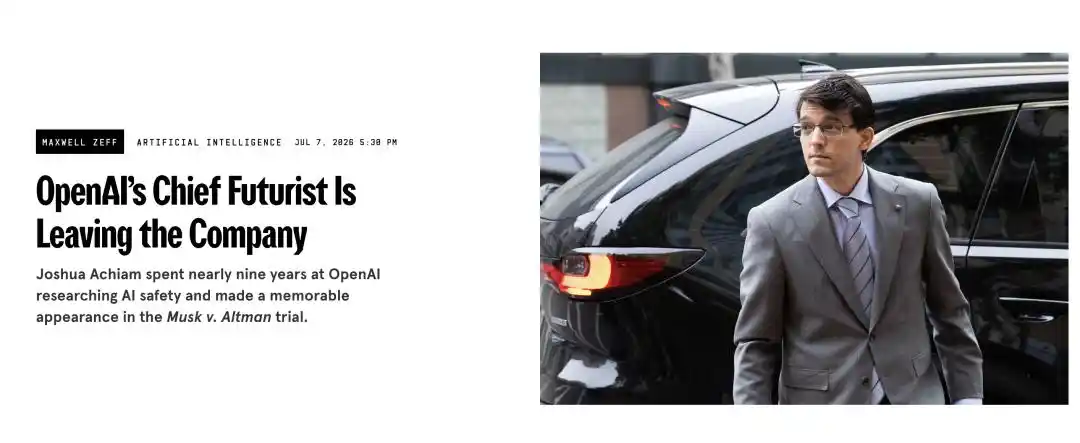
Just now, OpenAI's Chief Futurist, Joshua Achiam, announced his departure from the company via X. Having joined as a 25-year-old intern in 2017, he spent nine years at OpenAI, evolving from an AI safety research scientist to leading the Mission Alignment team. Earlier this year, that team was dissolved, and Achiam transitioned to the newly created role of Chief Futurist, positioned at the intersection of AI safety and policy to study AGI's long-term risks and opportunities. In his departure statement, Achiam called his time a "graduation," reflecting on the immense progress from AI that couldn't converse to systems solving scientific problems. He expressed optimism about a future of peace, prosperity, and possibility, closing with "To safe AGI." His tenure was notably marked by a 2018 incident where he publicly challenged Elon Musk—then still with OpenAI—on safety compromises if Musk pursued AGI at Tesla, leading Musk to call him a "jackass." This became an internal legend, with colleagues later giving him a trophy inscribed, "To safety, never stop being that jackass." Achiam's exit follows a pattern of prominent safety and alignment experts leaving OpenAI, including Jan Leike and others who joined rivals like Anthropic or started non-profits. His departure coincides with OpenAI's internal efforts to more tightly integrate its research and policy teams, and the recent hiring of former White House AI advisor Dean Ball. Achiam did not cite a specific reason for leaving but ...

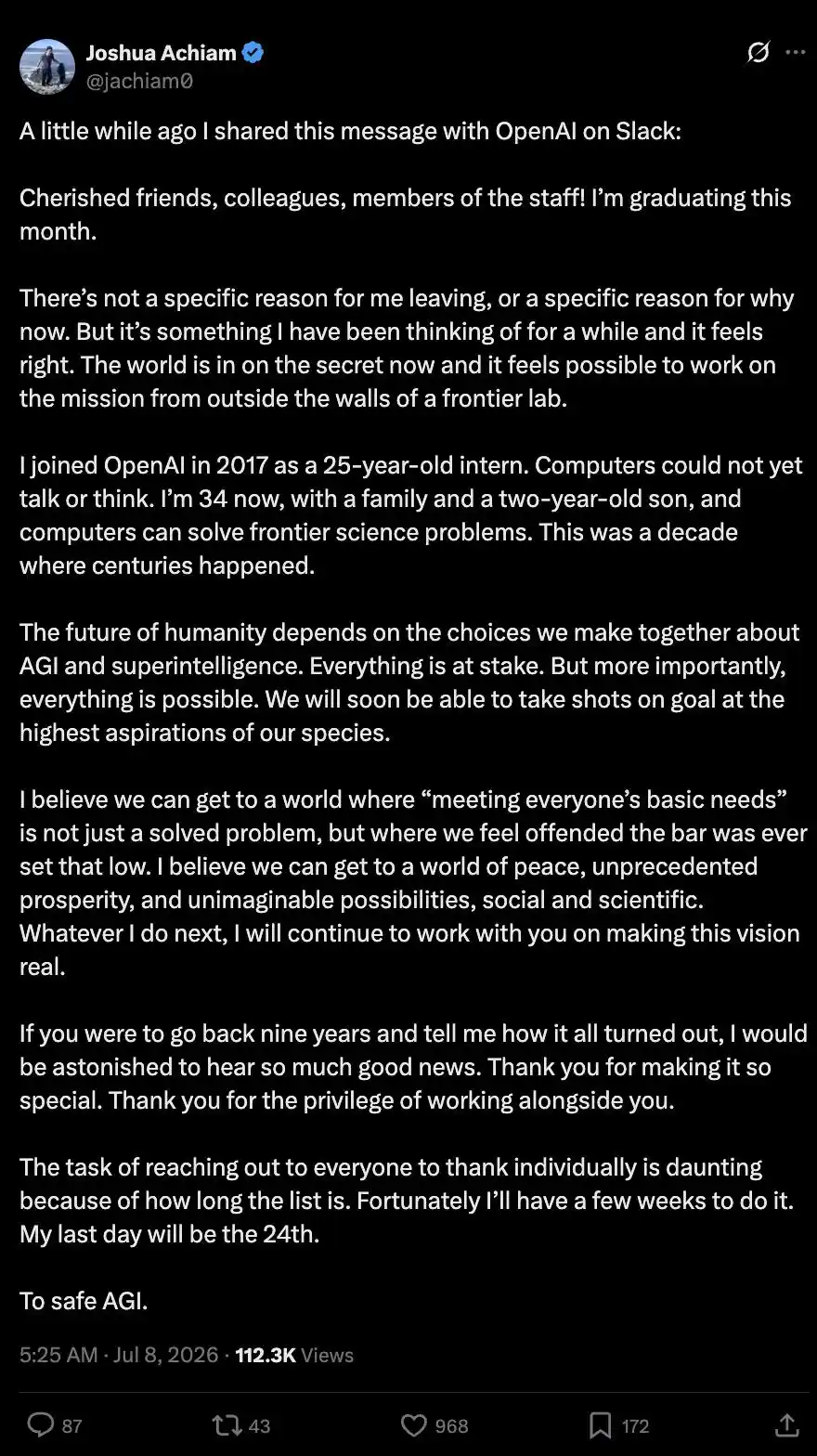
Just now, OpenAI's Chief Futurist Joshua Achiam announced his departure on X.
This is not an ordinary employee turnover.

Within OpenAI, the position of Chief Futurist sits between AI safety, policy, and the company's mission, responsible for studying the risks and opportunities that a continuously strengthening AI might bring to the world.

And Joshua Achiam was one of the key figures on OpenAI's safety and mission line.

Nine years ago in 2017, he joined OpenAI as an intern. In the early days, he was a research scientist focused on AI safety, conducting research on safety constraints in deep reinforcement learning.

Later, he led OpenAI's Mission Alignment team, responsible for upholding the company's original mission statement:

Ensure that AGI benefits all of humanity.

In February of this year, OpenAI disbanded the Mission Alignment team, and Joshua transitioned to the role of the company's Chief Futurist.
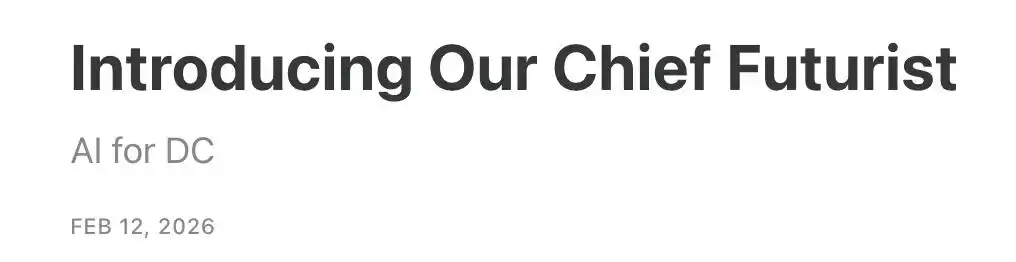
However, just five months later, Joshua announced that he would officially leave the company on July 24, after nine years.

As for the reason for his departure, Joshua did not reveal much.

He only stated that his departure was not due to a specific incident or a spur-of-the-moment decision, but something he had been contemplating for a long time.

For Safe AGI

In a long post on X, Joshua described this departure as "graduation."

He wrote that he joined OpenAI in 2017 as a 25-year-old intern (a graduate of UC Berkeley). At that time, computers could not truly converse with people, let alone think.

Now, he is 34, a father of a 2-year-old, and computers have begun solving cutting-edge scientific problems.

Joshua likened these nine years to "a decade where centuries of change happened."

Regarding the future, he remains optimistic.

I believe we can create a world where 'meeting everyone's basic needs' is no longer a problem to solve; instead, we would feel ashamed for setting the standard so low. I believe we can achieve a world filled with peace, unprecedented prosperity, and all sorts of unimaginable social and scientific possibilities. Whatever I do next, I will continue to work alongside you to make this vision a reality.
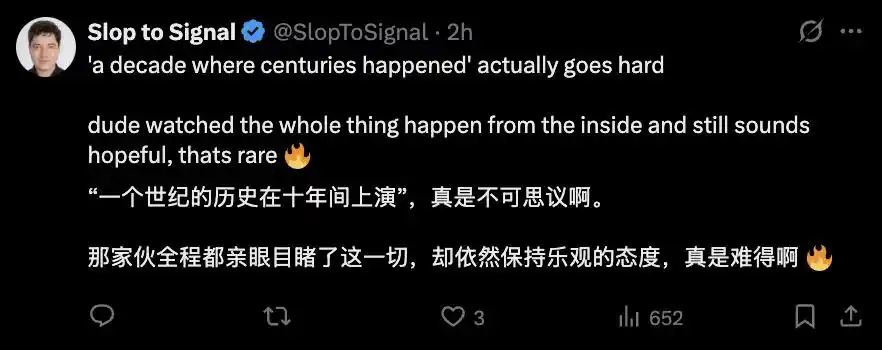
Finally, he concluded with a phrase:

To safe AGI.

This phrase also resonates with his position at OpenAI over the past nine years.

According to WIRED, OpenAI has not yet announced who will succeed Joshua. This position sits at the intersection of the company's AI safety and policy teams, with work including researching the potential harms and benefits of the rise of AI.

Previously, Joshua had also collaborated with senior leaders like OpenAI's Head of Global Affairs, Chris Lehane, to promote government regulation aligned with OpenAI's mission.

In other words, he was not just a "futurist" who made predictions.

More accurately, he was doing something else within OpenAI: constantly reminding the company of that old question as model capabilities charge forward.

Where exactly is this road ultimately leading?

The Man Who Interrupted Musk

Looking back at Joshua's OpenAI career, the most dramatic moment occurred in 2018.

During the global court case between Musk and OpenAI in April-May of this year, Joshua testified, recalling a farewell speech Musk gave in 2018 before leaving OpenAI:

At that time, he had interrupted Musk, pointing out that if planning to develop AGI at Tesla, it might come at the cost of safety.

It is said that Musk immediately called him a "jackass."

Later, this incident became something of an "urban legend" within OpenAI.

Dario Amodei, now CEO of Anthropic, and David Luan, who later became head of Amazon's AGI lab, even gifted Achiam a golden trophy engraved with the words:

"For safety, never stop being that jackass."

Whenever a Safety Leader Departs, OpenAI...?

On Reddit, users quickly placed this event into OpenAI's "safety lead departure list."

Someone joked:

Ilya left, Jan left, and now Joshua left. Every time the person responsible for alignment leaves, something seems to happen at OpenAI.
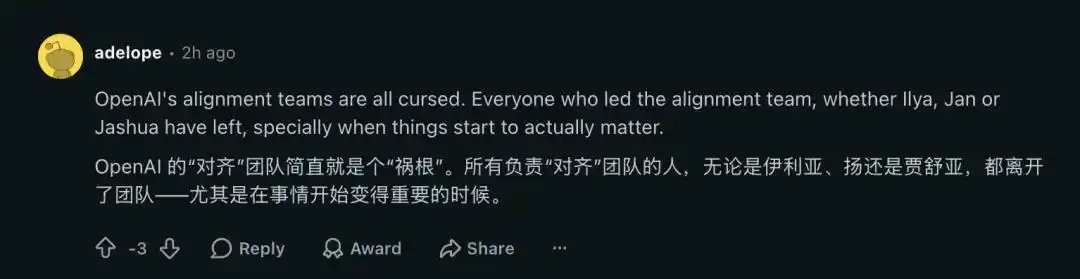
This meme is certainly an exaggeration.

But over the past two years, there have indeed been many changes in OpenAI's safety line.

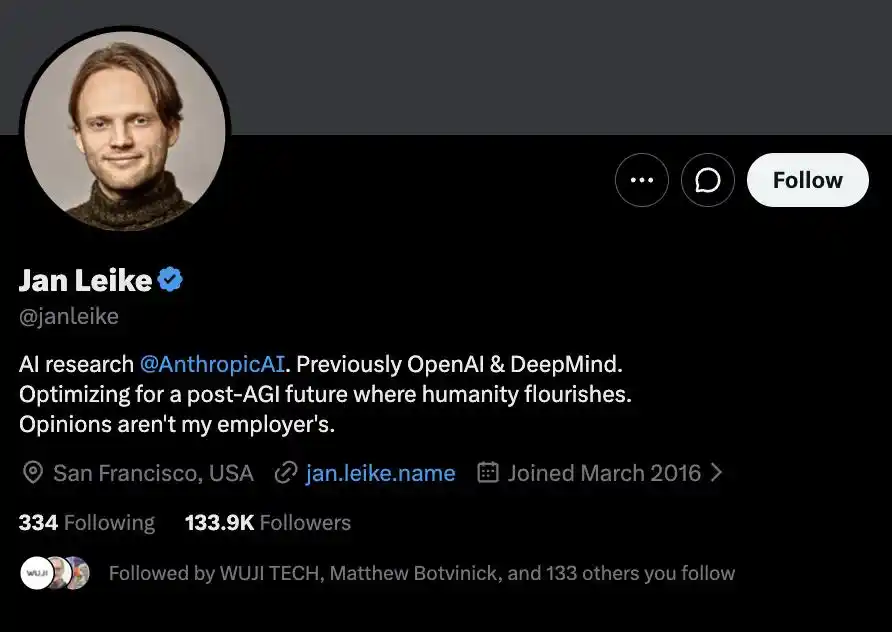
The Jan mentioned by the netizen is Jan Leike, who co-led OpenAI's Superalignment team, researching how to keep advanced AI models under human control. In 2024, he left OpenAI to join Anthropic.
In the same year, OpenAI's Policy Research Lead Miles Brundage, and Steven Adler, who had been responsible for researching dangerous capabilities of AI models, also left one after another, going on to found non-profit organizations pushing for stricter safety and security standards for AI labs.

Andrea Vallone, who was responsible for researching how ChatGPT responds to users in psychological or emotional distress, also left OpenAI at the end of 2025, joining A Corp, the team where her former colleague Jan Leike works.

Joshua is the latest name on this chain of departures.

Meanwhile, OpenAI itself is also adjusting the relationship between safety, research, and policy.

WIRED mentions that over the past year, OpenAI has been trying to bring AI research teams and policy teams closer together, hoping to develop rules and standards that better anticipate technological development. Some researchers, including Boaz Barak, Noam Brown, and Adrien Ecoffet, have also started participating more in policy-related work.
On another front, former White House AI advisor Dean Ball joined OpenAI this week as the company's Head of Strategic Futures. He will have a brief handover with Joshua and is also expected to continue collaborating with researchers and policy leads.

This makes Joshua's departure even more微妙 (subtle/delicate).

On one hand, OpenAI is tightening the bond between "safety" and "policy"; on the other hand, the person who once led Mission Alignment and later served as Chief Futurist chooses to walk out of the lab at this moment.

Joshua wrote in his departure letter: The world already knows the secret (of achieving AGI). Now, it is possible to advance this mission from outside the walls of the frontier lab.

This might be the most intriguing sentence in the whole affair.

Over the past decade, the pace of AI development has indeed been exhilarating. OpenAI has long ceased to be just that small research lab, transforming into a new kind of institution that must simultaneously face products, capital, policy, courts, and the public.

But ultimately, the past decade is just a small segment in the journey of AI. The road ahead may be even longer.

Long enough to grind any Goliath down to a dwarf.

Reference Links

[1]https://x.com/jachiam0/status/2074605703281693175

[2]https://www.wired.com/story/openai-chief-futurist-joshua-achiam-is-leaving-the-company/

This article is from the WeChat public account "Quantum Bit", author: henry

Criptomoedas em alta

Perguntas relacionadas

QWho is Joshua Achiam and what was his role at OpenAI?

AJoshua Achiam was the Chief Futurist at OpenAI. He previously led the Mission Alignment team and was a key figure in AI safety and policy, responsible for studying the risks and opportunities of advanced AI.

QWhat was the most dramatic incident involving Joshua Achiam and Elon Musk?

AIn 2018, during a farewell speech before Elon Musk left OpenAI, Joshua Achiam interrupted him, pointing out that developing AGI at Tesla might compromise safety. Musk reportedly called him a 'jackass' in response.

QWhat is the significance of the 'jackass' incident within OpenAI?

AThe incident became an internal legend at OpenAI. Dario Amodei and David Luan even gave Achiam a golden trophy inscribed with: 'For safety, never stop being that jackass,' highlighting a culture that valued challenging assumptions for safety's sake.

QAccording to the article, what pattern is observed when OpenAI's safety leaders leave?

AThe article mentions a pattern, albeit exaggerated, where significant events at OpenAI seem to follow the departure of key alignment and safety figures, such as Ilya Sutskever, Jan Leike, and now Joshua Achiam.

QHow did Joshua Achiam describe his departure and his outlook on the future of AI?

AJoshua Achiam described his departure as a 'graduation.' He expressed optimism about creating a future of peace, prosperity, and scientific possibilities, ending his statement with 'To safe AGI.'

Leituras Relacionadas

Bitcoin’s path to $80K may hinge on THIS hidden trend

Bitcoin's potential path toward $80,000 is influenced by conflicting market signals. Data shows the Coinbase Bitcoin Premium Index has recorded its longest-ever streak of consecutive negative premiums, indicating muted institutional demand or net selling from U.S. institutions. While such a trend often signals short-term weakness, it doesn't necessarily forecast a long-term bear market. Additionally, a bearish crossover occurred in Bitcoin's Net Unrealized Profit/Loss (NUPL), with its short-term average falling below the longer-term average, suggesting declining investor profitability and waning market momentum. Historically, major bear market bottoms saw the 100-day NUPL drop below zero, but this cycle it remains positive, implying either an unprecedented bottom or a further decline is needed. Currently trading around $63,148, Bitcoin has seen weekly gains but remains below its May peak. Technical indicators present a mixed picture: the MACD shows bullish momentum, while the RSI signals bearish pressure. A positive development is the return of inflows to Bitcoin ETFs after eight weeks of outflows. Analysts hold divergent views; some highlight a key liquidity zone between $48,000-$50,000 where a market bottom could form, while others maintain a more optimistic long-term outlook. Ultimately, while some bullish signs exist, a strong push from institutional investors appears crucial for Bitcoin to challenge the $80,000 level.

ambcryptoHá 14m

Bitcoin’s path to $80K may hinge on THIS hidden trend

ambcryptoHá 14m

Unexpected Weak Non-Farm Payrolls Data Pushes BTC to Rebound 11%, FOMC Minutes to Test the Narrative of This Rally

Bitcoin has rebounded 11% from its 21-month low, but the sustainability of this rally hinges entirely on the Federal Reserve's release of the June FOMC meeting minutes. The bounce was triggered by a weaker-than-expected US jobs report, which showed only 57,000 jobs added in June—about half of economists' forecasts. This data prompted traders to scale back bets on further Fed rate hikes, fueling a rally in Bitcoin alongside gold and stocks. The upcoming minutes are critical. They will reveal whether Fed officials, in their mid-June meeting, were already expressing concerns about a weakening labor market, tight credit conditions, or the risks of overtightening—factors that would support the market's recent dovish shift. Conversely, if the discussion focused on persistent inflation and the conditions for more rate hikes, the rally's foundational narrative would crumble. Market indicators show the rebound's fragility. While US spot Bitcoin ETFs saw a significant single-day inflow, it followed a prolonged period of outflows. On-chain data indicates a substantial increase in Bitcoin being moved to exchanges, creating potential sell pressure. Options market positioning suggests key price levels around $60,000 and $62,000 that could either stabilize or accelerate price movement. In essence, Bitcoin's 11% gain is built on speculation about the Fed's private deliberations three weeks ago. The FOMC minutes will replace that speculation with concrete details, and the discrepancy between market expectations and the actual record will determine whether Bitcoin holds above $64,000 or falls back toward $58,000.

marsbitHá 24m

Unexpected Weak Non-Farm Payrolls Data Pushes BTC to Rebound 11%, FOMC Minutes to Test the Narrative of This Rally

marsbitHá 24m

Just Now, The World's First Ultra-High-Frame World Model Was Born, Nvidia Content 0, Racing to 50 FPS

Just Now, Global First Ultra-High-Frame World Model Born, 0% NVIDIA, Speeds to 50 FPS A Chinese team has developed MoWorld, the world's first Flash World Model, achieving real-time interactive inference exceeding 50 FPS. Crucially, it is entirely built on domestic NPUs (National Processing Units), bypassing NVIDIA GPUs. Developed by Moxin Technology in collaboration with Zhejiang University's Pan Yunhe academician team, MoWorld represents a complete, closed-loop system from training and distillation to deployment on domestic computing power. The model tackles the critical industry bottleneck of real-time performance, essential for applications like robotics, gaming, and digital worlds. MoWorld achieves this through a full-stack redesign for NPUs, including a proprietary 3D-annotated data pipeline, system-level optimizations for long-sequence training (up to 2000 frames), and inference optimizations like dynamic mixed-precision quantization. On a Huawei Ascend 910C platform, a 14B MoE parameter model achieves over 50 FPS, reducing typical inference costs by 70% compared to equivalent GPU solutions. This breakthrough lowers the deployment barrier, potentially accelerating the industrialization of world models. Key application areas include gaming/entertainment (offering 6-DoF camera control for immersive exploration), embodied AI/autonomous driving (providing a high-fidelity digital training ground), film pre-visualization, and 3D reconstruction/digital twins due to its strong geometric consistency. MoWorld demonstrates that a full-stack domestic compute ecosystem can support cutting-edge, real-time world models, positioning China at a competitive starting line in defining next-generation spatial intelligence standards. The project underscores a shift in competition from model scale to real-world usability and cost-effective deployment.

marsbitHá 1h

Just Now, The World's First Ultra-High-Frame World Model Was Born, Nvidia Content 0, Racing to 50 FPS

marsbitHá 1h

Pacific 'Fever': How Extreme Weather Becomes Wall Street's Cash Machine?

"Pacific Fever": How Extreme Weather Becomes Wall Street's ATM? The summer of 2026 sees unusually fierce weather across China and globally. The common driver behind this global pattern is a powerful El Niño event, potentially the strongest since 1950, as declared by NOAA. This phenomenon, characterized by warming central/eastern Pacific waters, disrupts global atmospheric circulation, raising risks of floods, droughts, and heatwaves, further intensified by climate change. For financial markets, especially commodities, El Niño is not just weather but a major trading theme. History shows its price impact is profound. In the 1970s, El Niño-driven anchovy collapse in Peru fueled a soybean boom, giving Richard Dennis his first million. Anthony Ward's cocoa empire was built on superior weather intelligence. Most recently in 2024, West African droughts caused cocoa prices to soar over 400%, delivering huge gains for trend-following hedge funds. In 2026, markets are again pricing in future El Niño-induced supply shocks. Despite high current inventories, prices for palm oil, rubber, and sugar have rallied on anticipation of upcoming Southeast Asian droughts and weak Indian monsoons. Analysts identify key indicators to watch: the Niño3.4 index, Indian monsoon rainfall, Malaysian palm oil stocks, and the fundraising scale of specialized weather funds like Moreton Capital. Beyond trading opportunities, a concerning narrative is gaining traction online, linking El Niño with fertilizer shortages and energy supply disruptions to warn of potential global food crises within months. While alarmist, it highlights a deeper truth: the cascading effects of climate-driven weather extremes ultimately translate into higher costs of living for everyone, far beyond the trading floor.

marsbitHá 1h

Pacific 'Fever': How Extreme Weather Becomes Wall Street's Cash Machine?

marsbitHá 1h

Pacific 'Fever': How Extreme Weather Becomes Wall Street's ATM?

"Pacific 'Fever': How Extreme Weather Becomes Wall Street's Piggy Bank" The article examines how the 2026-2027 El Niño, potentially the strongest since 1950, is not only disrupting global weather but also creating major financial opportunities. It links recent extreme events in China and worldwide to this climate phenomenon, which alters atmospheric patterns, increasing risks of floods, droughts, and heatwaves. The core narrative explores how financial markets capitalize on these disruptions. A hedge fund is raising $500 million specifically to bet on El Niño-affected crops like South African corn and Malaysian palm oil. Historically, such strategies have yielded massive profits. Examples include Richard Dennis ("Turtle Trader") making his first fortune in the 1970s soy boom triggered by El Niño's impact on Peruvian anchovies (a key fishmeal source), and Anthony Ward's cocoa empire built on superior weather intelligence. The 2024 cocoa price surge, driven by West African drought, enriched quantitative trend-following funds. Currently, markets are preemptively bidding up palm oil, rubber, and sugar futures based on anticipated future supply shocks, despite high current inventories. The article details El Niño's asymmetric global impacts: causing drought in Southeast Asia (hurting palm oil/rubber) and India (affecting sugar/cotton), but bringing beneficial rains to South American soy and sugarcane. Key metrics to watch include the Niño3.4 index, Indian monsoon data, and Malaysian palm oil stocks. The true price effects often materialize *after* the El Niño peaks, suggesting 2027 may see the real volatility. The conclusion warns that beyond trading gains, the convergence of El Niño, energy shortages, and fertilizer scarcity poses a systemic risk, potentially raising the cost of living for everyone, turning a climate event into a global economic story.

链捕手Há 1h

Pacific 'Fever': How Extreme Weather Becomes Wall Street's ATM?

链捕手Há 1h

Trading

Spot

Artigos em Destaque

Como comprar T

Bem-vindo à HTX.com!Tornámos a compra de Threshold Network Token (T) simples e conveniente.Segue o nosso guia passo a passo para iniciar a tua jornada no mundo das criptos.Passo 1: cria a tua conta HTXUtiliza o teu e-mail ou número de telefone para te inscreveres numa conta gratuita na HTX.Desfruta de um processo de inscrição sem complicações e desbloqueia todas as funcionalidades.Obter a minha contaPasso 2: vai para Comprar Cripto e escolhe o teu método de pagamentoCartão de crédito/débito: usa o teu visa ou mastercard para comprar Threshold Network Token (T) instantaneamente.Saldo: usa os fundos da tua conta HTX para transacionar sem problemas.Terceiros: adicionamos métodos de pagamento populares, como Google Pay e Apple Pay, para aumentar a conveniência.P2P: transaciona diretamente com outros utilizadores na HTX.Mercado de balcão (OTC): oferecemos serviços personalizados e taxas de câmbio competitivas para os traders.Passo 3: armazena teu Threshold Network Token (T)Depois de comprar o teu Threshold Network Token (T), armazena-o na tua conta HTX.Alternativamente, podes enviá-lo para outro lugar através de transferência blockchain ou usá-lo para transacionar outras criptomoedas.Passo 4: transaciona Threshold Network Token (T)Transaciona facilmente Threshold Network Token (T) no mercado à vista da HTX.Acede simplesmente à tua conta, seleciona o teu par de trading, executa as tuas transações e monitoriza em tempo real.Oferecemos uma experiência de fácil utilização tanto para principiantes como para traders experientes.

489 Visualizações TotaisPublicado em {updateTime}Atualizado em 2026.06.02

Como comprar T

Discussões

Bem-vindo à Comunidade HTX. Aqui, pode manter-se informado sobre os mais recentes desenvolvimentos da plataforma e obter acesso a análises profissionais de mercado. As opiniões dos utilizadores sobre o preço de T (T) são apresentadas abaixo.

活动图片