Indomobil Group Partners with Space Time to Launch Blockchain-Verified Education in Indonesia

TheNewsCryptoPublicado em 2025-12-10Última atualização em 2025-12-10

Resumo

Indomobil Group has partnered with the Space Time Foundation to launch a blockchain-based education initiative in Indonesia, aiming to provide verifiable credentials to over 50,000 students. The program uses Space and Time's SXT Chain to store course completion records, enabling students to easily validate their qualifications for employment or further studies. The native token SXT serves as the primary payment method, allowing direct transactions between students, parents, and schools to enhance transparency and financial inclusion for unbanked populations. The initiative eliminates intermediaries, ensures traceable transactions, and modernizes education access through blockchain technology, as highlighted by leaders from both organizations.

It has been announced that the Indonesian conglomerate Indomobil Group has formed a partnership with the Space Time Foundation in order to launch an initiative that will provide verifiable education to more than 50,000 students in Indonesia. For the purpose of storing evidence of course completion, the program makes use of SXT Chain, a blockchain platform created by Space and Time. This makes it possible for students to readily validate their credentials when applying for employment or pursuing further study.

In addition, the initiative uses SXT, which is the native token of Space and Time, as the main mode of payment, as said in a statement. The unbanked population of Indonesia, which has historically depended on intermediaries to convert and transfer payments to educational providers, is the target audience for this initiative, which is aimed to give further assistance.

It is possible for parents and kids to send SXT tokens directly to their respective schools, as an alternative to spending cash. The purpose of this simplified strategy is to make payments for education more dependable, more transparent, and more expedient, especially for those who are financially excluded.

Jusak Kertowidjojo, president director of Indomobil Group, underscored the significance of the initiative, stating:

“Indomobil has always believed in building long-term infrastructure that supports national development. Education is a critical part of that. Our partnership with Space and Time and MakeInfinite Labs allows us to lead the world in efficient, transparent, and verifiable education.”

The backend architecture of the program is provided by Space and Time. This technology indexes each and every transaction and ensures that all financial and educational data is immediately available and verifiable. This means that data becomes the only source of truth in a system in which payments are made without the involvement of middlemen. The implementation of this assures that each and every transaction can be independently tracked and confirmed, providing the openness and accountability that is necessary for the program to be scaled efficiently.

Nate Holiday, one of the co-founders of the Space and Time network, stated his excitement about the combination of forces:

“We are thrilled that Indomobil leverages Space and Time technology to modernize and expand access to education for thousands of students. Blockchain offers a faster, more transparent, and more inclusive alternative to traditional payment systems.”

The initiative not only presents a scalable approach for the provision of education, but it also solves the unbanked conundrum that is frequent in developing nations. This is accomplished by eliminating financial obstacles and assuring verifiability via the infrastructure of blockchain technology. Students will have the option to validate their qualifications and courses whenever and wherever they want, as well as get direct access to current education and financial systems.


TagsAltcoinBlockchain

Leituras Relacionadas

WSJ: Unveiling the Secret Jury That Controls Disputes on Polymarket

Last month, Garrick Wilhelm lost a $567 bet on the Polymarket prediction platform about whether a ceasefire would be reached with Hezbollah. When a truce was announced, some traders argued it counted, but Wilhelm disagreed. The dispute was settled not by Polymarket, but by a decentralized group of UMA token holders who vote on such disagreements. As trading surges, resolving ambiguous outcomes is a growing challenge for prediction markets. Unlike competitors like Kalshi that decide internally, Polymarket outsources dispute resolution to UMA. Its token holders, mostly anonymous and with voting power weighted by holdings, arbitrate cases. Critics argue this system is prone to manipulation, as voters can also bet on the same markets they judge. A Wall Street Journal analysis found that over the past year, at least 60% of active UMA voters had corresponding Polymarket accounts and held positions in disputes they voted on. Voting power is also concentrated among a few large holders. Polymarket says only 0.2% of bets go to UMA and that the system disperses authority. Its founder has acknowledged flaws and promised fixes. UMA's backers deny any proven manipulation, dismissing critics as sore losers. The platform penalizes voters in the minority to incentivize "correct" outcomes. Disputes are rising, covering topics from a streamer's pregnancy announcement to Iran. This model also helps Polymarket argue it's an offshore platform outside U.S. regulation, a shift made after a 2022 settlement with the CFTC. Some losing traders have formed groups to protest, targeting entities like UMA.rocks, which aggregates votes. Its founder says traders often blame UMA for their own mistakes. A recently ousted committee member, Scout, admitted to both betting and voting but argued involved voters research more thoroughly. He highlighted the dilemma: "Either you have conflicted traders deciding, or you have uninformed outsiders voting. There is no perfect answer right now."

marsbitHá 6m

WSJ: Unveiling the Secret Jury That Controls Disputes on Polymarket

marsbitHá 6m

China's AI Circle Has Just Established a Pecking Order, and Capital Is Already Changing the Rules Again

The article describes how the valuation logic for major Chinese AI model companies has undergone three dramatic shifts between 2022 and 2026, driven by capital's changing priorities. The first phase (around 2022) was **technology-driven valuation**, where funding was based on model performance and benchmark scores. This logic was disrupted when DeepSeek's R1 model demonstrated that comparable capabilities could be achieved at a fraction of the cost, challenging the notion of technical superiority as an unassailable moat. The second phase shifted to **IPO window-driven valuation**. Following favorable listing conditions in Hong Kong, capital flowed to companies like Zhipu and MiniMax with the clearest path to a public listing. However, this focus on liquidity over fundamentals became apparent as their Annual Recurring Revenue (ARR) lagged far behind international peers like Anthropic. The third and current phase is **national strategy-driven valuation**. This shift was marked by the state-backed "Big Fund" leading a major investment in DeepSeek, signaling that leading domestic AI models are now viewed as strategic national assets comparable to semiconductor manufacturing. This new logic, combined with soaring US valuation benchmarks (e.g., OpenAI at $850B), propelled the combined valuation of China's top AI firms ("The Four Dragons"/"Five Strong") past 1 trillion RMB. The article presents a "pricing leap model": each shift is triggered by a key event that invalidates the old logic, leading to rapid capital reallocation under a new narrative before its flaws (particularly the gap in fundamental ARR metrics) become evident. It concludes that the next major test for these valuations will be a return to scrutinizing core business fundamentals, specifically ARR growth, suggesting a fourth pricing shift is imminent.

marsbitHá 31m

China's AI Circle Has Just Established a Pecking Order, and Capital Is Already Changing the Rules Again

marsbitHá 31m

'Stock God' Trump's 3,642 Trades Disclosed: The 'Perfect Closed Loop' of Policy and Portfolio

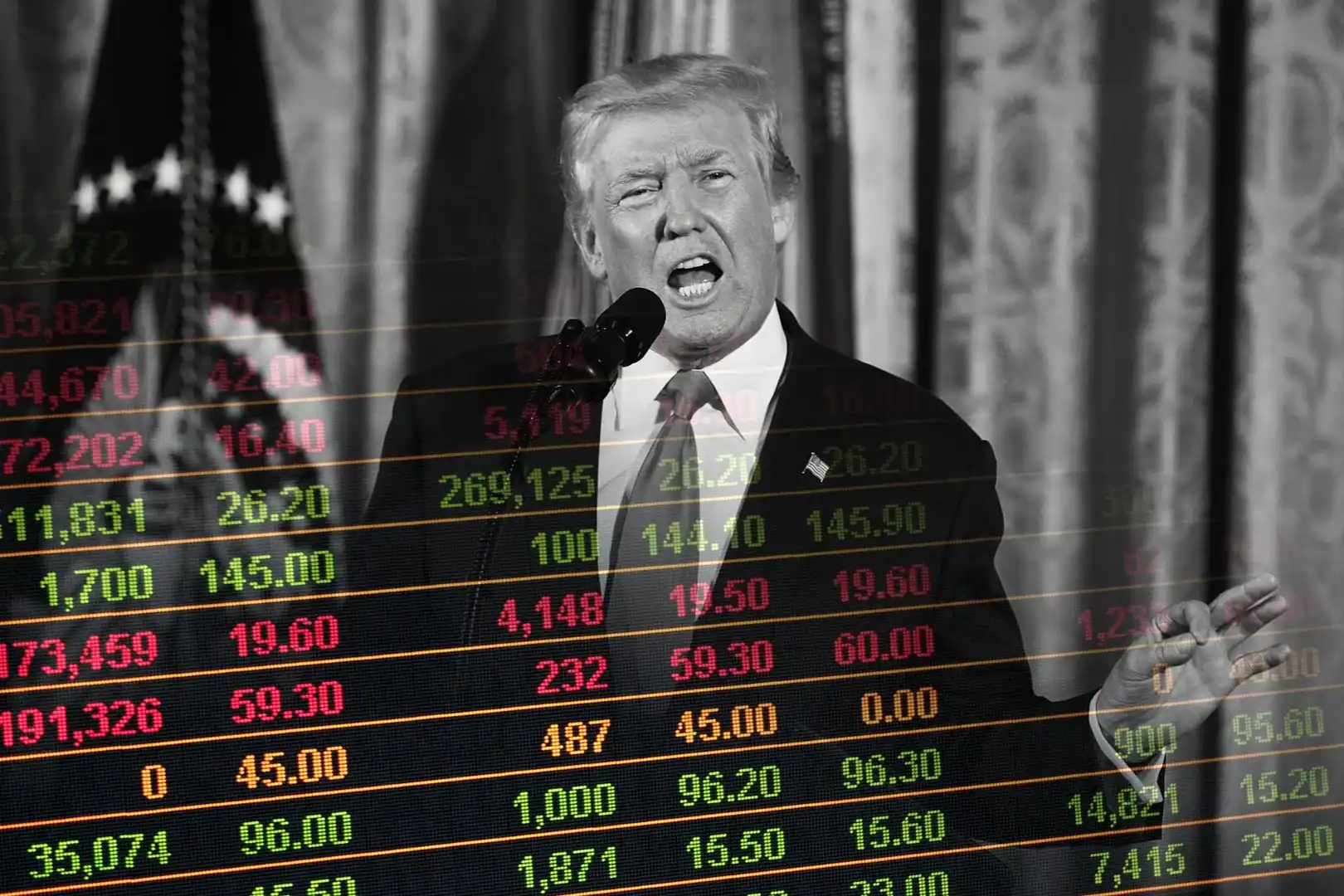
Summary: Donald Trump's First Quarter stock trades, totaling 3,642 transactions, have been disclosed. While the White House maintains the trades were managed by an advisor and complied with disclosure laws, they reveal a portfolio heavily aligned with his policy agenda. The trades show a rotation away from major tech stocks like Microsoft, Amazon, and Meta, and into semiconductor and AI hardware companies such as NVIDIA, AMD, Broadcom, Dell, and Intel. Notably, Trump's account purchased Dell stock before he publicly praised the company, after which its stock rose. The Dell family also pledged funds to a Trump-affiliated policy project. A critical case is Intel. The Trump administration converted $8.9 billion in CHIPS Act subsidies into a 9.9% equity stake, making the U.S. government Intel's largest shareholder. Months later, Trump's personal account also bought Intel stock. This intertwines national industrial policy with potential personal financial interest. Unlike typical insider trading concerns, this situation creates a "closed loop": policy decisions (e.g., subsidies, tariffs, crypto regulation) can boost the value of his holdings, and those holdings may, in turn, influence future policy directions. This blending of presidential power and personal portfolio, while legally disclosed, raises profound questions about conflicts of interest that current rules do not address.

marsbitHá 47m

'Stock God' Trump's 3,642 Trades Disclosed: The 'Perfect Closed Loop' of Policy and Portfolio

marsbitHá 47m

Dialogue with Figure Robotics Founder: Behind the $39 Billion Valuation Lies Ambition to Mass-Produce Millions of Units

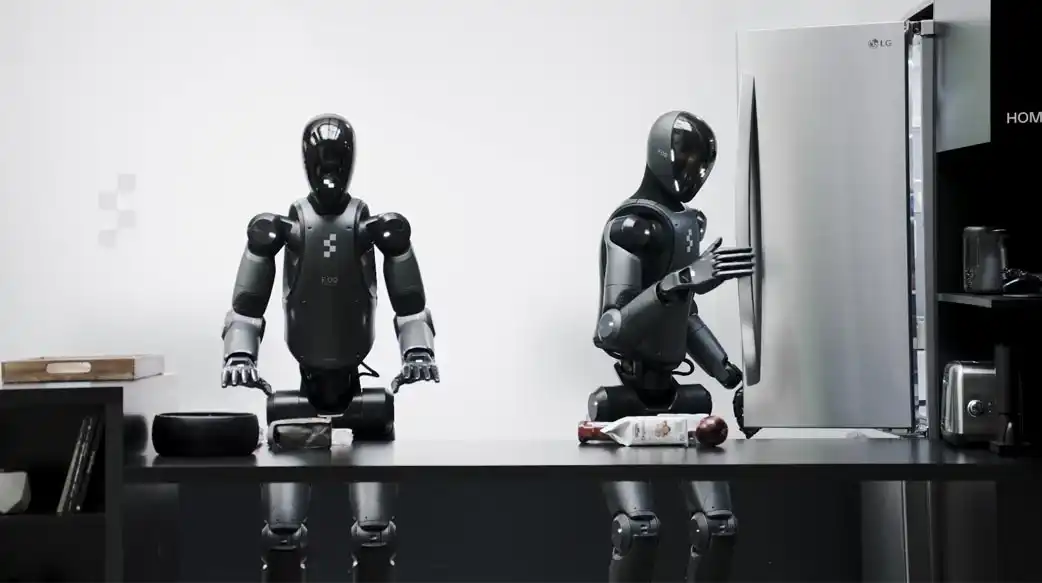
Title: Figure's Founder on the $39B Valuation and the Ambition to Mass Produce a Million Humanoid Robots In a Sourcery podcast interview, Figure founder and CEO Brett Adcock discusses the rapid rise of his humanoid robotics company. With a valuation that surged 15x in 18 months to $39 billion, Figure aims to create general-purpose humanoid robots for work in factories and homes. Adcock states that the company's primary goal is to make robots that perform real, paid work autonomously. He shares Figure's aggressive scaling plan: producing thousands of robots this year, with an ultimate ambition to reach one million units annually. Adcock explains Figure's vertically integrated strategy, designing its own motors, sensors, and joints to control its supply chain and destiny. He details the challenges, including achieving long-term, reliable, end-to-end autonomous operation—a feat no one has yet accomplished. The biggest risk is executing this complex vision at scale, but Adcock believes the potential market is enormous, representing a significant portion of global GDP. The interview also covers his departure from OpenAI, citing that Figure's internal AI team eventually surpassed OpenAI's capabilities for robotics applications. Adcock concludes by highlighting his focus for the year: large-scale commercial deployment of robots and advancing toward a "general robot" capable of any human task, potentially seeing the first signs of AGI (Artificial General Intelligence) in the physical world at Figure.

marsbitHá 47m

Dialogue with Figure Robotics Founder: Behind the $39 Billion Valuation Lies Ambition to Mass-Produce Millions of Units

marsbitHá 47m

Trading

Spot
Futuros
活动图片