How to Uncover New Wealth Opportunities? Renowned Independent Crypto Analyst Releases Top 10 Predictions for 2026

marsbitPublicado em 2026-01-13Última atualização em 2026-01-13

Resumo

In this article, independent crypto analyst Miles Deutscher shares his top 10 predictions for the cryptocurrency market in 2026. Key forecasts include Bitcoin ending the year higher than it started, potentially above $90,000, though a parabolic surge beyond $150,000 is uncertain. He anticipates that institutional investors will continue to drive the market more than retail, emphasizing the importance of tokens with strong revenue models and real utility. Major growth is expected in several sectors: prediction markets could see a 5x volume increase, perpetual futures trading will expand beyond crypto into stocks and metals, and ICO participation will hit new highs due to favorable regulations. Real-World Assets (RWA) are predicted to have their second-biggest year, while neobanks leveraging crypto and stablecoins are poised for exponential growth as infrastructure improves. The intersection of AI and crypto is highlighted as a major narrative, with advancing technology enabling practical applications in agents, data, and automation. Additionally, stablecoin supply is projected to grow by over 50%, fueled by regulatory developments like the U.S. Clarity Act. Deutscher encourages readers to focus on fundamental value and emerging narratives to capture upside opportunities.

Author:Miles Deutscher

Compiled by: Jiahuan, ChainCatcher

In this article, I will break down my top 10 cryptocurrency predictions for 2026 in detail. These include my price prediction for $BTC, top altcoin narratives, the prospects of crypto and AI integration, and more. This is an exercise I do every year, and it really helps me calibrate my direction for the new year. Even if you don't agree with all the predictions here, I hope this will inspire your thinking and prompt you to create your own list to prepare for this year and capture the greatest upside potential.

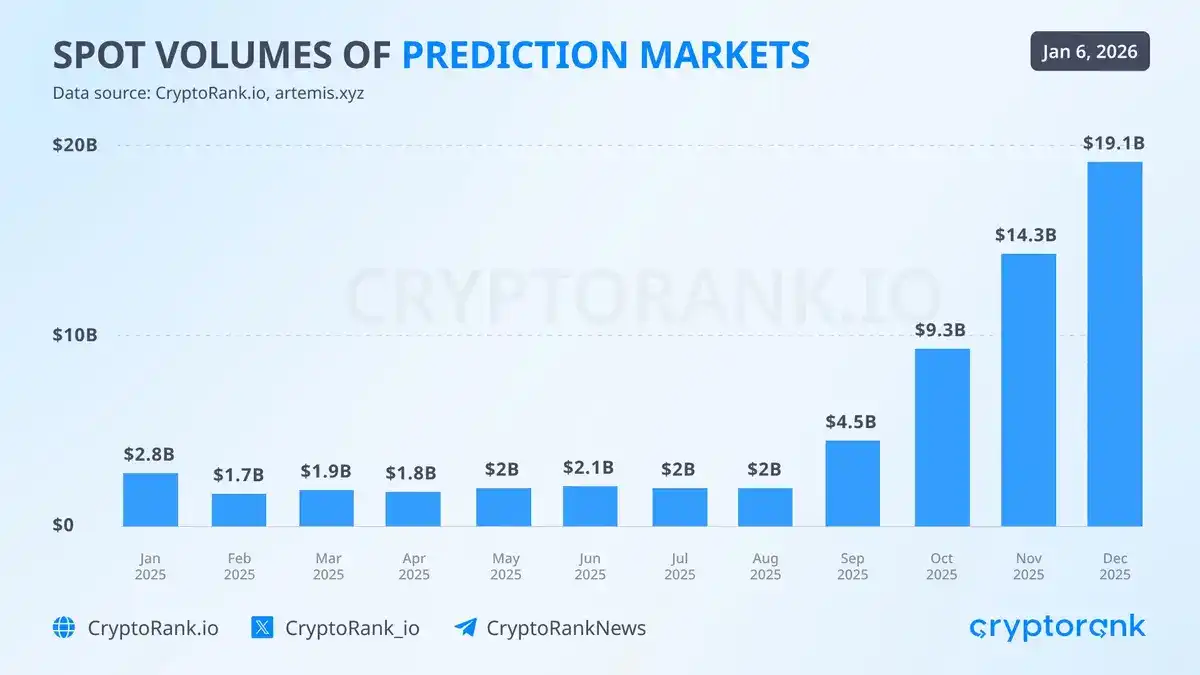
10. Prediction Market Trading Volume to Grow 5x

From January 2025 to today, the trading volume of prediction markets has grown by about 10 times. I believe this trend will continue, and in 2026, we will see at least one month where the volume reaches 5 times the current level. A 5x increase from the current trading volume would equate to approximately $95 billion per month. Another factor to consider is the rise of "adjacent protocols" built on top of prediction markets. For example, @intodotspace is building the first leveraged prediction market. This trend will further amplify trading volume.
9. Explosive Growth in Stock/Metal Perpetual Contracts

The argument here is simple: we will continue to see the proliferation of perpetual contracts in the mainstream—not just limited to crypto token trading. 2025 was the year perpetual futures technology exploded in the crypto space—instant settlement, excellent UI/UX, decentralization, etc. Secondly, gold/metals/stocks are in a fierce bull market. Typically, as the cycle nears its peak, people move further down the risk curve in pursuit of returns (perpetual contracts are well-suited to benefit from small-cap/emerging markets).

In many cases, accessing through crypto channels is easier and faster than buying stocks/gold through traditional finance (TradFi) channels. Due to this combined effect, I believe we will see explosive growth in the trading volume of stocks/metals on perpetual DEXs, and perpetual contract trading will extend far beyond crypto tokens.

8. The "Renaissance" of ICOs Continues

Due to a major shift in the regulatory environment, the public now has unprecedented access to participate in token sales. ICO participation is at an all-time high, and I expect this overall upward trend to continue. If you're interested in profiting from ICOs, I recently published a complete tweet thread and a free Notion template to help you stay organized in this space—you can check it out below.

7. Altcoins with Strong Revenue Models Will Win

The market sentiment has clearly shifted, favoring real businesses over pure speculation and hype. Of course, the latter will always have a place in the market, but more and more investors (both large and small) are looking for real "flywheels" to support token prices (amid a sea of token dilution).

I believe protocols that genuinely generate revenue will continue to dominate. Simply put, protocols with real revenue mechanisms will perform better than those without. Keep an eye on companies/projects/teams that are actually generating revenue.

6. RWA Will Have Its Second-Biggest Breakout Ever

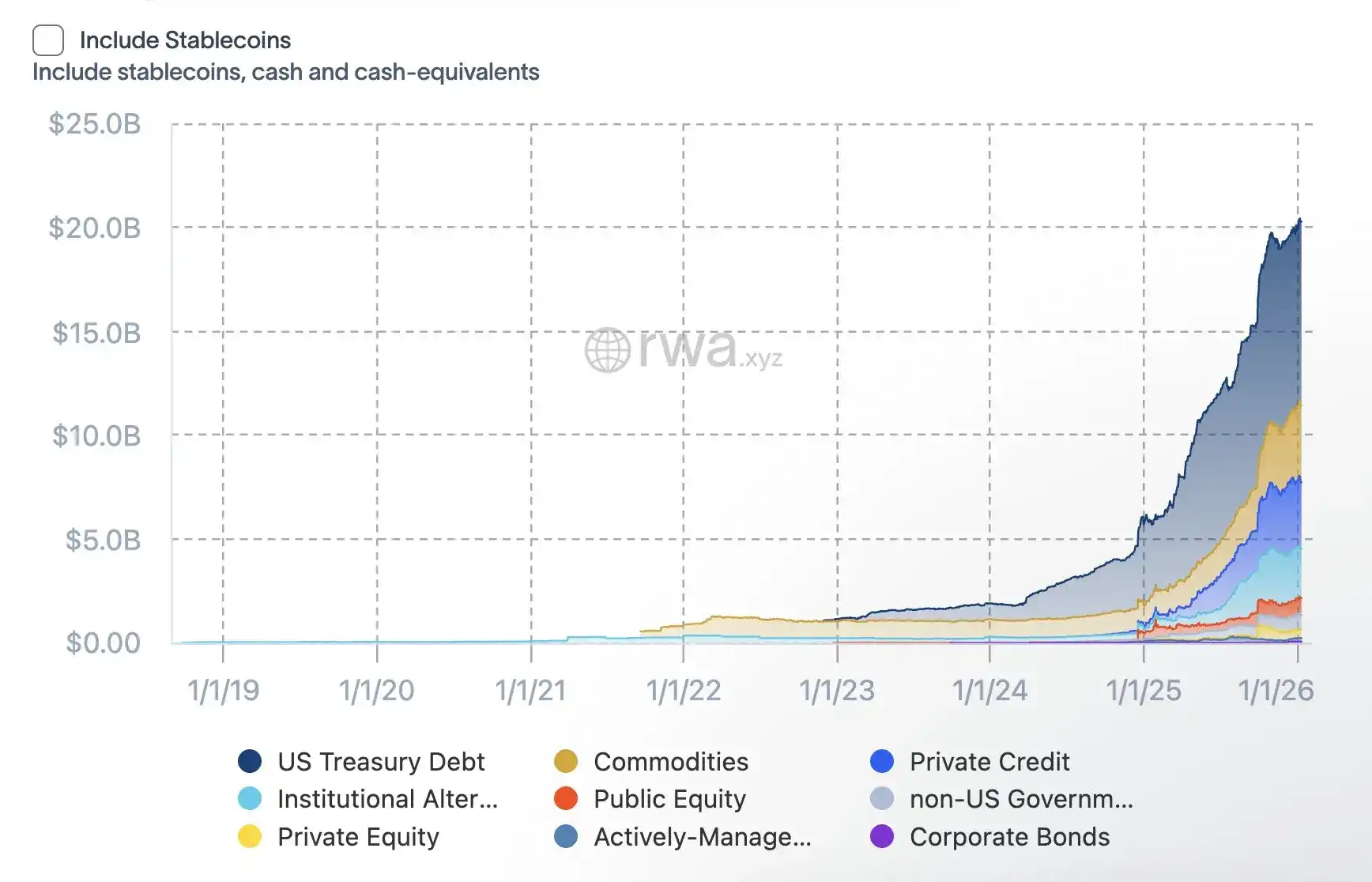
I’d love to say RWA will have its biggest year ever. However, technically, it’s hard to beat the $14 billion growth in 2025. I think liquidity will continue to flow into this space, and it will be another fruitful year, but the percentage increase might be smaller than in 2025. 2026 may bring many yield/tokenization opportunities and numerous altcoin trading setups in this field.
5. Neobanks Become the Most Exponentially Growing Sector in Crypto

It feels like we’ve finally reached a tipping point for crypto/stablecoin banking. The infrastructure has finally caught up with demand, and we’re seeing explosive growth in the adoption of many products. Being able to easily convert between cryptocurrency and fiat is a much-needed solution. This sector has the largest total addressable market (basically the entire financial world) and is actively solving problems in developing countries and regions where traditional financial systems are less accessible. This is a huge market, and I expect we will finally (truly) crack it this year.

4. AI / AI Agents Make a Real Comeback

Last January, we either experienced a crazy AI hype season that drove up the prices of Crypto x AI protocols—the only problem was that the technology hadn’t caught up yet. Entering 2026, things are different; the technology can actually deliver on the hype. For me, 2026 is undoubtedly the most critical year for AI so far (just like every year), and as people speculate on AI’s upside, retail interest can easily spill over into the crypto space. Crypto x AI is the perfect synergy. Crypto brings the freedom of financial rails, and AI brings automation, which I believe is the future of finance. I think this will create opportunities in many AI sub-sectors, including x402, robotics, agentic workflows, AI data/infrastructure, etc.

3. Stablecoin Supply to Grow by Over 50%

Last year, the total stablecoin supply grew by 50% (from $200 billion to $300 billion). I believe this year we will see similar growth in stablecoin supply, further catalyzed by the U.S. Clarity Act for stablecoins.

2. Institutional Driving Force in Crypto Market to Surpass Retail

This entire cycle has been institutionally driven (DATs, ETF pushes, etc.). I expect this shift toward institutionally driven markets to continue—which is why I focus on tokens/protocols that can attract institutional interest (back to my point about focusing on real revenue projects).

1. BTC Year-End Price Will Be Higher Than Year-Start

Whether $BTC will experience a crazy "blow-off top" above $150,000 this year depends on many factors: fund flows/buyer demand, DATs, macro background, etc.

Frankly, I’m not sure if the market can gather all the right conditions to trigger that most extreme疯牛见顶 mode. However, I think Bitcoin will close with a bullish price candle at the end of 2026. This means $BTC must close above the $90,000 range.

To summarize my long logic on this (I may go into more detail in a later post): we are likely in the final year of the business cycle, and we’re seeing price bottoming behavior similar to previous years, which makes me believe we will at least close green this year—I’ll dive deeper into my exact thesis on this in the coming weeks, stay tuned.

Perguntas relacionadas

QWhat is the author's price target for Bitcoin by the end of 2026?

AThe author believes Bitcoin will close the year with a bullish candle, meaning it must close above the $90,000 range.

QWhich sector does the analyst predict will be the most exponentially growing in crypto space for 2026?

AThe analyst predicts that Digital Banks (Neobanks) will be the most exponentially growing sector in the crypto space for 2026.

QWhat is the predicted growth for the total stablecoin supply in 2026?

AThe analyst predicts the stablecoin supply will increase by more than 50% in 2026, similar to its growth the previous year.

QAccording to the predictions, what will be the main driving force of the crypto market in 2026, institutions or retail?

AThe main driving force of the crypto market in 2026 is predicted to be institutions, surpassing retail investors.

QWhich narrative does the analyst believe will make a 'real comeback' in 2026 with the technology now able to deliver on its promises?

AThe analyst believes that AI / AI Agents will make a real comeback in 2026, as the technology can now deliver on its promises.

Leituras Relacionadas

Breaking: OpenAI Undergoes Major Reorganization, President Brockman Assumes Command

OpenAI has announced a major internal reorganization just months before its anticipated IPO. The company is merging its three flagship product lines—ChatGPT, Codex, and the API platform—into a single, unified product organization. The most significant leadership change involves co-founder and President Greg Brockman moving from a background technical role to take full, permanent control over all product strategy. This follows the indefinite medical leave of AGI Deployment CEO Fidji Simo. Additionally, ChatGPT's longtime lead, Nick Turley, has been reassigned to enterprise products, with former Instagram executive Ashley Alexander taking over consumer offerings. The consolidation, internally framed as a strategic move towards an "Agentic Future," aims to break down internal silos and create a cohesive "Super App." This planned desktop application would integrate ChatGPT's conversational abilities, Codex's coding power, and a rumored internal web browser named "Atlas" to autonomously perform complex user tasks. The reorganization occurs amid significant internal and external pressures. OpenAI has recently seen a wave of high-profile departures, including Sora co-lead Bill Peebles and other senior technical leaders, leading to concerns about a thinning executive bench. Externally, rival Anthropic recently secured funding at a staggering $900 billion valuation, surpassing OpenAI's own. Google's upcoming I/O developer conference also poses a competitive threat. Analysts suggest the dramatic restructure is a pre-IPO move to present a clearer, more focused narrative to Wall Street—streamlining operations and demonstrating decisive leadership under Brockman to counter internal turbulence and intense market competition.

marsbitHá 5m

Breaking: OpenAI Undergoes Major Reorganization, President Brockman Assumes Command

marsbitHá 5m

Two Survival Structures of Market Makers and Arbitrageurs

Market makers and arbitrageurs represent two distinct survival structures in high-frequency trading. Market makers primarily use limit orders (makers) to profit from the bid-ask spread, enjoying high capital efficiency (nominally 100%) but bearing inventory risk. This "inventory risk" arises from passive, fragmented, and discontinuous order fills in the limit order book (LOB). This risk, while a potential cost, can also contribute to excess profit if managed within control boundaries, allowing for mean reversion. Market makers essentially sell "time" (uncertainty over execution timing) to the market for price control and low fees. In contrast, cross-exchange arbitrageurs typically use market orders (takers) to exploit price differences or funding rates, resulting in lower nominal capital efficiency (requiring capital on both exchanges) and higher transaction costs. Their risk exposure stems from asymmetries in exchange rules (e.g., minimum order sizes), execution latency, and infrastructure risks (e.g., ADL, oracle drift). These exposures are active, exogenous gaps that primarily erode profits rather than contribute to them. Arbitrageurs essentially sell "space" (capital sunk across venues) for localized, immediate certainty. Both strategies engage in a trade-off between execution friction and residual risk. Optimal systems allow for temporary, controlled risk exposure rather than enforcing zero exposure at all costs. Their evolution converges towards hybrid models: arbitrageurs may use maker orders to reduce costs, while market makers may use taker orders or hedges for risk management. Ultimately, both use different forms of risk exposure—market makers exposing inventory, arbitrageurs immobilizing capital—to extract marginal, hard-won certainty from the market.

链捕手Há 5m

Two Survival Structures of Market Makers and Arbitrageurs

链捕手Há 5m

Who Will Define the Rules of the AI Era? Anthropic Discusses the 2028 US-China AI Landscape

This article, based on Anthropic's analysis, outlines the intensifying systemic competition between the U.S./allies and China for AI leadership by 2028. It argues that access to advanced computing power ("compute") is the critical bottleneck, where the U.S. currently holds a significant advantage through chip export controls and allied innovation. However, China's AI labs remain competitive by exploiting policy loopholes—via chip smuggling, overseas data center access, and "model distillation" attacks to copy U.S. model capabilities—keeping them close to the frontier. The piece presents two contrasting scenarios for 2028. In the first, decisive U.S. action to tighten compute controls and curb distillation locks in a 12-24 month AI capability lead, cementing democratic influence over global AI norms, security, and economic infrastructure. In the second, policy inaction allows China to achieve near-parity through continued access to U.S. technology, enabling Beijing to promote its AI stack globally and integrate advanced AI into its military and governance systems, altering the strategic balance. Anthropic contends that maintaining a decisive U.S. lead is essential for shaping safe AI development and governance. The core recommendation is for U.S. policymakers to urgently close compute and model access loopholes while promoting global adoption of the U.S. AI technology stack to secure a lasting strategic advantage.

marsbitHá 2h

Who Will Define the Rules of the AI Era? Anthropic Discusses the 2028 US-China AI Landscape

marsbitHá 2h

“Why Didn’t You Buy 2x Long SK Hynix?”

The article discusses the immense popularity of the "2x Long SK Hynix ETF" (07709.HK) in Hong Kong, which became the world's largest single-stock leveraged ETF by May 2026. Launched in October 2025, the ETF's net value soared over 1000% in seven months, significantly outperforming the 324% gain of SK Hynix's underlying stock, driven by the AI boom and a critical shift in industry demand from computing power to memory. It highlights the mechanics and risks of daily-rebalanced leveraged ETFs. In a smooth bullish market, they generate amplified returns, but during volatile periods—exemplified by market swings during geopolitical tensions in the Strait of Hormuz in March-April 2026—they suffer severe "volatility decay," where choppy price action can cause losses far exceeding twice the drop of the underlying asset. The piece frames SK Hynix, as NVIDIA's primary HBM supplier, within the classic cycle of the memory chip industry—a commoditized sector prone to boom-and-bust cycles of shortage, price hikes, overcapacity, and crashes. While current AI-driven demand and high margins (Q1 2026毛利率~79%) create a "super cycle," the article questions its sustainability. It warns that extreme profits will inevitably tempt competitors like Samsung and Micron to ramp up HBM production, potentially eroding scarcity. Furthermore, the entire narrative remains tethered to the massive AI capital expenditure of tech giants. In conclusion, the ETF's trajectory symbolizes the accelerated, all-in nature of the current AI revolution, where timeframes are compressed and market moves are extreme. However, it also underscores that while industry trends define ultimate returns, macro-geopolitical risks dictate the volatile and uncertain path to get there.

marsbitHá 2h

“Why Didn’t You Buy 2x Long SK Hynix?”

marsbitHá 2h

Trading

Spot
Futuros
活动图片