Hong Kong Proposes New Rules To Allow Crypto Investments For Insurers – Report

bitcoinistPublicado em 2025-12-23Última atualização em 2025-12-23

Resumo

Hong Kong's Insurance Authority has proposed new rules to allow insurers to invest in cryptocurrencies and stablecoins, as part of the city's broader strategy to become a global digital asset hub. The proposal, subject to public consultation from February to April 2026, would impose a 100% risk charge on crypto assets, requiring insurers to hold reserves equal to their crypto investments. Stablecoins would be treated differently, with risk charges based on the fiat currency they are pegged to. The move aims to support the insurance industry and economic development. Separately, the Hong Kong Monetary Authority is expected to issue its first stablecoin licenses in early 2026, though mainland China's strict stance against stablecoins may complicate applications involving Chinese institutions or the yuan.

Hong Kong is reportedly exploring new rules that would allow insurance companies to invest in cryptocurrencies and the infrastructure sector as part of its efforts to become a leading hub for digital assets and support broader economic development.

Hong Kong Eyes Crypto Investments For Insurers

On Monday, Bloomberg reported that the Hong Kong Insurance Authority has proposed a set of new rules that could channel insurance capital into digital assets, including cryptocurrencies and stablecoins.

Hong Kong financial authorities have been actively working to develop a comprehensive framework that supports the expansion of the digital assets industry, part of its strategy to become a leading crypto hub in the world.

According to the December 4 presentation reviewed by Bloomberg, the insurance regulator would impose a 100% risk charge on crypto assets, requiring insurers to hold reserves equal to the value of their crypto investments.

Meanwhile, stablecoin investments would be approached differently under the new proposal, with risk charges based on the fiat currency the Hong Kong-regulated token is pegged to.

The Insurance Authority proposal, which could still change in the coming months, will reportedly be open for public consultation from February through April 2026, followed by legislative submissions.

The regulator told Bloomberg that it initiated the review of the risk-based capital regime this year with the main goal of supporting the insurance industry and broader economic development.

Notably, the insurance authority website states that there were 158 authorized insurers in Hong Kong as of June 2025. Moreover, the total gross premiums of the Hong Kong insurance industry were HK$635 billion, worth approximately $82 billion, in 2024.

“We are at the stage of gauging industry feedback and will also put the proposals for public consultation in due course,” a spokesperson for the regulator told the news media outlet.

The proposed insurer framework also addresses new infrastructure rules as the city seeks new growth. The regulator is reportedly planning capital incentives for investments in Hong Kong or on the mainland, as well as for projects listed or issued in the financial hub.

HK’s Stablecoin Landscape

As Bloomberg noted, the Hong Kong Monetary Authority (HKMA) is expected to grant the first batch of stablecoin issuer licenses at the start of 2026. However, some industry players believe that the regulator’s timeline could be delayed.

As reported by Bitcoinist, the People’s Bank of China (PBOC) and other top financial regulators recently affirmed that stablecoins do not qualify as legal tender in the mainland, as they don’t meet regulatory requirements and risk of being used for illegal activities.

Following the pronouncement, multiple analysts suggested that the PBOC’s recent declarations not only sank hopes that Beijing might have softened its stance on cryptocurrencies but also would affect Hong Kong’s efforts to become a hub for the stablecoin industry.

Earlier this year, the HKMA enacted the Stablecoins Ordinance, which directs any individual or entity seeking to issue a fiat-referenced stablecoin (FRS) in Hong Kong, or any Hong Kong Dollar-pegged token, to obtain a license from the regulator.

Multiple companies have applied for the license, with more than 30 applications filed this year, according to local news outlets. The list of applicants includes logistics technology firm Reitar Logtech and the overseas arm of Chinese mainland financial technology giant Ant Group.

According to the founding director of the Law, Innovation, Technology and Entrepreneurship Lab at the University of Hong Kong’s Faculty of Law, Brian Tang, Beijing’s stance means that applicants for Hong Kong’s stablecoin licenses would need to reconsider if the application submitted to the HKMA touches mainland China issuers and users.

A spokesperson stated that the HKMA was reviewing the applications and aimed to begin with a reduced number of licenses. However, they noted that even if Hong Kong proceeds with the original approval schedule, projects that involve the yuan or mainland Chinese institutions would likely be delayed.
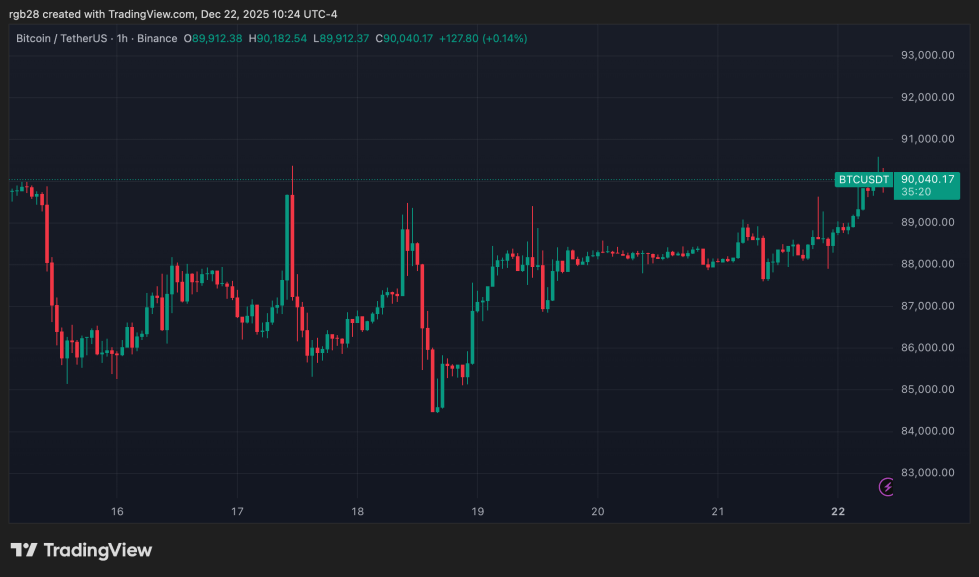
Bitcoin (BTC) trades at $90,040 in the one-week chart. Source: BTCUSDT on TradingView


Perguntas relacionadas

QWhat is the main purpose of Hong Kong's proposed new rules for insurance companies?

AThe main purpose is to allow insurance companies to invest in cryptocurrencies and the infrastructure sector as part of Hong Kong's strategy to become a leading hub for digital assets and support broader economic development.

QWhat specific risk charge would be imposed on crypto assets under the proposed rules?

AA 100% risk charge would be imposed, requiring insurers to hold reserves equal to the full value of their crypto investments.

QHow will the risk charge for stablecoin investments be determined according to the proposal?

AThe risk charge for stablecoins will be based on the fiat currency that the Hong Kong-regulated token is pegged to.

QWhen is the Hong Kong Insurance Authority's proposal expected to be open for public consultation?

AThe proposal is expected to be open for public consultation from February through April 2026.

QWhat potential impact did analysts suggest the PBOC's declaration on stablecoins would have on Hong Kong?

AAnalysts suggested that the PBOC's declaration, which states stablecoins are not legal tender, would affect Hong Kong's efforts to become a hub for the stablecoin industry and means license applicants must reconsider if their application involves mainland China issuers and users.

Leituras Relacionadas

Winter for Crypto IPOs: Consensys and Ledger Withdraw Applications

The crypto IPO window is tightening significantly in 2026, marked by prominent companies delaying or pausing their public listing plans. Following a successful 2025 "harvest year" that saw Circle, Bullish, and Gemini go public amidst a bull market, the tide has turned. Consensys, developer of MetaMask, recently postponed its IPO until at least fall 2026. Hardware wallet leader Ledger also suspended its planned US listing due to unfavorable market conditions, with Kraken having previously delayed its own plans. This shift is driven by a cooling market in 2026, characterized by a significant Bitcoin price correction, declining trading volumes, and reduced investor risk appetite for crypto stocks. The poor post-IPO performance of 2025 listings like Circle and Bullish, which saw major share price declines, has heightened investor caution. This contrasts sharply with the current AI sector, where companies like SpaceX, OpenAI, and Anthropic are commanding massive valuations and investor enthusiasm based on narratives of stable, exponential growth. Crypto companies now face pressure to transition from hype-driven models to demonstrating reliable cash flows and robust compliance. While the paused IPO plans may lead to valuation resets and affect ecosystem liquidity, they also accelerate industry consolidation toward stronger, more compliant infrastructure players. A potential recovery in Bitcoin's price and clearer regulations could reopen the IPO window in the latter half of 2026.

marsbitHá 1h

Winter for Crypto IPOs: Consensys and Ledger Withdraw Applications

marsbitHá 1h

ChatGPT Can Manage Your Money for You. Would You Trust It with Your Bank Account?

OpenAI has launched a personal finance tool for ChatGPT, currently in preview for US-based ChatGPT Pro users. This feature allows users to connect their bank and investment accounts (via Plaid, supporting over 12,000 institutions) directly to ChatGPT. It analyzes transactions, generates visual dashboards, and offers conversational financial advice—such as budgeting or planning for major purchases—based on the user's actual data. This move follows OpenAI's acquisitions of fintech startups Roi and Hiro Finance, signaling a strategic push into vertical "super assistant" applications, similar to its earlier health-focused feature. However, the launch has sparked significant privacy concerns. Critics question the safety of granting such sensitive financial access to an AI, especially amid ongoing lawsuits alleging OpenAI shared user chat data with third parties like Meta and Google. OpenAI emphasizes that ChatGPT only reads data (no transaction capabilities), deletes it within 30 days if disconnected, and offers opt-out options for model training. Yet, trust remains a major hurdle. The trend reflects a broader industry shift: AI companies like Anthropic and Perplexity are also targeting high-value, data-rich domains like finance and health. While technically promising, the tool operates in a regulatory gray area—it provides personalized guidance but disclaims formal financial advice or liability. Ultimately, OpenAI's challenge is convincing users to trust an AI with their most private financial information.

marsbitHá 1h

ChatGPT Can Manage Your Money for You. Would You Trust It with Your Bank Account?

marsbitHá 1h

Trading

Spot
Futuros
活动图片




