From $300 Million to $10 Million: Messari Was Still Sold at a Discount

Foresight NewsPublicado em 2026-06-15Última atualização em 2026-06-15

Resumo

Blockworks has acquired its long-time competitor Messari for over $10 million, a significant discount from Messari's peak valuation of approximately $300 million in 2022. The deal highlights survival pressures on high-valuation crypto startups and industry consolidation during a bear market. Following the acquisition, Messari's data platform and API—covering assets, markets, news, research, and more—will be integrated into Blockworks. Messari CEO Diran Li will join Blockworks in a senior leadership role. Blockworks, founded in 2018, initially focused on media and events but has shifted toward building institutional data, investor relations, and compliance tools. Its recent Series A extension funding, aimed at consolidating fragmented crypto data, facilitated this acquisition. Messari, also founded in 2018, raised a $35 million Series B at its $300 million valuation but faced challenges post-2022 market downturn, including staff reductions and leadership changes. The acquisition combines Blockworks' strengths in issuer-side disclosure and compliance workflows with Messari's extensive datasets and API capabilities. The move aligns with a broader trend of mergers in the crypto sector as firms seek efficiency and aim to build comprehensive, standardized data infrastructure akin to traditional financial platforms like Bloomberg.


Author: Ma He, Foresight News


On June 12, Blockworks, a leading platform in crypto data and capital markets, announced the acquisition of its long-time competitor Messari for a transaction price exceeding $10 million. Messari had reached a valuation of approximately $300 million in 2022, making this sale price a significant discount. This highlights the survival pressures faced by high-valuation startups and the consolidation wave in the data infrastructure sector during a deep bear market.


In the official announcement, Jason Yanowitz, Co-founder of Blockworks, stated, "For eight years, Messari has provided the industry with transparency, market intelligence, and comprehensive data coverage for every crypto asset, building the industry's most extensive dataset. This integration will combine Blockworks' strengths in issuer disclosure, investor relations, and compliance workflows with Messari's strengths in data breadth and API capabilities, jointly building a 'single source of truth' for on-chain markets."


Transaction Details


According to Blockworks' official announcement and confirmation by multiple media outlets, following the acquisition, Messari CEO Diran Li will join Blockworks in a senior leadership role.


Diran Li


Messari's core assets, including its data platform and API, will be integrated into the Blockworks system. This API supports multi-dimensional data such as assets, markets, exchanges, news, research, stablecoins, protocols, networks, token unlocks, fundraising, social sentiment, event monitoring, and watchlists, and is already used by funds, exchanges, developers, and various market participants.


Blockworks indicated that this transaction is its first major acquisition following the completion of its Series A extension funding several weeks ago. That funding round valued the company at approximately $192 million, was co-led by ParaFi Capital and Reciprocal Ventures with participation from Coinbase Ventures, and its stated purpose was to consolidate the fragmented data and information landscape in the crypto space.


Blockworks and Messari


Founded in 2018 by Jason Yanowitz and Michael Ippolito and headquartered in New York, Blockworks initially focused on media and events, accumulating significant influence among crypto professionals and investors through podcasts (like Empire), research reports, and offline summits.


Jason Yanowitz and Michael Ippolito


As the industry matured, the company gradually pivoted from content creation to an on-chain capital markets intelligence platform, focusing on building institutional-grade data, investor relations, and compliance tools.


Around October 2025, Blockworks shut down its news department, concentrating resources on the data, investor relations, and compliance services segments, with its Blockworks Intelligence business line becoming a key growth area. The Series A extension funding completed this April was precisely to fuel this transition and subsequent M&A. Yanowitz publicly stated that the company's revenue is scaling rapidly, and this funding round was explicitly aimed at "consolidating the fragmented crypto data and information landscape."


Blockworks' strength lies in its issuer-side capabilities: helping on-chain asset issuers (protocols, chains, foundations, applications, stablecoin and RWA issuers, prediction markets, etc.) establish standardized disclosure frameworks, investor relations processes, and compliance workflows. Its products already serve institutions looking to enter on-chain markets, providing end-to-end support from due diligence to continuous monitoring.


Messari, also founded in 2018 and headquartered in New York, was established by Ryan Selkis and Dan McArdle. The company initially focused on professional-grade crypto research and data analysis, quickly becoming the go-to platform for institutional and retail investors seeking reliable information.
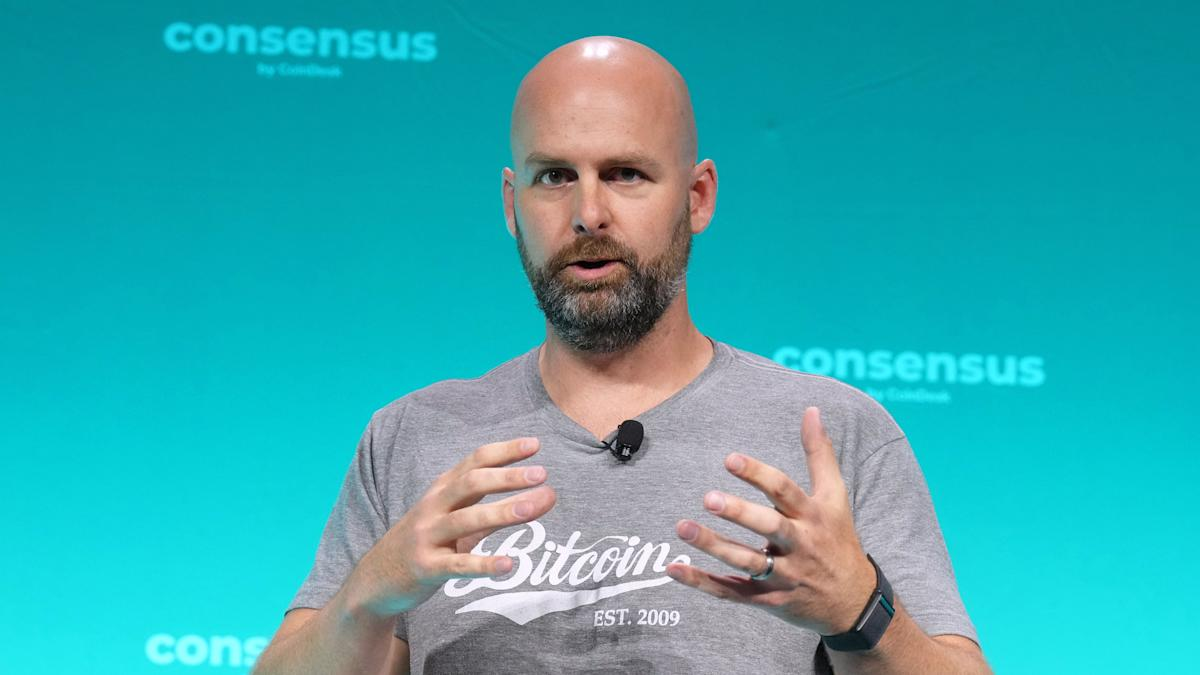

Ryan Selkis


In September 2022, Messari raised $35 million in a Series B funding round led by Brevan Howard Digital and followed by Point72 Ventures among others, valuing the company at approximately $300 million. This funding round occurred at the tail end of the bull market, reflecting the strong demand for high-quality data infrastructure at the time. However, the prolonged bear market post-2022, with tightening crypto project funding and trading volume pressures, presented real challenges for Messari. Following the departure of co-founder and former CEO Ryan Selkis in 2024, the company underwent workforce optimization. In a bear market environment, high-valuation data companies struggled to sustain previous growth expectations, facing increasing survival pressure.


Behind the Acquisition


According to Architect Partners' data, there have been 144 M&A transactions so far in 2026, totaling $11.8 billion, an increase of about 3.5% compared to the same period last year. Against a backdrop of pressure on trading volumes and token prices, some high-valuation startups are opting for mergers and acquisitions to achieve resource consolidation or exit.


Eric Risley, Founder of Architect Partners, pointed out that the industry is in a phase of divergence, where pressure may lead to more distress sales. The gap between Messari's $300 million valuation and its final sale price of just over $10 million exemplifies this phenomenon—early valuations based on growth narratives are being recalibrated against fundamentals and capital efficiency.


Yanowitz emphasized in the announcement: "This acquisition connects two sides of the market — issuers maintaining verifiable records of their operations, and investors, exchanges, and regulators consuming those records through research, APIs, and automated workflows." The core data foundation provided by Messari is precisely the prerequisite for AI agents to function effectively: an agent's capability depends on the data it can access and the APIs it can call.


The crypto industry is currently at a critical inflection point: institutional adoption is accelerating on-chain, sectors like stablecoins, RWA, and prediction markets continue to expand, driving surging demand for standardized disclosure, compliance monitoring, real-time data, and programmable access. In traditional financial markets, platforms like Bloomberg, FactSet, and S&P Global built data moats through long-term consolidation; the crypto field similarly requires such infrastructure but must adapt to the characteristics of on-chain native, real-time, and structured data.


By building upon Messari's vast dataset and overlaying its own issuer-side disclosure and IR capabilities, Blockworks aims to form a full-cycle solution from data collection, verification, and analysis to distribution and compliance. The introduction of AI will further accelerate this process, as high-quality, structured data is the core fuel for training and operating on-chain agents. For the Messari team, joining a platform with greater resources and strategic clarity allows its data assets to deliver value within a larger ecosystem, rather than continuing to contract under the pressure of independent operation.


The crypto data and research sector is transitioning from a period of flourishing diversity to consolidation of the fittest. Through market cycles, data and trust constitute long-term moats, and consolidation is often one of the optimal paths to navigate these cycles.


Perguntas relacionadas

QWhat is the key difference between Messari's valuation in 2022 and its recent acquisition price by Blockworks, and what does this signify?

AIn 2022, Messari was valued at approximately $300 million. It was recently acquired by Blockworks for a price exceeding $10 million. This significant devaluation, from $300 million to just over $10 million, highlights the survival pressure faced by high-valuation startups and the consolidation wave within the crypto data infrastructure sector during the prolonged bear market.

QWhat are the core assets of Messari that will be integrated into Blockworks, and what capabilities do they provide?

AMessari's core assets being integrated into Blockworks are its data platform and its API. This API provides multi-dimensional data support covering assets, markets, exchanges, news, research, stablecoins, protocols, networks, token unlocks, fundraising, social sentiment, event monitoring, watchlists, etc. It is utilized by funds, exchanges, developers, and various market participants.

QHow did Blockworks' business focus shift over time, leading up to the acquisition of Messari?

ABlockworks initially started in 2018 with a core focus on media and events (podcasts, research reports, conferences). As the industry matured, the company transitioned towards becoming an on-chain capital markets intelligence platform. It shifted its focus to building institutional-grade data, investor relations, and compliance tools. This strategic shift culminated in the acquisition of Messari to strengthen its data capabilities.

QWhat strategic goal did Blockworks aim to achieve by acquiring Messari, according to its co-founder?

AAccording to Blockworks co-founder Jason Yanowitz, the acquisition aims to build the 'single source of truth' for on-chain markets. The strategy is to connect the market's two sides by combining Blockworks' strengths in issuer disclosure, investor relations, and compliance workflows with Messari's strengths in data breadth and API capabilities.

QWhat broader trend in the crypto industry does the Messari acquisition represent, according to the data from Architect Partners?

AAccording to data from Architect Partners, the Messari acquisition represents a broader trend of consolidation and pressure-induced 'distressed' sales in the crypto industry. The data shows 144 M&A deals worth $11.8 billion year-to-date in 2026, a roughly 3.5% increase year-over-year. This indicates that in a bearish market with low trading volume and token price pressure, high-valuation startups are opting for mergers and acquisitions to consolidate resources or exit.

Leituras Relacionadas

Following US Ban on Fable 5, Zhipu AI's Stock Soars 47%

On June 15th, shares of Zhipu AI surged dramatically on the Hong Kong stock market, peaking at a 47.6% gain before closing 32.82% higher. This sharp increase was directly triggered by two recent industry events. On June 12th, Anthropic announced it was suspending global access to its latest flagship models, Claude Fable 5 and Claude Mythos 5, to comply with a U.S. government export control order. The next day, Zhipu AI announced it would open access to its latest open-source flagship model, GLM-5.2, under the permissive MIT license. The Anthropic incident highlighted a critical issue beyond raw model capability: the risk of sudden, unpredictable loss of access to advanced AI models, especially for developers and enterprises deeply integrated with them. This has shifted industry and market focus toward factors like stability, sustainable access, and controllability. Zhipu's move, promoting "frontier intelligence for all," positions its openly available model as a reliable and accessible alternative. The GLM-5.2 model emphasizes "Long Horizon Task" capabilities with a 1M context window, targeting complex, multi-step coding and engineering workflows where maintaining context is crucial. Analysts note this event exposes the risk of dependency on closed-source models subject to single jurisdictional controls, potentially accelerating a shift toward domestic base models and localized deployments. The market's reaction signals a new valuation dimension in AI: providers who can offer stable, long-term, and sustainably accessible AI capabilities are gaining strategic importance.

marsbitHá 24m

Following US Ban on Fable 5, Zhipu AI's Stock Soars 47%

marsbitHá 24m

Fully Entering the AI Era: Alipay Bets on Conversation, WeChat Holds Fast to Social

In May 2026, Alipay announced over 300 million AI payment transactions. Shortly after, WeChat opened its mini-programs for AI integration, sparking controversy by requiring developer source code access. This highlights their diverging approaches to AI integration. Alipay is testing "Project Treasure," an optional AI-native interface replacing traditional app grids with a conversational window. Users can command complex tasks (e.g., "book a ride and order coffee") handled end-to-end by AI. This shift follows an abandoned standalone AI app, focusing instead on enhancing its existing user base. For unmodified mini-programs, Alipay's AI uses "screen-reading" to simulate user interactions, bypassing the need for developer overhaul. It also introduced "Token Pay" for micro-transactions and "AI Wallets" for autonomous agent spending. WeChat, prioritizing its core social function, is taking an embedded approach. Its AI agent will operate within existing contexts like group chats and official accounts, assisting without a separate interface. To enable this, WeChat offers developers two paths: granting source code access for direct AI control ("Automatic Mode") or manually encapsulating services into standardized "Skills." Both place significant burden on developers. Key differences emerge in handling legacy services: WeChat demands developer cooperation (code or labor), while Alipay's screen-reading offers immediate, if potentially less stable, compatibility. Alipay's 3 billion AI transactions demonstrate user acceptance of AI-driven commercial actions. The divergent strategies may reshape mini-program ecosystems—Alipay passively "AI-fying" services, WeChat potentially favoring resource-rich developers—and set competing technical standards. Ultimately, the competition centers on where users entrust the command to "help me get things done."

marsbitHá 24m

Fully Entering the AI Era: Alipay Bets on Conversation, WeChat Holds Fast to Social

marsbitHá 24m

Trading

Spot
Futuros
活动图片