Fairshake Raises $193 Million as Crypto Firms Prepare for 2026 Midterm Elections

TheNewsCryptoPublicado em 2026-01-29Última atualização em 2026-01-29

Resumo

Fairshake, the largest crypto-backed political action committee (PAC), has raised $193 million in preparation for the 2026 U.S. midterm elections. Major contributors include Ripple, Andreessen Horowitz, and Coinbase. The group supports candidates based on their stance toward cryptocurrency, aiming to influence lawmakers to back clear crypto regulations. It operates through affiliated groups supporting both Democrats and Republicans who are crypto-friendly. Key legislative priorities include the stalled Digital Asset Market Clarity Act, which defines regulatory roles and rules for crypto companies. Fairshake is mobilizing early to prevent further delays in crypto legislation, particularly if Democrats gain congressional control, and to protect the industry from becoming a political target. The effort underscores crypto’s growing influence in U.S. politics.

Fairshake, the largest political action committee (PAC) backed by the crypto companies, has build $183 million fund ahead of the 2026 U.S. midterm elections. The crypto industries are once again stepping into U.S. politics. This move shows that crypto has become a permanent force in the U.S. election strategy.

Fairshake’s funding comes from the strong, powerful players in the crypto industry, like Ripple with $25 million, Andreessen Horowitz with $24 million, and Coinbase with $25 million. Nearly $200 million already raised, and Fairshake is closely matching what it spent during the last election cycle.

Fairshake’s Political Stand

Fairshakes basically support the political candidate based on their views on crypto. Its goal is to make the lawmakers who support clear crypto rules and those who don’t. It operates through two major affiliated groups, one which supports the Democrats, friendly to crypto, and the other which supports republicans friendly to crypto. Together, they form a permanent political operation to influence future crypto laws in Congress.

The Republicans have passed one major crypto-related law GENIUS Act. This law established the first U.S. federal framework for stablecoins payment in the U.S. and was supported by both parties. However, the progress has largely stalled beyond that.

The most important unresolved issue is the Digital Asset Market Clarity Act. The bill clearly explains which government agencies regulate crypto and how exchanges should be treated. It also explains what rules the crypto companies must follow. The bill has been delayed due to political disagreements and even disagreements within the crypto industry.

Why Fairshake is preparing early

If democrats takes the control of the congress, then there will be more delays in passing major crypto laws. Stricter rules focused on consumer protection and crypto regulation took a back seat to other political issues. This is the reason why Fairshake is preparing early and raising large amounts of money now.

Fairshake’s main goal is not just winning elections; it’s about making sure crypto does not become an easy target during political fights. Without clarity, companies remain vulnerable to sudden enforcement actions and policy changes. So this move from the Firshake shows that the crypto is now deeply embedded in U.S. politics.

Highlighted Crypto News:

Coinbase Expands Prediction Markets to All 50 U.S. States

TagsClarity ACTCryptoGenius ACT

Perguntas relacionadas

QHow much money has Fairshake raised for the 2026 midterm elections, and which companies are the major contributors?

AFairshake has raised $183 million for the 2026 midterm elections. Major contributors include Ripple with $25 million, Andreessen Horowitz with $24 million, and Coinbase with $25 million.

QWhat is the primary goal of Fairshake's political action committee?

AFairshake's primary goal is to support political candidates based on their views on cryptocurrency, aiming to elect lawmakers who support clear crypto regulations and oppose those who do not, ensuring crypto is not an easy target in political fights.

QWhat are the two major crypto-related legislative acts mentioned in the article, and what is their status?

AThe two major crypto-related acts are the GENIUS Act, which established the first U.S. federal framework for stablecoins and was passed with bipartisan support, and the Digital Asset Market Clarity Act, which defines regulatory agencies and rules for crypto exchanges but has been delayed due to political and industry disagreements.

QWhy is Fairshake preparing early for the 2026 elections, according to the article?

AFairshake is preparing early because if Democrats take control of Congress, there may be more delays in passing major crypto laws, with stricter consumer protection rules taking a back seat to other political issues, making early fundraising crucial to influence future crypto legislation.

QHow does Fairshake operate to influence crypto laws in Congress?

AFairshake operates through two major affiliated groups: one supporting Democrats friendly to crypto and another supporting Republicans friendly to crypto, forming a permanent political operation to influence future crypto laws in Congress.

Leituras Relacionadas

U.S. Government Bans Foreign Nationals from Using Fable 5, Anthropic Issues Rebuttal

U.S. Government Bans Foreign Access to Fable 5, Anthropic Issues Rebuttal On June 12th, the U.S. government ordered AI company Anthropic to immediately suspend all foreign access—including foreign nationals within the U.S. and Anthropic's own foreign employees—to its newly released Fable 5 and Mythos 5 AI models, citing national security concerns. This forced Anthropic to temporarily disable access to both models for all users globally, as it cannot technically differentiate user nationality at scale. The models, released just three days prior, represent Anthropic's highest public capability tier. Fable 5 is the first publicly available model from the advanced "Mythos" family, while Mythos 5 is a less-restricted version for approved cybersecurity and critical infrastructure partners. The government's directive was reportedly triggered by claims from another company that it could "jailbreak" Mythos 5, raising alarm within the Trump administration. Anthropic, in a detailed public statement, strongly challenged this rationale. The company argues the demonstrated "jailbreak" is a narrow, non-generalized technique that merely involves identifying minor, known software vulnerabilities—a capability common to other publicly available models like OpenAI's GPT-5.5 and routinely used by cybersecurity defenders. Anthropic stated it has complied with the order but disagrees with the government's standard, warning that applying it industry-wide would halt all new frontier model deployments. The company criticized the lack of a transparent, fact-based legal process and expressed confidence the situation stems from a misunderstanding. It is working to restore access and will release more technical details within 24 hours. Other Anthropic models remain unaffected.

链捕手Há 14m

U.S. Government Bans Foreign Nationals from Using Fable 5, Anthropic Issues Rebuttal

链捕手Há 14m

The Revelation from the Raydium Theft Incident: New DeFi Vulnerabilities Lurking in Forgotten Old Contracts

**Raydium Exploit Reveals DeFi's Hidden Risk: Forgotten "Zombie" Contracts** A recent attack on Raydium's deprecated V3 AMM pools resulted in a loss of approximately $1.34 million. The hacker exploited pools that were no longer supported by Raydium's current UI or SDK but remained fully functional and accessible on-chain. This incident highlights a critical, often overlooked category of risk in DeFi: inactive or legacy smart contracts that projects fail to properly decommission. Since March 2025, there have been at least 8 publicly reported attacks targeting such abandoned contracts, with total losses around $10.8 million. Including older pools and deprecated features, the count rises to 10 incidents with roughly $22.5 million in losses. These "zombie contracts" represent a lifecycle management failure rather than a code vulnerability, yet they are typically misclassified under general "code bug" categories in security reports, masking the true scale of the problem. The root cause is that projects often merely document a contract as "deprecated" without taking essential technical steps to secure it: withdrawing remaining assets, disabling external call functions, and implementing ongoing monitoring. These forgotten, under-monitored components become prime targets for attackers. To address this, the industry needs to recognize "zombie contracts" as a distinct risk category and establish standardized decommissioning protocols. Essential steps should include: 1) a formal retirement announcement, 2) removal of all front-end integrations, 3) withdrawal of locked assets, 4) disabling key contract functions, 5) ongoing security monitoring, 6) clear user communication, and 7) a post-mortem analysis. The value of a DeFi project lies not only in its current TVL but also in the security of its historical codebase, which has now become a new attack surface.

Foresight NewsHá 2h

The Revelation from the Raydium Theft Incident: New DeFi Vulnerabilities Lurking in Forgotten Old Contracts

Foresight NewsHá 2h

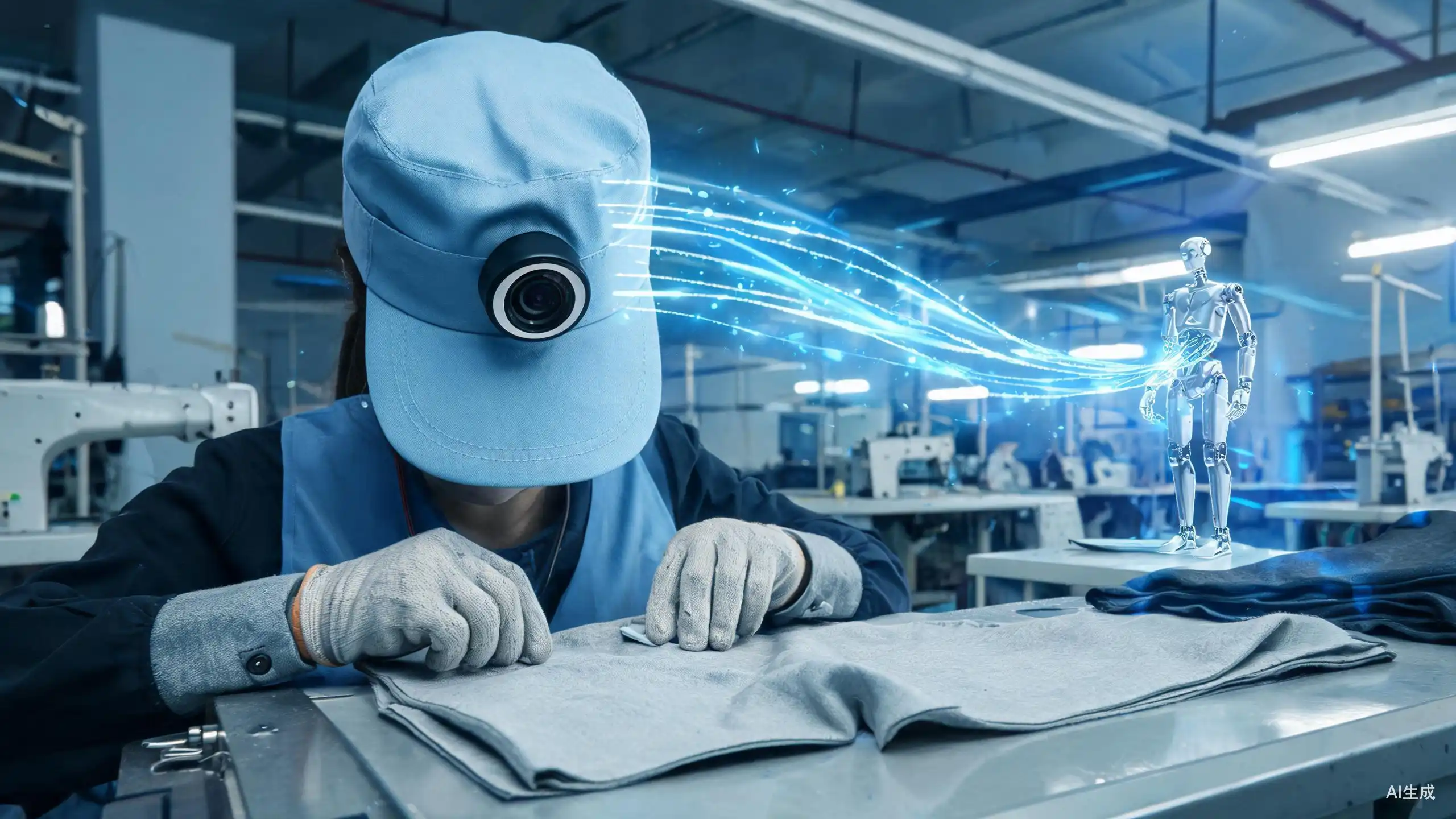
Robots Begin to 'Consume Data': The Hidden Production Chain from Indian Data Factories to Billion-Dollar Humanoid Robots

Robots have started to 'consume data,' driving the formation of a new industrial supply chain focused on producing training data for embodied AI. Unlike large language models, which are trained on vast internet text corpora, embodied AI models face a 'data desert' in the physical world. This has created a massive demand for first-person perspective video data (Ego Data), captured by workers wearing cameras in places like Indian garment factories. Companies like Neocambrian AI are establishing 'data factories' where workers perform standardized tasks (e.g., sorting clothes, kitchen organization) to generate thousands of hours of video. Research, such as NVIDIA's EgoScale, demonstrates that scaling this human demonstration data predictably improves robot performance, particularly for dexterous manipulation. This has validated a training path combining large-scale human data for pre-training with smaller amounts of robot-specific data for fine-tuning. The value of different data types varies significantly, forming a 'data pyramid.' The base consists of low-cost, large-scale internet and Ego Data. Higher layers include more expensive motion-capture data (e.g., from data gloves), simulation/synthetic data, and the most costly and scarce layer: real robot teleoperation data. This demand has spawned a layered ecosystem of data suppliers: low-cost data factories, motion capture and alignment specialists, robot-native teleoperation service providers, simulation data companies, and platforms aiming for data standardization. Robot companies themselves are adopting a 'layered procurement' strategy: outsourcing generic Ego Data while building in-house capabilities for robot-specific adaptation data and the critical deployment/failure data generated in real-world applications. The industry is shifting focus from hardware and basic mobility to the data pipelines required for general-purpose capability. While parallels exist to data labeling companies like Scale AI in the LLM boom, the physical complexity of robot data—involving action success ambiguity and sim-to-real gaps—requires more integrated solutions for data collection, annotation, and a continuous feedback loop. The race is on to build the data engines that will teach robots to operate reliably in the unstructured real world.

marsbitHá 4h

Robots Begin to 'Consume Data': The Hidden Production Chain from Indian Data Factories to Billion-Dollar Humanoid Robots

marsbitHá 4h

Trading

Spot
Futuros
活动图片