Ethereum's 2026 '5x Opportunity Window': Institutional Giants Densely Deploy, ETH Value Revaluation Imminent

marsbitPublicado em 2026-01-06Última atualização em 2026-01-06

Resumo

Etherean has established itself as the leading global, secure, and reliable blockchain platform for institutional adoption over the past decade. By 2026, it is poised to become the premier platform for business, driven by technological scalability, established institutional use cases, a favorable regulatory environment, and the transformative growth of stablecoins and asset tokenization. Key developments include major institutions like JPMorgan, BlackRock, and Fidelity tokenizing high-value assets such as money market funds and private credit on Ethereum. The passage of the U.S. GENIUS Act provided a clear regulatory framework for stablecoins, with 60% of them already deployed on Ethereum and its Layer 2 networks. Institutions are also building custom Layer 2 blockchains on Ethereum for tailored solutions, exemplified by Coinbase's Base and Robinhood's upcoming chain. The regulatory landscape has shifted from a barrier to an enabler, with U.S. leadership paving the way for broad adoption. ETH is being revalued as a institutional store-of-value asset, akin to "digital oil," with several public companies accumulating significant portions of its supply. Predictions for 2026 include a 5x growth in tokenized assets to $100 billion, a 5x increase in stablecoin market cap to $1.5 trillion, and a 5x surge in ETH's price to $15,000, reflecting its role as a bet on the growth of the new financial internet. Ethereum's proven security, liquidity, and extensive institutional adoption m...

Author: Vivek Raman, Etherealize

Compiled by: Saoirse, Foresight News

Over the past decade, Ethereum has established itself as the world's most secure and reliable blockchain platform for institutional adoption.

Ethereum's technology has achieved scalability, institutional application precedents have been set, the global regulatory environment is open and welcoming to blockchain infrastructure, and the development of stablecoins alongside the process of asset tokenization is bringing about fundamental changes.

Therefore, starting from 2026, Ethereum will be the best platform for conducting business.

After a decade of application promotion, stable operation, global adoption, and high availability assurance, Ethereum has become the preferred choice for institutions deploying blockchain. Next, let's review the key steps over the past two years of how Ethereum gradually became the default platform for tokenized assets.

Finally, we will provide a prediction for Ethereum in 2026: tokenization scale, stablecoin scale, and ETH price are all expected to achieve 5x growth. The stage for Ethereum's revival is set, and the time is ripe for various enterprises to adopt Ethereum infrastructure.

Ethereum: The Core Platform for Tokenized Assets

Blockchain's transformation of the asset sector is akin to the internet's reshaping of the information sector — enabling assets to become digital, programmable, and globally interoperable.

Asset tokenization achieves digitization by integrating assets, data, and payments onto the same infrastructure, thereby comprehensively upgrading business processes. Assets like stocks, bonds, real estate, and funds will be able to flow at internet speed. This is a major upgrade the financial system should have achieved long ago, and now, global public blockchains like Ethereum are finally making this vision a reality.

Asset tokenization is rapidly evolving from a hot concept to a fundamental upgrade of business models. Just as no enterprise would abandon the internet to revert to the fax machine era, once financial institutions experience the efficiency, automation, and speed brought by globally shared blockchain infrastructure, they will not return to traditional models; the tokenization process is irreversible.

Currently, the vast majority of high-value asset tokenization is completed on the Ethereum platform — because Ethereum is the most neutral and secure global infrastructure, similar to the internet, it is not controlled by any single entity and is open to all users.

By 2026, the "experimental phase" of asset tokenization has officially ended, and the industry has entered the deployment phase. Major institutions are directly launching flagship products on the Ethereum platform to access global liquidity.

Here are some examples of institutions conducting asset tokenization on Ethereum:

  • JPMorgan Chase (JPMorgan) directly deployed a money market fund on Ethereum, becoming one of the first banks to directly adopt a public blockchain;
  • Fidelity launched a money market fund on Ethereum Layer1, integrating asset management and operational processes into the blockchain system;
  • Apollo launched the private credit fund ACRED on a public blockchain, with Ethereum and its Layer2 networks offering the highest liquidity;
  • BlackRock, as one of the most active advocates of the "tokenization of everything" concept, led the wave of institutional asset tokenization by launching the tokenized money market fund BUIDL on Ethereum;
  • Amundi (Europe's largest asset management company) tokenized its Euro-denominated money market fund on the Ethereum platform;
  • BNY Mellon (the oldest bank in the US) tokenized a AAA-rated Collateralized Loan Obligation (CLO) fund on the Ethereum platform;
  • Baillie Gifford (one of the UK's largest asset management firms) will launch the first-of-its-kind tokenized bond fund on Ethereum and its Layer2 networks.

Ethereum: The Core Blockchain for Stablecoins

Stablecoins are the first clear case of achieving "product-market fit" in the asset tokenization space — stablecoin transfer volume surpassed $10 trillion in 2025. Stablecoins are essentially tokenized US dollars, equivalent to a "software upgrade for money," enabling dollars to flow at internet speed and possess programmable characteristics.

2025 was a pivotal year for stablecoins and public blockchains: the US "GENIUS Act" (also known as the Stablecoin Act) was formally passed. This act established a regulatory framework for stablecoins in one fell swoop, while also giving the "green light" to the underlying public blockchain infrastructure.

Even before the passage of the GENIUS Act, Ethereum's stablecoin adoption rate was already far ahead. Now, 60% of stablecoins are deployed on Ethereum and its Layer2 networks (if Ethereum Virtual Machine compatible chains that may become Ethereum Layer2s in the future are included, this proportion reaches 90%). The introduction of the GENIUS Act marked Ethereum's official "opening for business applications" — institutions received regulatory permission to deploy their own stablecoins on public blockchains.

The key reason email and websites achieved mass adoption was their connection to a unified global internet (rather than fragmented internal networks). Similarly, stablecoins and all tokenized assets can only fully realize their utility and network effects within a unified global public blockchain ecosystem.

Therefore, the explosive growth of stablecoins has only just begun. A typical case is: US national bank SoFi became the first bank to issue a stablecoin (SoFiUSD) on a permissionless public blockchain, ultimately choosing the Ethereum platform.

This is just the "tip of the iceberg" for stablecoin development. Investment banks and neobanks are exploring issuing their own stablecoins individually or in consortiums, and fintech companies are advancing the deployment and integration of stablecoins. The digitization of the US dollar on public blockchains is fully underway, and Ethereum is the default platform for this process.

Ethereum: Building Dedicated Blockchains

Blockchain is not a "one-size-fits-all" tool. Global financial markets require customization based on differences in region, regulatory systems, and customer groups. Precisely for this reason, Ethereum was designed from its inception with high security as a core goal, and through the highly customizable "Layer2 blockchains" that can be flexibly deployed on top of it, it has achieved a high degree of customization.

Just as every enterprise has its own dedicated website, application, and customized environment on the internet, many enterprises in the future will also have their own dedicated Layer2 blockchain within the Ethereum ecosystem.

This is not a theoretical architecture but a practical application already in place. Ethereum Layer2 has established institutional application precedents, achieved scalable deployment, and become the core support for Ethereum's "business-friendly" characteristics. Here are some examples:

  • Coinbase built the Base blockchain based on Ethereum Layer2, leveraging Ethereum's security and liquidity while opening up new revenue streams for itself;
  • Robinhood is building its own dedicated blockchain, which will integrate tokenized stocks, prediction markets, and various assets, and is built using Ethereum Layer2 technology;
  • SWIFT (Society for Worldwide Interbank Financial Telecommunication) (the global bank messaging network) adopted the Ethereum Layer2 network Linea to conduct blockchain-based settlement business;
  • JPMorgan Chase deployed tokenized deposit services on the Ethereum Layer2 network Base;
  • Deutsche Bank is building a public permissioned blockchain network based on Ethereum Layer2, laying the foundation for more banks to build Layer2 networks...

The value of Layer2 lies not only in customization; it is also the best business model in the blockchain field. Layer2 integrates the global security of Ethereum while enabling ultra-high profit margins of over 90% through operations, opening up new revenue sources for enterprises.

For institutions adopting blockchain technology, this is the best way to "have your cake and eat it too" — they can leverage Ethereum's security and liquidity while maintaining their own profit margins and operating a dedicated environment within the Ethereum ecosystem. Robinhood's choice to build its own blockchain based on Ethereum Layer2 was precisely due to this consideration: "Building a truly decentralized secure chain is extremely difficult... By leveraging Ethereum, we get security by default."

The global financial market will not concentrate on a single blockchain, but the global financial system can achieve synergy by relying on an interconnected network — this network is Ethereum and its Layer2 ecosystem.

Changes in the Regulatory Environment

Without regulatory support, a fundamental upgrade of the global financial system would be impossible. Financial institutions are not tech companies; they cannot innovate through a "fast trial and error" approach. The flow of high-value assets and funds requires a sound regulatory framework, and the United States is taking a leading role in this area:

  • Under the leadership of US SEC Chairman Paul Atkins, the first pro-innovation regulatory system since Ethereum's birth in 2015 has been formally established. Institutions have actively embraced asset tokenization, the financial system is preparing for migration to digital infrastructure, and Atkins himself stated that "within the next two years, all US markets will operate on-chain."
  • The US Congress also supports the responsible adoption of blockchain technology. The GENIUS Act passed in 2025 (mentioned earlier in the "Stablecoins" section) and the upcoming CLARITY Act (which will establish a comprehensive framework for asset tokenization and public blockchain infrastructure) have incorporated blockchain into the legal system, providing clear guidance for financial institutions to apply this technology.
  • The DTCC (Depository Trust & Clearing Corporation), although not a government agency, is the core infrastructure operator of the US securities market. It has fully embraced asset tokenization, allowing assets deposited with the DTC (Depository Trust Company) to circulate on public blockchains.

For over a decade, the blockchain ecosystem has long been in a "regulatory gray area," suppressing its potential for institutional-grade application. Now, led by the US, the regulatory environment has shifted from a "resistance" to a "catalyst." The stage for Ethereum to become the "best business platform" and achieve vigorous development is fully set.

ETH: An Institutional-Grade Treasury Asset

Ethereum has established its position as the "most secure blockchain," making it the default choice for institutional adoption. Based on this, ETH will be repriced in 2026, standing alongside BTC as an "institutional-grade store of value asset."

The blockchain ecosystem will have more than one store of value asset: BTC has established itself as "digital gold," while ETH becomes "digital oil" — a yield-bearing, utility-driven store of value asset with an underlying ecosystem powering economic activity.
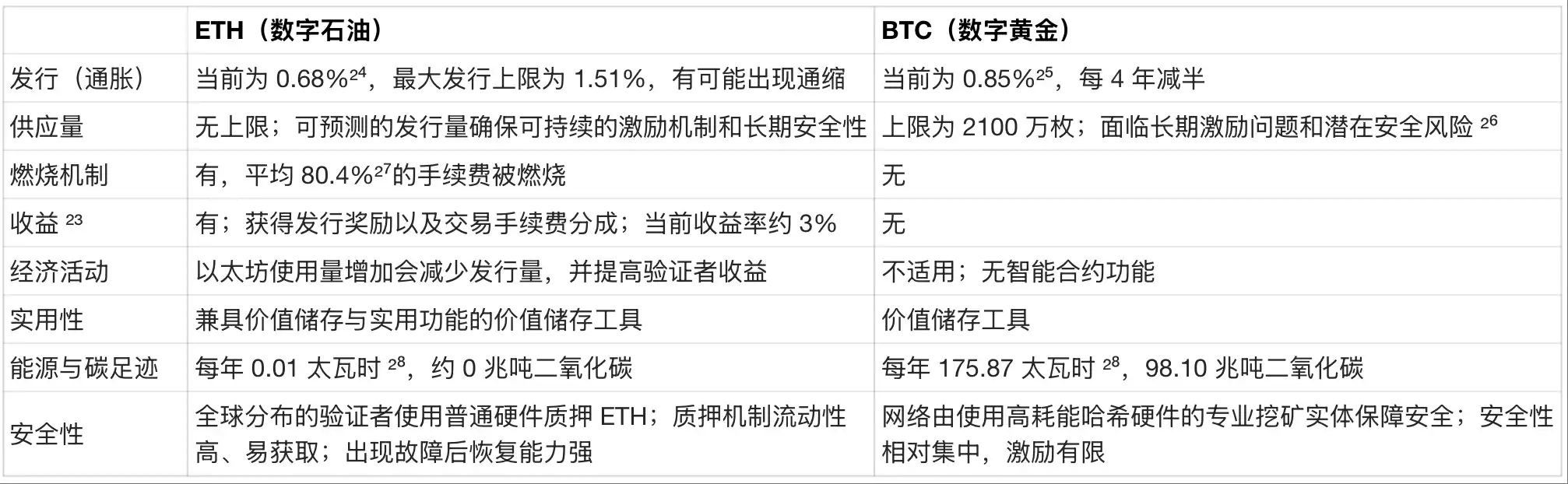
MicroStrategy, as the company holding the most Bitcoin, led the process of BTC becoming a store of value asset. Over the past four years, MicroStrategy has continuously incorporated BTC into its treasury assets, advocating for BTC's value proposition, making it a core category for institutional digital asset holdings.

Now, the Ethereum ecosystem has seen the emergence of 4 "MicroStrategy-like" companies, driving a similar breakthrough for ETH:

  • BitMine Immersion (Ticker: BMNR), operated by Tom Lee;
  • Sharplink Gaming (Ticker: SBET), operated by Joe Lubin and Joseph Chalom;
  • The Ether Machine (Ticker: ETHM), operated by Andrew Keys;
  • Bit Digital (Ticker: BTBT), operated by Sam Tabar.

MicroStrategy holds 3.2% of BTC's circulating supply. The aforementioned four companies holding ETH have collectively purchased approximately 4.5% of ETH's circulating supply in the past 6 months — and this process has only just begun.

As these four companies continue to incorporate ETH into their balance sheets, institutional ownership stakes in these ETH-holding companies is rapidly increasing, and ETH is expected to be repriced, standing alongside BTC as an institutional-grade store of value asset.

Ethereum 2026 Prediction: 5x Growth

Tokenized Assets: 5x Growth to $100 Billion

In 2025, the total value of tokenized assets on blockchain grew from approximately $6 billion to over $18 billion, with 66% deployed on Ethereum and its Layer2 networks.

The global financial system has only just begun the process of asset tokenization, with institutions like JPMorgan, BlackRock, and Fidelity already using Ethereum as the default platform for high-value tokenized assets.

We predict that the total scale of tokenized assets will achieve 5x growth in 2026, reaching nearly $100 billion, with the vast majority deployed on the Ethereum network.

Stablecoins: 5x Growth to $1.5 Trillion

Currently, the total scale of stablecoins on public blockchains is $308 billion, with about 60% deployed on Ethereum and its Layer2 networks (if Ethereum Virtual Machine compatible chains that may become Ethereum Layer2s in the future are included, this proportion reaches 90%).

Stablecoins have become a strategic asset for the US government. The US Treasury has repeatedly stated that stablecoins are a core measure to consolidate the dollar's dominance in the 21st century. Currently, the total US dollar circulation is $22.3 trillion. With the landing of the GENIUS Act and the large-scale application of stablecoins, it is expected that 20%-30% of US dollars will migrate to public blockchains.

We predict that the total market capitalization of stablecoins will achieve 5x growth in 2026, reaching $1.5 trillion, and Ethereum will play a leading role in this process.

ETH: 5x Growth to $15,000

ETH is rapidly developing into an institutional-grade store of value asset alongside BTC. ETH is a "call option" on the growth of blockchain technology, and its value appreciation will benefit from the following trends:

  • The scaling expansion of asset tokenization
  • The widespread application of stablecoins
  • The process of institutional adoption of blockchain
  • The "ChatGPT moment" for the financial system's upgrade to the internet era (referring to the inflection point of industry change brought by technological breakthrough)

Holding ETH is equivalent to holding a share of the "new financial internet." The logic for its value growth is clear: increases in user base, asset scale, number of applications, Layer2 networks, and transaction frequency will all drive the value of ETH higher.

We predict that ETH will achieve at least a 5x value increase in 2026 (market capitalization reaching $2 trillion, equivalent to BTC's current market cap), ushering in ETH's "NVIDIA moment" (referring to a key phase of explosive growth similar to NVIDIA's due to the AI wave).

Ethereum: The Best Platform for Business

By 2026, the discussion of "why adopt blockchain" is a thing of the past. Now, institutions are fully competing in asset tokenization, stablecoin application, and customized blockchain deployment; the structural upgrade of the global financial system has already begun.

When choosing blockchain infrastructure, institutions prioritize factors including: long-term operational history, application precedents, security, liquidity, availability, and risk level — and Ethereum performs optimally in all dimensions. Ethereum is the ideal choice if an enterprise has the following needs:

  • Increase profit margins? Achievable through asset tokenization to reduce costs, using stablecoins to reduce fees, and building a dedicated blockchain based on Ethereum.
  • Open up new revenue streams? Possible by building structured products on the Ethereum platform, launching new types of assets, issuing own stablecoins.
  • Achieve business digital upgrade? Can leverage Ethereum to optimize operational processes, automate accounting and payments, and reduce manual reconciliation work.

2025 was an inflection point for Ethereum's development: infrastructure upgrades were finalized, institutional pilot projects were scaled, and the regulatory environment turned favorable.

In 2026, the global financial system will experience its "internet moment" — and this transformation will occur on Ethereum, the best platform for conducting business.


Perguntas relacionadas

QWhat are the key factors that position Ethereum as the premier platform for institutional business by 2026?

AEthereum's established security, proven reliability, successful scaling, clear regulatory framework (like the GENIUS Act), and widespread institutional adoption for asset tokenization and stablecoins make it the premier platform.

QWhich major financial institutions are cited as examples of deploying tokenized assets directly on the Ethereum blockchain?

AThe article cites JPMorgan, Fidelity, Apollo, BlackRock, Amundi, BNY Mellon, and Baillie Gifford as examples of institutions deploying tokenized assets on Ethereum.

QWhat is the significance of the 'GENIUS Act' for stablecoins and public blockchain infrastructure?

AThe GENIUS Act, or Stablecoin Act, provides a regulatory framework for stablecoins and gives official approval for the use of public blockchain infrastructure, effectively opening the door for widespread institutional adoption on platforms like Ethereum.

QHow do Layer 2 blockchains on Ethereum benefit institutions, according to the article?

ALayer 2 blockchains allow institutions to build customized, dedicated environments that inherit Ethereum's global security and liquidity while enabling high-profit margins and serving as a new revenue stream.

QWhat is the predicted 5x growth for Ethereum's price by 2026, and what is the primary driver behind this valuation?

AThe predicted 5x growth would bring the ETH price to $15,000, driven by its role as an institutional store-of-value asset and its fundamental utility in the growth of tokenized assets, stablecoins, and the overall adoption of blockchain technology by the financial system.

Leituras Relacionadas

From Theft to Re-entry: How Was $292 Million "Laundered"?

A sophisticated crypto laundering operation was executed following the $292 million hack of Kelp DAO on April 18. The attack, attributed to the North Korean Lazarus group, began with anonymous infrastructure preparation using Tornado Cash to fund wallets untraceably. The hacker exploited a vulnerability in Kelp’s cross-chain bridge, stealing 116,500 rsETH. To avoid crashing the market, the attacker used Aave and Compound as laundering tools—depositing the stolen rsETH as collateral to borrow $190 million in clean, liquid ETH. This move triggered a bank run on Aave, causing an $8 billion drop in TVL. After consolidating funds, the attacker fragmented them across hundreds of wallets to evade detection. A major breakpoint was THORChain, where over $460 million in volume—30 times its usual activity—was processed in 24 hours, converting ETH into Bitcoin. This shift to Bitcoin’s UTXO model exponentially increased tracing complexity by shattering funds into countless untraceable fragments. The final destination was Tron-based USDT, the primary channel for illicit crypto flows. From there, funds were cashed out via OTC brokers in China and Southeast Asia, using unlicensed underground banks and UnionPay networks outside Western sanctions scope. Ultimately, the laundered money supports North Korea’s weapons programs, which rely heavily on crypto hacking for foreign currency. The incident underscores structural challenges in DeFi: its openness, composability, and lack of central control make such laundering not just possible, but inherently difficult to prevent.

marsbitHá 2h

From Theft to Re-entry: How Was $292 Million "Laundered"?

marsbitHá 2h

Trading

Spot
Futuros

Artigos em Destaque

O que é $S$

Compreender o SPERO: Uma Visão Abrangente Introdução ao SPERO À medida que o panorama da inovação continua a evoluir, o surgimento de tecnologias web3 e projetos de criptomoeda desempenha um papel fundamental na formação do futuro digital. Um projeto que tem atraído atenção neste campo dinâmico é o SPERO, denotado como SPERO,$$s$. Este artigo tem como objetivo reunir e apresentar informações detalhadas sobre o SPERO, para ajudar entusiastas e investidores a compreender as suas bases, objetivos e inovações nos domínios web3 e cripto. O que é o SPERO,$$s$? O SPERO,$$s$ é um projeto único dentro do espaço cripto que procura aproveitar os princípios da descentralização e da tecnologia blockchain para criar um ecossistema que promove o envolvimento, a utilidade e a inclusão financeira. O projeto é concebido para facilitar interações peer-to-peer de novas maneiras, proporcionando aos utilizadores soluções e serviços financeiros inovadores. No seu núcleo, o SPERO,$$s$ visa capacitar indivíduos ao fornecer ferramentas e plataformas que melhoram a experiência do utilizador no espaço das criptomoedas. Isso inclui a possibilidade de métodos de transação mais flexíveis, a promoção de iniciativas impulsionadas pela comunidade e a criação de caminhos para oportunidades financeiras através de aplicações descentralizadas (dApps). A visão subjacente do SPERO,$$s$ gira em torno da inclusão, visando fechar lacunas dentro das finanças tradicionais enquanto aproveita os benefícios da tecnologia blockchain. Quem é o Criador do SPERO,$$s$? A identidade do criador do SPERO,$$s$ permanece algo obscura, uma vez que existem recursos publicamente disponíveis limitados que fornecem informações detalhadas sobre o(s) seu(s) fundador(es). Esta falta de transparência pode resultar do compromisso do projeto com a descentralização—uma ética que muitos projetos web3 partilham, priorizando contribuições coletivas em vez de reconhecimento individual. Ao centrar as discussões em torno da comunidade e dos seus objetivos coletivos, o SPERO,$$s$ incorpora a essência do empoderamento sem destacar indivíduos específicos. Assim, compreender a ética e a missão do SPERO é mais importante do que identificar um criador singular. Quem são os Investidores do SPERO,$$s$? O SPERO,$$s$ é apoiado por uma diversidade de investidores que vão desde capitalistas de risco a investidores-anjo dedicados a promover a inovação no setor cripto. O foco desses investidores geralmente alinha-se com a missão do SPERO—priorizando projetos que prometem avanço tecnológico social, inclusão financeira e governança descentralizada. Essas fundações de investidores estão tipicamente interessadas em projetos que não apenas oferecem produtos inovadores, mas que também contribuem positivamente para a comunidade blockchain e os seus ecossistemas. O apoio desses investidores reforça o SPERO,$$s$ como um concorrente notável no domínio em rápida evolução dos projetos cripto. Como Funciona o SPERO,$$s$? O SPERO,$$s$ emprega uma estrutura multifacetada que o distingue de projetos de criptomoeda convencionais. Aqui estão algumas das características-chave que sublinham a sua singularidade e inovação: Governança Descentralizada: O SPERO,$$s$ integra modelos de governança descentralizada, capacitando os utilizadores a participar ativamente nos processos de tomada de decisão sobre o futuro do projeto. Esta abordagem promove um sentido de propriedade e responsabilidade entre os membros da comunidade. Utilidade do Token: O SPERO,$$s$ utiliza o seu próprio token de criptomoeda, concebido para servir várias funções dentro do ecossistema. Esses tokens permitem transações, recompensas e a facilitação de serviços oferecidos na plataforma, melhorando o envolvimento e a utilidade gerais. Arquitetura em Camadas: A arquitetura técnica do SPERO,$$s$ suporta modularidade e escalabilidade, permitindo a integração contínua de funcionalidades e aplicações adicionais à medida que o projeto evolui. Esta adaptabilidade é fundamental para manter a relevância no panorama cripto em constante mudança. Envolvimento da Comunidade: O projeto enfatiza iniciativas impulsionadas pela comunidade, empregando mecanismos que incentivam a colaboração e o feedback. Ao nutrir uma comunidade forte, o SPERO,$$s$ pode melhor atender às necessidades dos utilizadores e adaptar-se às tendências do mercado. Foco na Inclusão: Ao oferecer taxas de transação baixas e interfaces amigáveis, o SPERO,$$s$ visa atrair uma base de utilizadores diversificada, incluindo indivíduos que anteriormente podem não ter participado no espaço cripto. Este compromisso com a inclusão alinha-se com a sua missão abrangente de empoderamento através da acessibilidade. Cronologia do SPERO,$$s$ Compreender a história de um projeto fornece insights cruciais sobre a sua trajetória de desenvolvimento e marcos. Abaixo está uma cronologia sugerida que mapeia eventos significativos na evolução do SPERO,$$s$: Fase de Conceituação e Ideação: As ideias iniciais que formam a base do SPERO,$$s$ foram concebidas, alinhando-se de perto com os princípios de descentralização e foco na comunidade dentro da indústria blockchain. Lançamento do Whitepaper do Projeto: Após a fase conceitual, um whitepaper abrangente detalhando a visão, os objetivos e a infraestrutura tecnológica do SPERO,$$s$ foi lançado para atrair o interesse e o feedback da comunidade. Construção da Comunidade e Primeiros Envolvimentos: Esforços ativos de divulgação foram feitos para construir uma comunidade de primeiros adotantes e investidores potenciais, facilitando discussões em torno dos objetivos do projeto e angariando apoio. Evento de Geração de Tokens: O SPERO,$$s$ realizou um evento de geração de tokens (TGE) para distribuir os seus tokens nativos a apoiantes iniciais e estabelecer liquidez inicial dentro do ecossistema. Lançamento da dApp Inicial: A primeira aplicação descentralizada (dApp) associada ao SPERO,$$s$ foi lançada, permitindo que os utilizadores interagissem com as funcionalidades principais da plataforma. Desenvolvimento Contínuo e Parcerias: Atualizações e melhorias contínuas nas ofertas do projeto, incluindo parcerias estratégicas com outros players no espaço blockchain, moldaram o SPERO,$$s$ em um jogador competitivo e em evolução no mercado cripto. Conclusão O SPERO,$$s$ é um testemunho do potencial do web3 e das criptomoedas para revolucionar os sistemas financeiros e capacitar indivíduos. Com um compromisso com a governança descentralizada, o envolvimento da comunidade e funcionalidades inovadoras, abre caminho para um panorama financeiro mais inclusivo. Como em qualquer investimento no espaço cripto em rápida evolução, potenciais investidores e utilizadores são incentivados a pesquisar minuciosamente e a envolver-se de forma ponderada com os desenvolvimentos em curso dentro do SPERO,$$s$. O projeto demonstra o espírito inovador da indústria cripto, convidando a uma exploração mais aprofundada das suas inúmeras possibilidades. Embora a jornada do SPERO,$$s$ ainda esteja a desenrolar-se, os seus princípios fundamentais podem, de facto, influenciar o futuro de como interagimos com a tecnologia, as finanças e uns com os outros em ecossistemas digitais interconectados.

69 Visualizações TotaisPublicado em {updateTime}Atualizado em 2024.12.17

O que é $S$

O que é AGENT S

Agent S: O Futuro da Interação Autónoma no Web3 Introdução No panorama em constante evolução do Web3 e das criptomoedas, as inovações estão constantemente a redefinir a forma como os indivíduos interagem com plataformas digitais. Um projeto pioneiro, o Agent S, promete revolucionar a interação humano-computador através do seu framework aberto e agente. Ao abrir caminho para interações autónomas, o Agent S visa simplificar tarefas complexas, oferecendo aplicações transformadoras em inteligência artificial (IA). Esta exploração detalhada irá aprofundar-se nas complexidades do projeto, nas suas características únicas e nas implicações para o domínio das criptomoedas. O que é o Agent S? O Agent S é um framework aberto e agente, especificamente concebido para abordar três desafios fundamentais na automação de tarefas computacionais: Aquisição de Conhecimento Específico de Domínio: O framework aprende inteligentemente a partir de várias fontes de conhecimento externas e experiências internas. Esta abordagem dupla capacita-o a construir um rico repositório de conhecimento específico de domínio, melhorando o seu desempenho na execução de tarefas. Planeamento ao Longo de Longos Horizontes de Tarefas: O Agent S emprega planeamento hierárquico aumentado por experiência, uma abordagem estratégica que facilita a decomposição e execução eficientes de tarefas intrincadas. Esta característica melhora significativamente a sua capacidade de gerir múltiplas subtarefas de forma eficiente e eficaz. Gestão de Interfaces Dinâmicas e Não Uniformes: O projeto introduz a Interface Agente-Computador (ACI), uma solução inovadora que melhora a interação entre agentes e utilizadores. Utilizando Modelos de Linguagem Multimodais de Grande Escala (MLLMs), o Agent S pode navegar e manipular diversas interfaces gráficas de utilizador de forma fluida. Através destas características pioneiras, o Agent S fornece um framework robusto que aborda as complexidades envolvidas na automação da interação humana com máquinas, preparando o terreno para uma infinidade de aplicações em IA e além. Quem é o Criador do Agent S? Embora o conceito de Agent S seja fundamentalmente inovador, informações específicas sobre o seu criador permanecem elusivas. O criador é atualmente desconhecido, o que destaca ou o estágio nascente do projeto ou a escolha estratégica de manter os membros fundadores em anonimato. Independentemente da anonimidade, o foco permanece nas capacidades e no potencial do framework. Quem são os Investidores do Agent S? Como o Agent S é relativamente novo no ecossistema criptográfico, informações detalhadas sobre os seus investidores e financiadores não estão explicitamente documentadas. A falta de informações disponíveis publicamente sobre as fundações de investimento ou organizações que apoiam o projeto levanta questões sobre a sua estrutura de financiamento e roteiro de desenvolvimento. Compreender o apoio é crucial para avaliar a sustentabilidade do projeto e o seu impacto potencial no mercado. Como Funciona o Agent S? No núcleo do Agent S reside uma tecnologia de ponta que lhe permite funcionar eficazmente em diversos ambientes. O seu modelo operacional é construído em torno de várias características-chave: Interação Humano-Computador Semelhante: O framework oferece planeamento avançado em IA, esforçando-se para tornar as interações com computadores mais intuitivas. Ao imitar o comportamento humano na execução de tarefas, promete elevar as experiências dos utilizadores. Memória Narrativa: Utilizada para aproveitar experiências de alto nível, o Agent S utiliza memória narrativa para acompanhar os históricos de tarefas, melhorando assim os seus processos de tomada de decisão. Memória Episódica: Esta característica fornece aos utilizadores orientações passo a passo, permitindo que o framework ofereça suporte contextual à medida que as tarefas se desenrolam. Suporte para OpenACI: Com a capacidade de funcionar localmente, o Agent S permite que os utilizadores mantenham o controlo sobre as suas interações e fluxos de trabalho, alinhando-se com a ética descentralizada do Web3. Fácil Integração com APIs Externas: A sua versatilidade e compatibilidade com várias plataformas de IA garantem que o Agent S possa integrar-se perfeitamente em ecossistemas tecnológicos existentes, tornando-o uma escolha apelativa para desenvolvedores e organizações. Estas funcionalidades contribuem coletivamente para a posição única do Agent S no espaço cripto, à medida que automatiza tarefas complexas e em múltiplos passos com mínima intervenção humana. À medida que o projeto evolui, as suas potenciais aplicações no Web3 podem redefinir a forma como as interações digitais se desenrolam. Cronologia do Agent S O desenvolvimento e os marcos do Agent S podem ser encapsulados numa cronologia que destaca os seus eventos significativos: 27 de Setembro de 2024: O conceito de Agent S foi lançado num artigo de pesquisa abrangente intitulado “Um Framework Agente Aberto que Usa Computadores como um Humano”, mostrando a base para o projeto. 10 de Outubro de 2024: O artigo de pesquisa foi disponibilizado publicamente no arXiv, oferecendo uma exploração aprofundada do framework e da sua avaliação de desempenho com base no benchmark OSWorld. 12 de Outubro de 2024: Uma apresentação em vídeo foi lançada, proporcionando uma visão visual das capacidades e características do Agent S, envolvendo ainda mais potenciais utilizadores e investidores. Estes marcos na cronologia não apenas ilustram o progresso do Agent S, mas também indicam o seu compromisso com a transparência e o envolvimento da comunidade. Pontos-Chave Sobre o Agent S À medida que o framework Agent S continua a evoluir, várias características-chave destacam-se, sublinhando a sua natureza inovadora e potencial: Framework Inovador: Concebido para proporcionar um uso intuitivo de computadores semelhante à interação humana, o Agent S traz uma abordagem nova à automação de tarefas. Interação Autónoma: A capacidade de interagir autonomamente com computadores através de GUI significa um avanço em direção a soluções computacionais mais inteligentes e eficientes. Automação de Tarefas Complexas: Com a sua metodologia robusta, pode automatizar tarefas complexas e em múltiplos passos, tornando os processos mais rápidos e menos propensos a erros. Melhoria Contínua: Os mecanismos de aprendizagem permitem que o Agent S melhore a partir de experiências passadas, aprimorando continuamente o seu desempenho e eficácia. Versatilidade: A sua adaptabilidade em diferentes ambientes operacionais, como OSWorld e WindowsAgentArena, garante que pode servir uma ampla gama de aplicações. À medida que o Agent S se posiciona no panorama do Web3 e das criptomoedas, o seu potencial para melhorar as capacidades de interação e automatizar processos significa um avanço significativo nas tecnologias de IA. Através do seu framework inovador, o Agent S exemplifica o futuro das interações digitais, prometendo uma experiência mais fluida e eficiente para os utilizadores em diversas indústrias. Conclusão O Agent S representa um ousado avanço na união da IA e do Web3, com a capacidade de redefinir a forma como interagimos com a tecnologia. Embora ainda esteja nas suas fases iniciais, as possibilidades para a sua aplicação são vastas e cativantes. Através do seu framework abrangente que aborda desafios críticos, o Agent S visa trazer interações autónomas para o primeiro plano da experiência digital. À medida que avançamos mais profundamente nos domínios das criptomoedas e da descentralização, projetos como o Agent S desempenharão, sem dúvida, um papel crucial na formação do futuro da tecnologia e da colaboração humano-computador.

533 Visualizações TotaisPublicado em {updateTime}Atualizado em 2025.01.14

O que é AGENT S

Como comprar S

Bem-vindo à HTX.com!Tornámos a compra de Sonic (S) simples e conveniente.Segue o nosso guia passo a passo para iniciar a tua jornada no mundo das criptos.Passo 1: cria a tua conta HTXUtiliza o teu e-mail ou número de telefone para te inscreveres numa conta gratuita na HTX.Desfruta de um processo de inscrição sem complicações e desbloqueia todas as funcionalidades.Obter a minha contaPasso 2: vai para Comprar Cripto e escolhe o teu método de pagamentoCartão de crédito/débito: usa o teu visa ou mastercard para comprar Sonic (S) instantaneamente.Saldo: usa os fundos da tua conta HTX para transacionar sem problemas.Terceiros: adicionamos métodos de pagamento populares, como Google Pay e Apple Pay, para aumentar a conveniência.P2P: transaciona diretamente com outros utilizadores na HTX.Mercado de balcão (OTC): oferecemos serviços personalizados e taxas de câmbio competitivas para os traders.Passo 3: armazena teu Sonic (S)Depois de comprar o teu Sonic (S), armazena-o na tua conta HTX.Alternativamente, podes enviá-lo para outro lugar através de transferência blockchain ou usá-lo para transacionar outras criptomoedas.Passo 4: transaciona Sonic (S)Transaciona facilmente Sonic (S) no mercado à vista da HTX.Acede simplesmente à tua conta, seleciona o teu par de trading, executa as tuas transações e monitoriza em tempo real.Oferecemos uma experiência de fácil utilização tanto para principiantes como para traders experientes.

1.0k Visualizações TotaisPublicado em {updateTime}Atualizado em 2025.03.21

Como comprar S

Discussões

Bem-vindo à Comunidade HTX. Aqui, pode manter-se informado sobre os mais recentes desenvolvimentos da plataforma e obter acesso a análises profissionais de mercado. As opiniões dos utilizadores sobre o preço de S (S) são apresentadas abaixo.

活动图片














