Disrupting the Billion-Dollar Gambling Industry, Prediction Markets Are Being Hunted by the Old Order

Odaily星球日报Publicado em 2026-01-12Última atualização em 2026-01-12

Resumo

Prediction markets are facing regulatory crackdowns in the United States, particularly from state-level authorities overseeing the lucrative sports betting industry. The Tennessee Sports Wagering Council (SWC) recently issued cease-and-desist orders to platforms like Kalshi, Polymarket, and Crypto.com, demanding they halt sports-related prediction contracts for state residents. The SWC alleges these platforms are offering illegal gambling services without a state license, despite being registered with the federal Commodity Futures Trading Commission (CFTC) as designated contract markets. This conflict stems from the rapid growth of both sectors. Since the federal ban on sports betting was overturned in 2018, the legal U.S. sports betting market has exploded, reaching nearly $150 billion in total bets in 2024. Tennessee, which legalized online-only sports betting, collected over $97 million in tax revenue from it in 2024. Prediction markets, which frame their offerings as "event contracts" (financial derivatives under CFTC purview) rather than gambling, have seen even more explosive growth, with trading volume surging 400% to $40 billion in 2025, with sports-related contracts being the largest category. This creates a "regulatory arbitrage," allowing prediction markets to operate without state licenses, addiction controls, or high gambling taxes, directly competing with and eroding the tax base of the traditional sports betting industry. The friction is not isolated to Tenne...

Original | Odaily Planet Daily (@OdailyChina)

Author | Azuma (@azuma_eth)
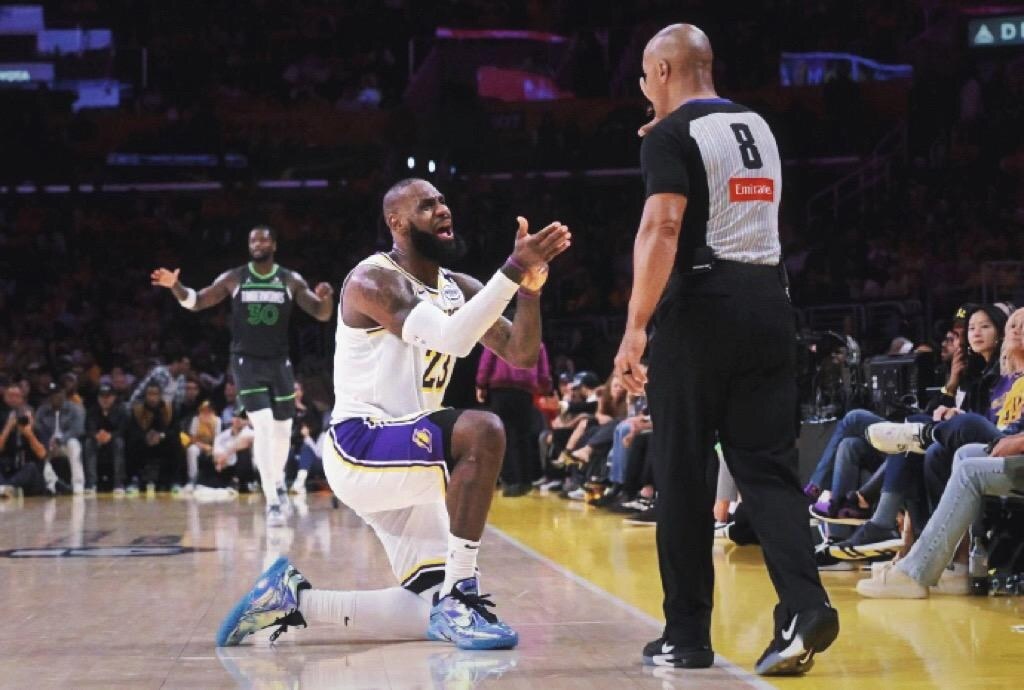
The booming prediction markets are now facing a real challenge.

On January 9, US time, the Tennessee Sports Wagering Council (SWC) issued cease-and-desist orders to prediction market platforms such as Kalshi, Polymarket, and Crypto.com, demanding that they stop offering sports event prediction contracts to residents of the state. The reason given was that these companies were engaged in illegal gambling operations without obtaining a license from the state government.

In the notice, the SWC accused these three companies of illegally offering sports betting products under the guise of "event contracts." Although these platforms are registered with the U.S. Commodity Futures Trading Commission (CFTC) as designated contract markets, according to Tennessee state law, any entity offering sports event betting services in the state must hold a license issued by the SWC.

The SWC demanded that Kalshi, Polymarket, and Crypto.com must cease all activities in the state by January 31, cancel open contracts, and refund resident deposits. Failure to comply by the deadline could result in civil penalties of up to $25,000 per violation and even criminal charges.

The Rapidly Growing Sports Betting Market

To understand why Tennessee is taking such a hard line against prediction market platforms, one must look at the current state of the U.S. sports betting market.

Since the U.S. Supreme Court overturned the federal law, the Professional and Amateur Sports Protection Act (PASPA), which had prohibited commercial sports betting, on May 14, 2018, individual states have gained the authority to decide for themselves whether to legalize sports betting within their jurisdictions. Currently, sports betting in the U.S. is regulated by state-level agencies responsible for licensing, compliance, and enforcement. Each state can set its own tax rates, market entry barriers, and responsible gambling requirements.

According to a report by the sports betting media Legal Sports Report, as of now, 38 U.S. states (including Washington D.C. and Puerto Rico) have allowed the legal operation of sports betting services (both online and offline), with 30 of those states permitting online sports betting services — Tennessee is one of them, and it is the first state to allow only online sports betting while prohibiting physical betting venues.

Home to multiple popular leagues such as the NFL, MLB, NBA, and NHL, the United States is undoubtedly a sports powerhouse, and sports betting is a gambling service clearly defined and heavily taxed by state governments.

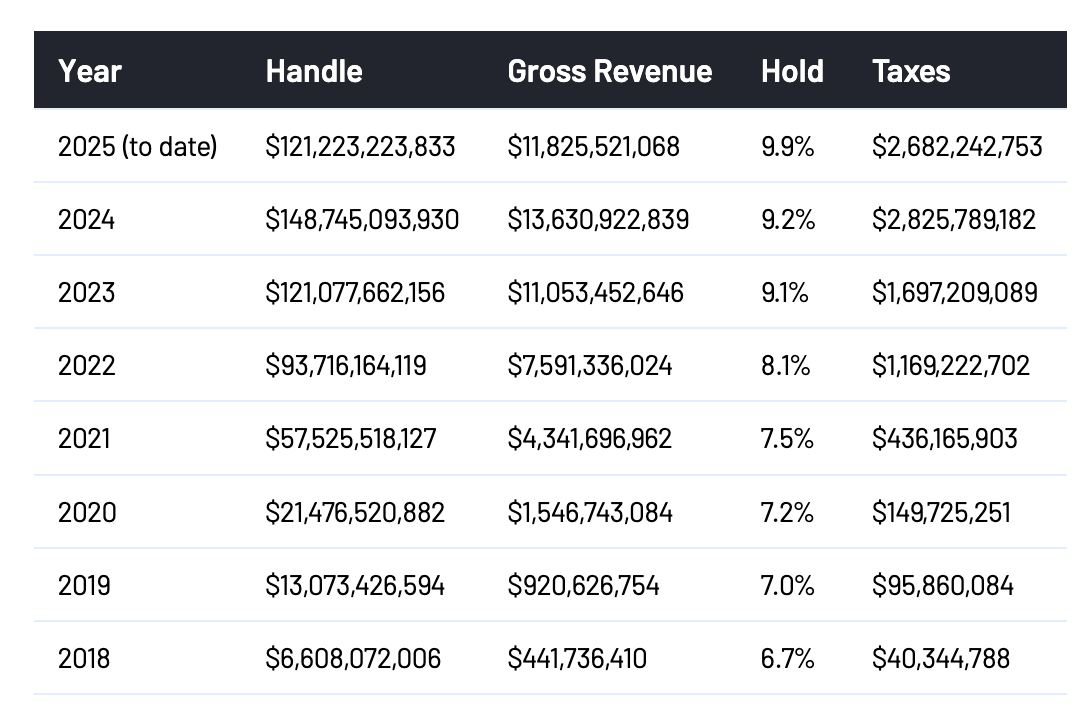
Statistics from another major sports betting media, Sports Book Review (chart below, data as of August 2025), show that since the regulatory opening in 2018, the total betting handle and tax revenue of the U.S. sports betting market have shown an astonishing growth trend over the past few years — in 2024, the total market handle reached $148.74 billion, with tax contributions amounting to $2.82 billion; in just the first 8 months of 2025, the total handle ($121.22 billion) and tax revenue ($2.68 billion) have already nearly reached the full-year 2024 levels.
Focus on Tennessee: What Does Sports Betting Mean?

Now, let's focus on Tennessee, the protagonist of this event.

In 2019, Tennessee passed the Tennessee Sports Gaming Act, formally legalizing sports betting. Although the then-Governor Bill Lee had reservations about gambling, he still allowed the bill to pass without exercising his veto power. Between 2021 and 2022, the Tennessee General Assembly passed laws establishing a dedicated regulatory council to be fully responsible for licensing and oversight. This council was initially called the Sports Wagering Advisory Council and was renamed the Tennessee Sports Wagering Council, the SWC that issued the cease-and-desist orders to Kalshi, Polymarket, and Crypto.com at the beginning of this article.
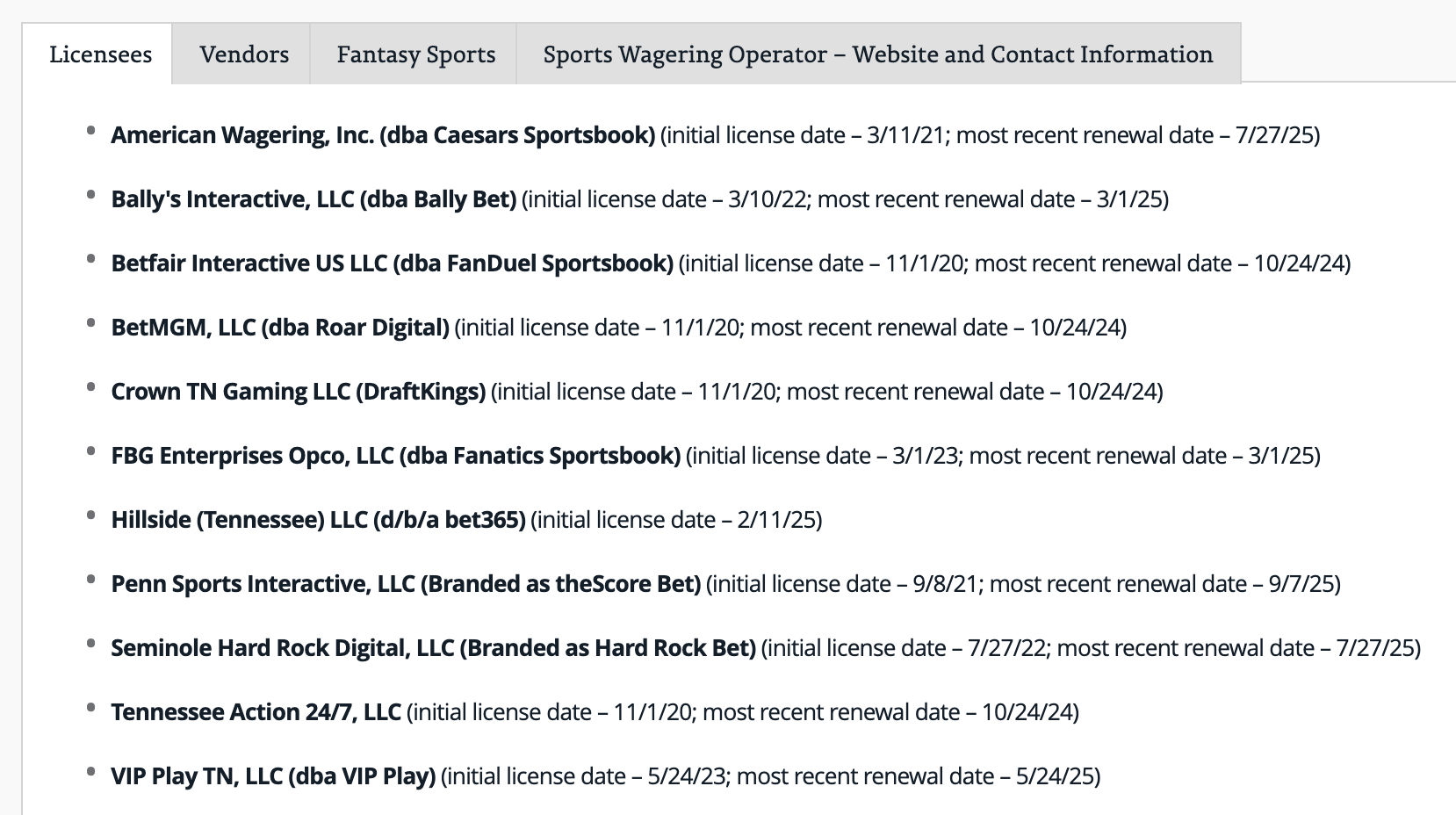
Currently, the SWC is the sole regulatory body for sports betting in Tennessee, responsible for operational licensing, compliance supervision, rule-making, and enforcement. The SWC stipulates that all sports betting providers must obtain a license from the SWC to offer services in the state. A total of 11 licenses have been issued so far (see chart above); only residents aged 21 and over can access related services, and they must pass geolocation verification to ensure bets are placed within the state; regarding taxation, the state levies a 1.85% tax on the total handle — an earlier scheme based on revenue was replaced in 2023 by taxation based on the total handle.

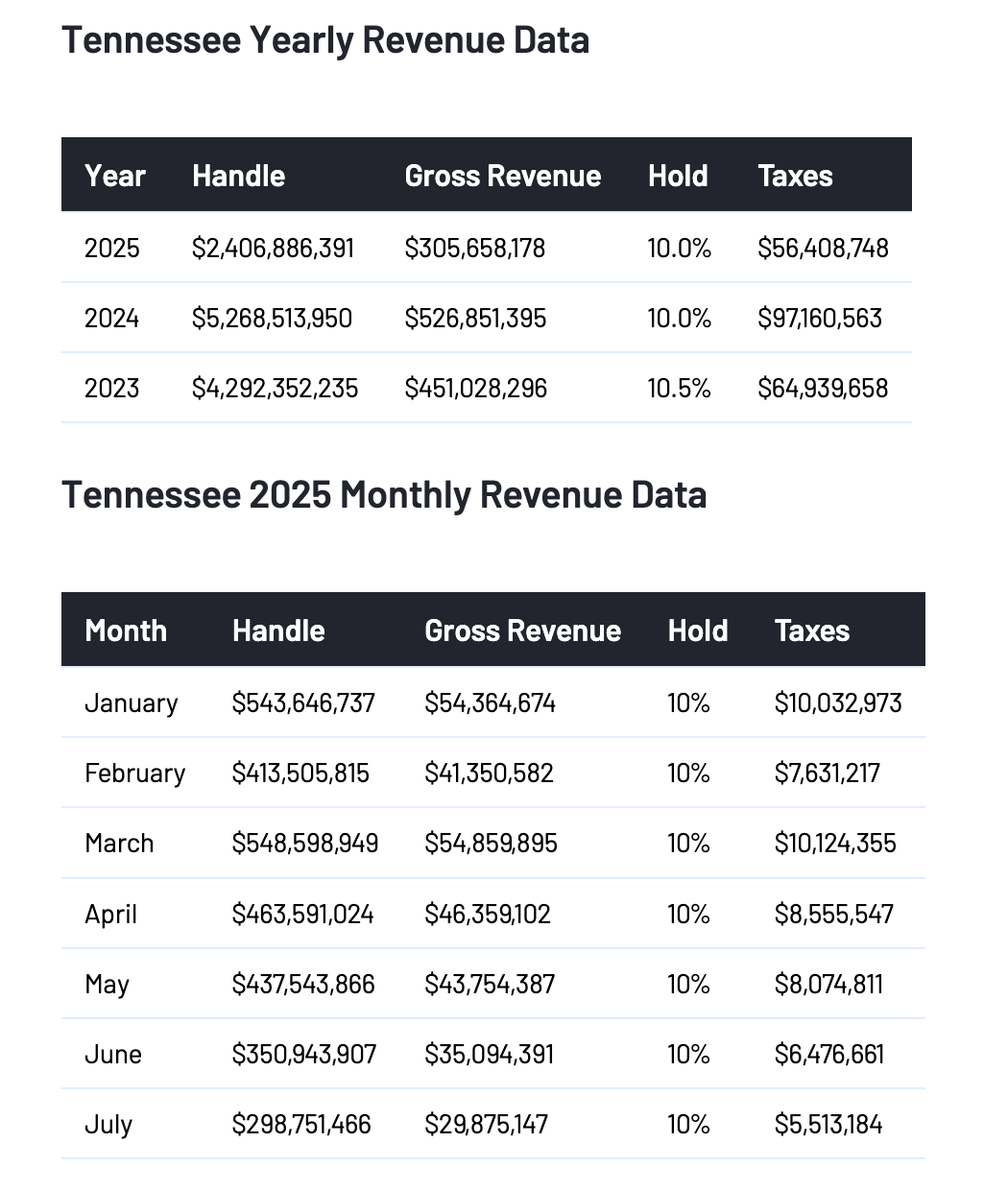
The sports betting market has contributed substantial tax revenue to Tennessee. Statistics from Sports Book Review (chart below, data as of July 2025) show that in 2024, the total sports betting handle in Tennessee reached $5.268 billion, with tax contributions amounting to $97.16 million; in the first 7 months of 2025, the total handle has already reached $2.4 billion, with tax contributions reaching $56.4 million.
But this huge and still growing cake is now being gradually eroded by the likes of Polymarket.

How Are Prediction Markets Eroding the Old World?

On December 3, 2025, Polymarket announced that it had obtained CFTC approval to return to the U.S. market after nearly four years; even earlier, Kalshi and Crypto.com's prediction market platform, Truth Predict, had already opened their doors to U.S. users under CFTC approval.

The current regulatory situation is that sports betting is clearly classified as a gambling service, with regulatory authority belonging to the states. However, prediction market platforms like Polymarket are generally regarded as new entities providing "event contract" trading services, and "event contracts" are considered financial derivatives in terms of asset nature, falling under the regulatory purview of the CFTC. This allows prediction markets to bypass the stringent regulations of gambling services — no need for state-level licenses, no need to follow addiction control and other user protection regulations, no need to pay high gambling taxes to the states; but at the same time, they can offer sports event outcome betting services similar to gambling,客观上 forming a certain "regulatory arbitrage."

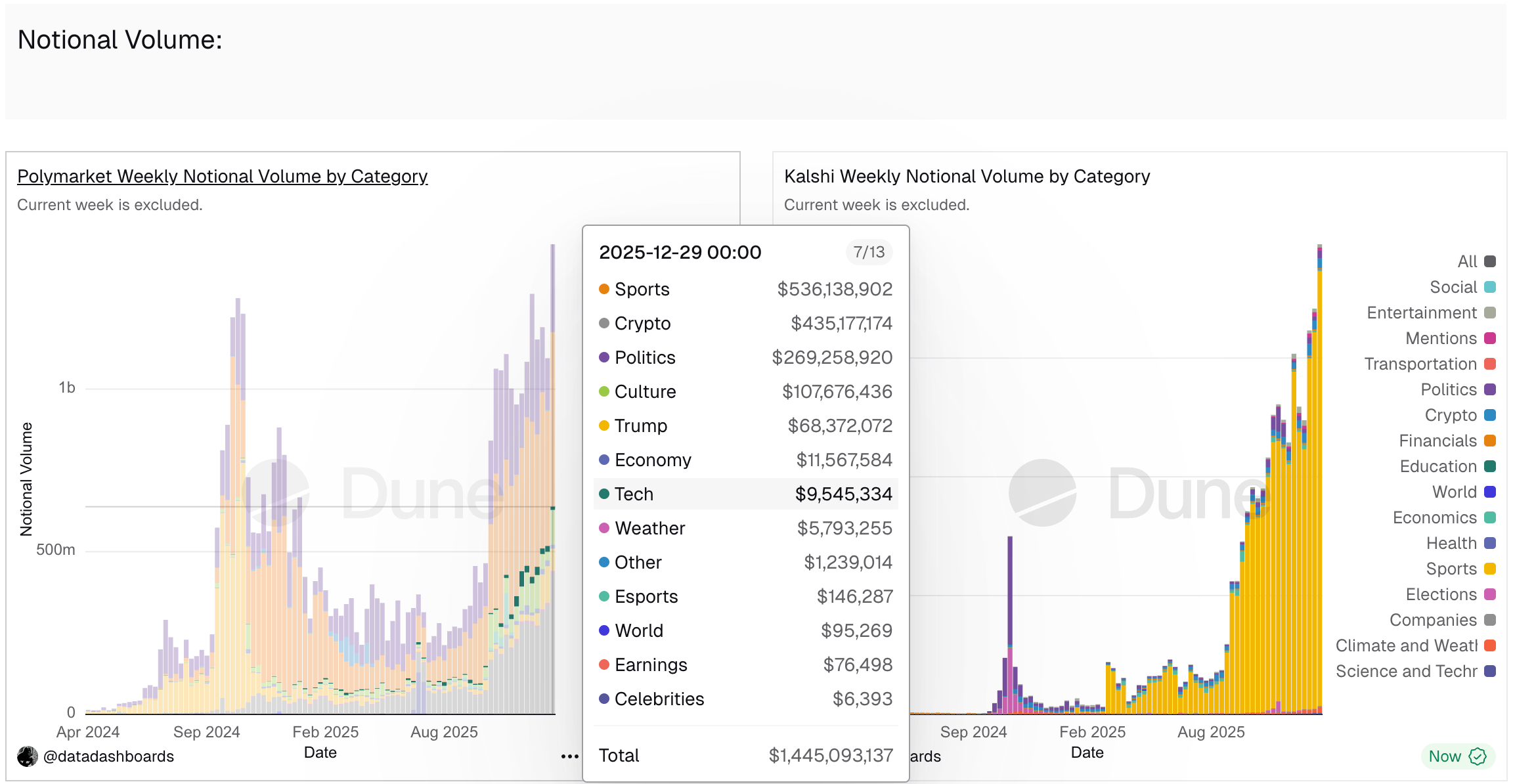
If prediction markets were still just small experimental fields, it might be tolerable. But the fact is that the growth rate of prediction markets is even more outrageous than that of the already夸张ly growing sports betting market — in 2025, the total trading volume of prediction markets was approximately $40 billion, an increase of about 400% from $9 billion in 2024. Data Dashboards compiled on Dune (chart below) also show that sports-related event contracts have long become the category with the highest trading volume share in prediction markets.
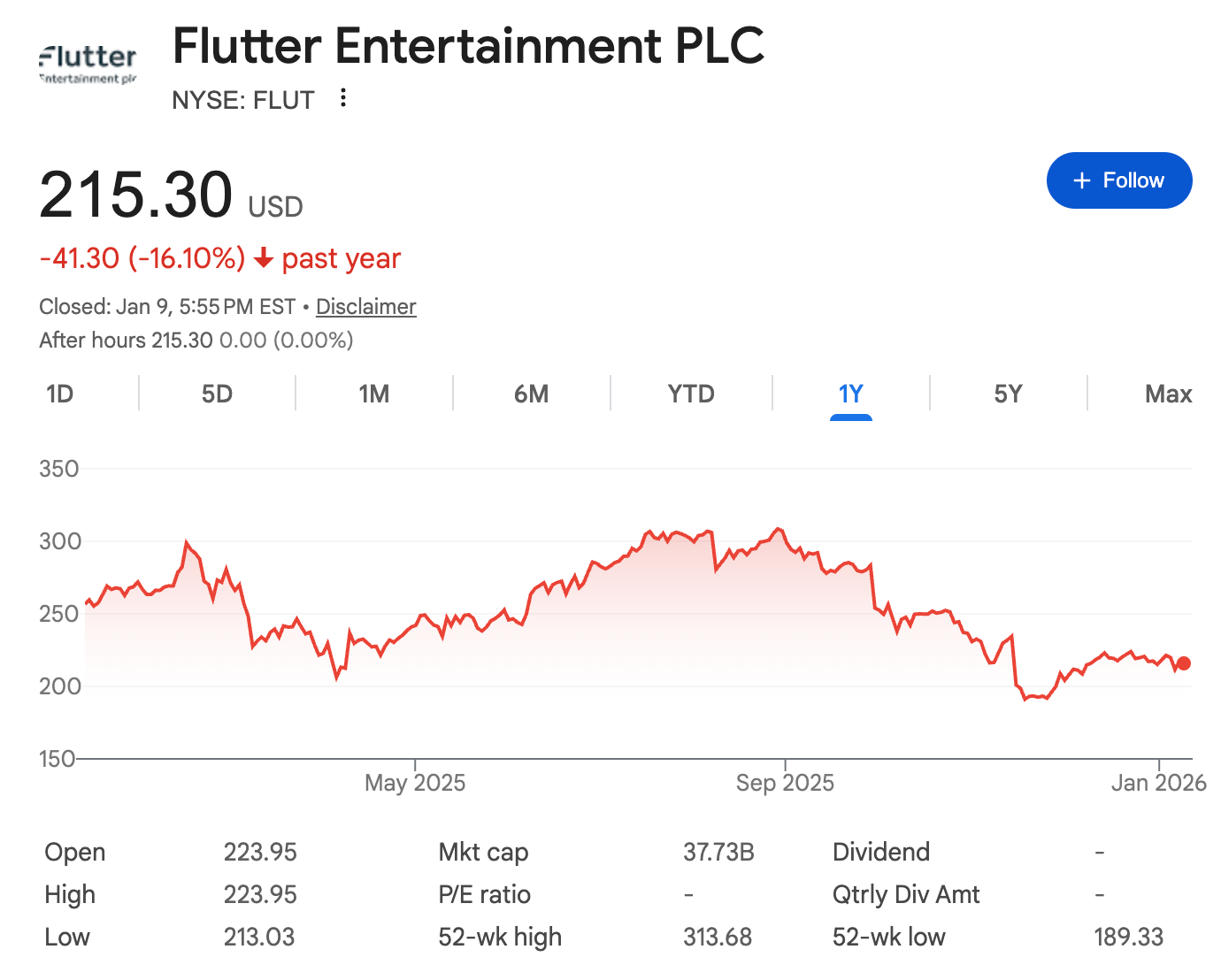
The capital market has long sensed the growing threat Polymarket poses to traditional sports betting services. Two giants of the sports betting market, DraftKings and Flutter Entertainment, recorded declines of 11.7% and 16.1% respectively over the past year — during the same period, the US stock market was in a bull run, with the Dow Jones rising 12.97% for the year, the Nasdaq up 20.36%, and the S&P 500 gaining 16.39%; and the size of the sports betting market continued its eight-year upward trend.
Whether it is Tennessee, which relies on sports betting as a source of tax revenue, or the capital forces that actually control the sports betting market, it is difficult for them to agree to let prediction markets, this new player, come and share the pie.

Friction Is Not an Isolated Case; How Do Prediction Markets Fight Back?

In fact, Tennessee's ban on prediction markets is not an isolated incident. Maryland, Ohio, Illinois, New Jersey, Nevada, Montana, Michigan, and Connecticut have all cracked down on prediction markets for similar reasons. And since Polymarket only returned to the U.S. market last December, Kalshi has borne the brunt of more regulatory impacts.

In response, Kalshi has filed lawsuits against three states — Nevada, New Jersey, and Maryland — on the grounds that it "has complied with higher-priority federal regulations and does not need to comply with state-level regulations." However, the results have not been ideal.

  • The lawsuit in Nevada was the first to proceed. The district court initially supported Kalshi, but then turned around and ruled against Kalshi last November. Judge Andrew Gordon determined that sports event contracts on Kalshi were very similar to sports betting wagers and therefore fell under the regulatory scope of Nevada's gambling laws. Kalshi has appealed to the U.S. Court of Appeals for the Ninth Circuit;
  • In New Jersey, the district court sided with Kalshi, but the state's gaming regulatory agency has appealed to the U.S. Court of Appeals for the Third Circuit;
  • In Maryland, the district court sided with the gaming regulatory agency's demands. Judge Judge Adam B. ruled that Kalshi failed to prove that "Congress has clearly and manifestly intended to deprive states of the power to regulate gambling." Kalshi has appealed this decision to the U.S. Court of Appeals for the Fourth Circuit.

The law firm Benesch commented on this, stating that as the national debate continues, similar divisions are expected at the appellate court level, which will lay the groundwork for the Supreme Court to resolve this issue in the coming years... If the appellate courts happen to consistently support Kalshi's position, other prediction markets might emulate its model and proceed with similar businesses before the Supreme Court hears the case; but if the appellate courts reach different conclusions, companies in similar situations might wait for clearer legal signals before taking action. In any case, Kalshi's lawsuit will create a precedent with direct and profound implications for the national sports betting and gambling industry.

In summary, whether prediction markets need to follow state gambling regulations remains an unresolved issue for now. The fundamental contradiction of this issue lies in the similarity of the products and services offered by prediction markets and sports betting, and the difference in regulatory requirements.

This is a tug-of-war over institutional fit. Before the appellate courts or even the Supreme Court give a final ruling, the gray area between prediction markets and sports betting will persist for a long time, and regulatory conflicts will be hard to avoid. In the short term, states will likely continue to defend their regulatory authority and tax base through enforcement and litigation; while prediction market platforms will try to use federal compliance and innovation narratives as a shield to fight for more living room.

Recommended Reading:

《Why Prediction Markets Are Truly Not Gambling Platforms》

Perguntas relacionadas

QWhat is the main reason the Tennessee Sports Wagering Council (SWC) issued a cease-and-desist order to prediction market platforms like Kalshi, Polymarket, and Crypto.com?

AThe SWC issued the order because these platforms were offering sports event prediction services to Tennessee residents without obtaining a state license, which the state classifies as illegal gambling operations.

QHow does the regulatory classification of prediction markets differ from traditional sports betting in the United States?

APrediction markets are classified as offering 'event contracts,' which are considered financial derivatives under the jurisdiction of the CFTC (Commodity Futures Trading Commission), while sports betting is explicitly categorized as gambling and regulated at the state level.

QWhat significant financial impact does the sports betting market have on the state of Tennessee according to the article?

AIn 2024, the sports betting market in Tennessee had a total handle (betting volume) of $5.268 billion and contributed $97.16 million in tax revenue to the state.

QWhat legal argument has Kalshi used to challenge state-level enforcement actions against its prediction market?

AKalshi has argued that it 'has complied with higher-priority federal regulations and does not need to comply with state-level regulations,' claiming federal oversight by the CFTC preempts state gambling laws.

QWhat is the potential long-term outcome of the legal battles between prediction markets and state regulators as suggested in the article?

AThe article suggests that the conflicting rulings from various federal appellate courts are likely to create a split, which could eventually lead the U.S. Supreme Court to resolve the fundamental conflict between federal and state regulatory authority over these markets.

Leituras Relacionadas

When Doing Cryptocurrency Payment, the First Thing is Licenses, What is the Second?

When launching a crypto payment business, obtaining the necessary licenses is the crucial first step. However, the second, and arguably more critical, step is designing a comprehensive operational framework that forms a coherent business loop. This loop must be clearly understood and executable by all stakeholders: banks, payment partners, exchanges, on-chain analytics providers, regulators, and your internal team. Many projects mistakenly believe a single license permits all operations. Licenses merely grant entry; they don't define how the specific business functions. The real challenge lies in detailing every aspect of the workflow. This involves clarifying the customer base, the flow of fiat and crypto assets, the settlement process, and establishing clear lines of responsibility for risks like AML compliance, sanctions screening, chargebacks, and regulatory inquiries. A robust framework must answer seven core questions: Who are the clients and merchants? Who collects fiat and crypto? Who handles conversion and custody? And who is ultimately accountable for compliance and risk management? Projects often fail not from a lack of licensing, but during due diligence when they cannot convincingly explain these operational details. Therefore, beyond securing licenses, the priority must be constructing a closed-loop system. This system ensures the business model is transparent, risks are managed, responsibilities are delineated, contracts are aligned, and the entire process is comprehensible to partners and regulators. The true competitive edge in crypto payments lies not in acquiring a license quickly, but in integrating licensing, banking, compliance, and operations into a sustainable and executable whole.

marsbitHá 20m

When Doing Cryptocurrency Payment, the First Thing is Licenses, What is the Second?

marsbitHá 20m

Arthur Hayes Analysis: AI Bubble Nears Burst, Crypto Market Faces Short-Term Pressure

Arthur Hayes argues that the current AI market is a bubble poised to burst, which will exert downward pressure on the crypto market in the near term. The core trigger is rising oil prices due to the US-Iran conflict and a blockade of the Strait of Hormuz. Higher energy costs directly increase the operational expenses of AI data centers, squeezing profit margins for companies like Google, Anthropic, and OpenAI. Hayes predicts that persistent inflation from high oil prices will force Trump, in a bid to win the November election, to turn public sentiment against the AI industry. He may propose regulations and taxes on data centers and AI companies to appeal to voters concerned about costs and job displacement. Such political rhetoric could shatter market confidence. Furthermore, the market is unlikely to healthily absorb the massive concurrent IPOs of SpaceX, Anthropic, and OpenAI, which together seek valuations in the trillions. The combination of soaring energy costs, overwhelming equity supply, and negative political pressure will puncture the AI bubble. Hayes notes that nearly all new USD liquidity since 2022 has flowed into AI, leaving crypto like Bitcoin behind. When the AI bubble bursts, liquidity will contract sharply, pulling down all risk assets, including cryptocurrencies. In response, Hayes's fund, Maelstrom, has sold all AI-related stocks and non-core cryptocurrencies. It maintains core positions in Bitcoin and Ethereum while increasing exposure to energy sector equities, betting on rising oil and gas prices. He expects Bitcoin to bottom after the AI-led market decline, before rallying again with future monetary easing.

Foresight NewsHá 34m

Arthur Hayes Analysis: AI Bubble Nears Burst, Crypto Market Faces Short-Term Pressure

Foresight NewsHá 34m

To C, To B, and the Next Big Thing Called To A

After To C and To B, the Next Wave is To A: Serving AI Agents In a recent quarterly earnings call, Meituan's Wang Xing introduced a new concept: To A (To Agent), signifying that future business services will increasingly target AI Agents as primary clients, not just consumers or merchants. This shift implies that internet giants must now consider how to make their services more appealing for AI Agents to recommend, fundamentally altering traditional distribution logic. This "To A era" is prompting an unusual trend of alliances among major tech companies. Unlike previous competitive battles, firms like Meituan, Tencent, JD.com, Huawei, OPPO, and OpenAI are rapidly forming partnerships. The reason is strategic: as AI Agents become the primary user interface, handling tasks from a single command (e.g., "Book a Japanese restaurant for tomorrow"), the risk for platforms is being bypassed entirely. Companies are positioning themselves within this new value chain. Three primary strategies are emerging: 1. **Super-Entry Points + Service Providers:** Platforms like Tencent's Yuanbao, WeChat, and ChatGPT aim to be the first-stop Agent, integrating various services (food delivery, shopping, travel) from partners like Meituan and JD.com. 2. **Apps as Callable Services:** Companies like Meituan, JD.com, and Uber are ensuring their core services remain accessible and callable by external Agents, shifting from front-end apps to back-end capabilities. 3. **System-Level Agent Entry Points:** Smartphone makers (Huawei, Honor, OPPO) are leveraging their OS-level AI assistants to control the initial user command, redistributing it to relevant service apps. While alliances offer mutual benefit—entry points gain service capabilities, and service providers gain traffic—inherent conflicts of interest exist. A dominant Agent platform could eventually attempt to connect directly with suppliers (restaurants, hotels), bypassing current aggregators like Meituan or Ctrip. Other unresolved challenges include the potential for Agent recommendations to become a new form of paid ranking and unclear accountability for faulty recommendations. The current rush to form alliances is a defensive move by service providers to secure their position before the landscape solidifies. In this To A-driven restructuring, the greatest risk is not losing the race but failing to hear the starting gun.

marsbitHá 43m

To C, To B, and the Next Big Thing Called To A

marsbitHá 43m

The More Lifelike the Robot, the More Terrifying? Unveiling the 'Uncanny Valley Effect' in the Era of Humanoid Robots

As humanoid robots become increasingly lifelike, they confront a significant psychological barrier known as the "Uncanny Valley Effect," a concept proposed by Japanese roboticist Masahiro Mori in 1970. This phenomenon describes a dip in human comfort and acceptance when robots appear almost, but not perfectly, human. Minor imperfections in facial expressions, eye movements, or skin texture trigger a subconscious sense of unease, as the brain detects something trying, yet failing, to mimic a person. Examples range from the controversial human-like robot Sophia to animated characters in films like *The Polar Express*. The effect poses a key design challenge for robotics companies. Some, like Boston Dynamics, avoid it entirely by creating highly capable but visibly mechanical robots. Others, like Hanson Robotics, push for greater human likeness despite the risk. For consumer robots, especially in homes, most manufacturers opt for stylized or clearly mechanical designs to ensure broader acceptance. While the Uncanny Valley remains a powerful force, its impact may diminish over time through technological advancements that achieve near-perfect realism or through generational familiarity as people grow accustomed to interacting with humanoid machines. Ultimately, navigating this psychological frontier requires as much understanding of human perception as of robotics technology itself.

marsbitHá 43m

The More Lifelike the Robot, the More Terrifying? Unveiling the 'Uncanny Valley Effect' in the Era of Humanoid Robots

marsbitHá 43m

Trading

Spot
Futuros

Artigos em Destaque

Como comprar ORDER

Bem-vindo à HTX.com!Tornámos a compra de Orderly (ORDER) simples e conveniente.Segue o nosso guia passo a passo para iniciar a tua jornada no mundo das criptos.Passo 1: cria a tua conta HTXUtiliza o teu e-mail ou número de telefone para te inscreveres numa conta gratuita na HTX.Desfruta de um processo de inscrição sem complicações e desbloqueia todas as funcionalidades.Obter a minha contaPasso 2: vai para Comprar Cripto e escolhe o teu método de pagamentoCartão de crédito/débito: usa o teu visa ou mastercard para comprar Orderly (ORDER) instantaneamente.Saldo: usa os fundos da tua conta HTX para transacionar sem problemas.Terceiros: adicionamos métodos de pagamento populares, como Google Pay e Apple Pay, para aumentar a conveniência.P2P: transaciona diretamente com outros utilizadores na HTX.Mercado de balcão (OTC): oferecemos serviços personalizados e taxas de câmbio competitivas para os traders.Passo 3: armazena teu Orderly (ORDER)Depois de comprar o teu Orderly (ORDER), armazena-o na tua conta HTX.Alternativamente, podes enviá-lo para outro lugar através de transferência blockchain ou usá-lo para transacionar outras criptomoedas.Passo 4: transaciona Orderly (ORDER)Transaciona facilmente Orderly (ORDER) no mercado à vista da HTX.Acede simplesmente à tua conta, seleciona o teu par de trading, executa as tuas transações e monitoriza em tempo real.Oferecemos uma experiência de fácil utilização tanto para principiantes como para traders experientes.

256 Visualizações TotaisPublicado em {updateTime}Atualizado em 2026.06.02

Como comprar ORDER

Discussões

Bem-vindo à Comunidade HTX. Aqui, pode manter-se informado sobre os mais recentes desenvolvimentos da plataforma e obter acesso a análises profissionais de mercado. As opiniões dos utilizadores sobre o preço de ORDER (ORDER) são apresentadas abaixo.

活动图片